Article Contents:
- The art of making the right choice: what determines the success of a purchase
- Understanding needs as the basis for decision-making
- Quality characteristics as selection criteria
- Price segments and their features
- Economy class: sensible savings
- Middle class: optimal choice
- Premium Segment: Maximum Quality
- Buying geography: where to find the best offers
- Online platforms: convenience and variety
- Offline sales points: opportunity to assess the material
- Calculating needs and planning purchase
- Precise measurements as the basis for calculation
- Comprehensive approach to purchasing
- Logistics and Delivery: Practical Aspects
- Delivery options and their features
- Acceptance and quality control
- Seasonality of purchases and pricing policy
- Impact of construction cycles on pricing
- Savings strategies when purchasing
- Supplier selection criteria
- Reputation and work experience
- Service options and support
- Modern trends in consumer behavior
- Digitalization of the purchasing process
- Customers' ecological awareness
- Technological innovations in sales
- Personalized Offers
- Blockchain and Traceability
- Future of the market and consumer preferences
- Sustainable development as mainstream
- Customization and personalization
- Conclusion
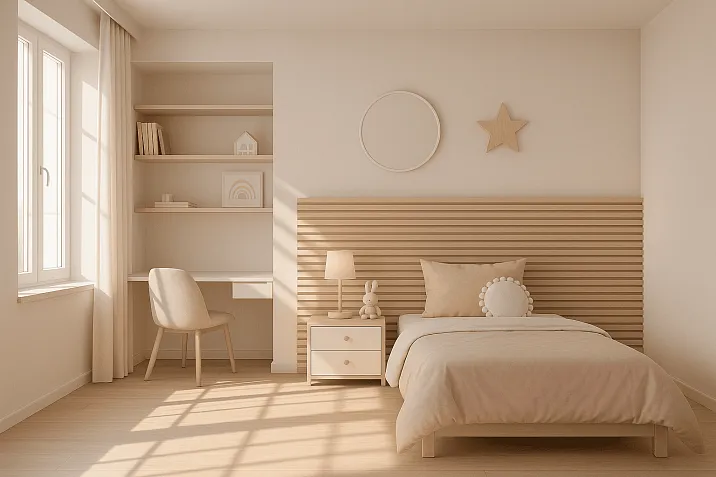
The moment of truth comes when you realize: an ordinary wall can become a work of art. Solution buy MDF planks for walls People who do not settle for mediocrity and strive to create spaces reflecting their individuality. But how not to get lost among the variety of offers? How to choose exactly what will delight the eyes for decades?
The modern market of finishing materials offers hundreds of options, but only a few of them can radically transform the interior. MDF wall planks have become a revolutionary solution, combining affordability, quality, and limitless design possibilities. However, the success of your project depends not only on the quality of the material, but also on a thoughtful approach to its selection and purchase.


The art of making the right choice: what determines the success of a purchase




Understanding needs as the basis for decision-making
Every purchase begins with a clear understanding of goals. Why do you need planks? To create an accent wall in the living room? To zone space in a studio? To hide surface defects? Or simply to add texture and depth to a dull interior? The answer to this question determines the choice of size, color, surface type, and material quantity.
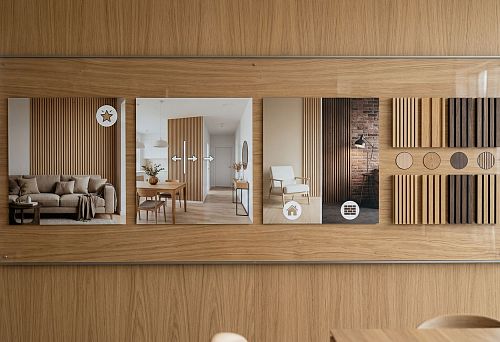
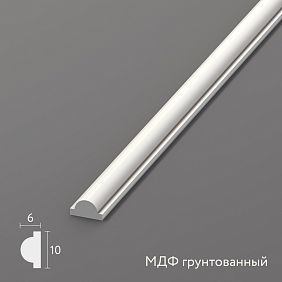
MDF material It possesses a unique ability to adapt to various design tasks. Thin planks 10×20 mm create a delicate texture, ideal for modern minimalist interiors. Massive profiles 40×60 mm form expressive architectural accents, suitable for spacious rooms with high ceilings.
Color selection is determined not only by personal preferences but also by the characteristics of the room. Light tones visually expand space, dark tones add depth and sophistication. Natural wood tones create a warm atmosphere, while modern monochromatic solutions emphasize architectural expressiveness.
Our factory also produces:


Quality characteristics as a selection criterion
Material density is the first indicator of quality. MDF with density 700-900 kg/m³ ensures durability and structural stability. Less dense material may deform over time, while denser material creates excessive load on fasteners and increases transportation costs.
The moisture content of finished products should be 6-9%. Exceeding this value may cause deformation after installation, while insufficient moisture makes the material brittle. Moisture stabilization under factory conditions is a sign of professional production.
Formaldehyde emission class E0 or E1 guarantees safety for health. Modern MDF interior planks are produced using environmentally safe binders, confirmed by appropriate certificates.
Dimensional accuracy affects installation quality. Tolerances of ±0.2 mm are considered good for mass production, ±0.1 mm indicate premium quality. Geometry can be checked with a caliper or a regular ruler.
Get Consultation
Price segments and their features
Economy class: reasonable savings
The budget segment offers planks priced at 200-400 rubles per linear meter. This category includes Russian-made products from medium-quality raw materials. Material density is usually 650-750 kg/m³, emission class E1, standard dimensional accuracy ±0.3 mm.
Savings are achieved through simplified technological processes, use of less expensive raw materials, minimal packaging. Quality meets basic standard requirements but lacks safety margin. Such planks are suitable for temporary finishes or spaces with low aesthetic requirements.
Economy-segment manufacturers often do not provide advanced technical support or warranty service. The assortment is limited to the most popular sizes and colors. Delivery is conducted through construction hypermarkets.
Mid-range class: optimal choice
Mid-range price segment products (400-800 rubles per linear meter) offer a reasonable compromise between cost and quality. Material density 750-850 kg/m³, emission class E1 or E0, dimensional accuracy ±0.2 mm.
Manufacturers invest in modern equipment, quality control, and dealer network development. The assortment includes various sizes and color options. Packaging ensures protection during transport. Technical support assists in material selection and calculation.
Warranty obligations cover factory defects and compliance with declared characteristics. Product certification confirms compliance with Russian and international quality standards.
Premium segment: maximum quality
Luxury products priced at 800-1500 rubles per linear meter are targeted at discerning customers. Material density 850-950 kg/m³, emission class E0, dimensional accuracy ±0.1 mm, exclusive finishes and profiles.
Production uses the best European raw materials and equipment. Multi-stage quality control ensures defective products do not reach consumers. Individual packaging protects each item from damage.
Premium brands offer exclusive designer collections, custom manufacturing to order, professional technical support. Extended warranty covers not only factory defects but also compliance with the customer’s aesthetic expectations.
Purchase geography: where to find the best offers
Online platforms: convenience and variety
Online purchases are becoming increasingly popular due to the convenience of comparing prices and features. Large marketplaces offer products from hundreds of manufacturers with detailed descriptions and customer reviews. Filtering systems help quickly find suitable options by size, color, and price.
Specialized online stores for construction materials often provide more qualified technical support and professional consultations. Having their own warehouses ensures fast delivery and product quality control.
Manufacturer websites guarantee original products and full compliance with declared characteristics. Direct sales eliminate intermediary markup, but may limit comparison opportunities with competitors.
Offline sales points: opportunity to evaluate the material
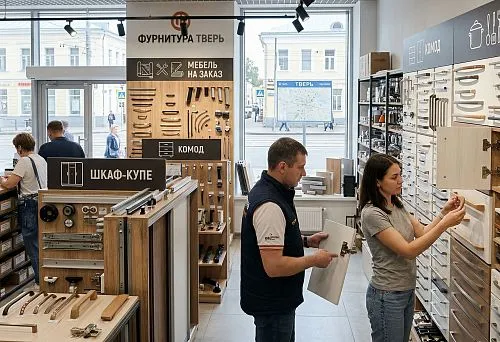
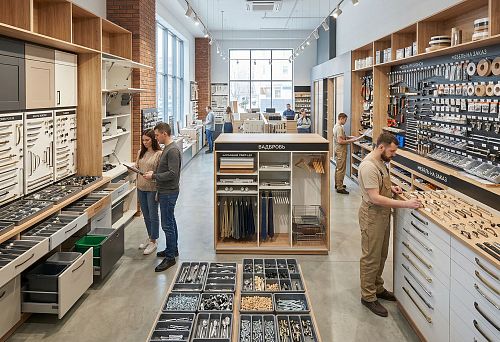
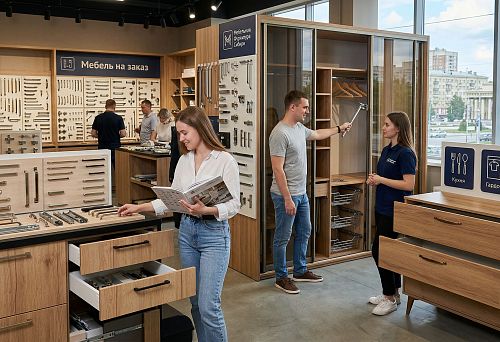
Construction hypermarkets offer a wide variety of manufacturers in one place. The opportunity for visual and tactile inspection helps evaluate material quality before purchase. Consultants can provide basic information on characteristics and applications.
Specialized finishing materials stores work with premium brands and offer professional designer consultations. Exhibitions demonstrate various ways to use planks in interior design. Design and installation services simplify project implementation.
Regional manufacturers' dealers provide direct contact with the production facility. Warehouse stock ensures the availability of the required amount of material. The possibility of obtaining special prices for bulk purchases is attractive for construction organizations.
Calculation of requirements and procurement planning
Accurate measurements as the basis for calculation
Accurate measurements of the room are the foundation for calculation. Wall height is measured at several points to detect possible deviations. Width takes into account all openings, niches, and protrusions. A room plan with dimensions simplifies subsequent calculations.
The method of laying the boards determines material consumption. For vertical installation, the number of boards is calculated by the formula: wall width / (board width + gap between boards). For horizontal installation, the wall height is divided by the same sum.
A reserve coefficient of 10-15% compensates for waste during cutting, possible defects, and calculation errors. For complex geometric shapes and diagonal installation, the reserve increases to 20-25%. It is better to have a small surplus than to purchase material from another batch with possible color differences.
Comprehensive approach to procurement
In addition to the boards, it is necessary to purchase fasteners, guide profiles, and finishing accessories. Clip systems provide hidden mounting but require routing grooves at the ends of the boards. Self-tapping screws are easier to install but require subsequent hole filling.
Installation tools include a circular saw, drill, screwdriver, level, and measuring tape. Professional tools ensure high-quality results but increase the project budget. Renting specialized equipment may be economically justified for one-time jobs.
Consumables — glue, sealants, putty, paint — are selected according to the type of substrate and operating conditions. Compatibility between materials is critically important for the longevity of the structure.
Logistics and delivery: practical aspects
Delivery options and their features
Self-pickup from the supplier's warehouse is the most economical option for customers with their own transport. Boards up to 3 meters long fit into a standard passenger car with lowered rear seats. Longer items require the use of freight transport.
Courier delivery is convenient for small orders within city limits. The service cost depends on weight, volume, and delivery distance. Elevating to a floor is often charged separately and can significantly increase the total delivery cost.
Transport companies provide delivery to regions but require the customer to collect the goods at the terminal. Packaging must protect against damage during handling and long-term transport. Insurance is recommended for expensive orders.
Acceptance and quality control
Goods acceptance must be conducted in the presence of a representative from the transport company or courier. Visual inspection of packaging reveals visible damage, which must be recorded in the delivery note. Rejecting damaged goods protects the buyer's rights.
It is advisable to open the packaging and conduct a detailed inspection of the goods on the day of receipt. Quantity, dimensions, color, and absence of surface defects are checked. Any discrepancies from the declared specifications should be documented with photos for subsequent reference to the supplier.
Storage conditions until the start of installation include protection from moisture, direct sunlight, and mechanical damage. Boards are stored horizontally on a flat surface with spacers every 500-600 mm. Vertical storage is allowed only for material thicker than 20 mm.
Seasonality of procurement and pricing policy
Influence of construction cycles on pricing
The construction industry has pronounced seasonality, affecting demand and prices for finishing materials. The peak activity period is spring-summer (March–September), when the majority of renovation and construction work is carried out. Prices reach their maximum during this period.
Winter months are characterized by reduced demand and corresponding price reductions of 10-20%. Manufacturers stimulate sales through special promotions and discounts. buy MDF planks for walls It is more advantageous during the off-season, provided there is the possibility of long-term storage.
Holidays (New Year, March 8, May holidays) also affect pricing. Pre-holiday sales may offer significant discounts, but with a reduced assortment and limited delivery times.
Savings strategies when purchasing
Wholesale discounts are provided upon exceeding a certain purchase volume. Typically, this is 500-1000 linear meters for retail buyers and 3000-5000 meters for construction organizations. Combining orders with neighbors or colleagues helps achieve wholesale volumes.
Advance payment may reduce the cost by 3-7% depending on the supplier's policy. Long-term contracts with fixed prices protect against inflation risks but require precise planning of requirements.
Choosing less popular colors and sizes sometimes allows obtaining discounts on clearance stock. However, savings should not compromise the overall design concept. Minor shade deviations may be unnoticed in the interior, while non-standard sizes may complicate installation.
Supplier Selection Criteria
Reputation and work experience
Long-term presence in the market indicates supplier stability and product quality. Companies with 10+ years of experience have passed the test of time and crises. Customer reviews on independent platforms provide an objective assessment of product and service quality.
The portfolio of completed projects demonstrates experience working with various types of structures. Collaboration with renowned designers and architects confirms the high quality of output. Participation in industry-specific exhibitions shows a commitment to development and implementation of innovations.
Quality and compliance certificates confirm adherence to production standards. Membership in professional associations obliges adherence to ethical business practices. Awards and diplomas from industry competitions recognize the company's outstanding achievements.
Service capabilities and support
Technical consultation helps correctly select the type and quantity of material for specific tasks. Qualified specialists consider room characteristics, usage conditions, and design concepts. Free calculations and consultations are a sign of customer-oriented company policy.
Warranty obligations protect buyers from hidden defects and non-compliance with stated specifications. Standard warranty is 12 months, extended warranties may reach 36-60 months. Complaint resolution procedures must be transparent and prompt.
Additional services – design, installation, maintenance – transform the supplier into a comprehensive contractor. This simplifies project implementation but increases dependence on a single company. The ability to obtain services individually provides greater flexibility.
Modern trends in consumer behavior
Digitalization of the purchasing process
Virtual showrooms allow evaluating material appearance in various interiors without visiting a sales office. 3D visualization helps visualize results before work begins. Augmented reality enables "trying on" planks on walls of one's own home via a mobile app.
Online configurators automate material requirement calculations. The client inputs room dimensions, selects laying method, and the system calculates exact quantities of planks, fasteners, and consumables. Integration with ordering systems simplifies purchase completion.
Chatbots and online consultation systems provide 24/7 technical support. Artificial intelligence answers standard questions; complex cases are escalated to human consultants. Interaction history is preserved for analyzing customer needs.
Consumer ecological awareness
FSC certification confirms legal origin of wood raw materials and sustainable forestry practices. Consumers increasingly pay attention to ecological product characteristics. Willingness to pay extra for eco-friendliness may reach 10-15% of cost.
Product carbon footprint is becoming an important selection criterion. Local production reduces transportation costs and CO₂ emissions. Energy-efficient production technologies and use of renewable energy sources enhance product appeal.
Waste management and used material return programs form a circular economy. Manufacturers develop schemes for accepting old planks for recycling into secondary raw materials. This reduces ecological burden and creates additional value for customers.
Technological innovations in sales
Personalized offers
Machine learning systems analyze customer preferences and offer personalized solutions. Purchase history, time spent on product pages, and items added to favorites all form a customer profile. Algorithms recommend products with high probability of purchase.
Dynamic pricing considers demand, inventory levels, and competitor behavior. Prices may change during the day to maximize profit or stimulate sales. Personal discounts are offered to most active customers.
Loyalty programs accumulate bonuses for purchases and activity. Status levels grant access to exclusive products and services. Gamification of the purchasing process increases customer engagement.
Blockchain and traceability
Blockchain technology ensures full traceability of products from production to end consumer. Each stage – raw material preparation, manufacturing, logistics, sales – is recorded in an immutable ledger. This guarantees product authenticity and eliminates counterfeits.
Smart contracts automate contract condition execution. Payment occurs after delivery confirmation of goods of appropriate quality. Dispute arbitration is automatically handled based on embedded algorithms.
Loyalty tokenization converts bonus programs into cryptocurrency assets. Tokens can be accumulated, exchanged, and transferred to other users. This creates an additional ecosystem around the brand.
Future of the market and consumer preferences
Sustainable development as mainstream
Circular economy changes the approach to product lifecycle. Instead of the "produce-use-dispose" model, concepts of reuse and recycling are developing. MDF planks Designed with consideration for disassembly and reuse.
Biodegradable materials gradually replace synthetic components. Binders based on plant proteins and resins ensure ecological safety without compromising strength. Full biodegradation cycle lasts 2-5 years depending on conditions.
Carbon-neutral production becomes a competitive advantage. Companies invest in renewable energy, energy-efficient technologies, and reforestation programs. Carbon neutrality certification confirms ecological responsibility.
Customization and personalization
Mass customization allows producing unique items on an industrial scale. Digital printing technologies create individual textures and patterns. 3D printing forms complex geometric profiles tailored to specific design tasks.
Modular systems simplify the creation of individual solutions from standard components. The buyer selects dimensions, colors, and types of fastening from an available catalog. Automated production systems ensure rapid order fulfillment.
Co-creation involves customers in the development of new products. Crowdsourcing ideas, voting on designs, and beta-testing novelties create a community of loyal customers. Successful customer ideas are integrated into mass production.
Conclusion
The modern market of finishing materials offers customers unprecedented choice opportunities. buy MDF planks for walls Today, one can be fully confident in the quality and durability of the material, thanks to advanced control and product certification systems.
A thoughtful approach to purchasing begins with a clear understanding of one's own needs and capabilities. Analyzing technical specifications, comparing price offers, and evaluating supplier reputations — all these stages are critically important for successful project implementation.
Technological innovations fundamentally change the purchasing process, making it more convenient, personalized, and transparent. Virtual try-ons, automated calculations, and online consultations transform material selection into an engaging creative process.
Customers' ecological awareness stimulates the development of sustainable production technologies. The future belongs to materials that are not only beautiful and functional but also safe for the environment.
The price accessibility of quality MDF rails makes modern design accessible to a broad range of consumers. Democratization of design allows each individual to create a unique space reflecting their personality and lifestyle.
Professional support at every stage — from selection to installation — guarantees successful implementation of even the most complex projects. Integrating various services within a single supplier simplifies coordination of work.
Globalization of the market ensures access to the best global technologies and materials. Local production reduces logistics costs and supports regional economies.
Digital technologies continue to transform the market, creating new opportunities for interaction between manufacturers and consumers. Personalization, automation, and artificial intelligence — all serve to create a better customer experience.
Prospects for market development are linked to further improvement in product quality, expansion of service capabilities, and adoption of innovative technologies. Customers receive more tools for making informed choices.
Investments in quality finishing pay off with long-term benefits: increased property value, reduced operating costs, and improved quality of life. Choosing the right materials is an investment in the future.
STAVROS Company, combining decades of experience with advanced production technologies, offers customers not just quality materials, but comprehensive solutions for creating modern interiors. Every STAVROS product embodies principles of quality, reliability, and aesthetic perfection, ensuring customers confidence in their choice and long-term satisfaction with the result, creating the foundation for spaces that delight and inspire for many years.