












































































Article Contents:
- Veneering as a High Art of Wood Processing
- Technological Process of Creating Perfection
- Quality control at every stage
- Variety of Natural Textures in One Material
- European Elite Species
- Exotic Species for Special Projects
- Domestic High-Quality Species
- Advantages of Veneered MDF Over Alternatives
- Dimensional Stability as a Key Advantage
- Economic Efficiency of Elite Material
- Ecological Aspects of Modern Production
- Design Solutions Using Veneered Strips
- Classic Interiors in Modern Interpretation
- Modern Styles and Current Trends
- High-Class Commercial Interiors
- Installation Technology for Veneered Strips
- Foundation Preparation Considering Material Characteristics
- Fastening Systems to Preserve Finish Integrity
- Joint and corner processing
- Maintenance and Operation: Preserving Original Beauty
- Daily Care for Veneered Surfaces
- Protection Against Damage and Restoration
- Periodic Renewal of Protective Coating
- Innovative Technologies in Veneer Production
- Thermal Treatment for Improved Properties
- Pressing for Creating Unique Textures
- Radio Frequency Drying for Accelerated Process
- Economic Aspects of Using Veneered Strips
- Cost of Ownership Analysis
- Impact on property value
- Regional pricing characteristics
- Quality Control and Standardization
- International Quality Standards for Veneer
- Control Methods in Production
- Environmental Sustainability and Certification
- Sustainable forestry
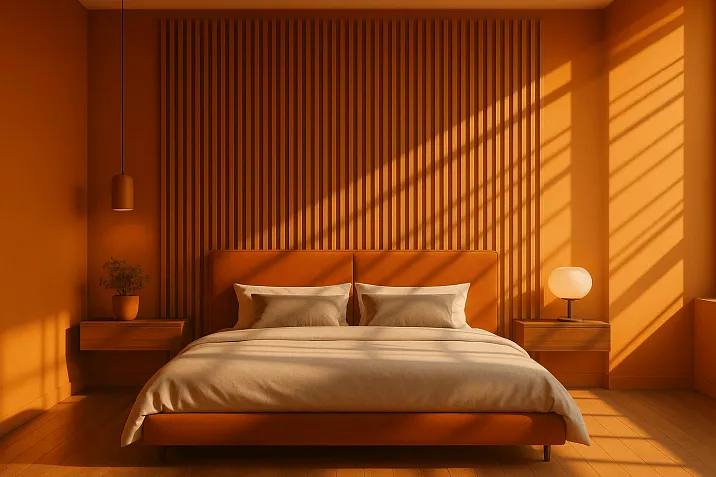
True beauty is born in details. When a designer is tasked with creating an interior that is both luxurious and practical, the choice falls on veneer MDF strip – a material that embodies the perfection of natural textures in modern technological processing. This product has become a revolution in the world of finishing materials, combining the unparalleled aesthetics of natural wood with the reliability and stability of industrial production.
What makes leading architects around the world choose veneered MDF over solid wood? The answer lies in understanding that modern design requires not just beautiful materials, but intelligent solutions capable of withstanding the test of time, climate, and intensive use.


Veneering as a high art of wood processing
The veneering technology has turned an ordinary building material into a piece of applied art. Imagine a master cabinetmaker of the 18th century, who with a delicate knife peels off layers from a noble trunk, striving to preserve every nuance of natural beauty. Modern machines do this with jewel-like precision, but the principle remains unchanged – to reveal and preserve the uniqueness of each tree.




Technological process of creating perfection
The production of veneered strip begins with careful selection of wood. Tree trunks aged 80 to 150 years undergo a multi-stage quality control. Moisture, density, absence of wood defects, correct fiber growth – each parameter affects the final result.
The peeling process takes place on machines with knives up to 4 meters long. Cutting speed reaches 200 m/min, but each millimeter is controlled with micron precision. Veneer thickness varies from 0.6 to 3.2 mm depending on the wood species and the intended finished product. MDF material serves as a stable base that is not subject to warping and cracking, typical of solid wood.
Our factory also produces:


Quality control at every stage
Each veneer sheet undergoes optical inspection on special scanners. Computer systems analyze color, texture, and presence of defects, after which sorting by quality class occurs. Veneer of the "Extra" class is used for elite projects, where perfection of every millimeter of surface is crucial.
The veneer moisture is stabilized in drying chambers at a temperature of 60-80°C. The process lasts 8-16 hours depending on thickness and species. Final moisture content of 8-12% ensures optimal adhesion to the adhesive layer and prevents deformation during use.
Get Consultation
Variety of natural textures in one material
European elite species
European oak remains the undisputed leader among species for veneering. Its characteristic texture with prominent medullary rays creates a unique pattern that cannot be artificially imitated. Each MDF Interior Strip with oak veneer is unique, like a fingerprint.
Ash attracts designers with its light color palette and clearly defined annual ring structure. This species is ideal for modern Scandinavian-style interiors, where naturalness and minimalism are valued.
American walnut creates a warm, cozy atmosphere thanks to its rich color palette ranging from light brown to dark chocolate. The wavy texture of walnut is especially effective under side lighting.
Exotic species for special projects
Central African wenge has a unique dark brown color with almost black veins. This species symbolizes luxury and sophistication, but requires a professional approach to interior design.
Zebrawood got its name due to contrasting stripes resembling the coloring of African zebra. Such veneer becomes a dominant element in interior design and requires restraint in other details.
Padauk belongs to endangered species, making its veneer especially valuable. Purple-brown tones with golden veins create a truly royal atmosphere.
Domestic high-quality species
Karelian birch is the pride of Russian forests. The irregular fiber structure creates a marble-like pattern with a mother-of-pearl sheen. Karelian birch veneer is used in the most prestigious projects.
Common maple is valued for its light, almost white wood with delicate texture. It is ideal for creating modern interiors in minimalist or high-tech styles.
Advantages of veneered MDF over alternatives
Dimensional stability as a key advantage
glued oak beams veneer MDF strip In front of the solid wood panel – exceptional geometric dimensional stability. The swelling coefficient is only 8-12% when fully submerged in water for 24 hours, which is 2-3 times better than natural wood.
Temperature deformations are also minimal due to the homogeneous structure of the MDF base. With a temperature difference of 30°C, a 3000 mm long plank will change its size by only 0.8-1.2 mm. Such indicators allow using the material even in rooms with an unstable microclimate.
Economic efficiency of premium material
The cost of veneered planks is 25-40% of the price of a similar product made from solid wood, with identical appearance. Savings become especially significant when using exotic species, where the difference can reach 10 times.
Installing veneered planks is simpler and faster due to their stability and predictable dimensions. This reduces labor costs by 20-30% and shortens project completion time.
Ecological aspects of modern production
Using veneer allows increasing the surface area obtained from one cubic meter of valuable wood by 20-25 times. This drastically reduces pressure on forest resources and makes premium species accessible to a wider range of consumers.
Modern adhesive systems of class E0 ensure formaldehyde emissions at the level of natural wood – less than 0.05 mg/m³. This allows using MDF planks even in children's rooms and bedrooms.
Design solutions using veneered planks
Classic interiors in a modern interpretation
21st-century neoclassicism requires new approaches to traditional materials. Veneered planks allow recreating the atmosphere of palace interiors using modern, more reliable materials.
Wall panels at 1/3 the height of the room create classic buaizer proportions. Oak or walnut veneer combined with gold molding forms an atmosphere of aristocratic luxury.
Modern styles and current trends
Minimalism finds its ideal embodiment in light veneer species. Ash, maple, birch create a calm, soothing atmosphere without visual noise or unnecessary details.
Loft uses the contrast between rough industrial surfaces and noble wood. Dark species – walnut, wenge, stained oak – create warm accents against brick and concrete backgrounds.
Scandinavian style values naturalness and eco-friendliness. Light shades of birch, pine, spruce harmonize with the philosophy of northern design and maximum use of natural light.
Commercial interiors of high class
Class A offices require materials combining prestige with practicality. Decorative MDF rails With quality veneer, they create an atmosphere of reliability and stability.
Restaurants and hotels use veneer to create a cozy, home-like atmosphere. Warm wood tones psychologically encourage relaxation and rest.
Exhibition halls and showrooms use veneered planks to create a neutral yet elegant background that does not compete with exhibits.
Installation technology for veneered planks
Preparation of the base considering the material's characteristics
The quality of installing veneered planks depends on careful preparation of the base. The surface must be flat with deviations no more than 2 mm per linear meter. The base's moisture content should not exceed 4% for mineral surfaces and 12% for wooden structures.
The room temperature stabilizes at 18-22°C 48 hours before installation begins. Relative air humidity should be 45-65%. Sudden fluctuations in these parameters may cause veneer deformation.
Fastening systems to preserve the integrity of the finish
Hidden clip systems provide an ideal finished surface appearance. Clips are milled into the end of the plank to a depth of 10-15 mm with precision ±0.2 mm. Any deviation will complicate installation and may damage the veneer.
Adhesive fastening is applied to perfectly prepared bases. Polyurethane adhesives provide a bond strength of 8-12 MPa and retain elasticity necessary to compensate for minor structural movements.
Mechanical fastening with self-tapping screws requires pre-drilling holes with a diameter 0.8 times the screw diameter. This prevents cracking of the MDF base and damage to the veneer.
Joint and corner processing
Joining veneered strips requires special skill. The direction of fibers of adjacent elements must match, and transitions in color and texture must be as inconspicuous as possible.
Corner joints are made at a 45° angle with mandatory matching of veneer grain patterns. In critical projects, special corner elements are used, manufactured according to the specific characteristics of the particular veneer batch.
Ends of strips are protected by special sealants preventing moisture penetration. The sealant color is matched to the main veneer tone for maximum invisibility.
Care and maintenance: preserving original beauty
Daily care of veneered surfaces
Veneer requires gentle care to preserve its aesthetic qualities. Dry cleaning with a soft cloth or vacuum cleaner with a soft attachment should be performed weekly. Cleaning motions must follow the direction of the wood fibers.
Wet cleaning is performed using slightly damp microfiber cloths with special care products for veneered surfaces. Excess moisture is immediately removed with a dry cloth to prevent veneer deformation.
Protection from damage and restoration
Direct sunlight may cause fading of some veneer species. It is recommended to use protective curtains or UV filters on windows in rooms with large glazing areas.
Scratches and abrasions on veneered surfaces are removed using special retouching pencils or oils. Deep damage requires professional repair with local replacement of the veneer section.
Periodic renewal of protective coating
Lacquered surfaces require renewal every 5-7 years depending on usage intensity. Oil-based coatings require more frequent renewal—every 2-3 years, but the procedure is simpler and can be performed locally.
Wax-coated surfaces require regular renewal of the wax layer. This not only protects the veneer but also enhances its natural beauty, adding depth to color and texture.
Innovative technologies in veneer production
Thermal treatment for improved properties
Thermo-treated veneer undergoes color and physical property changes at temperatures of 160-220°C. The process occurs in a steam environment without oxygen access, preventing combustion.
Thermo-treated veneer acquires a darker, richer color and increased dimensional stability. The material’s hygroscopicity decreases by 30-40%, which is especially important for use in humid environments.
Pressing for creating unique textures
Pressing technology allows creating raised textures on the veneer surface, imitating various wood treatments. Pressure up to 50 MPa creates indentations up to 0.5 mm deep.
Such textures are not only decorative but also functional—they conceal minor surface defects and create additional tactile sensations. MDF laths for interior Veneer with textured patterns is especially popular in modern design.
Radio frequency drying for accelerated process
Traditional veneer drying takes 12-48 hours depending on thickness and species. Radio frequency drying at 13.56 MHz reduces this process to 15-30 minutes.
Uniform heating throughout the material thickness eliminates internal stresses and cracks. The quality of veneer after RF drying exceeds that of traditional methods.
Economic aspects of using veneered strips
Analysis of ownership cost
Initial costs for MDF paneling With quality veneer, costs constitute 60-80% of the cost of a similar project using solid wood. Operational expenses are significantly lower due to material stability.
The service life of veneered strips in interior conditions is 20-25 years with proper care. The possibility of local repair without dismantling the entire structure further reduces long-term costs.
Impact on property value
Quality veneer cladding increases property value by 8-15% depending on the building class and wood species used. This is especially noticeable in the luxury segment, where exclusive finishes are valued.
Commercial properties with quality wooden cladding rent for 15-25% more than similar spaces with standard finishes. Prestigious appearance attracts reputable tenants.
Regional Pricing Characteristics
The cost of veneered planks varies by region depending on logistics and local demand. In major cities, prices are 20-30% higher than the average Russian level due to the high concentration of luxury projects.
Seasonality also affects pricing. Maximum prices occur during the spring-summer construction season. Orders for the autumn-winter period may be 10-15% cheaper.
Quality control and standardization
International veneer quality standards
The European standard EN 635 regulates requirements for veneer quality. Classification by appearance includes classes E, I, II, III, IV, where class E represents the highest quality with no visible defects.
The American standard HPVA defines 7 classes of veneer quality, from AA (perfect) to E (with allowable defects). For luxury projects, veneer of class A or higher is used.
Production control methods
Optical scanners analyze each veneer sheet for defects, color deviations, and structural irregularities. Automatic sorting ensures uniform quality within each batch.
Humidity control is performed at every stage of production. Infrared moisture meters ensure measurement accuracy of ±0.5%, which is critical for adhesive quality.
Ecological sustainability and certification
Sustainable Forestry
FSC (Forest Stewardship Council) certification guarantees that the wood used for veneer production comes from responsibly managed forests. This is important for environmentally responsible projects.
PEFC (Programme for the Endorsement of Forest Certification) is another system confirming the legality and sustainability of wood origin. Dual FSC/PEFC certification ensures maximum





