








































































Article Contents:
- St. Petersburg and wood: why slatted panels are especially appropriate here
- Which rooms in St. Petersburg apartments are best suited for slatted panels
- Historical apartments: ceilings, stucco, 'herringbone'
- New buildings: white walls and open layouts
- Apartments and commercial properties
- Materials for slatted wall panels in St. Petersburg: climate adjustments
- Natural oak in St. Petersburg: rules for working with a humid climate
- MDF: stability for St. Petersburg's dampness
- Solid wood paneling: St. Petersburg traditions of wooden interior
- Slatted panels in different rooms of a St. Petersburg apartment
- Living room: accent wall with or without TV
- Bedroom: natural silence and acoustic felt
- Kitchen-living room: zoning in an open layout
- Hallway: encountering natural materials from the threshold
- Ceiling: the fifth dimension of St. Petersburg interior
- Slatted panels with lighting: special significance for St. Petersburg
- Parameters of slatted wall panels: table for St. Petersburg conditions
- Slatted panels in St. Petersburg interior styles
- Petersburg classic: oak, moldings, symmetry
- Scandinavian minimalism: ash and white
- Northern Art Deco: dark tones and natural luxury
- Japandi in Petersburg style: silence and natural rhythm
- Slatted facade panels for Petersburg buildings
- Slatted modular panel for Petersburg projects
- Installation of slatted wall panels in Petersburg: specifics of the humid climate
- How to attach slatted panels in Petersburg apartments: three methods
- Adhesive method
- Method with lathing
- Combined Method
- Decorative Slat Panels for Commercial Properties in St. Petersburg
- Calculating the Quantity of Slat Wall Panels for St. Petersburg Apartments
- Accessories for Slat Wall Panels: What's Needed for St. Petersburg Interiors
- Frequently Asked Questions About Slat Panels in St. Petersburg
- Can Slat Panels Be Installed in Winter in St. Petersburg Apartments?
- How to Care for Slat Panels in St. Petersburg's Humid Conditions?
- Are Wood Slat Panels Suitable for St. Petersburg Apartments with 'Fluctuating' Humidity?
- MDF Slat Panels or Natural Oak — What to Choose for a St. Petersburg Apartment?
- Is Battens Needed When Installing Slat Panels in Historic St. Petersburg Houses?
- Slatted panels in the bedroom — is additional vapor barrier needed on the exterior wall?
- Conclusion
St. Petersburg is a city with a special attitude towards interiors. This is not just a geographical fact; it's a cultural trait. Petersburgers live in homes with history: pre-revolutionary apartments with stucco and herringbone parquet, Stalin-era buildings with three-meter ceilings and wide windowsills, Soviet 'ships' with non-standard layouts, modern new buildings in Murino and Kudrovo with panoramic windows and smooth, white 'blank' walls without history. And in each of these housing types — there are specific questions and specific answers to the question: how to finish the walls to make the space come alive?
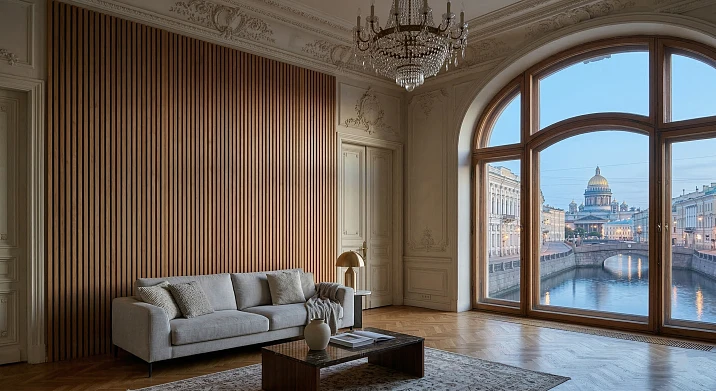
Slatted wall panels in St. Petersburg are the material that answers this question more convincingly than others. The natural rhythm of vertical wooden slats fits organically both into the lofty rooms of 'parade' apartments on the Petrograd Side and into the modest spaces of new buildings beyond the Ring Road. Wood in a city with a humid climate and gray skies for eight months of the year is not a decorative technique; it's almost a physiological need.
But the St. Petersburg market for slatted panels has its own specifics. A different climate, different construction traditions, different logistical realities. And different questions from buyers: where to find quality material with delivery to St. Petersburg, how to account for the humidity of the St. Petersburg climate when choosing a finish, what to do with the non-standard ceilings of historical houses. This article is about all of that: in detail, honestly, and with practical benefit.
St. Petersburg and wood: why slatted panels are especially appropriate here
Before discussing technical parameters — a few words about context. In St. Petersburg, there are three architectural and climatic factors that make slatted wall panels an especially relevant solution.
First factor: light deficit. St. Petersburg is one of the 'darkest' major cities in Russia in terms of the number of sunny days. From October to April, the sun is a rare guest. Gray skies, diffused light, early dusk. In such conditions, the warm amber tone of natural oak on the wall works like the apartment's 'internal sun': it creates a feeling of warmth and coziness that is so lacking outside.Wooden slat panelsWood in a St. Petersburg interior is not a tribute to fashion; it's a conscious response to the climate.
Second factor: high ceilings. The historical apartments of St. Petersburg — Petrogradskaya, Vasilievsky Island, Central District — have ceilings of 3–3.5 m, and often higher. Such spaces require a special approach to finishing: ordinary materials 'get lost' in them, failing to fill the volume. Vertical slats from floor to ceiling at a height of 3+ m are an architectural accent that works to its full potential precisely in tall rooms. No other finishing solution 'raises' the ceiling as convincingly as a vertical slatted wall.
Third factor: humidity. The St. Petersburg climate is the most humid among major Russian cities. Relative air humidity during the off-season reaches 85–90%. For wooden materials, this means: one must be especially careful when choosing a finish and maintaining a stable indoor microclimate. But with the correct choice of finish (varnish or hard oil-wax) and normal heating operation — slatted panels in a St. Petersburg apartment last for decades without any problems.




Which rooms in St. Petersburg apartments are best suited for slatted panels
St. Petersburg is a city with a very diverse housing stock. From 'Stalin-era buildings' in the Moskovsky District to modern residential complexes in Primorsky. For each type of housing, there is its own logic for applying slatted panels.
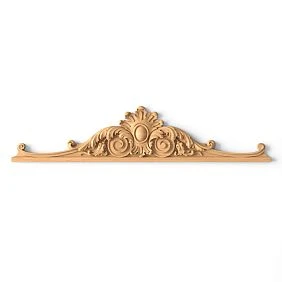
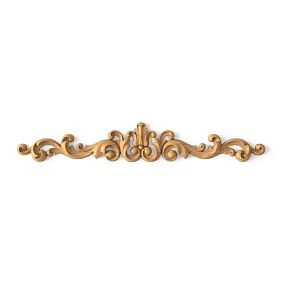
Our factory also produces:
Historical apartments: ceilings, stucco, 'herringbone'
In pre-revolutionary and Stalin-era apartments, slatted panels face a challenge that doesn't exist in modern new builds: they need to organically fit into the existing architecture. Stucco cornices, 'herringbone' parquet, wide baseboards—all of this creates a strong historical context.
Wall slat panels in interiorFor historical St. Petersburg apartments, the format of wainscoting (a slatted field at a height of 100–130 cm from the floor with a molding at the border) or an accent wall with profiled wooden framing is suitable. Natural oak with a dark tint ('tobacco', 'dark walnut') fits organically into the pre-revolutionary context. Light tones are for Stalin-era buildings with more restrained architecture.
Ceiling heights of 3–3.5 m give slatted wall panels 'room' to fully unfold: a slat from floor to ceiling, 3 m long, is a monumental vertical line that only works in such spaces. This effect is impossible in a two-meter 'Khrushchevka'.
Get Consultation
New builds: white walls and open layouts
In modern St. Petersburg residential complexes, there is a clean, neutral 'white box' without history and without architectural details. Here, slatted wall panels perform a different task: they do not 'fit into' the existing architecture but create it from scratch. The first slatted wall in a new build is the first architectural statement in a space that previously had none.
The open layouts of St. Petersburg new builds (a 30–40 sq. m kitchen-living room) are an ideal format for slatted panels as a zoning tool. A slatted wall behind a sofa group visually 'separates' the relaxation area from the kitchen without physical partitions. For St. Petersburg new builds with panoramic windows and large open spaces, this is one of the most in-demand applications.
Apartments and commercial properties
St. Petersburg is an actively developing market for aparthotels and short-term rentals. Apartments with slatted walls in the living area are a competitive advantage in the rental market: interior photos featuring a wooden slatted accent wall yield significantly higher booking conversion rates. For commercial real estate — cafes, restaurants, showrooms, offices — slatted panels become part of the brand's visual identity.
Materials for slatted wall panels in St. Petersburg: climate adjustments
The St. Petersburg climate necessitates adjustments to standard material selection recommendations. We will examine each option considering St. Petersburg's specific conditions.
Solid oak in St. Petersburg: rules for working with a humid climate
Solid oak is the best material for slatted wall panels from an aesthetic standpoint. In St. Petersburg, its use requires two mandatory conditions.
First condition: coating. In St. Petersburg apartments, solid oak for slatted panels must only be used with a lacquer coating (polyurethane water-based lacquer) or with a hard oil-wax. 'Soft' oil without wax is less resistant to humid conditions. Hard oil-wax creates a sufficient moisture barrier while preserving the natural tactile surface.
Second condition: microclimate stabilization. In winter, when St. Petersburg's central heating is operating, humidity in apartments drops to 20–25% (very dry). In summer and during the off-season, it rises to 60–70% and higher without climate control. Such fluctuations cause seasonal wood movement. This is normal and not a defect, but it requires proper acclimatization of the slats before installation (72 hours in the room) and small expansion gaps between the ends of the slats and the floor/ceiling surface (2–3 mm).
If these conditions are met —Wooden slat panelssolid oak slatted panels in a St. Petersburg apartment will last 20–30 years without loss of aesthetic qualities.
MDF: stability against St. Petersburg's dampness
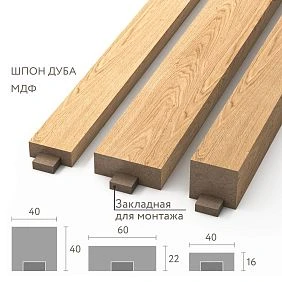
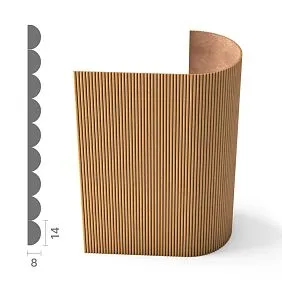
MDF Slatted Wall PanelIn St. Petersburg conditions, it is a technically more predictable solution. MDF is significantly less sensitive to humidity fluctuations than solid wood: geometry remains stable with humidity variations from 20% to 80%.
For St. Petersburg hallways, kitchen areas, and rooms with unstable microclimates, MDF with lacquer coating is preferable to solid wood. In living rooms and bedrooms with normal climate control, solid oak still wins in aesthetics.
Requirement when purchasing MDF in St. Petersburg: emission class E1/E0 certificate. St. Petersburg's humid climate accelerates the release of substances from low-quality MDF. Class E2 is unacceptable.
paintable slatted wall panelsMDF in St. Petersburg interiors is for monochrome concepts with precise RAL colors. Dark blue (RAL 5011), dark green (RAL 6005), anthracite (RAL 7016) slatted walls are colors literally 'created' for St. Petersburg's damp and gray sky outside the window.
Solid wood molding: St. Petersburg traditions of wooden interiors
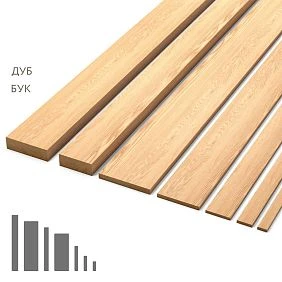
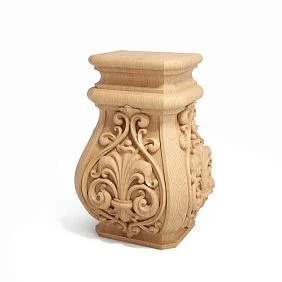
Pogonazh iz massivaOak, ash, birch, pine for slatted wall panels, baseboards, moldings, and cornices. St. Petersburg is historically a city of wooden interiors: parquet, wooden doors, wooden baseboards, and moldings in pre-revolutionary apartments. Slatted wall panels made from the same solid oak as the parquet and baseboards are an organic continuation of St. Petersburg tradition.
Slatted panels in different rooms of a St. Petersburg apartment
St. Petersburg apartments are special spaces. Let's examine the application of slatted wall panels by room, considering typical St. Petersburg specifics.
Living room: accent wall with or without TV
In St. Petersburg living rooms of historical buildings, there are high ceilings and long walls. An accent wall with slatted panels from floor to ceiling here works to its full potential.Slatted panels in the living room interior— a detailed guide to concepts for living rooms of different formats.
For historical St. Petersburg apartments — the 'neoclassical' concept: oak with 'walnut' or 'dark tobacco' tinting, profiled moldings around the perimeter of the slatted field, wainscoting at a height of 110–130 cm from the floor with a plaster molding at the border. This is an organic dialogue with the apartment's existing architecture.
For modern new-builds in St. Petersburg — Scandinavian minimalism with bleached oak or a monochrome concept with dark MDF.
Bedroom: natural silence and acoustic felt
slatted panels in the bedroom— an accent wall behind the bed headboard. In a St. Petersburg bedroom, slatted panels with an acoustic felt backing solve several tasks at once: natural aesthetics, sound absorption (especially relevant in buildings with thin inter-apartment walls), a feeling of a 'natural shelter' — something so lacking in dense urban development.
soft slat panelswith a soft backing — the optimal choice for a St. Petersburg bedroom: felt absorbs sound, slats create a natural aesthetic.
Parameters for the bedroom: slat 20–30 mm, gap 12–15 mm, vertical orientation, material — natural oak or ash in light tones. A light wooden wall behind the headboard in the gray St. Petersburg winter — like a 'charge' of natural warmth and coziness for the whole day.
Kitchen-living room: zoning in an open-plan layout
Modern St. Petersburg residential complexes (Primorsky, Moskovsky, Krasnoselsky districts) — open-plan layouts with combined kitchen-living rooms of 25–40 sq. m. HereSlatted panels in the kitchenand in the living area — a tool for visual zoning.
A slatted wall behind the sofa group 'separates' the relaxation area from the kitchen. For the area adjacent to the kitchen: slats with only a lacquer finish (resistant to moisture and grease). Natural oak color paired with neutral kitchen fronts — or a contrasting option: a dark slatted wall with a white kitchen.
Hallway: an encounter with natural material from the threshold
The hallway in a St. Petersburg apartment is the first thing a guest sees. And simultaneously — the room with the most aggressive microclimate: wet umbrellas and jackets, an open door in damp weather, heavy traffic. For the hallway — exclusively MDF with polyurethane lacquer or natural oak with a hard lacquer. No oil finish.
Wall finishing with slatted panelsIn the hallway — a slatted accent on one of the walls (opposite the entrance or behind the coat rack). A small fragment of a slatted surface in the hallway creates a strong first impression upon entry.
Ceiling: the fifth dimension of St. Petersburg interior
The high ceilings of St. Petersburg's historic apartments are not only an asset but also a challenge. At the wall level, such a room 'works,' but the ceiling often remains a neutral white 'sky' without character.Batten panels for ceilingsWith a ceiling of 3–3.5 m — an architectural technique that 'grounds' a too-high space, creating a sense of coziness without losing the 'breath' of the high ceiling.
Horizontal slats on the ceiling paired with vertical ones on an accent wall — a 'natural grotto' of wood. One of the most sophisticated and effective interior solutions, which achieves maximum impact in St. Petersburg's high-ceilinged spaces.
Slatted panels with lighting: special significance for St. Petersburg
In a city where the polar night is not a metaphor but a literal reality for several winter months, interior lighting takes on special significance.Slatted panels with lightingIn St. Petersburg apartments, this is not just a design technique; it's part of the 'light diet' for people living in conditions of chronic light deficiency.
An LED strip behind the slats with warm light at 2700K or extra-warm at 2200K creates a soft amber glow from the gaps. On a St. Petersburg December evening, when it's dark outside by 4 PM, a slatted wall glowing from within with warm, natural light literally 'warms up' the space. Not physically, but psychologically—no less important.
Technically: LED 2700K, density 60–120 diodes/meter, mandatory dimmer. Plus track spotlights on the slatted surface at a 30–45° angle—to 'reveal' the natural wood grain.
Track spotlights with warm light (2700K, CRI ≥ 90) angled towards the slatted surface—create shadows in the gaps, turning a flat surface into a three-dimensional relief. In the evening in a St. Petersburg apartment, a slatted wall under such lighting becomes 'alive': the play of light and shadow on amber oak—a natural theater right in the living room.
Parameters of slatted wall panels: a table for St. Petersburg conditions
St. Petersburg apartments are diverse. Slatted panel parameters are selected individually, but there is practical logic for different types of rooms.
| Room Type | Ceiling Height | Recommended slat width | Gap | Material | Finish |
|---|---|---|---|---|---|
| Historical living room | 3.0–3.5 m | 40–55 mm | 18–25 mm | Natural oak | Hard oil-wax or varnish |
| Stalin-era living room | 2.8–3.0 m | 35–45 mm | 16–20 mm | Oak or MDF | Varnish or matte enamel |
| New construction living room | 2.6–2.8 m | 30–40 mm | 14–18 mm | Oak or MDF | Varnish or oil-wax |
| Any bedroom | 2.6–3.0 m | 20–30 mm | 12–15 mm | Natural oak | Wax-oil |
| Hallway | Any | 30–40 mm | 14–18 mm | MDF or oak | Varnish only |
| Kitchen-living room | 2.6–2.8 m | 30–40 mm | 14–18 mm | MDF or veneer | Varnish only |
| Ceiling | 3.0+ m | 30–40 mm | 14–18 mm | Light MDF/oak | Varnish or oil-wax |
Slatted panels in St. Petersburg interior styles
St. Petersburg is a city with a distinct cultural identity. Interior styles in demand in St. Petersburg have their own specifics.
St. Petersburg classic: oak, moldings, symmetry
In apartments of the Central District, Petrograd Side, Vasilyevsky Island — demand for interiors that respect historical architecture. Slatted wall panels in wainscoting format (110–130 cm from the floor) made of natural oak with 'dark walnut' tint + profiledSolid wood molding at the border +solid wood cornice along the top edge — this is a dialogue with the historical context, not a contradiction to it.
Details that make a classic slatted wall 'St. Petersburg': symmetrical placement of the slatted field on the wall (equal fields on each side of the window opening), molding framing around the perimeter, 120–150 mm high baseboard, herringbone parquet at the base.
Scandinavian minimalism: ash and white
Scandinavian style is one of the most popular in modern St. Petersburg apartments of new construction. The logic is simple: St. Petersburg is a Scandinavian city in terms of climate and cultural ties. Bleached ash or oak on white walls, light floors, minimalist furniture — naturalness without ornament.
slatted wall panels for interior finishingIn Scandinavian style: slats 20–30 mm, gap 12 mm, white oak or ash, backing — white wall or light gray felt. Simplicity that works thanks to natural material and correct rhythm.
«Northern Art Deco»: dark tones and natural luxury
Petersburg eclecticism — a mix of historical architectural motifs with modern materials. Dark oak («dark walnut», «smoky») with golden details (brass furniture handles, brass lamps), dark wall tones. A slatted wall made of dark oak in such a concept is a natural «fur coat» for the room, creating a feeling of shelter and luxury simultaneously.
soft slat panelswith a dark felt backing in the «northern art deco» concept — one of the most exquisite solutions for a Petersburg living room or study.
Japandi in Petersburg style: silence and natural rhythm
Japanese-Scandinavian aesthetics (japandi) — meditative emptiness, natural materials, absence of ornament. Relevant for Petersburgers seeking «silence» as a counterbalance to city noise. Dark ash «smoky» with anthracite felt backing, low furniture without legs, absence of decor. A slatted wall in the japandi concept is not a «decoration», but a natural texture that allows the eye to rest.
Slatted facade panels for Petersburg buildings
Petersburg is a city with developed suburban construction (Kurortny District, Vsevolozhsk, Gatchina) and active commercial construction.Slatted Façade Panelsfor exterior application in Petersburg conditions — a separate topic.
The Petersburg climate for facade materials is one of the most challenging in the country: high humidity, sea winds, frequent transitions through zero in the off-season (from +2 to −3 at night — freeze-thaw cycles). For exterior application — only special species and coatings: thermally treated wood (thermowood), larch, WPC with protective coatings. Standard oak with ordinary varnish — not intended for facade application in the Petersburg climate.
For interior use in commercial venues in St. Petersburg (restaurants, cafes, hotels, offices) — slatted panels made of natural wood at full strength: natural aesthetics as part of the establishment's brand image.
Modular slatted panel for St. Petersburg projects
Non-standard dimensions of St. Petersburg historical apartments (complex layouts, slanted ceilings, niches, arches) sometimes make installation of individual slats labor-intensive.slatted modular wall panel— a ready-made panel with fixed slats and a specified gap — installs faster and easier on standard flat walls.
For new buildings with flat walls and right angles — modular panels are ideal: identical standard panels, uniform rhythm, quick installation. For historical apartments with 'wandering' walls and non-standard angles — individual slats with battens offer more flexibility.
Installation of slatted wall panels in St. Petersburg: specifics of the humid climate
installation of slatted panelsin St. Petersburg conditions has several important features compared to the dry Moscow climate.
Acclimatization — longer. Standard recommendation — 48–72 hours. In St. Petersburg conditions with high humidity — 72 hours minimum, preferably 96 hours. Especially critical during the transitional seasons (October-November, March-April), when the difference between outdoor and indoor humidity is at its maximum.
Expansion gaps. When installing vertical slats made of natural wood in a St. Petersburg apartment — a compensation gap between the end of the slat and the floor/ceiling surface: 2–3 mm. Covered by baseboard and cornice. Without a gap during seasonal wood expansion — slats can deform the baseboard or cornice.
Moisture protection when installing on external walls. In St. Petersburg homes, external walls often have condensation from the street side. Before installing slatted panels on an external wall — vapor barrier or vapor retarder is mandatory. Without it, moisture from the wall will penetrate into the wooden slats.
Choosing adhesive. Solvent-free construction adhesive, frost-resistant (if installation is carried out at temperatures below +10°C — St. Petersburg autumn often 'gifts' such conditions even in heated apartments at the beginning of the heating season).
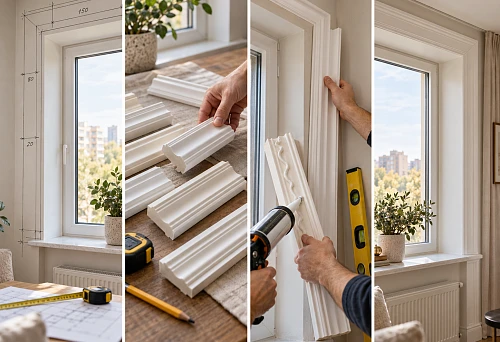
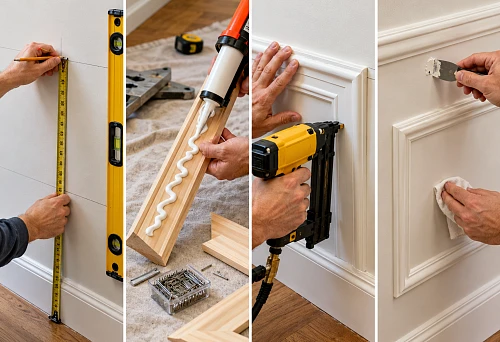
FullStep-by-step guide for DIY installation of slatted panels— with a detailed description of each stage.
How to install slatted panels in St. Petersburg apartments: three methods
How to install slatted panels— depends on the wall type and task. In St. Petersburg apartments, three types of walls are found: brick (historical buildings), reinforced concrete (Soviet and modern housing stock), aerated concrete (part of new constructions).
Adhesive method
For even concrete walls of new constructions (tolerance 3 mm/2 m). Solvent-free construction adhesive. Slats are fixed with adhesive, held with painter's tape for 24 hours until polymerization. Fast, clean, no battens required.
For St. Petersburg conditions: adhesive must be frost-resistant (working temperature from +5°C). Brick and plastered walls of historical buildings before adhesive installation — must be primed.
Method with battens
For uneven walls (historical apartments, brick houses). Wooden battens 40×20 mm, leveled with a laser level. Battens compensate for wall unevenness, create a technical gap behind the slats (for wiring, sound insulation). Slats are attached to battens with finishing nails or clips.
In brick walls of St. Petersburg houses — fasten battens with 6×60 mm anchor bolts every 400–500 mm.
Combined method
Battens for leveling + adhesive for attaching slats to battens. For very uneven walls in old buildings — battens level the surface, adhesive provides secure fastening without visible nails.
Installation of batten panelsOn aerated concrete walls — only special fasteners for porous substrates: aerated concrete anchors (chemical anchors or special plastic anchors with an increased expansion area).
Decorative slat panels for commercial properties in St. Petersburg
St. Petersburg is an actively developing market for food service and retail. Restaurants, cafes, coffee shops, showrooms, boutiques — everywhere there is a demand for natural, authentic aesthetics that cannot be created with synthetic materials.
decorative slatted wall panelsIn commercial properties in St. Petersburg — slats made of natural oak or dark-toned ash + LED backlighting behind the slats + professional track lighting. Such an interior creates an atmosphere that literally 'holds' guests — a person feels comfortable in a natural environment and wants to stay longer.
For restaurants and cafes: slats with a lacquered finish (resistance to moisture, kitchen vapors), dark tones (anthracite, dark walnut, dark green), LED behind the slats with a dimmer to create an evening atmosphere.
For showrooms and offices: lighter tones, acoustic backing behind the slats (noise reduction in high-traffic areas).
Calculating the quantity of slat wall panels for St. Petersburg apartments
Non-standard dimensions of St. Petersburg premises require precise calculation. A typical example — an accent wall in the living room of a St. Petersburg 'Stalin-era' apartment:
Parameters: wall 5.2 m × 3.0 m, batten 40 mm, gap 18 mm, no openings.
Batten spacing (batten + gap): 40 + 18 = 58 mm.
Number of battens: 5200 / 58 = ~90 battens.
Length of each batten: 3.0 m.
Linear meters: 90 × 3.0 = 270 lin. m.
12% reserve: 270 × 1.12 = ~302 lin. m.
For a non-standard height of 3.0 m: battens of standard length 3.0 m are installed without joints. Ideal for high St. Petersburg ceilings.
For ceilings 3.3–3.5 m: battens need to be joined or custom length ordered. A batten joint with proper staggering (offsetting joints of adjacent battens by 600–800 mm) is unnoticeable.
Accessories for wall batten panels: what's needed for a St. Petersburg interior
A professional batten interior is a system, not just battens. Accessories are purchased simultaneously with the battens.
Baseboard.solid wood baseboardto match the slats. For St. Petersburg's high-ceilinged rooms: skirting board height 100–150 mm — proportional to ceiling height. Profiled skirting for classical concepts, straight — for contemporary.
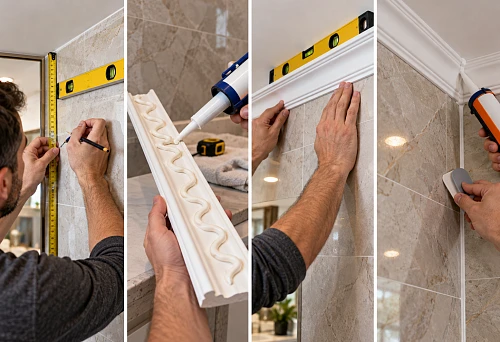
Cornice.a polyurethane cornicealong the top edge of the slatted field with a groove for LED strip. For St. Petersburg historical apartments — profiled polyurethane cornice, imitating stucco — a harmonious dialogue with the original architecture.
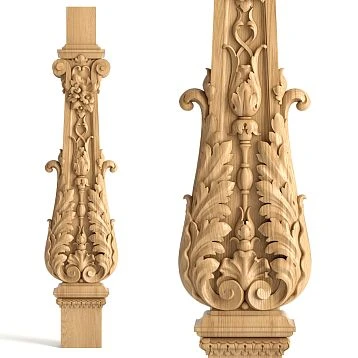
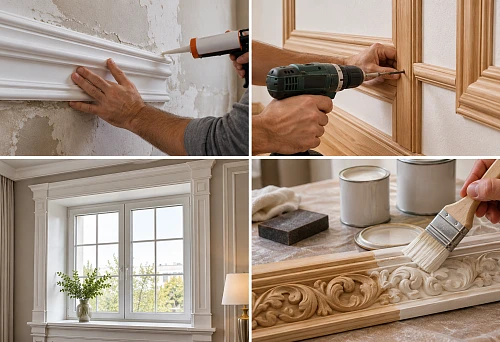
Molding.Solid wood moldingsalong the side edges and for wainscoting. In the St. Petersburg classical concept, moldings are a mandatory element.
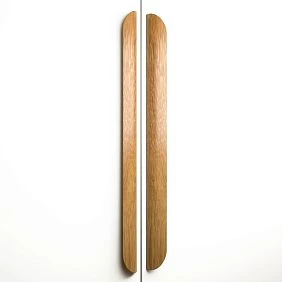
Furniture handles.Wooden furniture handles made of solid woodfor built-in furniture to match the slatted panels — a unified natural system from walls to furniture.
Frequently Asked Questions about Slatted Wall Panels in St. Petersburg
Can slatted panels be installed in winter in St. Petersburg apartments?
Yes, provided conditions are met: room temperature not below +15°C, working heating, humidity 40–60%. Installation in an unheated room in winter or at humidity above 70% is not permitted. With St. Petersburg winter humidity (high) — increase acclimatization to 96 hours.
How to care for slatted panels in St. Petersburg humidity conditions?
Slats with varnish coating: wipe with a damp microfiber cloth, neutral cleaning agent without abrasives. Slats with oil coating: the same + renewal with maintenance oil every 1–2 years (St. Petersburg humidity slightly accelerates oil 'leaching'). Do not use a steam cleaner — high-temperature steam softens both varnish and oil.
Are wooden slat panels suitable for St. Petersburg apartments with 'fluctuating' humidity?
When coated with hard oil-wax or polyurethane varnish — yes. Seasonal wood movement (expansion at high humidity, shrinkage at low) is a natural process. With proper expansion gaps and correct coating — visually unnoticeable. If you wish to completely eliminate this factor — MDF or veneered MDF.
MDF Plank Panelsor natural oak — what to choose for a St. Petersburg apartment?
For a living room with climate control — natural oak: maximum aesthetics. For an entryway, kitchen area, rooms without air conditioning — lacquered MDF: stability in humidity conditions. For a bedroom — natural oak with hard oil-wax.
Is a lathing needed when installing slat panels in historic St. Petersburg houses?
In most cases — yes. Walls of pre-revolutionary houses (brick with plaster) often have significant unevenness (5–15 mm over 2 m). For a level slat field — lathing is mandatory: it compensates for unevenness and creates a single plane for mounting the slats.
slatted panels in the bedroom— is additional vapor barrier needed on an external wall?
If the accent wall behind the bed headboard is not an external wall of the building, vapor barrier is not needed. If it is an external wall — a layer of vapor barrier material between the load-bearing wall and the lathing is recommended. Especially important in old St. Petersburg housing stock buildings with insufficient external wall insulation.
Conclusion
Slatted wall panels in St. Petersburg are not a metropolitan trend transplanted to the northern city, but an organic and long-overdue solution for spaces that are in acute need of natural warmth and architectural expressiveness. St. Petersburg's high ceilings, nine months of gray skies per year, and historic architecture that demands respectful dialogue—all of this creates a demand for a material with a natural character and long-term value. Natural wood meets this demand more precisely than any other finishing material.
slatted wall panels for interior finishingliving room, bedroom, entryway, and kitchen — considering St. Petersburg's climatic conditions, with the correct choice of coating and material, with professional installation — serve for decades, becoming more beautiful with each year.
Solid wood moldingoak and ash,Slatted panels with lightingfor St. Petersburg's dark evenings, moldings, baseboards, cornices, and furniture handles to complete the natural interior — the full range is available in the STAVROS company catalog.
STAVROS is a manufacturer of slat systems and solid wood molding products. Full-cycle production, professional consultation on material selection and parameters, taking into account the climatic conditions of a specific room. Delivery to St. Petersburg and the Leningrad region. Because the St. Petersburg interior deserves real wood — not imitation, not a surrogate, but a natural material that lives and breathes along with your home.