Article Contents:
- The corridor as a design challenge: why it's so difficult here
- Three main challenges of corridor space
- Why slatted panels: the mechanics of advantages
- Impact protection: slats as a buffer
- Moisture resistance with the right material choice
- Spatial optics: vertical lines work
- Materials for slatted panels in the corridor: strict selection
- Moisture-resistant MDF: the optimal choice for most
- Wood array: authenticity with conditions
- Thermowood: when humidity is at its maximum
- What is not suitable for the hallway
- Parameters of slatted panels for the hallway: numbers that work
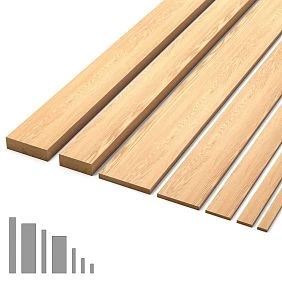
- Slat Width
- Gap between slats
- Direction of slats
- Structure height
- Color and tone of slatted panels in the hallway: working with light
- Light tones: expand and illuminate
- Dark tones: boldness and character
- Wood: always warmth
- Two tones: slats + load-bearing base
- Stylistic concepts of slatted panels in the hallway
- Scandinavian Purity
- Modern classicism
- Loft-style entrance hall
- Japandi: Eastern serenity at the entrance
- Eco-style: Nature at the entrance
- Slatted panels in hallways of different apartment types: specific solutions
- Hallway in a Khrushchyovka (4–5 m², ceiling 2.5–2.6 m)
- Hallway in a panel house (6–8 m², ceiling 2.7 m)
- Hallway in a Stalin-era building (8–12 m², ceiling 3.0–3.2 m)
- Hallway in a business-class new building (10–15 m², ceiling 2.8–3.0 m)
- Hallway in a country house
- Installation of slatted panels in the corridor: specifics of narrow space
- Preparation stage
- Working in narrow space
- Installation of slatted panels around door openings
- How to mount slatted panels in a corridor with damp walls
- Integration of functional elements into a corridor slatted wall
- Built-in coat rack
- Mirror in slatted frame
- Lighting: three integration methods
- Hidden hooks and shelves
- Slatted panel in the corridor and adjacent rooms: unity of space
- Care for Slatted Panels in the Corridor: Practice
- Prices for Slatted Panels in the Corridor: Project Budgeting
- FAQ: Most Common Questions About Slatted Panels in the Corridor
- About the Company STAVROS
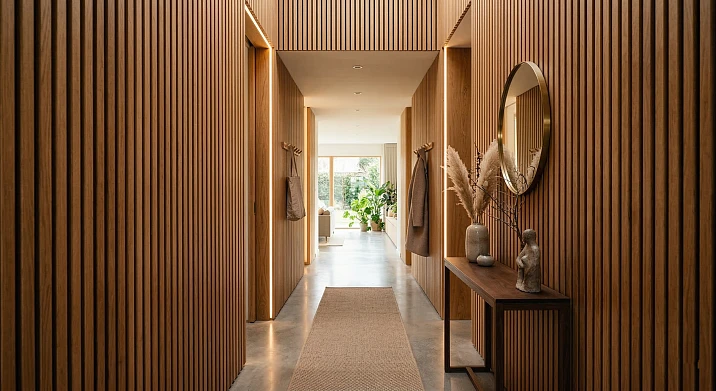
The corridor is the most underrated room in the house. Its area is small, traffic is high, lighting is often poor, and the issue of finishing is postponed until last. Meanwhile, it is the corridor that creates that very first impression—of the house, of the owner's taste, of whether to expect something interesting from this space further on.
Slatted panels in the corridor are a design solution that works on several fronts simultaneously: visually expands the cramped space, protects walls from mechanical damage, creates architectural character where there was previously just a painted surface. And all this—without major renovation, without moving walls, and without an astronomical budget.
This article is for those who want to truly understand the topic. Not to get general advice like 'install slats—it will look nice,' but to understand: which material will withstand corridor loads, which parameters work in a narrow space, how to install correctly, and whySlatted wall panelsin the hallway—is not a trend, but an engineering-based solution.
The Corridor as a Design Task: Why It's So Difficult Here
Before discussing slatted panels in the corridor, it's worth honestly outlining what a designer or owner is dealing with when taking on this object. The corridor is not a room. It has fundamentally different conditions of existence.




Three Main Challenges of Corridor Space
Challenge one: mechanical load. Nowhere in the apartment do walls receive as many random impacts as in the hallway. Coats with buttons, bags, umbrellas, children's backpacks, furniture corners during a move. A regular painted wall in the hallway by its third year looks like a battlefield: scratches, scuffs, dark streaks at shoulder height. No paint solves this—it simply gets repainted every few years.
Challenge two: humidity. Wet outerwear, damp umbrellas and shoes—all of this raises the humidity in the entryway to levels noticeably exceeding those in the living room or bedroom. During the off-season, humidity in the entryway can reach 70–80%, posing requirements for the finishing material that not every one can withstand.
Challenge three: narrowness and lack of natural light. Most urban hallways are 3–8 m² without a window. Artificial lighting from above or the side, tight 90–120 cm widths, a feeling of confinement. The design task: not to decorate, but to open up. To make it so a person does not feel the pressure of the space.
All three challenges are solved systematically by slatted panels in the hallway—and this is not an advertising claim, but the result of understanding the physics of the material and the optics of space.
Our factory also produces:


Why slatted panels specifically: the mechanics of advantages
Get Consultation
Impact protection: the slat as a buffer
slatted panels for wallsMade from MDF with a density of 780–820 kg/m³ or from solid hardwood—this is a physical barrier between the aggressive hallway environment and the surface of the load-bearing wall. The slats take the impact upon themselves. If one slat is damaged—it is replaced, without requiring reworking of the entire structure. This is a fundamental difference from paint: damage the paint in one spot—you have to repaint the entire wall (otherwise the patch spot will be visible).
Moisture resistance with the correct material choice
Moisture-resistant MDF of class MR (green cut on the end) with a two-component polyurethane coating—this is a material for which hallway humidity is not a problem, provided one condition is met: a ventilation gap behind the structure and properly treated ends at the floor.
Optics of space: vertical lines work
Vertical slats in a narrow hallway aren't just beautiful. It's an optical technique that changes the perception of space. The eye moves along the vertical lines upward—the ceiling appears higher. The rhythm of narrow verticals 'stretches' the volume, eliminating the feeling of being boxed in.
Add to this the play of shadows: each slat casts a shadow into the gap—the surface gains depth under any lighting. With a side spotlight, the slatted hallway wall literally comes to life: shadows become deeper, the rhythm—more expressive. This is impossible to reproduce with flat paint or wallpaper.
Materials for hallway slatted panels: strict selection
The hallway is a stress test for any material. Here, you cannot afford to compromise on quality. Let's analyze each option honestly.
Moisture-resistant MDF: the optimal choice for most
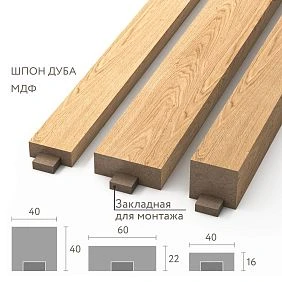
slatted MDF panelMoisture-resistant class MR—the most common and functionally justified choice for a hallway. What's important when choosing:
-
Density of at least 780 kg/m³ (optimum for a hallway is 800–820 kg/m³)
-
Class MR—water absorption no more than 10–12% under 24-hour exposure
-
Coating: two-component polyurethane varnish or acrylic matte enamel. A matte finish hides fingerprints and minor scratches—a critically important property for a hallway
-
Slat thickness: 14–16 mm minimum. Thinner slats may produce a characteristic sound upon lateral impact
MDF Slatted Wall Panelwith the correct finish in the hallway will last 15–20 years without losing its appearance under normal use.
Solid wood: authenticity with conditions
Wooden slat panelsin the hallway is the choice for projects where the naturalness of the material and durability with the right to restoration are important. Hardwoods — oak, ash — with a UV-lacquer or hard wax oil finish withstand hallway loads with dignity.
Limitation: wood in the hallway requires stricter adherence to installation technology — acclimatization for 5–7 days, expansion gaps, antiseptic-treated battens, sealing of ends. Without this, even expensive solid oak in the hallway will begin to deform.
Oak Slat Panelin the hallway is a warm amber or nut-brown space that makes a strong first impression on guests. The advantage of solid wood over MDF: scratches are restored by sanding and re-oiling, not by replacing the panel.
Thermowood: when humidity is at its maximum
For hallways in country houses with unstable heating, for entrances and vestibules with extreme humidity fluctuations — thermally treated wood. Water absorption is 2–5 times lower than that of ordinary solid wood. Geometric stability is the highest among all wood materials. Dark, rich tone without additional staining.
What is not suitable for the hallway
Ordinary (non-moisture resistant) MDF — swells at the ends during seasonal humidification. PVC battens — a soft material that scratches instantly upon contact with keys, buttons, and bag corners. Thin MDF (8–10 mm) without a load-bearing base — 'drums' under lateral impacts and deflects under point loads.
Parameters of batten panels for the hallway: numbers that work
A corridor is a space where the parameters of the slat construction influence the perception of the room's dimensions. Therefore, the choice of slat width, gap, and direction should be approached consciously.
Slat width
| Width | Effect | Recommendation for a corridor |
|---|---|---|
| 20–40 mm | Frequent rhythm, 'active' dynamic texture | For wide corridors (1.5 m+) |
| 40–60 mm | Universal rhythm, balance between detail and form | Optimal for most corridors |
| 60–100 mm | Large scale, monumentality | For high ceilings and wide halls |
For a standard urban corridor 90–120 cm wide with a ceiling height of 2.7–3.0 m, a 40–55 mm slat creates the most harmonious rhythm.
Gap between slats
The gap is not just a space. It is the visible depth of the construction, creating volume. In a corridor:
-
Gap 10–14 mm — compact, cozy rhythm, the load-bearing base reads as a background
-
Gap 14–20 mm — expressive balance, optimal for most solutions
-
Gap 20–30 mm — airy, graphic construction; in a narrow corridor it can create a sense of through space
Key principle: the tone of the load-bearing base, visible in the gap, works as a background for the slats. A black base with light slats creates maximum contrast and depth. A base matching the tone of the slats is a soft, monolithic solution.
Slat Direction
Vertical — a classic for corridors. Raises the ceiling, elongates the space. The gaze is directed upward along the verticals — the feeling of height at an actual 2.7 m becomes an effect of 3+ m.
Horizontal — for wide and long corridor-galleries. Expands the space horizontally, creates a sense of length. In narrow corridors — use with caution: horizontal slats can enhance the feeling of tightness.
Diagonal — for unconventional, bold projects. Dynamics and movement. In a corridor, it works only with a confident designer's hand — an incorrectly chosen angle creates chaos.
Structure height
Three schemes for a corridor:
Full height (from floor to ceiling): maximum architectural statement. Full-height slats in a corridor transform it from a 'passageway' into an architectural event. Works with ceilings from 2.7 m.
Panel scheme (1.0–1.4 m from the floor): a practical solution — slatted panel at the height of intensive mechanical contact, above — plaster or paint. Delineation with horizontal molding. More budget-friendly while preserving the visual effect.
Accent zone (0.5–0.8 m from the floor or 'apron'): slatted insert in the lower part of the wall — a non-standard, memorable solution. Suitable for hallways with shoe cabinets and coat racks, where the lower part of the wall is most vulnerable.
Color and tone of slatted panels in the hallway: working with light
A hallway without a window is a room that lives exclusively in artificial light. And this defines everything.
Light tones: expand and brighten
Light slats — white, cream, light gray, whitewashed ash — reflect artificial light, making the space visually larger and brighter. For hallways up to 5 m² — the only choice for those who want to maximize the openness of the space.
white slatted wall panelMDF for painting — an ideal solution for obtaining an exact white or cream tone according to RAL. Painting with matte acrylic paint in 2 coats gives a surface that does not glare and visually 'dissolves' the walls.
Dark tones: boldness and character
Anthracite, dark brown, graphite, dark green — in a hallway with good spot lighting, dark slats create a stunning play of shadows. Each light point emphasizes the relief, making the dark slatted wall lively and deep.
Condition: spotlights with good CRI (not lower than 80, optimum 90+) at a distance of 50–70 cm from the slatted surface. With poor lighting, dark slats in a narrow hallway are a gloomy solution.
Wood: always warmth
The natural tone of wood—oak, ash, alder—with an oil finish in the hallway creates what is so often lacking in transitional spaces: a sense of warmth. A person entering the house from outside instinctively reaches for the warm tone of wood. This is not sentimentality—it's the neuropsychology of material perception.
Two tones: slats + load-bearing base
decorative slatted wall panelswith a contrasting load-bearing base is a design technique that creates depth. White slats on a black base: the gap reads as a dark shadow—an effect of maximum depth. Gray slats on a white base: a delicate halftone contrast.
Stylistic concepts of slatted panels in the hallway
Scandinavian purity
White or light gray MDF slats with matte enamel. Slats 40–50 mm, gap 12–15 mm, vertical orientation, full height. Light oak parquet or light gray stone-look tile. No excessive decor. Stainless steel or white wood coat rack. Spot lighting 2700–3000 K.
In such a concept,Slatted panels in interior designof the hallway is not an accent, but part of a unified, restrained canvas. Minimalism in which every detail speaks precisely.
Modern classic
Slats with a chamfer made of MDF in matte enamel NCS 2005-Y20R (warm white) or RAL 9001 (cream). Horizontal molding fromsolid wood trimdivides the wall into two zones: slatted panel up to 1.3 m, above—solid-color paint. Floor skirting board from the same solid wood. Brass accessories: coat hooks, cabinet handles.
This style is the most universal and most suitable for hallways in Stalin-era apartments and pre-revolutionary buildings.
Loft Entrance Hall
Dark MDF slats — anthracite RAL 7016 or black RAL 9005 — on a dark base. Metal tubes as a coat rack. Open shelves made of aged wood. Concrete or terrazzo floor. Spotlights with warm light.
A loft corridor is a bold solution that requires consistency. Styles cannot be mixed here: every element must speak the same language. Slatted panels in a loft-style corridor are the foundation upon which everything else is built.
Japandi: Eastern Silence at the Entrance
Wide slats 70–90 mm made of thermowood or oak with a gray-brown tint. Narrow gap of 10–12 mm. Matte base in a dark tone. Floor — dark matte tiles. Minimal furniture: only what is necessary. Floor lamp or wall light with warm light and a fabric shade.
Japandi in the corridor is the philosophy of 'nothing extra.' Slatted wall panels here are not decoration, but the essence. A surface that speaks through its silence.
Eco-Style: Nature at the Entrance
Natural oak or ash with clear oil. Live plants (succulents on a shelf). Woven rattan baskets. Jute rug. Wooden coat rack. The wood surface is unpolished, with a live texture of the grain.
In the eco-concept, Wooden slat panels in the corridor is the first contact with natural material upon entering the home. They set the theme for the entire interior.
Slatted panels in corridors of different apartment types: specific solutions
Corridor in a Khrushchyovka (4–5 m², ceiling 2.5–2.6 m)
The task here is singular — space. There is none, and an illusion needs to be created.
Solution: white vertical slats 35–45 mm made of moisture-resistant MDF with matte white enamel. A 10–12 mm gap on a black supporting base — creates maximum depth with a white slat. Full height from floor to ceiling. No horizontal molding — a continuous vertical line raises the ceiling.
Lighting: recessed LED strip 2700 K behind the slats near the floor — a strip of warm light from below 'detaches' the structure from the floor, visually lifting it.
Corridor in a panel building (6–8 m², ceiling 2.7 m)
More space — more possibilities. Here, you can afford an accent solution.
Solution:Wall finishing with slatted panelsOn one long wall — full height, slats 50–60 mm made of oak veneer with matte oil. The opposite wall — solid paint matching the wood tone. Built-in wardrobe — with slatted fronts in the same system. Unity of material on the wall and on the furniture — a sign of professional design thinking.
Corridor in a Stalin-era building (8–12 m², ceiling 3.0–3.2 m)
A Stalin-era building is a gift to a designer. High ceilings, thick walls, wide corridor. Here, slatted panels reveal their full potential.
Solution: oak or ash, slats 60–80 mm, total height 3.0–3.2 m — monumental verticals. Dark green or graphite enamel tone. Brass details: hooks overlay on the coat rack, mirror rim. Floor skirting board made ofsolid wood trimheight 100–120 mm. MDF cornice with a classic profile at the top.
In a Stalinist corridor, slatted panels are a dialogue with the building's history. An architectural response to the monumentality of the space.
Corridor in a new business-class building (10–15 m², ceiling 2.8–3.0 m)
A blank slate. Free layout. A space where you can create anything.
Solution:slatted modular wall panel— maximum precision of factory assembly, quick installation, perfect gap geometry. Tone: dark walnut or thermowood. Slats 60 mm, gap 16 mm, vertical direction. Load-bearing base — charcoal black. Integrated wardrobe with slatted fronts. LED lighting behind the lower part of the structure.
Corridor in a country house
In a country house, the corridor is a 'lock' between the street and the house. Dirty shoes, wet jackets, construction dust during the work season. The material must be durable.
Thermowood from birch or ash is the ideal option. Water absorption is 3–4 times lower than ordinary wood, biostability is maximum.Slatted Façade Panelsmade of thermowood, which are used outdoors, in a country house vestibule-corridor — are absolutely appropriate: they withstand external conditions, and inside the vestibule — this is more than sufficient strength.
Installation of slatted panels in a corridor: specifics of narrow space
Installation in a corridor has its own specifics. Tight space, limited access with tools, the need to work around doorways, coat racks, cabinets.
Preparation Stage
First — completely clear the corridor. Remove all coat racks, hooks, mirrors. Remove built-in furniture if possible. Only empty space allows for checking geometry and working without restrictions.
Second — check the walls for mold and damp spots. A corridor with mold in the corners — first eliminate the source of moisture (check waterproofing, ventilation), then treat with antiseptic, prime, and only then install the slatted structure. Installing slats over a moldy wall — temporarily covering up the problem, not solving it.
Working in narrow space
In a corridor 90–110 cm wide, the standard 2 m straightedge for checking levelness doesn't fit — use a 1.5 m straightedge or a stretched horizontal cord. A laser level is mandatory: in a narrow space, any misalignment of the battens is multiplied along the entire wall length.
Installing slats in a corridor is recommended to start from the far wall (opposite the entrance door) — this is the point visible when opening the door. The most careful work should be done here: the first impression is formed precisely from this wall.
installation of slatted panelsaround doorways
Doorways in a corridor are an inevitable obstacle. Slats are cut precisely along the perimeter of the opening, ends are covered with a trim strip from the same material. If there are architraves: architraves are removed, slats are installed flush with the door frame, architraves are returned — and cover the joint. If architraves are planned to be replaced: slats are installed to the frame, new architraves are installed on top fromsolid wood trimmatching the slats.
How to install slatted panelsin a corridor with damp walls
For corridors in apartments with external walls (building ends): mandatory ventilation gap behind the battens — minimum 20 mm. Load-bearing base — moisture-resistant MR MDF or moisture-resistant plywood. Battens — only antiseptic-treated timber or metal profile. All plank ends at the floor — silicone-based sealant.
This is not overcaution. This is the technology that ensures 15–20 years of service life for the structure without degradation.
Integration of functional elements into the corridor slatted wall
A slatted wall in the corridor is not just decoration. It is a structure into which functional elements can be built.
Built-in coat rack
Hooks and hanging rails are mounted directly into the load-bearing base before installing the slats — through technological holes in the MDF base. Or: hooks are attached between the slats into a special groove of the load-bearing base. Result: the coat rack seems to 'grow' out of the slatted wall — unity of form and function.
Mirror in a slatted frame
Mirror in a frame made of slats — in the same tone and same width as the panel slats. The mirror is mounted flush with the load-bearing base or slightly protrudes — the slats frame its perimeter. This solution visually 'stitches' the mirror into the slatted wall, creating architectural integrity.
Lighting: three integration methods
LED strip behind the slats: a 2700 K strip is mounted on the load-bearing base in horizontal bands — light seeps through the gaps, creating horizontal bands of warm color on the floor. In the evening — a cinematic effect.
Recessed spotlights in the load-bearing base: LED spots with a diameter of 50–60 mm are mounted into the load-bearing base between the slats — directional light emphasizes the relief of the slatted surface. Requires planning before installation.
Wall sconce 'cutting through' the slatted wall: a sconce with a flat base is mounted through an opening in the load-bearing base. The wire is concealed behind the structure. The fixture appears 'built-in' to the wall.
Concealed hooks and shelves
Behind the load-bearing base — a space of 15–20 mm. With proper planning, you can hide charger cables there, bring out charging sockets between the slats, conceal the cable from a doorbell sensor. The hallway is a place where concealed utilities behind the slatted panel free you from wires that usually spoil any renovation.
Slatted panel in the hallway and adjacent rooms: spatial unity
One of the most powerful design techniques is extending the slatted panel from the hallway into adjacent rooms. This creates a sense of spatial unity and architectural continuity.
Hallway — entryway — living room: slats of the same material, same tone, same width. The transition between rooms is seamless, only the volume of space changes. No wall 'ends' — they flow into one another.
Slatted panels in the kitchenIn the dining area — an extension of the same system from the hallway. A unified material stitches different rooms into a single architectural statement.
Batten panels for ceilingsIn the hallway — the transition of the slatted system from the vertical plane of the walls to the horizontal plane of the ceiling. A hallway with slatted walls and a slatted ceiling is an architectural volume, not just a 'passageway'.
Maintenance of slatted panels in the hallway: practice
Proper care for slatted panels in the hallway is simple but requires regularity.
Daily maintenance: use a dry or slightly damp microfiber cloth on the surface of the slats. Important: for wet cleaning — wring the cloth until it is barely damp, not wet. MDF slats do not like prolonged contact with water on the front surface, even with a quality coating.
Removing local stains: use a neutral detergent with pH 6–8 for most stains. No aggressive alkalis, chlorine, or acetone. Minor scratches on matte enamel: use a wax pencil matching the coating color.
Annual maintenance for wooden slats: apply a thin layer of renewing oil to solid wood surfaces. 15–20 minutes of work — and the wood looks like new again.
Points of maximum wear in the hallway: shoulder height (80–120 cm from the floor) — the area in contact with bags and clothing. The edges of the mirror. The area near coat hooks. These spots should be inspected twice a year and treated if necessary.
Prices for slatted panels in the hallway: project budgeting
| Type of solution | Hallway area | Material (RUB) | Installation (rub.) | Total (rub.) |
|---|---|---|---|---|
| Budget (MDF, economy) | 5 m² | 10 000–18 000 | 8 000–12 000 | 18 000–30 000 |
| Medium (MDF MR, matte enamel) | 5 m² | 20 000–40 000 | 12 000–20 000 | 32 000–60 000 |
| Business (oak veneer on MDF) | 5 m² | 35 000–65 000 | 15 000–25 000 | 50 000–90 000 |
| Premium (solid oak) | 5 m² | 50 000–100 000 | 20 000–35 000 | 70 000–135 000 |
Corridor area of 5–6 m² — medium budget for a decent result: 35,000–60,000 rubles turnkey, including material, battens, skirting board, and installation.
DIY installation with basic skills and tools reduces costs by 30–40%.DIY slatted panelin the corridor — a realistic task for one weekend with an area up to 8–10 m².
FAQ: the most common questions about slatted panels in the corridor
Slatted panels in the corridor — is it too expensive for 'just a passageway'?
The corridor is the first thing everyone sees when entering your home. This room forms the first impression. Investing in the corridor is one of the most visually effective: small area, maximum perceived impact.
What material to choose for a corridor with constantly damp walls?
Must be moisture-resistant MDF of MR class or thermowood. Before installation — eliminate the cause of moisture (ventilation, waterproofing). Ventilation gap behind the structure — minimum 20 mm. Without this, no material will last long.
What is more important — vertical or horizontal battens in a narrow hallway?
For a hallway up to 120 cm wide — vertical ones definitely. They raise the ceiling and elongate the space. Horizontal battens in a narrow hallway enhance the feeling of confinement.
Can slatted panels be installed over existing tiles in a hallway?
Technically yes — if the tile is firmly attached, not peeling, and the surface is degreased. The lathing is fastened with dowels through the tile into the base. Minus: additional depth of the structure and risk of dowels loosening in the tile joints. More reliable — remove the tile.
How long will slatted panels last in a hallway?
Moisture-resistant MDF with polyurethane coating — 15–20 years with normal use. Solid oak with UV varnish — 25–40 years. Thermowood — 30+ years.
Are slatted panels in a hallway fire-safe?
MDF and wood are combustible materials (class G3–G4). If desired — treatment with a fire-retardant compound (flame retardant), reducing the class to G1–G2. For hallways in multi-apartment buildings on evacuation routes — clarify fire safety requirements.
How to combine slatted panels with tiles at the entrance?
The slatted panel starts where the tile zone ends (usually 50–80 cm from the door). A horizontal molding or metal profile creates a clear transition boundary. The tone of the slat echoes the tone of the tile (not matching, but complementing).
Can slatted panels be used in a hallway with a dark floor?
Yes. Dark floor + light slats is a classic contrast that works well in a narrow space. Dark floor + dark slats is a bold monochrome solution that requires bright artificial lighting.
Is approval required for installing slatted panels in a hallway?
Decorative wall finishing is not considered redevelopment and does not require approval. Exception: cultural heritage sites.
How to choose the width of slats for a small hallway?
For a hallway up to 5 m²: slat 35–50 mm, gap 10–14 mm. Wider slats in a small space create a scale imbalance — the wall appears 'heavy'.
About the company STAVROS
The hallway is a small space that requires big decisions. Making a mistake with the material here means redoing everything in just two or three years. That is why the choice of manufacturer is critical.
STAVROS is a Russian manufacturer of architectural wooden elements for interiors with its own full-cycle production. CNC processing, chamber drying, humidity control at shipment, factory-applied coatings. Each batch comes with technical documentation confirming material class, humidity, and emissions.
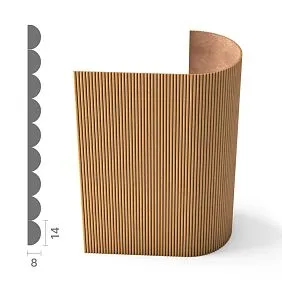
For your hallway in the STAVROS catalog:Slatted wall panelsmade from moisture-resistant MDF and solid oak;slatted MDF panelMR class with polyurethane coating;Wooden slat panelsmade from oak and ash with oil finish;slatted modular wall panelfor quick installation;soft slat panelsfor arches and niches;Pogonazh iz massiva— skirting boards, moldings, cornices for finishing framing;paintable slatted wall panelsfor individual color solutions.
STAVROS supplies materials with installation recommendations and professional consultation on parameter selection. A corridor made wisely welcomes guests in a way that makes them want to go further. STAVROS makes exactly such materials.