Article Contents:
- Why slatted panels with lighting look more expensive than a plain wall
- A smooth wall gives a flat perception
- Slats break up the light flow and create texture
- Light + shadow create a 'third dimension' without heavy finishing
- Which lighting scenarios work best
- LED strip behind the slats
- Hidden cornice from top to bottom
- Track or ceiling spotlights
- Bottom-up lighting
- When to combine two light sources
- Where do slatted panels with lighting look best
- TV Area
- Wall behind the sofa
- Headboard area in the bedroom
- Niche
- Entry Hall
- Hallway
- Office
- Furniture Fronts and Islands
- Which material to choose for lighting
- MDF — if precise color and calm monochrome are needed
- Oak — if a lively texture with side lighting is needed
- Beech — if a smooth natural pattern is needed
- Primed MDF — if a project for enamel and LED is needed
- How to choose the rhythm and depth of slats for lighting
- Frequent rhythm — for delicate chiaroscuro
- More active rhythm — for pronounced volume
- When soft light is better than contrast
- How not to overload a small wall
- When it's better to make a slatted 'island' rather than the entire wall
- Backlighting for the TV zone: how to create a background that doesn't compete with the screen
- Why a TV needs a rhythmic background
- Why slats enhance the screen rather than interfere
- Where it's better to hide LEDs
- When spots at a 30–45° angle are needed
- What color panel to choose for the TV zone
- Bedroom, niche, and hallway: where backlighting works softer
- In the bedroom — soft overhead lighting
- In the niche — local depth without overload
- In the hallway — the 'looks more expensive at first glance' effect
- In dark rooms — light panels + built-in LED
- What to choose from the STAVROS assortment
- PAN-003 — when you need expressive texture under directional lighting
- PAN-001 — when you need a more delicate rhythm
- PAN-002 and PAN-004 — if the panel will be painted to match the interior
- When to choose MDF and when solid wood
- Installation and lighting: what to plan in advance
- Where to plan power supply for LED
- What to consider when choosing profile and power supply
- Why a dimmer is almost mandatory
- When to paint the panel before installation, and when after
- How to avoid glare and 'dirty' shadows
- Mistakes when choosing slatted panels with lighting
- FAQ: Answers to Popular Questions
- Which slatted panels are suitable for LED lighting?
- What's better: light behind the slats or light from above?
- Are backlit panels suitable for TV zones?
- Which panels are best for painting with LED?
- Which light to choose: warm or neutral?
- Can expensive volume be created without complex framing?
- STAVROS: a manufacturer trusted by designers
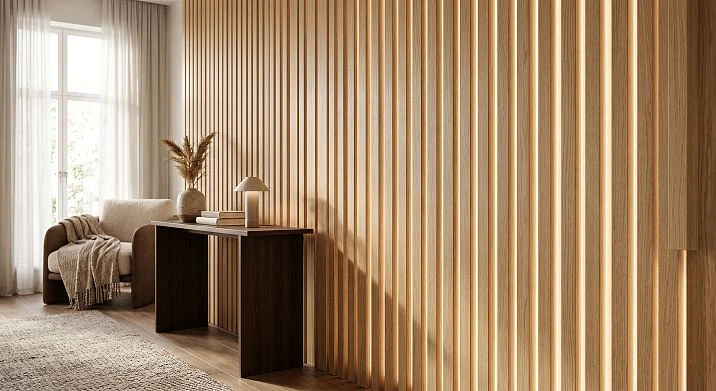
Expensive interiors are rarely created with money—they are created with an understanding of how light works. The right combination of slat rhythm, precise gaps, and directional light flow creates that effect of depth and volume that previously required heavy framing, plaster moldings, and complex milling. Today, all this is replaced by one smart solution—Slatted panels with lighting, which work through the play of light and shadow, turning an ordinary wall into a living architectural surface.
This logic is consistently revealed in the STAVROS catalog: the slatted surface breaks up the light flow, each batten is illuminated differently, the gaps recede into shadow—and the wall acquires that very 'third dimension' commonly referred to as an expensive interior. Among the models that are particularly convincingly revealed under directional light, stands outSlatted panel PAN-003, and MDF solutions for painting open up limitless possibilities for working with color and interior palettes.
Why slatted panels with backlighting look more expensive than an ordinary wall
This question seems trivial until you understand the physics of the process. Once you realize what exactly happens to light on a slatted surface, you stop looking for other explanations for the expensive effect.




A smooth wall gives a flat perception.
A smooth painted wall or wallpaper without a pronounced texture reflects light evenly across the entire plane. The eye has nothing to catch onto—the surface is read as a single two-dimensional field. Even the most expensive paint and perfectly applied putty do not add volume: they only make the plane smoother. As a result, the room is perceived as flattened, and an accent wall without relief simply becomes a color spot.
Our factory also produces:


Slats break up the light flow and create relief.
Vertical battens are a series of parallel protrusions, each of which intercepts light in its own way. The edge of the slat closer to the light source is brighter, the far edge is darkened, and the gap between the slats recedes into even deeper shadow. As a result, the same surface simultaneously contains several brightness levels: from a bleached peak to an almost black abyss. It is this range of visual brightness that creates the illusion of volume—the brain reads multiple levels of illumination as physical depth of the surface.
Get Consultation
Light + shadow give a 'third dimension' without heavy finishing.
Slatted wall panels with lighting do not require any box, niche, or multi-level ceiling. One source of directional light is enough—and the relief immediately 'turns on'. The entire decorative effect is built not on the mass of the structure, but on the contrast of light and shadow. The higher the contrast, the sharper the sense of volume. At the same time, the slats themselves are thin, light, and elegant: they add visual weight to the wall without adding physical weight to the structure. This is the main value of decorative slatted panels with lighting—expensive volume without complex engineering.
Which lighting scenarios work best?
Lighting a slatted wall is not just 'install an LED and you're done'. Each scenario provides a fundamentally different character of light, a different type of chiaroscuro, and a different mood. Making a mistake with the scenario means losing half the effect even with perfect panels.
LED strip behind the slats
The most common and yet one of the most spectacular ways to illuminatea slatted wall with lighting. The LED strip is mounted behind the substrate or in a groove between the slats and the wall: the light shines through the gaps between the battens, creating thin glowing strips. The slats themselves remain in shadow—and it is precisely this contrast between the glowing gap and the dark slat that creates an almost graphic, high-contrast effect. For residential interiors, it is better to use warm white light at 2700–3000 K: it softly highlights the texture of the wood and creates a cozy, enveloping atmosphere.
Hidden cornice from top to bottom
A light cornice is a hidden structure along the top edge of the slatted field, from which light is directed from top to bottom along the surface of the slats. This is precisely the scenario that creates sculptural, architectural chiaroscuro: each slat casts its own shadow downward, creating a wavy light pattern. Interestingly, a polyurethane light cornice can simultaneously serve as a decorative framing element for the slatted field—and contain a groove for an LED strip. Light directed from above is especially expressive onwall slatted panels in interior with a large batten spacing and deep gaps.
Track or ceiling spotlights
Track projectors and adjustable spotlights provide a directional beam of light at an angle to the plane of the slatted panel. This is the so-called dramatic scenario: an incidence angle of 30–45° from the vertical creates a maximally pronounced lateral chiaroscuro. Each slat turns into a small sculptural form with a brightly lit edge and a deep shadow behind it. This effect is described in the PAN-003 card as one of the key application scenarios—especially for the TV zone, where directional spotlights at a 30–45° angle enhance the architectural character of the accent wall.
Bottom-up lighting
Bottom lighting is counterintuitive but a very powerful scenario. An LED strip or built-in fixtures at the base of the slatted structure create an upward light flow that illuminates the slats from bottom to top, giving a sense of a 'floating' structure. This is especially convincing in a bedroom behind the headboard: light flowing from below the slats turns the wall into a semi-transparent light object, creating lightness and weightlessness. This scenario also works well for decorative panels with lighting in niches—there, the upward light literally 'lifts' the niche and increases its visual height.
When to combine two light sources
Professional interiors typically use not one, but two light sources for a slatted wall. The basic scenario: an LED strip behind the slats as the main lighting plus track spots as accent directional lighting. The strip provides uniform soft glow, the spots add sculptural shadow. The second working option: a hidden cornice from top to bottom plus bottom-up lighting—two opposing light flows create a volumetric effect where the slats literally 'hang' in space. The main condition for combining is that both sources must be controlled by separate dimmers, otherwise the balance will be lost.
Where slatted panels with lighting look best
TV area
The TV zone is undoubtedly the strongest application scenario for slatted panels with LED.Slatted panel for TV on the wallcreates a structured architectural background on which the screen no longer appears as a 'black hole'—it becomes part of a unified composition. The vertical rhythm of the slats organizes the wall, giving it scale and direction. LED lighting behind the slats works as a soft counterpoint to the screen's brightness—reduces eye strain when watching in the dark and makes the entire zone visually richer.
Wall behind the sofa
An accent wall of slats with LED behind the sofa in the living room solves a problem that is difficult to tackle with other means: it gives the zone weight and completeness without a heavy structure. The sofa zone immediately gains clear boundaries—the textured wall becomes the 'back' of the space, and the lighting adds depth. Especially expressive areslatted panels with LEDin combination with warm light—the wood 'lights up,' the texture becomes alive and tactile even on a visual level.
Headboard zone in the bedroom
A bedroom with slatted panels and backlit headboard is a classic of modern design that never goes out of style precisely because it works flawlessly. The slats visually lift the wall toward the ceiling, while the upward LED lighting from below creates a soft, floating glow that functions simultaneously as a night light, a decorative accent, and functional reading light. Important: a bedroom doesn't need contrasting, harsh chiaroscuro—it needs soft, diffused light, which a panel with a warm 2700K LED strip provides.
Niche
Slatted panels with lighting work especially convincingly in niches because a niche is already a volumetric form in itself. Adding a slatted texture to the back wall of the niche and upward lighting from below transforms it from a simple recess in the wall into an independent interior object. A niche with slats and LED reads as a thoughtful architectural detail, not a random construction element. Light-colored MDF panels for painting to match the entire wall work particularly well for niches—this makes the niche seem deeper and the light inside it softer.
Entryway
In the hallway, a slatted wall with lighting solves the task of creating a first impression. It is here that a guest forms an instant assessment of the interior—and a textured, illuminated wall immediately conveys 'luxury' without any additional effort.Decorative slatted wall panels for interiorIn the hallway, this is a functionally lightweight and installationally simple solution that changes the perception of the entire space. Vertical slats with top lighting work especially well: they visually stretch a low corridor upward and add a sense of height.
Corridor
The corridor is a space where it is traditionally difficult to create expressive design. Narrow proportions, lack of natural light, transit function—all of this hinders it. Slatted panels with LED change the situation radically: the rhythm of vertical battens in a narrow space creates an illusion of length and depth, while the lighting adds dynamism and compensates for the lack of windows. In dark corridors, light-colored MDF panels for white or cream enamel with built-in LED lighting are especially effective.
Office
In a study, a slatted wall with lighting performs a dual task: it creates a professional, representative background for video calls and negotiations, and also forms a work atmosphere conducive to concentration. Neutral or warm neutral light (3000–3500K) combined with panels made of oak or paintable MDF creates a calm, restrained-premium environment.Slatted panels with lighting for the studyare increasingly found in home offices precisely as a tool for forming the right work context.
Furniture fronts and islands
LED slat panels are not just for walls. Furniture fronts with slat texture and built-in lighting from below or behind the slats transform an ordinary cabinet or kitchen island into a designer object. The combination is especially expressive: an oak or MDF slatted front plus lighting under the lower edge of the island. The light emerges from under the furniture and reflects off the floor, creating a floating volume effect. For furniture applications, the flexible PAN-001 panel on a fabric base is convenient—it wraps around radius fronts without deformation.
Which material to choose for backlighting
Material selection is not just a matter of aesthetics. Different materials interact with light differently, and this directly affects the final visual effect.
MDF — if precise color and calm monochrome are needed
MDF with a density of 750–850 kg/m³ is the ideal base for painting. The homogeneous structure without knots or defects provides a perfectly smooth surface that can be painted any color—from matte white to deep anthracite. With side or top lighting, a painted MDF slat gives a uniform, clean chiaroscuro without the visual 'noise' of natural texture. This is especially valuable in minimalist interiors, where geometric purity of rhythm is more important than the liveliness of texture.MDF panels with backlighting— is a monochrome architecture of light, where form is more important than material.
Oak — if a lively texture is needed with side lighting
Solid oak with a density of 700–750 kg/m³ is a completely different story. Oak has a pronounced large-pored grain pattern that becomes even brighter and more vivid with side or directional lighting. Each oak slat is a unique object with its own pattern. When light falls at an angle, the wood fibers play with highlights, creating an organic, unique chiaroscuro.Oak slat panels with backlighting— is the choice for those who want to combine architectural precision and the natural aesthetics of living material.
Beech — if you need a smooth, natural grain pattern.
Beech with a density of 680–720 kg/m³ occupies an intermediate position between MDF and oak. Its structure is more uniform and finer than oak, the grain pattern is unobtrusive, and the surface when sanded gives an almost 'engineered' smoothness — with a natural character, but without intense visual noise. When backlit, beech produces a soft, even chiaroscuro without sharp contrasts. This is a material for restrained, aristocratic interiors — where subtlety is important, not expression.
Primed MDF — if you need a project for enamel and LED.
ModelsPAN-002andPAN-004— are primed MDF panels specially prepared for finishing painting with any enamels, varnishes, or interior paints. They are ideal for project applications when the panel color must exactly match a given interior palette — RAL, NCS, or the client's own color system. Primed panels for painting with LED are a solution for those working on a custom interior with precise color tuning: every detail matches the desired tone, and the backlight enhances the color rather than competing with it.
How to choose the rhythm and depth of slats for backlighting
The rhythm of slats is essentially the frequency of chiaroscuro. The smaller the spacing of the battens, the more delicate the effect. The larger — the more expressive.
Frequent rhythm — for delicate chiaroscuro
A fine spacing of slats creates many thin stripes of light and shadow, which from a distance blend into a velvety texture. Such a surface looks rich and subtle, but not aggressive. This is a good choice for a bedroom, study, or any interior where atmosphere is needed, not a theatrical effect.
A more active rhythm for pronounced volume
Large slat spacing and deeper gaps between battens create clear, sculptural chiaroscuro. Each slat reads as an independent architectural form with its own illuminated edge and its own shadow. PAN-003, with its pronounced vertical rhythm, is exactly this option: the most convincing, the most 'interior' effect with directional lighting.
When soft light is better than contrasty light
Not every space requires harsh chiaroscuro. In a bedroom, a children's room, or a relaxation area, the warm diffused light of an LED strip behind the slats works better than a sharp directional spotlight. Soft light creates coziness and safety, harsh light creates tension and theatricality. It's important to match the character of the light with the room's function and the desired atmosphere.
How to avoid overloading a small wall
A small wall easily 'swallows' large relief. If the surface is less than 2 meters wide, it's better to choose a delicate slat rhythm and soft side lighting, rather than a spotlight head-on. Active chiaroscuro on a small area creates visual overload: instead of depth, you get heaviness.
When it's better to make a slatted 'island' rather than a whole wall
In a TV zone, in a niche behind a headboard, in an entryway, slatted panels often work more effectively not as a continuous canvas from wall to wall, but as a limited 'island'. For a TV zone, the optimal logic is a slatted panel that is 30–50 cm wider than the TV on each side. This creates correct proportions and emphasizes the screen without turning the entire wall into a uniform pattern. This is exactly the logic applied in STAVROS solutions forTV zones with slatted panels.
Backlighting for a TV zone: how to create a background that doesn't compete with the screen
Why a TV needs a rhythmic background
A TV hanging on a smooth wall is perceived as a random technical object. A rhythmic background of vertical slats turns it into part of an architectural composition—the screen becomes a 'window' within this system, rather than an alien object on the wall. This is why a backlit slatted panel behind the TV is one of the most commercially stable requests in the wall panel category.
Why do rails enhance the screen instead of interfering
The vertical rhythm of the slats does not compete with the image on the screen because it operates in a different spatial plane. The screen is a source of dynamic, colorful imagery. The slats are a static architectural background. The chiaroscuro of the slatted surface creates a neutral, organized environment in which the screen appears brighter and more contrasty, rather than getting lost.
Where is it best to hide LEDs
For a TV zone, it's best to hide the LED strip behind the panel's substrate—this way, the light exits through the gaps between the slats and creates a uniform, soft glow that serves as backlighting for the screen, reducing eye strain when watching in a dark room. A second good option is a concealed light cornice above the slatted field, directing light from top to bottom: the panel receives architectural lighting, and the screen gets a neutral, non-glaring background.
When are 30–45° angled spotlights needed
Spotlights at a 30–45° angle to the plane of the slatted panel are a solution for a pronounced sculptural effect. This angle provides maximum contrast in chiaroscuro: the slats 'come to life,' and the space gains depth. For a TV zone in the evening, when the TV is off, this is the main decorative accent of the wall. Specifically, card PAN-003 directly recommends this angle for the TV zone as optimal.
What panel color to choose for a TV zone
For a TV zone, neutral warm tones are the most universal: natural oak, oak in light toning, MDF for painting in shades of taupe, greige, or warm gray. Dark panels—anthracite, wenge, graphite—provide a cinematic effect but require good general lighting in the room; otherwise, the zone becomes oppressive. White or cream MDF is the lightest and most open option, which works well in small living rooms.
Bedroom, niche, and hallway: where lighting works softer
In the bedroom — soft overhead lighting
The bedroom requires the most delicate approach to lighting. Rails and LEDs here work in 'ambiance' mode, not 'accent'. A hidden light cornice with a warm 2700K strip, directed top-down along the rail panel behind the bed, creates a soft, enveloping glow that calms and sets the mood for rest. No cold whiteness, no bright spotlight — only warm, living light that highlights the texture of the wood and creates a sense of a sheltered, intimate space.
In the niche — local depth without overload
A niche is already a ready-made architectural form, and the task of lighting is not to create a new effect, but to enhance the existing depth. An LED strip at the base of the niche or along its perimeter creates a contour glow that emphasizes the volume without flooding everything with uniform light. The rail texture on the back wall of the niche with upward lighting is one of the most refined techniques in modern interiors. Panels for the niche are best chosen in the same tone as the overall palette of the room — then the niche reads as part of a unified concept, not a separate attraction.
In the hallway — the 'more expensive at first glance' effect
The hallway is the most strategically important space in the house in terms of first impression. A rail wall with lighting here acts as an instant quality marker: the guest sees the relief, feels the light — and draws a conclusion about the status of the entire interior in one second. In the hallway, overhead lighting works especially well, directing light from top to bottom and visually increasing the ceiling height. For narrow hallways and corridors, choose panels with vertical rails and a delicate rhythm — they will create the desired sense of height and depth without visual heaviness.
In dark rooms — light panels + built-in LED
If a room lacks natural light or the windows are unfavorably placed — dark oak rails with dark tinting will make it even darker. The correct solution for poorly lit spaces: light MDF panels with white or light gray paint plus built-in LED lighting in a warm or neutral tone. Light rails reflect light, evenly brightening the room, and the LED adds a soft own light source, compensating for the lack of daylight.
What to choose from the STAVROS assortment
PAN-003 — when expressive relief is needed under directional lighting
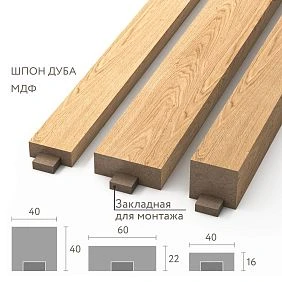
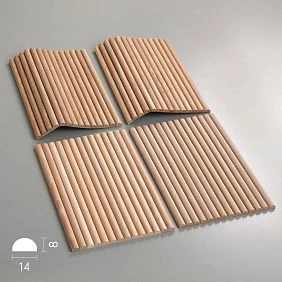
Slatted panel PAN-003— the flagship model of the catalog in terms of visual impact and versatility. Available in three versions: paintable MDF, solid oak, and solid beech. The pronounced vertical rhythm of parallel battens works as a tool for creating luxurious volume — especially with directed side lighting or spotlights at a 30–45° angle. PAN-003 is equally convincing in a TV area, behind a bed headboard, in a niche, in an entryway, and on furniture fronts. This is the choice for those who want maximum visual effect with minimal structural complexity.
PAN-001 — when a more delicate rhythm is needed
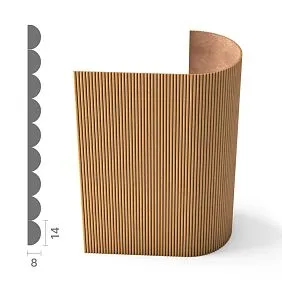
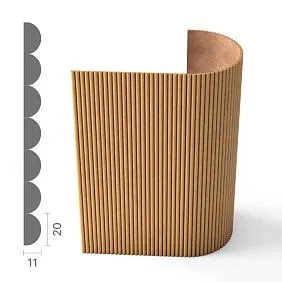
Slat panel PAN-001— a calmer, more versatile option with a flexible fabric base. It is indispensable where you need to navigate a curved surface, column, or arch — the panel follows any curve without deforming the slats and joins seamlessly. PAN-001 is available in paintable MDF and solid oak versions. The delicate rhythm of this model provides soft chiaroscuro — perfect for a bedroom, children's room, or interior where atmosphere is more important than an architectural statement.
PAN-002 and PAN-004 — if the panel will be painted to match the interior
PAN-002 and PAN-004— primed MDF panels, ready for the application of a final paint coating. This is a professional solution for project interiors with a precise color program: the panel can be painted in any specified shade — and together with LED lighting, it creates a monochrome, cohesive, impeccably refined surface. It is precisely PAN-002 and PAN-004 that designers choose when working with a custom palette and needing complete color control for every interior detail.
When to choose MDF and when to choose solid wood
MDF is chosen when color is more important than texture, when the interior is built on monochrome or a precise palette, when you need to ensure perfect geometry of the slats without natural variations. Solid oak or beech is chosen when you want a living, warm, organic surface — one that cannot be reproduced with film or veneer. With lighting, both materials are good but provide fundamentally different effects: MDF — geometrically clean, wood — tactilely rich.
Installation and lighting: what to plan in advance
The most common mistakes when installing slatted panels with lighting occur not during installation, but before it—at the design stage. It is at this stage that all key lighting decisions need to be made.
Where to plan power supply for LED
Power supply for LED strips should be planned at the rough electrical stage—before finishing work begins. Ideally, it should be a concealed feed to a point behind the panel backing or in the gap between the wall and the structure. If the electrical work is already complete, power can be run through a baseboard or decorative conduit—but this is always a compromise. Lay the wire with a margin: an LED strip for a 3-meter wall will require a power supply of at least 36–50 W.
What to consider when choosing a profile and power supply
An LED profile is an aluminum channel into which the strip is mounted and which evenly diffuses light, eliminating the 'spotty' appearance of individual diodes. For lighting behind slats, it's better to use a profile with a matte diffuser—it provides an even light strip without hot spots. The power supply is selected with a 20–30% power reserve from the calculated load: this extends its lifespan and reduces heat.
Why a dimmer is almost mandatory
A dimmer is not an option but a necessity for any decorative lighting. A slatted wall with LED operating at 100% power looks different than the same wall at 40–60%. Dimming allows you to change the mood of the space depending on the time of day and task: bright light for active use, soft light for evening relaxation. In bedrooms and living rooms, a dimmer is critically important. In hallways and offices—it is desirable.
When to paint panels before installation, and when after
Primed panels PAN-002 and PAN-004 are best painted before installation—especially if the ends of the slats need to be painted. Painting an installed panel requires masking adjacent surfaces and makes it difficult to apply paint evenly in the gaps between slats. An exception is if the paint is applied with a sprayer and the surface can be completely exposed: in this case, painting after installation is possible but labor-intensive.
How to avoid light leaks and 'dirty' shadows
Two main lighting defects in slat panel illumination are glare (visible light source) and 'dirty' shadow (blurred, indistinct shadows instead of clean chiaroscuro). Glare is eliminated by proper placement of the LED strip behind the substrate or in a profile with a matte diffuser. 'Dirty' shadow is a consequence of too wide a beam angle of the spotlight or its incorrect placement. For clean sculptural shadows, use spots with a narrow beam of 15–25° at a sufficient distance from the wall.
Mistakes when choosing slat panels with lighting
Even the most expensive panels and the best fixtures won't save you if there's a conceptual error at the foundation. Here are the most common ones:
-
Too bright cool light for warm wood. Cold white light 4000–5000 K kills the warmth of oak texture and makes natural wood look like plastic. For any wooden panels — only warm or warm neutral, 2700–3000 K.
-
Too active relief in a small room. A large rhythm of slats and harsh spotlighting in a cramped space create not depth, but pressure. A small room requires a delicate rhythm and soft diffused light.
-
Attempting to make the entire wall glow without composition. A slat wall from floor to ceiling and from corner to corner with uniform LED lighting is not an expensive interior, it's background noise. Composition is needed: a slat 'island' with framing, correct proportions, an accent, not a carpet.
-
Lack of dimming. Fixed brightness deprives the lighting of its main advantage — controllable mood. This is a critical mistake.
-
Dark panels in a dark room without light compensation. Dark oak or anthracite MDF in a room without natural light turn the room into a well. Dark panels require either sufficient general lighting or powerful built-in illumination.
-
Random choice of light without reference to material and color. Neutral light on warm oak looks neutral — neither good nor bad. Warm light on the same oak is a living, rich, tactile material. The color of the light must be chosen for the specific material and color of the panel.
FAQ: Answers to popular questions
Which slat panels are suitable for LED lighting?
For LED backlighting, any slatted panels with sufficient clearance between the substrate and the wall (at least 20 mm) to accommodate the profile with the tape are suitable. From the STAVROS catalog, PAN-003 is particularly well-suited for recessed LED lighting due to its pronounced relief rhythm, and primed PAN-002 / PAN-004 are ideal due to their readiness for final painting in any color.
What's better: light behind the slats or light from above?
It depends on the desired effect. LED behind the slats provides soft glow from the depth—a delicate atmospheric effect. Top-down lighting through a light cornice gives sculptural chiaroscuro—an architectural, representative character. In most interiors, a combination works best: tape behind the slats as the main backlight plus spots or a cornice for accent lighting.
Are panels with backlighting suitable for a TV zone?
Yes, this is one of the strongest scenarios. Slatted panels behind the TV structure the wall, LED backlighting reduces eye strain when watching in the dark and makes the zone visually richer. It's important to use neutral or warm light of low brightness—the backlight should be a background, not a competitor to the screen.
Which panels are better for painting with LED?
The best solution is primed slatted panels PAN-002 and PAN-004 made of MDF. They are ready for the application of any enamels and paints, provide perfect slat geometry, and allow you to match the exact color to the interior palette. In combination with LED, they are the perfect tool for monochrome design with architectural lighting.
Which light to choose: warm or neutral?
For natural wood (oak, beech) — always warm, 2700–3000 K. Cold light kills the warmth of the natural texture. For painted MDF in neutral or cool tones — neutral warm, 3000–3500 K. For white or light gray panels in a modern minimalist interior, neutral light, 3500–4000 K is acceptable — but only if the room's general lighting is also neutral.
Is it possible to create an expensive volume without complex framing?
This is precisely the entire logic of slatted panels with lighting. The slatted surface and directional light provide the same visual effect of depth and volume that was previously achieved with complex framing and multi-level structures. No heavy engineering, no milling, no complex framework — just the rhythm of the slats, the correct gap, and skillfully directed light.
STAVROS: the manufacturer trusted by designers
In conclusion — a few words about the manufacturer. STAVROS is a Russian manufacturer of solid wood and MDF products with a wide stock program and shipping from a single piece. The STAVROS slatted panel catalog covers several design solutions — from flexible panels on a fabric base to rigid boards on an MDF substrate, from natural oak and beech to primed MDF for any painting.
All products are manufactured in a strictly controlled microclimate: temperature 20–24 °C, humidity not less than 40% — this guarantees geometric stability and minimal deformation during operation. Each panel undergoes manual sanding and is produced in two quality levels — Standard and Prestige. This is precisely why STAVROS is chosen by professional designers, architects, and developers who value predictable results — and those who want to achieve an expensive interior volume without unnecessary structural compromises.
You can explore the full range and choose the right solution for your project in the section Rafter panelson the STAVROS website.