




















































Article Contents:
- Why slat panel dimensions are a design decision, not a technical parameter
- Four key dimensions of slat panels
- Slat width: from 15 to 90 mm — how to choose your number
- Narrow slats: 15–25 mm
- Standard slats: 30–45 mm
- Wide slats: 50–70 mm
- Extra-wide slats: 75–90 mm and wider
- Practical formula for choosing slat width
- Slat thickness: shadow depth is a parameter visible from a distance
- Thin slats: 10–12 mm
- Standard slats: 14–18 mm
- Thick slats: 20–30 mm
- Summary table: slat thickness and visual effect
- Gap width: the air that changes everything
- Narrow gap: 8–12 mm
- Standard gap: 15–20 mm
- Wide gap: 25–35 mm
- Gap wider than slat: extreme 'transparency'
- Gap and Substrate: An Inseparable Pair
- Slat Length: Standards and Non-Standard Solutions
- Standard Lengths: 2400 and 3000 mm
- Non-Standard Lengths: Made to Order
- Horizontal Slats and Length
- Modular Slat Panel Sizes: Substrate Formats
- Standard Modular Panel Sizes
- Calculation of the number of modules
- Slat Panel Sizes by Material: What Changes
- Solid Wood Slat Panel Sizes
- MDF Slat Panel Sizes
- PVC Slat Panel Sizes
- Rail and Room Size Ratio: Compatibility Table
- Rail Panel Sizes and Lighting: The Overlooked Connection
- Rails and Directional Lighting (Spotlights, Track Lights)
- Rails and Built-in LED Lighting
- Rails and Diffused Overhead Lighting
- Non-Standard Rail Panel Sizes: When 'Standard' Doesn't Fit
- Order Volume Calculation by Size: Step-by-Step Guide
- For Linear Rails (Vertical Installation)
- For Horizontal Rails
- For Modular Panels
- Mounting gap and thermal gap: numbers for durability
- Batten field finishing system dimensions
- Frequently asked questions about batten panel dimensions
- What are the most popular batten panel dimensions?
- Can I order battens with a custom width?
- How to calculate how many battens will fit on a wall?
- Does the length of a batten affect its deformation?
- What gap to choose with built-in lighting behind the battens?
- How do batten panel dimensions affect their price?
- Batten panels for ceilings — same dimensions as for walls?
- Conclusion

The dimensions of slatted panels are not technical details for specialists. This is the essence of the choice. Whether you get the interior look that inspired you to make this choice, or disappointment from the mismatch between expectations and reality, depends precisely on the numbers that describe the slat—width, thickness, length, gap spacing.
Behind this query always lies a specific human task: 'I saw a beautiful slatted wall. I want one like that. What dimensions should I choose?' Or: 'The wall is 3.8 meters wide, the ceiling is 2.65. How many slats do I need? What gap?' Or simply: 'I don't understand what all these millimeters on websites mean—explain.'
This article answers all these questions fully, honestly, and practically. No fluff, no abstractions—only specific numbers, their visual meaning, and practical application. Read it as a guide to action.
Why slatted panel dimensions are a design decision, not a technical parameter
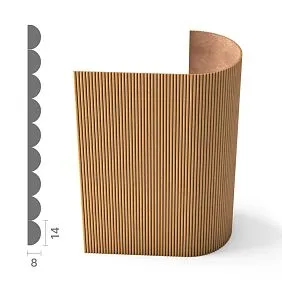
Before moving on to the numbers, it's important to understand one thing. The dimensions of slatted panels are not 'product technical specifications' that you just need to know. These are design variables, each of which affects the visual result. Changing the slat width by 10 mm changes the 'scale' of the entire slatted field. Changing the gap by 5 mm changes the 'density' of the surface and the visibility of the substrate. Changing the slat thickness by 3 mm changes the depth of the shadow.
A professional designer, when working with slatted panels, doesn't think about 'standard' sizes—they think about the specific room, specific ceiling height, specific viewing distance, specific lighting situation. And they choose numbers for these conditions.
This is precisely why a competent answer to the question 'what sizes do slatted panels come in' is not just a list of numbers. It's an explanation of the logic behind each number.



Four key dimensions of a slatted panel
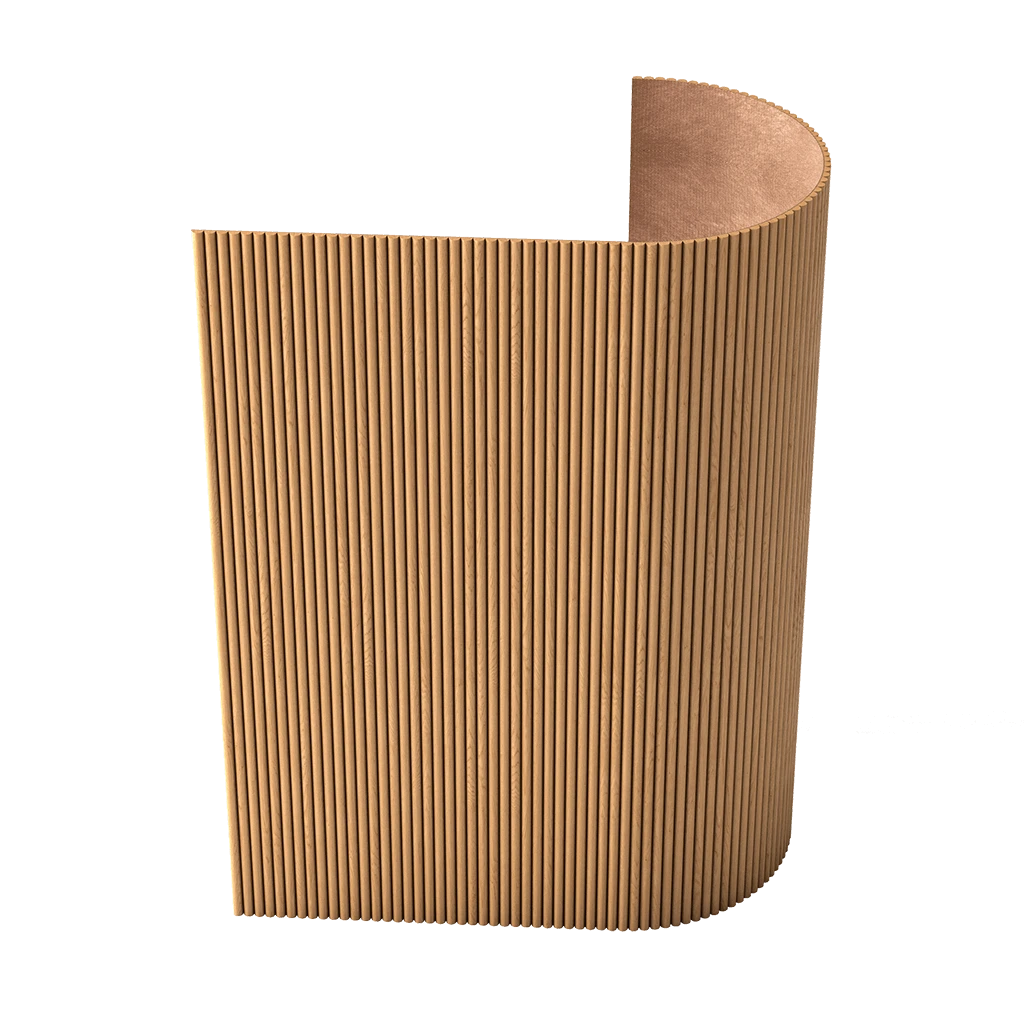
Slatted wall panelsare described by four main parameters. Understanding each of them means gaining full control over the choice.
1. Slat width — the width of the plank's front surface (mm). This is the main visual parameter: it is the width that determines the 'scale' of the slatted pattern.
2. Slat thickness – the depth of the plank from the back plane to the front face (mm). Determines the shadow intensity in the gap and the 'volumetric' quality of the surface.
3. Gap width – the distance between adjacent slats (mm). Determines the 'density' of the surface and the visibility of the substrate.
4. Slat length – the longitudinal dimension of the plank (mm or mm). Determines whether horizontal seams are needed when covering surfaces exceeding the standard length.
Additional parameter for modular systems: module size – width × height of the substrate with slats already fixed.
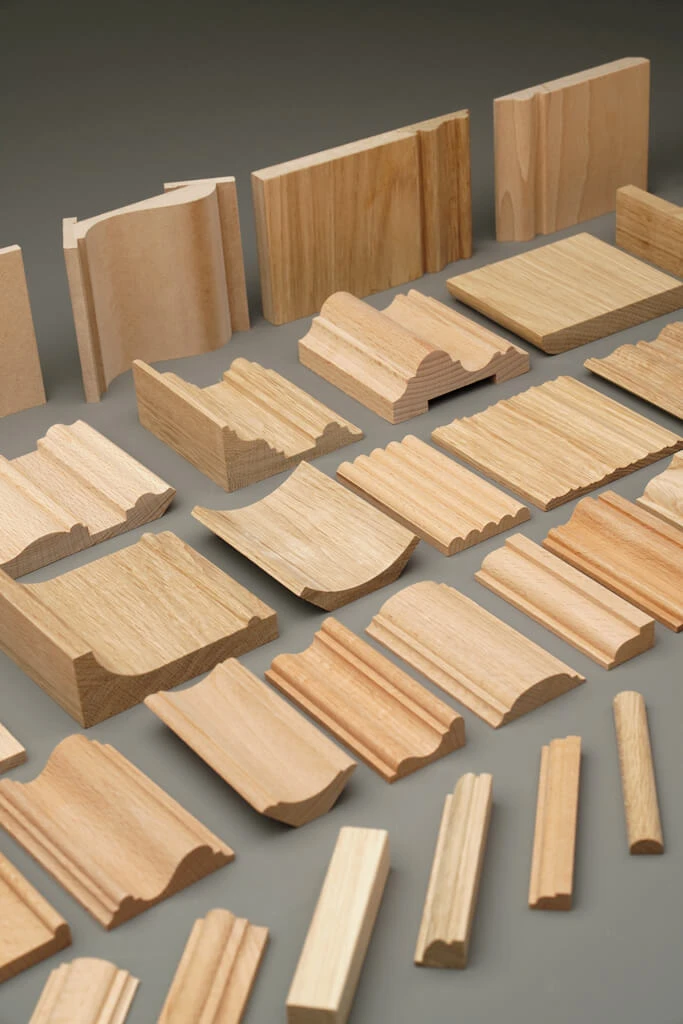
Our factory also produces:



Slat width: from 15 to 90 mm – how to choose your number
Slat width is the most discussed parameter when choosingdecorative slatted panels. And this is justified: it is the width that sets the 'tone' of the entire surface.
Psychologically, the human eye perceives a slatted surface as a set of repeating vertical (or horizontal) elements – and the 'scale' of this repetition is directly linked to the perception of space. A fine, frequent rhythm (narrow slats) – lightness, delicacy, 'textile-like' quality. A large, sparse rhythm (wide slats) – monumentality, scale, architectural weight.
Get Consultation
Narrow slats: 15–25 mm
Slats with a width of 15–25 mm create a fine, delicate rhythm. Visual effect: the surface is perceived almost like fabric or blinds – closely spaced thin vertical lines. When viewed from a distance of 2–3 meters – the surface reads as a uniform texture; when approached – it reveals itself as a set of individual planks.
Practical application:
-
Small rooms (up to 15 sq. m) — narrow slats do not 'overload' the limited space
-
Low ceilings (2.3–2.5 m) — thin slats do not 'press down' with their scale
-
Hallways and corridors — a delicate rhythm in a limited space
-
Scandinavian and Nordic interiors — delicacy as a stylistic principle
Thin slats made ofMDF for Painting in white tone on a dark background — create the image of a vertical 'keyboard' on the wall. Striking, modern, delicate.
Technically: 15–20 mm slats require greater installation precision — with a small width, any deviation from vertical (or horizontal) is more noticeable than with wide slats.
Standard slats: 30–45 mm
The 30–45 mm range is the practical 'golden mean' for most living spaces. This is the width at which:
-
The slat is wide enough for the natural wood grain (oak, ash) to be clearly visible
-
The slat is narrow enough not to dominate a standard-height space
-
The surface rhythm is active but not aggressive
For rooms with ceilings 2.6–2.8 m — 30–40 mm is optimal. For ceilings 2.8–3.0 m — 40–45 mm.
Wooden slat panelsOak slats 35–40 mm wide — this is the most popular format for living rooms, bedrooms, and hallways. The slat is wide enough to show the medullary pattern of oak — and narrow enough to create an expressive slatted rhythm.
Wide slats: 50–70 mm
Slats 50–70 mm — a 'close-up' in the slatted pattern. Each slat is perceived as an independent element with a clearly readable natural pattern. The surface appears architecturally monumental.
For residential spaces — recommended for ceilings from 2.9 m. In an apartment with a 2.6 m ceiling, wide slats 60–70 mm will visually 'lower' the space.
Optimal for:
-
Commercial interiors (restaurants, hotels, office lobbies)
-
Apartments with historical high ceilings (Soviet classic, Stalinist Empire style)
-
Large country houses with open floor plans
Slatted Façade PanelsFor exterior use — typically wide (50–80 mm): the batten should be visible from a distance.
Very wide battens: 75–90 mm and wider
Battens over 75 mm — for specific tasks: double-height spaces (4–5 m high), large-scale commercial projects, facade systems of large buildings. In standard residential spaces — practically not used.
Practical formula for selecting batten width
A simple working formula used by professional designers:
Ceiling height (cm) ÷ 8 = recommended batten width (mm)
Examples:
-
Ceiling 260 cm: 260 ÷ 8 = 32.5 mm → choose a 30–35 mm batten
-
Ceiling 280 cm: 280 ÷ 8 = 35 mm → choose a 35–40 mm batten
-
Ceiling 300 cm: 300 ÷ 8 = 37.5 mm → choose a 35–45 mm batten
-
Ceiling 350 cm: 350 ÷ 8 = 43.75 mm → choose a slat 40–50 mm
This formula is a guideline, not a strict law. Interior style, viewing distance, and personal preferences adjust the result.
Slat thickness: shadow depth is a parameter visible from a distance
Slat thickness is a parameter often underestimated when choosing. Meanwhile, it is precisely the thickness that determines how 'voluminous' the surface will appear under directional lighting.
The logic is simple: the slat protrudes from the substrate plane by its thickness. The gap between slats is the space where the shadow forms. The thicker the slat — the deeper the gap, the more pronounced the shadow, the more three-dimensional the surface appears.
Thin slats: 10–12 mm
Slight shadow definition. Under directional lighting — a delicate, soft shadow in the gaps. Under diffused lighting — the relief is almost invisible, the surface is perceived as uniform. For mounting directly on the wall (without a frame) — minimal protrusion from the wall.
Suitable for: small spaces where it's important not to 'weigh down' the wall with extra protrusion. MDF slats of minimal thickness — for monochrome minimalist solutions.
Standard slats: 14–18 mm
Optimal thickness for most residential and commercial applications. Under side or directional lighting, it creates a clear, well-defined shadow in the gap. The surface looks textured and three-dimensional.
15–16 mm oak or ash slats — standard forslatted wall panelsinterior finishing. Sufficient rigidity, pronounced relief, optimal weight.
Thick slats: 20–30 mm
Deep gap, maximum shadow expression. With directed side lighting — each gap casts a wide, saturated shadow. The surface acquires a sculptural character.
Thick slats — for those who want the slatted surface to 'work' even in low light. In rooms with a single source of side light — 20–25 mm slats create active chiaroscuro.
Wooden slat panelsmade of solid oak 20–25 mm thick — for restaurants, lobbies, meeting rooms, where surface expressiveness under directed track lighting is critically important.
Summary table: slat thickness and visual effect
| Slat thickness | Shadow depth | Visual character | Application |
|---|---|---|---|
| 10–12 mm | Delicate | Almost flat surface | Monochromatic minimalism |
| 14–16 mm | Standard | Pronounced relief | Residential, office spaces |
| 18–20 mm | Strong | Architectural volume | Commercial, accent zones |
| 22–30 mm | Maximum | Sculptural relief | Restaurants, lobbies, facades |
Gap width: the air that changes everything
If the slat width is the 'positive' of the slat pattern, then the gap width is its 'negative'. The empty space between slats. Shadow. Or light, if LED lighting is installed behind the slats.
The gap determines: how actively the substrate is visible, how 'airy' or 'dense' the surface appears, how deep the shadow recedes under directional lighting.
Narrow gap: 8–12 mm
The surface appears dense. The substrate is almost invisible—only a thin shadow in the gap. The slats 'dominate,' the gap is a delicate accent.
With a narrow gap of 8–10 mm: from a distance of 3–4 meters, the surface is perceived as an almost solid wooden or painted plane. The slat pattern is discernible upon closer inspection.
Suitable for: bedrooms (calm, continuous look), studies (concentration, minimal 'noise'), rooms with low ceilings (where accentuating the slat rhythm is unnecessary).
Standard gap: 15–20 mm
The optimal range for most design tasks. The gap is actively present, the substrate is discernible, but the slats still dominate.
Slat/gap ratio 40/15 mm—dense, restrained rhythm. Ratio 35/18 mm—balanced. Ratio 30/15 mm—delicate. All three are workable, professional solutions for residential interiors.
slatted panels for interior wall finishingwith a standard gap of 15–20 mm—the most in-demand format. It 'reads' well from a distance, creates a pronounced rhythm, but does not overwhelm.
Wide gap: 25–35 mm
The gap becomes an independent visual element, equal to the slat. With a gap equal to the slat width (e.g., 30/30 mm) — an 'openwork' rhythm, the surface appears light and 'breathable'.
A wide gap is critically important for integrated LED lighting: the wider the gap, the more intense the light strips when the backlight behind the slats is on.
A wide gap is also the choice for slatted partitions, where through 'transparency' is important: space is perceived through the gaps, light passes freely.
Gap wider than the slat: extreme 'transparency'
When the gap is wider than the slat (e.g., slat 20 mm, gap 40 mm) — an image of a 'sparse palisade' is created. The slats are thin lines in space, with open space between them. For walls, this format is exotic — more often used for ceiling 'island' systems and partitions.
Gap and backing: an inseparable pair
The gap cannot be considered without the color of the backing — these are two parts of one visual solution:
| Gap | Underlay | Visual effect |
|---|---|---|
| 15 мм | Dark (black felt) | Thin dark stripes — restrained contrast |
| 20 мм | Black | Active black pattern between rails |
| 20 мм | Warm felt | Soft warm stripes — delicately |
| 25 мм | LED backlight | Glowing stripes — glow effect |
| 30 мм | White | Openwork light rhythm |
Rail length: standards and custom solutions
Rail length is a parameter that often doesn't raise questions: 'So what if it's 2400 or 3000 — the main thing is that it's enough for the height.' But it's precisely with length that the most common ordering mistakes are associated.
Standard lengths: 2400 and 3000 mm
2400 mm (2.4 m) — basic standard length. Corresponds to the typical apartment height of 2.4 m. With a ceiling height of 2.5 m — the 2400 mm slat is trimmed with a margin. With a height of 2.6 m — minus 200 mm.
3000 mm (3.0 m) — extended standard length. Covers any ceiling height up to 3.0 m without a horizontal seam. The most popular format for modern Russian apartments with ceilings of 2.6–2.85 m: one slat — the entire wall height.
Why is it important to choose a slat length that overlaps the ceiling height? A horizontal joint of two slats on a vertical wall is a visual flaw that disrupts the continuity of the rhythm. Vertical slats should run from floor to ceiling without a seam — this is a fundamental rule of slat finishing.
Non-standard lengths: custom order
For Stalin-era apartments with ceilings of 3.1–3.5 m, for double-height spaces, for recreational areas with ceilings of 4.0+ m — slats are ordered in non-standard lengths. This is possible with manufacturers who work with solid wood in their own production.
For non-standard length: add 50–80 mm to the ceiling height (margin for trimming). A slat length of 3200 mm for a 3100 mm ceiling is optimal.
Horizontal slats and length
In horizontal slat installation — slat length = wall width (or part of it). If the wall width exceeds the standard slat length, — a joint is inevitable. Joints of horizontal slats should be placed with an offset (like brickwork) — never on the same vertical line. This is a professional rule for horizontal installation.
Modular slat panel dimensions: substrate formats
slatted modular wall panel— is a ready-made block with slats fixed to a substrate. The substrate size determines the 'step' of the modular system.
Standard modular panel sizes
600 × 2400 mm — a 'half' module. The 600 mm width is convenient for transportation and installation. When covering a wall 3600 mm wide — exactly 6 modules without cutting.
1200 × 2400 mm — a 'full' module. Twice as fast to install (half the number of elements). When covering a wall 3600 mm wide — 3 modules. But transportation is more difficult.
600 × 1200 mm — a 'small' module for partial coverage: behind a bed, above a sofa, in a niche. Convenient for small accent zones.
Non-standard modules: when ordering from the manufacturer, modules for specific niche, alcove, or wall section sizes are possible. This eliminates the need for edge trimming.
Calculating the number of modules
Area of the slatted field (sq. m) ÷ area of one module (sq. m) = number of modules (rounded up).
Example: wall 3.8 × 2.65 m = 10.07 sq. m. Module 0.6 × 2.4 m = 1.44 sq. m. 10.07 ÷ 1.44 = 6.99 → 7 full modules needed + 1 module for trimming edge elements. Total: 8 modules.
Slatted panel dimensions by material: what changes
The material of the slat affects the available sizes — this is a technological reality that is important to consider when ordering.
Dimensions of slatted panels made from solid wood
Solid wood: width 20–80 mm (depends on wood species and manufacturer). Thickness 15–30 mm. Standard length — 2400 and 3000 mm, custom up to 4500–5000 mm (depending on wood species).
Limitations: oak and ash in very wide slats (over 100 mm) are unstable under humidity changes. Wide oak slats warp. Therefore, solid oak slat panels wider than 80 mm are technologically complex and expensive.
Optimal range for oak: 25–65 mm. For pine and birch (softer and lighter species): 20–80 mm.
Sizes of MDF slat panels
MDF slats are produced by cutting standard MDF sheets. Width: practically any from 10 to 120 mm. Standard thickness: 12, 16, 18, 22 mm. Length: standard 2440 and 2800 mm (MDF sheet size).
Important nuance: MDF slat length is 2440 mm (not 2400 mm) — this is the MDF sheet size. With a ceiling of 2.4 m — 2440 mm slats provide a small margin. With a ceiling of 2.6 m — 2440 mm slats are insufficient, slats from a 2800 mm sheet are needed.
Sizes of PVC slat panels
PVC slats are produced by extrusion. Standard width: 50–200 mm (wider slats than MDF and solid wood). Length: 3000–6000 mm. Thickness: 8–12 mm (PVC is lightweight — rigidity is provided by internal profile stiffening ribs).
ForPVC slat panelsLarge slat width is the norm, not an exception. This is why plastic slat systems often appear 'larger' than wooden ones in identical rooms.
Slat size to room ratio: compatibility table
Complete table of recommended slat panel sizes for different rooms — a professional decision-making tool.
| Room | Area | Ceiling Height | Batten width | Gap | Orientation |
|---|---|---|---|---|---|
| Hallway | up to 6 sq m | 2.4–2.6 m | 20–25 mm | 12–15 mm | Vertical |
| Bedroom | 12–18 sq m | 2.5–2.7 m | 25–35 mm | 14–18 mm | Vertical/horizontal |
| Living room | 18–30 sq m | 2.6–2.8 m | 35–45 mm | 15–20 mm | Vertical |
| Large living room | 30–50 sq m | 2.8–3.2 m | 45–60 mm | 18–25 mm | Any |
| Office | 10–16 sq m | 2.6–2.8 m | 30–40 mm | 15–18 mm | Vertical |
| Restaurant | from 40 sq m | 3.0–4.0 m | 50–70 mm | 20–30 mm | Vertical |
| Office/Lobby | from 50 sq. m | 3.0–4.5 m | 55–80 mm | 22–30 mm | Any |
| Bathroom (moisture-resistant) | 5–12 sq. m | 2.4–2.6 m | 25–35 mm | 15–20 mm | Vertical |
| Corridor | 4–12 sq. m | 2.4–2.6 m | 20–30 mm | 12–15 mm | Vertical |
Slat panel dimensions and lighting: the overlooked connection
Slat panel dimensions and lighting type are interrelated variables. Change the lighting—reconsider the dimensions. Designers know this rule but rarely explain it to clients.
Slats and directional lighting (spotlights, track lights)
With directional side lighting (35–45° angle to the surface) — a thick slat with a narrow gap creates a hard, contrasting shadow. The thicker the slat, the deeper the shadow.
Optimal dimensions for track lighting: slat thickness 18–25 mm, gap 15–20 mm. This combination creates rich chiaroscuro that makes the surface sculpturally expressive.
Slats and built-in LED lighting
With LED backlighting behind the slats (between the slats and the substrate) — the gap = a light slit. The wider the gap, the more intense the light strips.
Minimum gap for LED lighting: 18–20 mm. Optimal: 22–28 mm. A narrow 12 mm gap with LED — light is barely visible. A 25 mm gap with LED — bright, expressive light strips.
How to install slatted panelsWith built-in lighting — requires pre-laying of wiring in the substrate grooves before installing the slats. Groove dimensions: minimum 16 mm deep, 12 mm wide.
Slats and diffused overhead light
With standard ceiling diffused lighting — thin slats (10–14 mm) with a narrow gap (10–12 mm) get lost: the surface looks almost flat. For diffused overhead light, choose thicker slats (16–20 mm) and a wider gap (18–22 mm) — at least some minimal chiaroscuro will be present.
Non-standard sizes of slatted panels: when 'standard' doesn't fit
slatted panels for wallsIn standard sizes — this is a solution for most projects. But there are situations where non-standard is the only correct choice.
Non-standard length. Stalin-era apartments with ceilings of 3.3–3.5 m, double-height spaces, and stairwell halls with heights of 4–5 m require slats of 3200–4500 mm in length. Production of non-standard lengths: only by direct order from the manufacturer, made from solid wood or non-standard format MDF sheets.
Non-standard slat width. For slatted partitions with 'equal rhythm' (slat = gap) and specific proportions, for niche solutions with special architectural requirements. Custom production to any specifications: slat systems with such capabilities are a hallmark of a high-level manufacturer.
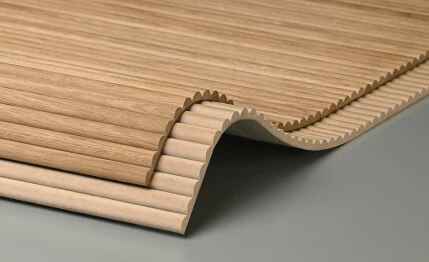
soft slat panels— flexible slats for curved surfaces: columns, arched niches, rounded corners. Width is standard, but the material allows the slat to be bent to a radius without damaging the structure.
Calculating order volume by dimensions: step-by-step instructions
For linear slats (vertical installation)
-
Measure the width of the slatted field (W, mm)
-
Determine the slat width (s, mm) and gap (g, mm)
-
Number of slats = W ÷ (s + g) — round to the nearest whole number
-
Length of one slat = ceiling height + 50 mm allowance
-
Total linear footage = number of slats × length of one slat
-
Add a 15% reserve (straight sections) or 20% (corner transitions)
Example: wall width 3600 mm, slat 35 mm, gap 18 mm. Number of slats: 3600 ÷ (35+18) = 3600 ÷ 53 = 67.9 → 68 slats. Ceiling height 2650 mm + 50 = 2700 mm = 2.7 m. Total linear footage: 68 × 2.7 = 183.6 m. With 15% reserve: 183.6 × 1.15 = 211.1 m → order 215 linear meters.
For horizontal slats
-
Measure the height of the slat field (H, mm)
-
Number of slats = H ÷ (s + g)
-
Length of one slat = wall width + 50 mm reserve
-
Total linear footage = number of slats × slat length
-
Add 15–20% reserve
For modular panels
Field area ÷ module area + 10–15% = number of modules. Always round up to the nearest whole number.
Mounting Gap and Thermal Gap: Numbers for Durability
In addition to the visual gaps between the slats, there are two technical gaps in the installation of slatted panels that directly affect durability.
Bottom mounting gap. Between the bottom end of the vertical slat and the floor — a gap of 8–10 mm. Covered by the baseboard. If the slat rests against the floor — changes in humidity cause the slat to 'push out' the baseboard from below or deform at the base.
Top mounting gap. Between the top end of the slat and the ceiling — a gap of 8–10 mm. Covered by the cornice. Same logic: wood expands with humidity — a margin is needed.
Detailed technology for installing slatted panelswith a description of all technical gaps — in the professional instructions.
These gaps are especially important for solid wood. MDF and PVC are more stable, but even for them, a bottom gap under the baseboard is desirable: any change in room humidity causes minimal movement.
Dimensions of the slatted field finishing system
A slatted wall is not just the slats themselves. The complete system includes finishing elements, and their dimensions must match the dimensions of the slats.
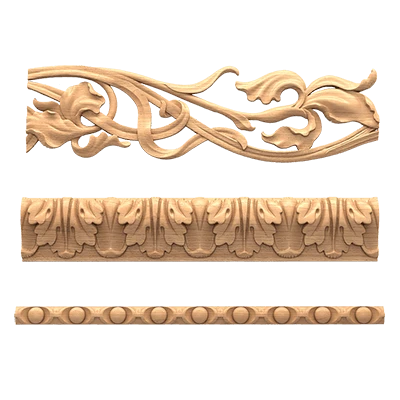
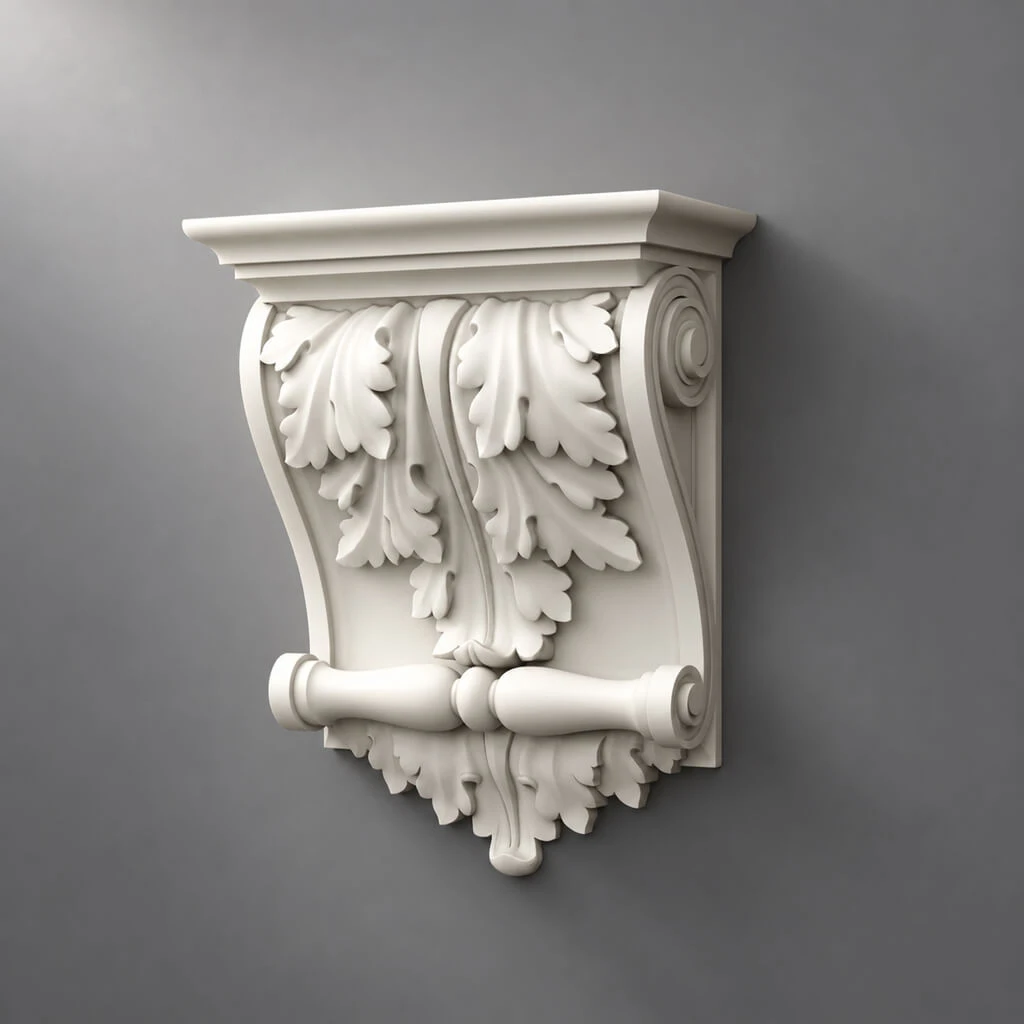
a polyurethane cornicealong the top edge: the width of the cornice — not less than the width of the slat. Standard: 40–80 mm. For slats 30–35 mm — cornice 40–50 mm. For slats 50–60 mm — cornice 60–80 mm.
solid wood baseboardalong the bottom edge: skirting board height for rooms with ceilings 2.6–2.8 m — 60–90 mm. For ceilings 3.0+ m — 80–120 mm. The skirting board must cover the lower mounting gap of the slat (10 mm) and create a visual 'base' for the slatted field.
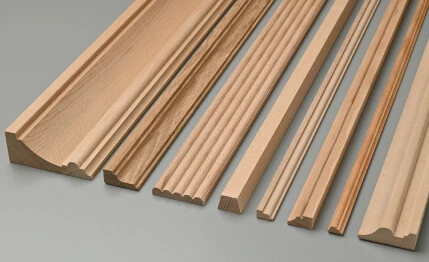
Polyurethane moldingin a two-zone solution: a horizontal strip at the junction of the slatted field and a neutral wall. Moulding width — 20–40 mm. Thickness — within the projection of the slat (so the moulding does not 'protrude' beyond the slats).
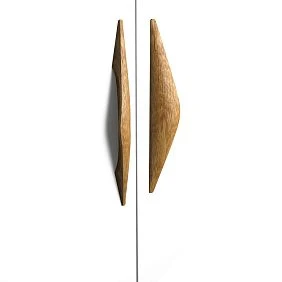
Wooden furniture handleson built-in furniture: handle diameter or width — within the width of the slat (so the handle looks like part of a unified system).
Frequently Asked Questions about Slatted Panel Sizes
What are the most popular slatted panel sizes?
According to requests from professional design studios and private clients — the most popular are: slat 35–40 mm × gap 18–20 mm × thickness 15–16 mm × length 3000 mm. This is the 'workhorse' for residential spaces with ceilings 2.6–2.8 m.
Is it possible to order slats with non-standard widths?
Yes, from manufacturers with their own production (solid wood milling, MDF cutting). Non-standard width — any value from 15 to 100+ mm. Non-standard orders require a longer production time.
How to calculate how many slats will fit on a wall?
Wall width (mm) ÷ (slat width + gap) = number of slats. Example: wall 2800 mm, slat 40 mm, gap 18 mm: 2800 ÷ 58 = 48.3 → 48 or 49 slats (with adjustment of the first/last slat at the corners).
Does the length of the slat affect its deformation?
Yes. A long solid wood slat (3000 mm) can warp along its length if acclimatized incorrectly. Long slats should be stored horizontally on multiple supports—without sagging along the length. Acclimatization: 48–72 hours indoors.
What gap to choose for built-in lighting behind the slats?
Minimum 20 mm. Optimal 22–28 mm. With a gap less than 18 mm, the LED strip behind the slats creates a dim, barely noticeable glow.
How do the dimensions of slatted panels affect their price?
Wider slat → more material per slat → higher price per linear meter. Greater length → more production waste → higher price. Non-standard sizes → small-batch production → significantly higher price.
Are slatted panels for the ceiling the same sizes as for walls?
Slats for the ceiling are thicker (minimum 16–18 mm for oak, 18–20 mm for MDF) due to horizontal mounting under their own weight. Width is similar to wall slats, but considering the room height (not the ceiling height). More details in the article about slatted panels for ceilings.
Conclusion
The dimensions of slatted panels are not boring technical specifications. It is the language spoken by the slatted surface. The width of the slat sets the scale. The thickness—the depth. The gap—the density and air. The length—seamless integrity. Together—this is a specific image that either precisely matches your concept or doesn't match at all.
Correctly chosen dimensions slatted wall panelscombined with a well-chosen finishing system —a polyurethane cornice, solid wood baseboardandmoldingson horizontal boundaries — create a space that looks like the work of a professional designer. Because it's based on professional solutions.
Full range of slatted panels in standard and custom sizes, finishing elements,Pogonazh iz massiva, Wooden furniture handles— in the STAVROS company catalog.
STAVROS — production of decorative interior solutions with millimeter precision. Solid oak, ash, birch, pine slatted panels — in standard and custom sizes for specific projects.installation of slatted panelsDIY — with professional consultations and all necessary elements from the manufacturer. Choose sizes consciously — and the slatted wall will become exactly the image you envisioned.