



































































Article Contents:
- What lies behind the regional request: why Samara residents are searching for slat panels
- Samara and its architectural context: why it matters for material choice
- Slat panels for walls: a complete selection system
- Material decides everything: from seasonal stability to visual weight
- Slat width and its role in space perception
- Spacing between slats: how the gap between slats affects rhythm
- Polyurethane wall moldings: architectural geometry, not decoration
- Types of moldings and their purpose
- Polyurethane as a material for moldings: why it beats plaster
- How moldings build wall geometry next to slatted panels
- Two-level wall: a scheme that is always relevant
- Fully slatted wall with molding frame: mono-material with an accent
- Horizontal molding as the only partner for vertical slats
- Samara spaces: where slatted panels with moldings work best
- Living room in a Samara apartment
- Bedroom: when silence is more important than expressiveness
- Hallway and corridor: spatial illusions
- Kitchen: practicality first
- Children's room: lightness through scale and color
- Size charts: how to correctly match molding to slat
- Correspondence between cornice height and slat width
- Correspondence between ceiling height and molding scale
- Installation: from the first dowel to the finishing element
- Slatted panels: a technology that cannot be rushed
- Molding installation: precision of joints is key
- Style combinations: slatted panels + moldings in different concepts
- Modern classicism
- Scandinavian minimalism
- Loft and Industrial
- Neoclassicism
- Eco and biophilic design
- Errors of an unassembled wall: diagnosis and correction
- First mistake: slatted panels everywhere
- Second mistake: moldings everywhere and all at once
- Third mistake: conflict of scales
- Fourth mistake: different styles in one space
- Fifth mistake: decisions based on photos without samples
- Sixth mistake: saving on additional elements
- DIYer or pro: when to install yourself and when not to
- Slatted panel lighting: how light changes the material
- STAVROS: a system, not just a catalog
- FAQ: popular questions about slatted panels and moldings

Rhythm is what turns a surface into architecture. It’s what distinguishes a wall that was simply 'papered' or 'painted' from a wall that was designed. When the vertical lines of slats repeat at a precise interval, and a horizontal molding sets a clear limit to this rhythm, that very sense of order is born—the one people describe with words like 'expensive,' 'professional,' 'architectural.' Though it would be more accurate to say one word: rhythmic.
Samara is one of the largest cities in the Volga region with a developed construction and renovation culture. A lot is built here: both standard multi-story buildings, and private houses, and cottages with historical interiors in mansions from the early 20th century. Requests forRafter panelsand wall moldings in Samara are not just for a city apartment in a new building. It's also for a country house with high ceilings, and for the reconstruction of old housing stock, where wooden slats are already historically organic.
This article is not about 'how to buy' or 'how much it costs'. It's about how to think when assembling a wall. About rhythm, geometry, proportion. About whypolyurethane wall moldingsis not a decoration on top of a finished wall, but part of its structural concept. And about how one correctly made decision at the beginning of a project saves months of rework at the end.





What's behind the regional search: why Samara residents are looking for slatted panels
When a person types 'buy slatted panels Samara' into a search engine, there's a specific situation behind this query. Renovation is already underway or just being planned. There's an understanding that a wooden or wood-like texture on the wall is desired. There's a basic idea of the result. What's missing is the main thing: a system.
Most users at this moment are not yet thinking about moldings. They are thinking about the slats. They look at options, compare colors, estimate the cost per linear meter. This is precisely where the key project error occurs: buying slatted panels is only half the task. The second half is understanding how they integrate into the wall system as a whole.
A wall without a top finish is an unfinished thought. A slatted plane that 'goes' under the ceiling without a horizontal limiter is perceived as a temporary solution.polyurethane decorative moldingsturn this thought into a complete sentence. They give the slats a frame — top, side, bottom — and it is this frame that gives the entire space a sense of intentionality.
Therefore, in this article, slatted panels and moldings are considered as a single system. Not as two separate products, but as two tools of one architectural solution.




Samara and its architectural context: why it matters for material selection
Samara is a city with a rich architectural past. A 19th-century merchant's mansion and a Soviet Stalin-era building, a constructivist residential building and a modern high-rise — all coexist in one city. And for each of these contexts, there is its own logic for choosing slatted panels and moldings.
In Samara's new buildings, the typical ceiling height is 2.7–2.85 m. This is sufficient for confidently using full-height slatted panels. It is sufficient for a molding with a cornice height of 80–100 mm. But it is insufficient for massive stucco with a multi-level profile — it will 'weigh down' the space.
In Samara's old housing stock — mansions and tenement houses with ceilings of 3.2–3.8 m — here, on the contrary, a delicate 70 mm molding will look lost. The scale demands more: a 120–150 mm cornice, molding frames with a full profile, a slatted panel covering the full height of the wall.
In private houses of the Samara region with ceilings of 3.0–3.5 m — a medium scale that accepts both a moderate and a representative option depending on the design intent.
This is why 'buy slatted panels Samara' is a search query that represents not one type of property, but several completely different spaces. And it is precisely for them that the system needs to be built: material, format, slat width, molding profile.
Our factory also produces:






Slatted panels for walls: a complete selection system
Get Consultation
Material decides everything: from seasonal stability to visual weight
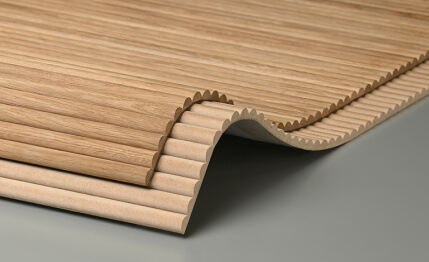
Slatted wall panelsare made from different materials, and each carries its own behavior in operation and its own visual character.
Solid oak — a living texture with a pronounced pattern, high density, slow reaction to humidity changes compared to coniferous species. In the Samara climate with moderately humid summers and dry heating periods, oak with an oil finish behaves stably. Requirements: oil impregnation with wax (not varnish), sealed ends, acclimatization for 5–7 days in the room before installation.Solid oak slat panels— the choice for those who want a durable material with a living surface that only gains depth over time.
MDF with decorative coating — a medium-density board with a film or veneer finish. Stable under humidity fluctuations in residential spaces, does not require acclimatization for more than 3 days.Slatted wall panel made of MDF— the workhorse of modern renovation. Decors: oak, ash, walnut, gray concrete, white matte — the choice is vast. A critical requirement for the Samara climate: edges must be sealed.
MDF for painting — profiles without a decorative layer for subsequent painting.paintable slatted wall panels— open up the possibility of a monochrome solution: slats and moldings are painted in one tone — the interior gets a textured, yet tonal surface without color tension. This is one of the most sophisticated modern techniques.
Thermowood — natural wood that has undergone high-temperature treatment without chemical additives. Resistant to moisture, does not swell or dry out within the range of household conditions. Characteristic dark chocolate tone. For bathrooms, kitchens, areas with variable humidity in Samara homes — the optimal choice.
Slat width and its role in the perception of space
Slat width is not a technical parameter. It is a design decision that directly influences how a person perceives the volume of a room.
40–55 mm (narrow slat): high density of vertical lines — active rhythm, dynamism, upward aspiration. Works well in small rooms, corridors, niches. In large spaces, it gives a 'fine print' effect — too many details.
60–90 mm (medium slat): universal range for most residential interiors in Samara. Balanced rhythm, readable from any distance, does not overload the surface with details.
100–130 mm (wide slat): calm, monumental rhythm. Requires space — for rooms from 20 sq. m and ceilings from 2.8 m. In small rooms, wide slats 'overload' the wall.
140–180 mm and more: representative scale for halls, living rooms with high ceilings, country houses with ceilings of 3+ m.
Spacing between slats: how the space between slats affects the rhythm
Spacing — the distance between slats — is the second key rhythm parameter. It determines how much the surface 'breathes'.
-
Spacing = slat width: uniform, clear rhythm. 'Parquet' effect — alternating dark and light of equal spacing.
-
Spacing less than slat width: dense surface, slats visually dominate. Heavier, more monolithic.
-
Spacing greater than slat width: light surface, more background between slats. Visually 'airier'.
For a medium-sized Samara living room (18–25 sq. m): 70 mm slat, 60–80 mm spacing — balanced rhythm. For a bedroom: 55 mm slat, 45–55 mm spacing — dense, enveloping rhythm. For a hallway: 45 mm slat, 35–40 mm spacing — compact, dynamic.
Polyurethane wall moldings: architectural geometry, not decoration
The word 'molding' evokes for many the image of gypsum stucco from a pre-revolutionary mansion. Heavy, ornamental, accessible only with three-meter ceilings. This is an outdated notion. ModernPolyurethane molding— a lightweight, precise, geometrically pure element of wall architectural geometry. It weighs several times less than plaster, can be cut with a regular saw, is glued with mounting adhesive without dowels, and loads the wall so minimally that it cannot even be measured.
What does molding do to a wall?
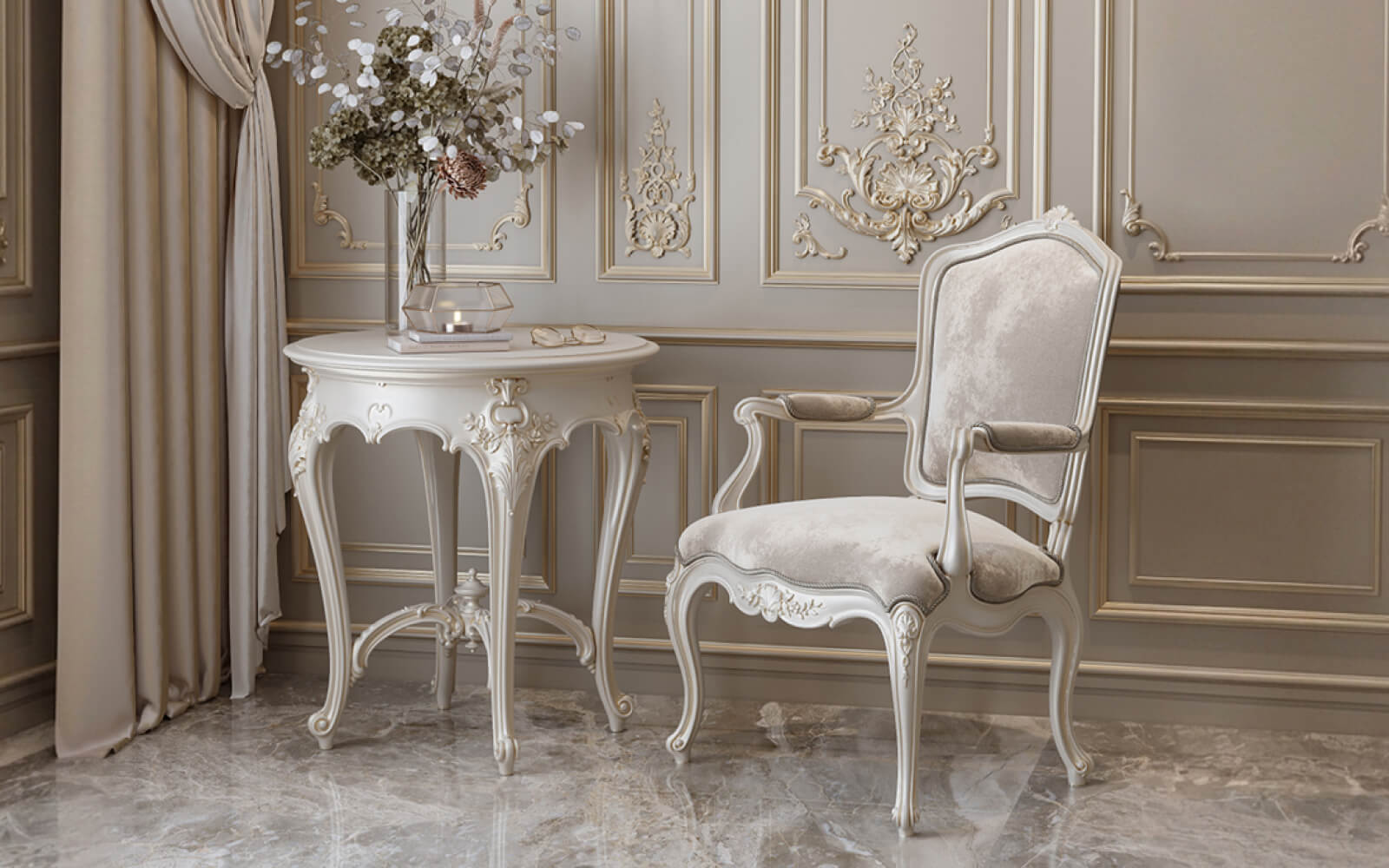
Molding transforms a flat surface into a structured one. It creates a system of visual lines—horizontal and vertical—that organize the wall into an architectural grid. The molding frames on the wall are not 'decorations'; they are geometry that makes the surface readable, ordered, and multi-layered without the use of color.
Types of moldings and their purpose
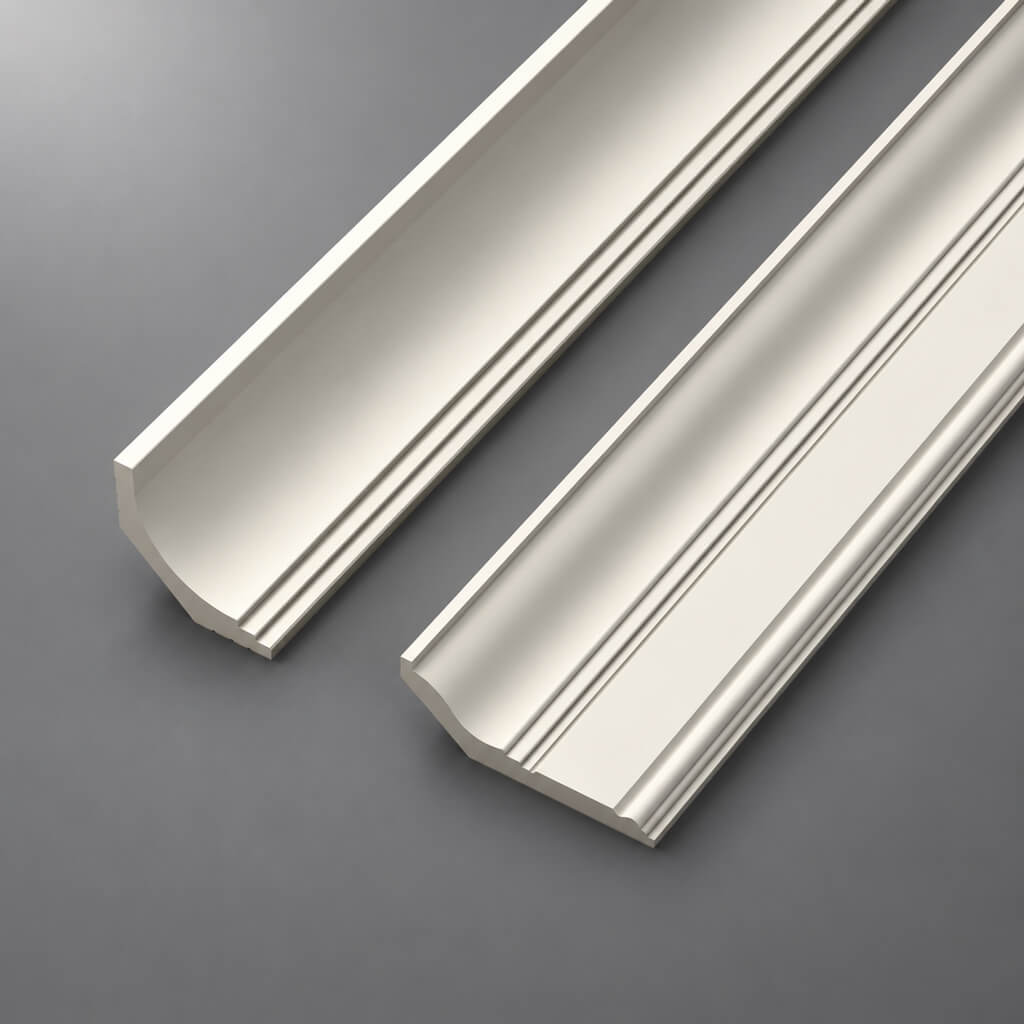
Ceiling cornice (ceiling skirting): covers the wall-ceiling joint, creating a horizontal supporting line along the upper perimeter of the space. For residential spaces in Samara with a ceiling height of 2.7 m, the optimal height is 80–100 mm. For ceilings 3+ m, 120–150 mm.
Wall moldings (frames): create a system of rectangular framings on the wall. A 'paneled' structure that makes a neutral surface architecturally active. Without color—only through form.
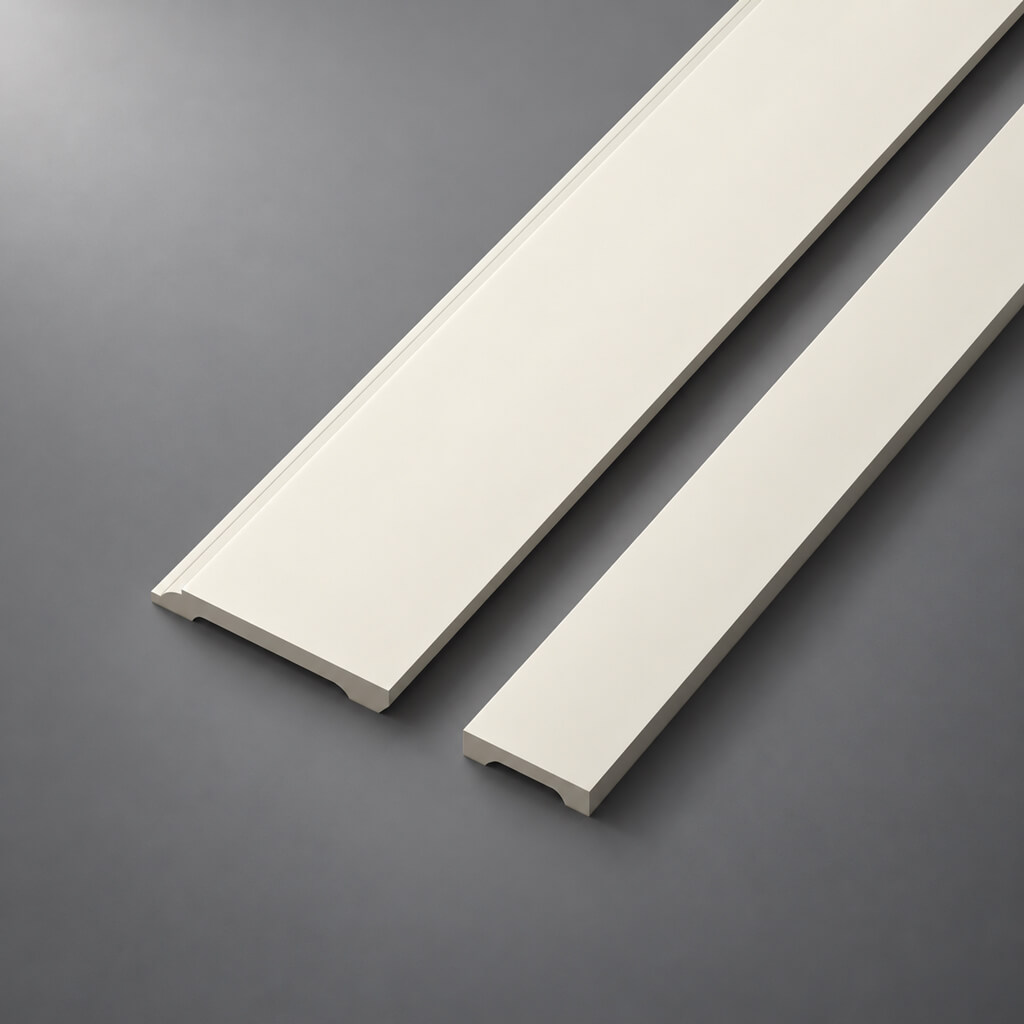
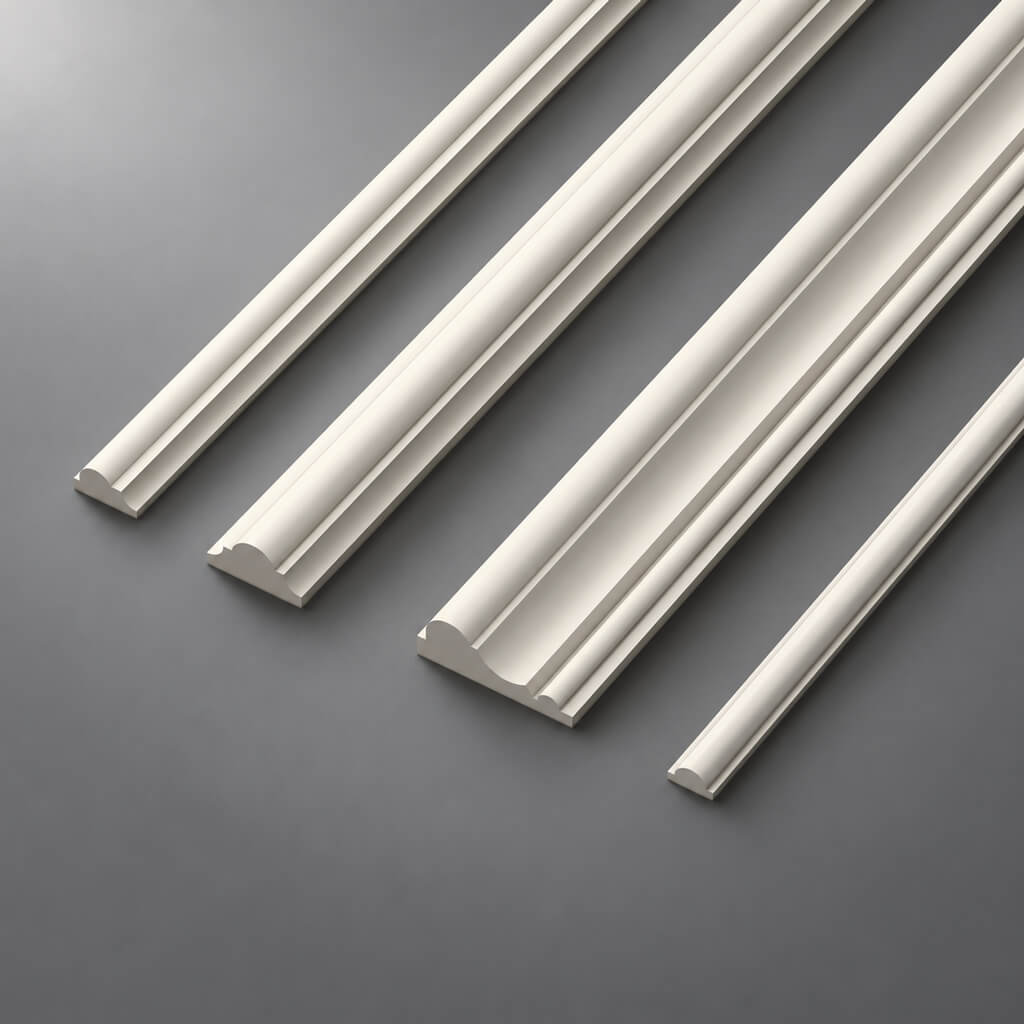
Divider profile: a horizontal line dividing the wall into zones—lower (paneled area) and upper (neutral surface with molding frames). It is this element that turns a two-level wall from a 'random assortment' into a meaningful architectural scheme.
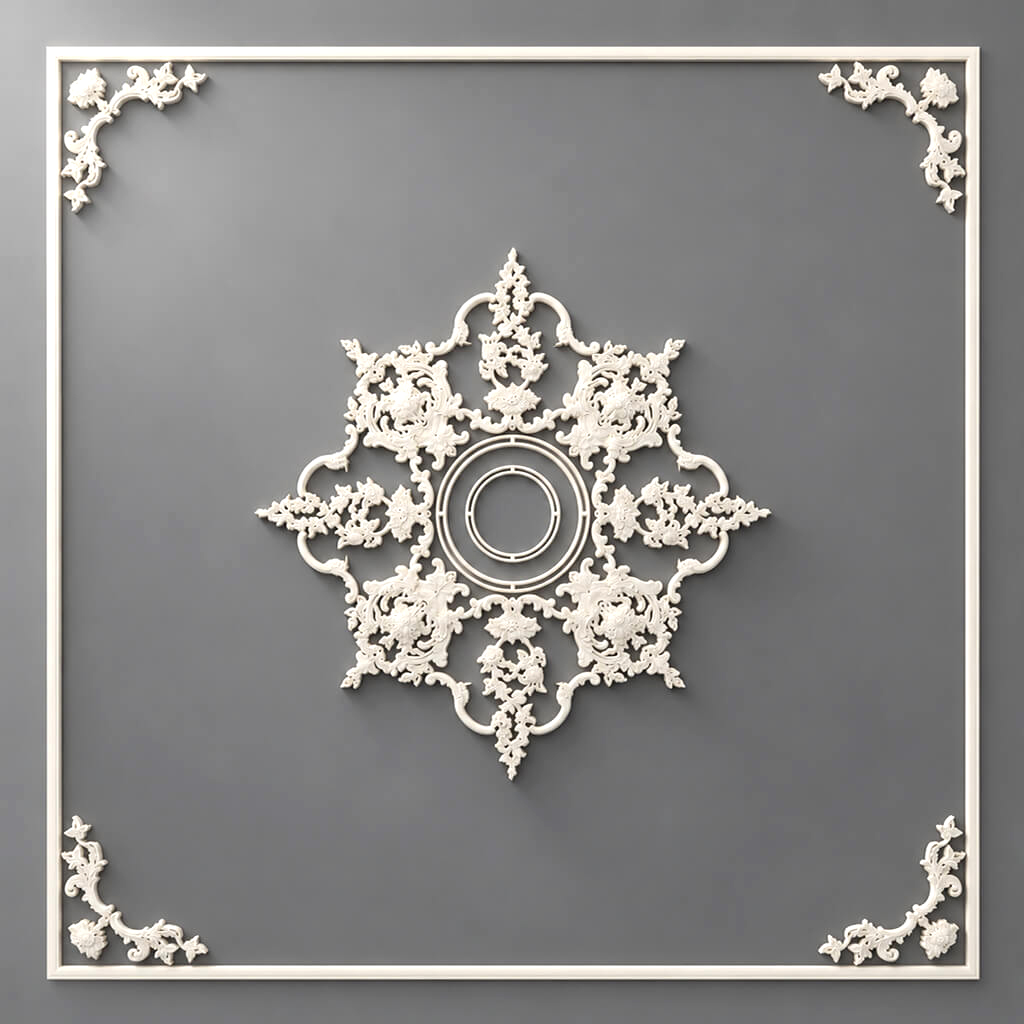
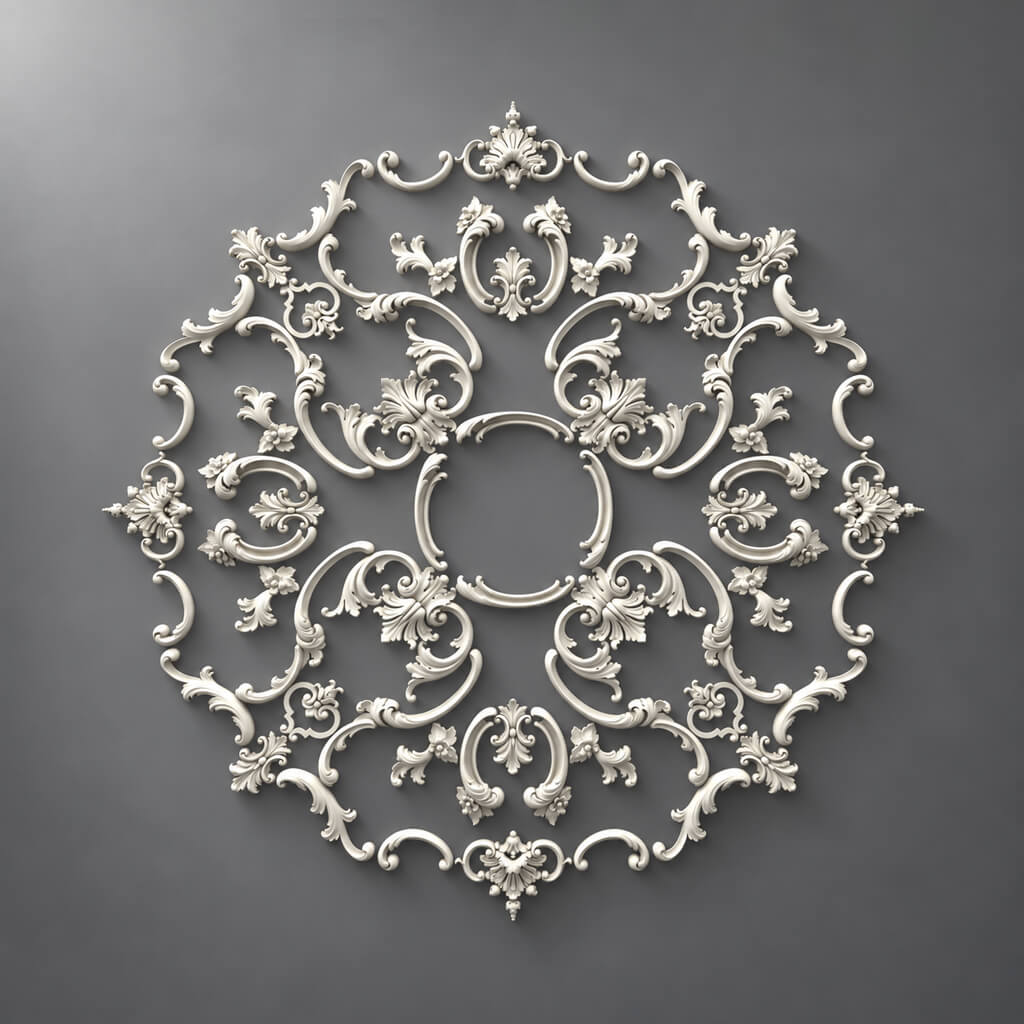
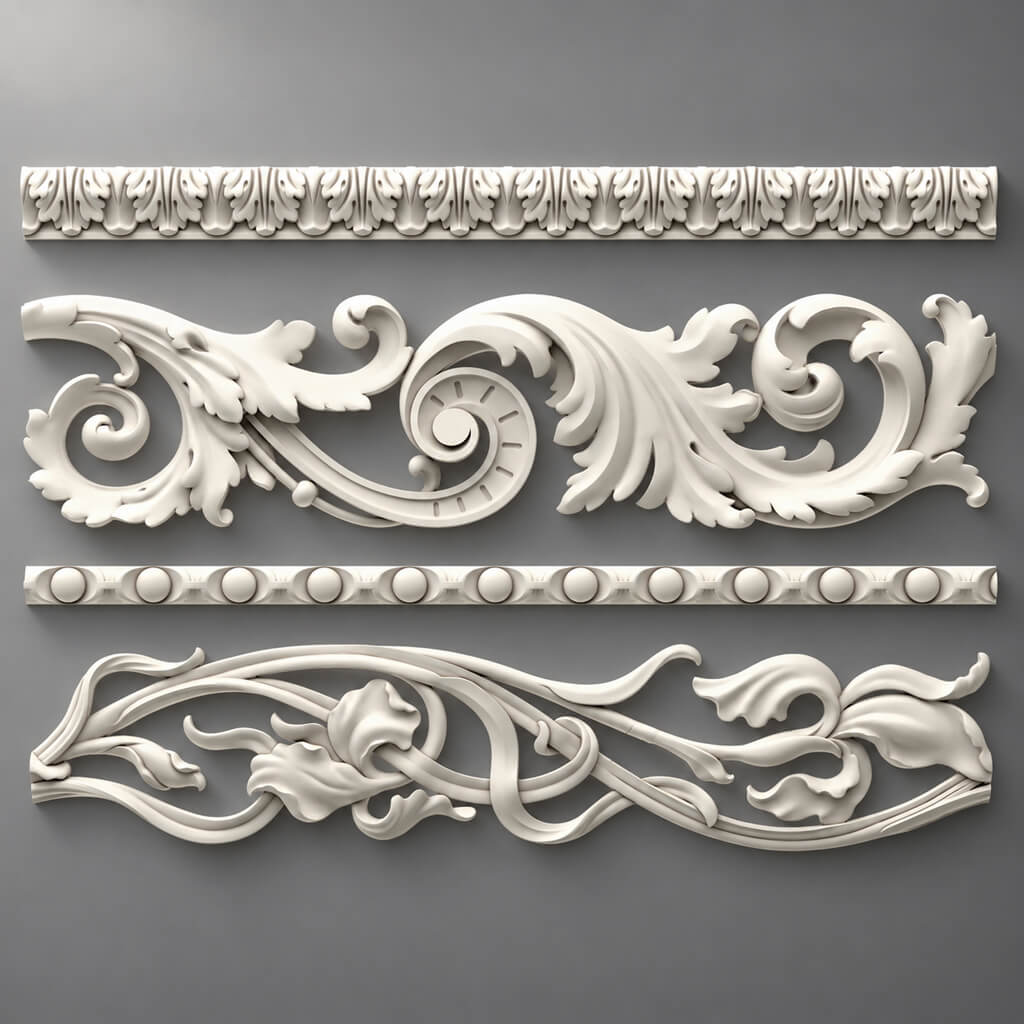
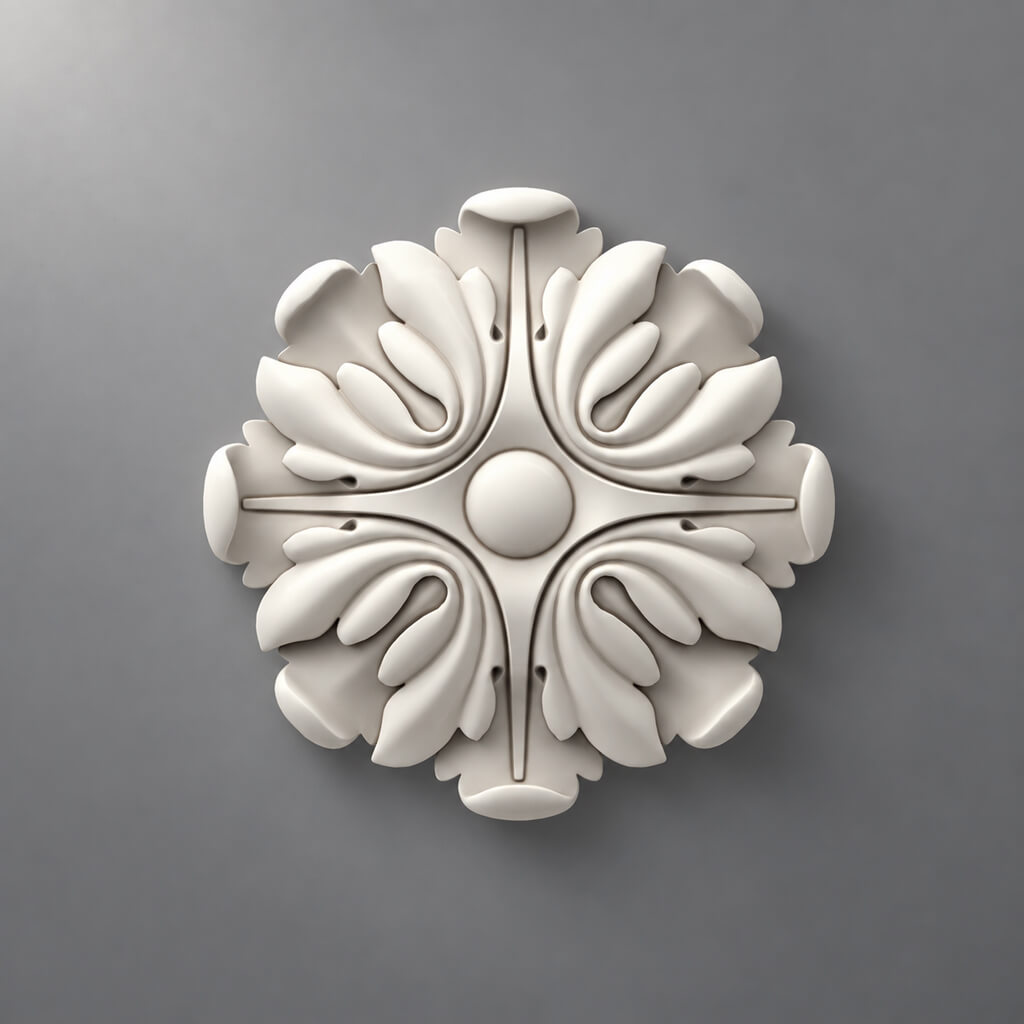
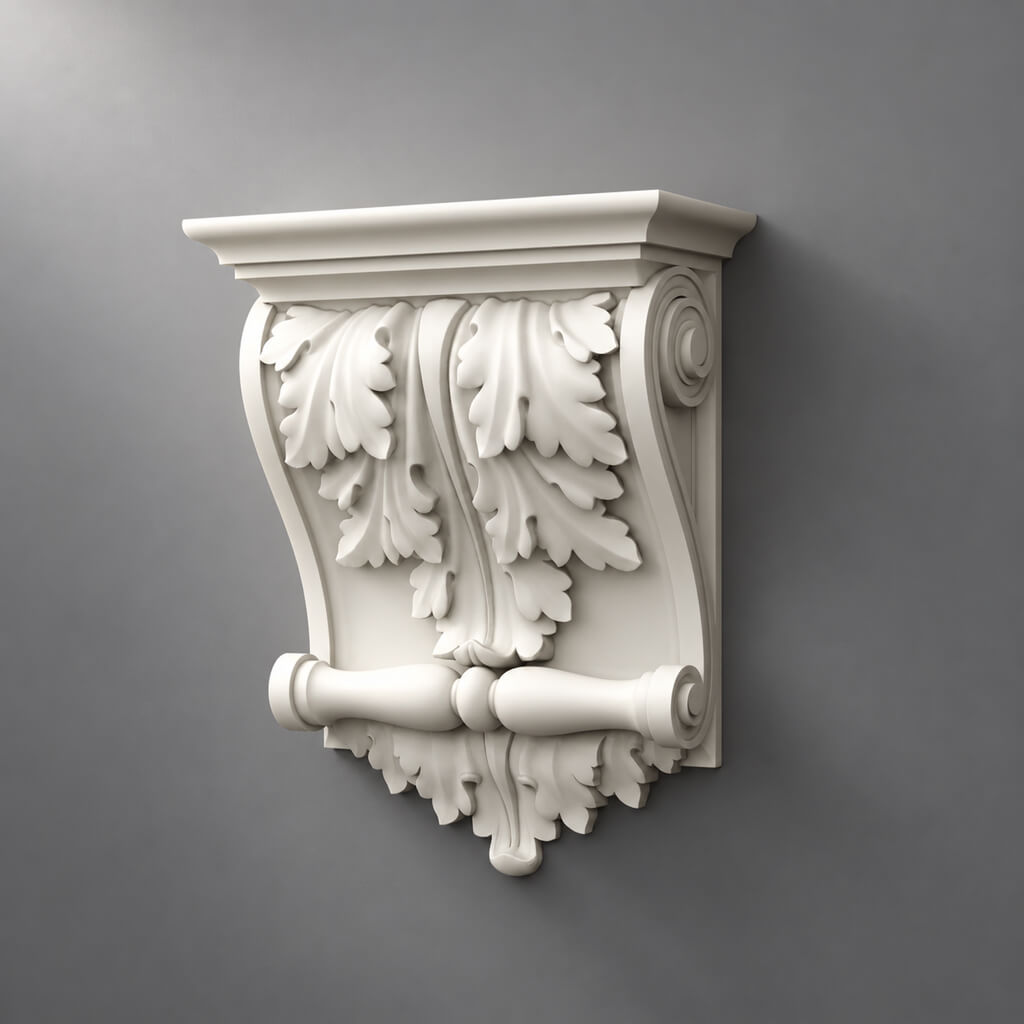
Corner blocks and decorative inserts: point elements at the intersection of moldings—corner blocks with ornamentation or geometric relief. A detail that emphasizes the intentionality of the entire solution.
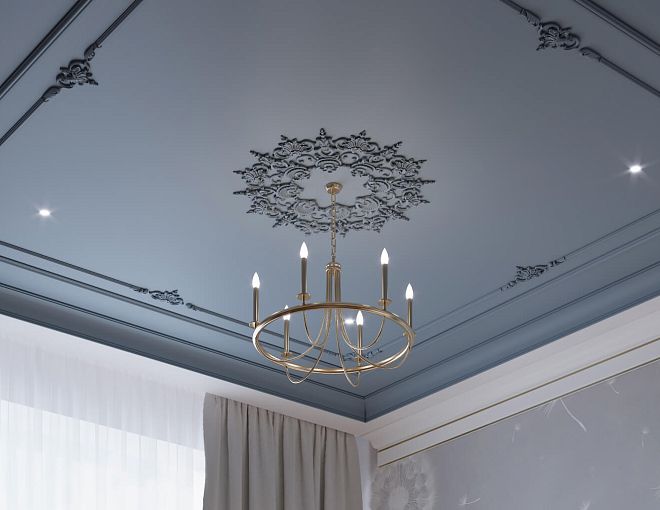
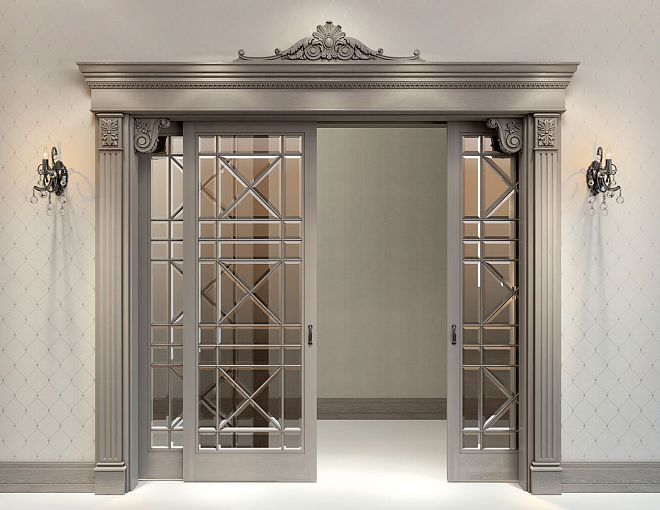
Architraves:polyurethane decorative moldingsas framing for door and window openings. They transform an opening from a technical hole in the wall into an architectural element with a frame.
Polyurethane as a material for moldings: why it beat plaster
The comparison is fair: plaster was the only option for decorative moldings for centuries. Polyurethane appeared much later — and immediately took the lead in residential construction. Why?
| Parameter | Polyurethane | Gypsum |
|---|---|---|
| Weight | Very light (up to 0.3 kg/linear meter) | Heavy (up to 2–4 kg/linear meter) |
| Installation | Adhesive, no dowels | Adhesive + dowels, often reinforcement |
| Cutting | Regular handsaw or miter box | Special tool |
| Moisture resistance | High | Low without special treatment |
| Impact resistance | Moderate | Brittle |
| Painting | Any water-based paint | Any paint |
| Deformations during settlement | None | Cracks at joints |
| Installation cost | Low | High |
For an apartment in a new building in Samara, where the house settles during the first 3–5 years, polyurethane molding is fundamentally preferable to plaster molding: it will not crack at the joints due to minor building movements.
How moldings define wall geometry next to slatted panels
This is the key practical section. Not 'how it looks,' but 'how it works.'
Two-level wall: a scheme that is always relevant
The most versatile and durable wall finishing scheme:
-
Lower zone (from floor to height of 90–110 cm):Slatted wall panel— vertical rhythm, warm material, protection from mechanical damage.
-
Divider molding at a height of 90–110 cm: a horizontal line that demarcates zones. Creates a visual 'horizon'—a stabilizing line that organizes the entire space.
-
Upper zone (from the divider to the ceiling): a neutral painted or plastered surface with or without molding frames.
-
Ceiling cornice: the final horizontal line at the top.
Why does this scheme work? Because it engages several perception mechanisms at once:
-
The lower zone with wood 'grounds' the space, creating a sense of stability.
-
Divider molding—a visual anchor for the gaze.
-
The upper neutral zone 'raises' the ceiling through contrast with the more active lower zone.
-
The cornice 'closes' the space, giving it a finished look.
Fully slatted wall with a molding frame: a single material with an accent
Another option: a slatted panel from floor to ceiling on one accent wall—andMoldings made of polyurethanearound the perimeter of the same wall as an outer frame. Battens inside, molding along the edges — the wall becomes a 'picture in a frame'.
This solution is particularly convincing in:
-
Living rooms with one accent wall behind the sofa or TV.
-
Bedrooms with an accent wall behind the bed headboard.
-
Hallways with the only 'front' wall at the entrance.
Horizontal molding as the only partner for vertical battens
Sometimes one molding is enough. Vertical battens covering the full height of the wall — and one horizontal profile under the ceiling, separating the batten surface from the ceiling plane. Simple. Clean. Architectural.
This very technique — minimal molding with maximum batten surface — is loved by Scandinavian designers. It works with 'quiet' neutral materials: white MDF, light ash, matte surface without pattern.
Samara spaces: where batten panels with moldings work best
Living room in a Samara apartment
Slatted panels in the living room interior— one wall. Not two, not three. One—behind the sofa or behind the TV. This is a fundamental limitation that makes the result convincing: the accent is where it is singular. The other three walls serve as a neutral background, against which the slatted surface reads as maximally expressive.
TV area with slatted panels— a separate topic. Slats from floor to ceiling behind the TV, a bracket mounted directly into the wooden surface, hidden lighting in the gaps between the slats. A powerful contemporary technique that transforms a functional zone into the visual center of the living room.
Moldings in the living room of a Samara apartment: a ceiling cornice with a geometric profile of 90–110 mm along the entire perimeter. On neutral walls—molding frames in a medium scale. Corner blocks at intersections—if the interior is in a neoclassical direction.
Bedroom: when quietness is more important than expressiveness
slatted panels in the bedroom— the wall behind the headboard, a light warm tone, medium spacing of the slats. The bedroom is a space for restoration, not for display. Therefore, the principle 'the quieter, the better' applies here.
In the bedroom, molding should be delicate: a ceiling profile of 55–70 mm with a simple cross-section, without ornament. No massive frames or corner blocks with bas-reliefs—they create a sense of formality incompatible with the function of the space. Hidden LED strip lighting at 2700K behind the slats is the perfect evening mode.
Entryway and corridor: spatial illusions
Slatted panels in the hallway interior— vertical slats along the long wall of a narrow corridor. Vertical lines elongate the space in depth—this optical effect works regardless of the corridor's width. An important condition: only light-colored slats. Dark wood in a dark corridor gives a tunnel-like feeling.
Moldings in the entryway: a cornice is essential—it 'raises' the ceiling in a narrow space. A dividing profile at a height of 90 cm is an excellent solution for a two-level wall in the entryway, where the lower zone is a slatted panel as protection from impacts and scratches, and the upper zone is a neutral surface.
Kitchen: practicality comes first
Slatted panels in the kitchen— area for the dining table or decorative wall behind the dining area. Never — a work apron (there you need a material for washing). For the kitchen: only film-coated MDF or thermowood with oil coating — they withstand accidental splashes and wet cleaning.
Moldings in the kitchen: geometric cornice with a simple cross-section of 70–85 mm. No frames with thin relief — in the kitchen they accumulate grease and require complex cleaning.
Children's room: lightness through scale and color
Slatted panels in the children's room — light tones, narrow slats 40–55 mm, study or play area. Dark wood — never. White, light blue, milky — always.
Moldings in the children's room: minimal cornice 45–60 mm without ornament. In the children's room, the space should be light — nothing should 'loom' over the child.
Size tables: how to correctly select molding to match the slat
Correspondence between cornice height and slat width
| Batten width | Ceiling cornice | Separator profile |
|---|---|---|
| 40–55 mm | 50–70 mm | 15–25 mm |
| 60–80 mm | 70–95 mm | 20–30 mm |
| 85–110 mm | 90–120 mm | 25–35 mm |
| 115–140 mm | 110–145 mm | 30–40 mm |
| 145–180 mm | 130–165 mm | 35–50 mm |
Ceiling height and molding scale compatibility
| Ceiling Height | Crown Molding | Frame molding | Casing |
|---|---|---|---|
| 2.5 m | 55–75 mm | 20–30 mm | 35–50 mm |
| 2.7–2.9 m | 75–100 mm | 25–35 mm | 40–65 mm |
| 3.0–3.2 m | 100–130 mm | 30–45 mm | 55–80 mm |
| 3.3–3.8 m | 120–160 mm | 40–55 mm | 65–90 mm |
| 3.8 m and above | 150–200 mm | 50–70 mm | 80–110 mm |
Installation: from the first anchor to the finishing element
Slat panels: a technology that cannot be rushed
installation of slatted panels— a sequential process with several mandatory stages.
Step 1. Acclimatization. Solid wood — 5–7 days in the room at operating temperature and humidity. MDF — 3 days. Without acclimatization — deformations after installation are possible.
Step 2. Battens. For solid wood — mandatory: horizontal 40×40 mm bars with a spacing of 400–500 mm, strictly horizontal and level. Ventilation gap between the wall and the battens — 10–15 mm. For MDF on a flat wall — installation with adhesive without battens is permissible.
Step 3. First slat. A critically important stage. Strictly vertical and level. A 1 mm deviation in the first slat per meter of length will result in a 5–8 mm deviation towards the ceiling — the entire pattern will shift. Check three times.
Step 4. Installation of the main field. The battens are fixed through the groove (concealed fastening) or through the front surface (if provided by the design). The expansion gap for solid wood is 1–1.5 mm.
Step 5. Trim elements. Starter profile at the bottom, finishing profile at the top, corner profiles on external corners.Installation of batten panelsWithout trim elements — an unfinished result. Trims account for 15–20% of the labor, providing 80% of the feeling of a professional result.
Installation of moldings: precision of joints is key
polyurethane decorative moldingsare installed with mounting adhesive (acrylic or special for polyurethane) without dowels.
The main rule: corners are cut at 45° in a miter box. For internal corners — joining with a straight butt joint followed by trimming. Never press on the molding until the adhesive has fully set — use painter's tape for temporary fixation during setting.
Joints on straight sections: offset joints by at least 50 cm from corners. Seam puttying is mandatory before painting.
Installation sequence: first corner blocks — then straight sections. This ensures precise fitting of straight sections to pre-installed corner elements.
Style combinations: slatted panels + moldings in different concepts
There is no 'correct' style — there is internal consistency. When all elements speak the same language of forms — the interior is cohesive regardless of stylistic direction.
Modern classic
Oak in a warm golden tone, slats 80–100 mm, spacing 70 mm. Cornice with a soft ogee profile 110–130 mm. Medium-scale molding frames on the walls. Corner blocks with geometric ornament. Walls — warm white or cream. This is an image that is both contemporary and timeless.
Scandinavian minimalism
Light ash or white MDF, slats 50–65 mm, spacing 45–55 mm. Straight geometric cornice 60–75 mm without ornament. No frames or corner blocks — just one cornice and one baseboard. Walls — white, light gray. Principle: minimum elements, maximum precision.
Loft and industrial
Brushed dark wood or gray MDF with concrete finish, slats 90–120 mm, wide spacing. Cornice — straight metal or none at all. Moldings — only if they are metal or dark decor. Walls — gray concrete, dark plaster.
Neoclassicism
Light wood or paintable MDF, slats 70–90 mm. Cornice with a double ogee profile 130–150 mm. Molding frames with a full profile. Corner blocks with plant or geometric bas-relief. Walls — white, ivory. This is the language of architectural tradition, translated into modern materials.
Eco and biophilic design
Thermowood or brushed ash, slats 60–80 mm with matte oil finish. Cornice — simple-section wooden molding or minimalist polyurethane 55–70 mm. Walls — natural earthy tones: terracotta, ochre, moss. No gloss — only matte surfaces.
Errors of an uncomposed wall: diagnosis and correction
First error: slatted panels everywhere
Four slatted walls in a living room is not 'more of a good thing'. It's a lack of accent. No accent — no visual center — no sense of space, only texture. Solution:Wall finishing with slatted panels— one accent wall. The other three — a neutral background.
Second mistake: moldings everywhere and all at once
Cornice + frames on all walls + ornamented architraves + corner blocks with bas-reliefs = visual noise where no single element stands out.polyurethane decorative moldingsThey work through moderation. Start with the cornice — it already provides 70% of the effect. Add frames only if there is architectural logic.
Third mistake: scale conflict
A thin, narrow 40 mm batten with a massive 150 mm cornice — a scale imbalance. A wide 130 mm batten with a 55 mm cornice — the same issue. Scale must be coordinated: large with large, small with small. Use the matching table above.
Fourth mistake: different styles in one space
Battens in Scandinavian minimalist style (white MDF, straight lines, no decorations) + a cornice with a Baroque swirl. A conflict of languages. Not 'interesting eclecticism', but a design error. The stylistic language must be unified for all surface elements.
Fifth mistake: deciding based on photos without samples
A photo on a phone screen is a false reference. The wood tone on the screen and in the room under your lighting are different things. A molding sample in your hands and on the wall feel different. Always order physical samples. Place them against the wall under working lighting. Look at them in the morning, afternoon, and evening. Only then — place your order.
Sixth mistake: skimping on additional elements
Buyslatted panels for wallsand not buying starter profiles, finishing profiles, corner elements. Result: an installed surface with exposed ends and unfinished corners. This feeling of incompleteness costs more than the additional elements themselves.
DIYer or Pro: When to Install Yourself and When Not To
DIY slatted panel— is a reality, not a marketing myth. Especially in modular format: ready-made modules with slats on a backing are installed like laminate panels — tongue and groove, fixed with glue or clips.
DIY slatted wall panels— from individual slats is more difficult. Requires leveling skills, ability to work with lathing, precise corner cutting. If you have no carpentry experience — it's better to do the first wall with a pro, observing the process.
Moldings — in most cases are suitable for DIY installation. The main thing is precise corner cutting in a miter box and patience when fitting joints. Putty + primer + finish painting cover minor inaccuracies.
Slat panel lighting: how light changes the material
Slatted panels with lighting— is one of the most effective techniques in modern interiors. Hidden LED strips in the gaps between slats or behind slats work differently:
-
Strip in gaps between slats: light shines through the gap — slats become a dark rhythm on a glowing background. The effect is strong, almost theatrical.
-
Strip behind slats (backlighting the rear surface): soft diffused glow from the wall — slats stand out against a warm halo. Calmer, more atmospheric.
For living spaces — 2700K warm white. For work zones — 3000–3500K neutral. Never — cold bluish light (6000K) in living areas: it strips wood of its warmth.
STAVROS: a system, not just a catalog
When you're looking for where to buy slatted panels in Samara and simultaneously selectpolyurethane wall moldings— STAVROS offers precisely a systemic solution.
STAVROS producesSlatted wall panelsmade from solid oak, ash, thermowood, MDF with film coating and for painting — in the full range of formats and tones. Simultaneously — a complete line ofof decorative polyurethane moldings: ceiling cornices, wall moldings, separation profiles, corner blocks, trims. All products are manufactured within a unified quality system with guaranteed stylistic and scale compatibility.
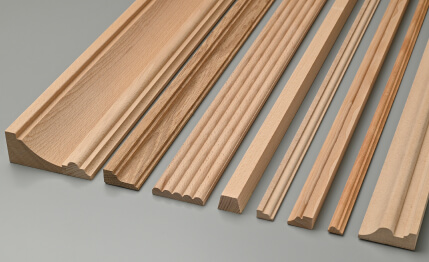
Pogonazh iz massiva— wooden moldings, cornices, and baseboards for those interiors where natural material is preferable to polyurethane.Solid wood moldings, cornices, and baseboards— for a complete wooden solution without mixing materials.
Delivery to Samara is a standard service for any volume. Before ordering — samples. Before samples — a precise understanding of your space: ceiling height, wall area, lighting, style. With this understanding, the choice becomes precise, not random.
STAVROS is a manufacturer that understands: an interior is not a set of products, but an architectural system. And it is this system, assembled with the right rhythm and without decorative panic, that makes the difference between 'the renovation is done' and 'the interior is created'.
FAQ: popular questions about slatted panels and moldings
Where to buy slatted panels in Samara with delivery?
Most manufacturers of high-quality slatted panels offer Contact us to confirm shipping to your destination., including Samara. It is recommended to order samples before the main order — verify the tone and quality before purchasing a batch.
Which slatted panel is best for an apartment in a Samara new-build?
MDF with sealed edges is the most practical option. Solid oak — with oil coating and proper installation conditions. Avoid cheap slats with open edges — they poorly tolerate humidity changes when heating is turned on/off.
Can moldings be installed without a professional?
Yes, if you know how to work with a saw and miter box. The main thing is precise 45° angle cuts and the correct mounting adhesive. Small gaps in joints are filled with acrylic putty.
How to choose molding to match slatted panels?
One language of forms (geometric to geometric, soft to soft), tonal unity (warm wood — warm white molding), scale correspondence (see table above).
What is more important — the width of the slat or its tone?
Both parameters are equally important. Width determines the rhythm and scale of the surface. Tone determines the temperature character of the interior — warm or cool. Start with tone, then select width to suit the space.
How much material to take with a margin?
15% of the calculated volume. For slatted panels — accounting for cuts at corners and window reveals. For moldings — accounting for cuts at corners (internal and external).
Can solid wood slatted panels be painted?
Yes, if it's an oil-based or semi-transparent stain that doesn't cover the grain. Opaque paint on solid wood is a debatable solution: it hides the natural grain, depriving the solid wood of its main advantage.
Is a batten frame needed for MDF slats?
On a flat wall (deviation no more than 3–5 mm) — not mandatory, adhesive mounting is permissible. On an uneven wall — a batten frame is necessary to create a flat plane.