








































Article Contents:
- Which walls require slat structure: space diagnosis
- First task: wall without focus
- Second task: neutralizing an empty long wall
- Third task: proportion correction
- Fourth task: designating a zone without physical partitions
- Fifth task: masking surface defects
- Rostov climate: why it matters when choosing material
- Polyurethane wall molding: what it really is
- What is included in the polyurethane wall decor system
- When wall molding enhances the interior: six situations
- Situation one: a 'bare' wall and ceiling joint
- Situation two: a neutral wall next to a slatted one
- Situation three: a wall without furniture
- Situation four: framing openings
- Situation five: zoning with a horizontal line
- Situation six: a ceiling with niches and level changes
- How to combine slatted panels and wall decor: a system, not a collage
- The principle of a unified language of forms
- Principle of scale coordination
- Principle of tonal unity
- Complex wall architecture: five working schemes
- First scheme: three-level wall
- Second scheme: full slatted wall in a frame
- Third scheme: monochrome slatted and molded wall
- Fourth scheme: zonal frames without slats
- Fifth scheme: slatted panel behind a mirror
- Where it works especially well: zone-by-zone analysis
- Living room: one accent wall rules everything
- Bedroom: silence through delicacy
- Hallway and corridor: optics in limited space
- Kitchen: technology dictates choice
- Study: structure as a metaphor for order
- How to maintain proportions and spacing: detailed mechanics
- Slat spacing: three formulas
- Ratio of slatted area to wall height
- Horizontal divider: where to place it
- What ruins the entire composition: seven deadly mistakes
- First mistake: three slatted walls in one room
- Second mistake: too wide slats in a low room
- Mistake three: stucco decor in the wrong style
- Mistake four: unfinished transitions
- Mistake five: slats without ventilation gap in Rostov
- Mistake six: mixing two different wood tones
- Mistake seven: choosing a sample from a phone screen
- Materials for slatted panels: from solid wood to MDF
- Solid oak: living texture with character
- MDF: predictability in a professional sense
- MDF for painting: architectural plasticity in color
- Flexible slatted panels: for non-standard geometries
- Installation of slatted panels: from the first dowel to the last detail
- Battens: the foundation of the system
- The first slat: precision that defines everything
- Thermal gap: essential for Rostov
- Finishing elements: 15% of the budget, 80% of perception
- Special applications: ceiling, hallway, kitchen
- Slatted ceiling: the fifth dimension of interior
- Facade panels: a special story for the Rostov climate
- STAVROS: a systematic approach to complex walls
- FAQ: Answers to Popular Questions

There are interiors that are memorable at first glance — not because they are expensive, but because they have depth. The wall there is not just a painted surface — it lives, breathes, and shapes the space around it. The vertical rhythm of slatted panels, the horizontal pause of molding, the thin line of a cornice — this is architecture in miniature, and it is available in any apartment, in any Rostov house, in any square footage.
But this medal has a flip side. The same wall, overloaded with elements, turns into chaos — with competing patterns, incompatible scales, and decor without logic. The boundary between a 'complex wall' and an 'overloaded wall' is thin but absolutely real. And this article is precisely about where that line lies.
Wall slat panels in Rostov-on-Don enjoy steady demand — the climate here allows working with natural wood, if seasonal peculiarities are considered; the city's architecture is heterogeneous: Khrushchyovka and Brezhnevka buildings with low ceilings, Stalinist buildings with high halls, modern monolithic new constructions. Each housing type requires its own approach — both toslat panels, and topolyurethane wall moldings. Let's start with which walls even 'ask for' a slatted structure — and why.



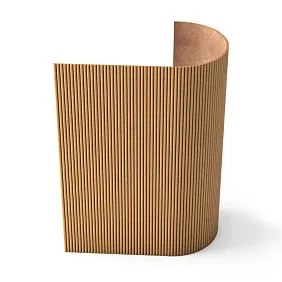
Which Walls Require a Slatted Structure: Space Diagnosis
Not every wall needs slats. It's important to acknowledge this right away to avoid the main mistake — 'if it's beautiful, then it goes everywhere.' Slats are a tool, not a universal decoration. They solve specific problems.




First problem: a wall without a focal point
When a room lacks an attraction point — no fireplace, no panoramic window, no pronounced architectural element — the gaze 'wanders' around the room and cannot find a place to settle.Slatted wall panelsOn one wall, they instantly create such a focus. Vertical rhythm is a visual 'magnet' that organizes the space around it. One accent slatted wall turns an ordinary room into a structured interior.
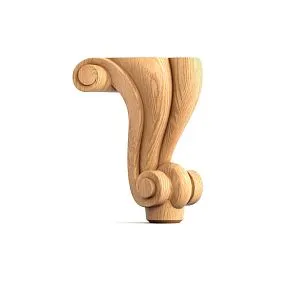
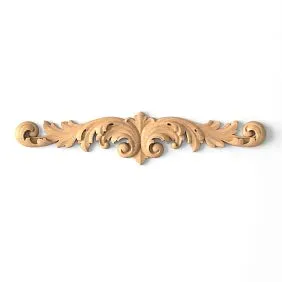
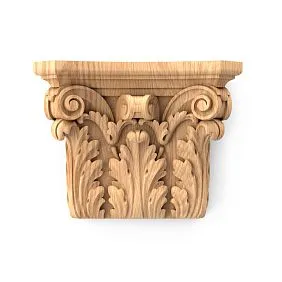
Our factory also produces:

Second task: neutralizing an empty long wall
A long neutral wall in a narrow Rostov apartment is a source of a 'sterile' feeling. A wall without structure looks unfinished, temporary. Vertical slats break the monotony: each slat is a separate vertical element, and their rhythm turns a flat surface into an active architectural plane.
Get Consultation
Third task: correcting proportions
Low ceiling? Vertical slats stretch the space upward—the eye follows the vertical lines and 'sees' a height greater than it actually is. A wide but 'flat' room? A slatted wall behind a sofa or bed creates the depth that is lacking.Wooden slat panelsOn the end wall of a narrow hallway, they stop the endless perspective—the hallway begins to seem shorter and cozier.
Fourth task: defining a zone without physical partitions
In Rostov's open-plan layouts—kitchen-living rooms, studios—a slatted wall or slatted screen acts as a visual zoning element without losing space.Slatted panels in interior designBehind a dining table, behind a sofa, behind a workspace—each time it's a 'frame' for the zone that doesn't block light or divide the air.
Fifth task: masking surface defects
In Rostov's Soviet-era buildings, uneven walls are not an exception but the rule. Wavy plaster, 'floating' surfaces, cracks around window openings.Wall finishing with slatted panelsthrough battens levels any surface without requiring expensive plaster leveling. The battens themselves create a flat geometric plane, over which the slats lay perfectly.
Rostov climate: why it matters when choosing materials
Rostov-on-Don is a city with a humid moderate continental climate. Summers are hot and humid, winters are mild. Relative humidity in summer is 60–75%, in winter with heating — 25–40%. This is a significant range, and natural wood reacts to it.
For wall slat panels in Rostov-on-Don made of solid oak, ash, or other species, it is critically important: proper protective coating (oil with wax or hard oil that seals the pores), mandatory temperature gap of 1.5–2 mm between slats during installation, and acclimatization for at least 5–7 days in the room before installation. In summer, Rostov's high humidity causes wood to swell; in winter with heating on, it dries out. The gap compensates for both processes.
MDF with sealed edges behaves more stably than solid wood under such fluctuations. For wall slat panels in Rostov in areas with unstable humidity (kitchen, hallway with entrance door, combined bathroom) — MDF with moisture-resistant film or thermowood is preferable.
Polyurethane wall molding: what it really is
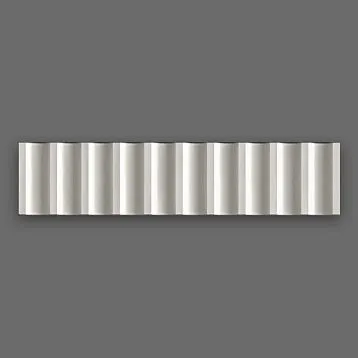
The word 'molding' evokes for many the image of heavy plaster rosettes in Soviet cinemas or luxurious Baroque interiors. This is an outdated image. ModernPolyurethane wall moldingis a fundamentally different product: lightweight, flexible, moisture-resistant, technologically precise.
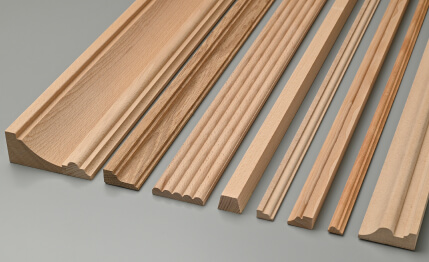
Polyurethane profiles — cornices, moldings, baseboards, corner blocks, casings, friezes — are produced by injection molding. The surface is perfectly smooth, profile details are sharp. Installation — with acrylic mounting adhesive, without wet processes or special tools. Cutting — miter box and regular handsaw. Weight per square meter — 8–12 times less than its plaster counterpart.
For Rostov new buildings, where the structure continues to settle for 3–5 years after completion, this is fundamentally important: polyurethane is elastic and compensates for micro-movements of the structure without cracks at the joints. Plaster under such conditions inevitably cracks—and not after ten years, but after the first heating season.
What is included in the polyurethane wall decor system
Polyurethane wall decor— it's not just a ceiling cornice. It's a complete system of architectural elements:
-
Ceiling cornices—the boundary between wall and ceiling, the main horizontal line of the interior
-
Wall moldings—horizontal profiles that divide the wall into zones
-
Frame moldings—geometric frames on the wall surface, creating a 'coffered' effect
-
Corner blocks—a decorative solution for profile intersections in classical styles
-
Baseboards—the boundary between wall and floor, the final lower element
-
Door and window casings—architectural framing of openings
-
Friezes and decorative panels—relief elements for creating ornamental surfaces
-
Consoles and brackets — voluminous accent details
Polyurethane molding on wallsworks on several levels simultaneously: structures the surface, sets a stylistic frame, creates a play of shadows through relief. And it doesn't require specialized craftsmen — installation is accessible for DIY work.
When wall molding enhances the interior: six situations
Situation one: the 'bare' wall-to-ceiling joint
In Rostov's new buildings, this joint is a technical problem. Building settlement causes cracks precisely here. A polyurethane ceiling cornice solves two problems at once: it hides cracks and turns a technical joint into an architectural detail. An additional effect — the cornice visually 'raises' the ceiling, creating a clear horizontal line that separates the wall plane from the ceiling plane.
Situation two: a neutral wall next to a slatted one
When one wall is covered withslatted wooden panels, and the other three are neutral, the question arises: how to 'tie' the active and neutral surfaces into a single whole? The answer — a common cornice around the entire perimeter. One continuous horizontal line unites all walls into a single architectural system, regardless of what happens on their surfaces.
Situation three: a wall without furniture
A large neutral wall without furniture is an emptiness that's difficult to 'fill' without overloading. Frame moldings create a geometric structure on an empty surface without adding physical objects. Two or three frames of different sizes, vertically oriented—and the empty wall transforms into an organized architectural surface.
Situation four: framing openings
Door and window openings in Rostov houses of Soviet construction often lack any framing or have primitive plastic casings. Polyurethane casings—geometric or with a light ornament—turn a technical opening into an architectural frame. This detail produces a disproportionately large effect: a framed opening looks 'correct,' finished.
Situation five: zoning with a horizontal line
A wall molding at a height of 85–100 cm from the floor creates a horizontal line that divides the wall into lower and upper zones. The lower part can be slatted, the upper—neutral. Or the lower part—in a darker tone, the upper—lighter. The dividing molding legitimizes this division: makes it intentional, architectural, not accidental.
Situation six: ceiling with niches and level changes
In modern Rostov apartments with designer ceilings—niches, level changes, hidden lighting—a polyurethane cornice frames the boundaries of these changes, turning technical solutions into decorative ones. A cornice around a lighting niche is a frame for a lighting effect.
How to combine slatted panels and wall decor: a system, not a collage
The most common mistake is selecting slats and molded decor separately, then trying to combine them in one space. The correct approach is the opposite: first, the system is determined, then—the details.
The principle of a unified language of forms
Slatted wall panel— linear element. It speaks the language of vertical parallels. Molding should speak the same language or a compatible one.
-
Geometric battens + geometric cornice — minimalism, modern classic, Scandinavian style
-
Geometric battens + soft ogee — transitional style, 'soft classic'
-
Brushed battens + wooden molding — eco, Nordic style, 'living' materials
-
Painting-grade MDF + painting-grade polyurethane — monochrome architectural plasticity, one color but rich relief
Principle of scale coordination
Ceiling height determines the permissible scale of all elements. This is a strict rule with no exceptions:
| Ceiling Height | Batten width | Crown Molding | Frame molding | Skirting board |
|---|---|---|---|---|
| 2.5 m | 40–55 mm | 55–70 mm | 18–22 mm | 60–75 mm |
| 2.6–2.7 m | 50–70 mm | 65–85 mm | 22–28 mm | 70–90 mm |
| 2.8–3.0 m | 65–90 mm | 85–110 mm | 28–38 mm | 85–110 mm |
| 3.0–3.3 m | 80–115 mm | 100–135 mm | 35–48 mm | 100–130 mm |
| 3.3–3.8 m | 100–140 mm | 125–165 mm | 45–60 mm | 120–155 mm |
For Rostov Khrushchyovka apartments with a 2.5 m ceiling: slat 40–50 mm, cornice 60–70 mm. Exceeding these parameters means putting pressure on the space. For Rostov Stalinist apartments with a 3.1 m ceiling: slat 90–110 mm, cornice 110–130 mm. Here, a small scale will be lost—the decor won't 'read'.
Principle of tonal unity
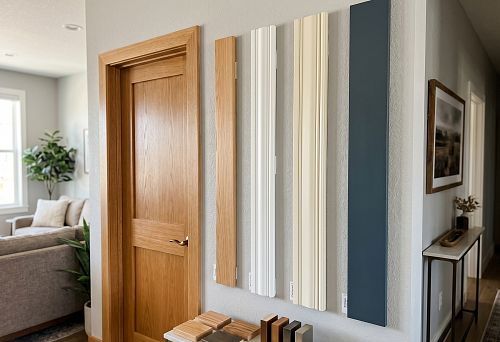
Warm wood (oak, natural ash, walnut) — warm white or cream for molded decor. Cool tone (gray MDF, light "concrete", matte white) — neutral white or cool light gray for decor. Warm battens and cool white decor create tonal dissonance that is difficult to formulate but easy to feel.
Complex wall architecture: five working schemes
First scheme: three-level wall
A classic of the genre that works in any space:
-
Lower belt (0–90 cm):slatted panels for wall finishing— vertical rhythm, warm texture, protection from mechanical damage
-
Horizontal dividing molding: a boundary between zones creating a visual "horizon"
-
Upper belt (90 cm — ceiling): neutral surface or frame moldings
-
Ceiling cornice: finishing horizontal line
This scheme is good because the batten zone does not "capture" the entire wall — it remains an accent. The upper neutral zone "opens" the space upward. The cornice completes it all like a period at the end of a sentence.
Scheme two: full slatted wall in a frame
Slats from floor to ceiling on one wall — and a frame molding around the perimeter of this wall. The slats inside the frame are perceived as a 'painting' — a self-sufficient architectural composition with a clear boundary. Three neutral walls emphasize this painting through contrast.
For a Rostov living room: a slatted wall behind the sofa — with a frame molding around the perimeter — and a single cornice around the entire perimeter of the room. A perfect, complete system.
Scheme three: monochrome slatted and molded wall
paintable slatted wall panels + polyurethane decor→ unified paint color. The surface gains a rich texture — both through the verticals of the slats and the horizontals of the moldings — without color tension. Shadows from the profiles under side lighting create a lively geometry. White monochrome expands small Rostov apartments. Dark monochrome (anthracite, deep gray, sapphire blue) creates an atmosphere in large spaces.
Scheme four: zonal frames without slats
Frame moldings on a neutral wall without slat cladding — for rooms where slats are excessive in character (children's room, small bedroom), but the wall requires structure. Three or four rectangular frames in the upper part of the wall create a geometric grid. Combined with a ceiling cornice — a full-fledged, cohesive architectural system without a single slat.
Scheme five: slatted panel behind a mirror
In the hallways of Rostov apartments — narrow, dark, with small area — verticalslatted wall panels for interior finishingbehind the mirror create a depth that does not exist in reality. The mirror doubles the slatted rhythm — and the hallway visually transforms into a spacious hall. Polyurethane door trims complete the solution.
Where it works especially well: breakdown by zones
Living room: one accent wall rules them all
Slatted panels in the living room interior— always choose one wall. Which one? The one you see first when entering the room. Or the wall behind the sofa, along which the seating area is arranged. It should be a wall without windows or doors — so the rhythm of the slats isn't interrupted by openings.
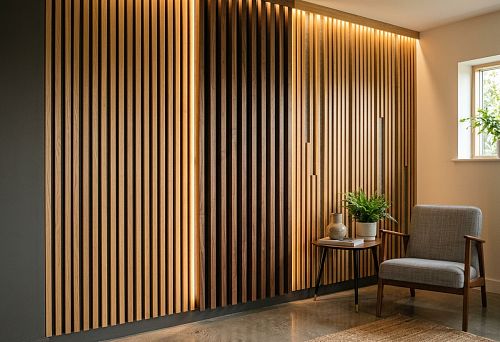
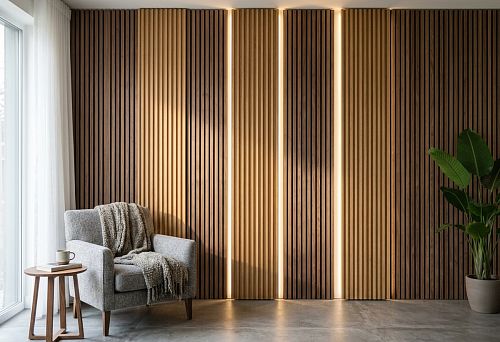
TV area with slatted panels— the second most popular option. Slats behind the TV from floor to ceiling,Slatted panels with lighting— hidden 2700K LED strip in the gaps between the slats. In the evening, warm light flowing from the wooden surface — one of the best lighting effects for a residential interior.
Molding in the living room: a general cornice around the perimeter is mandatory. Frame moldings on neutral walls are optional, depending on ceiling height and style. For Rostov Stalin-era buildings: corner blocks, moldings with a soft profile — all of this is organic with ceilings of 3.0–3.2 m. For new builds: geometric cornice without ornament, frames made of flat molding 22–30 mm.
Bedroom: quietness through delicacy
slatted panels in the bedroom— the wall behind the bed headboard. Only one wall. Light tones: milk ash, natural oak with a light cut, MDF in white or light cream. In a Rostov bedroom of 12–14 sq. m, dark wood will create a feeling of tightness — especially during the hot summer period, when psychologically you want space and coolness.
Narrow slat spacing in the bedroom — 45–55 mm with a slat width of 50–65 mm. A dense rhythm creates an enveloping, wrapping effect. It is precisely this that is responsible for the feeling of coziness and security in a sleeping space.
Molding decor in the bedroom: strict principle of 'less is more'. Cornice with a simple geometric profile 60–75 mm. Frame moldings — only if the ceiling is higher than 2.8 m. No ornament or corner blocks with rich relief: the bedroom is a space of peace, not a ceremonial hall.
Hallway and corridor: optics in a limited space
Slatted panels in the hallway interior— here every centimeter counts. Vertical slats along one long wall create an optical perspective. The eye follows the parallel vertical lines and perceives the space as longer. A paradox, but it works.
For Rostov hallways: only light-colored slats, narrow spacing, thin cornice 65–80 mm. Dark wood in a narrow hallway turns it into a tunnel — visually, psychologically, unequivocally.
Polyurethane door casings in the hallway are a key detail. In a space where several doors stand side by side, casings create a 'frame' for each opening and turn the wall with doors into an architectural rhythmic sequence. This is what distinguishes a professional result from an amateur one.
Kitchen: technology dictates the choice
Slatted panels in the kitchenin Rostov — the dining table area, sofa zone in a kitchen-living room, sometimes — a decorative wall behind the dining group. The work apron — never: grease, steam, water splashes are incompatible with a wooden surface without special protection.
Materials for the kitchen: film-coated MDF with a matte surface — maintenance with a damp cloth, without oil impregnation. Thermowood — if you want a natural texture with guaranteed resistance to moisture and temperature fluctuations.Slatted wall panel made of MDFin 'dark walnut' or 'grey oak' color behind the dining table in a light kitchen — a visual 'anchor' point that makes the dining area a separate, independent space.
Molding in the kitchen: a simple cornice 65–80 mm without fine ornamentation. Fine relief + kitchen environment = an accumulator of grease deposits that cannot be cleaned. Baseboard at the floor — mandatory, it covers the joint with the floor covering.
Cabinet: Structure as a Metaphor for Order
Wooden slat panelsIn a home office — at the desk. This is a visual 'background of thought': dark wood behind the monitor creates a 'cabinet' effect — serious, focused. Dark oak, walnut, wenge are the right choices for a workspace.
Frame moldings around built-in shelving and bookcases frame the contents of the shelves as an architectural element. Books and folders inside a polyurethane frame are perceived as part of the interior — not as a chaos of things.
How to Maintain Proportions and Spacing: Detailed Mechanics
Slat Spacing: Three Formulas
Slat spacing — the distance between the centers of adjacent slats or the distance between their edges (gap). Different styles require different spacing:
Dense rhythm (gap 30–45 mm with slat 50–65 mm): creates a cozy, dense effect. Good for bedrooms, offices, relaxation areas. The surface is perceived as 'closed,' warm.
Medium rhythm (gap 50–70 mm with slat 55–75 mm): a universal option. Balance between openness and structure. Works in living rooms, hallways, entryways.
Sparse rhythm (gap 80–120 mm with slat 60–90 mm): an airy, light effect. Suitable for high-ceilinged rooms, large spaces. In a small room, a sparse rhythm creates a sense of incompleteness.
Ratio of Slatted Zone to Wall Height
For a three-level scheme, the optimal ratio:
-
Lower paneling zone: 30–40% of wall height
-
Middle neutral zone: 50–60% of height
-
Cornice: 5–8% of height
With a 2.7 m ceiling: lower paneling zone 80–100 cm, cornice 70–85 mm.
Horizontal divider: where to place it
Molding-divider between the paneling and neutral zones — not at an arbitrary height. There are several 'correct' positions:
-
85–90 cm: windowsill level — creates a visual 'horizon' at eye level when seated
-
100–110 cm: countertop level, work surfaces — a unified horizon for the entire room
-
120–130 cm: 'English' style — a higher lower belt with a more pronounced proportion of wooden surface
Placing molding at 75 or 95 cm is not a catastrophe, but visually it's 'neither here nor there.' The human eye perceives fractional heights as random. Anchoring to a clear horizontal logic is the best solution.
What kills the entire composition: seven deadly mistakes
Mistake one: three slatted walls in one room
One accent slatted wall is a focus and a magnet. Two is already tension. Three is chaos with no way out without complete dismantling. In slatted wall panels in Rostov-on-Don, as everywhere, the iron law applies: one accent per space.
Mistake two: too wide a slat in a low room
A 120–140 mm slat with a 2.5 m ceiling is like wearing a coat three sizes too big. It doesn't 'raise' the ceiling—it presses down on it. The scale mismatch cannot be fixed by any play of tones.
Mistake three: stucco decor of the wrong style
Geometric slats made of light MDF—and a Baroque cornice with acanthus leaves. Each of these elements is beautiful separately. Together they create a schizophrenic space where neither style can win.Types of slat panelsdiffer fundamentally in style code—and the cornice must correspond.
Mistake four: unfinished transitions
Buy slatted panels for wall finishing, install — and forget about the skirting board, starter profile, corner elements, and reveals. Exposed slat ends, unfinished corners, lack of skirting — this is a 'raw' result that produces the opposite effect: expensive material looks cheap precisely due to the absence of finishing details.
Mistake five: slats without a ventilation gap in Rostov
Rostov's hot, humid summers and dry heating season require a ventilation gap between the wall and the battens — at least 10–15 mm. Without it, condensation accumulates behind the wooden battens under high humidity, leading to mold and deformation. This is not an aesthetic but a technical issue.
Mistake six: mixing two different wood tones
Warm reddish oak and cool gray-brown walnut in the same room — a tonal conflict that is 'read' immediately. If the space combines slats and wooden furniture, floorboards, doors — they should be in a unified tonal group. Warm with warm, cool with cool.
Mistake seven: choosing a sample based on a phone screen
A phone screen gives a bright, saturated, warm picture. In reality, the same oak under the cold LED lighting of an apartment looks different. Always request a sample and evaluate it under your lighting. This is half an hour that saves a month of rework.
Materials for slatted panels: from solid wood to MDF
Solid oak: living texture with character
Oak Slat Panel— the most in-demand material for 'above average' and 'premium' class interiors. Oak is dense, resistant to mechanical damage, with an expressive texture. Tangential cut — a 'flame-like' pattern, lively and dynamic. Radial — calm parallel fibers with a fine texture.
For Rostov-on-Don: oil finish with pore sealing is mandatory. Hard oil forms a protective layer that prevents humid air from penetrating the fiber structure during the summer period.
MDF: predictability in the professional sense
MDF Slatted Wall Panel— a medium-density board with a decorative surface. Sealed edges, wood, stone, concrete, or monochrome film — predictable behavior across the entire range of household humidity. For the Rostov climate with its humidity fluctuations, MDF demonstrates excellent stability.
slatted modular wall panel— made of MDF — a ready-made module: slats on a single backing. Installed as a panel — without fitting each slat separately. Perfect for DIY installation.
MDF for painting: architectural plasticity in color
paintable slatted wall panels+ polyurethane decor for painting = a monochrome system. This is not saving on finishing — it's a conscious design decision: the richest relief through form, not through color.
Flexible slatted panels: for non-standard geometries
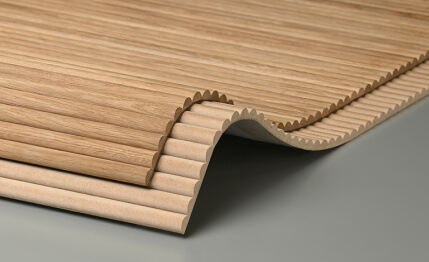
soft slat panels— slats on a flexible base for curved surfaces. Arches, rounded columns, semicircular niches — this material is indispensable. For Rostov apartments with non-standard layouts — an essential tool.
Installation of slatted panels: from the first dowel to the last detail
installation of slatted panels— a process where there are no minor details. Every stage affects the outcome.
Battens: the foundation of the system
For solid wood — always via battens. 40×40 mm timber horizontally, with 400–450 mm spacing. Strictly level. Ventilation gap between the wall and timber — 10–15 mm. In the Rostov climate, this is not an option but a mandatory condition: ventilation prevents condensation buildup.
For modular MDF panels on a flat wall — installation with mounting adhesive is possible, but horizontal timber for support is still recommended.
First slat: the precision that defines everything
How to install slatted panels— the first slat is installed strictly vertically. Level check is mandatory. A deviation of 1 mm/linear meter towards the ceiling results in a 2.5–3 mm offset — and the entire slat pattern 'drifts'. Correcting this without dismantling is impossible.
Starter profile at the floor — holds the first slat and conceals the gap between the lower end and the floor. Without it — an open end and a gap that cannot be neatly closed afterwards.
Thermal gap: mandatory for Rostov
For solid wood in the Rostov climate: 1.5–2 mm between slats during summer installation, 2–2.5 mm during winter. In summer, the wood is already swollen from moisture — it will shrink during winter drying. If there is no gap — the slats will buckle. Wedges or special spacer shims during installation ensure a consistent gap along the entire length.
Finishing elements: 15% of the budget, 80% of the perception
Installation of batten panelsWithout finishing elements — an incomplete job. List of mandatory items:
-
Starter profile at the floor (hides the bottom end)
-
Finishing profile at the ceiling (hides the top end — or a cornice covers it)
-
Corner profiles on external corners
-
Internal corner pieces on incoming corners
-
Slopes made of slatted panelson window and door openings
Special applications: ceiling, hallway, kitchen
Slatted ceiling: the fifth dimension of interior
Batten panels for ceilings— a separate structural story. Ceiling slats are mounted on special suspension systems. The direction of the slats determines the visual effect: across the long axis of the room — makes the room wider, along — elongates.
For Rostov corridors with insufficient lighting: slatted ceiling with lighting – slats perpendicular to the corridor axis + hidden lighting = the space is completely transformed.
Facade panels: a special story for the Rostov climate
Slatted Façade Panels— only thermally modified wood or WPC. Rostov summer sun is direct, intense, with surface temperatures up to 70°C on the sunny side. Regular wood cannot withstand such loads – it will dry out, warp, and lose its protective coating in one season.
STAVROS: a systematic approach to a complex wall
When it comes to a complete finishing system – slatted wall panels plus polyurethane wall moldings – it is important that all elements are produced in a unified stylistic and scale key. This is exactly how STAVROS works.
STAVROS producesRafter panels— made from solid oak, ash, thermally modified wood, MDF with decorative coating and for painting. Simultaneously – a complete line ofof polyurethane wall moldings: cornices, moldings, baseboards, frame profiles, corner blocks, architraves, friezes. All products are developed with systematic logic – stylistic series, coordinated scales, compatible profiles.
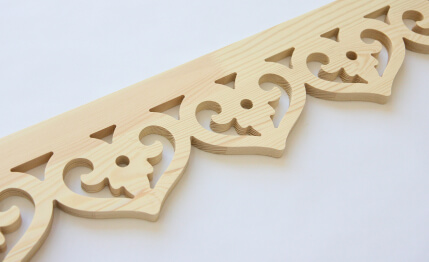
Pogonazh iz massiva— for interiors where the unity of natural wood in cornices, baseboards, and moldings is important.Polyurethane appliqués— for decorative accents on walls: medallions, rosettes, consoles, panels with relief.
Slatted wall panels in Rostov-on-Don are not a question of 'where to buy,' but a question of 'what to buy them with.' A slat without the correct cornice, molding, and finishing elements is an unfinished idea. The STAVROS system allows you to build a complete wall architecture from baseboard to cornice – in one style, one scale, with a guarantee of compatibility for all elements.
Delivery to Rostov-on-Don is standard. Samples — before ordering. A step you cannot skip: evaluate the sample of slatted panels and cornice together, under your lighting, on your wall. This is the only way to ensure the system will work precisely in your space.
FAQ: Answers to popular questions
Which wall slatted panels are suitable for Rostov-on-Don considering the climate?
For areas with unstable humidity (kitchen, hallway) — film-coated MDF with sealed edges or thermowood. For living rooms — solid oak with oil finish, with a mandatory 1.5–2 mm gap between slats and a lathing with a 10–15 mm ventilation gap.
Is a cornice needed if slatted panels are already installed?
Yes, it is mandatory. The cornice completes the system, creates a unified horizontal line around the entire perimeter, and visually 'raises' the ceiling. A slatted wall without a cornice is an unfinished system.
Can polyurethane decor be combined with wooden slats?
Yes, and it should be. Polyurethane cornice for painting + warm solid wood is a classic and organic combination. The key: choose a warm white for the cornice if the wood is in a warm tone.
What slat spacing to choose for a small Rostov room?
Dense rhythm: gap of 35–50 mm with slat width of 50–65 mm. A dense rhythm creates a sense of coziness and does not 'thin out' the space.
Can slat panels be installed independently?
Yes, especially modular panels on a substrate. Step-by-step installation instructions are in the article How to install slatted panelsThe main thing: the first slat strictly vertical, gap, lathing with ventilation gap.
How to choose wall molding for a specific interior style?
Focus on the profile: geometric — for modern styles, soft ogee — for 'soft classic', ornamental — for neoclassical and historical styles. The scale of the cornice is determined by the ceiling height according to the correspondence table.
How much material to take with a margin?
15% of the calculated volume is a universal rule for slats and molding. Consider corners, slopes, trimming when joining.
Which cornice to choose for a Rostov new building with settlement?
Polyurethane — definitely. The elasticity of polyurethane compensates for micro-movements of the building without cracks at the joints. Plaster in a new building will crack within the first or second year.