








































Article Contents:
- Why chaotic purchasing ruins the entire interior
- Three signs of chaotic purchasing
- What does 'a project of compatible solutions' mean
- Moscow context: what apartments and what tasks
- How to choose slatted panels to match the style and room
- First question: what material?
- Second question: what slat width?
- Third question: what installation format?
- How to navigate polyurethane molding categories
- First category: horizontal profiles
- Second category: vertical profiles
- Third category: frame profiles
- Fourth category: accent decor
- How to combine slatted panels with ceiling decor: top-down logic
- Cornice as the 'style passport'
- Vertical scale rule
- Lighting in slatted panel systems
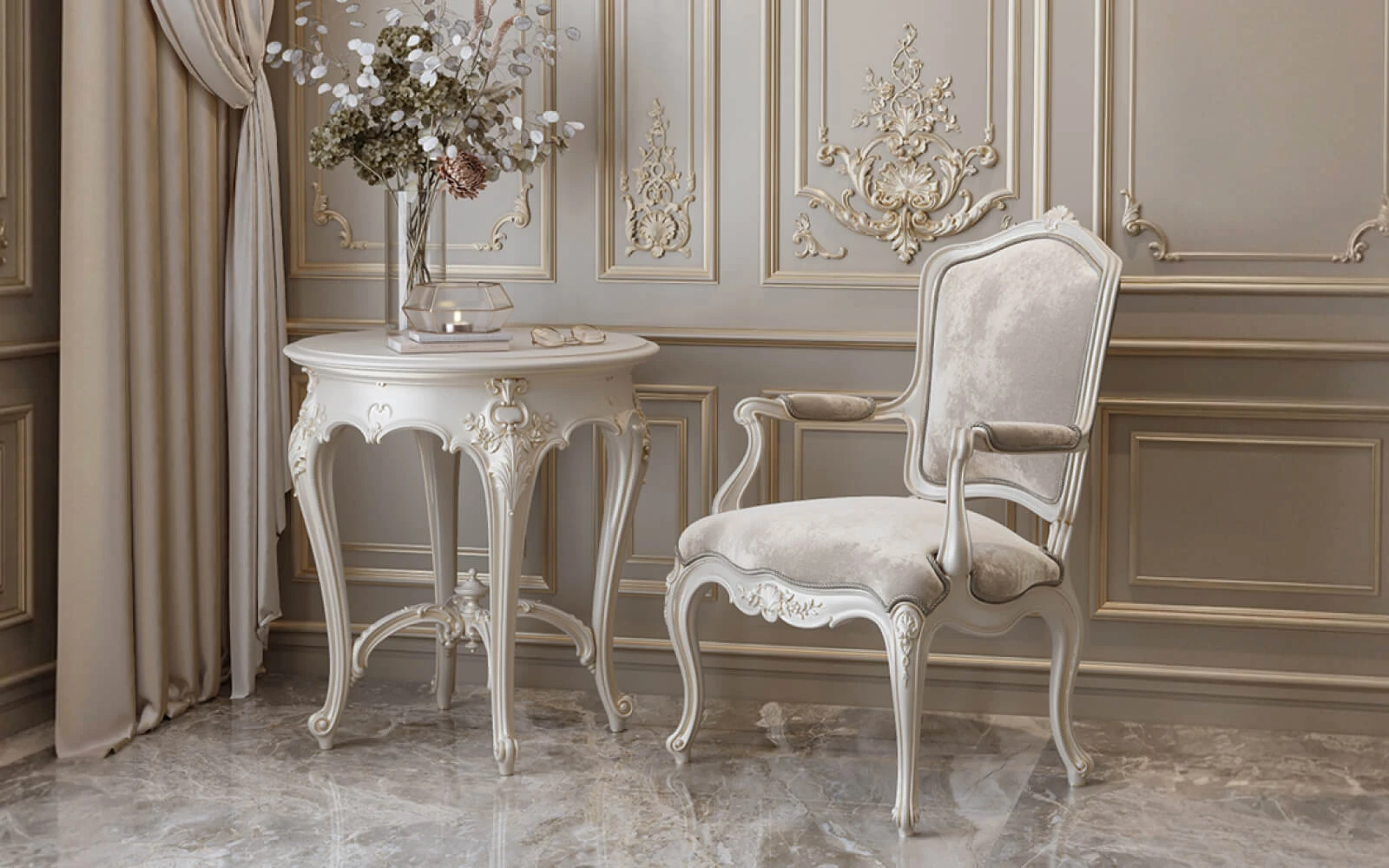
- Wall decor: moldings and frames paired with slats
- Architectural Implementation
- Molding and Rail Compatibility Requirements
- Door and Window Decor: Casings as a Connecting Element
- How to Choose a Casing for a Rail
- Window Reveals
- Pre-Order Checklist: Practical Guide
- For slatted panels
- For Polyurethane Molding
- How to Avoid Material Incompatibility
- Polyurethane and Natural Wood: Thermal Gap
- MDF and Polyurethane: Primer and Paint
- Finish color: tonal triangle
- Slatted panels in specific areas of a Moscow apartment
- Living room: TV area and sofa wall
- Bedroom: delicacy as a principle
- Hallway and corridor: optics against crampedness
- Kitchen-living room: functional zones through material
- Study: concentration through dark material
- Installation as part of the system: cannot be separated
- Battens: ventilation is mandatory
- Acclimatization: especially important in Moscow
- System installation sequence
- How to install slatted panels: fasteners for different surfaces
- Most common mistakes in Moscow renovations
- First mistake: focusing on photos without considering the space
- Second mistake: saving on finishing profiles
- Third mistake: too many slats in a small space
- Fourth mistake: different styles in one room
- Fifth mistake: buying without samples
- Sixth mistake: ignoring the scale of decor
- System selection: algorithm for independent design
- STAVROS: a system, not a store
- FAQ: Answers to Popular Questions
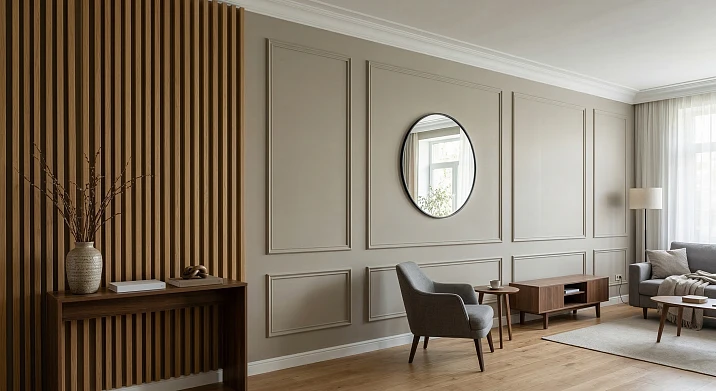
Moscow is a city where thousands of apartments are being built and renovated simultaneously. Every day, hundreds of people search for where to buy slatted panels in Moscow while simultaneously studying moldings, cornices, and trim. They buy. They install. And then they stand in the middle of the finished room and feel something is off—not in individual elements, but as a whole.
This effect is called 'a collection of goods instead of a project.' Each detail is good on its own. The slats are beautiful. The cornice is high-quality. The moldings are finely crafted. But together, they don't work as a system—because they were chosen separately, without a unified logic. This article is dedicated to this very mistake.
If you're planning to address the issue of wall slatted panels and simultaneously figure out polyurethane moldings—read without rushing. There are no empty recommendations here. Only specifics that work.
Why chaotic purchasing ruins the entire interior
There is an illusion that haunts many clients: 'the main thing is to choose good materials, and everything else will fall into place.' This is not true. And in expensive renovations, this is no less true than in budget ones.
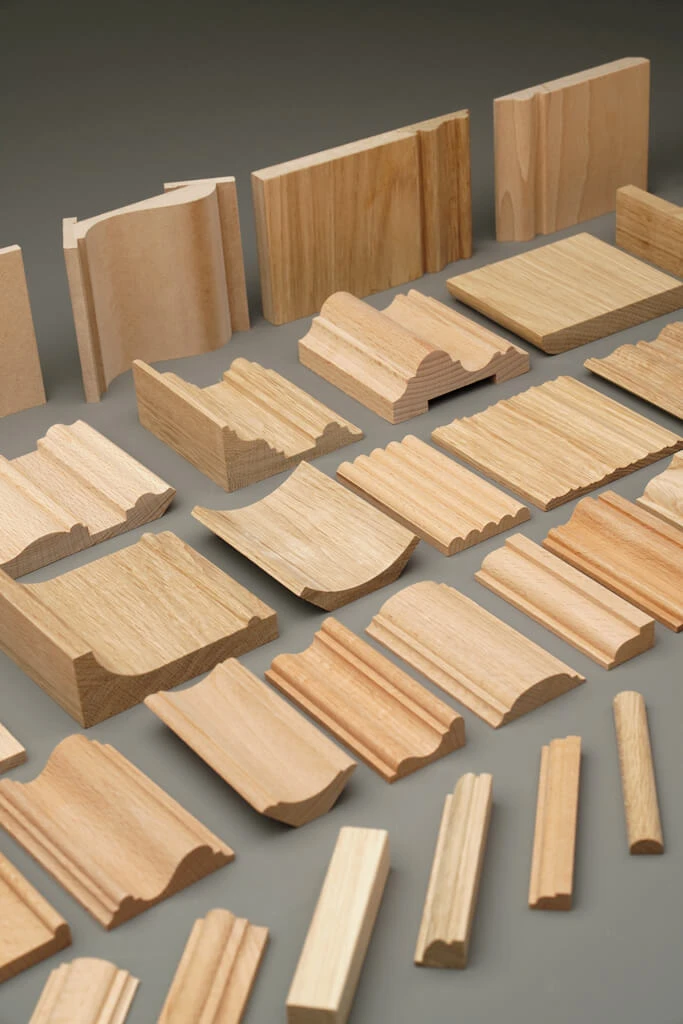
The problem is not the quality of individual elements. The problem is the lack of connection between them. Wall slatted panels are chosen based on one logic. The ceiling cornice is bought because 'I liked this one.' The baseboard is taken 'by size, to cover the gap.' The door casings—'whatever was available.' In the end, each detail is a soloist, but there is no orchestra.


Three signs of chaotic purchasing
Scale mismatch. A 130 mm cornice in an apartment with 2.65 m ceilings feels oppressive and overbearing. A 45 mm baseboard with the same ceilings reads as a temporary plug. The scale of decorative elements is not an aesthetic choice but a mathematical calculation. Violating scale proportions is instantly visible and cannot be hidden with furniture.
Conflict of stylistic languages. A geometric slat without ornament, installed next to a Baroque cornice with acanthus leaves, is not 'bold eclecticism.' It's a stylistic conflict. Each element belongs to a different vocabulary of forms, and they do not communicate with each other.
Tonal break. A warm honey oak batten and a cold white RAL 9003 cornice are different color temperatures that clash in one space. Tonal coherence is what the eye registers before the brain has time to formulate the problem.
Our factory also produces:


What does 'a project of compatible solutions' mean?
It's when the general logic is formulated before choosing specific items: style, scale, tonality, material base. And only after that are elements selected that correspond to this logic. Not 'which cornice is prettier,' but 'which cornice is compatible with the chosen batten in this room with this ceiling height in this style.'
Sounds complicated? In practice, it's a few questions that are asked once before purchase. Below — for each of them.
Get Consultation
Moscow context: what apartments and what tasks
Moscow is a city with colossal diversity in its housing stock. From constructivist houses of the 1920s to monolithic skyscrapers of 2025. Each type has its own geometry, its own ceilings, its own architectural logic.
Pre-revolutionary buildings and Stalin-era apartments: ceilings 3.0–4.2 m, wide rooms, massive openings. Large-scale cornices, wide battens, frame moldings with moderate ornamentation are organic here.
Khrushchyovka and Brezhnevka apartments: ceilings 2.48–2.65 m, narrow hallways, adjoining layouts. Precision of scale is needed here: a 15 mm error in cornice width is immediately noticeable.
Panel houses from the 1980s: ceilings 2.62–2.72 m, even surfaces, standard openings. Slatted wall panels in neutral tones with geometric decor work well.
Monolithic new-builds: ceilings 2.7–3.2 m, open floor plans, non-standard zoning. Maximum freedom for a design approach — but also maximum responsibility for decisions.
Private houses in the Moscow region: ceilings from 2.7 m to 'as you wish', often arches, rounded transitions, open staircases. Here, you often need soft slat panels for curved surfaces and non-standard decor.
For each of these contexts — its own system of compatible solutions. Let's start with the main tool.
How to choose slatted panels to match the style and room
Before looking at specific items and searching for where to buy slatted panels in Moscow, answer three questions. They determine everything else.
First question: what material?
Types of slat panels on the market — solid wood, MDF with decorative coating, MDF for painting, thermally modified wood, WPC. Each material has its own logic of application.
Solid oak, ash, walnut — natural, living texture that does not age aesthetically. Wooden slat panels react to humidity and temperature: mandatory acclimatization for 5–7 days, ventilation gap during installation, oil coating with sealed ends. If these conditions are met — a material for decades.
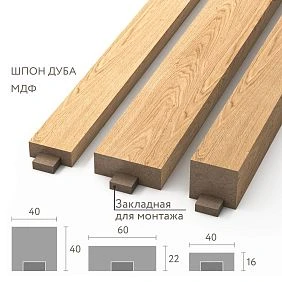
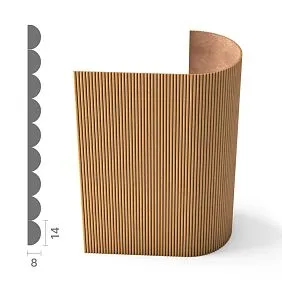
MDF with decorative coating — stable geometry, wide choice of decor, predictable behavior in Moscow's climate.MDF Slatted Wall Panelwith sealed edges — one of the most technically reliable options for a city apartment.
MDF for painting — absolute adaptability. Tired of the color — repaint at any moment in one day. The profile of the slat remains, only the tone changes.paintable slatted wall panelsin combination with polyurethane decor — a system that is repainted entirely and updates the interior without dismantling.
Thermowood — zero hygroscopicity, absolute stability, dark saturated tone. For bathrooms, kitchen areas, loggias, saunas. Nordic character — not liked by everyone, but those who like it — for good.
Second question: what is the width of the slat?
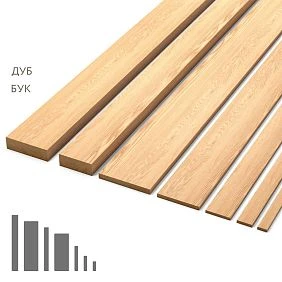
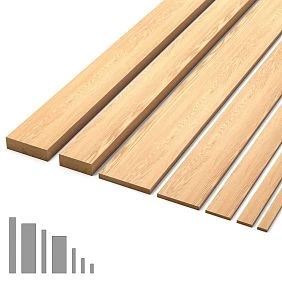
This is not a matter of taste. This is a matter of the physics of perception. Rule: the width of the slat is proportional to the height of the ceiling. Violation — a conflict of scale.
| Ceiling Height | Optimal batten width | Permissible range |
|---|---|---|
| 2.5–2.6 m | 42–55 mm | 38–62 mm |
| 2.65–2.75 m | 52–68 mm | 48–75 mm |
| 2.8–3.0 m | 65–88 mm | 58–95 mm |
| 3.0–3.3 m | 82–110 mm | 75–120 mm |
| 3.3–4.0 m | 100–140 mm | 90–160 mm |
Don't aim for the maximum of the range—the middle is always safer. Extremely wide slats with an average ceiling create a pressing horizontal rhythm.
Third question: what installation format?
Individual slats—for those who want complete freedom in choosing the rhythm and spacing between slats. Requires careful professional installation: an error with the first slat is replicated across the entire wall.
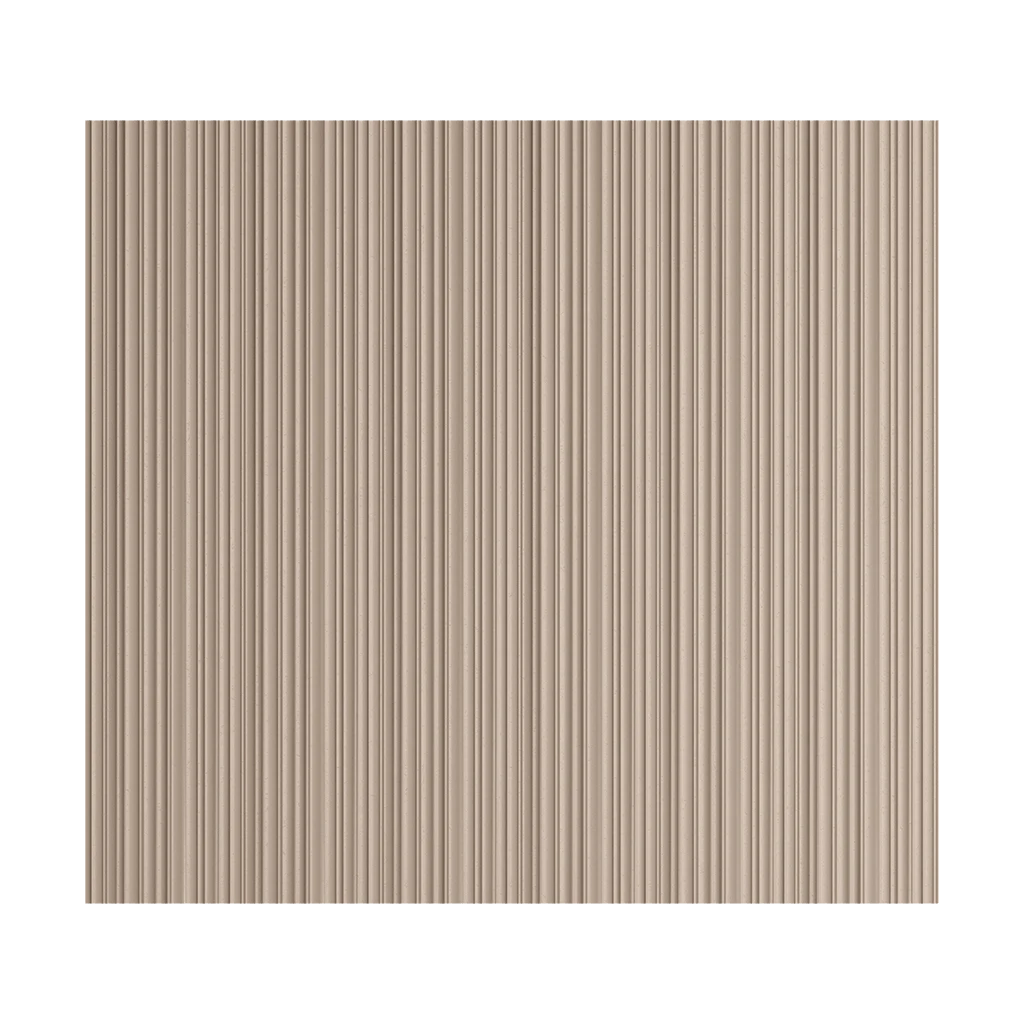
slatted modular wall panel— reiki on a single substrate. Installs faster, risk of geometric error is minimal. An excellent choice for DIY installation.
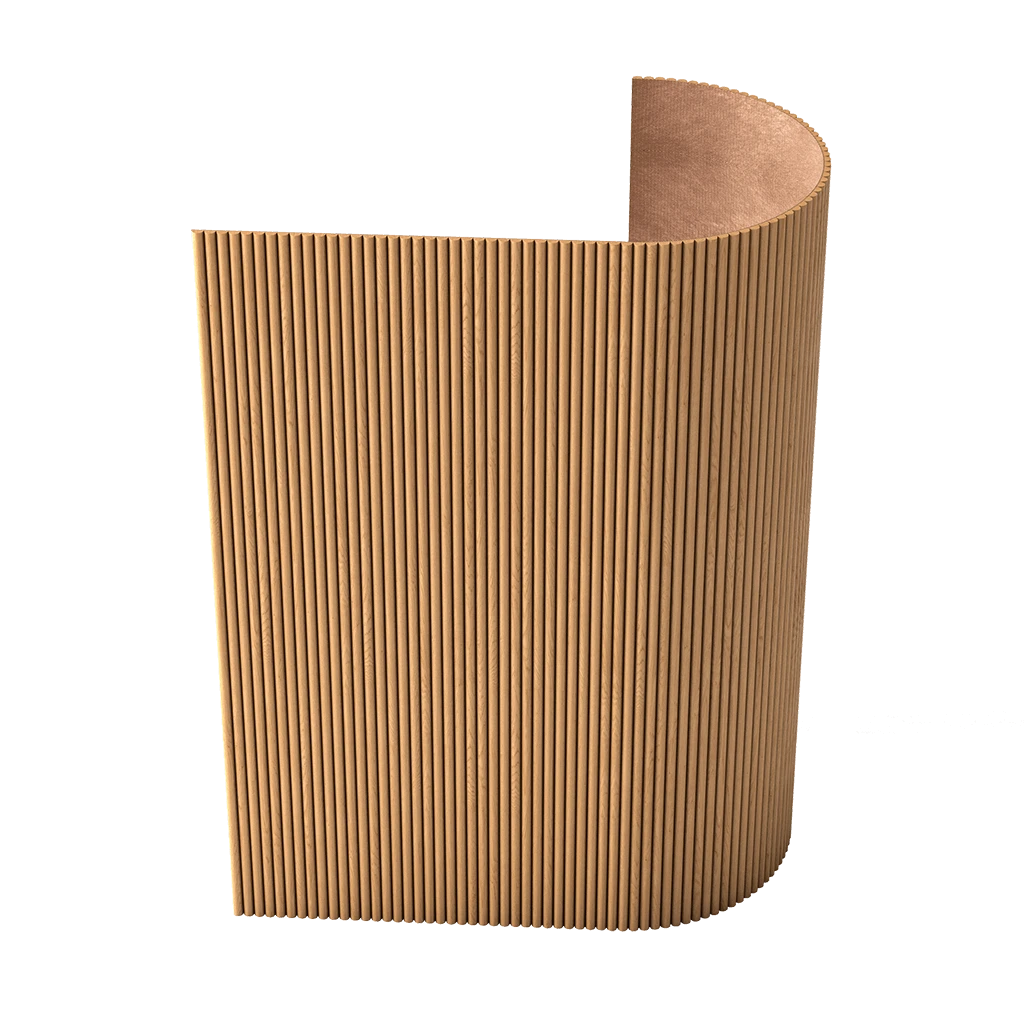
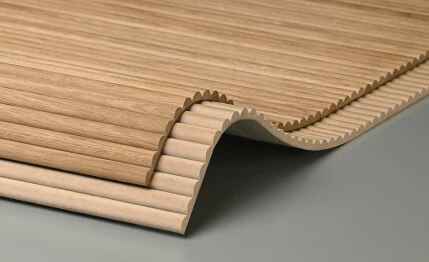
soft slat panels— for non-standard surfaces: arches, columns, rounded walls. Indispensable in Moscow new builds with custom layouts.
How to navigate the categories of polyurethane molding
The one who opens a polyurethane molding store for the first time often gets lost. Cornices, moldings, baseboards, brackets, medallions, friezes, pilasters, capitals, architraves, corner blocks, rosettes — the assortment is extensive. How to navigate this without special education?
Let's break down the categories by function — it's the only logic that works.
First category: horizontal profiles
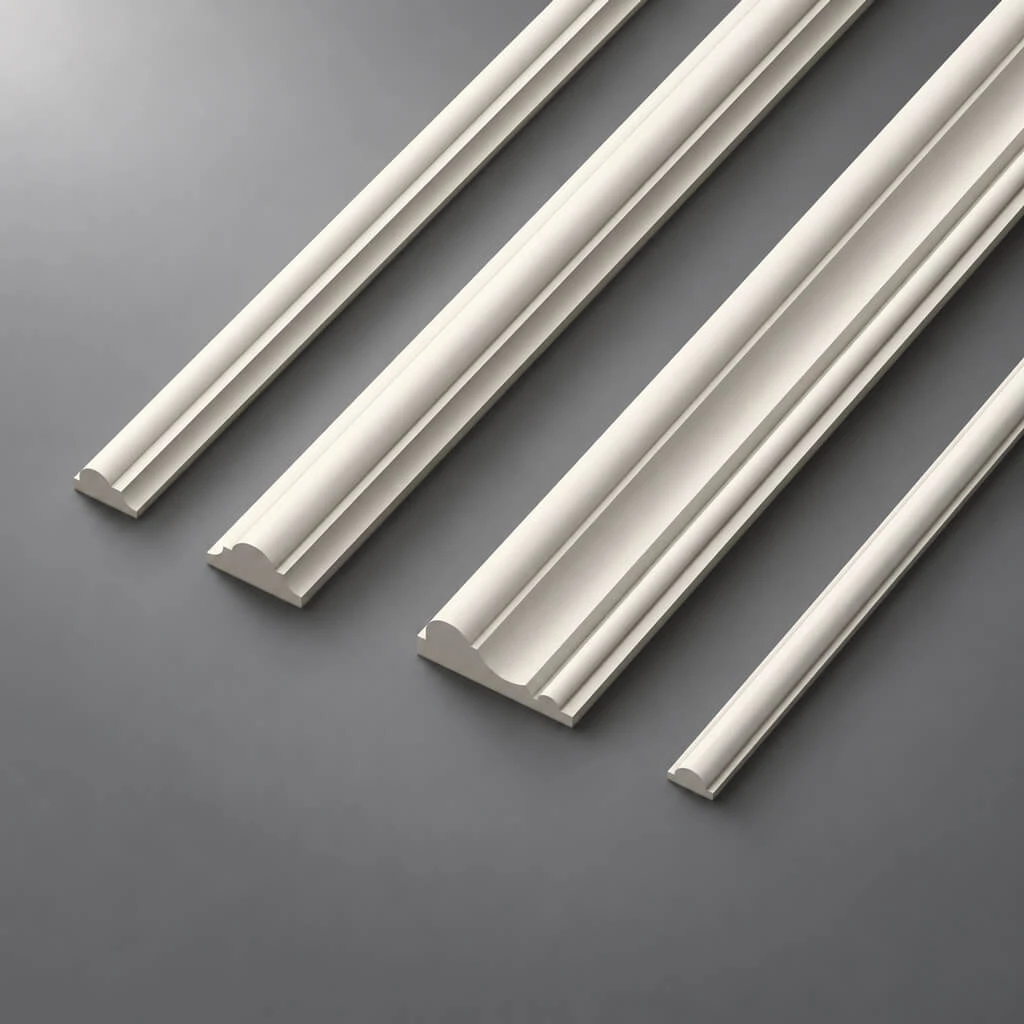
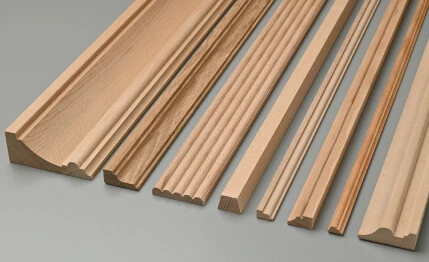
These include ceiling cornices, friezes, wall baseboards. Their function is to create horizontal lines, dividing space into zones: ceiling/wall, wall/floor. This is an architectural function, not a decorative whim.
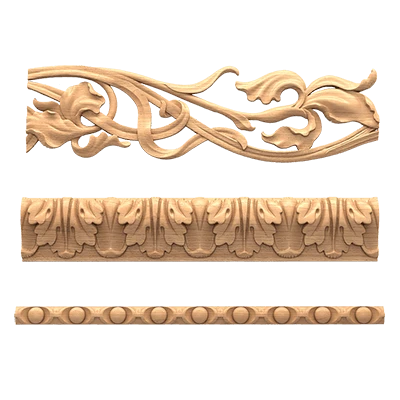
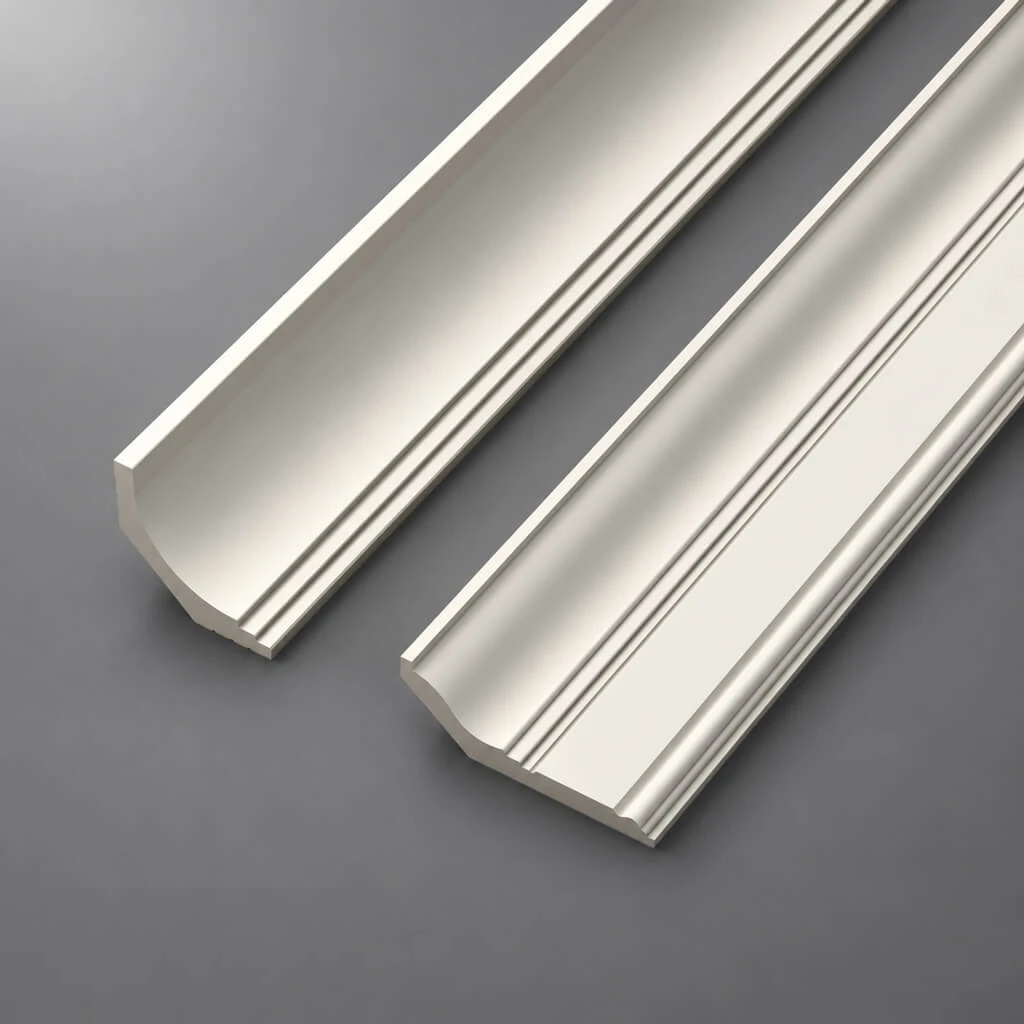
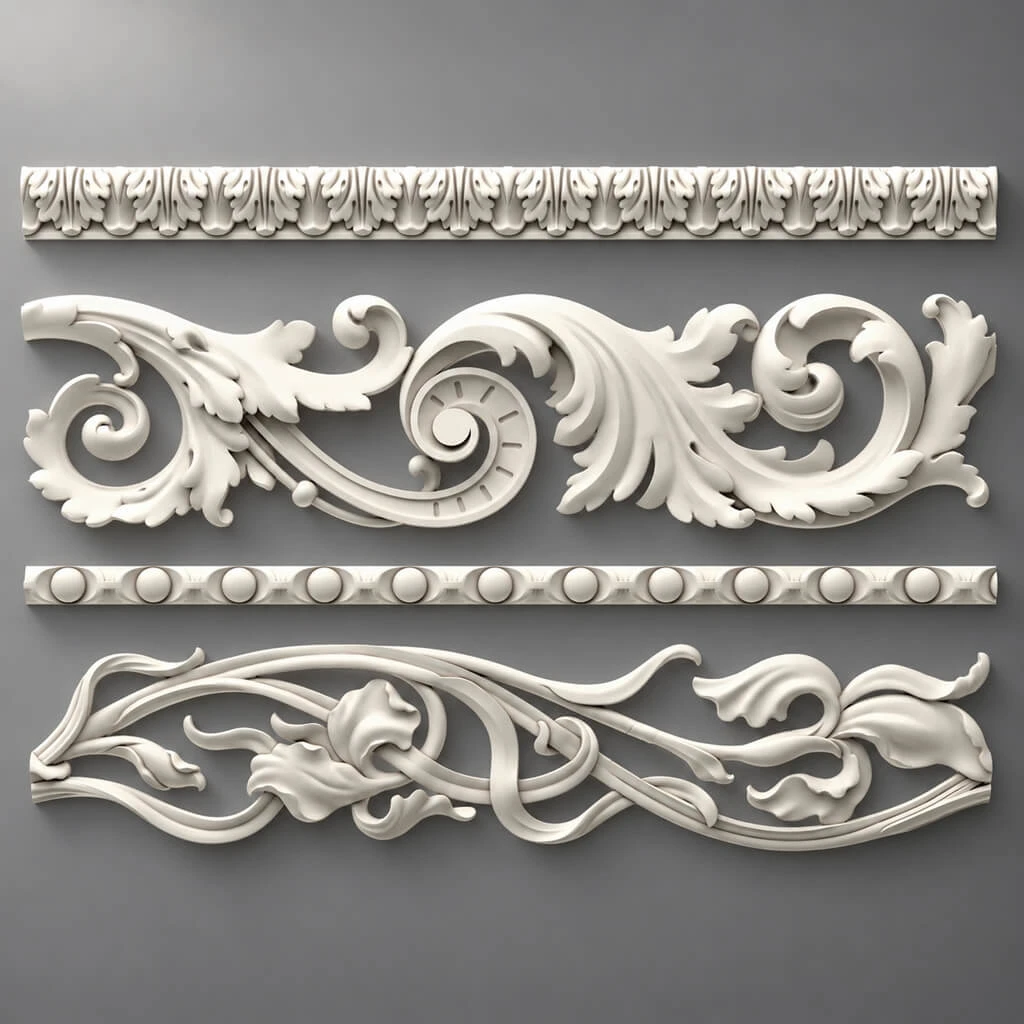
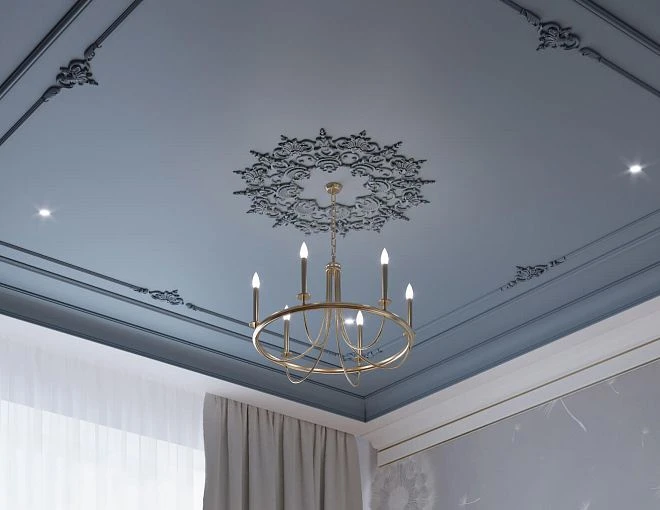
Ceiling cornice — the most important element in the entire system. It conceals cracks at the wall-ceiling joint, visually raises the ceiling, completes the upper zone of the interior. A geometric profile (right angle with a bevel or slight ogee) — universal for any style. An ornamental profile (with leaves, beads, rocaille) — only for classical styles with corresponding context.
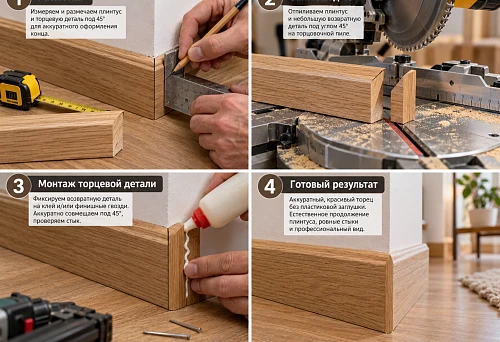
Baseboard — the lower horizontal line. Protects the wall from impacts, closes the gap between wall and floor, creates a visual 'base' for the space. Without a baseboard, the space feels unfinished — even with expensive finishes.
Category two: vertical profiles
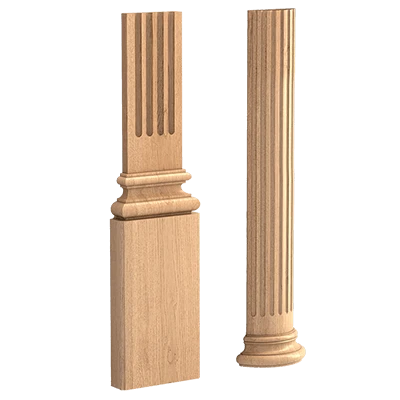
Door and window architraves, pilasters, corner profiles. Their function is to frame openings and vertical architectural elements, creating clear boundaries between surfaces.
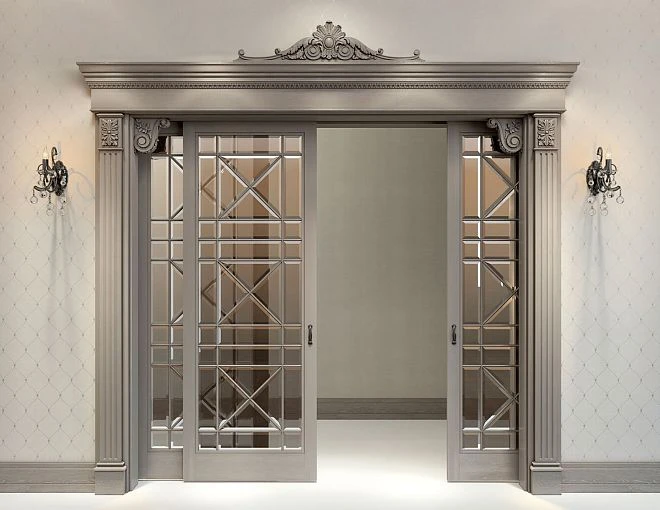
An architrave is a detail that produces a disproportionately large effect. A door opening without an architrave looks technical—like a hole in the wall. With the right architrave—like an architectural element. Architrave width: 55–75 mm for modern styles, 75–110 mm for classic styles.
Category three: frame profiles
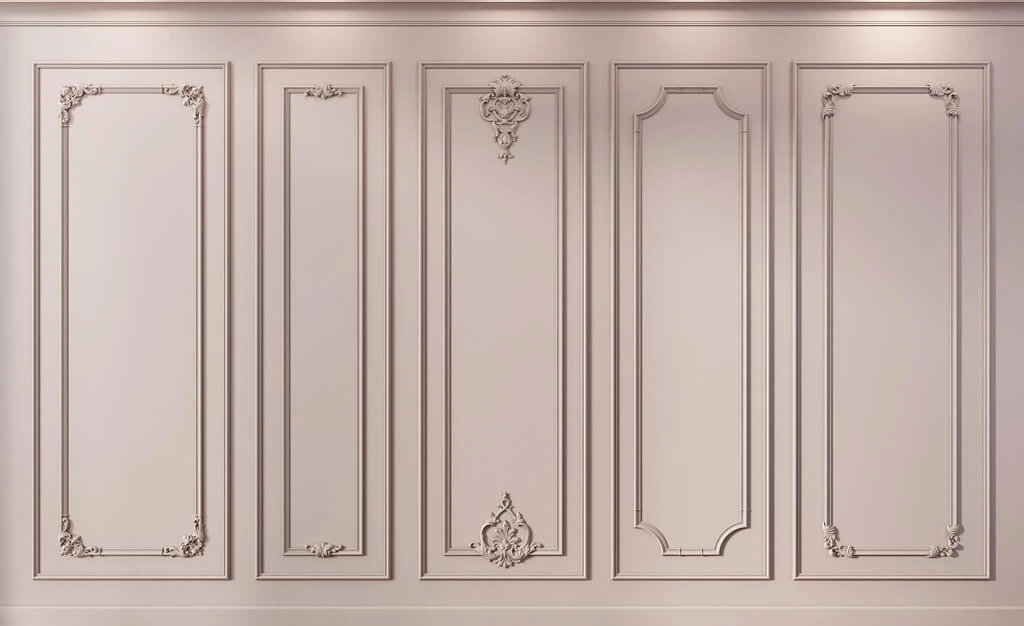
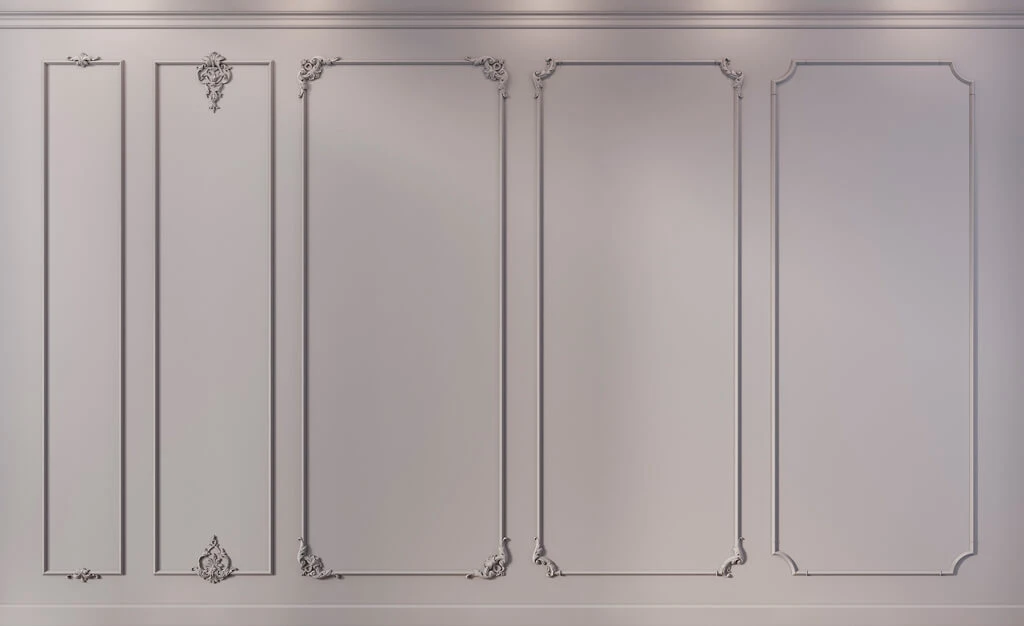
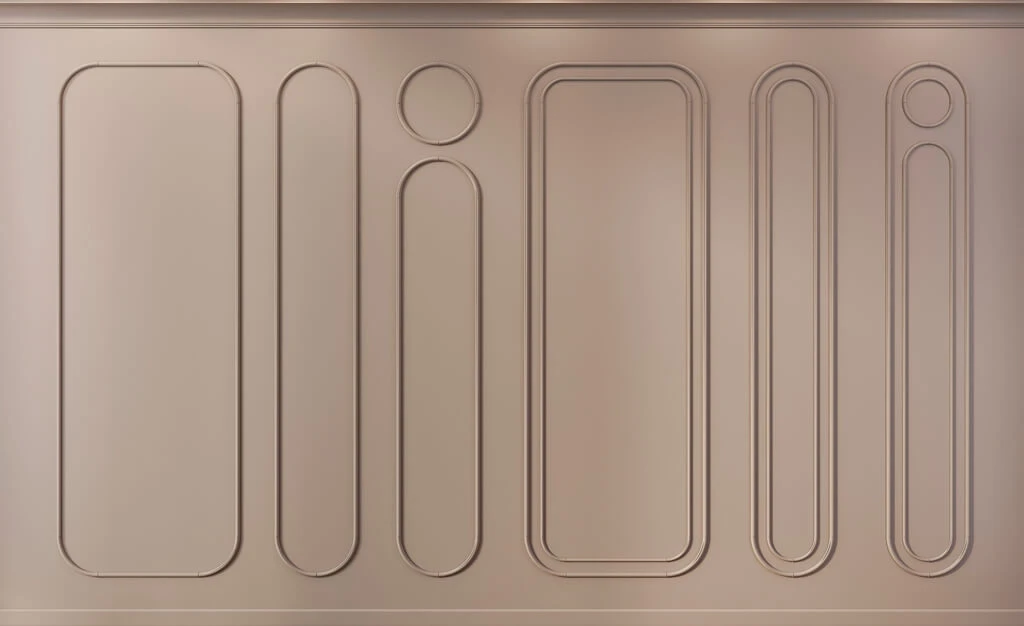
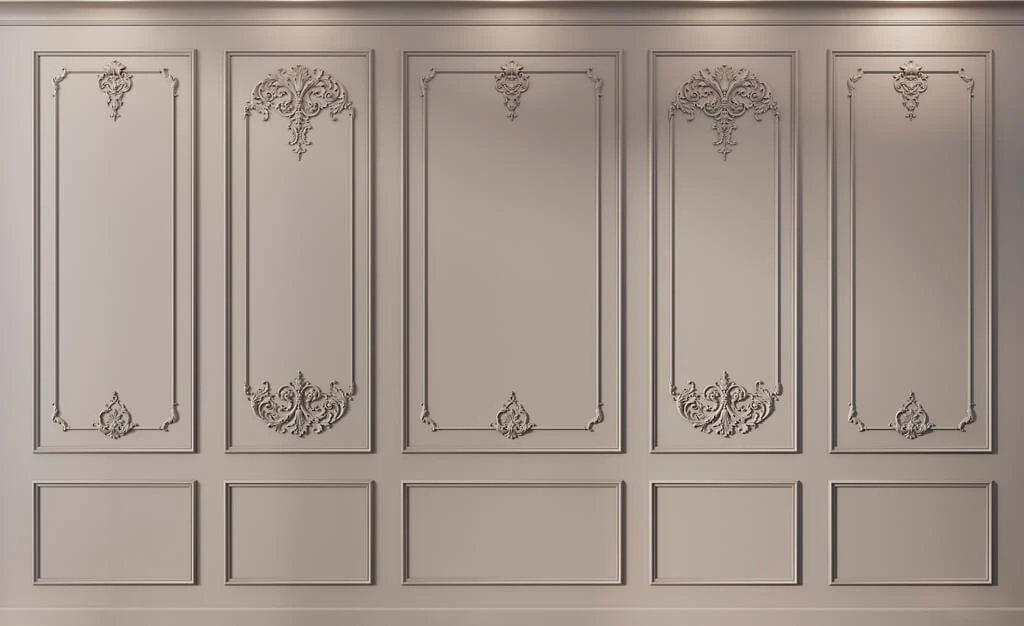
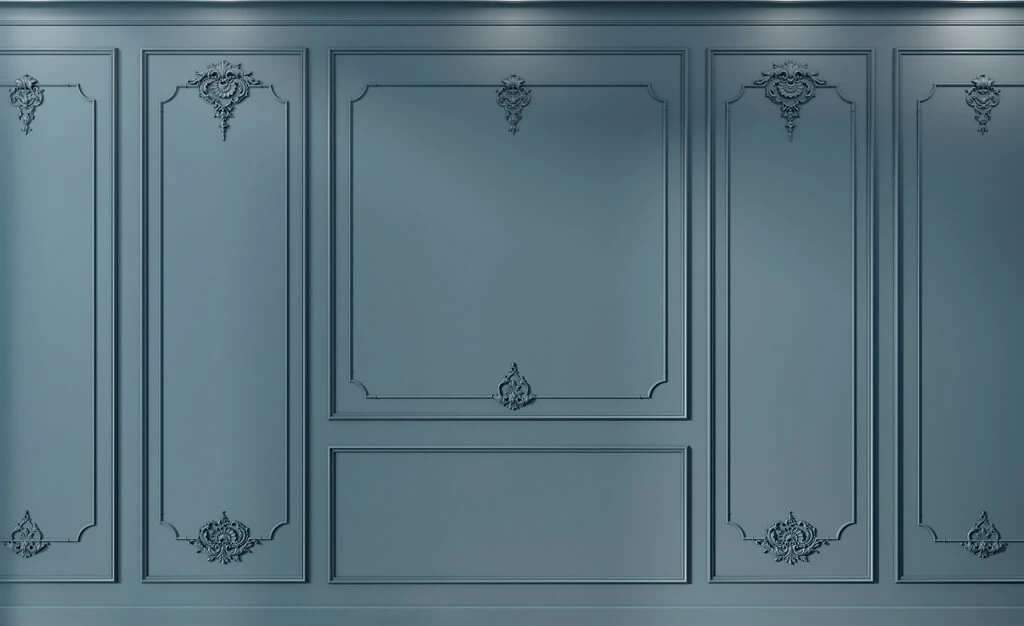
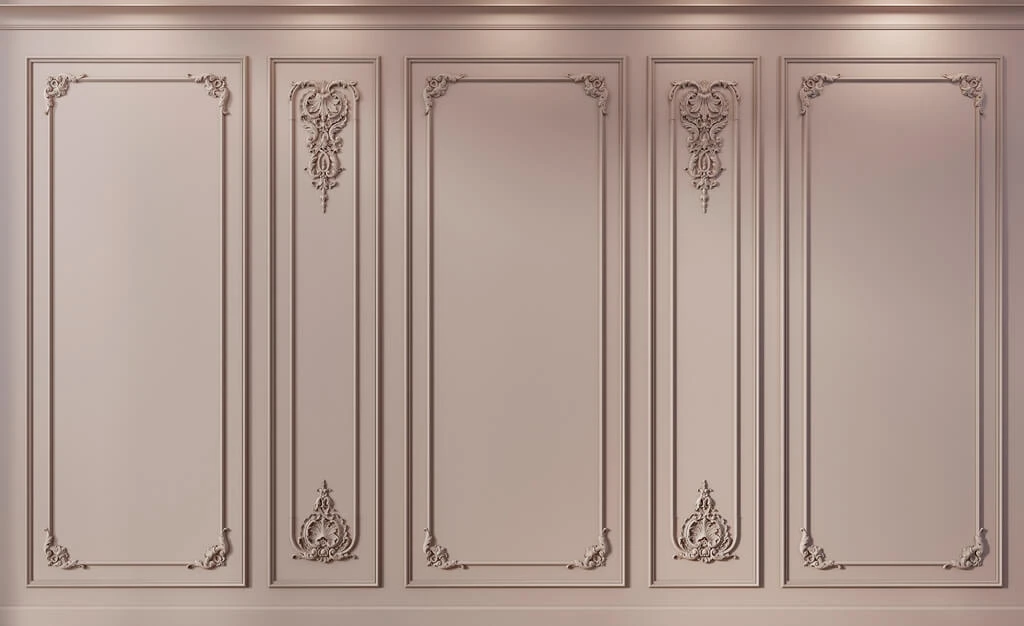
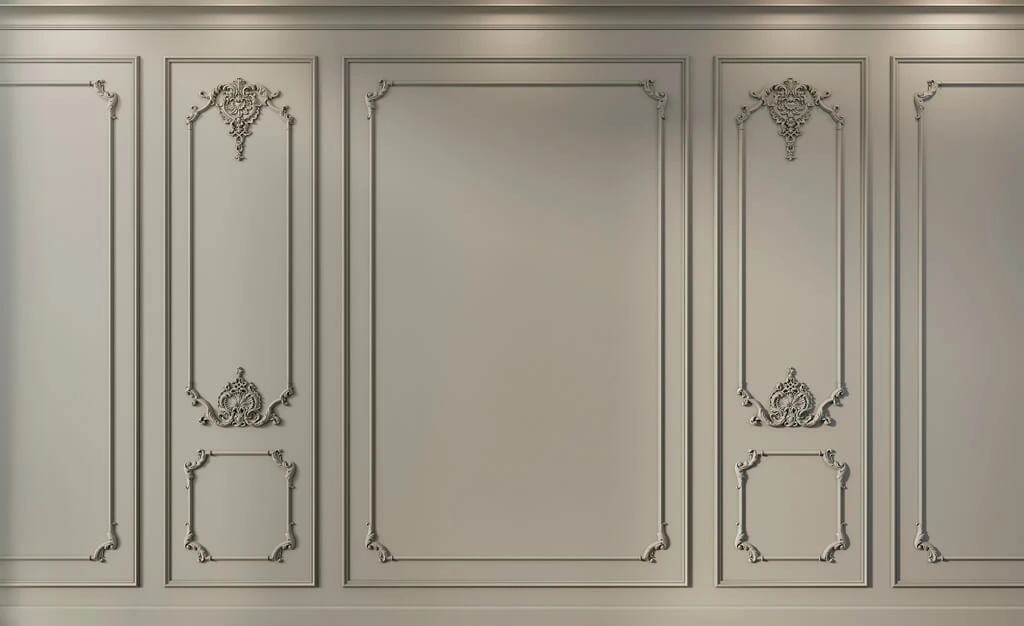
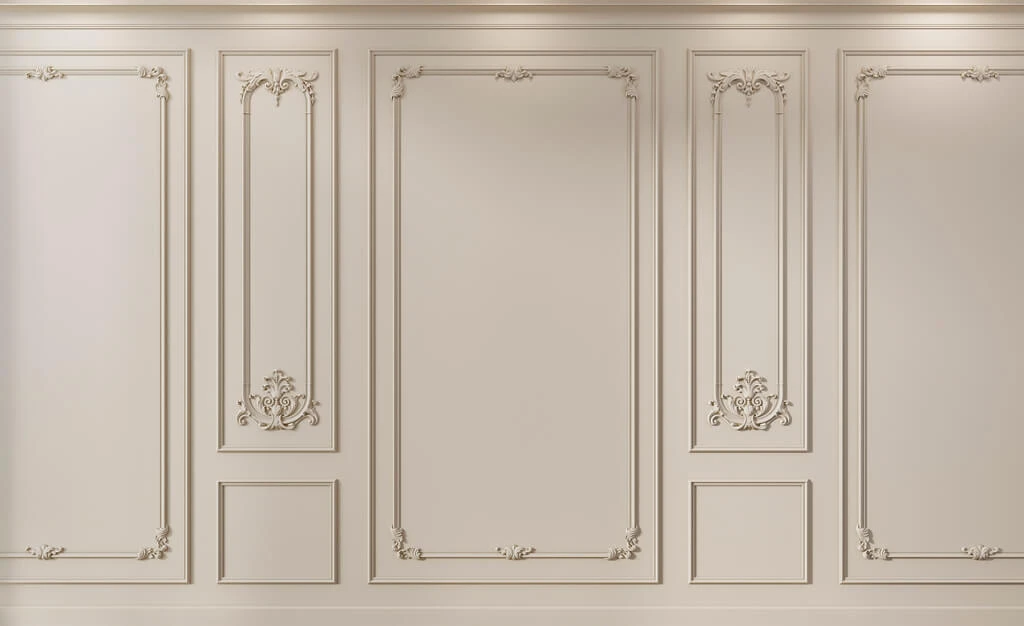
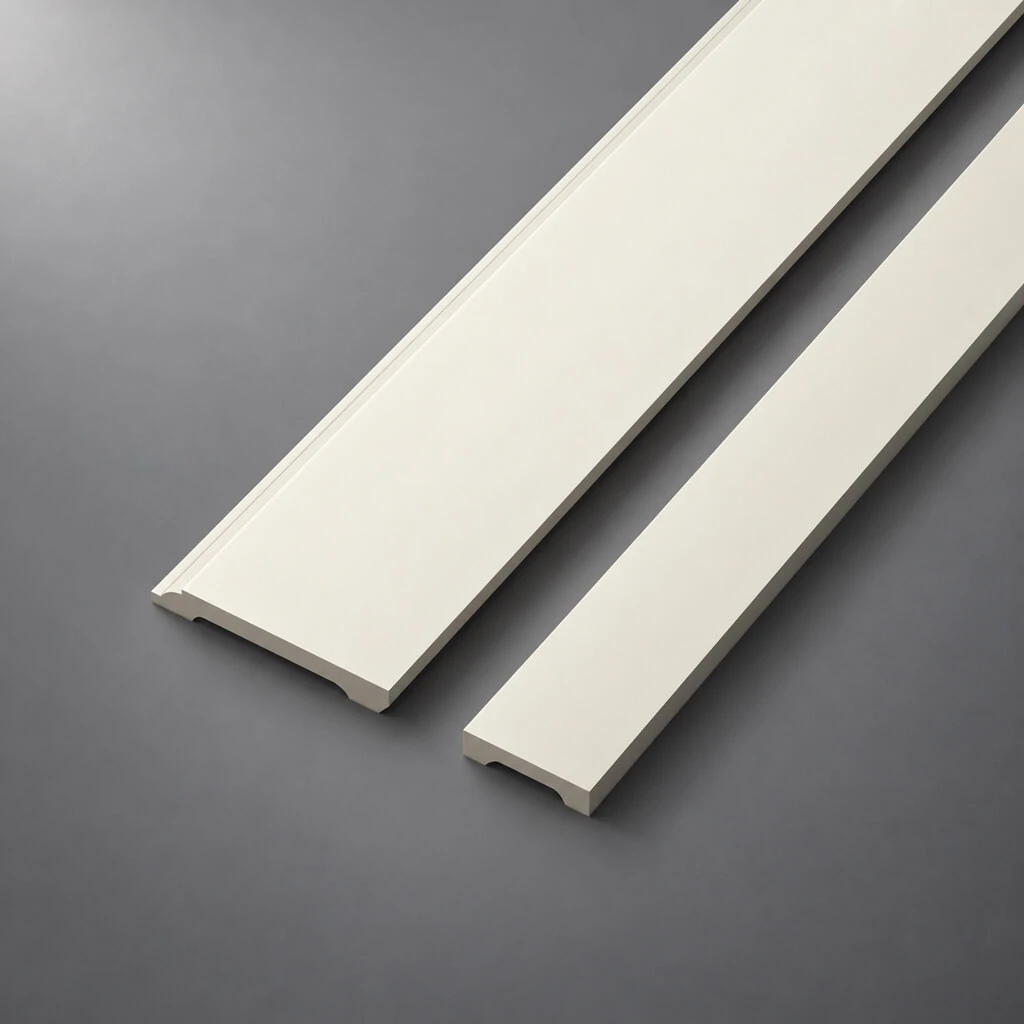
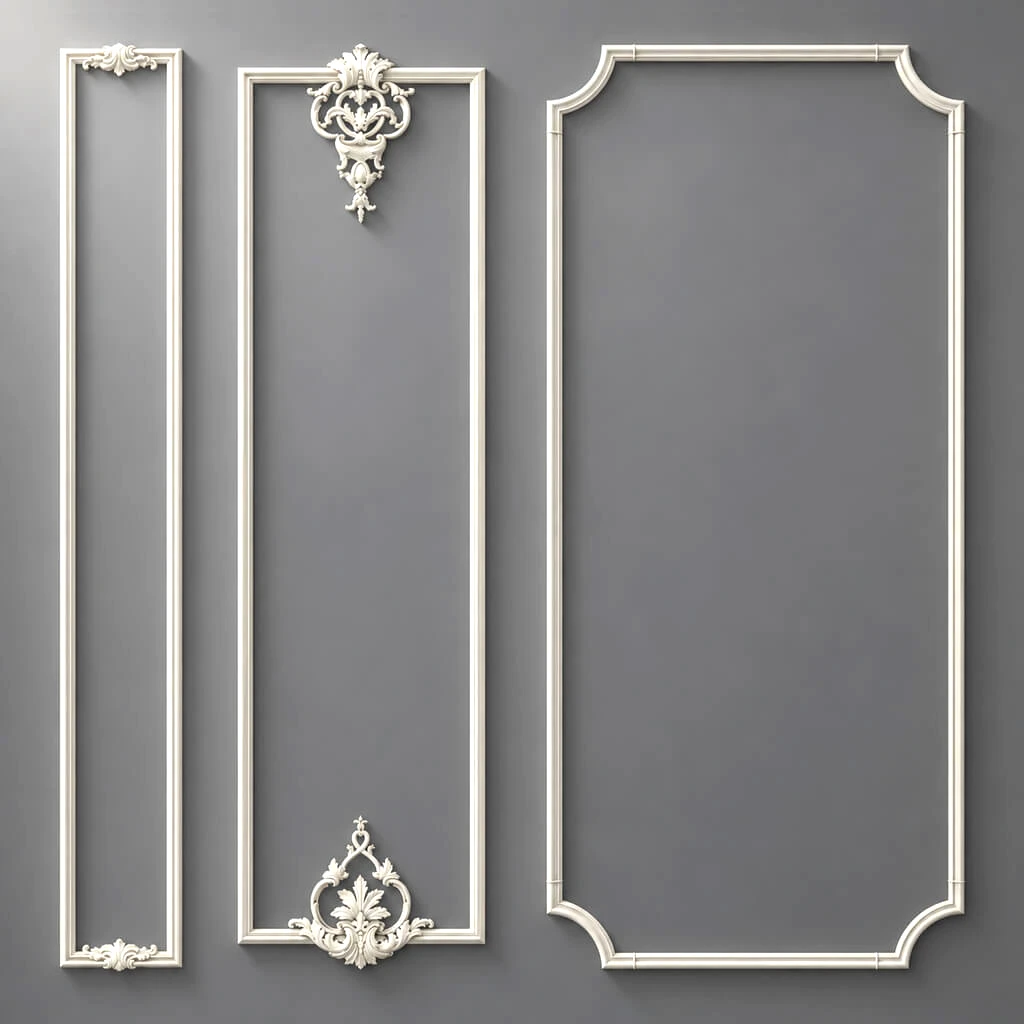
Flat moldings and profiles that make up decorative frames on walls. They carry no ornament—only geometry. This category is the most universal and least 'style-dependent'.
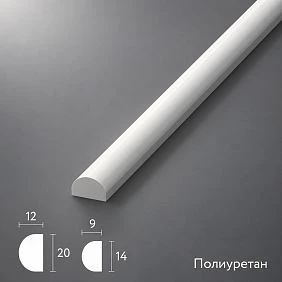
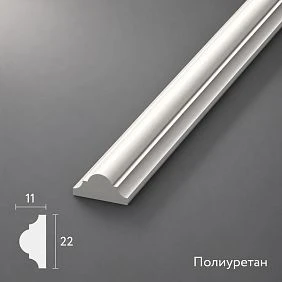
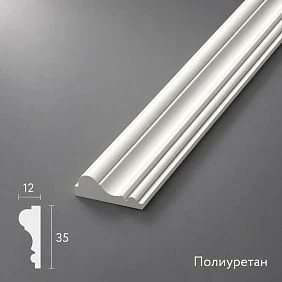
A flat molding 18–35 mm wide creates frames on the wall surface—geometric rectangles or squares that break the wall into structured fields. This technique works in minimalism, modern classic, Scandinavian style, and art deco.
inonline store of polyurethane moldingsSTAVROS represents this category with a wide range of profiles—from the thinnest 12 mm to the pronounced 42 mm.
Category four: accent decor
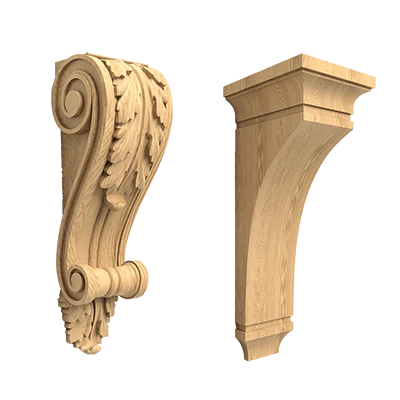
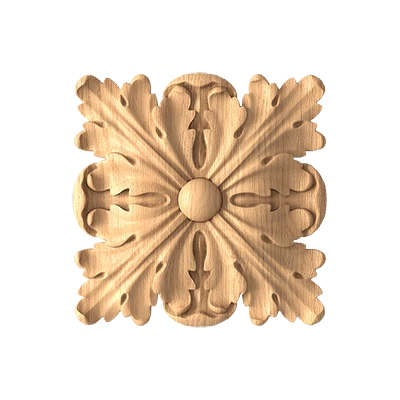
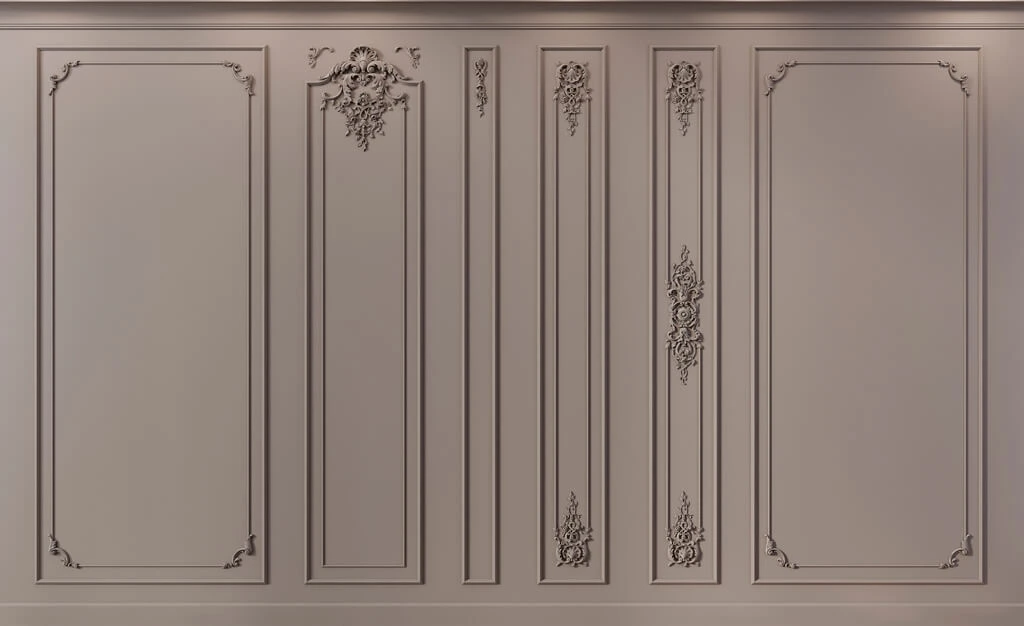
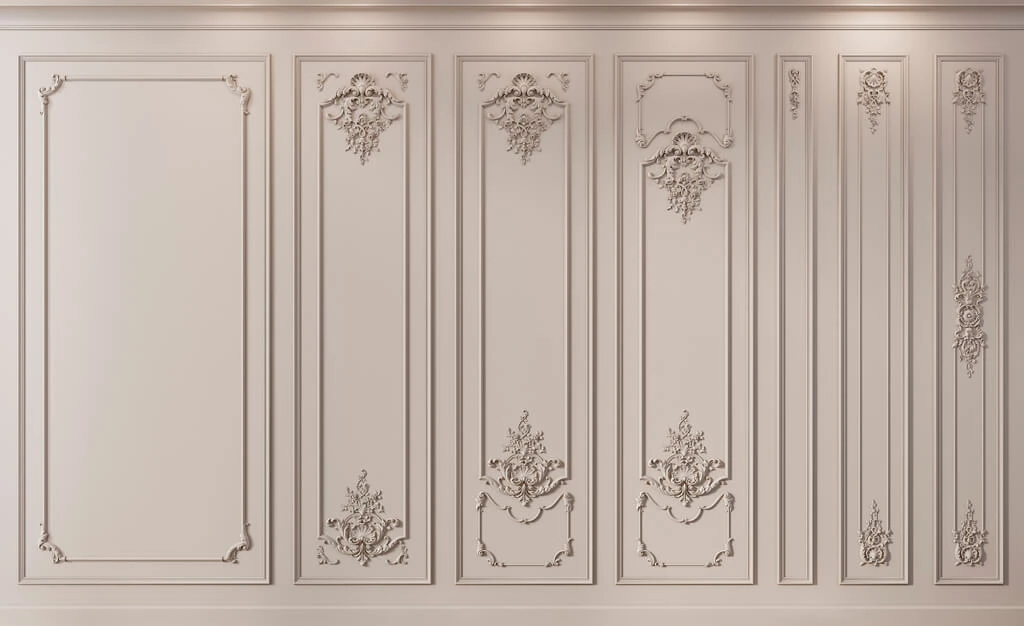
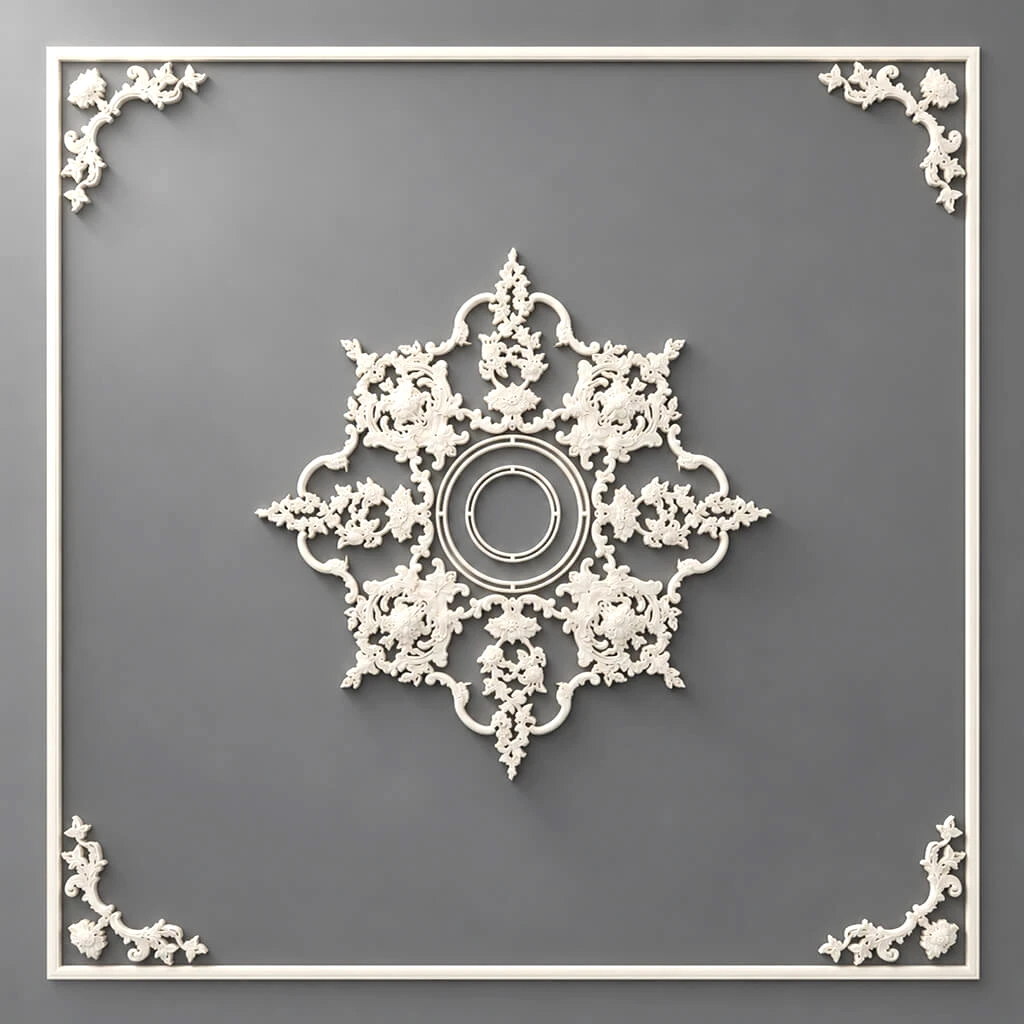
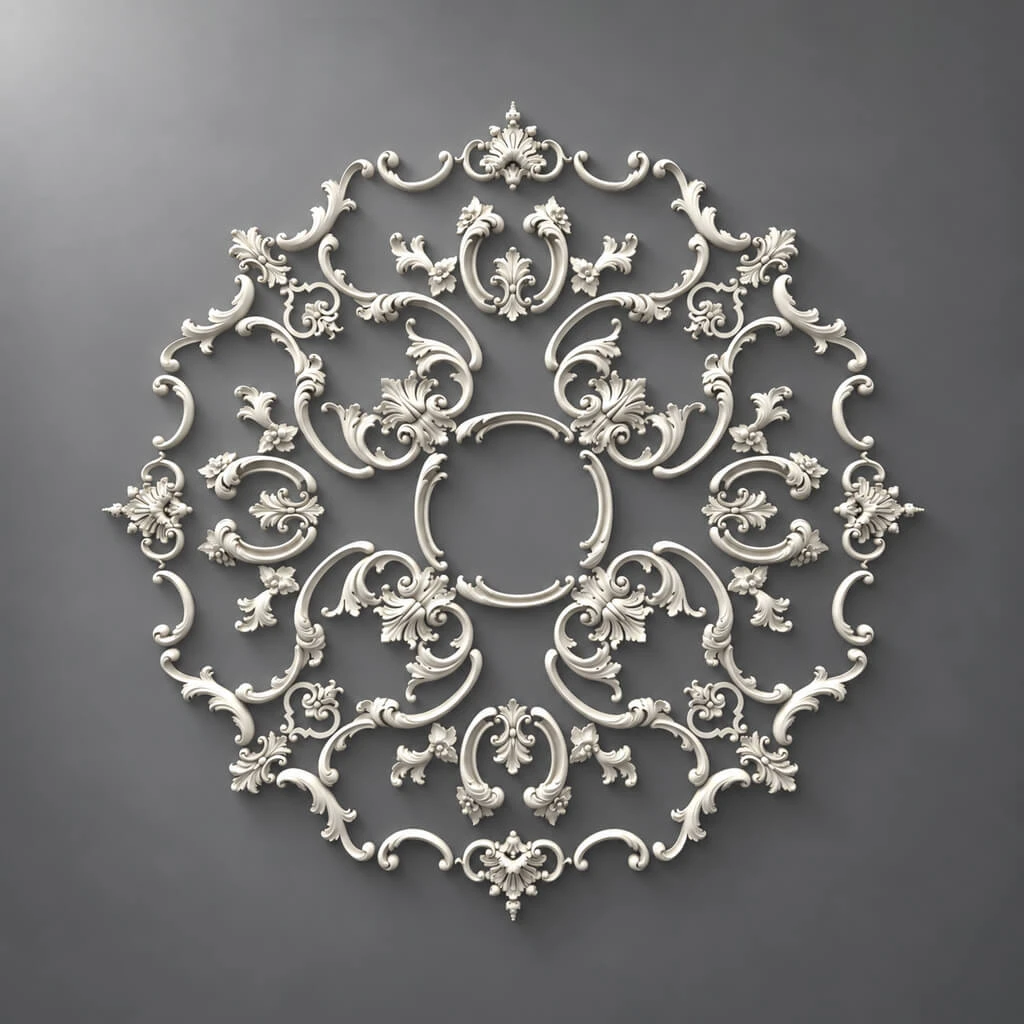
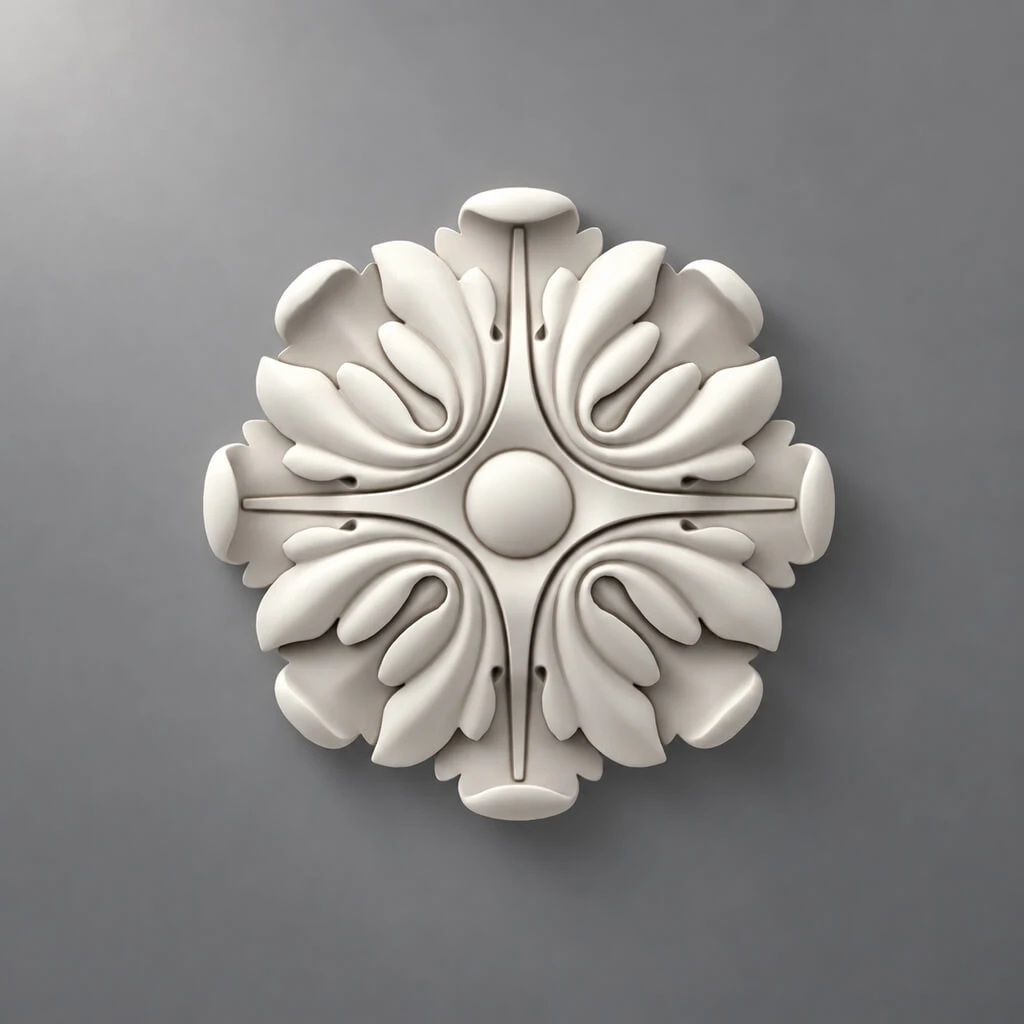
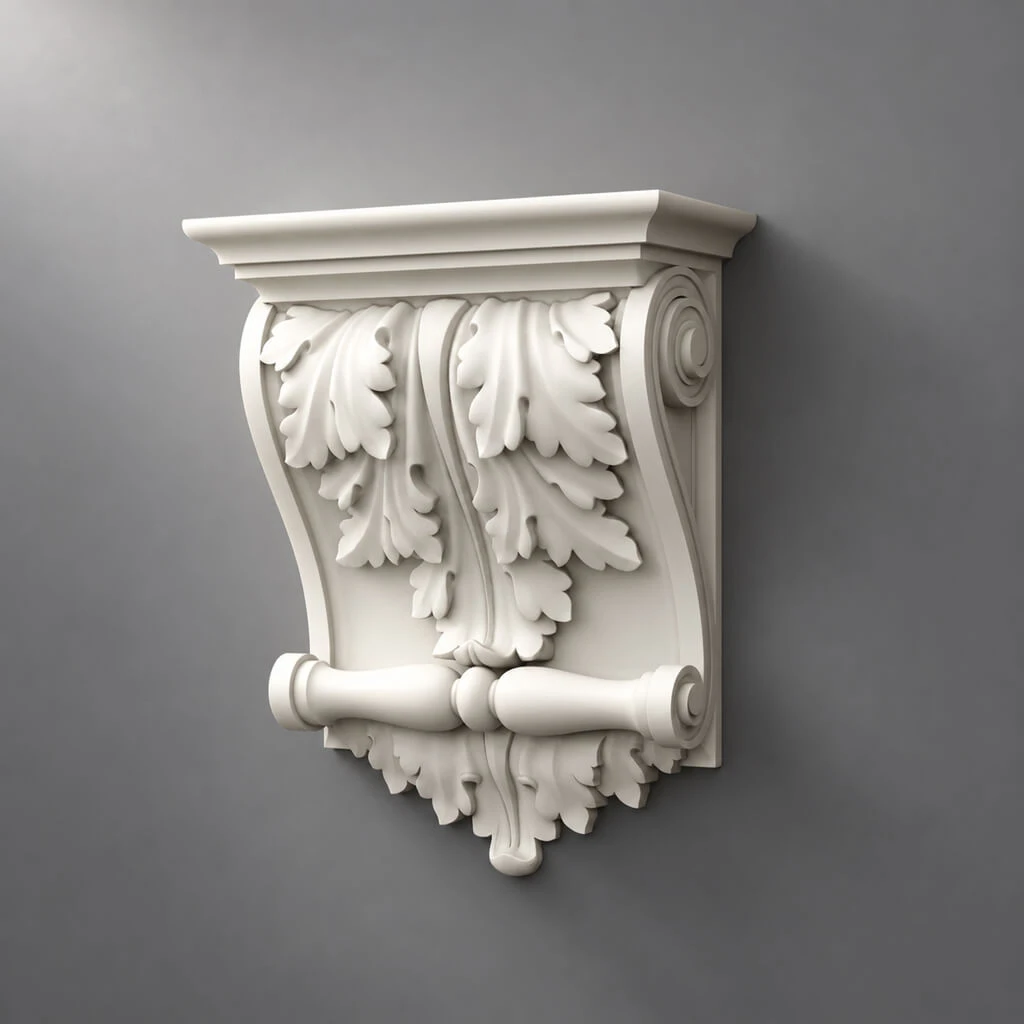
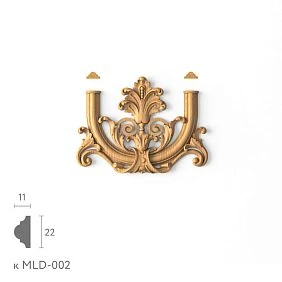
Rosettes, medallions, brackets, corner blocks at molding intersections, consoles, capitals. These are point elements that create accents in specific places.
Important: accent decor is not for all interiors. In minimalism and Scandinavian style—it is alien. In neoclassicism, art deco, 'English' style—it is organic. Rule: before adding corner blocks and rosettes, make sure the interior style accepts them.
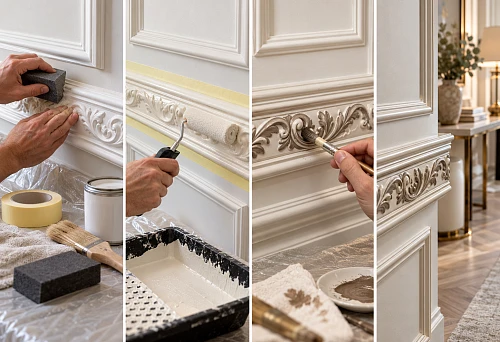
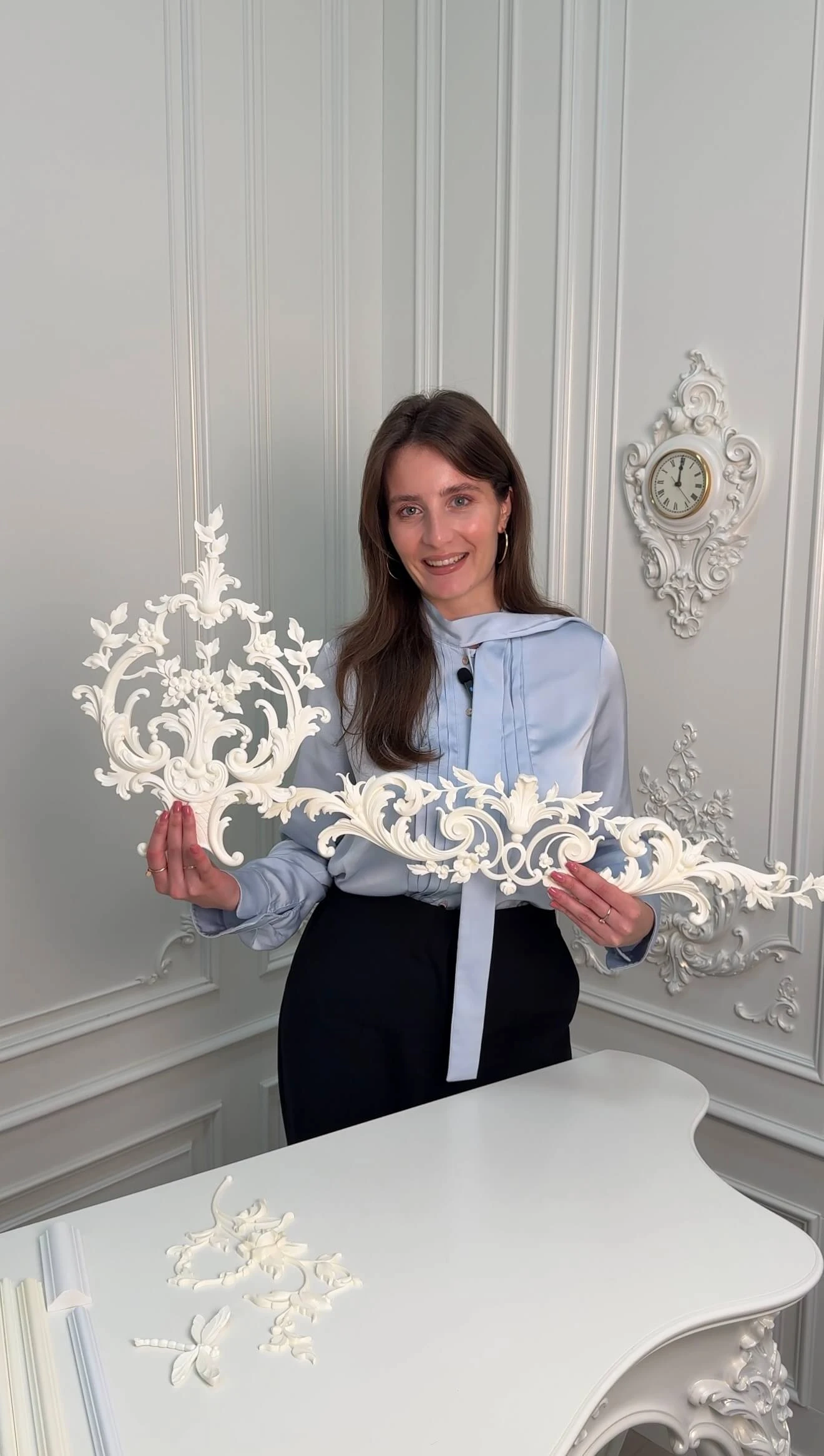
Molded Decoration Salon— a section featuring the entire range of applied polyurethane decor: from simple overlays to complex architectural elements.
How to combine slatted panels with ceiling decor: logic from top to bottom
An interior is read from top to bottom: first the ceiling and cornice, then the walls with decor, then the floor and baseboard. Compatibility should be built in this exact sequence.
Cornice as the 'style passport'
The ceiling cornice sets the stylistic tone for the entire system. Determine it first — and then select all other elements to match it.
Geometric cornice 65–85 mm → the entire system is built in a modern key. Slats — without ornament, smooth profile. Wall moldings — flat frame type. Door casings — straight profile.
Cornice with a soft ogee curve 85–110 mm → transitional style, 'modern classic'. Slats — with a light texture, natural wood or MDF imitating wood. Moldings — with soft transitions. Door casings — with a moderate profile.
Cornice with ornament 100–135 mm → classic. Slats are used here sparingly — as an accent in one zone (study, library), not as continuous cladding. Everything else is of a corresponding character.
Rule of vertical scale
The sum of the heights of the cornice + baseboard should not exceed 12–14% of the wall height. With a ceiling of 2.7 m, the wall is approximately 2.5–2.55 m high. 12–14% of that is 300–357 mm. If cornice 85 mm + baseboard 95 mm = 180 mm — it's within the norm. If cornice 140 mm + baseboard 130 mm = 270 mm — it's borderline. If more — the upper and lower zones start to 'eat up' the wall.
Lighting in the slatted panel system
Slatted panels with lighting— one of the most impressive techniques, especially in the living room and bedroom. An LED strip in the gaps between the slats creates diffused light that makes the wood texture three-dimensional and vibrant.
However, one nuance is important: the cornice above the illuminated slatted wall should not compete in terms of decor. A restrained geometric profile—and the lighting works. An ornamental cornice next to an illuminated slat is visual noise.
Wall decor: moldings and frames in combination with slats
One of the most common tasks in Moscow apartments is how to decorate walls where part of the surface is occupied by slats and part is a neutral painted surface. Molding frames on neutral walls are a solution that creates unity through geometry.
How this works architecturally
Imagine: an accent wall—Wooden slat panelsfrom floor to ceiling, natural oak. Three adjacent walls—neutral paint. Without additional decor, the adjacent walls look 'empty' against the rich slatted one. Adding frame moldings on the neutral walls—geometric rectangles in two or three rows in height—creates a rhythmic connection with the structure of the slatted surface. The slats are vertical, the moldings are horizontal-vertical: one geometric language, one spatial conversation.
Requirements for compatibility of molding and slats
The width of the molding is proportional to the width of the slat. Rule: flat molding for frames should be in the range of 25–45% of the main slat width. Slat 65 mm → frame molding 17–28 mm. Slat 88 mm → frame molding 22–40 mm.
The molding tone is coordinated with the cornice tone: if the cornice is painted RAL 9010 (warm white), the molding frames are the same tone. Using different white tones for the cornice and moldings creates a tonal break that stands out on an illuminated wall.
Door and window decor: architraves as a connecting element
Architraves are the most underrated element in Moscow renovations. People spend significant sums on slatted wall panels, quality cornices—and leave doorways without framing or with plastic architraves 'matching the door color.'
This is a fundamental error. An opening without an architrave is an unclosed mounting joint between the frame and the wall. It always looks unfinished. A polyurethane architrave with the correct profile is a detail that makes the door part of the architecture, not just a hole in the wall.
How to choose an architrave for slats
The principle of 'one language of forms' works here exactly the same. If the slats are strict geometry, straight lines → a straight-profile architrave, without ornament, width 58–72 mm. If the slats have a light texture, natural wood → an architrave with a soft ogee, 65–82 mm. If the slats are used in a classical context → an architrave with moderate ornament, 75–105 mm.
Architrave tone: always coordinated with the cornice and baseboard. Three elements—one tone. This creates a 'frame' for the interior, into which everything else fits organically.
Window reveals
Slopes made of slatted panels—a technique that transforms a window opening from a technical element into an architectural one. Especially relevant in Moscow new builds with deep reveals (150–250 mm): a plastered white reveal against a slatted wall is a contrast. A wooden or MDF reveal matching the slat tone is unity.
A polyurethane architrave, meanwhile, completes the transition between the wall and the reveal—creating a clear architectural boundary.
What to check before ordering: a practical checklist
This is the most practical section of the article. Before clicking 'place order' — go through each point.
For slatted panels
Edges. Sealed or open? An open edge on MDF is a source of deformation during humidity fluctuations. Only sealed.
Tone under your lighting. Order a sample. Warm 2700K lamps enhance the reddishness of wood. Cold 4000K lamps — gray notes. The same 'natural oak' under different light — two different results.
Slat length and ceiling. Standard slat length is 2400, 2700, 3000 mm. Ceiling in a Moscow new-build is 2720 mm. A 2700 mm slat: requires slight trimming at the top. A 2400 mm slat: joining in height. Calculate in advance.
Quantity with a margin. Minimum 7–10% margin for trimming, joints, mistakes. Buy identical slats in one batch — batches can have tonal differences.
Compatibility of finishing profiles. Starter and finishing profiles, corner elements must be from the same system as the slat. Do not select 'similar' finishing profiles — only compatible ones.
For polyurethane molding
Clarity of relief. Run your finger along the inner corner of the profile. A quality element has a clear corner without smears. On a cheap one — blurred relief that looks 'smeared' after painting.
Material density. Quality polyurethane is resilient, does not indent under finger pressure. A soft baseboard at the floor will deform upon first contact with furniture or a vacuum cleaner.
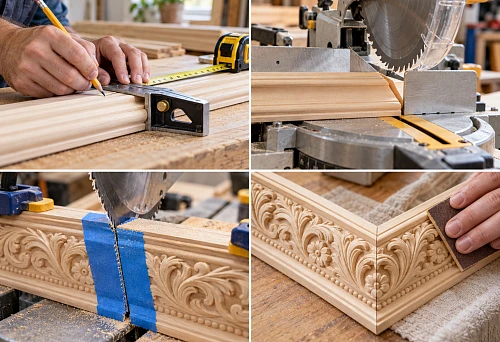
Joints at corners. The cornice is cut at a 45° angle using a miter box. Check if a corner block is provided or if precise cutting is needed. For curved Moscow corners (which are almost always curved) — a corner block is preferable.
Tonal compatibility in the base. Polyurethane is supplied with a white primer. The final tone is after painting. Ensure the selected RAL matches across all system elements.
Scale relative to ceiling height. Once again — use the scale table. Don't buy a cornice 'that looks nicer' — buy a cornice of the right size for your ceiling.
How to avoid material incompatibility
This question is asked least often when purchasing — and regretted most often after installation.
Polyurethane and natural wood: thermal gap
Polyurethane hardly expands with temperature changes. Natural wood expands and contracts significantly. If a wooden batten is installed flush against a polyurethane cornice without a gap — during the first heating season, the batten presses on the cornice and deforms the joint. A 1.5–2 mm gap filled with elastic sealant afterwards is mandatory.
MDF and polyurethane: primer and paint
MDF for painting and polyurethane decor can be painted in the same tone — provided proper preparation. MDF requires a special MDF primer (water-based or acrylic-based). Polyurethane needs light treatment with fine-grit sandpaper and the same acrylic primer. Painting with one paint in one day is possible, but only if these conditions are met. Without primer, MDF 'absorbs' paint, resulting in an uneven tone.
Color of the finish coating: tonal triangle
In a final interior, there are always three 'tonal poles': the trim, the molding, and the walls. They should not be identical (that's boring and loses structure), but they must be harmonious.
Working scheme:
-
Trim — warm natural tone (oak, ash)
-
Molding — warm white (RAL 9001–9010)
-
Walls — neutral warm (light beige, soft gray-beige)
Conflicting scheme:
-
Trim — warm
-
Molding — cool white (RAL 9003)
-
Walls — cool gray
This is a tonal break that works against the space.
Slatted panels in specific zones of a Moscow apartment
Living room: TV zone and sofa wall
Slatted panels in the living room interior— one accent wall. Either behind the TV or behind the sofa. Never both simultaneously. The rule of one accent wall has no exceptions in a living room up to 25 sq. m.
TV area with slatted panels— from floor to ceiling, slat 58–75 mm, spacing 45–60 mm,lighting in the gaps. Cornice around the entire perimeter of the room — geometric profile, tone coordinated with the slat. On neutral walls — molding frames made of flat profile 20–28 mm.
This is a system that works. Not a set of beautiful elements, but a coordinated project.
Bedroom: delicacy as a principle
slatted panels in the bedroom— only the wall behind the bed headboard. Light oak, milk ash, soft MDF in a pastel tone. Dark wood in a bedroom up to 16 sq. m creates a feeling of confinement — contrary to the very purpose of this space.
Cornice in the bedroom — minimal geometric profile, 62–78 mm. No ornament. The bedroom is not a reception hall. Decorative saturation disrupts the tranquility for which this space is conceived. Frame moldings — only on neutral walls, in the form of large rectangles from 600 mm wide.
Hallway and corridor: optics against crampedness
Slatted panels in the hallway interiorThey solve a problem that neither furniture nor lighting can handle: a narrow Moscow corridor becomes a space with character.
Vertical light-toned slats along one long wall create perspective. A 68–80 mm cornice 'raises' the ceiling. Matching door trims on all hallway doors create architectural unity. Mismatched trims are a source of chaos that cannot be neutralized by anything else.
Kitchen-living room: functional zoning through material
Slatted panels in the kitchen— the area for a dining table or sofa corner in a kitchen-living room. Only film-faced MDF with a matte finish — no exposed solid wood next to work surfaces.
A slatted panel in the kitchen-living room solves the problem of visual zoning: the relaxation area — slats, the cooking area — a neutral backsplash. Two materials delineate functions without walls or partitions. Muscovites know how to appreciate this.
Study: concentration through dark material
The wall behind the desk —Wooden slat panels— is a dark tone: brushed oak, walnut, wenge. A strict 80–95 mm cornice, geometric profile. Frame moldings around built-in shelving. The study space should read as organized and serious — and the material works towards this goal better than any decorator.
Installation as part of the system: cannot be separated
Choosing the right elements is half the job. Installing them so the system works is the other half. And here, too, there are rules of compatibility.
Battens: ventilation is mandatory
Horizontal 40×40 mm battens spaced 400–450 mm apart, strictly level. Ventilation gap between wall and battens — 10–15 mm. Without this, condensation behind wooden cladding is inevitable in Moscow's climate (heating season with 20–25% relative humidity in apartments).installation of slatted panelsProper battens — this is not a question of aesthetics, but a question of durability.
Acclimatization: especially important in Moscow
In Moscow new buildings during the heating season, air humidity drops to 18–22%. Slats brought from the production warehouse (60–65% humidity) must 'dry out' in apartment conditions. Minimum 5–7 days for solid wood, 3–4 days for MDF. Violation — deformations of already installed slats within the first month of operation.
System installation sequence
-
Installation of battens with ventilation gap — strictly level
-
Laying lighting cables (if provided)
-
Slat acclimatization — 5–7 days
-
Installation of starter profile at the floor
-
Installation of battens from bottom to top with a thermal gap of 1.5–2 mm
-
Installation of finishing profile at the ceiling
-
Installation of corner profiles on external corners
-
Installation of polyurethane cornice
-
Installation of baseboard
-
Installation of door architraves
-
Installation of molding frames on neutral walls
-
Painting polyurethane elements (after installation — more convenient)
How to attach slatted panels: fasteners for different surfaces
How to install slatted panels— a question that determines the durability of the result. Cleats (concealed fasteners) — for solid wood and MDF on battens: the batten holds without visible fasteners, surface is clean. Liquid nails + dowels combined with finishing nails — for straight walls without battens, only for MDF.
On concrete walls of Moscow panel buildings: dowel-nail 6×40 mm for battens. On drywall — special drywall anchors. On brick walls of historical houses — anchor fasteners with pre-drilling.
Most Common Mistakes in Moscow Renovations
Mistake One: Focusing on Photos Without Considering the Space
A beautiful interior photo on Instagram or Pinterest is of a specific apartment with specific proportions, lighting, and ceiling height. Copying this solution exactly into a different space rarely works. What looks luxurious with a 3.5 m ceiling can feel oppressive with a 2.65 m ceiling.
Mistake Two: Skimping on Finishing Profiles
Expensiveslatted wall panels for interior finishingmaterials have been purchased, but savings were made on starter profiles, corner elements, and trims. It's these 'little things' that determine 80% of the perceived quality. An unfinished plank edge, an untreated corner, a missing trim—each of these details instantly diminishes the impression of even the most expensive material.
Mistake Three: Too Many Slats in a Small Space
Three slatted walls in an 18 sq. m living room is overkill. Slats on all surfaces 'close off' the space, making it cramped and stuffy. One accent wall creates an effect—three walls create a boxy feeling.
Mistake Four: Different Styles in One Room
Geometric slats + ornamental cornice + plastic 'wood-look' baseboard + trims without a profile. These are four different stylistic languages. They don't 'complement'—they compete. The result is an interior without character.
Mistake five: buying without samples
In online shopping, this is the main pitfall. The screen doesn't convey the texture or the shade under specific lighting. Order samples before the main order — it takes time but saves significantly more.
Mistake six: ignoring the scale of decor
A 150 mm cornice with a 2.65 m ceiling is almost 6% of the wall height just for one horizontal profile. Add a 110 mm baseboard — another 4.4%. That's 10.4% of the wall height 'eaten up' by two profiles. With neutral walls, this still works. With slatted panels — the space starts to feel like a cramped hall.
Systematic selection: an algorithm for independent design
If you want to buy slatted panels in Moscow and simultaneously form a system of stucco decor — use this algorithm.
Step 1. Measure the ceiling height. Determine the width of the slat and cornice using the scale table.
Step 2. Determine the style: geometric (minimalism, Scandinavian, modern) or classical (neoclassical, 'soft classic', art deco). This determines the profile type of all decorative elements.
Step 3. Choose the slat material. Consider the application area, moisture resistance requirements, and the need for acclimatization.
Step 4. Choose the cornice. The profile corresponds to the style. The size — according to the scale table. The tone — coordinated with the slat (warm with warm, cool with cool).
Step 5. Choose the baseboard. Size — 75–85% of the cornice height. Profile — the same stylistic language as the cornice.
Step 6. Choose the architraves. Width 55–75 mm for a geometric style. Profile — coordinated with the cornice.
Step 7. Optionally — molding frames on neutral walls. Flat profile 18–30 mm. Tone — the same as the cornice and baseboard.
Step 8. Check the tonal unity of the entire system on samples under your lighting.
It's not difficult. It's systematic — which fundamentally differs from chaotic purchasing.
STAVROS: a system, not a store
Those looking for where to buy slatted panels in Moscow and simultaneously finda polyurethane molding storewith a wide range and guaranteed system compatibility — come to STAVROS for a reason.
STAVROS is a full-cycle manufacturer.Rafter panelsfrom solid oak, ash, thermowood, coated MDF and paintable MDF — in the full range of formats. Simultaneously —Full range of polyurethane decorCornices, baseboards, moldings, architraves, frame profiles, corner blocks, accent elements. All of this was designed as a system — large-scale series, coordinated profiles, stylistic compatibility.
This practically means the following: a batten from the STAVROS line and a cornice from the same line are guaranteed to be compatible in scale, tone, and stylistic language. No need to guess 'if it will fit.' This has already been verified at the product development level.
Pogonazh iz massiva— for those building a fully natural system: wooden cornice, wooden baseboard, wooden molding.decorative polyurethane elements— for those who value technological sophistication, moisture resistance, ease of installation, and precision of relief.
Delivery in Moscow and to the regions. Samples before ordering. Consultation on element compatibility — before a purchase decision is made.
STAVROS understands a good interior not as beautiful photos of individual materials, but as a working system — assembled thoughtfully, with respect for the space and for those who live in it.
FAQ: Answers to popular questions
Can you buy paneling in Moscow with same-day delivery?
Depends on stock availability. For solid wood and popular MDF items — usually, yes. For special formats and non-standard sizes — 2–5 business days. Please specify when ordering.
How to understand if molding frames are needed on neutral walls?
Simple test: if a neutral wall next to a slatted accent wall looks 'empty' and unexpressive — molding frames are needed. If the wall is sufficiently saturated with color or texture — they are not.
Polyurethane or plaster for a cornice in a Moscow apartment?
For most modern Moscow apartments — polyurethane. It is lightweight, installs without additional fasteners or reinforcement, and does not require special primer for painting. Plaster — for the restoration of historical buildings and interiors where 100% authenticity is important.
How long do MDF slatted panels need to acclimate?
3–4 days with the heating on in a room under normal use conditions. Solid wood — 5–7 days.
How to calculate the number of slatted panels?
Divide the area of the accent wall (height × width) by the area of one slat (length × width). Add 8–10% for cutting and reserve. For non-standard ceiling heights, consider the slat length.
Is a cornice needed if the ceiling is very low (2.48 m)?
Yes, but a small one. A cornice 48–58 mm with a geometric profile for a 2.48 m ceiling — hides the wall-ceiling joint and doesn't feel oppressive. A 100 mm cornice with the same ceiling — absolutely not.
How to understand if a cornice and a slat made of different materials are compatible?
Check four parameters: scale (cornice size matches ceiling height), tone (both elements warm or both cool), profile (both geometric or both with soft transitions), stylistic language (the same—no mixing minimalism and baroque).
Can slatted panels be installed by yourself?
Yes, especially modular panels on a backing. A detailed step-by-step guide forinstalling slatted wall panels—describing all stages from wall preparation to finishing profiles. The key is a strictly vertical first slat and proper lathing with a ventilation gap.