


































Article Contents:
- What to look for in wall slatted panels: a conversation without fluff
- Construction: underlay plus slats
- Slat material: MDF, oak, WPC
- Rhythm and scale: technical parameters that define everything
- When polyurethane molding is needed in the interior
- What is polyurethane molding in 2026
- Six situations where molding is mandatory
- Which profile to choose
- How panels and molding work together: architectural mechanics
- Dialogue of Rhythm and Relief
- Three Combination Schemes
- Light as the Third Participant
- Which Combinations Suit Modern Interiors
- Minimalism: Everything in One Color
- Scandinavian Style: Nature and Restraint
- Modern classic and neoclassic
- Loft and Industrial Style
- Contemporary: Contrast and Precision
- Where an Accent is Needed, and Where a Calm Background
- Logic of the Accent
- Living Room: One Accent Wall
- Bedroom: accent behind the headboard
- Hallway: a background that organizes
- Kitchen: dining area as an accent
- Niche: the perfect place for slatted decor
- Decorative imbalance mistakes: an honest breakdown
- First mistake: panels on all four walls
- Second mistake: moldings of all styles at once
- Third mistake: uncoordinated vertical axis
- Fourth mistake: color mismatch
- Fifth mistake: decor without function
- Mistake Six: Ignoring Edges and Corners
- Slat Panels in Specific Areas: Ceiling and Niches
- Ceiling: It's Often Forgotten—Unjustly
- Niches: Slat Decor as an Architectural Solution
- Installation: Principles That Must Not Be Violated
- Foundation Preparation
- Acclimatization: Two Days That Decide Everything
- Seamless Joint: A Sign of a Quality Product
- Installation Order: A Rule Without Exceptions
- Tools
- Materials Navigator: Summary Table
- FAQ: Questions Asked Before Purchase
- About the Company STAVROS
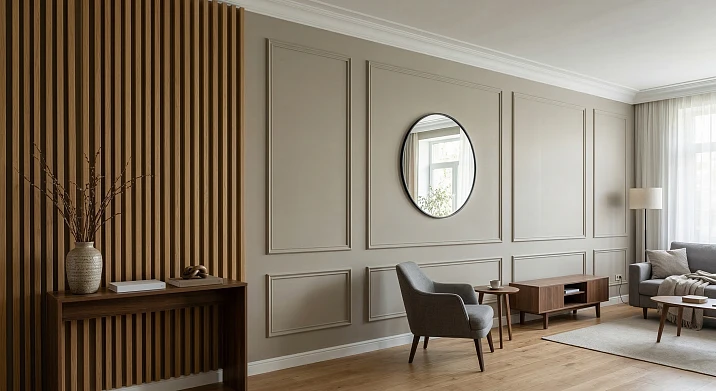
Two materials. Two natures. Two ways to speak with space — through line and volume, rhythm and relief.Wall slatted panelsandpolyurethane moldingsThese are not just finishing materials that happened to be popular at the same time. They are two elements of a single architectural system that, when applied correctly, transform an ordinary apartment into a space with internal logic and character.
Kazan is a city that knows how to appreciate quality and is not shy about complex solutions. If you are looking for where to buy slatted panels in Kazan and are simultaneously wondering whether molding is needed and what kind — this article is for you. Not about trends. About understanding the material from the inside.
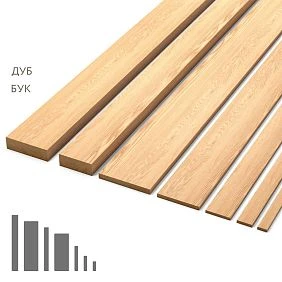
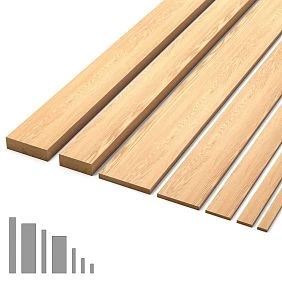
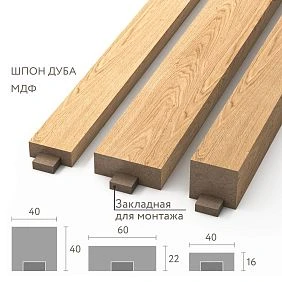
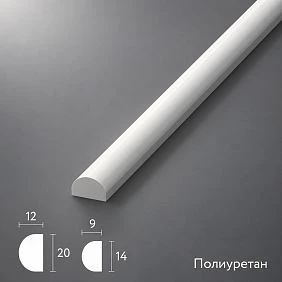
What to look for in wall slatted panels: a no-nonsense conversation
Before moving on to combinations and compositions — you need to understand the product itself. Because under the general name 'slatted panels' there are several fundamentally different products with different application logics.

Construction: backing plus slats
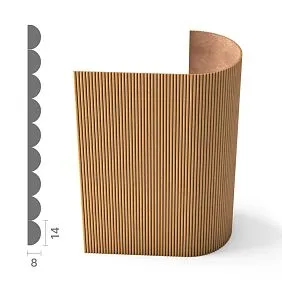
Any slatted panel is a backing (base) with evenly spaced slats. It is the backing that determines most of the technical characteristics: how the panel will behave with humidity, how it will accept fasteners, and how precise its geometry is. The slats determine the aesthetics: width, spacing, surface texture.
slatted panels for wallsPanels on MDF backing are the most common option for residential interiors. MDF with a density of 750–850 kg/m³ provides a perfectly smooth surface, stable geometry, and good adhesion for any paint coating. On such a backing, paint applies evenly, without spots or gaps.
slatted modular wall panelA panel is a ready-to-install module of standard size that, when several are joined, forms a single continuous field. This is the optimal option if you want a quick and clean result with minimal errors.
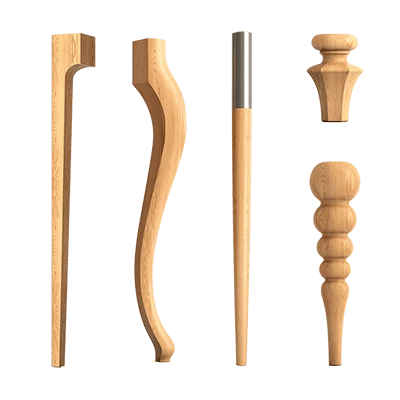
Our factory also produces:


Slat material: MDF, oak, WPC
MDF is the best choice when color is the priority.MDF Slatted Wall PanelPaint-grade MDF offers limitless color freedom: white, anthracite, olive, terracotta, smoky gray, powder pink—any catalog shade. The surface is smooth, uniform, and free of natural defects.
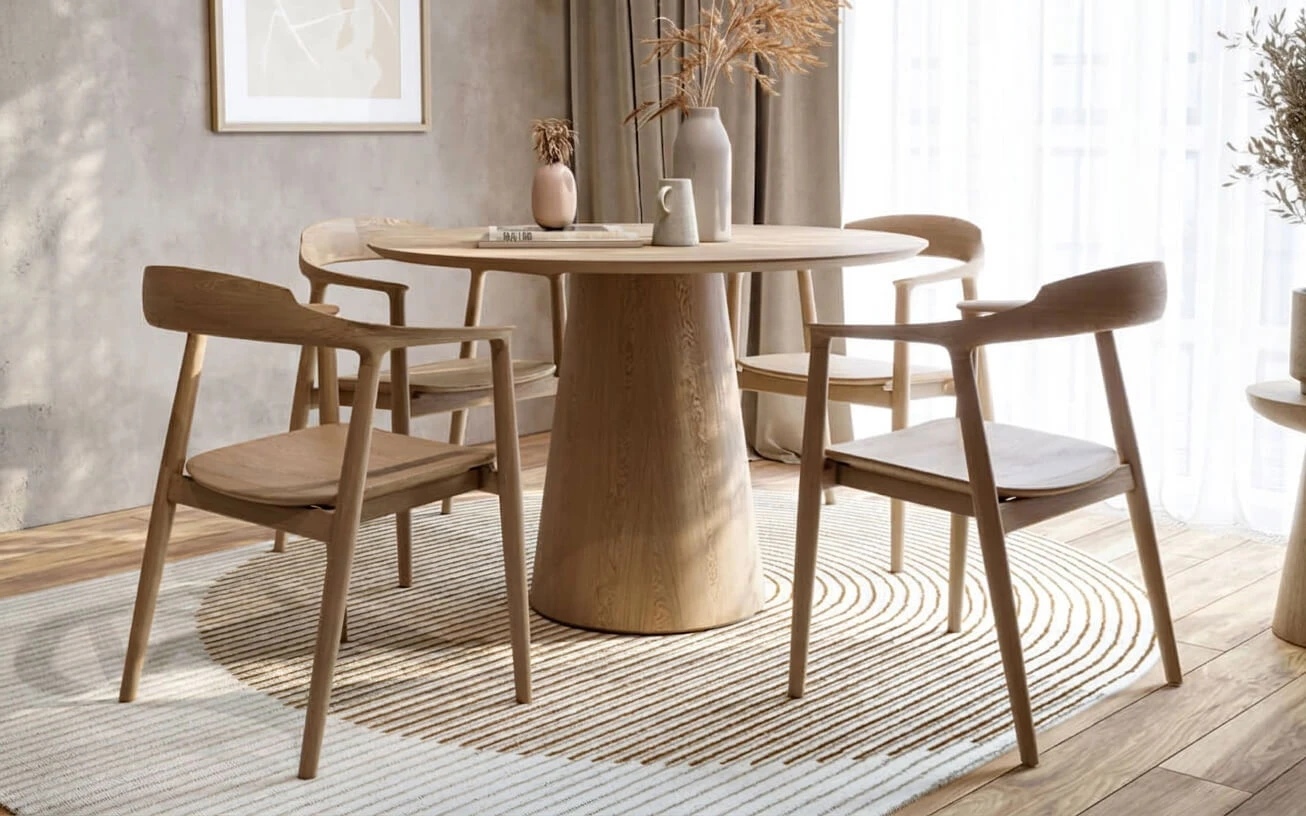
Oak is for when texture is the priority.Oak Slat PanelOak carries the living, natural grain pattern of the wood fiber, which cannot be artificially reproduced. It is a material with character: under clear oil, it reveals a warm honey tone; under stain, it shifts to a cool Scandinavian gray or a rich tobacco hue.Slat panel textureThe texture of oak is what makes a wall come alive even in minimal lighting.
WPC is for when moisture resistance is needed.DCP slatted panelsWPC panels are not afraid of constant dampness and are suitable for bathrooms, balconies, open terraces, and facade structures.Slatted Façade PanelsWPC panels are the choice for exterior cladding where unprotected wood would not survive.
Get Consultation
Rhythm and Scale: Technical Parameters That Define Everything
The rhythm of a slatted panel is the ratio of the slat width to the gap between them. A closed rhythm (slat wider than the gap) creates a quiet, dense, 'fabric-like' surface. It works as a calm background. An open rhythm (gap wider than the slat) creates a dynamic, airy surface that makes a statement.
Practical scale rule: in rooms with ceilings up to 2.6 m — slats 30–45 mm wide, in high halls from 3 m — 60–80 mm. Scale mismatch creates visual discomfort that is hard to put into words but easy to feel.
When polyurethane molding is needed in interior design
The question sounds provocative: is molding always needed? No. But there are specific situations where its absence leaves the interior unfinished — like a sentence without a period.
What polyurethane molding is in 2026
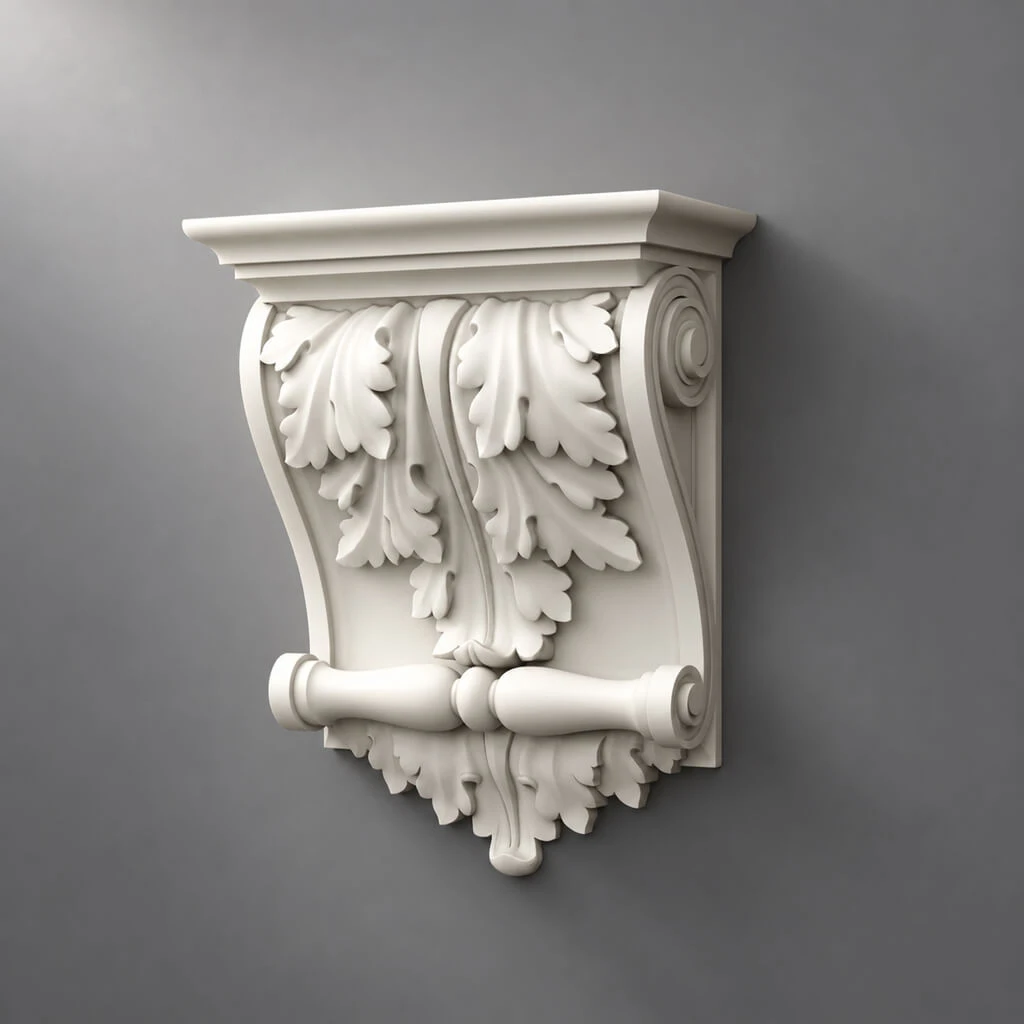
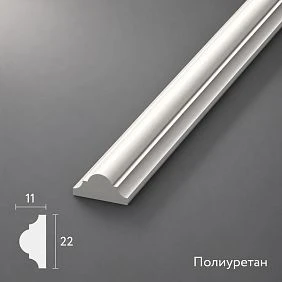
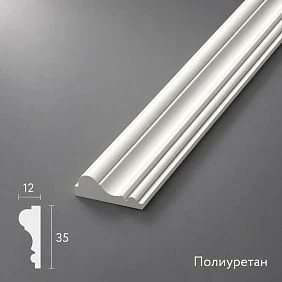
polyurethane moldings— it's not an attempt to cheaply copy plaster. It's an independent material with fundamentally different properties: lightweight (5–7 times lighter than plaster), moisture-resistant, elastic, with precise factory geometry of the profile. It doesn't crumble when cut, is easily processed with a regular handsaw, glued with mounting adhesive without additional fasteners, and can be painted any color.
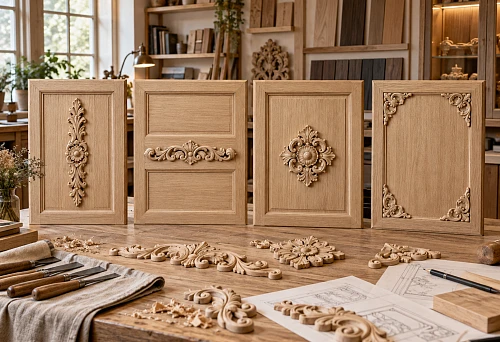
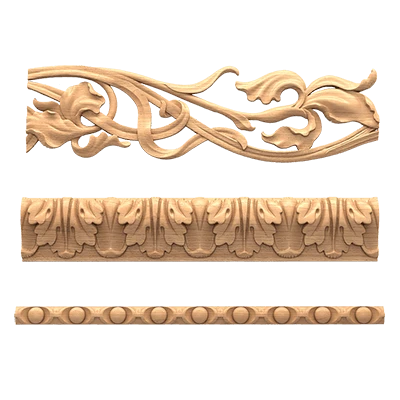
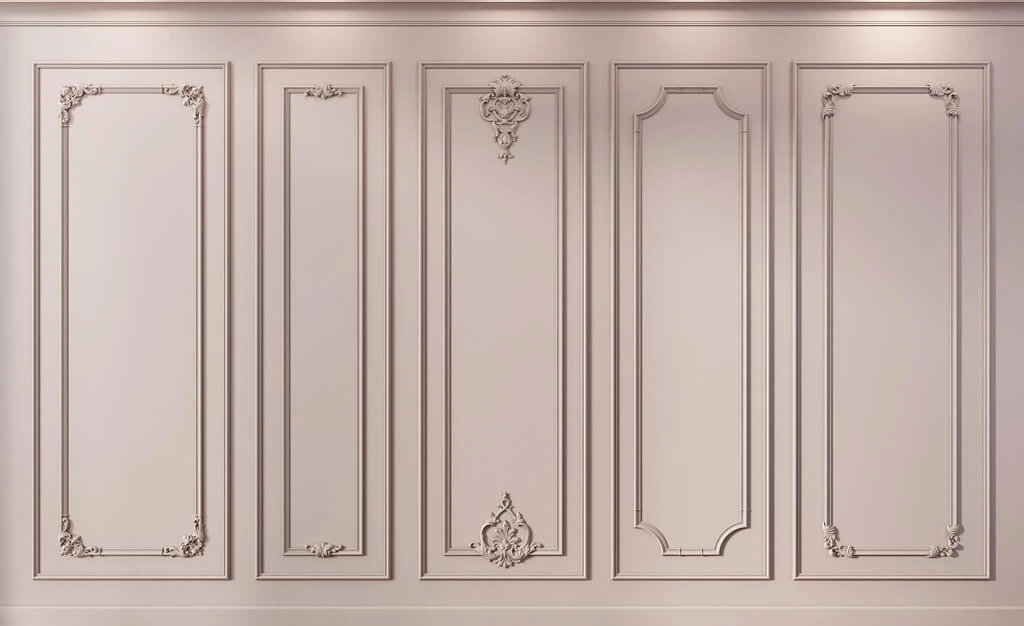
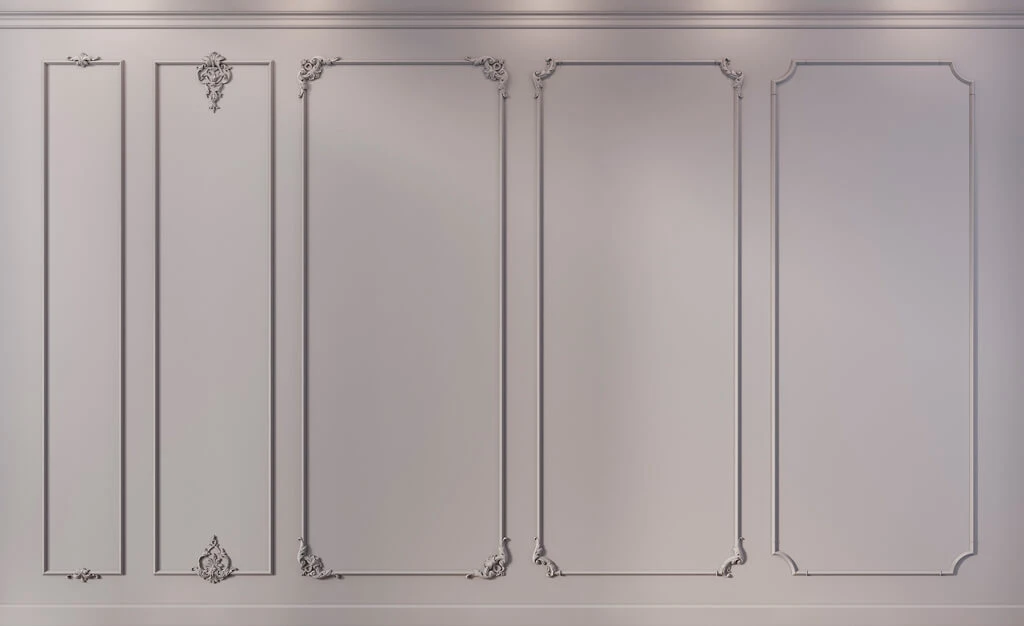
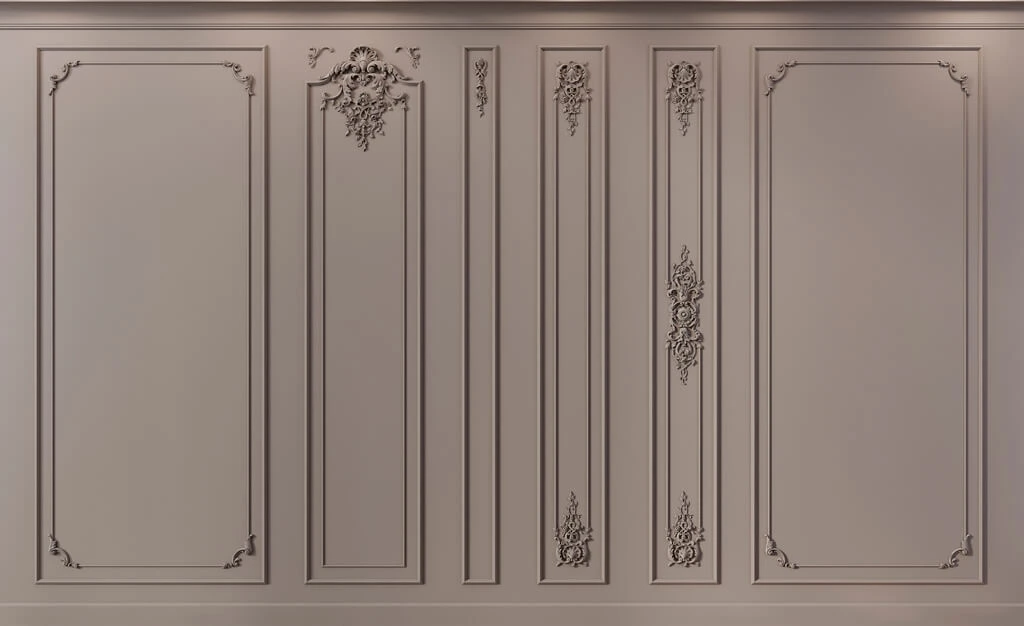
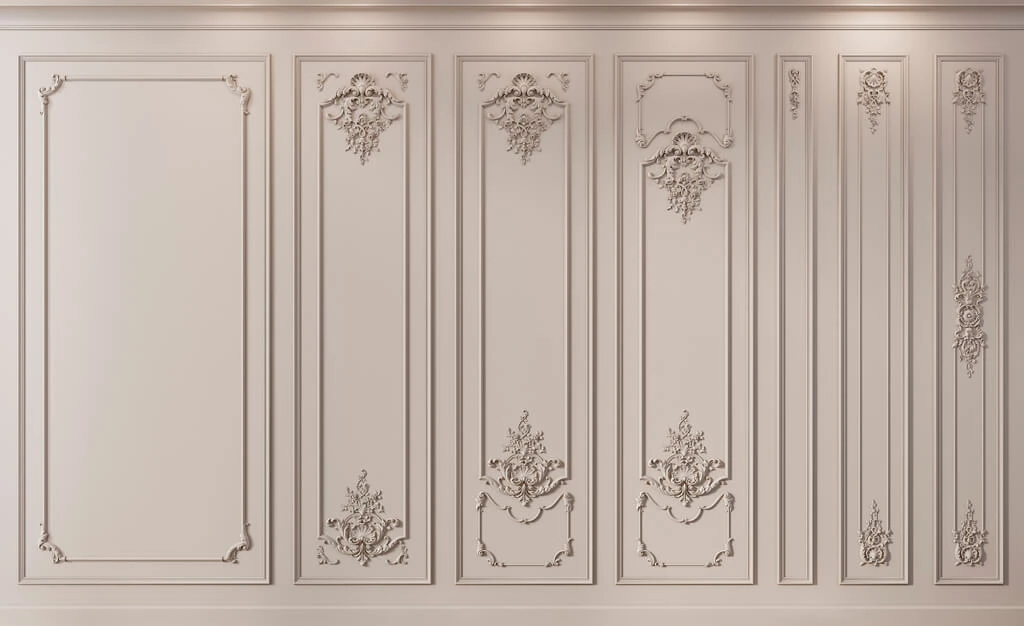
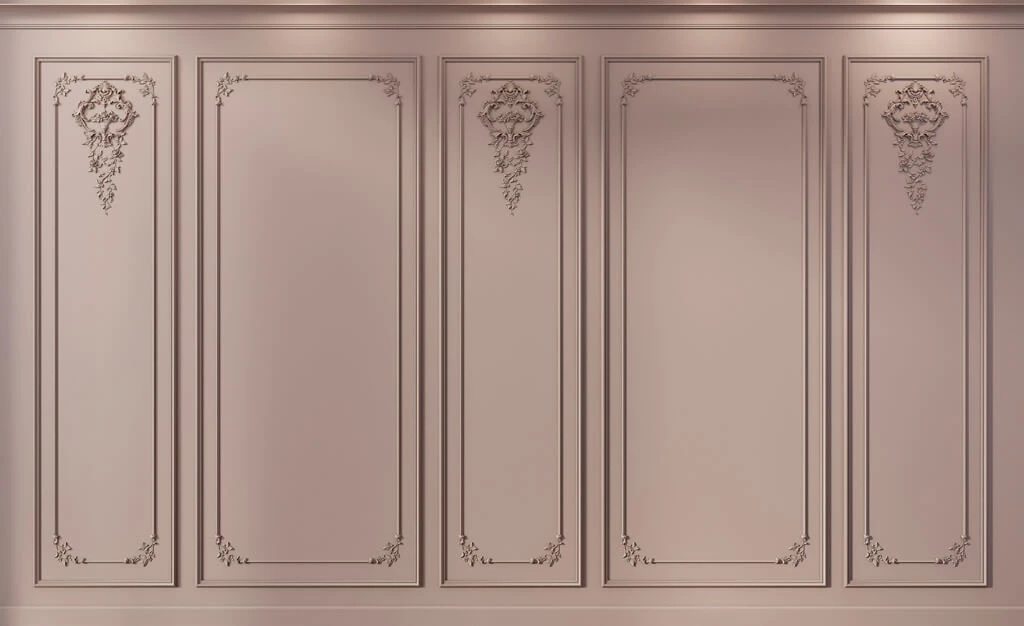
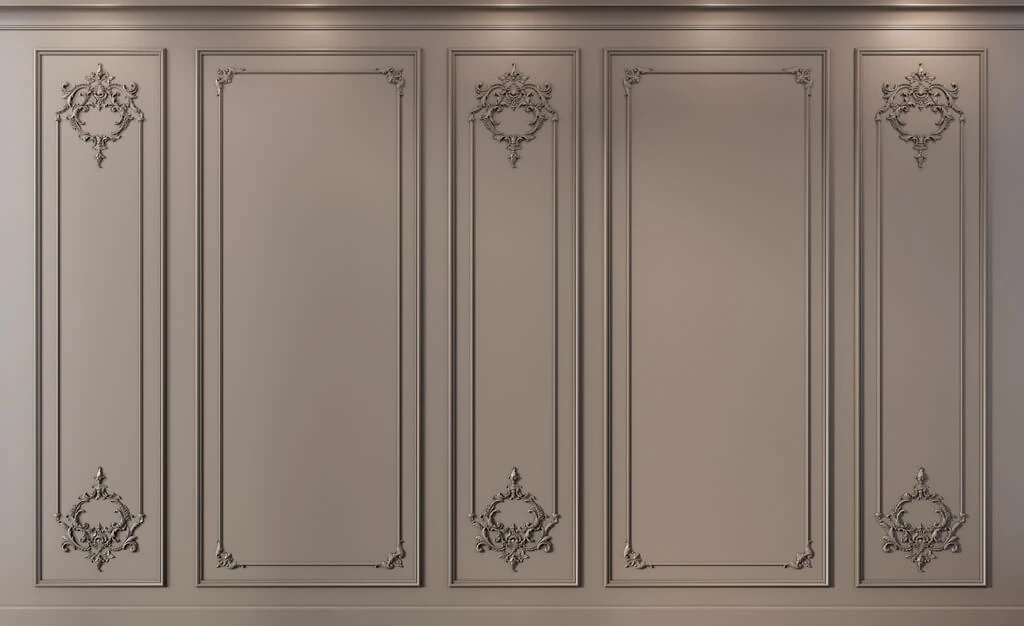
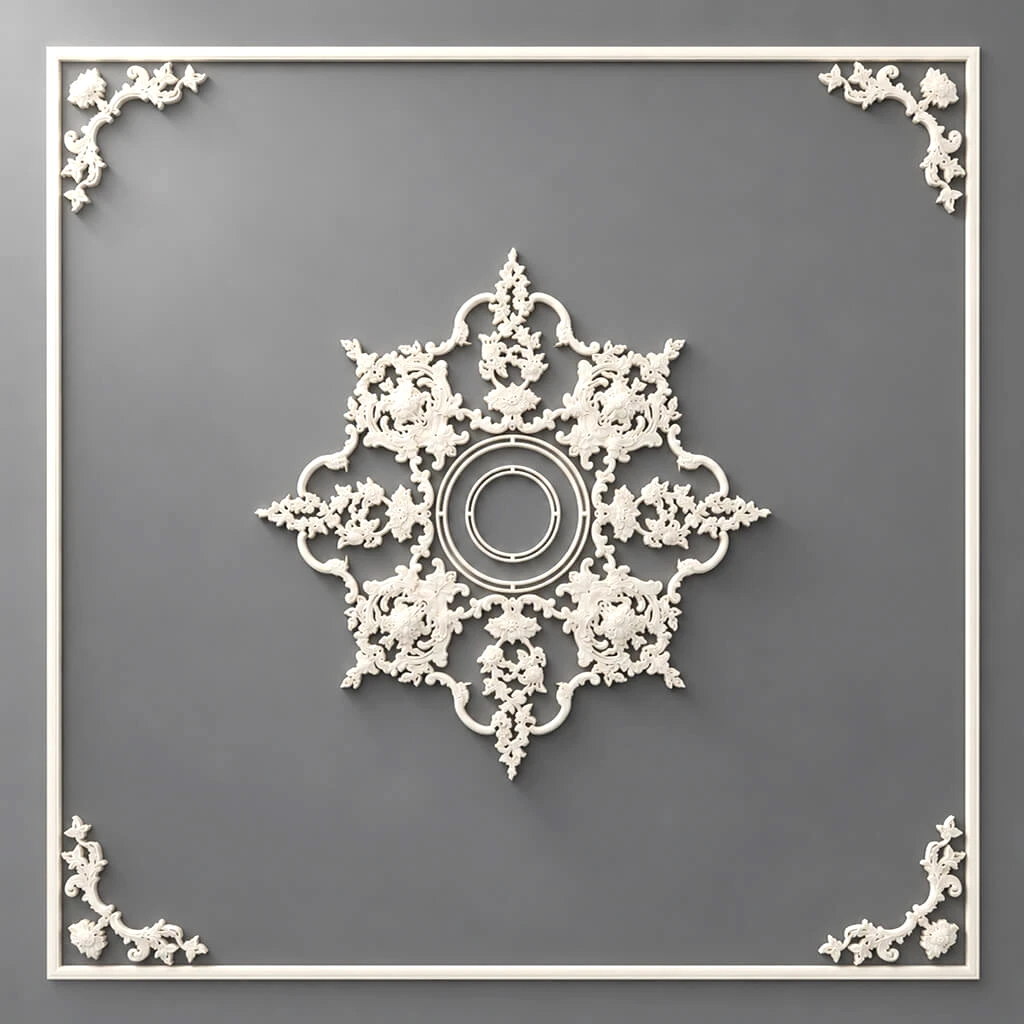
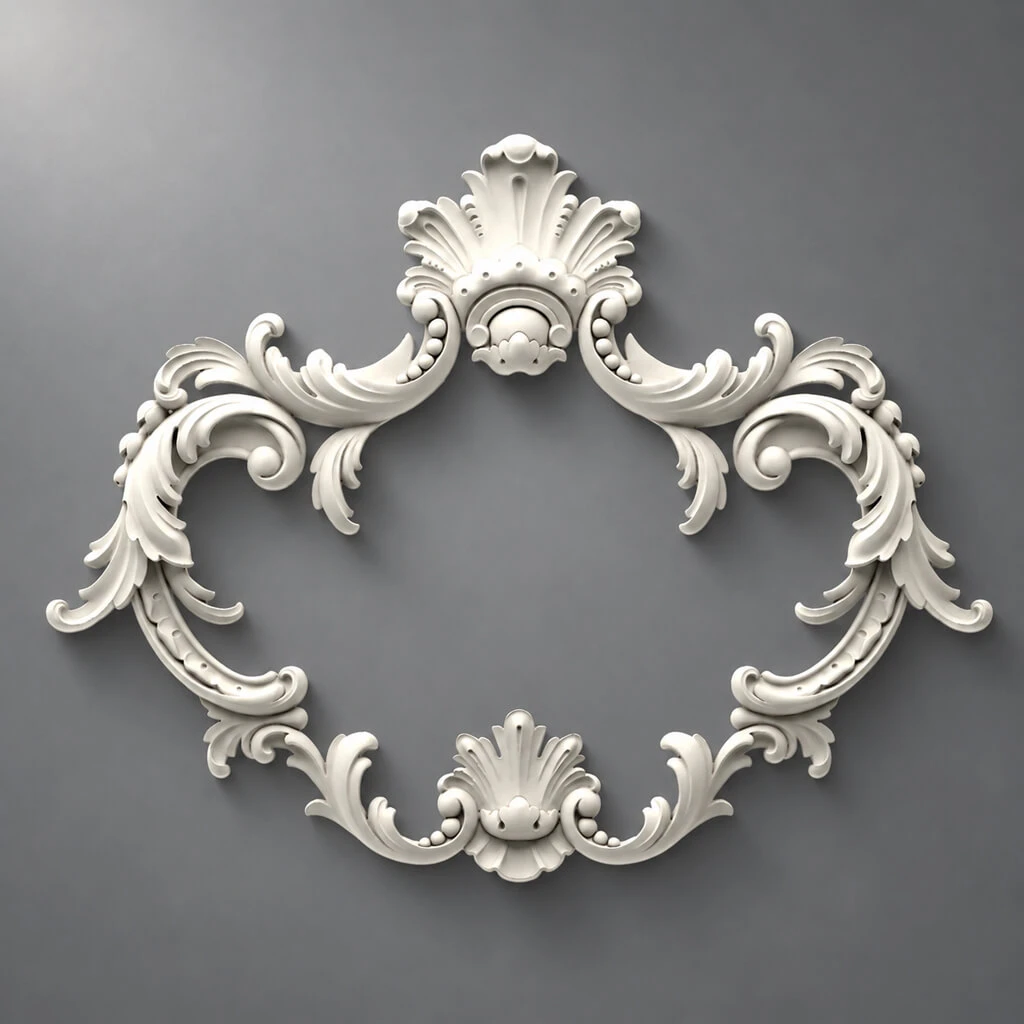
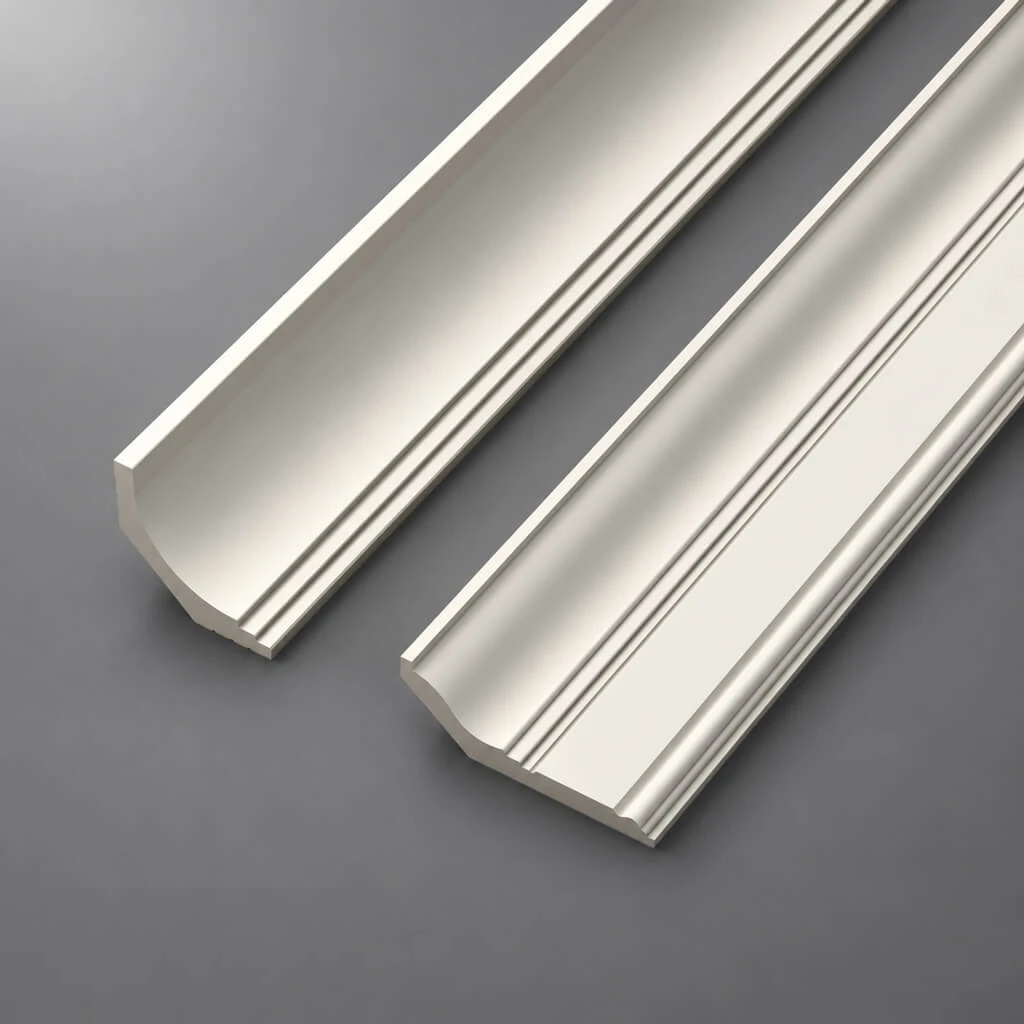
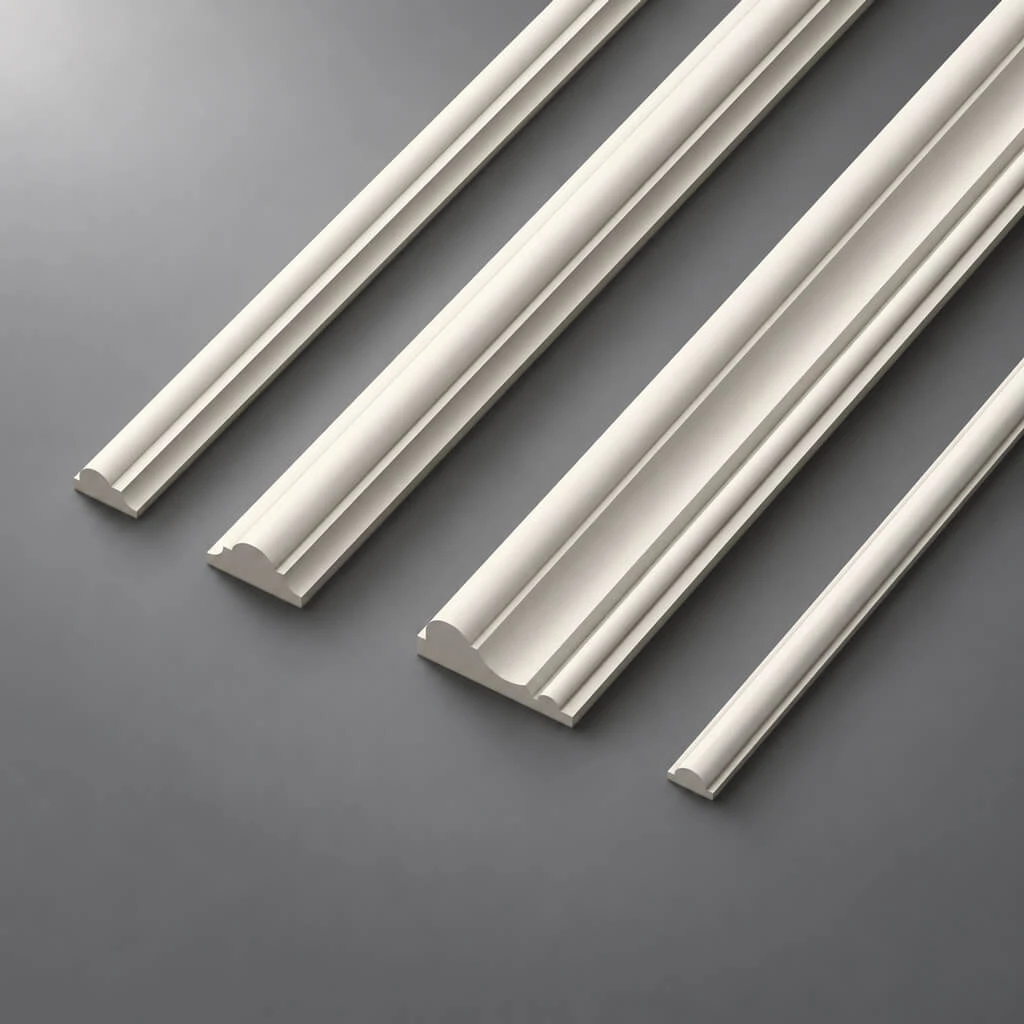
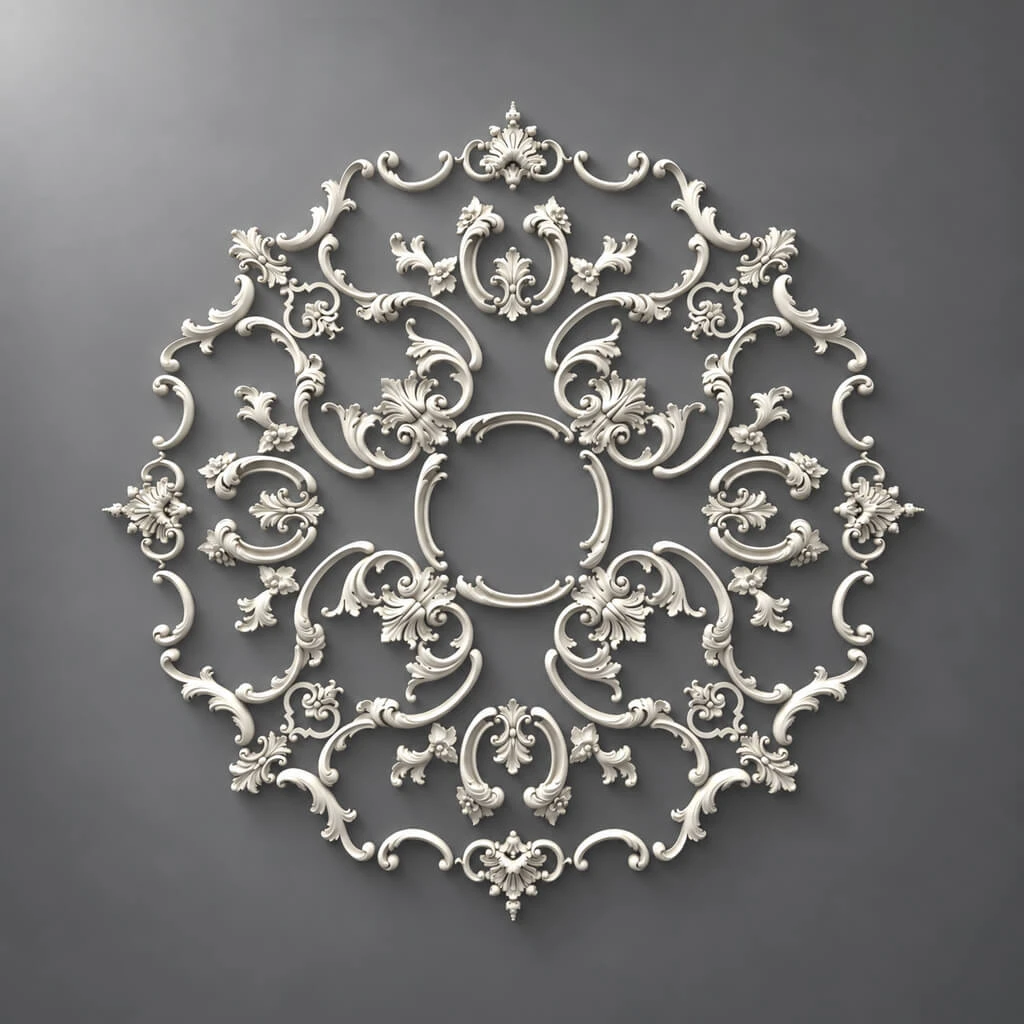
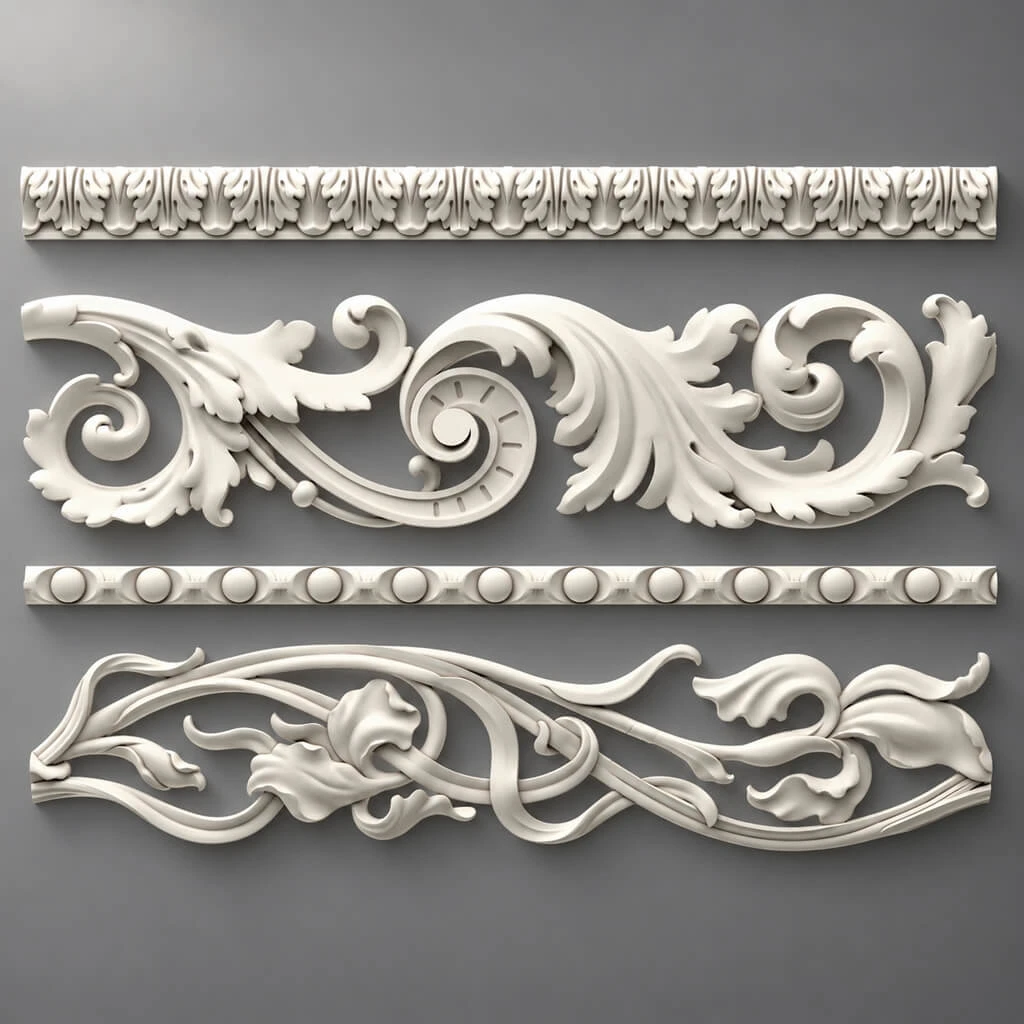
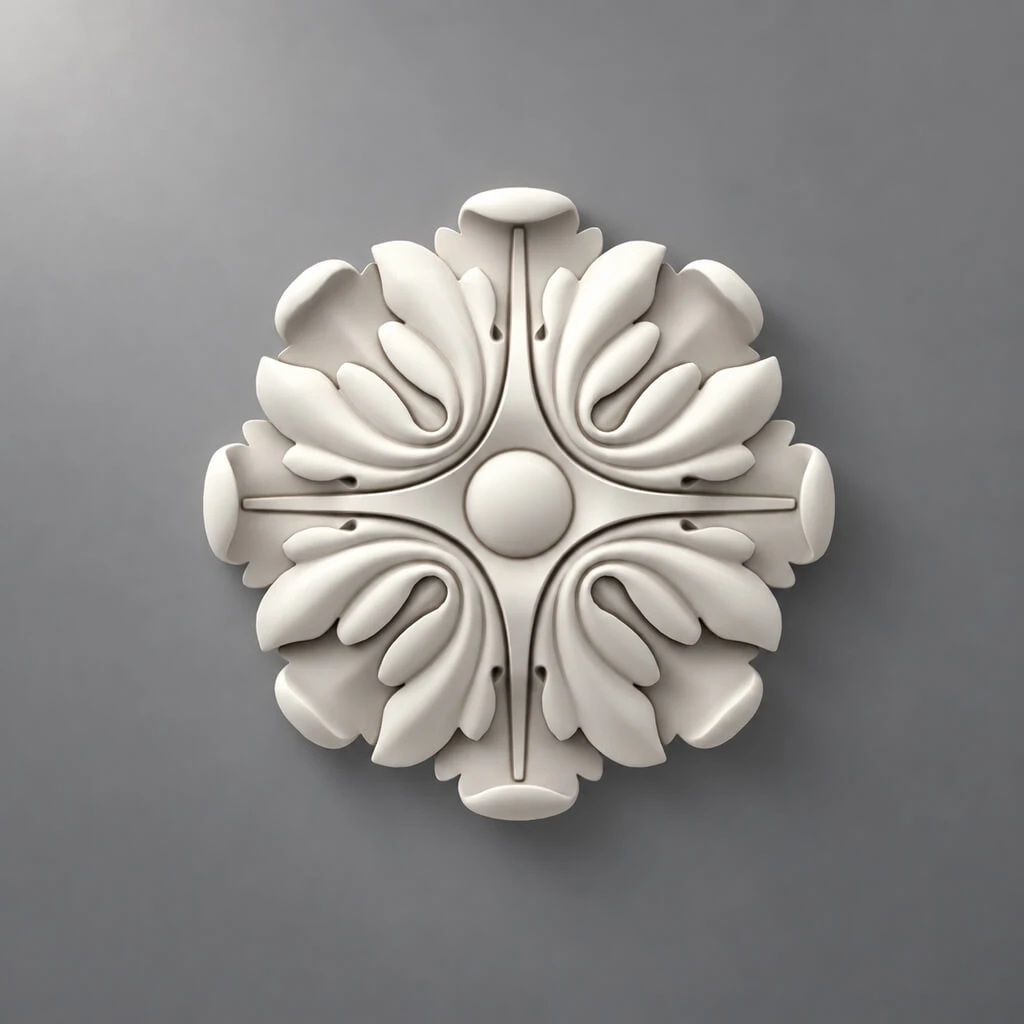
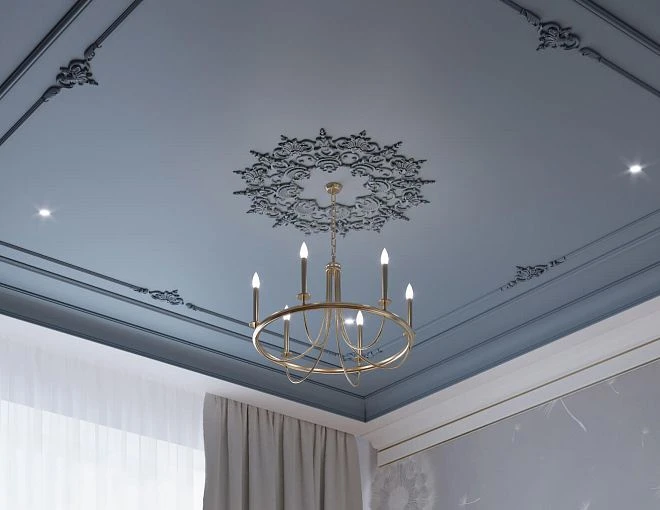
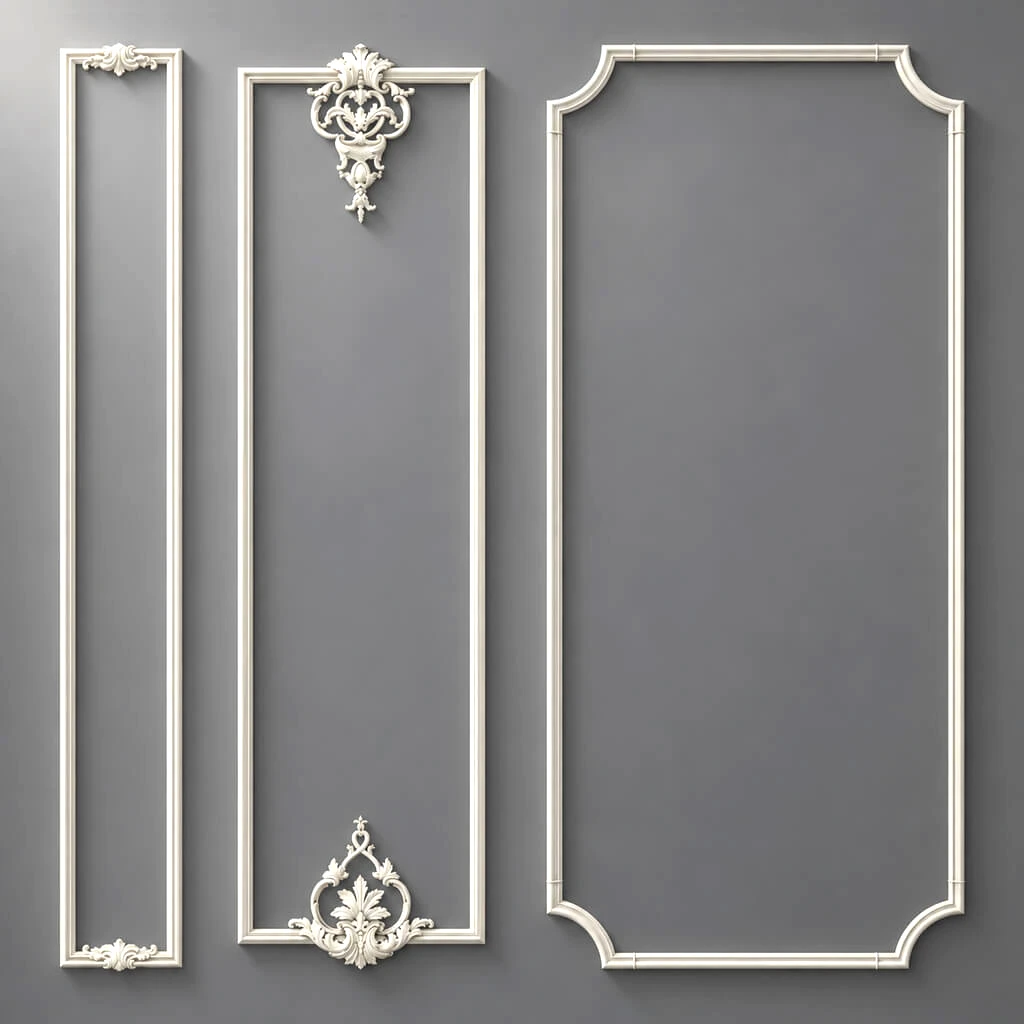
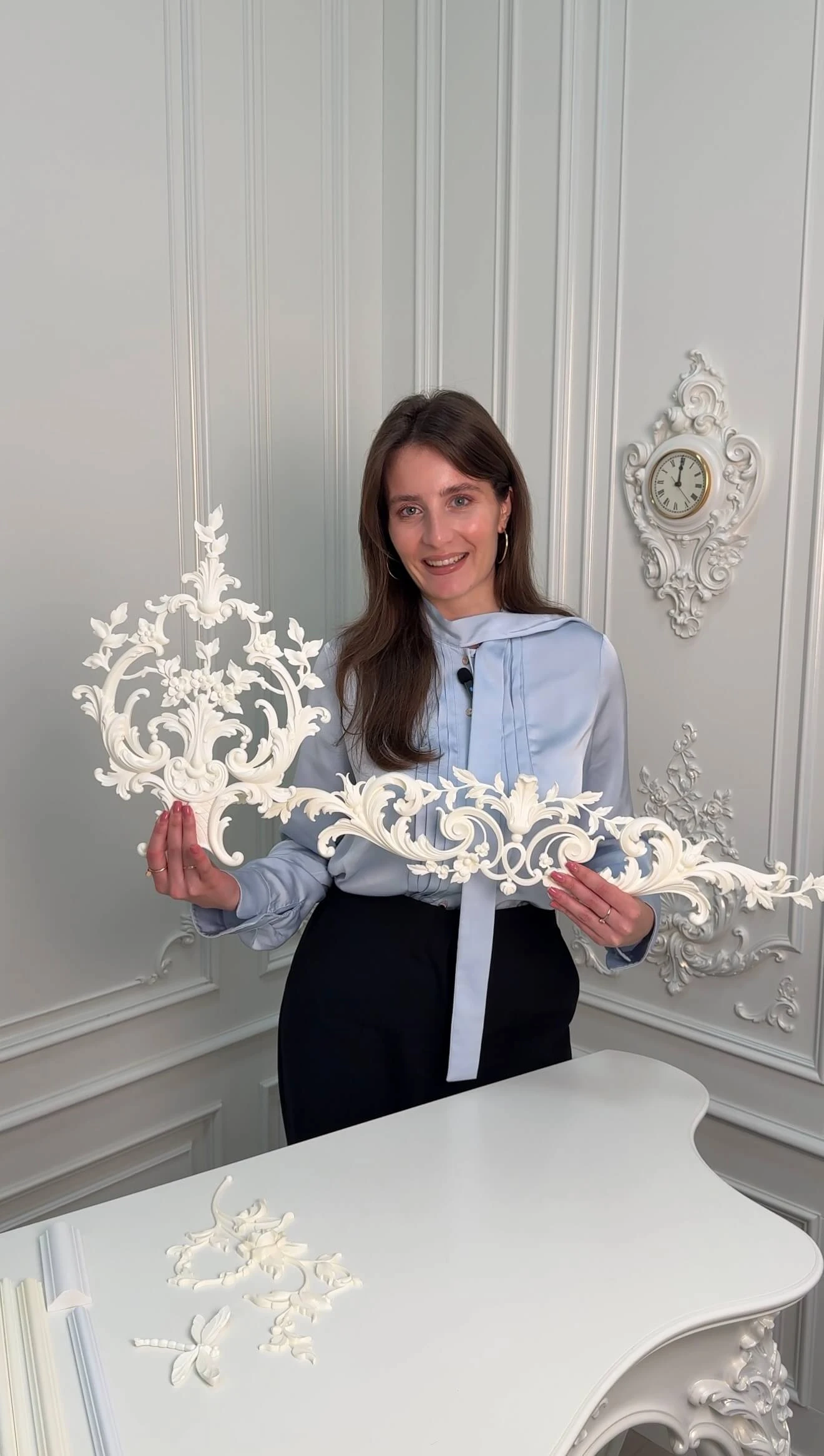
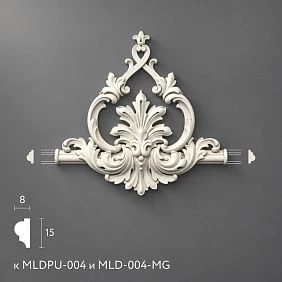
Polyurethane moldings— these are cornices, moldings, belts, corner elements, rosettes for chandeliers, frame overlays above openings. Each element has an exact repeatable profile — the geometry doesn't change from batch to batch. This is critically important for large-scale installation, where several linear meters of cornice must join perfectly.
Six situations where molding is mandatory
Not 'desirable' — precisely mandatory from the standpoint of architectural logic.
First. Wall–ceiling transition when there is slatted finishing. A slatted panel that meets the ceiling without a cornice looks like an unfinished construction. A molding cornice puts a period.
Second. The top edge of a partial panel field. If the panel occupies the lower zone of the wall — up to a height of 100–130 cm — its top edge must be finished with a molding. This turns 'finishing' into an 'architectural solution'.
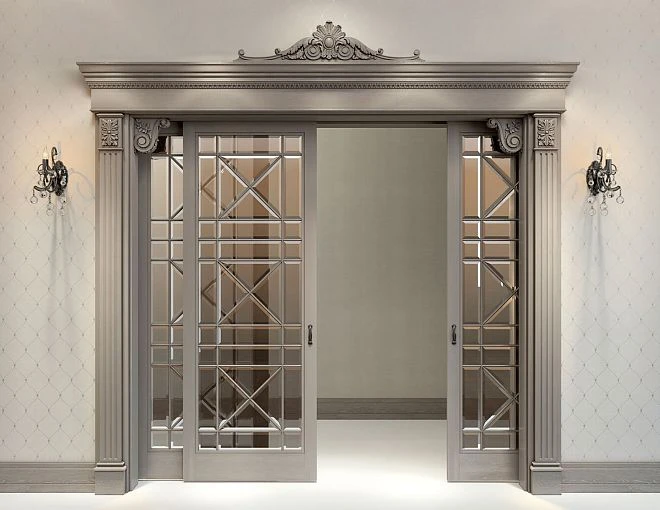
Third. Door and window openings in a room with slatted walls. A polyurethane casing around the perimeter of the opening is a detail that connects the opening with the overall wall finish.
Fourth. A long wall without division. On a wall longer than 4 m, a monotonous slatted rhythm begins to 'drift.' Vertical moldings that divide the wall into sections create a second-order rhythm—over the rhythm of the slats.
Fifth. Niches and recessed areas.Polyurethane Moldingsaround the perimeter of a niche turns a functional recess into an architectural element—a shelf, an alcove, a decorative panel.
Sixth. The area above a fireplace, console, or TV. A frame molding here works like a picture frame—it fixes the object in the wall space and gives it status.
Which profile to choose
Choosing a molding profile is not a matter of taste. It is a matter of matching the style and scale of the room.
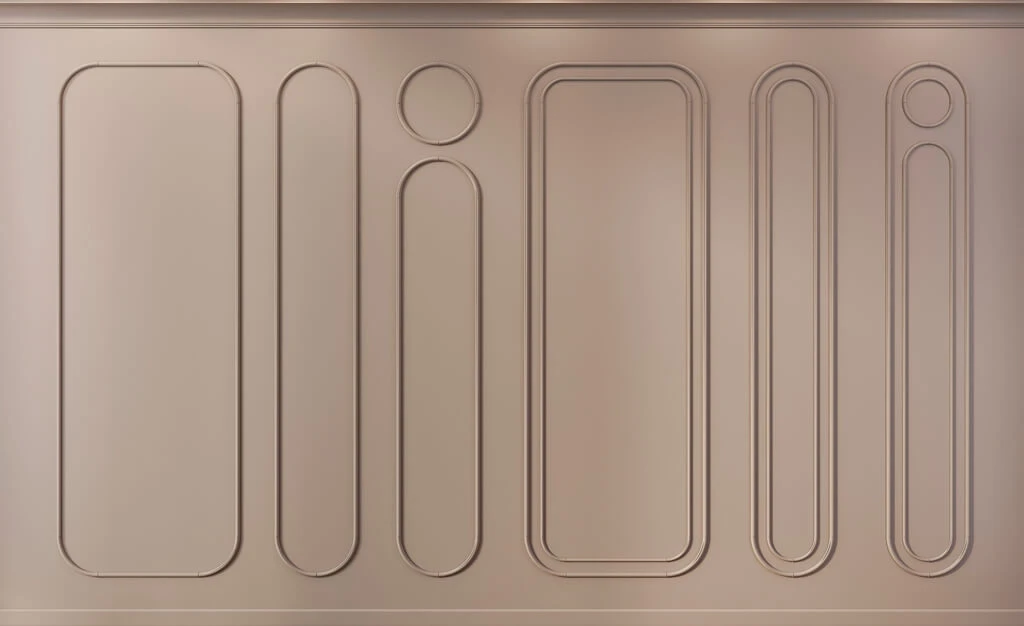
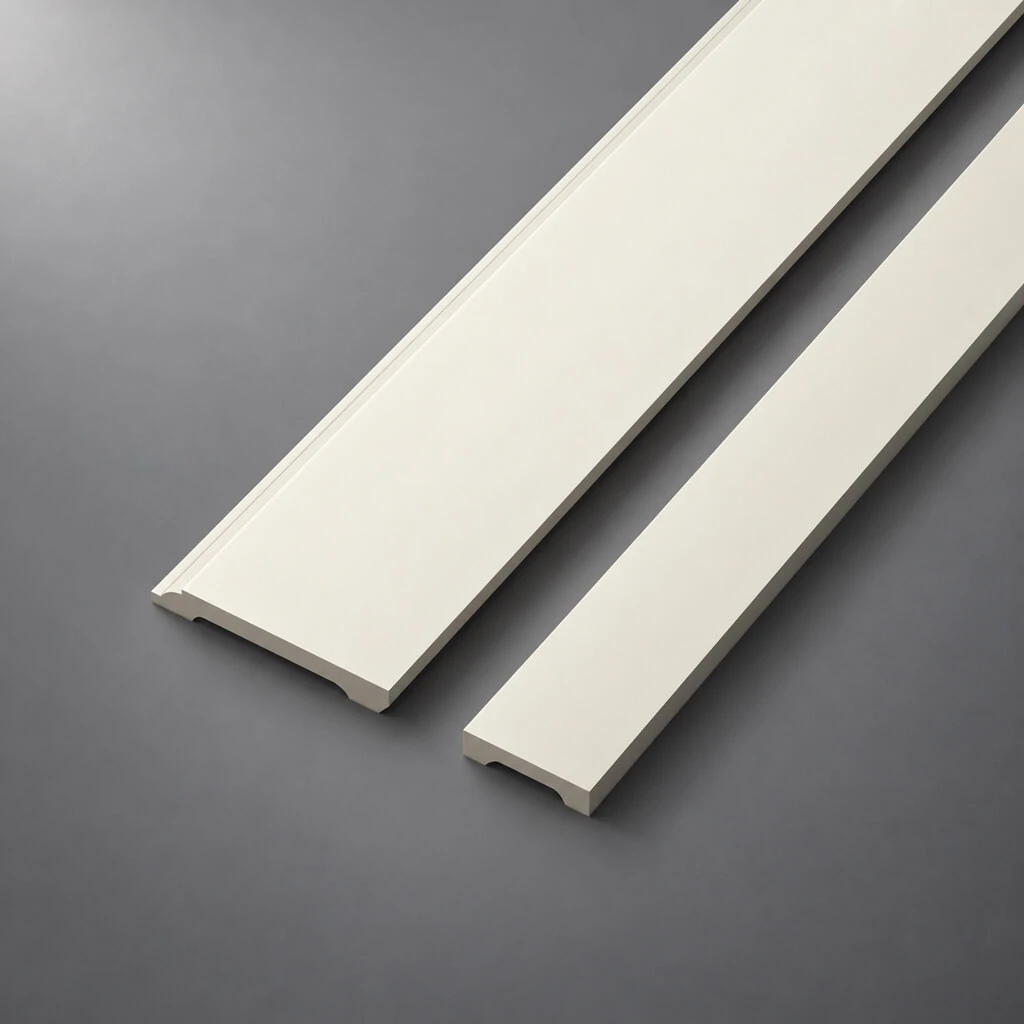
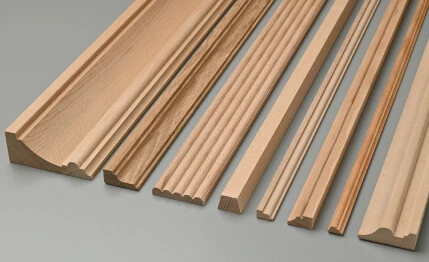
Flat minimalist molding—for modern interiors, minimalism, Scandinavian style. Width 20–40 mm, height 10–15 mm. Works through the geometry of the line, not through ornament.
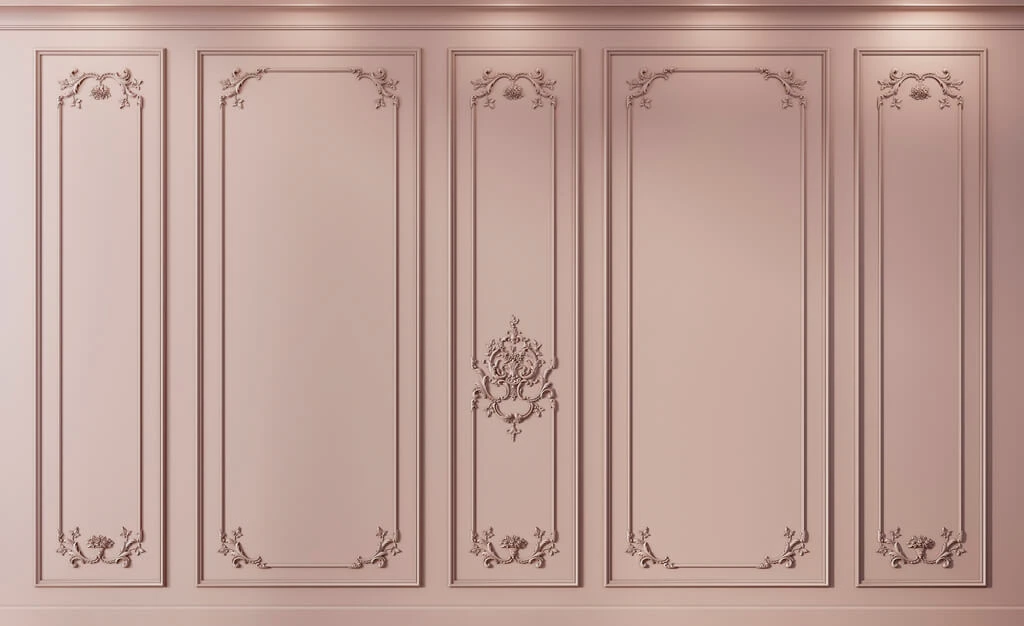
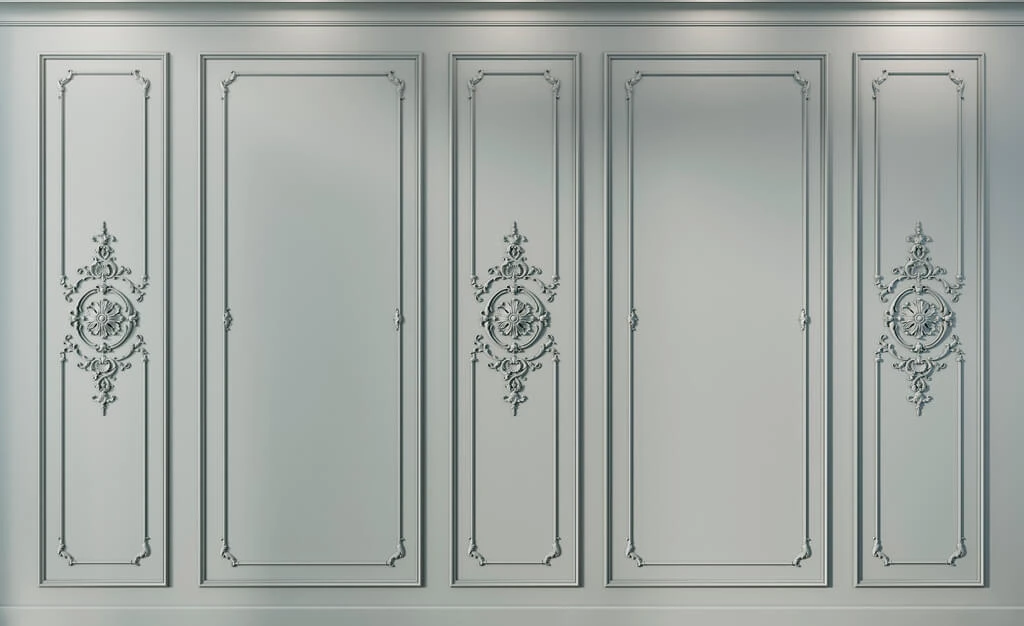
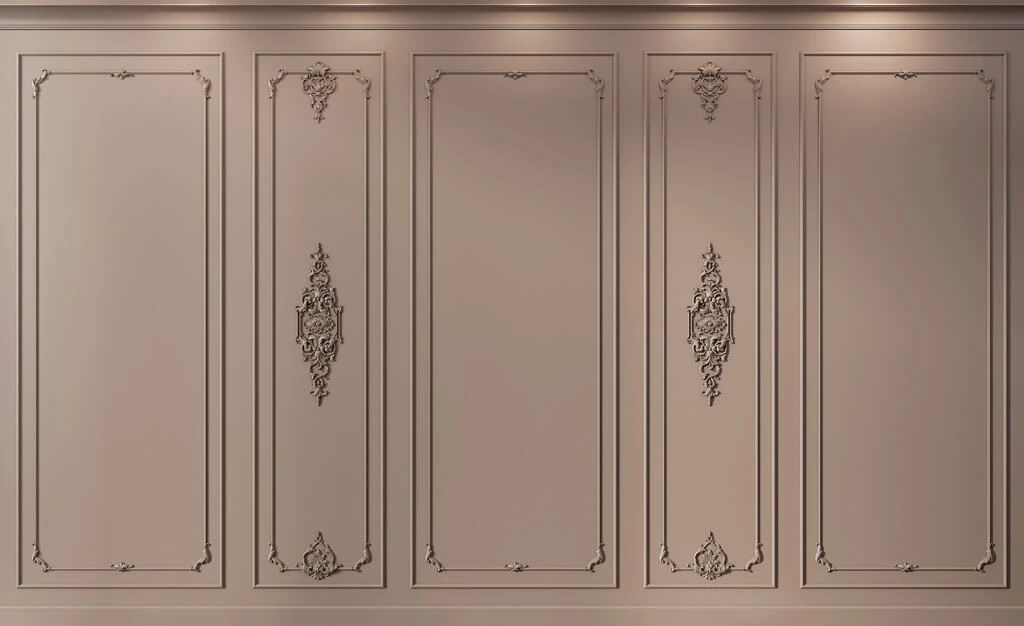
Stepped profile—for modern classic and neoclassical styles. Several horizontal ledges create a play of light and shadow without complex ornamentation.
Classical curvilinear profile with reverse curves (cavetto, ovolo)—for traditional styles: classic, baroque, empire. Rich chiaroscuro, expressive form.
Principle of proportionality: the height of the cornice in centimeters—no more than 2.5–3% of the ceiling height in centimeters. With a ceiling of 2.7 m—cornice up to 7–8 cm in height.
How panels and moldings work together: architectural mechanics
Let's call things by their proper names: slatted panels and moldings are two different languages. The first speaks in lines, the second in volumes. An interior where these languages are not translated to each other looks like a conversation between two people, each talking about their own thing.
Dialogue of rhythm and relief
Slatted panels create rhythm — a repeating linear element that organizes the plane. Moldings create relief — volume that interacts with light. When rhythm and relief are coordinated in scale, the interior reads as a unified architectural statement.
What does 'coordinated' mean? The width of the molding profile should be a multiple of or proportionate to the width of the slat. If slats are 40 mm — molding 40 or 80 mm. If slats are 60 mm — cornice 60 or 120 mm. This is called a modular system, and it is precisely this that forms the basis of classical architecture.
Three combination schemes
Scheme 'frame'. The slatted panel occupies the entire accent wall from floor to ceiling. Around the perimeter — molding, like a picture frame. Ceiling cornice throughout the room. The slatted wall becomes an architectural 'canvas', and the molding becomes its frame.
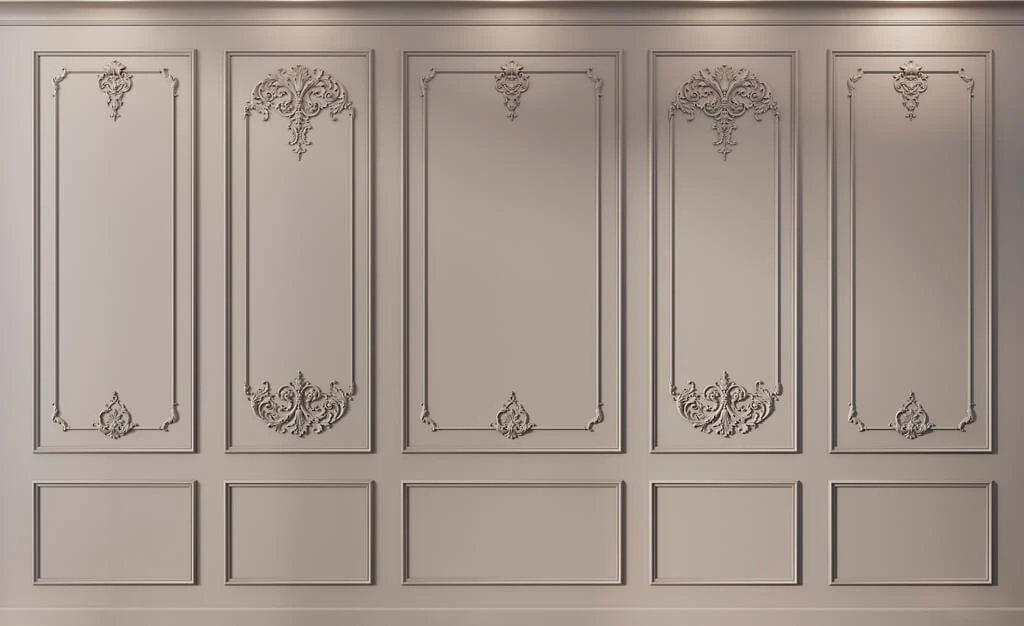
Scheme 'three-part wall'.slatted wall panels for interior finishingIn the lower zone — from floor to a height of 110–130 cm. Chair rail molding at the boundary. Middle zone — painted wall or wallpaper. Ceiling cornice. Three horizontals organize the wall as classical architecture has done for several centuries.
Scheme 'accent in a niche'. Slatted panel — on the back wall of a niche or recessed area. Around the perimeter of the niche — molding. The panel inside creates depth and texture, the molding outside — a clear frame. Result: the niche transforms into an independent architectural element.
Light as the third participant
You cannot talk about rhythm and relief while ignoring light. A slatted panel under a side light source—a floor lamp, wall sconce, or directional spotlight—fully reveals itself: each slat casts a shadow, and the surface comes alive. Under diffused overhead light, the same panel appears almost flat.
A plaster cornice with properly directed light creates a deep shadow—it is this shadow that gives a sense of volume. Uplighting directed along the wall from bottom to top can turn even a simple molding into a dramatic architectural element.
Therefore: when choosing materials, always consider the light sources. This is not an additional question—it is part of the design itself.
Which combinations are suitable for modern interiors
Let's state it plainly: 'modern interior' is a broad concept. Minimalism, Scandinavian style, neoclassicism, contemporary, loft—each has its own language. And for each of them—its own material combinations.
Minimalism: everything in one color
paintable slatted wall panelsMatching the wall color—this is a minimalist technique where the panel 'dissolves' into the surface, preserving only the rhythm. A thin, flat ceiling molding in the same color—a pure horizontal line. No ornaments, no contrasts. All expressiveness comes through light and shadow.
Color palette: white, light gray RAL 7035, warm linen, off-white. One color for everything: panel, molding, ceiling.
Scandinavian style: nature and restraint
Wooden slat panelsOak with a light oil finish — this is the quintessence of the Scandinavian approach. Natural texture without excessive processing. Molding is appropriate here in a wooden execution — wooden baseboard, wooden molding at the junction of the panel with the main wall. Or — a complete absence of molding, if the space itself is sufficiently laconic.
Modern Classicism and Neoclassicism
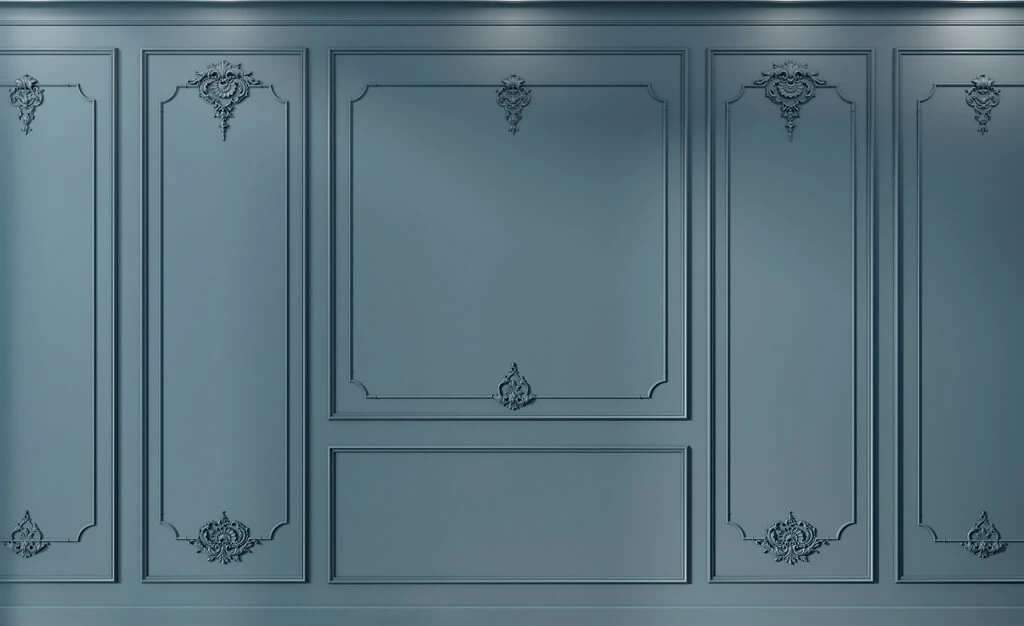
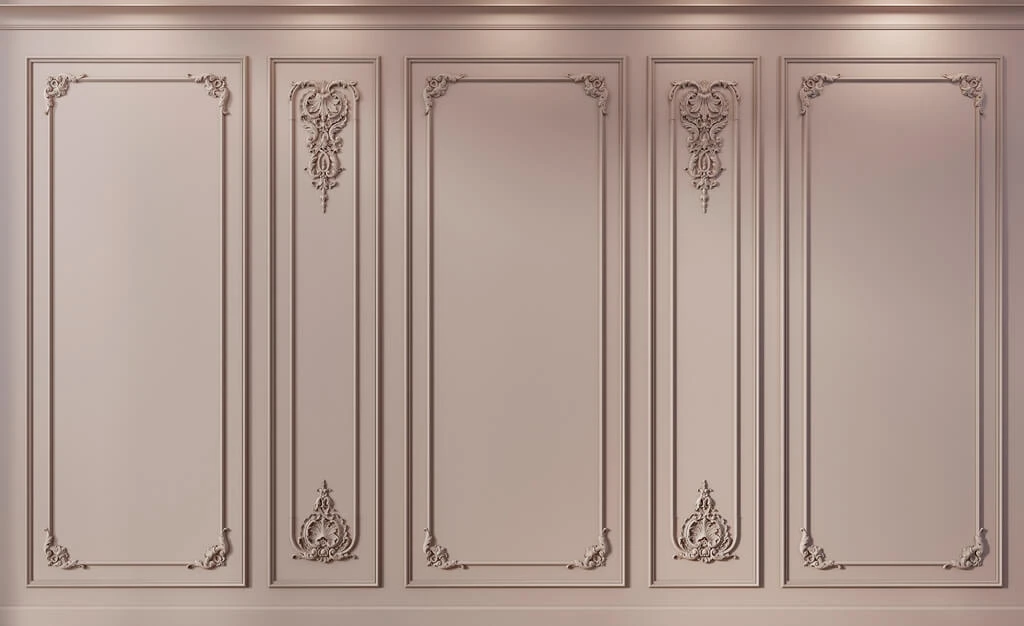
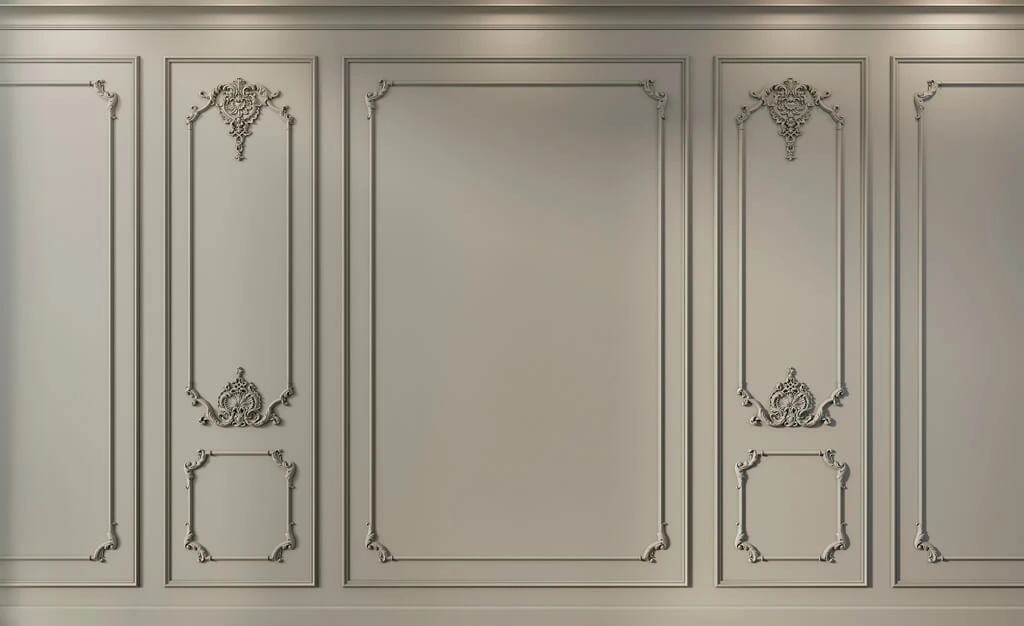
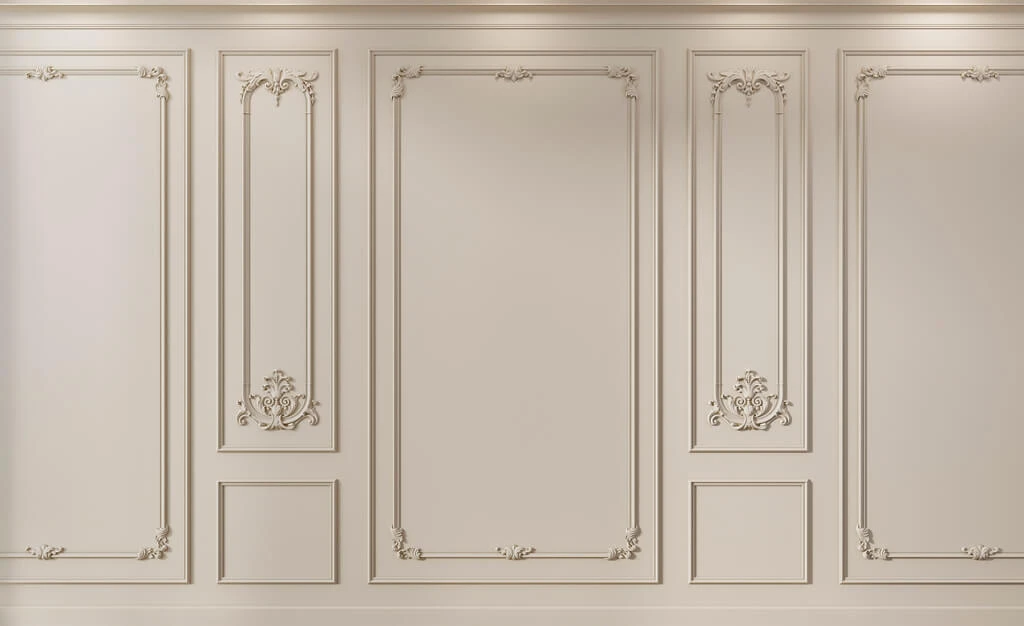
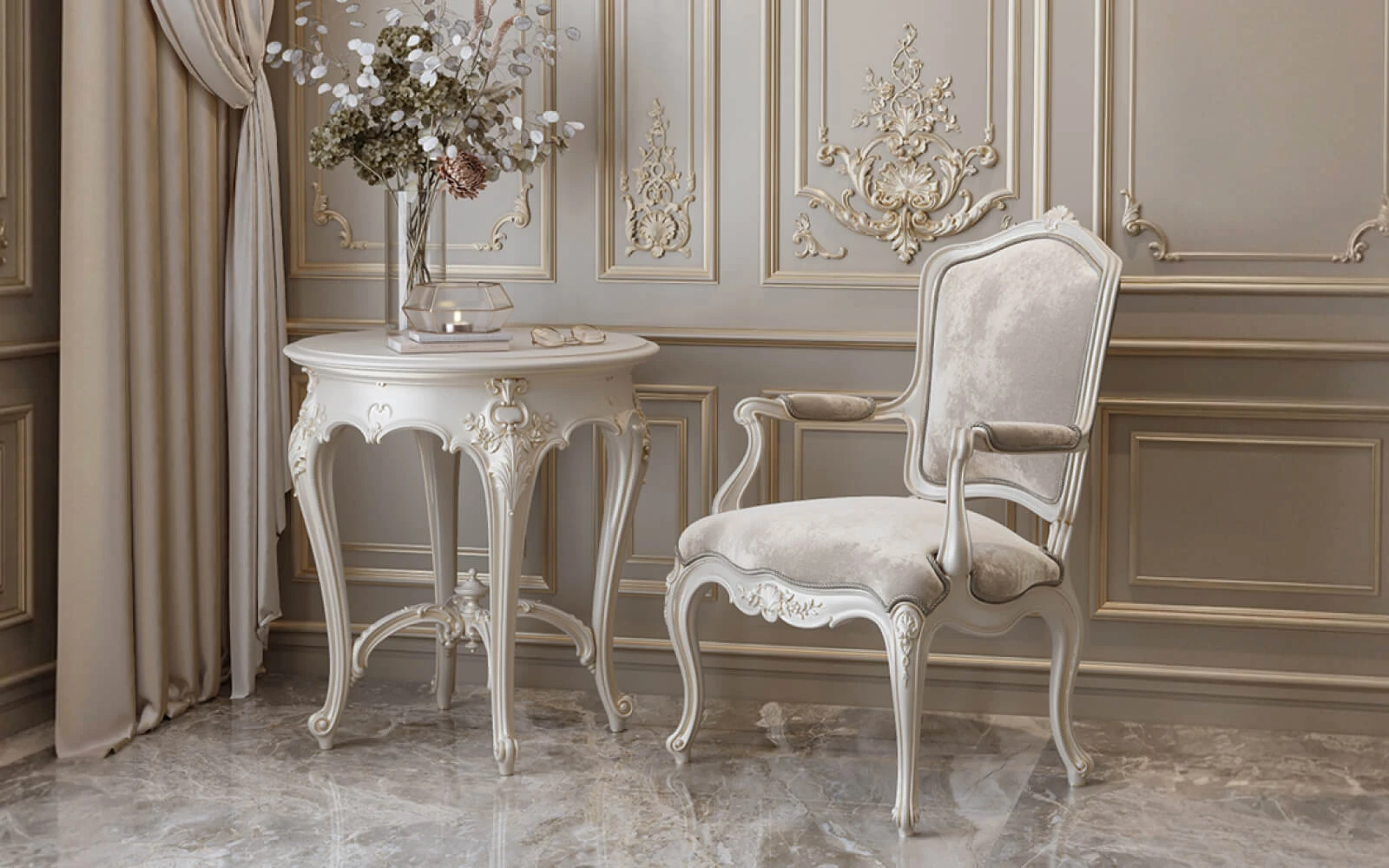
It is here that the combinationof slatted panelsandpolyurethane moldingunfolds to the full breadth of its possibilities. Slatted panels in the lower zone of the wall — a classic panel field. Waist molding with a profile that includes a cavetto and an ovolo. The middle zone is neutral. Ceiling cornice with a rich profile, rosette for the chandelier.
Color solution: white or ivory for the entire surface, gilding on cornice details — for formal spaces.
Loft and industrial style
Dark tinted slats — fumed oak or MDF painted dark. Metal profile instead of polyurethane molding.slatted wall panels in the interiorof the loft create warmth against the backdrop of brutal materials — concrete, brick, exposed utilities.
Contemporary: contrast and precision
White walls plus a dark slatted panel on one accent wall plus a white thin ceiling molding — this is contemporary at its best. Contrast creates tension, the molding organizes it. Balance — not through uniformity, but through precisely calibrated contrast.
Where an accent is needed, and where a calm background
One of the most important questions in design: what should attract attention, and what should remain unnoticed? The answer to it determines whether the interior will work as a unified whole.
Logic of accent
An accent is something the eye is intentionally drawn to. A room should have one—maximum two—accent elements. Everything else is background. Slatted panel as an accent: expressive material, open rhythm, bright or dark color. Slatted panel as background: paintable MDF matching the wall color, closed rhythm, neutral color.
The same applies to moldings. A cornice with a rich profile in a contrasting color is an accent. A thin molding matching the ceiling color is a structural element, almost invisible.
Living room: one accent wall
Slatted panels in the living room interiorwork best on one wall—behind the sofa or behind the TV. The other three walls are neutral. This solution provides maximum effect with minimal material usage.TV area with slatted panelstoday—is a classic that never goes out of style precisely because it relies on architectural logic, not a temporary trend.
Bedroom: accent behind the headboard
slatted panels in the bedroombehind the bed headboard—is an accent where the eye most often rests: upon entering the room, upon waking up. Molding along the top edge of the panel field defines the boundary and completes the accent. The remaining walls are calm.
Slatted panels in the bedroom interiormade of oak with warm oil create a feeling of a natural cocoon—exactly what a restful space needs.
Hallway: background that organizes
In the hallway, a slatted panel often serves as a backdrop—it structures the transitional space without claiming the role of the main accent.Slatted panels in the hallway interiorOn the lower part of the wall—up to a height of 90–100 cm—they protect the surface from mechanical damage and create a visual 'base' for the space. A molding trim along the top edge completes this zone.
Kitchen: dining area as an accent
Slatted panels in the kitchenIt is most appropriate to place it in the dining area—outside the work zone with constant steam. Here, the panel creates a restaurant atmosphere: a warm wooden backdrop, directed lighting above the table—and an ordinary dinner turns into an event.
Niches: the perfect place for slatted decor
A niche is already a ready-made architectural accent. A slatted panel on the back wall of the niche plus molding aroundpolyurethane molding decorationthe perimeter—turn a wall recess into a full-fledged designer object. This works in the living room (TV niche), in the bedroom (bedside niches), in the hallway (wardrobe area).
Errors of decorative imbalance: an honest breakdown
Imbalance in an interior is not something that catches the eye immediately. It is what creates a chronic feeling of 'something is off.' Let's examine the most common sources of this feeling.
First mistake: panels on all four walls
Whenslatted wall panelsThey cover the entire perimeter of the room, the rhythm of the battens ceases to be an accent—it becomes a background. But a very active background that doesn't let the eye settle on anything. The space begins to feel cramped and anxious, even if it's quite spacious. Maximum—two adjacent walls, or one accent wall against three neutral ones.
Second mistake: moldings of all styles at once
A thin flat molding in one corner, a rich classical cornice in another, coffered frames on the ceiling and a simple band on the wall—all of this in one room creates stylistic schizophrenia. Moldings should belong to one stylistic solution. One profile for the ceiling, one for the walls. If variety is needed—variety in scale, not in style.
Third mistake: uncoordinated vertical axis
The batten panel stands vertically. The molding runs horizontally. When vertical battens and horizontal molding meet—an intersection arises that needs to be architecturally resolved. Either the molding runs over the end of the panel (covering it), or the panel runs up to the molding (stops at it). Both options are correct. Incorrect—when battens 'intrude' behind the molding or the molding 'cuts through' the battens without a clear resolution.
Fourth mistake: color mishmash
Three different shades of white—the panel is milky, the molding is creamy, the ceiling is cool white—this is not variety. This is inconsistency that reads as carelessness. Either one precise color for all white surfaces, or a deliberate color contrast with a clear logic.
Fifth mistake: decor without function
Decor should do something: structure, finish, direct the gaze, mask a transition. Decor for decor's sake—a molding in the middle of a wall without a logical connection to anything, a frame on the ceiling not over anything specific—this is visual noise. Every molding element should have an architectural function.
Sixth mistake: ignoring ends and corners
Slatted wall panels for interiorFinishing with untreated ends at corners looks unfinished — MDF cuts are visible, the slat rhythm is disrupted. Corner trims, end strips, additional elements — these are not optional accessories, they are an essential part of the system.
Slatted panels in specific areas: ceiling and niches
Ceiling: it's often overlooked — in vain
Batten panels for ceilings— is a technique that changes the perception of height. The horizontal rhythm overhead visually 'lowers' the ceiling — creating a cozy, intimate feeling. In large open spaces, this is exactly what's missing: the scale of the room becomes human.
Slatted panels for the ceilingare mounted according to the same principles as on a wall: frame or adhesive + fasteners, material acclimatization, seamless module joints. The only fundamental difference is the load-bearing capacity requirements. Solid oak for the ceiling requires a reliable frame; MDF panels are significantly lighter.
Combination: slatted ceiling plus a molded cornice around the perimeter — this is a solution constantly found in professional projects. The cornice separates the ceiling field from the walls, creates a clear frame, and completes the entire spatial composition.
Niches: slatted decor as an architectural response
A wall niche is potential. Most leave it simply painted. ButSlatted wall panelson the back surface of the niche plus molding around the perimeter — transform this potential space into an accent object. When adding spot lighting inside, the effect is multiplied many times over.
This works especially well in bedside niches, TV niches, and decorative niches in living rooms.Slatted panels with lightingInside a niche, it's not just beautiful. It's a technically sound use of space that works both as decor and as functional lighting.
Installation: Principles That Must Not Be Violated
Installation techniques determine the final result no less than the choice of material. Installation errors are something that cannot be cosmetically corrected.
Foundation Preparation
The base must be: dry (humidity no more than 8%), clean (without residues of old coating that may peel off), geometrically level or leveled with a frame.How to install slatted panelsTo a wall with a deviation of more than 5 mm — only via a frame. On a level base — adhesive plus finishing fasteners.
Acclimatization: The Two Days That Decide Everything
Wooden products must be in the room at working temperature and humidity for at least 48 hours before installation. Violating this rule leads to deformation of installed panels — spreading of slats, warping of the substrate, and gaps at joints.
Seamless Joint: A Sign of a Quality Product
With a professional panel, when joining two modules, the rhythm of the slats continues without interruption — the outermost slats of adjacent modules form a symmetrical gap. This is a parameter that needs to be clarified when ordering. Its absence means non-symmetrical strips will be visible at the joints, ruining the entire rhythm.
Installation order: a rule without exceptions
Always: first the slatted panels, then the molding.installation of slatted panelsis completed entirely — with corner overlays and end elements. Then the molding is installed: it covers the ends, hides transitions, and finishes the edges. Never the other way around.
Tools
Miter saw — for precise 45° cuts on corners. Without it, the molding corners will look unsightly. Pneumatic stapler or finish nailer — for reliable panel fastening. Level — mandatory. Tape measure, pencil, painter's tape — basic set.
Materials navigator: summary table
Structured overview will help quickly navigate when choosing:
| Material | Application | Strengths | Limitations |
|---|---|---|---|
| MDF panel for painting | Walls, niches, ceiling in dry areas | Freedom of color, precise geometry | Wet rooms — no |
| Oak solid wood | Walls, headboards, office, ceiling | Living texture, durability, restorability | More expensive than MDF, requires acclimatization |
| WPC (Wood-Plastic Composite) | Bathrooms, balconies, facade, terrace | Complete water resistance, frost resistance | Fewer color and texture options |
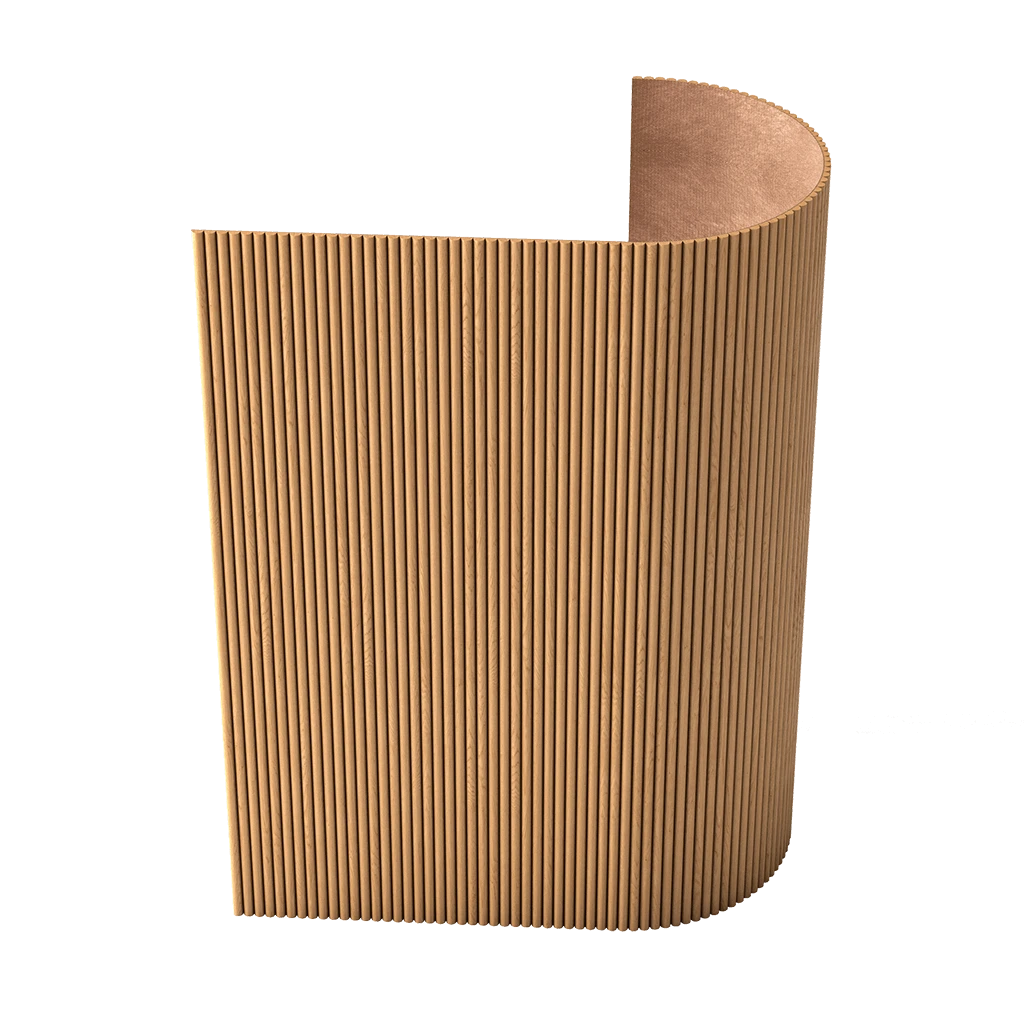
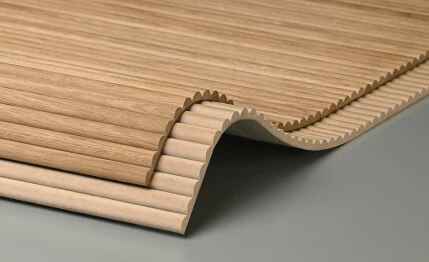
| Flexible panel | Arches, columns, rounded surfaces | Installation on non-standard surfaces | Limited assortment |
| Polyurethane cornice | Ceiling, wall-ceiling transition | Lightweight, precise profile, moisture-resistant | Requires quality adhesive |
| Polyurethane molding | Walls, frames, belts | Any profile, quick installation | Not for open facade |
FAQ: questions asked before purchase
Can wall slat panels be purchased in Kazan with delivery?
Yes. The company STAVROS works with orders throughout Russia, including Kazan and the Republic of Tatarstan. Delivery is via transport companies with full packaging. Orders are placed online.
Wall slat panels — do you need a specialist for installation?
No. With basic tools and careful markingInstallation of batten panelsit is accessible for self-installation. The STAVROS website has detailed instructions.
Polyurethane molding or plaster — which to choose?
For most interior tasks, polyurethane is preferable: it is lighter, installs faster, moisture-resistant, does not require specialized tools or a crew. Plaster is justified in rare situations when a unique custom shape is needed.
How to combine slat panels with lighting?
Slatted panels with lightingrequire a gap between the panel backing and the wall — an LED strip is placed in this gap. For this, the panel is mounted on a frame that provides an air gap of at least 20–25 mm. The cable is laid before installation.
What color of slat panels to choose for a dark room?
For dark rooms, light slats—white or natural wood with light oil finish—visually expand the space and add brightness. Dark slats in a dark room create a sense of intimacy—this is suitable for studies and bars, but not for living rooms lacking natural light.
Wooden slat panels—how to care for them?
Wooden slat panelsOil-finished panels are wiped with a slightly damp cloth. Every 3–5 years—apply a fresh coat of oil-wax. Lacquered panels—regular dry or slightly damp cleaning. No special care required.
How many panels are needed for a room?
Measure the area of the surfaces to be finished. Add 12–15% for cutting and waste due to non-standard openings. Divide by the area of one module from the product card—and round up.
Ceiling molding—can it be installed independently?
Yes. Polyurethane cornice is glued with mounting adhesive, cut at 45° with a miter saw. Joints are filled, sanded, and painted. The entire process is accessible without special skills, given basic tools and careful work.
About the company STAVROS
When the task is formulated—'I want slat panels in Kazan, need molding, it's important that everything is coordinated'—all that remains is to find a supplier who understands all these things simultaneously.
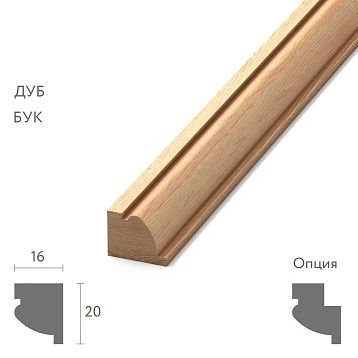
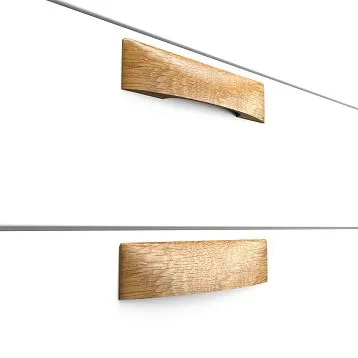
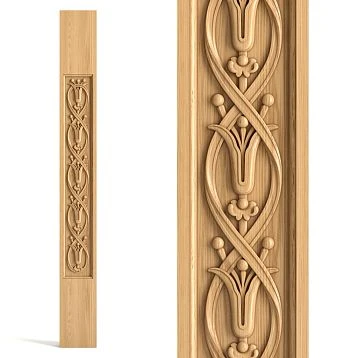
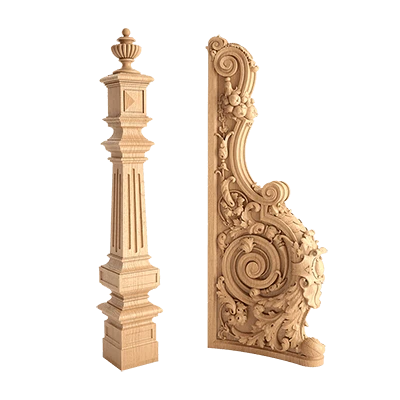
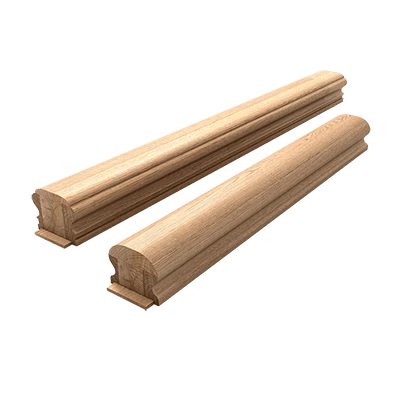
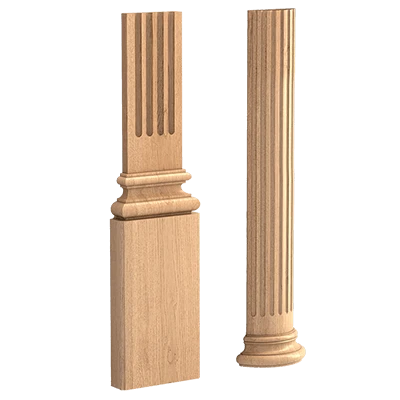
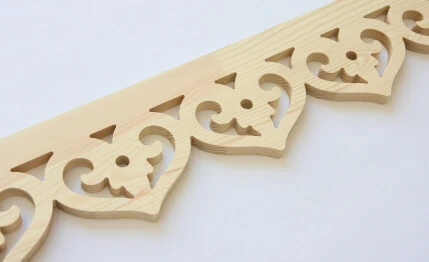
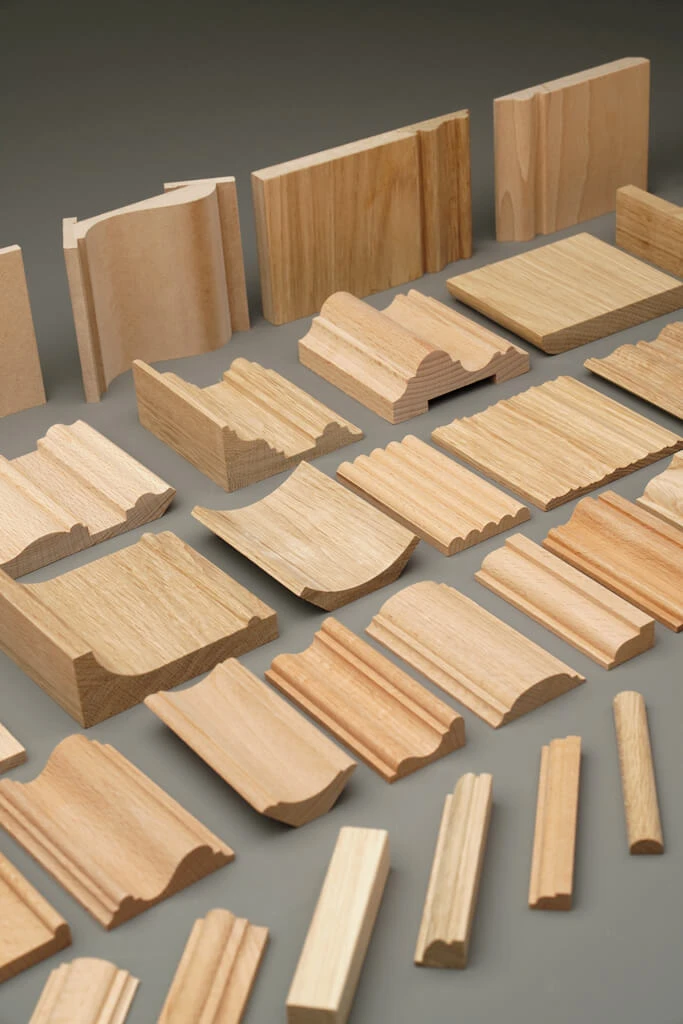
STAVROS—a manufacturing company with a full range of materials for architectural interior finishing. In the STAVROS catalog:Buy slatted panels for wallsin Kazan and throughout Russia—made from MDF, solid oak, DPC, and on a flexible fabric base;polyurethane moldings— cornices, moldings, belts in a wide range of profiles;Polyurethane moldings— in the form of overlays, rosettes, and frame elements;Solid wood molding— for finishing touches.
STAVROS knows the product inside out — from production to installation. Consultation on material selection, quantity calculation, technical support — all this is available when placing an order. Delivery to Kazan and all regions of Russia is carried out by transport companies with full packaging and documentary support.
An interior at the intersection of rhythm, texture, and relief begins with the right materials from STAVROS.