

















































Article Contents:
- What Are PVC Slat Panels: The Material from the Inside
- Structural Types of PVC Slat Panels
- Cellular (Foamed) PVC
- Solid PVC Profile
- Foamed PVC with Reinforced Ribs
- Technical Parameters of PVC Slat Panels: Numbers That Matter
- Width
- Profile thickness
- Length
- Coefficient of Linear Thermal Expansion
- Operating temperature range
- Flammability class
- Decorative Range of PVC Slat Panels: What's on the Market
- Solid matte and glossy
- Wood imitation
- Stone and marble imitation
- Embossed surfaces
- Where PVC slat panels work flawlessly
- Bathroom and toilet
- Balconies and loggias (unheated glazed)
- Utility rooms, workshops, basements
- Rental housing and temporary finishes
- Where PVC slat panels fall short: honest criticism
- PVC slat panels vs. MDF vs. solid wood: comparison table
- PVC slat panels: installation technology from A to Z
- Required Tools
- Materials for installation
- Step 1: Wall preparation
- Step 2: installation of the lathing
- Step 3: Installation of starter profiles
- Step 4: installation of the first slat
- Step 5: installation of the paneling
- Step 6: trimming around openings and pipes
- Step 7: sealing (for bathrooms)
- Step 8: finishing skirting boards and moldings
- PVC slatted panels in the bathroom: design within material constraints
- PVC slatted panels for ceilings: possibilities and limitations
- PVC slatted panels and comprehensive interior context
- Caring for slatted PVC panels: what's really needed and what's unnecessary
- Choosing quality slatted PVC panels: what to look for
- FAQ: questions and answers about slatted PVC panels
- About the Company STAVROS
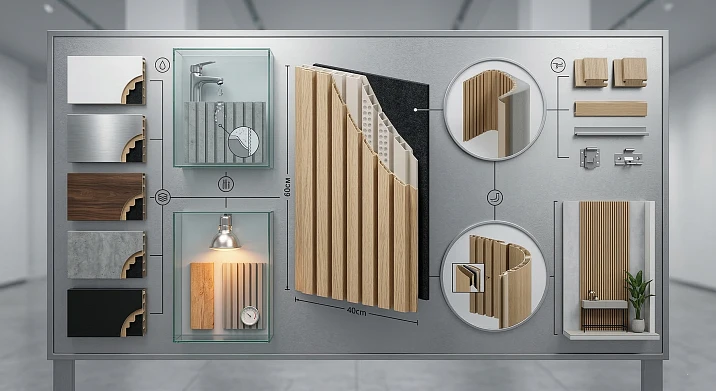
The conversation about PVC slatted panels always starts the same way: someone says 'cheap and practical,' someone wrinkles their nose and utters the word 'plastic' with undisguised disdain. Both are right—and both are wrong at the same time.
PVC battens are not a universal hero of the renovation market nor a cheap surrogate deserving only a condescending glance. This is a material with a clear niche application, understandable technical parameters, and specific conditions where it performs excellently. Understanding this niche means making the right decision and not spending money twice: first on PVC where MDF is needed, and then on replacing disappointing finishes.
This article provides a complete, honest, and technically competent analysis of PVC panel battens: the chemistry of the material, construction, parameters, areas of application, installation, maintenance, and comparison with wood and MDF. And—the inevitable conclusion about when PVC is appropriate and when it seriously loses to competitors.
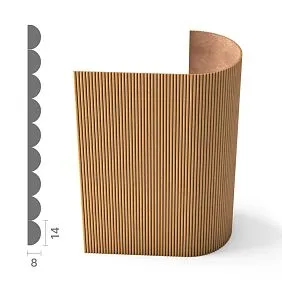
What are PVC panel battens: the material from the inside
Polyvinyl chloride is a thermoplastic polymer obtained by polymerizing vinyl chloride. In its pure form, PVC is rigid and brittle. For construction applications, plasticizers (typically phthalates), stabilizers (thermal and UV), and fillers (chalk, kaolin) are added to it. The final composition and ratio of components determine the mechanical properties of the product, its durability, and safety.
The production of PVC panel battens is a continuous extrusion process: molten granules are forced through a profiling die that shapes the cross-section of the batten. Simultaneously or in the next technological step, a decorative layer is applied—a thermal transfer or calendered film with a printed pattern. On top, there is a protective varnish layer.
The internal structure of the finished batten is cellular: longitudinal stiffening ribs divide the profile into closed chambers. This ensures an optimal balance of lightness and load-bearing capacity. A batten measuring 2700 mm in length and 100 mm in width weighs about 350–450 g—nothing compared to an MDF batten of the same size.
A fundamental chemical characteristic: PVC is absolutely hydrophobic. Its molecular chain contains no polar groups capable of forming hydrogen bonds with water molecules. Zero water absorption is not a marketing claim but a physical reality. It is precisely this property that defines the main area of application for PVC battens.
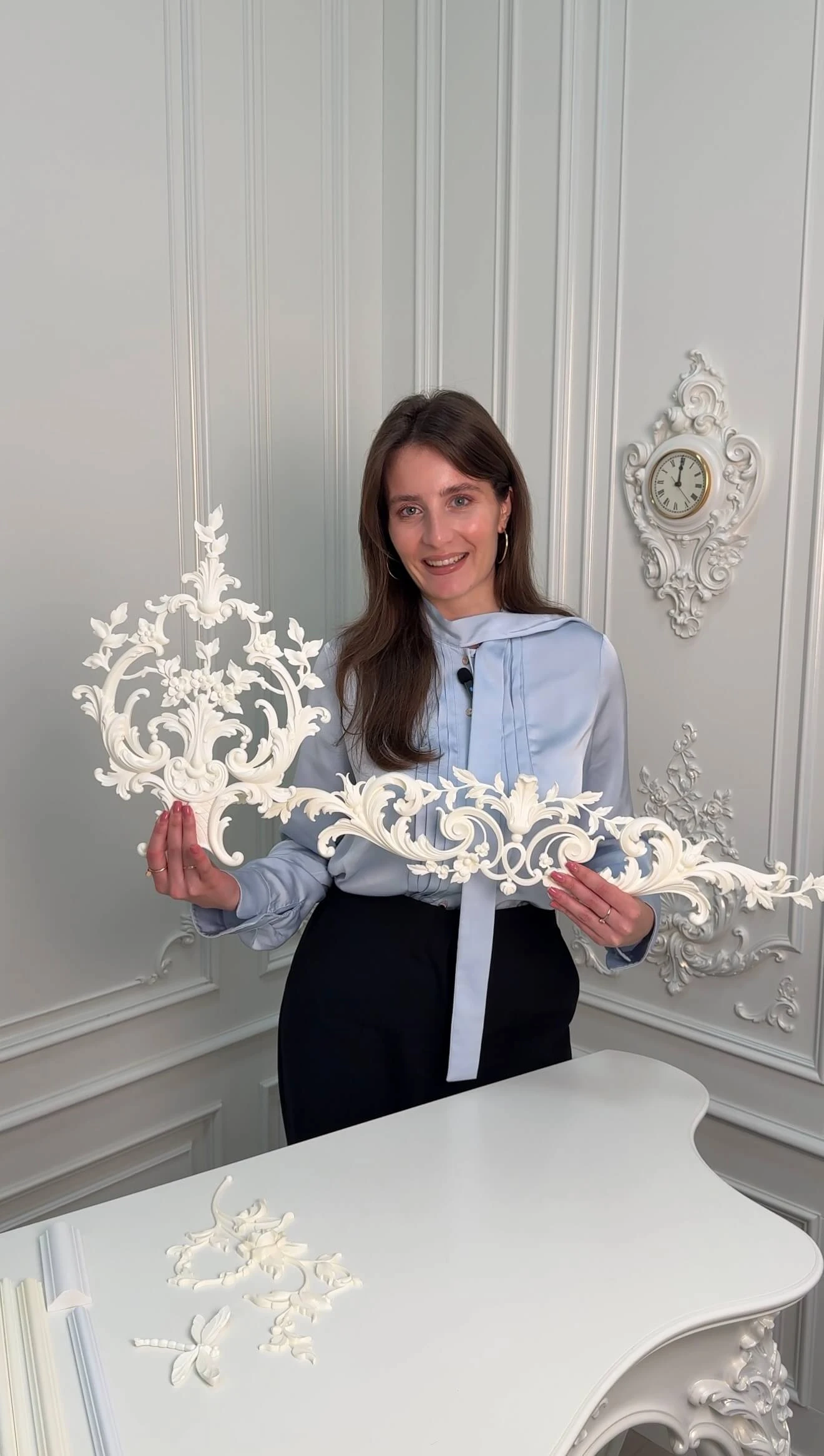

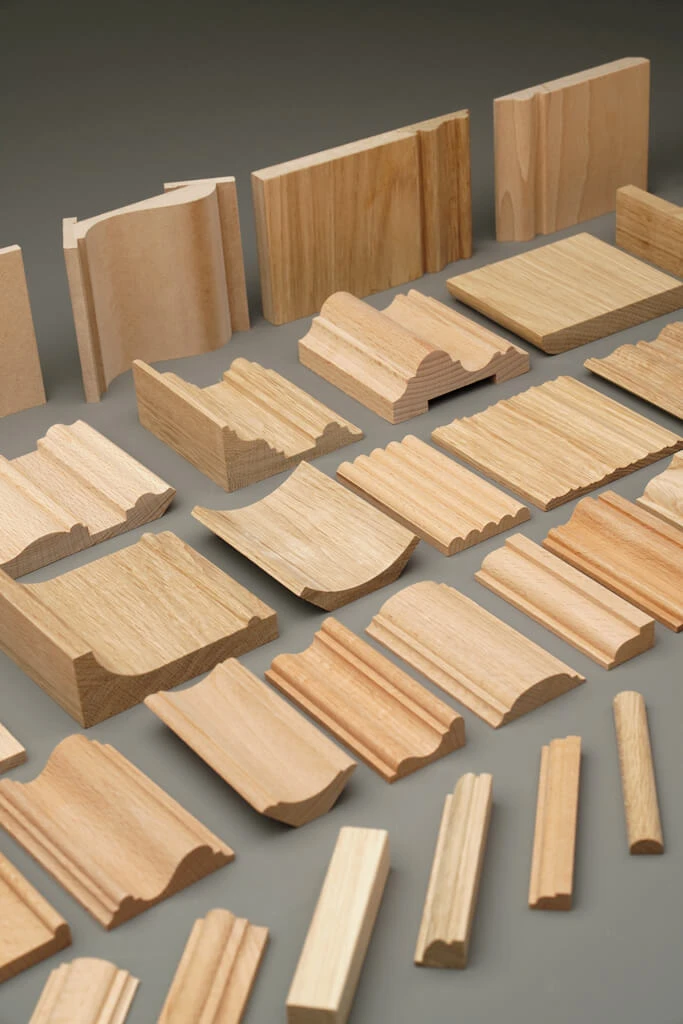
Structural types of PVC panel battens
The market for PVC panel battens is not homogeneous. There are several structural variants, each solving its own task.
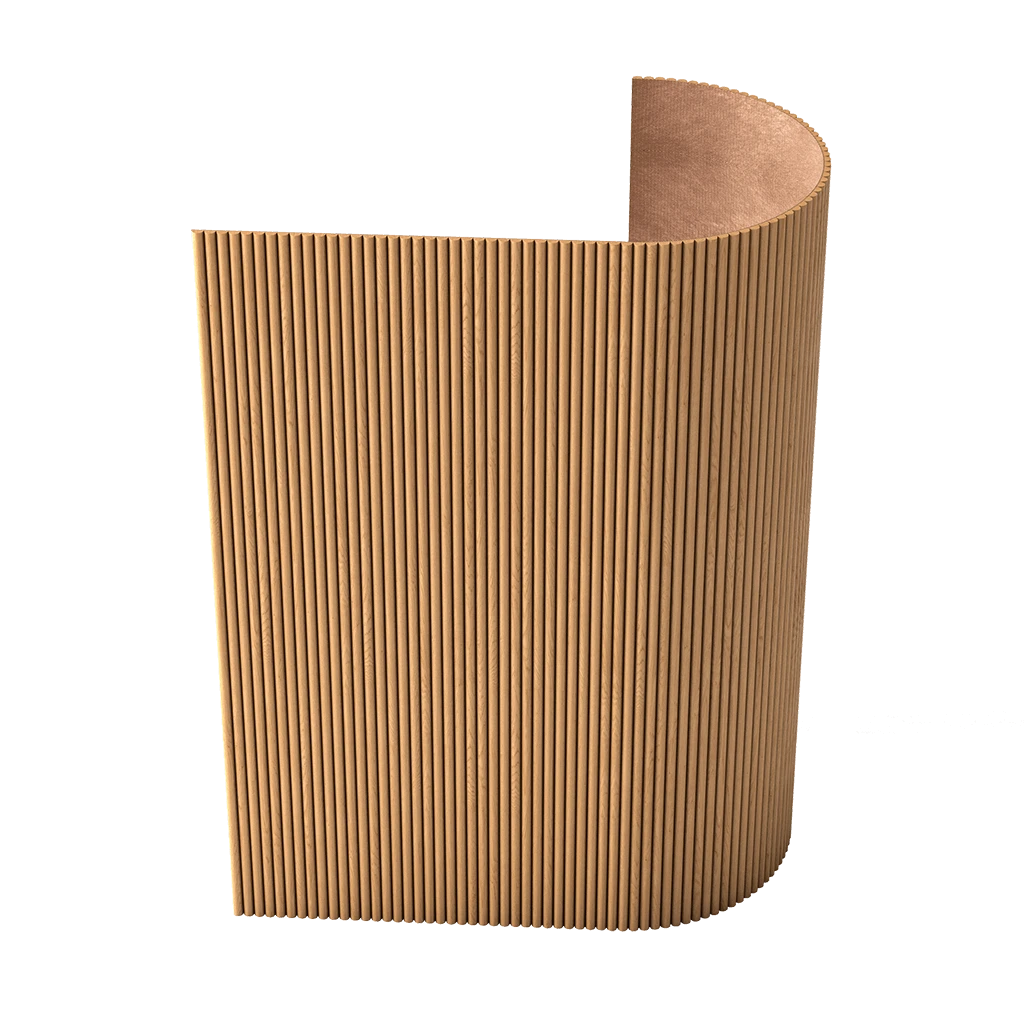
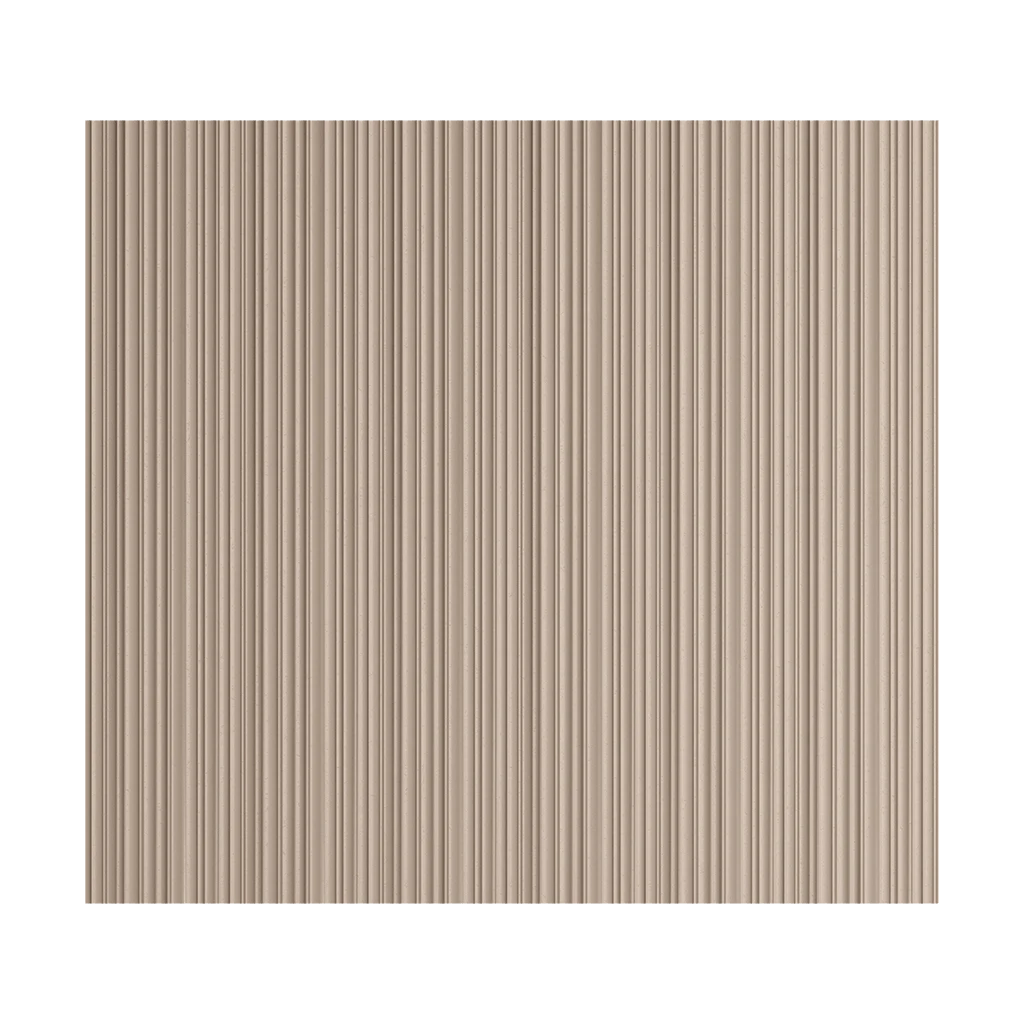
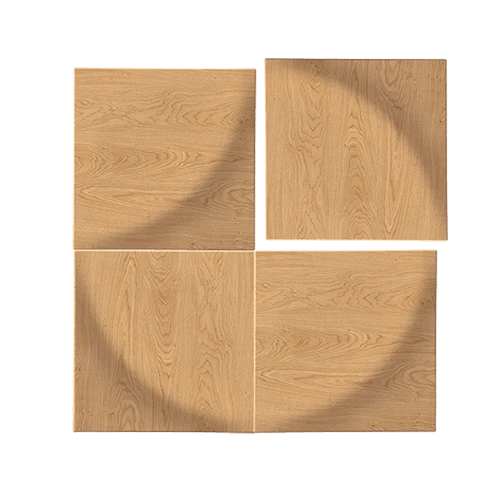
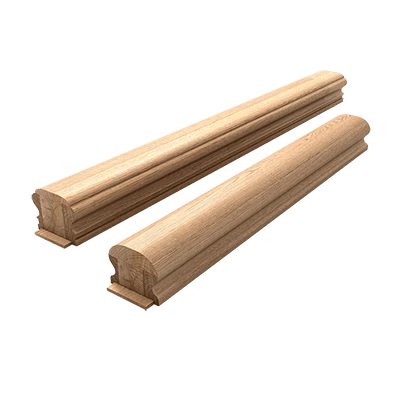
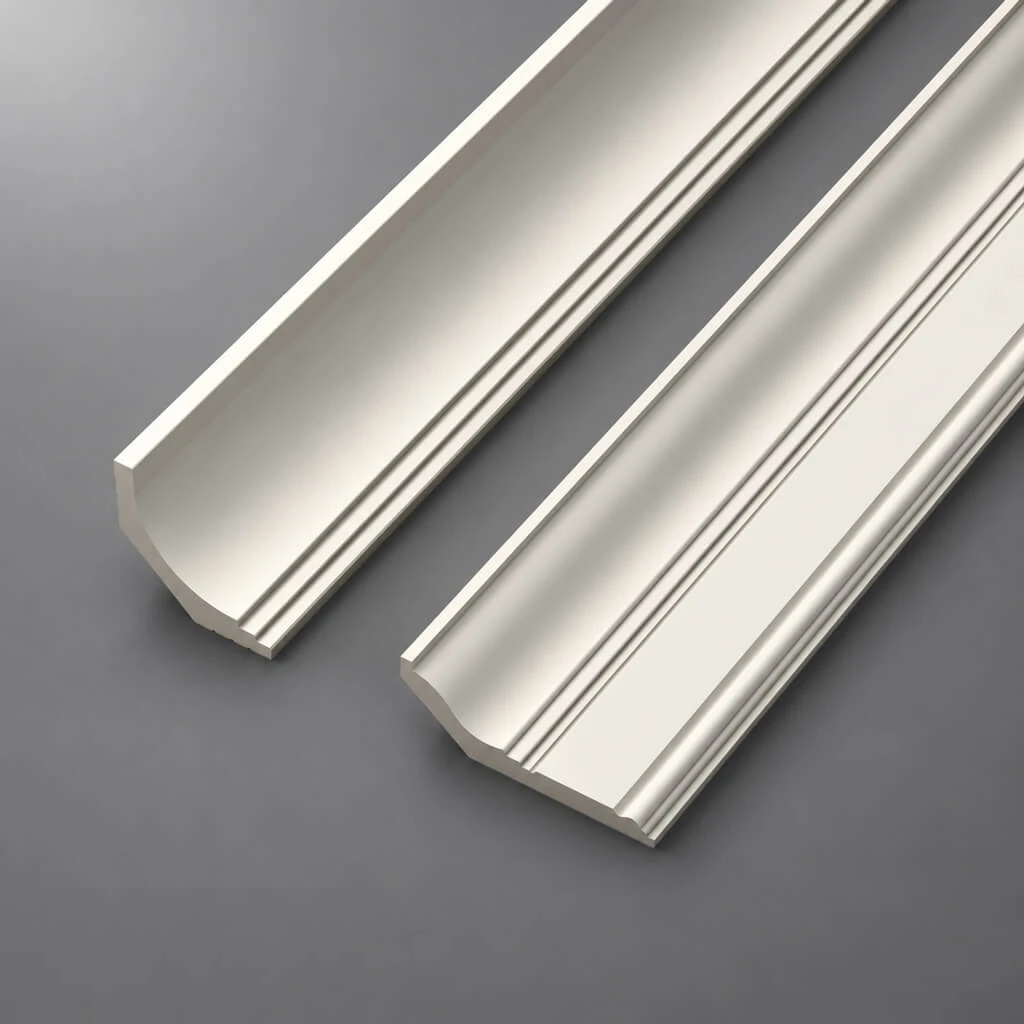
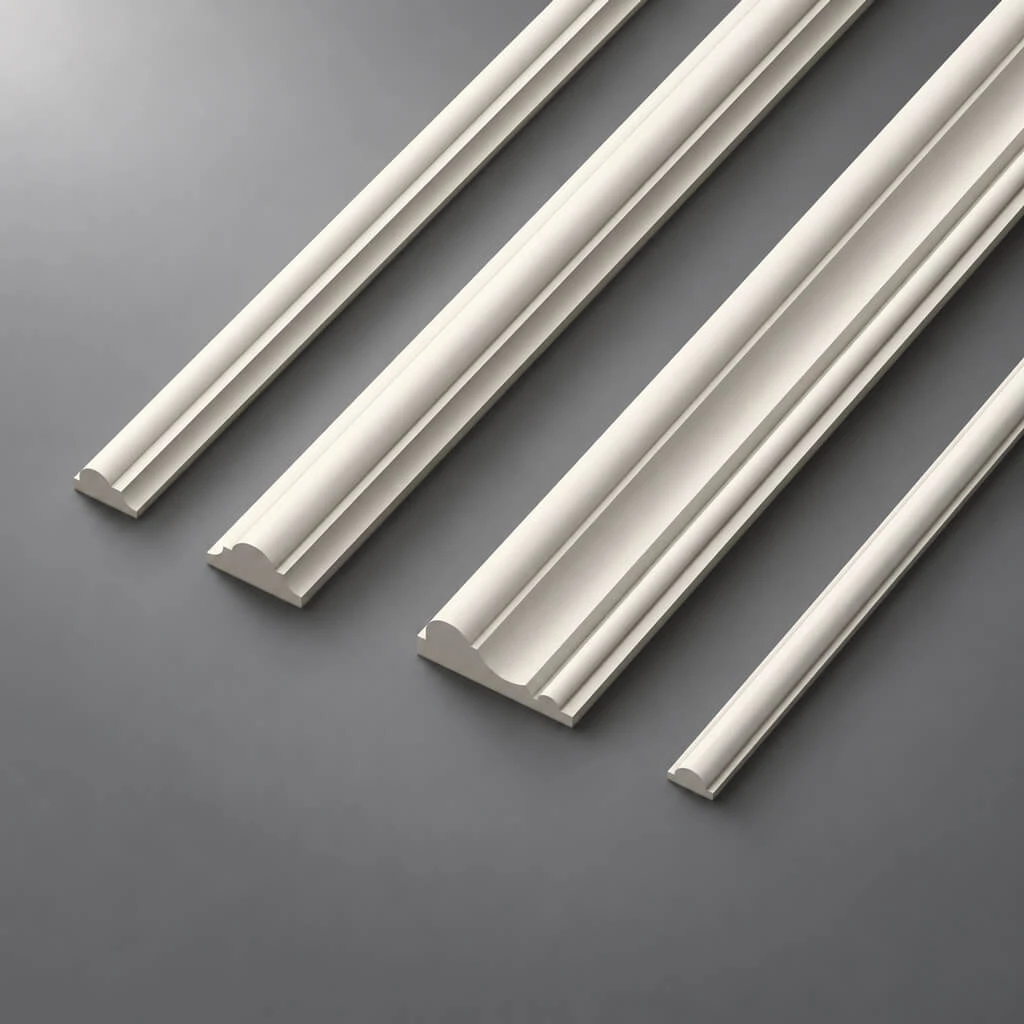
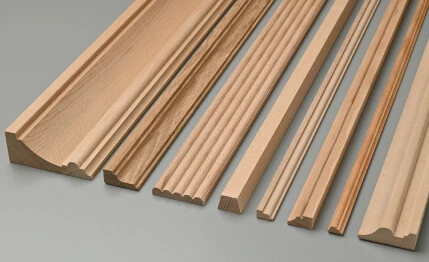
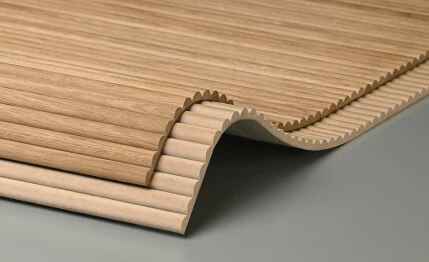
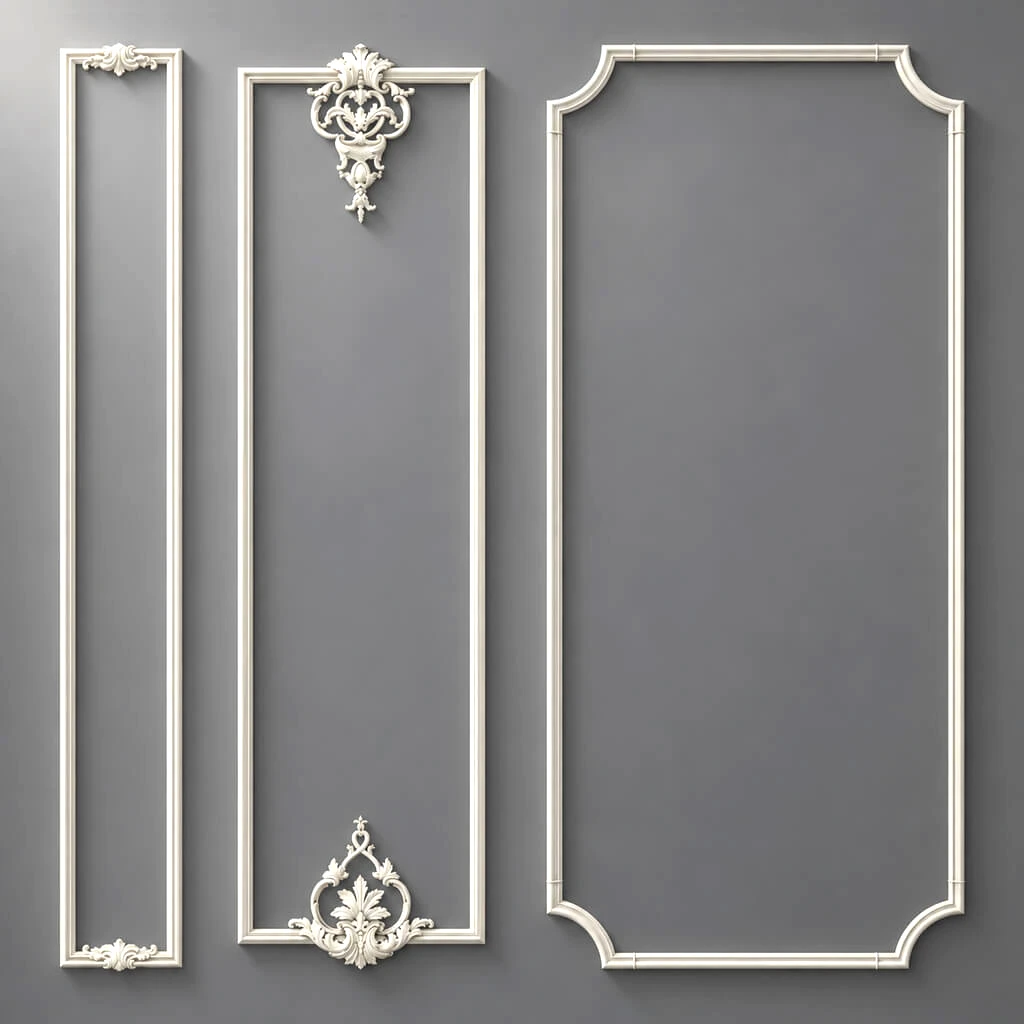
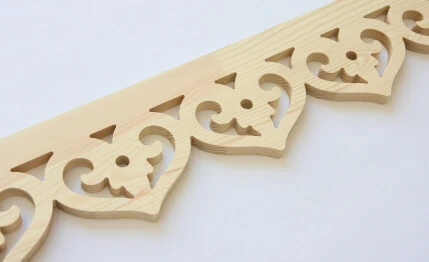
Our factory also produces:



Cellular (foamed) PVC
The most common type for wall panels in residential interiors. Inside the profile is a cellular structure with air chambers between stiffening ribs. Lightweight, inexpensive, and easy to install. Typical thickness is 8–14 mm; density is 0.55–0.70 g/cm³.
Limitations: produces a characteristic 'hollow' sound when tapped. Pressing between the points of the lathing supports results in noticeable deflection at thicknesses less than 10 mm. Not recommended for load-bearing structures.
Get Consultation
Solid PVC profile
A dense profile without internal voids. Heavier (density 1.35–1.45 g/cm³), significantly stronger and stiffer. Used in load-bearing structures, facade systems, and where high mechanical surface strength is required. Less commonly used for interior wall panels — the high price and weight are not justified for the task.
Foamed PVC with reinforced ribs
A compromise: a cellular base with thickened stiffening ribs that increase resistance to mechanical impact. The best option for wall panels in actively used spaces — hallways, corridors, children's rooms.
Technical parameters of PVC strip panels: numbers that matter
Technical parameters are not manufacturer bureaucracy. Every number in the specification means something specific for your particular space. Let's break down the key ones.
Width
Range: 65–300 mm. Narrow strips (65–100 mm) create a frequent, ornamental rhythm and visually complicate the surface — suitable for small bathrooms and toilets. Medium (100–150 mm) — a universal format, the most common on the market. Wide (150–250 mm) — a calm, monumental rhythm that expands the space when placed horizontally.
Profile Thickness
8, 10, 12, 14 mm. This is a critical parameter often ignored when purchasing. A panel with a thickness of 8 mm will deflect noticeably and audibly when pressed if the distance between the lathing guides is 500 mm. For residential spaces, the minimum acceptable thickness is 10 mm; for hallways and areas with mechanical load — 12 mm.
Profile wall thickness (not the overall thickness, but the thickness of the outer walls of the cellular structure) is an even more important parameter: 1.0 mm — budget segment; 1.5 mm — mid-range; 2.0+ mm — quality.
Length
2700 and 3000 mm are standard. For rooms with ceiling heights up to 2.7 m — the first format without horizontal joints. Important: during vertical installation, the slat must be 10–15 mm shorter than the actual distance from floor to ceiling — for a compensation gap.
Coefficient of linear thermal expansion
For PVC — 0.07–0.08 mm/(m·°C). This is 5–7 times greater than for MDF, and 4–5 times greater than for steel. A slat 2700 mm long expands by 3.8–4.3 mm with a 20°C temperature change. This is precisely why compensation gaps for PVC slats are not a recommendation, but a mandatory structural requirement.
Operating temperature range
From -20°C to +50°C. At temperatures above +50°C, softening and deformation of thin-walled PVC profiles begins. For enclosed rooms with normal ventilation — this is not a problem. For glazed balconies with southern orientation in summer — a potential risk.
Flammability class
G2–G3 for most standard interior PVC panels. When burning, hydrogen chloride is released — an aggressive toxic compound. For evacuation routes and children's institutions, PVC is not permitted by regulations.
Decorative range of slatted PVC panels: what's on the market
One of the real advantages of PVC is the variety of decor. Laminating film allows reproducing almost any visual image.
Solid-color matte and glossy
White, gray, beige, blue, green — in matte and glossy finishes. White gloss for bathrooms is the most popular option in the mass segment. Maximally reflects light, creates a feeling of cleanliness, and increases the perception of volume in small rooms.
Matte solid colors are an honest choice for those who don't want imitation: the surface acknowledges its nature and doesn't pretend to be a natural material. With good lighting, it's a perfectly decent result.
Wood imitation
Oak, pine, walnut, wenge, teak — printed patterns on PVC. The quality range is huge: from cheap film with a monotonous repeating pattern every 30 cm to high-quality digital printing with a repeat step of 200+ cm and convincing texture. The best samples look quite convincing from a distance of 1.5–2 m; upon close inspection, the imitation is always visible.
For comparison:Oak Slat Panelmade from natural veneer or solid wood has a unique pattern for each plank, which never repeats and cannot be reproduced by any printing. The difference is fundamental.
Imitation of stone and marble
White marble with gray veins, travertine, limestone — for bathrooms and kitchen backsplashes. With quality film, they are convincing from a distance. One of the most popular decors for mid-price bathrooms.
Embossed surfaces
Relief embossing with a depth of 0.2–0.8 mm imitates texture: wood grain, brick, large stone. Adds visual complexity and a sense of materiality — within the capabilities of plastic.
Where PVC plank panels work flawlessly
Honesty requires admitting: in specific operating conditions, PVC planks are not just 'one of the options,' but the optimal choice.
Bathroom and toilet
Constant steam, water splashes, frequent cleaning with aggressive agents, temperature fluctuations. This is where PVC's zero water absorption is a key competitive advantage. The slat does not swell, delaminate, or deform from moisture, and is not a breeding ground for mold. With proper sealing of the lower ends — a reliable finish for the bathroom for 10–15 years.
Compare withslatted wall panels made of MDFfor the same task: for a bathroom, you will need special moisture-resistant MDF of HMR class with a water-resistant coating — and the cost of the solution will increase 2–3 times. For a bathroom without special aesthetic pretensions, PVC is an economically rational choice.
Balconies and loggias (unheated glazed)
Condensation in winter, high humidity in the off-season, temperature fluctuations. PVC is resistant to all of the above. Limitation: balconies with southern orientation under full summer sun exposure — thin-walled profiles may overheat. For such conditions, thickened panels are needed.
Utility rooms, workshops, basements
Where functionality is more important than aesthetics, the budget is limited, and the requirements for service life are moderate — PVC solves the task with minimal costs.
Rental housing and temporary finishing
Apartments for rent — it's about practicality. Cheap, quickly installed, easily replaceable finish. PVC for this scenario is a logical choice.
Where slatted PVC panels lose: honest criticism
Talking only about advantages means helping the customer make a mistake. The limitations of PVC are real and important.
Tactile quality. PVC is plastic. To the touch, it feels cold, light, 'hollow'. In living spaces — the living room, bedroom, study — where a person spends hours and where surfaces are perceived tactilely constantly, this factor creates subconscious discomfort.slatted panels for wallsmade from MDF or solid oak provide a fundamentally different sensation — dense, warm, natural.
Acoustics. The cellular PVC profile resonates under mechanical impact — a characteristic plastic sound when tapped or accidentally struck. MDF and wood absorb sound — there is no resonance or 'hollowness'.
Environmental friendliness. PVC contains plasticizers — phthalates, which are released into the air at room temperature with low intensity. When heated — the intensity increases. For children's rooms and bedroomsMDF slatted panelsof class E0 is a fundamentally safer choice.
Durability. Under normal conditions — 10–15 years for high-quality PVC panels with UV stabilizers. MDF with a quality coating — 15–25 years; solid oak — 30–50 years. Over a full life cycle, PVC often loses in terms of total cost of ownership.
Impossibility of repainting.Paintable lath panelsmade from MDF allow changing the color without dismantling — at any time, to any desired shade. PVC with a laminating film cannot be repainted with standard dyes. If you want to update the interior — replace the slats entirely.
Visual imitation. Upon close inspection, the 'wood-like' or 'marble-like' pattern on PVC is always perceived as an imitation. Periodic repetition of the film pattern, unnatural shine, synthetic nature of the surface. Next to real wood — this is especially noticeable.
PVC vs. MDF vs. Solid Wood Slat Panels: Comparison Table
| Parameter | PVC | MDF | Solid oak |
|---|---|---|---|
| Moisture resistance | Absolute | Medium / High (HMR) | Medium (with coating — high) |
| Tactile | Synthetic, cold | Dense, neutral | Warm, natural |
| Acoustics | Resonates | Absorbs | Absorbs |
| Ecological | Plasticizers | E0/E1 | Natural |
| Repainting | Impossible | Yes, without dismantling | Yes |
| Texture uniqueness | No (pattern repeats) | No | Yes (each slat is unique) |
| Service life | 8–15 years | 15–25 years | 30–50 years |
| Flammability | G2–G3 (toxic smoke) | G2 (less toxic) | G2 |
| Price | Low | Medium–high | High |
| Installation | Lightweight | Medium | Medium |
PVC Slat Panels: Installation Technology from A to Z
installation of slatted panelsPVC slat panels are one of the most accessible types of finishing work for DIY. However, mistakes here cost visible results. Let's break it down in detail.
Required tools
-
Laser level (not bubble level — accuracy is critical)
-
Hacksaw for metal with fine teeth (18–24 teeth/inch) or jigsaw with blade for plastic
-
Screwdriver
-
Utility knife
-
Rubber mallet
-
Silicone sealant gun (for bathrooms)
-
Nail set for finish nails
Materials for installation
-
Metal profile UD/CD 27×60 mm or wooden beam 25×40 mm for lathing
-
Dowels and self-tapping screws for fastening to load-bearing wall
-
Starting PVC corner profiles (external and internal corners, ceiling, floor)
-
Clips or finishing nails
-
Bathroom silicone sealant
Step 1: Wall preparation
In the bathroom — mandatory inspection for hidden damp areas and mold. If present — eliminate and apply antifungal treatment before installation. PVC does not allow moisture to escape: moisture trapped behind the panels will damage the load-bearing wall.
Wall irregularities when installing on battens — are not critical: the battens correct the plane. For adhesive installation without battens — the wall must be level (deviation no more than 3 mm over 2 m).
Step 2: installing the battens
Battens are installed perpendicular to the direction of the planks. For vertical planks — horizontal guides spaced 400–500 mm apart. All elements are aligned strictly in one plane — using a laser level. The slightest deviation from the batten plane becomes visible on the finished surface under side lighting.
For bathrooms: galvanized metal profile is preferable to wooden battens. Metal does not accumulate moisture and is not susceptible to mold. If using wooden battens — antiseptic treatment is mandatory.
Step 3: Installing Starter Profiles
Corner starting PVC profiles are installed around the perimeter: at the floor, ceiling, external and internal corners. Level alignment of the starting profile is the foundation for a level result. Attached to battens or directly to the wall every 400–500 mm.
Step 4: installing the first slat
Insert the tongue into the starting profile, align vertically (for vertical installation) or horizontally (for horizontal), secure to the batten with a clip. Check with a level again after fixing — this is the point from which the entire row will proceed.
Step 5: installing the paneling
Each subsequent plank is inserted with its groove into the tongue of the previous one and secured to the batten. The 'tongue-and-groove' lock simultaneously connects the planks and conceals the fasteners. Installation speed with properly installed battens — 8–12 m² per working day for one person.
Expansion gap — mandatory. At end walls, floor, and ceiling — a 5–8 mm gap. Without it, thermal expansion of PVC will cause deformation after 1–2 seasons. The gap is concealed by the starting profile.
Step 6: trimming around openings and pipes
Using a hacksaw for metal or a jigsaw. Cut slowly, without pressure, with a fine-toothed blade. Burrs are removed with a utility knife.
Step 7: sealing (for bathrooms)
All horizontal joints at the floor, all joints with plumbing fixtures — silicone sealant. This is a key step: water penetrates behind the panels through these areas if sealant is absent. Silicone is applied after installation of all panels is complete; excess is removed with a wet finger.
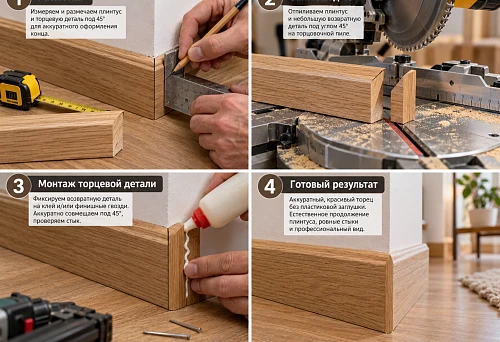
Step 8: finishing baseboards and moldings
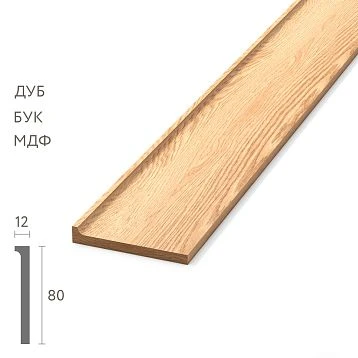
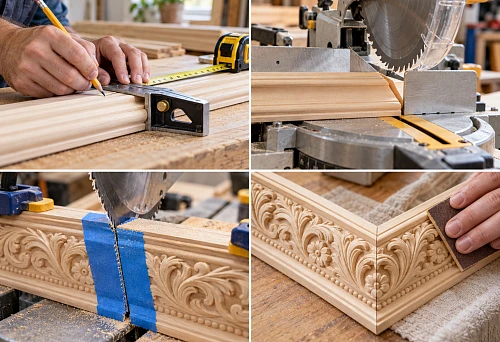
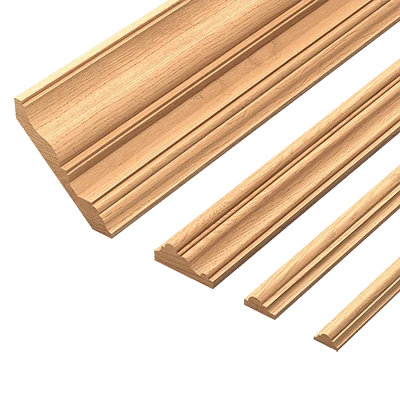
Wooden baseboardMDF or solid wood in a white tone organically completes the white PVC battens. This is one of the most effective techniques: a natural baseboard neutralizes the synthetic character of the plastic finish.wooden skirting board purchaseSolid oak with a white tint — this is a living detail that changes the perception of the entire room.
PVC slat panels in the bathroom: design within the material's limits
PVC battens have limited aesthetic potential — and this must be accepted. But within this potential, there are techniques that significantly enhance the visual result.
Horizontal placement for expansion. In a narrow bathroom 1.2–1.5 m wide, horizontal battens on the long wall visually expand the space. Batten width of 100–150 mm with horizontal installation — a calm rhythm without overload.
Contrast wall. One wall with PVC panels, the rest with tile or paint. This reduces the overall synthetic feel of the room and makes the PVC a targeted, appropriate accent.
Neutral solid color instead of imitation. White matte or light gray is more honest and beautiful than unconvincing marble imitation in a budget execution.
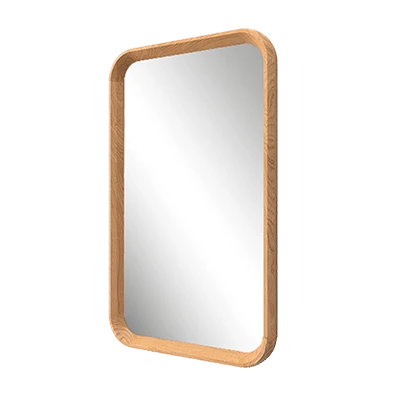
Natural details as a counterpoint.Wooden planksin the frame of a mirror, a wooden shelf,Furniture Handlesmade of natural wood on a nightstand — these details 'legalize' the plastic nearby and make the space warmer.
PVC slatted panels for the ceiling: possibilities and limitations
Slatted panels for the ceilingmade of PVC is a popular solution for bathrooms and balconies. The light weight of PVC simplifies installation on a horizontal structure.
The installation technology for the ceiling is similar to that for walls: battens along the ceiling (perpendicular to the slats), attachment to the ceiling slab via hangers or directly, a starter profile around the perimeter, installation of slats with clips. An expansion gap at the end walls is mandatory: ceiling slats also expand with temperature changes.
Limitation: on glazed balconies with intense direct sunlight, ceiling PVC slats can deform in summer when heated to 50–55°C. For such conditions — reinforced panels 12–14 mm thick or an alternative material.
PVC slatted panels and the comprehensive interior context
PVC battens require a smart environment. Attempting to use them 'as wood' next to real wood is an obvious design failure. An honest strategy: neutral PVC as a background material with accents of natural components.
In an entryway with PVC battens:Wooden baseboardat the floor, a wooden coat rack or console. If the house has a staircase—balusters for staircasessolid oak will create the necessary material anchor point.Pogonazh iz massiva—baseboards, casings, moldings—in a unified tone with the wooden details of the entryway completes the space.
For living rooms—living room, bedroom—PVC battens require special caution. If you still choose them for these spaces: only solid neutral tones, a maximum of natural materials in furniture and decor, no imitation wood next to real wood.Classic Furniturewith detailed profiles and high-quality finishing next to PVC battens creates an inevitable material dissonance—consider this when designing.
The most sensible strategy for living rooms: considerSlatted panels in interior designfrom MDF or solid wood as a fundamentally higher-quality alternative with comparable long-term cost.Wall finishing with slatted panelsfrom MDF is a result that delights for twenty years without replacement. PVC in a living room will require complete replacement in 10–12 years.
Care for PVC paneling: what's really needed and what's unnecessary
Ease of care is a real advantage of PVC, not exaggerated by marketing.
Daily care: a damp cloth or sponge with water. No special products needed. The surface doesn't leave streaks—water spots only remain in hard-water regions.
Weekly cleaning: a neutral detergent (pH 6–8) diluted in water. Apply with a sponge, rinse with clean water. Chlorine-containing products in high concentration are not acceptable for regular use—they damage the lacquer layer.
Limescale: diluted citric acid or special products. Concentrated acidic products are prohibited.
Mechanical damage: cannot be repaired. Local scratches—you'll have to live with them or replace the panel. That's why it's recommended to buy 2–3 spare panels from the same batch when purchasing.
Yellowing: irreversible. Only replacement. Prevention—panels with UV stabilizers.
Choosing quality PVC paneling: what to look for
The market is flooded with cheap panels with claimed characteristics that don't match reality in practice. How to distinguish a quality product?
Check the wall thickness. Take a panel, gently press on the front surface between two imaginary support points. A quality panel—resists elastically. A cheap one—bends.
Assess the geometry evenness. Take 3–4 battens from one package, place one against another. The width should match within a visually imperceptible tolerance (≤0.2 mm). Variation in width will result in uneven joints during installation.
Check the lock tightness. Insert two battens into each other. The lock should connect without gaps and without play. A weak lock in the bathroom means moisture behind the panels within 6–12 months.
Examine the decorative layer. Try to pry the edge of the film with your fingernail. On a quality panel, the film is applied with no chance of peeling under normal use. On a cheap one — it yields.
Clarify the presence of UV stabilizers. This is crucial for rooms with direct sunlight. Without stabilizers — yellowing within 5–7 years.
FAQ: Questions and Answers about PVC Batten Panels
How do PVC batten panels differ from MDF batten panels?
PVC is a synthetic plastic with zero water absorption, low price, limited service life (8–15 years), inability to repaint, and synthetic tactile quality. MDF is a wood-fiber board with a higher price, tactile and visual quality, possibility of repainting without dismantling, and a service life of 15–25 years. Each material is optimal in its niche.
Can PVC batten panels be used in a children's room?
Not recommended. PVC contains plasticizers that are released into the air when heated. For children's rooms — MDF of class E0 with water-based coatings.
Why did the PVC battens deform after installation?
The most likely cause is the absence of expansion gaps. PVC expands more intensively when heated than other materials. Also: installation at low temperature with subsequent heating of the room.
Can PVC battens be mounted on the ceiling?
Yes. The light weight of PVC simplifies ceiling installation. Limitation: overheating on glazed balconies. In residential rooms with normal ventilation — acceptable.
How long will PVC batten panels last?
Quality ones with UV stabilizers — 12–15 years without noticeable change in appearance. Budget ones without stabilizers under direct sun exposure — 5–7 years until yellowing.
Is sealing needed when installing PVC in the bathroom?
Mandatory. The bottom edge at the floor, joints with plumbing fixtures, the area near the bathtub or shower tray — silicone sealant. Without sealing, moisture penetrates behind the panels and destroys the load-bearing wall.
What width of PVC strip is best for a 4 m² bathroom?
100–150 mm. Narrow battens (65–80 mm) create an overloaded rhythm in a small space. Wide ones (200+ mm) with horizontal installation will give an expansion effect.
Can PVC battens be combined with wooden elements?
Yes — and it's a sensible strategy. Neutral solid-color PVC as a background material with accents of natural wood (baseboard, shelves, handles). The main rule: do not place wood imitation PVC next to real wood.
What is the minimum thickness of a PVC panel for a wall?
10 mm is the minimum for walls in living spaces. 8 mm panels are only permissible on bathroom ceilings where there is no mechanical load.
How to properly cut PVC strip panels?
With a metal saw with fine teeth (18–24 teeth per inch) or an electric jigsaw with a blade for plastic. Slowly, without pressure. Burrs are removed with a utility knife.
About the company STAVROS
If your renovation task goes beyond what PVC can offer — and you want a result that will remain flawless in twenty years — STAVROS creates exactly such products.
STAVROS is a Russian manufacturer of wooden architectural elements for interiors with a full production cycle. In the catalog:Slatted wall panelsmade of MDF and solid oak with precise geometry and a rich selection of finishes;slatted panels for wall finishingin various formats — from classic flat to 3D relief;slatted modular wall panel3D panels for quick installation on commercial projects;soft slat panelsfor curved surfaces;Pogonazh iz massiva— skirting boards, moldings, cornices;Wooden baseboardmade of solid wood and MDF in a wide assortment;Furniture Handlesmade from natural wood;balusters for staircaseshandcrafted;Classic Furniturefor demanding customers.
STAVROS works with private clients, designers, and architects across Russia. Samples of coverings, professional consultation, delivery, and full project support—from selecting parameters to the final result. Choose a material that won't disappoint. Choose STAVROS.