











































































Article Contents:
- How lighting works in a slatted wall: physics and aesthetics
- Hidden light as a principle
- Three types of lighting in a slatted wall
- Color temperature and the character of space
- What moldings on adjacent planes provide: architectural framework
- The function of molding on a multi-layered wall
- Polyurethane as a material for molding in a complex wall
- Types of moldings for a multi-layered wall
- How to combine slatted panels and moldings without system conflict
- Hierarchy principle: what is primary
- Uniform color as a way to unify systems
- Different colors: when it is justified
- Where a multi-layered wall is appropriate: the room as context
- Living room: the main statement
- Bedroom: atmosphere without demonstrativeness
- Hall and entrance: the first and last impression
- Study: intellectual interior
- How to avoid conflicts of rhythm and shadows
- Principle of perpendicular rhythms
- Shadows of battens and shadows of moldings: direction must match
- Scale of rhythms: proportionality
- Wall finishing with batten panels: technical requirements for a system with lighting
- Wall preparation: electrical work before finishing
- Frame: depth determines the effect
- LED strip: parameters that determine the quality of the effect
- Batten panels in interior with lighting: styles and their requirements
- Neoclassicism: white moldings, warm wood, soft light
- Modern minimalism: battens dominate, decor recedes
- Loft: dark wood, cold light, rough profiles
- Art Deco: Geometry of Moldings, Gold Backlighting
- Complex Wall Mistakes: What to Avoid
- First Mistake: Backlighting is Too Bright
- Second Mistake: Moldings Cross the Slatted Field
- Third Mistake: LED Strip Wires Visible Through Gaps
- Fourth Mistake: Molding Style Differs from Slats
- Fifth Mistake: Backlighting Without a Dimmer
- Sixth Mistake: Improper Molding Installation on Unprepared Surface
- Practical Cases: Three Real Scenarios
- Case 1: Living Room 24 m², Ceiling 2.85 m, Modern Classic
- Case 2: Bedroom 18 m², ceiling 2.7 m, Scandinavian style
- Case 3: Hall 8 m², ceiling 2.9 m, Art Deco
- Frequently Asked Questions (FAQ)
- STAVROS: a system, not a set of elements

A wall is not just a partition. In the hands of someone with spatial thinking, it becomes a tool: it sets the mood, controls light, creates depth where there is none. But the more elements appear on the wall, the more acute the question becomes: how to hold it all together? How to make the lighting, slats, and moldings work as a unified system, not as a set of random solutions, each pulling the blanket to itself?
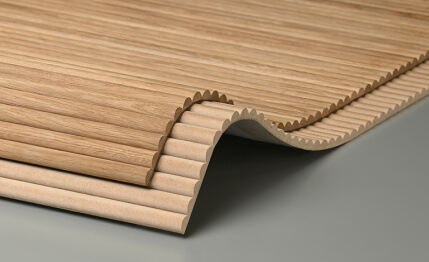
Slatted wall panels with lightingandpolyurethane wall moldings— these are two systems with different natures and different functions. The first is dynamic: light changes, moves, creates atmosphere. The second is static: molding sets the architectural framework within which everything else exists. It is in their interaction that what professional designers call a layered wall is born — a surface with depth, rhythm, and internal logic.
This article is about how to build such a wall. Not to decorate, not to overload, but precisely to build — with an understanding of each layer, each transition, each conflict that needs to be prevented before it arises.



How lighting works in a slatted wall: physics and aesthetics
The first question anyone asks themselves when they see a slatted wall with lighting: where is the light coming from? The answer is not obvious — and it is precisely in this non-obviousness of the source that the main advantage of such a solution lies.




Hidden light as a principle
Slatted wall panels with lightingThey work on the principle of a hidden source: the LED strip is placed behind the slats or between the slats and the wall, and is not directly visible. Only the result is visible—uniform light breaking through the gaps, or soft diffusion across the wall surface behind the structure. The effect is fundamentally different from any visible light fixture: there is no blinding point, no harsh shadows, no sense of artificiality. There is a glow that seems to emanate from the wall itself.
It is the hidden nature of the source that makes slatted lighting compatible with a complex wall: moldings, ornaments, transitions—all coexist with the lighting without conflict, because the light is not a separate visible object in the space.
Our factory also produces:




Three types of lighting in a slatted wall
Background lighting behind the slats. The LED strip is mounted directly on the wall, perpendicular to the slats, in the space between the wall and the back of the slatted structure. Light penetrates through the gaps between the slats from below and creates the effect of a 'glowing wall'—the slats appear to float in front of a luminous plane. For this effect, a setback of the slats from the wall of at least 3–5 cm and a dark (black or dark gray) backing wall that absorbs light in the spaces between the slats are required.
Lighting along the slats. The strip is laid along the slat on the back side (in a specially milled groove) or between two slats. The light spreads along the surface, creating a grazing light and accentuating the relief of each slat. This is a more rigid, graphic option—for modern and loft interiors.
Spot accent lights in the gaps. Miniature spot LED lights are installed in the gaps between the slats at a certain pitch. Each creates a round beam of light on the floor or wall, forming a pattern of light spots. This is a theatrical effect—impressive but requiring very precise execution.
Get Consultation
Color temperature and the character of the space
Warm light (2700–3000 K) behind wooden slats is a classic solution. Yellow and golden tones enhance the natural hue of the wood, creating a sense of coziness and a homely atmosphere. Neutral light (3500–4000 K) is more modern, clean, suitable for neutral species (ash, birch, painted MDF). Cold light (5500–6500 K) hardly works with wood—it conflicts with the warm nature of the material. Exception: dark thermowood and painted slats with a cold color in modern interiors.
What moldings on adjacent planes provide: an architectural framework
If a slatted wall with lighting is dynamism, thenpolyurethane decorative moldingsis structure. They create the very framework within which dynamism appears meaningful, not chaotic.
The function of molding on a multi-layered wall
Molding performs several tasks simultaneously. The first is zoning: molding can mark the boundary of a slatted field, separating it from the smooth part of the wall. This is a 'frame' around the slatted panel that says: here begins and ends a special space.
The second is transition between planes: molding at the junction of wall and ceiling, at the junction of a slatted field and a smooth wall, at the junction of different finishing systems—everywhere it smooths the transition, making it an architectural event, not a technical seam.
The third is rhythmic complement: horizontal molding on a wall, parallel to the slatted field, creates a secondary horizontal rhythm that complements (not competes with) the vertical rhythm of the slats.
Polyurethane as a material for molding in a complex wall
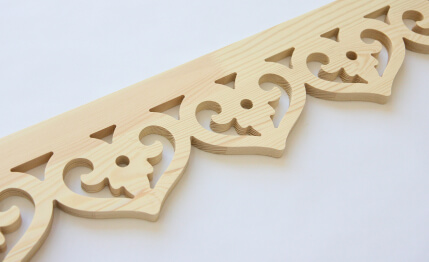
polyurethane wall moldingshave a fundamental advantage over wooden or plaster analogues in the context of a multi-layered wall: they do not react to humidity changes (wood in a space with lighting can heat up and deform), do not crumble under vibration, and perfectly accept any paint. Polyurethane molding, painted to match the wall, becomes part of the architecture—it is visible, but it does not interfere, distract, or create visual noise.
Types of moldings for a multi-layered wall
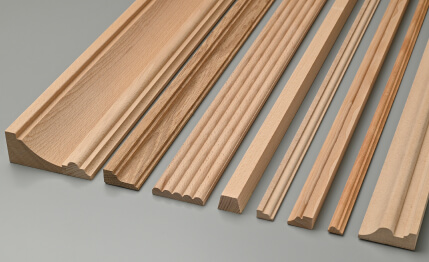
Flat separator molding with a minimal profile (8–15 mm)—for modern and Scandinavian interiors. It creates a thin, clear dividing line without decorative load.
Profiled cornice (30–80 mm) — for neoclassical and classical styles. Creates a horizontal accent with pronounced relief and shadow.
Corner molding (external corner) — for framing the boundaries of the slatted field vertically: where the slatted zone ends and a smooth plane begins.
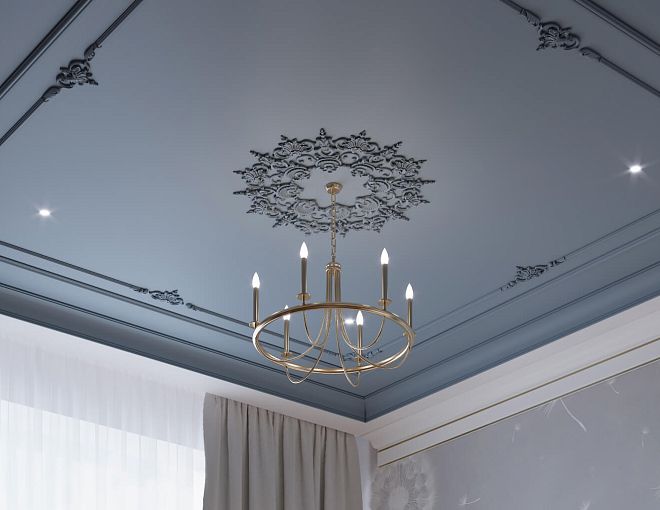
Ceiling cornice at the wall-ceiling junction — completes the entire system, creates a horizontal horizon, above which is the ceiling, below — the architectural wall.
How to combine slatted panels and moldings without system conflict
Two decorative levels on one wall — it's a risk. A risk of visual clutter, competing rhythms, conflicting styles. How to avoid it?
Hierarchy principle: what is primary
On a multi-layered wall, there should always be one dominant element and one secondary one. In most cases, slatted panels with lighting are the dominant — they carry dynamics and the main visual effect. Moldings in this case are secondary: they frame, organize, complete — but do not compete.
If for some reason moldings must be dominant (for example, in a classical interior where stucco decoration is the primary language), then the slatted zone becomes the background: neutral panels without lighting, painted to match the wall color, creating texture, not an independent statement.
Uniform color as a way to unify systems
The most effective way to eliminate conflict between slats and moldings is a uniform color.paintable slatted wall panelsand polyurethane moldings, painted the same color as the wall, form a unified surface where the rhythm of the battens and the profile of the molding are perceived as elements of a single architectural system. Lighting in this case acts as a third layer—it adds a glow without disrupting the color unity.
This is the most complex and most beautiful solution. It requires precise execution: any joint, any paint irregularity—and the unity is broken.
Different colors: when is it justified
Batten zone—in natural wood, moldings—white. This is the classic 'nature and architecture' contrast, working in Scandinavian style, neoclassicism, and organic modernism. The battens carry the warmth of natural material, the moldings—the purity of the architectural line. Lighting is placed only in the batten zone—it enhances the natural character of the wood and does not touch the white architectural framework.
Batten zone—dark (thermowood, tinted oak), moldings—light or white. A contrasting solution for modern interiors with a strong architectural character. Lighting in the dark zone creates an effect of 'glowing darkness'—especially effective with warm light.
Where a multi-layered wall is appropriate: the room as context
Not every space accommodates a complex wall. A multi-layered solution requires scale, proper lighting, and a certain style. Let's break it down by room types.
Living room: the main statement
The living room is the ideal context for a multi-layered wall. It has scale: ceiling height and the area of the main wall allow for the full architectural system to unfold. It has viewing distance: a sofa opposite the wall provides the correct distance for perceiving the complex solution. And it has functional motivation: the living room should make an impression, create an atmosphere, be memorable.
Scheme for the living room: a lower batten belt 100–130 cm high with background lighting behind the battens, a horizontal molding along the dividing line, a smooth upper part with a ceiling cornice. Batten zone—in natural wood or matching the wall color. Moldings—white or cream. Lighting—warm, 2700 K. This is a classic three-part solution that works in any style from neoclassicism to organic modernism.
Bedroom: atmosphere without ostentation
In the bedroom, a multi-layered wall is appropriate only in one zone — the headboard. A full system on all bedroom walls is overkill. A headboard wall with vertical slats, background lighting from below (creating a floating light effect at the base) and framing moldings — this is a strong, yet delicate image.
A fundamental detail for the bedroom: lighting must be dimmable (a dimmer is mandatory) and warm (no cooler than 3000 K). Bedroom lighting is not task lighting, but ambient; its purpose is to create a sense of coziness, not to illuminate the space.
For the headboard wall, soft slat panels are also relevant — they add tactile comfort and good acoustics, reducing echo in the bedroom.
Hall and entryway: the first and last impression
The hall is a space you pass through, not stay in. This means the wall here is perceived not through prolonged examination, but in motion. A multi-layered wall in the hall must produce an instant, strong, unambiguous effect. No half-tones: a dark slatted zone with warm lighting and white moldings — or a completely monochrome system with pronounced relief.
A narrow hall works well with vertical slats without lighting: the vertical rhythm adds height. A wide hall — with horizontal lighting behind the slats: it creates depth where the gaze follows the length of the room.
Study: an intellectual interior
In a study, a multi-layered wall is appropriate behind the desk or on the opposite wall — as a background that fosters concentration. Slatted panel with backlighting in the study is particularly effective as an indirect source of ambient lighting: it reduces eye strain when working at a monitor and creates soft, even light without shadows.
Moldings in the study are restrained, with a minimal profile. The study is a space for work, not for display. The decor here acts as a backdrop, creating a sense of quality and status without being intrusive.
How to avoid conflicts of rhythm and shadows
This is the most subtle section. When two rhythmic elements meet on a wall—the vertical rhythm of slats and the horizontal rhythm of moldings—plus light creating its own shadows, there is a risk of visual chaos. How to prevent it?
The principle of perpendicular rhythms
Vertical rhythm and horizontal rhythm do not compete—they create a grid. Like the warp and weft threads in fabric: each goes in its own direction, and together they form a dense, uniform structure. Conflict arises when both rhythms run in the same direction with different intervals: for example, vertical slats with a 40 mm interval and vertical moldings with a 300 mm interval. The eye sees two different vertical rhythms and gets lost. The solution is simple: if the slats are vertical—the moldings are horizontal. And vice versa.
Shadows of slats and shadows of moldings: the direction must coincide
Every relief element casts a shadow—in the direction opposite to the light source. If there is one source (e.g., general overhead lighting), the shadows from the slats and the shadows from the moldings go in the same direction. If there are multiple sources from different sides—shadows from different elements can intersect and create visual clutter. The golden rule: for a multi-layered wall, directional lighting should be unified—one dominant source of grazing light, creating shadows in one direction.
Backlighting behind slats (ambient) is an exception to this rule: it does not create directional shadows but only adds a glow. Therefore, it is compatible with any direction of molding shadows.
Scale of rhythms: proportionality
Narrow slats (30 mm) against a massive cornice (100 mm) are a disproportionate pair. A large molding visually overwhelms the thin slat rhythm. Proportionality: if the slats are narrow—the moldings are thin. If the slats are wide (60–80 mm)—the molding can be more developed. General rule: the largest of the moldings should not be more than three times wider than the widest slat.
Wall Finishing with Slat Panels: Technical Requirements for a System with Lighting
Wall finishing with slatted panelsInstalling with lighting is a more technically demanding task than standard slat panel installation. A number of structural solutions must be planned before installation begins.
Wall Preparation: Electrical Work Before Finishing
All wiring for the LED strip must be laid before installing the frame and slats. Wires are run in a corrugated conduit along the wall, with outlet points marked to the centimeter. The power supply for the strip (and dimmer, if included) is installed in a convenient location for maintenance—behind the slat structure, but accessible via a removable element.
Critical: The power supply's wattage must match the length of the strip with a 20–30% reserve. Overheating of the power supply behind the slat structure is a fire risk and a source of visual defects (flickering, uneven brightness).
Frame: Depth Determines the Effect
For backlighting behind the slats, the frame must provide a setback from the wall of at least 30–50 mm. This is the space where the LED strip is located. A smaller setback—the strip will be visible through the gaps, and the hidden source effect is lost. A larger setback (80–100 mm or more)—creates a 'deep glow' effect, softer and more uniform.
A frame made of metal profile is preferable to wooden battens in the context of lighting: metal does not heat up from the LED strip, does not deform, and is easier to install while precisely maintaining the setback.
Strip: Parameters That Determine the Quality of the Effect
Luminous flux: For backlighting behind slats, 600–800 lm/m is sufficient. For a brighter effect—1000–1200 lm/m. Above 1400 lm/m—excessive and creates glare through the gaps instead of uniform illumination.
Diode spacing: a strip with 60 mm spacing between diodes provides uniform illumination when installed 30 mm from the wall. A strip with 30 mm spacing is more uniform, without visible point sources. With a small gap (less than 20 mm), a strip with spacing no more than 20 mm is needed, otherwise distinct light spots will be visible on the wall instead of uniform illumination.
Color Rendering Index (CRI): not lower than 90 for wooden slats — only a high CRI accurately reproduces the natural color of wood without distortion.
Slatted panels in interior designwith backlighting: styles and their requirements
Not every interior style is equally suitable for a multi-layered wall with backlighting and moldings. Let's examine the most harmonious ones.
Neoclassicism: white moldings, warm wood, soft light
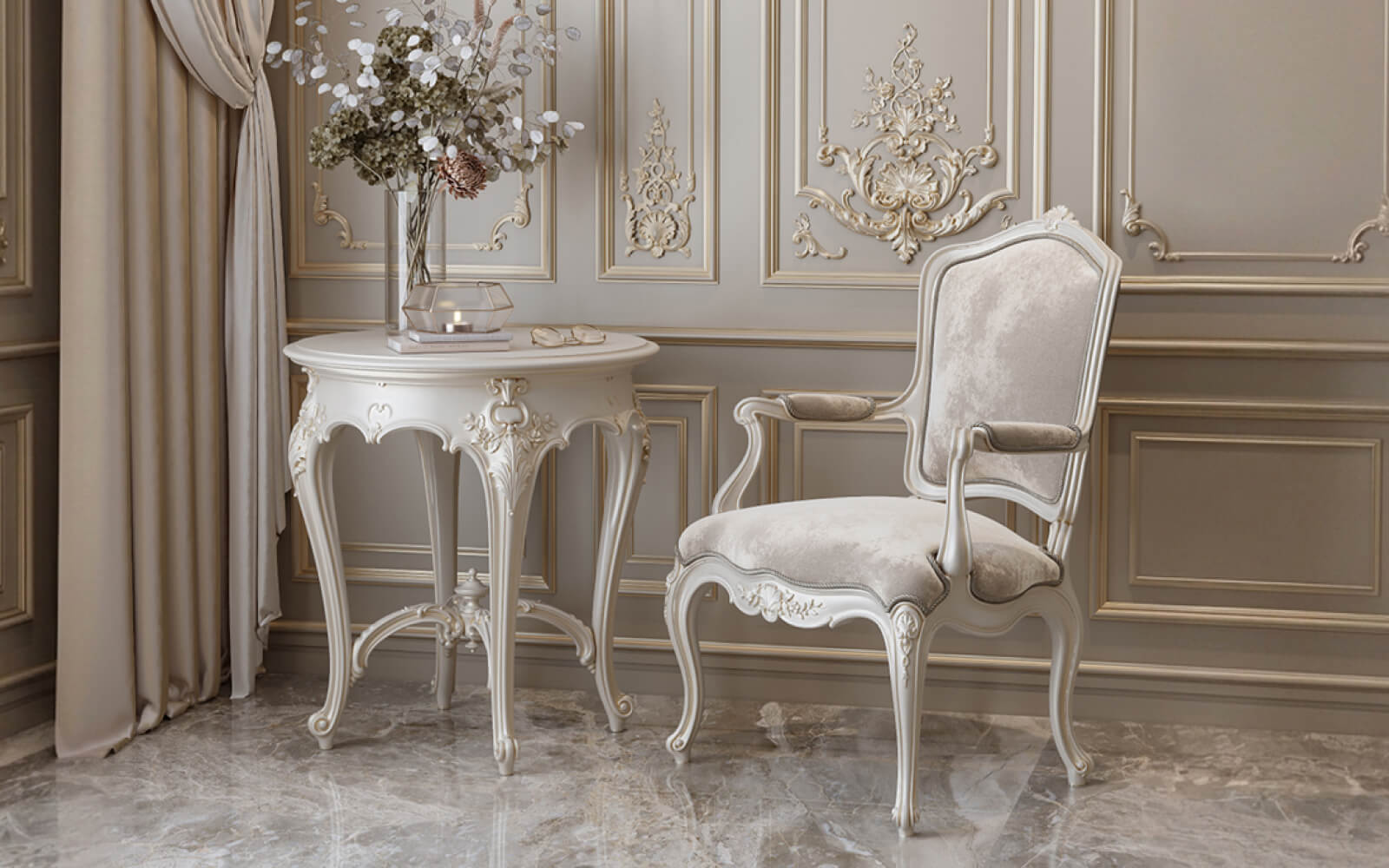
In a neoclassical interior, moldings are primary, slats are secondary. White polyurethane cornice, white dividing moldings, and white baseboard define the architectural framework. Within it — a slatted zone in natural light wood with warm ambient backlighting. The slats create texture and warmth, the moldings create order and architecture.
Contemporary minimalism: slats dominate, decor recedes
In a minimalist interior, moldings are extremely thin or absent altogether. The slatted wall occupies the entire plane from baseboard to ceiling. Backlighting is ambient, behind the slats. The result is an exceptionally clean surface with a single active element — the illuminated slatted relief.
Loft: dark wood, cool light, rough profiles
In a loft, moldings can be metal or polyurethane with an industrial profile — without classical ornaments, with simple geometry. Slats made of thermowood or tinted MDF in charcoal or rust colors. Backlighting is neutral or cool, integrated into the gaps as accent lighting, not ambient glow.
Art Deco: Geometry of Moldings, Gold of Backlighting
In Art Deco, moldings carry geometric patterns—meanders, zigzags, stepped profiles. The slats are horizontal, made of dark wood. The backlighting is warm, almost amber. Golden accents in hardware and fixtures echo the golden glow behind the slats.
Mistakes of a Complex Wall: What to Avoid
First mistake: backlighting is too bright
Backlighting behind slats, whose power is chosen without considering the room's overall lighting, creates a sharp contrast: the slatted area is blindingly bright, the rest of the room is dark. The result is a stressful, uncomfortable feeling. Backlighting behind slats is always accent lighting, not primary. Its brightness should be 2–3 times lower than the brightness of the room's main lighting.
Second mistake: moldings intersect the slatted field
A horizontal molding passing through the slatted field cuts it into fragments and disrupts the rhythm. The molding should frame the slatted field—around its perimeter, but not inside it. Inside the slatted field, there is no decor, only slats.
Third mistake: LED strip wires are visible through the gaps
The strip's wire, laid carelessly along the wall behind the slats, is visible through wide gaps at certain viewing angles. Wires are routed strictly behind the slats (not in the gaps), secured to the wall with cable clips, and painted the color of the backing wall.
Fourth mistake: molding of a different style than the slats
decorative slatted wall panelsScandinavian ash with a 15 mm spacing and a Baroque polyurethane cornice with acanthus leaves—this is a clash of two different cultures on one wall. Stylistic unity is not an option. The molding profile must match the character of the slats: minimalist with minimalist, classic with classic.
Fifth mistake: lighting without a dimmer
Fixed brightness lighting deprives the system of flexibility. In the evening, a subdued atmosphere is needed; in the morning, more active light. A dimmer is a mandatory element of any lighting system behind slats. Optimal control is via smartphone or voice control for integration into a smart home.
Sixth mistake: improper molding installation on an unprepared surface
Polyurethane molding glued onto paint without primer or onto a dusty surface will peel over time. Surface preparation for molding is as thorough as for any finishing element: cleaning, priming, applying mounting adhesive to the back side, fixing until set.How to install slatted panelsand decorative elements—the principles of surface preparation are the same for all elements of the system.
Practical cases: three real scenarios
Case 1: Living room 24 m², ceiling 2.85 m, modern classic
The main wall (4.2 m) is divided into three parts: a lower slat belt 110 cm high made of light oak (slats 40 mm, spacing 12 mm), a horizontal polyurethane molding with a classic profile along the dividing line, and an upper smooth part with a ceiling cornice. Background lighting behind the slats: LED strip 2700 K, 800 lm/m, offset from the wall 45 mm, dark gray backing. Moldings and cornice are white. Slats are natural oak with oil finish. Result: a wall where the warmth of wood and the architectural structure of moldings create a cohesive classic picture with soft evening glow.
Case 2: Bedroom 18 m², ceiling 2.7 m, Scandinavian style
Headboard wall (2.1 m) — vertical slats made of painted MDF (ash for painting, dusty gray-blue color, slats 30 mm, spacing 10 mm) from floor to ceiling. Framing — thin polyurethane molding around the perimeter of the slatted field, same color. Bottom lighting: LED strip at the base of the slatted structure 5 cm from the floor — creates a floating effect of the slatted field above the floor. Strip color — 2700 K, brightness — minimal (dimmer). Result: a bedroom with a meditative atmosphere and soft light, as if emanating from the wall itself.
Case 3: Hall 8 m², ceiling 2.9 m, Art Deco
Both long walls of the hall (each 3 m) are clad with horizontal slats made of thermowood (60 mm, spacing 20 mm). Ceiling cornice — polyurethane, with a geometric Art Deco profile, in matte gold finish. Baseboard — same profile and color. Lighting: recessed LED fixtures in every third gap between the slats, warm light, creating a periodic pattern of light stripes. Result: a hall that upon entry creates a sense of solemnity and style without a single superfluous element.
Frequently Asked Questions (FAQ)
Can I install a slatted wall with lighting myself?
Yes, with basic construction skills and understanding of electrical work. The critical point — running the wiring before installing the frame. If the electrical work is already concealed, wires are run in cable channels along the baseboard or around the perimeter of the frame.
What type of LED strip is best for lighting behind slats?
SMD 2835 or SMD 5630 strip with a density of 120 diodes/m, CRI not lower than 90, IP20 (for dry rooms) or IP54 (for kitchens). Power — 10–14 W/m, luminous flux — 800–1000 lm/m.
Is a dimmer needed for lighting behind slatted panels?
Absolutely. Dimmable lighting allows changing the room's atmosphere from bright functional lighting to delicate evening light. A dimmer with a soft-start function extends the strip's lifespan.
How to attach polyurethane molding next to a slatted structure?
On acrylic-based mounting adhesive such as 'liquid nails'. The molding is pressed against the surface and secured with painter's tape for 4–6 hours. Joints between the molding and the slatted structure are sealed with acrylic sealant.
Can colored LED strip (RGB) be used behind slatted panels?
Technically — yes. Aesthetically — with caution. RGB backlighting behind wooden slats in a residential interior quickly becomes tiresome and looks appropriate only in game rooms or youth interiors. For living rooms, bedrooms, and studies, choose warm white with adjustable brightness.
What is the minimum gap width between slats for background lighting?
12–15 mm — the minimum for noticeable glow through the gap. With a gap of less than 10 mm, the lighting is practically not visible. The optimal gap for even, uniform glow is 20–30 mm.
Howinstall slatted panelstaking into account lighting?
First, all electrical wiring is laid and the frame is fixed with the required offset from the wall. The LED strip is mounted on the wall or frame before laying the slats. Then the slats are mounted. Lastly — moldings and final painting.
STAVROS: a system, not a set of elements
A multilayer wall is a system. It has no random elements: each performs its own function, works towards a common result, and does not interfere with the others. This is precisely why such a system requires materials that are designed to work together — in terms of geometry, surface quality, and durability.
STAVROS creates a complete system for a multi-layered wall:Wooden slat panelswith precise geometry and proper humidity, ready for installation and lighting.polyurethane decorative moldingswith a rich assortment of profiles — from minimalist to classic.Polyurethane wall decor— overlays, ornamental elements, corner accents — for those who want to add an extra layer of detailing.
STAVROS understands: behind a beautiful wall is the right material. And creates materials worthy of beautiful walls.