



































































Article Contents:
- Transition zone: why a balcony is neither an extension of the living room nor part of the street
- Slat panels for balconies: which material will withstand and which will give up
- Solid wood on an open balcony: yes, but with conditions
- WPC: uncompromising outdoor slat panels
- MDF: only for glazed loggias
- PVC and aluminum: pragmatics without lyricism
- Facade slat panels: when rhythm goes outside
- Ventilated facade: slat system as a structural element
- Slat spacing on the facade: scaling a large space
- Polyurethane facade decor: what it is and where it is appropriate
- How facade polyurethane differs from interior polyurethane
- Where exterior polyurethane decor for house facades is used
- How to unify balcony, facade, and interior: a visual connection strategy
- The principle of a unified decorative language
- Balcony door as an architectural transition
- Slat rhythm as a unifying element from inside and outside
- Climate requirements: moisture, sun, frost — three killers of the wrong material
- Moisture: enemy number one
- Ultraviolet: The Invisible Destroyer
- Temperature Fluctuations: The Geometry of Deformation
- Errors in Choosing Materials for Balconies and Facades: Analysis of Typical Cases
- First Error: Interior MDF on an Open Balcony
- Second Error: Interior Polyurethane Decor on a Facade
- Third Error: Installation Without a Ventilated Gap
- Fourth Error: Stylistic Break Without a Transitional Element
- Fifth Error: Incorrect Slat Orientation
- Specific Application Scenarios: City Apartment Balcony, Country House Veranda, Cottage Facade
- First Scenario: Open Balcony of a City Apartment
- Scenario two: glazed loggia attached to the living room
- Scenario three: country house veranda
- Scenario four: cottage with a modern facade
- Installation of slatted panels on a balcony: key technical nuances
- Battens for balcony slatted panels
- Fasteners for outdoor conditions
- Expansion and drainage gaps
- Stylistic types of polyurethane facade decor and their application
- Color as a connecting element
- STAVROS: materials for those who think about the space as a whole
- FAQ: Answers to Popular Questions About Slat Panels for Balconies and Facade Decor

There are areas in a house's architecture that are neither the street nor a room. A balcony, loggia, glazed veranda, open terrace—all these are intermediary spaces. They connect the outside world with the inside world. This is precisely why their design raises so many questions and so many mistakes: materials suitable for a living room deteriorate here in one season, while purely outdoor solutions make a balcony look like a storage room. Where to find the truth?
The truth lies in understanding the nature of transitional zones. A balcony, veranda, facade wall near a balcony block—this is not interior or exterior. It is a separate category of space with its own requirements for materials, its own logic of style, its own laws of visual connection between what is inside and what is outside. Slat panels for balconies andFacade decoration made of polyurethane—are two tools that, when used skillfully, can connect these spaces into a single architectural story. When used unskillfully—they can turn a house into a collection of incompatible fragments.
This article is about how to prevent that.



Transitional Zone: Why a Balcony is Not an Extension of the Living Room and Not Part of the Street
First of all, it is necessary to honestly answer a question that most homeowners do not explicitly ask themselves: what is a balcony from the perspective of a living environment?
An open balcony is an outdoor environment with periodic human presence. Rain, snow, ultraviolet light, temperature fluctuations from -30 to +40°C are at work here. Any material placed on an open balcony must withstand these conditions without structural damage, deformation, or loss of appearance.
A glazed loggia is a semi-outdoor environment. The temperature here is milder, direct exposure to precipitation is excluded, but condensation, high humidity, and seasonal temperature fluctuations remain. The requirements for materials are intermediate between outdoors and living spaces.
A veranda or terrace of a country house is an open or partially open space, in terms of exposure conditions close to an open balcony, but with a larger area and, as a rule, with more thoughtful protection from precipitation.
The facade wall is a full-fledged outdoor environment. No compromises on material durability.
Understanding this classification is the key to all subsequent decisions. When asking yourself 'which material to choose,' always first determine: in what specific environment will it be placed?




Slatted panels for the balcony: which material will withstand, and which will give up
A slatted panel is an architectural rhythm created by repeating vertical or horizontal elements. On a balcony, this rhythm can work on the railing, ceiling, back, or side walls. But only if the material matches the environmental conditions.
Our factory also produces:


Solid wood on an open balcony: yes, but with conditions
Wooden slat panels— a natural material with a natural ability to adapt. Wood breathes, moves, reacts to moisture and heat. A properly prepared and installed wooden slatted system on a balcony lives long and beautifully. The key words here are 'properly prepared.'
Requirements for wood on an open balcony:
-
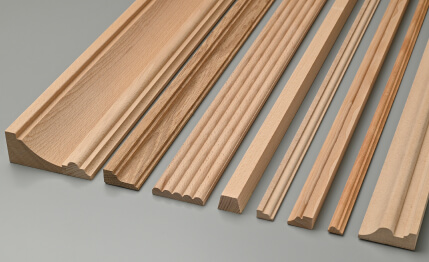
Species. Larch, teak, thermally modified wood, iroko — species with high natural resistance to moisture and rot. Pine without special treatment is not for an open balcony. Oak is good but requires regular maintenance.
-
Treatment. Impregnation (deep treatment) with an antiseptic, finishing with a weather-resistant oil or protective varnish with a UV filter. Without a UV filter — the wood will turn gray in one season.
-
Installation. A ventilated gap is mandatory: air must circulate freely behind the panel, otherwise condensation destroys the wood from the inside.
slatted panels for wallsFrom the array, properly processed and mounted on a ventilated frame, this is a durable and visually rich solution for a balcony in a country house or an enclosed balcony in a city apartment.
Get Consultation
WPC: uncompromising outdoor slatted panel
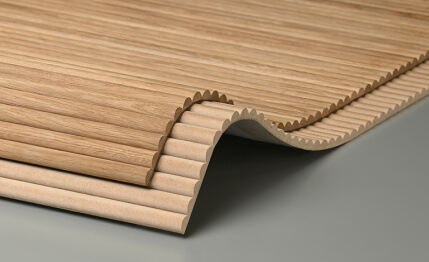
Wood-polymer composite (WPC) is a material specifically created for outdoor conditions.DCP slatted panelsThey combine the appearance of wood (texture, color) with complete indifference to water, rot, and biological damage. They do not swell, crack, or require annual treatment.
For open balconies and facade applications, WPC is the optimal choice in terms of durability, appearance, and maintenance effort. The only drawback: when heated under direct sunlight, dark shades of WPC get very hot. This must be considered when choosing a color for southern orientations.
MDF: only for glazed loggias
Slatted wall panel made of MDFIt is an excellent material for interiors. On an open or even partially open balcony, it is a death sentence. MDF absorbs moisture, swells, delaminates, and loses its shape. No coating will save it from constant condensation on a glazed loggia without heating.
The only acceptable scenario for using MDF slatted panels in a balcony context: a fully heated loggia with normal ventilation, adjacent to the living space and behaving like a room. Only under these conditions do the conditions compare to a living space—and MDF works normally.
PVC and aluminum: pragmatism without lyricism
PVC slatted panels are moisture-resistant, lightweight, inexpensive, and completely impervious to moisture. They work perfectly on balconies from a practical standpoint. From an aesthetic point of view—plastic remains plastic. If the balcony is a purely utilitarian space, PVC is a practical choice. If the balcony should be part of the design—no.
Aluminum slat systems — expensive, reliable, stylish in certain architectural contexts. Suitable for modern facade solutions, for commercial buildings, for minimalist architecture.
Facade slat panels: when rhythm goes outside
A balcony is also part of the facade. And this is a fundamental circumstance: what is done on the balcony is visible from the outside. Therefore, the solution for the balcony cannot be made in isolation from the facade — and vice versa.
Slatted panels for the facade— is already a full-fledged exterior material, constantly operating in outdoor conditions. Here the requirements are stricter in all parameters: weather resistance, UV stability, resistance to mechanical impacts.
Ventilated facade: slat system as a structural element
Modern facade slat systems made of WPC, aluminum, or thermally modified wood are installed according to the principle of a ventilated facade: slats are mounted on a supporting frame with a mandatory air gap of 20–40 mm between the slats and the main wall. This gap ensures constant air circulation, condensation removal, and proper thermal regime of the wall.
This is not only an architectural but also a thermal engineering solution: a ventilated facade reduces heat loss, protects insulation from moisture, and extends the service life of the entire wall structure.
Slatted panel on the facade— in a ventilated facade system — is function plus aesthetics. The slat rhythm on the facade works not as decoration but as the architectural skin of the building.
Slat spacing on the facade: the scale of a large space
The facade context requires a different scale of slat rhythm compared to the interior. If in the interior a slat width of 40–60 mm is perceived as optimal, then on the facade from a distance of 5–15 meters such a slat appears 'too small'. Facade slat panels typically have a wider spacing: slats of 80–120 mm with a gap of 20–40 mm.
Exception: decorative slatted accents on limited areas of the facade — for example, on balcony railings or on the wall section between windows — may be applied with a smaller pitch because they are viewed from a closer distance.
Polyurethane facade decor: what it is and where it is appropriate
Facade decoration made of polyurethane— this is a separate category of products, fundamentally different from interior polyurethane decor. Yes, the raw material is the same. But the formulation, density, coating, and mounting system are fundamentally different.
How facade polyurethane differs from interior polyurethane
Interior polyurethane decor operates in stable conditions: constant temperature of 18–24°C, humidity 40–60%, without direct exposure to sun and precipitation. It can be soft, lightweight, with thin walls — the conditions do not require high strength.
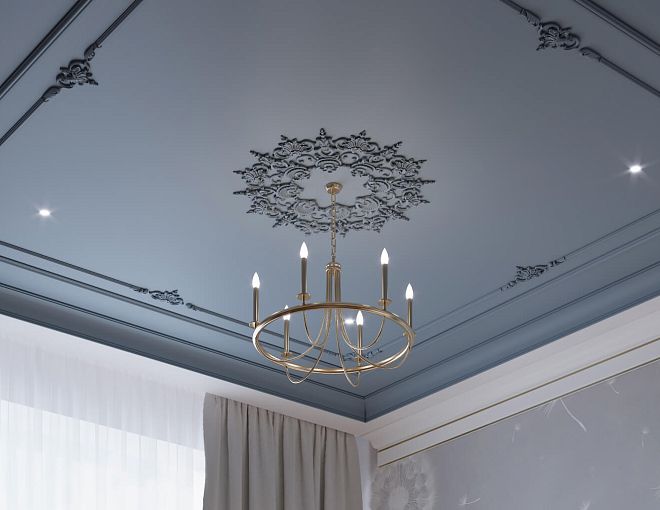
Polyurethane facade decoration for the houseexists in fundamentally different conditions. Requirements:
-
Temperature resistance: from −60 to +80°C without deformation or cracking.
-
UV stability: resistance to ultraviolet light without yellowing or structural degradation.
-
Water resistance: zero water absorption or close to zero.
-
Mechanical strength: resistance to impacts, hail, accidental mechanical effects.
-
Adhesion to coatings: the ability to hold facade paint and weather-resistant coatings for a long time without peeling.
Facade polyurethane has a higher density (200–250 kg/m³ compared to 80–150 kg/m³ for interior polyurethane), a reinforced outer layer, and a special factory-applied primer. It is a completely different product—despite its visual similarity to interior counterparts.
Where exterior polyurethane facade decor is used
Outdoor facade decoration using polyurethaneis used in several typical areas:
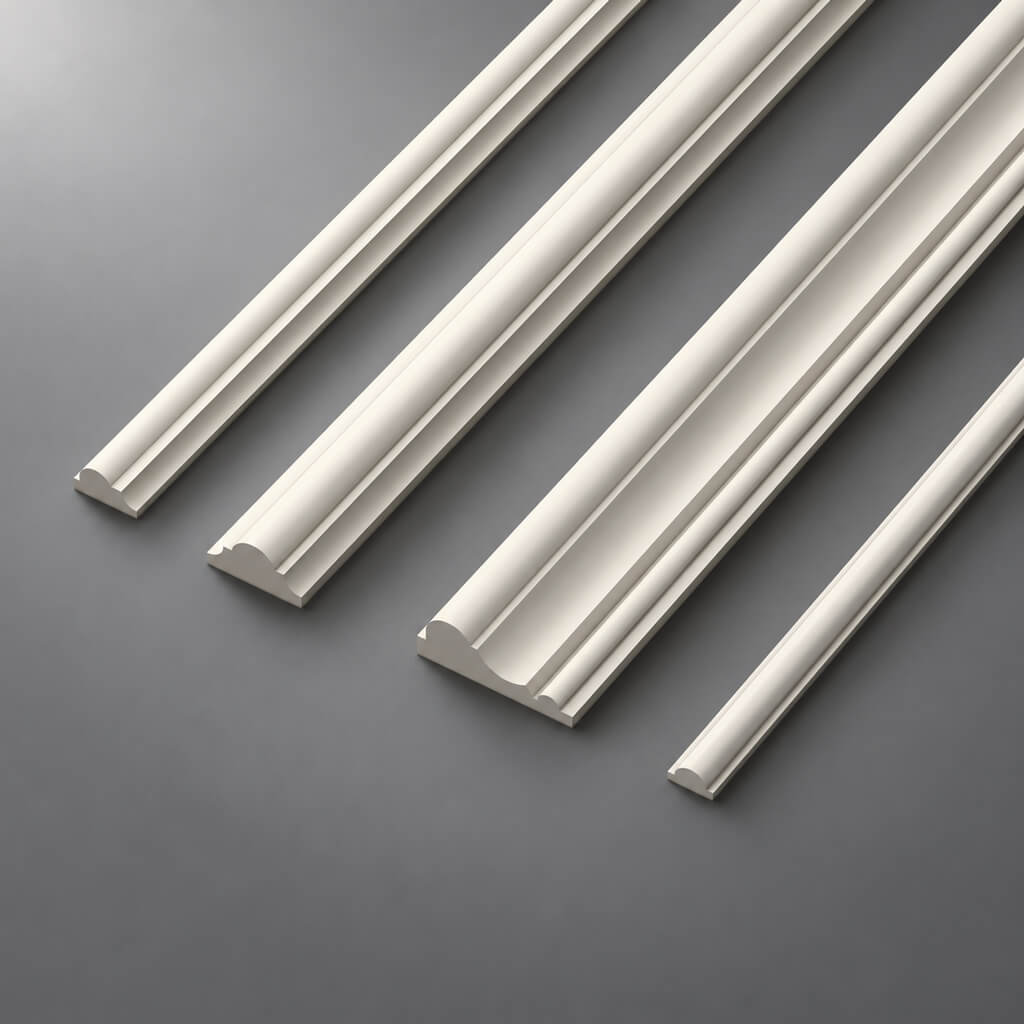
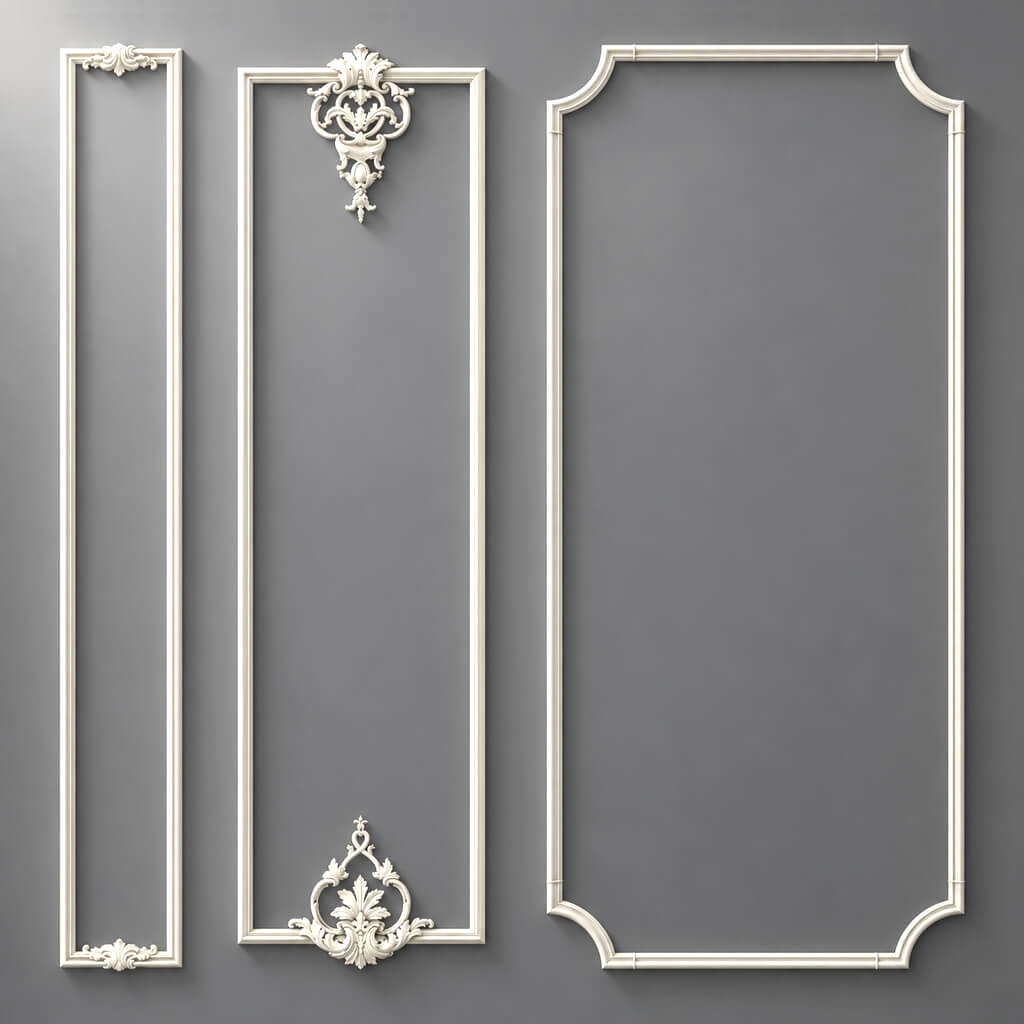
Cornices and profiles. Horizontal cornice elements along the top line of the facade, along the line of interfloor ceilings, and around the perimeter of window and door openings. They create horizontal division of the facade and emphasize architectural lines.
Window and door framing. Casings, profile frames around window blocks. They enliven a flat facade, create shadows, and give the facade scale and detailing.
Pilasters and half-columns. Vertical decorative elements that divide the plane of the facade. In the context of balcony areas—they can frame the vertical edges of balcony piers.
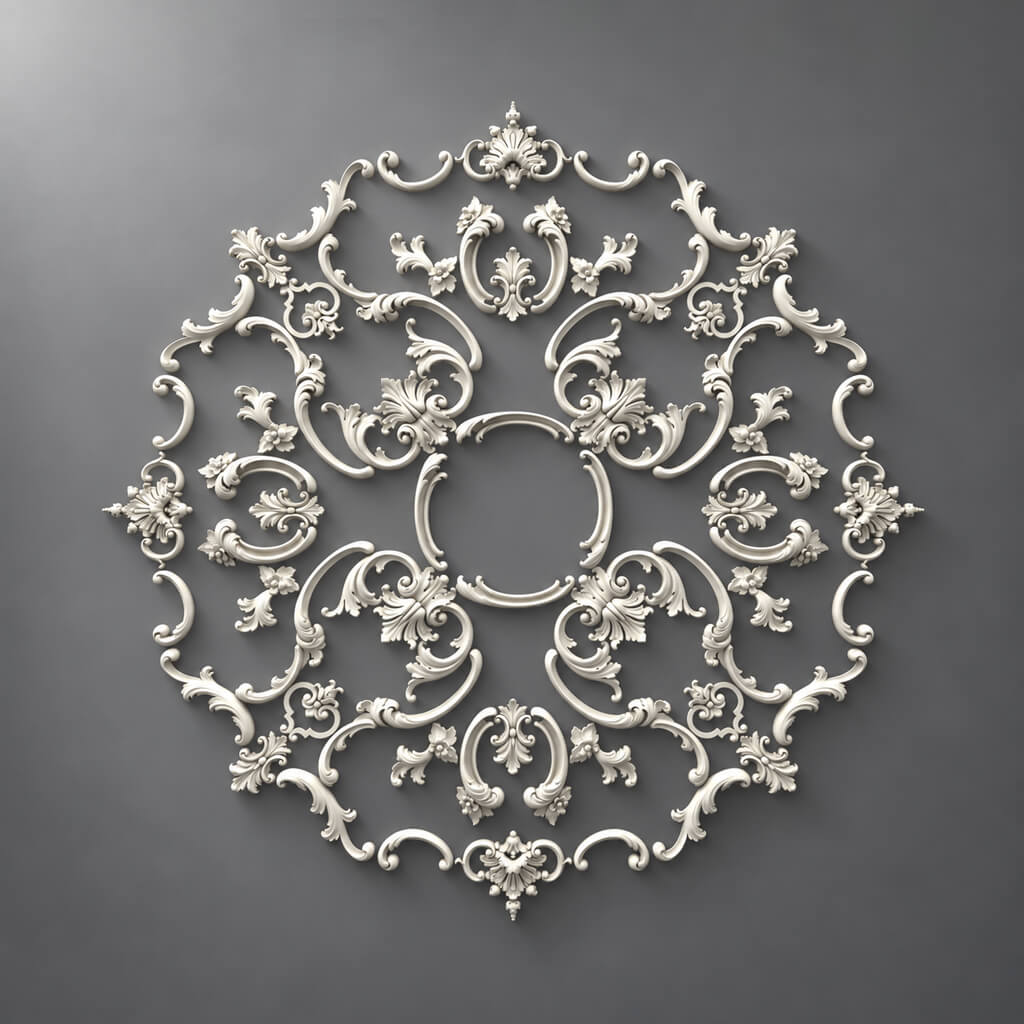
Pediments (sandrils). Decorative 'canopies' above windows and doors. A classic facade element returning to architecture in combination with modern materials.
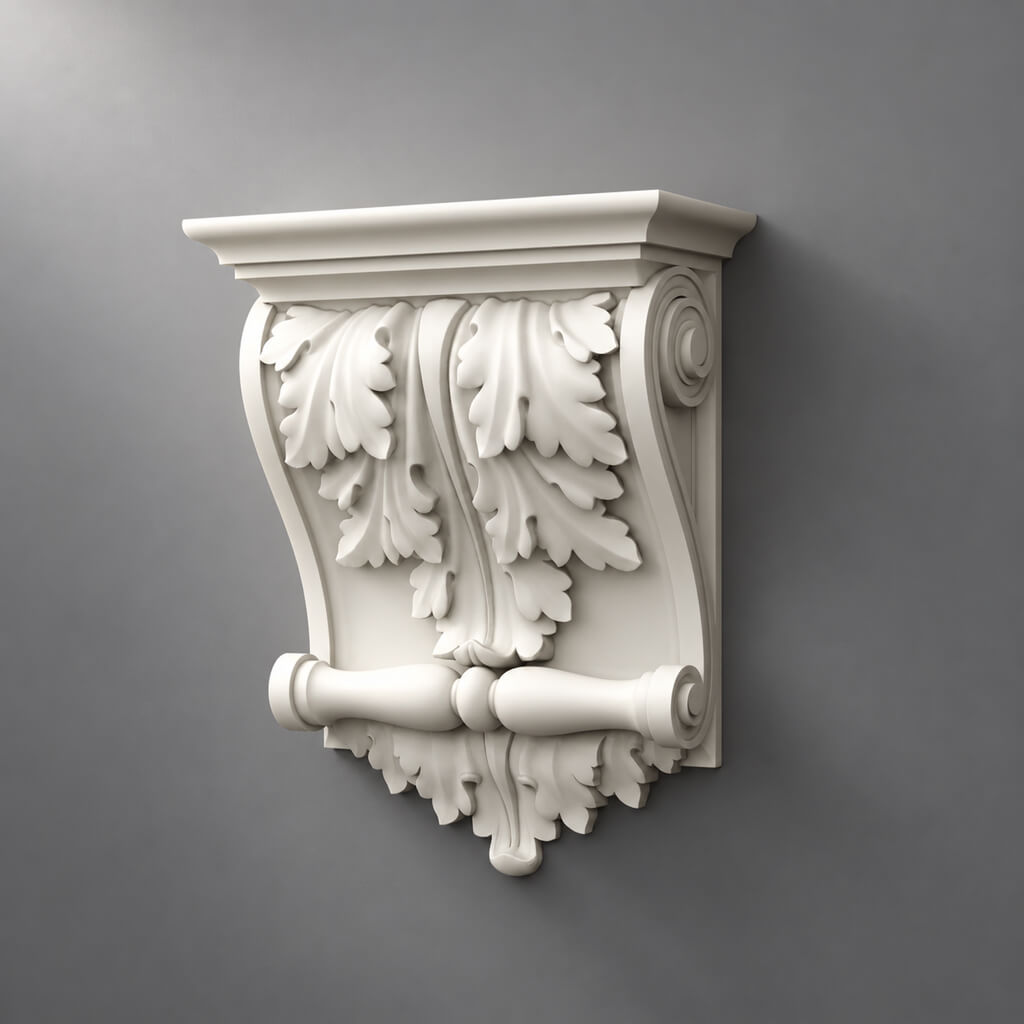
Balcony railings and balustrades. Polyurethane balusters and handrails—lighter than stone, not prone to corrosion like metal. This is a classic application of facade polyurethane.
How to unify the balcony, facade, and interior: a strategy for visual connection
Here's a problem that can't be solved by impulsively choosing 'beautiful materials'. The balcony, facade, and interior of the adjacent room are three spaces with different operating conditions. How to create a visual connection between them without violating the technical requirements of each zone?
The principle of a unified decorative language
A decorative language is not 'identical materials'. It is 'identical principles of form-making'. The slat rhythm in the living room interior and the slat rhythm on the balcony railing are one language expressed in different materials. Wood in the interior and WPC on the balcony are different materials, but a unified visual image.
The principle is specified in several rules:
-
Uniform slat spacing. The spacing of the vertical rhythm of interior and balcony slat panels should match or be in a multiple ratio. This creates a sense of a unified system.
-
Uniform color tone. Warm oak in the interior and warm WPC imitating oak on the balcony is unity. Light slats inside and dark ones outside is a break.
-
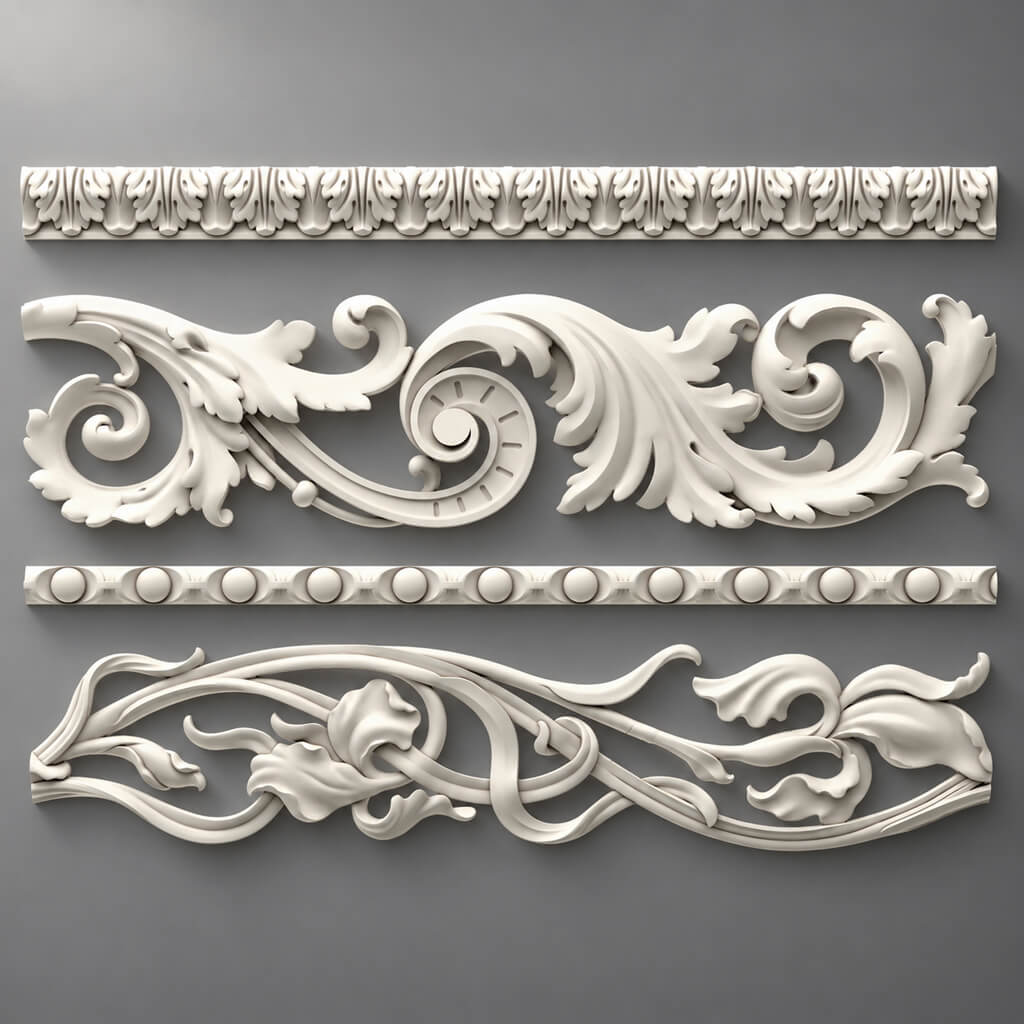
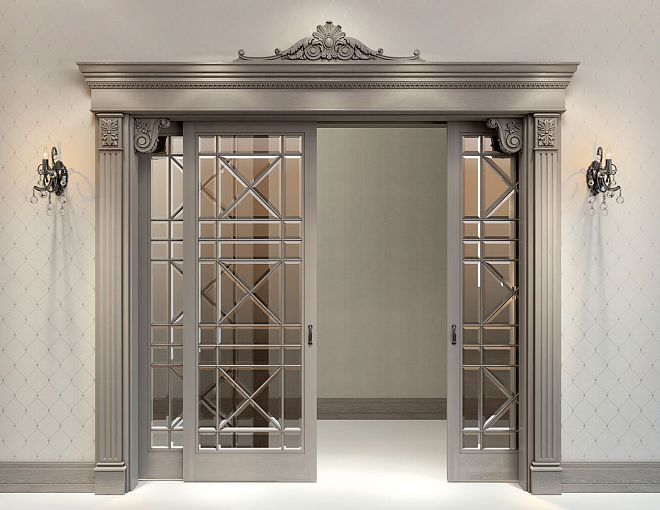
Common decorative element. A molding made of facade polyurethane around the perimeter of the balcony block on the outside and a similar (but interior) molding around the perimeter of the balcony door on the inside is a stitching of two spaces through a unified decorative code.
The balcony door as an architectural transition
A balcony door is not just a passage. It is a spatial seam. This is precisely where the interior meets the exterior. And this is precisely where stylistic chaos most often arises: one thing inside, something completely different outside.
Proper design of the balcony door as a transition:
-
Balcony block reveals from the inside — in interior material (slatted panels for walls or painted plaster matching the wall color).
-
Exterior casing — made of facade polyurethane, painted in a color that echoes the interior color scheme.
-
Slopes made of slatted panels inside the balcony block — is an elegant and well-considered solution that connects the wall plane with the reveal plane.
Slat rhythm as a stitching element from inside and outside
Imagine: in the living room, the accent wall to the left of the balcony block is finished slatted wooden panels in oak. The view from the room through the balcony door extends to the balcony — and sees the same vertical articulation there, but now executed in wood-plastic composite (WPC) under oak. The slat rhythm 'flows' through the glass door from the street into the room and back.
This is precisely that architectural unity which transforms a dwelling from a set of rooms into a cohesive space. This is what expensive architects do. But this solution is available to anyone who thinks about materials systematically, not fragmentarily.
Climatic requirements: moisture, sun, frost — the three killers of the wrong material
A balcony in the Russian climate is a testing ground. Over a year, the material goes through a journey from July heat to January frost, from summer downpours to spring condensation. Let's examine the three main factors of degradation and how to counter them.
Moisture: Enemy Number One
Moisture affects balcony materials in several ways:
-
Direct precipitation (rain, snow) — on open balconies.
-
Condensation — on glazed loggias during the cold season.
-
Dew and fog — during the off-season.
-
Splashes from neighbors above — on balconies of apartment buildings.
Untreated wood absorbs moisture, swells, then dries and cracks. This cycle repeats hundreds of times over its service life and gradually destroys the structure. MDF delaminates upon first wetting. WPC does not absorb moisture.
For wooden slat panels on open balconies — impregnation before installation and annual renewal of oil coating. This is not just a recommendation — it is a condition for the material's survival.
Ultraviolet: The Invisible Destroyer
UV radiation destroys lignin — the natural binding substance of wood. Unprotected wood on an open balcony turns gray in one season: not because it gets dirty, but because the top layer breaks down and discolors.
Yellowing of facade polyurethane without UV stabilizers is a similar issue. Inexpensive interior polyurethane used on a facade will look like a plastic part from a used car after a year.
Solutions:
-
For wood: oils and varnishes with UV filter (SPF for wood, if you will), renewal every 1–2 years.
-
For WPC: most quality WPC systems have built-in UV stabilizers—they do not fade.
-
For facade polyurethane: coating with facade acrylic paint with UV protection.
Temperature fluctuations: geometry of deformation
All materials expand and contract with temperature changes. That's physics. The problem arises when the material is rigidly fixed—without compensation gaps. The deformation has nowhere to go—and the panel warps, cracks, or pulls out the fasteners.
Slat systems on balconies are installed with mandatory deformation gaps:
-
End gaps between the slat and limiting structures: 5–8 mm for every 2 meters of slat length.
-
Gaps at fastening points: do not clamp the slat tightly—use fasteners with slight free play, allowing for linear expansion.
-
Vertical joints between panels: 3–5 mm.
It seems like a small thing — until the first winter, when panels installed without gaps start to warp.
Mistakes in choosing materials for balconies and facades: analysis of typical cases
The most unpleasant thing about mistakes is that they are costly. Dismantling, removal, reinstallation — labor costs are twice as high as when the job is done correctly the first time. Let's examine the most common mistakes.
First mistake: interior MDF on an open balcony
The most common and most destructive. A person sees beautiful MDF Plank Panels in a store, buys them for the balcony. Installs them. By next spring — swelling, delamination, fallen decorative veneer.
MDF is an outstanding material for interiors. Its place is in the living room, in the bedroom, in the kitchen in a closed area. An open balcony is not its territory.
Second mistake: interior polyurethane decor on the facade
A person bought beautiful polyurethane moldings to frame a balcony block from the outside. Used a standard interior product. Result: after a year, the moldings turned yellow, cracked at the ends, and began to peel off the facade.
The difference between interior and facade polyurethane is not a marketing invention. It is a fundamental technological difference. For exterior use—only specialized facade products.
Third mistake: installation without a ventilated gap
Batten panels are screwed directly to the wall without an air gap. There is no air movement between the wall and the panel. Result: condensation collects in this space, the wood rots from the back, and the wall gets wet. Everything looks fine from the outside—until the panels start falling off.
A ventilated gap is not an option but a structural requirement for any batten panels on exterior surfaces. Installationof slatted panelson the exterior is always on battens with air exchange ensured.
Fourth mistake: stylistic break without a transitional element
Inside the living room—a classic interior with polyurethane moldings and oak wood panels. On the balcony—white plastic and aluminum. On the facade—bare plaster. Three spaces exist in three different architectural worlds. Visual chaos is guaranteed.
The fix—not necessarily redoing everything. Often, one connecting element is enough: a molding made of facade polyurethane around the balcony block on the outside, painted to match the interior wood panels. This simple step creates a visual frame that links the two spaces into a single narrative.
Mistake five: incorrect slat orientation
Vertical slats on a balcony create an illusion of height, but on a narrow balcony they function like a 'grille' – visually dividing the space into sections.
Horizontal slats on a balcony railing or wall create a sense of horizontal expansion, making a narrow balcony appear wider in perception.
On a facade: vertical slats make a building appear taller, horizontal ones emphasize horizontal divisions and tiering. The choice of orientation should be dictated by the building's architectural proportions.
Specific application scenarios: balcony of a city apartment, veranda of a country house, facade of a cottage
First scenario: open balcony of a city apartment
Conditions: open, without a roof over part of the balcony, area 3×1.5 m, multi-apartment building, height above ground 5th floor.
Balcony ceiling (if the neighbor's floor slab serves as an awning): DPC slat panels with horizontal orientation. The material is not afraid of moisture, there is no direct sun (under the slab). Color – resembling warm wood.
Railing: DPC slat system with vertical orientation, spacing 80–100 mm. Transparent or with glazing – depending on the building's rules.
Back wall of the balcony (adjacent to the apartment): conditions here are milder – no direct precipitation if the railing provides cover. Well-treated wood can be used here.Wooden slat panelsmade of thermally modified wood or larch — optimal.
Exterior framing of the balcony block:Polyurethane facade decoration for the house— a simple geometric casing, painted in a color that harmonizes with the wooden panels.
Scenario two: a glazed loggia attached to the living room
Conditions: the loggia is 5×1.8 m, glazed, partially heated, and essentially serves as an extension of the living room.
Floor: outdoor laminate class 34+ or tiles with an anti-slip surface.
Walls: conditions allow for MDF — if heating maintains a temperature of at least +8°C during the cold period.MDF Plank Panelsfor painting — in the same tone as the living room. This creates a visual continuation of the interior.
Ceiling: slatted panels made of moisture-resistant MDF or PVC.
Joints between the loggia and living room: molding in the same tone as the baseboard and slatted panels — a seamless transition line without interruption.
Outside (visible part of the loggia from the street):exterior facade decor made of polyurethanearound the perimeter — a horizontal cornice above the glazing and framing of vertical supports.
Scenario three: country house veranda
Conditions: open veranda 6×4 m with a roof, plank floor, wooden support posts. House style — modern estate with classical elements.
Walls and fencing:Slatted Façade Panelsmade of larch with horizontal orientation. Treatment — oil with UV protection and weather-resistant antiseptic.
Veranda ceiling (under the roof, precipitation does not reach): slatted system made of thinner slats — creates an elegant, 'interior' ceiling for the outdoor space.
Decor: Facade decoration made of polyurethane— cornice along the perimeter of the veranda roof, framing of support posts. These are classical architectural elements in a lightweight execution.
Connection with the interior: slatted panels of the same proportions and shade — in the hallway and living room. A person entering the house via the veranda does not notice the moment of transition — the material language is continuous.
Scenario four: cottage with a modern facade
Conditions: two-story cottage, modern architecture, large windows, flat roof or slight slope.
Facade slat system: vertical slats made of dark-toned WPC (graphite, anthracite) on a white or light silver facade. Slat spacing — 100–120 mm, gap — 30–40 mm. The slat system covers part of the facade — not the entire building, but accent zones: between windows, on side ends, above garage doors.
Polyurethane facade decor: here — minimal. In modern architecture, rich stucco is inappropriate. Only strict horizontal cornice lines along the perimeter of the floors and simple rectangular frames around window blocks. This creates the necessary detailing without historical references.
Balconies: same dark-toned WPC on railings. Balcony supports — clad with horizontal strips of light material. Contrasting rhythm — dark verticals and light horizontals — creates an expressive facade image.
Installation of slat panels on a balcony: key technical nuances
Proper installation in outdoor and semi-outdoor conditions is half the success. Even the highest quality material will fail due to improper installation.
Battens for balcony slat panels
Wooden battens for slats on an open balcony — only from impregnated (antiseptic-treated) wood. Untreated pine slats as battens will rot faster than the cladding panels.
Aluminum profiles for battens — the optimal option for wet areas: do not rot, do not corrode with the correct alloy choice (6060, 6063), not afraid of moisture.
Batten spacing: for horizontal slat panels — vertical battens with a spacing of 400–500 mm. For vertical slat panels — horizontal battens with a spacing of 300–400 mm. Closer spacing provides a more rigid fastening.
Fasteners for outdoor conditions
Fasteners for balcony slat systems — only made of stainless steel A2 or A4. Galvanized fasteners over time cause rusty streaks on wooden surfaces — especially in high humidity conditions.
For concealed fastening of slat panels in outdoor conditions — special stainless steel or aluminum clips. Concealed mounting is not only more aesthetic but also more reliable: there are no through holes through which water can penetrate inside the panel.
Detailed technologyinstallation of slatted panelsis described in a separate comprehensive article — be sure to study it before starting work.
Expansion and drainage gaps
The lower edge of slat panels on vertical surfaces should not touch the balcony floor. A 10–15 mm gap is required — a drainage gap to prevent capillary moisture absorption from below.
If slats are mounted horizontally — the bottom surface of each slat should have a slight slope or chamfer for water drainage. Otherwise, water accumulates on the horizontal surface of the slat, which accelerates coating degradation.
Stylistic types of polyurethane facade decor and their application
Not allPolyurethane facade decoration for the houseequally appropriate in any context. The choice of decor is determined by the architectural style of the building.
| Architectural style | Recommended facade polyurethane decor | Slat panels |
|---|---|---|
| Classicism, neoclassicism | Cornices with profile, pilasters, pediments, balustrade | Vertical slats for painted wood |
| Modern minimalism | Only strict horizontal profiles, without ornament | WPC in neutral tones |
| Provence, country | Cornices with medium complexity profile, decorative brackets | Horizontal slats for bleached wood |
| Art Deco | Geometric profiles, angular accents, flat ornament | WPC in dark tones |
| Scandinavian | Only simple cornice, minimal stucco | Light vertical slats |
Using polyurethane facade decor in the 'classicism' style on a modern minimalist facade is a stylistic catastrophe. It's not 'adding character'—it's creating an architectural conflict that stands out from a hundred meters away.
Color as a connecting element
The final, but no less important question is color. It is through color that stylistic unity of the balcony, facade, and interior is achieved—even if the materials are fundamentally different.
Color selection algorithm:
-
Determine the main color of the interior of the room adjacent to the balcony.
-
Choose for the balcony slatted panels the same tone or a tone one step darker/lighter in the same color palette.
-
Paint facade polyurethane decor in a color that harmonizes with the overall facade tone — but with an accent that echoes the interior (for example, the same shade of white used in interior finishes).
The same shade permeating the space from the living room to the balcony railing and to the facade cornice — that is architectural unity. Not expensive, not difficult — it just requires a conscious choice.
STAVROS: materials for those who think about space as a whole
STAVROS manufactures and supplies materials for the entire spectrum of tasks — from interior slatted panels to facade polyurethane decor. This means that at STAVROS you can find solutions for each of the transitional space zones — and solutions created with an understanding of how they work together.
slatted panels for wallsSTAVROS — a wide range of formats and materials: from interior MDF solutions to solid oak panels with outdoor coatings.Facade decoration made of polyurethaneSTAVROS — specialized products for outdoor use with the correct density, UV-stable coatings, and precise geometry for facade painting.
When you work with STAVROS, you work with a system, not individual parts. This allows creating a space where the balcony, facade, and interior tell one story — in one architectural language, without stylistic clutter.
FAQ: answers to popular questions about slatted panels for balconies and facade decor
Can ordinary MDF slatted panels be used on a glazed balcony?
Only under conditions of constant heating and ventilation. If the temperature on the balcony drops below 0°C in winter or condensation accumulates — MDF is not suitable. In unheated or poorly heated loggias, use DPC, PVC, or treated wood.
Is a special permit required for installing slatted panels on the facade of an apartment building?
The appearance of apartment building facades is regulated by the management company or homeowners association. Changing the appearance of balcony railings and facade elements typically requires approval. Check with your management company.
How often should the coating on wooden slatted panels on an open balcony be renewed?
Every 1–2 years — apply protective oil or varnish. For thermally modified wood — less frequently, every 3–4 years. For WPC — no scheduled maintenance required, only regular washing.
What slat spacing should be chosen for a balcony railing?
For safety: the distance between vertical elements must not exceed 100 mm (building code requirement for high-rise structures). For aesthetics: 60–80 mm spacing creates a dense decorative rhythm, 80–120 mm — more open.
Are polyurethane facade cornices compatible with wooden slatted panels?
Yes, and it is one of the most elegant combinations. A polyurethane cornice frames the slatted panel area, creating an architectural upper boundary. Compatibility condition: overall color scheme and scale matching.
Can slatted panels be installed on a balcony independently?
Yes. Basic construction skills, proper tools, and adherence to technology are sufficient. The most important aspects are proper surface preparation and maintaining gaps. Step-by-step instructions on how toHow to install slatted panelsare available in the comprehensive guide.