
















































































Article Contents:
- Metal slat panels: the architectural grammar of modern facades
- What are metal slat panels in facade architecture
- Where metal slat panels are used
- Technical specifications important for selection
- When a metal facade requires additional plasticity
- The problem of cold anonymity
- Three scenarios when a metal facade needs decor
- Polyurethane facade decor: what it is and why it works outdoors
- Physics of polyurethane outdoors
- Which polyurethane facade elements can work alongside metal
- Risks of incompatibility in style and scale
- Stylistic Incompatibility
- Scale incompatibility
- Color incompatibility
- Plane incompatibility
- Modern private house facades: how it works in practice
- First look: black metal and white accent
- Second look: canopy with slatted visor and polyurethane brackets
- Third look: facade with horizontal belt
- Image four: corner accent
- Commercial buildings: metal, polyurethane and representativeness
- Business center: strictness with accents
- Shopping center: visual magnet
- Administrative building: representativeness without pretentiousness
- Climate and installation: technical conditions of durability
- Metal and climate
- Polyurethane and climate
- Joint installation: logic of sequence
- Mounting polyurethane decor on facades
- Slat Panels and Polyurethane: Design Mistakes That Cost a Lot
- First Mistake: Decor as a 'Patch'
- Second Mistake: Interior Polyurethane Instead of Facade
- Third Mistake: Inconsistent Fastening Solutions
- Fourth Mistake: Underestimating the Scale of Decor
- Styles Where the Combination of Metal and Polyurethane is Especially Organic
- Modern minimalism
- High-Tech
- Neoclassicism in a Modern Interpretation
- Industrial Style
- Cost of Solutions: A Realistic View
- Slat Panels in Interior: When Facade Logic Moves Inside
- What the Customer Should Consider Before Making a Decision
- About the Company STAVROS
- FAQ: Answers to Popular Questions

Modern architecture speaks two languages simultaneously. The first is the language of precise geometry, metal lines, and industrial rigor. The second is the language of plasticity, relief, and architectural detail, which gives the facade a human scale.Metal slat panelsandFacade decoration made of polyurethane— this is not a contradiction. It is a dialogue between two systems that, when skillfully combined, create a facade impossible to forget.
But such a combination requires understanding. Not intuitive—professional. Because the metallic rhythm of slats and the plastic relief of polyurethane can either enhance each other or mutually destroy the result. Let's break it down in essence.


Metal slat panels: the architectural grammar of a modern facade
Before discussing the combination, it is necessary to understand the nature of each material separately. Let's start with metal.




What are metal slat panels in facade architecture
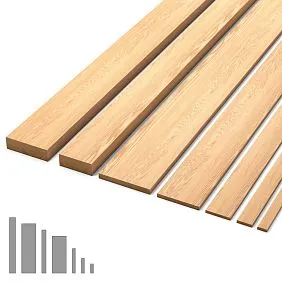
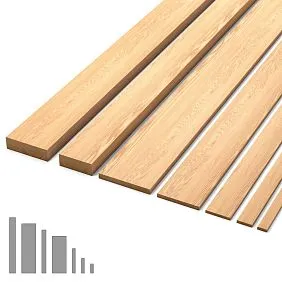
Metal slat panels— are cladding elements based on metal profiles, creating a rhythmic linear pattern on the facade surface. The slats can be horizontal, vertical, or diagonal. They can have an open or closed profile, varying widths and depths, and different inter-slat gaps.
Material base: most often aluminum, less commonly galvanized or stainless steel, sometimes copper or corten steel for special architectural tasks. Aluminum slats are the most common choice: lightweight, corrosion-resistant, and well-suited for powder coating in any RAL color.
What does a metal slat system provide for a facade? Several fundamental things:
-
Rhythm. A repeating linear element creates a visual frequency that organizes the facade plane. A fine slat pitch creates a fast rhythm, conveying business energy. A wide pitch creates a slow rhythm, conveying monumentality.
-
Depth. Slats are a three-dimensional element. They cast shadows that change throughout the day. The facade comes alive, changing its expression depending on the lighting.
-
Scale. The slat grid sets the scale for perceiving the building. Thin slats with a small pitch make the building appear taller visually. Powerful horizontal slats make it appear grounded and stable.
-
Function. A slat screen can conceal technical equipment on the roof, utility lines, and irregularities in the primary cladding. This is both aesthetics and function simultaneously.
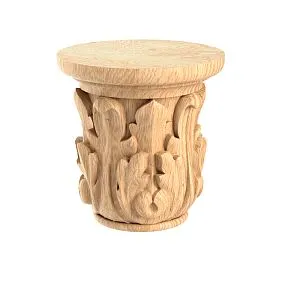
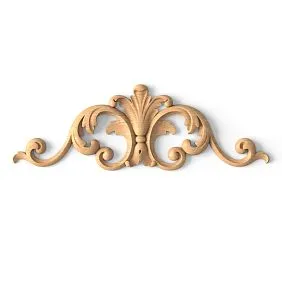
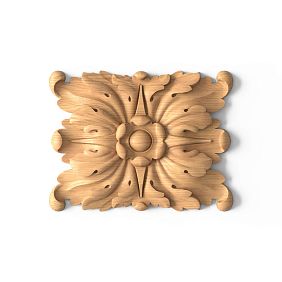
Our factory also produces:
Where are metal slat panels used?
The application area for metal slat systems on facades is exceptionally broad. This is not a niche product for avant-garde projects—it is a universal facade solution that works across a wide variety of building typologies.
Public and commercial buildings. Shopping centers, business centers, sports facilities—where representativeness, durability, and low maintenance costs are important. A metal slat screen on a shopping center facade looks modern, is easy to maintain, and creates a recognizable image.
Residential apartment buildings. In the business and premium segments, metal slat facades are a stable trend. A slat screen over a parking area, slat balcony railings, vertical slat accents at entrance areas—these are details that distinguish quality housing from standard panel buildings.
Private houses. A metal slat screen on a private house is a statement. It is most often used for a vertical accent fragment of the facade, for canopies, and for fencing terraces and roof areas. This is not an economical, but an impressive solution.
Industrial facilities with architectural ambitions. Production buildings, new-type logistics centers — a category where metal slat facades allow creating a representative image with minimal maintenance cost.
Get Consultation
Technical specifications important for selection
Choosing a metal slat system is not just about aesthetics. Technical parameters determine both durability and application possibilities.
| Parameter | Aluminum slats | Steel slats | Copper slats |
|---|---|---|---|
| Weight | Lightweight | Heavy-duty | Medium |
| Corrosion resistance | High | Medium (galvanized) | Very High |
| Color options | RAL any color | RAL any color | Natural or patina |
| Durability | 40–50 years | 25–35 years | 80+ years |
| Cost | Medium | Below average | High |
| Thermal expansion | High | Average | High |
Thermal expansion is a particularly important parameter. Metal expands significantly when heated. The fastening system must provide compensation for thermal expansion, otherwise, after a few years, the rails will begin to deform or tear out the fastening nodes.
When a metal facade requires additional plasticity
This is the most interesting question. Not every metal facade needs decoration. But many do. When exactly?
The problem of cold anonymity
A clean metal facade without any plastic accents can produce one of two impressions: either brilliant technological beauty (if everything is done perfectly), or cold anonymity (if the scale is not worked out, details are not thought through, the building 'loses its face').
The metallic rhythm of slats creates structure but does not create hierarchy. The facade has no top or bottom in the architectural sense, no accents that say: 'here is the main entrance,' 'here is the main floor,' 'here is what makes this building special.'
This is where plastic decor comes into play. Its task is not to decorate the metal for the sake of decoration, but to create architectural hierarchy, give the facade scale, a readable structure, a 'face' in the human sense.
Three scenarios when a metal facade needs decor
First scenario: accentuating the entrance group. A metal slat facade around the entire perimeter of the building, and a clean rectangular opening of the entrance without any accents. This works only in strict minimalism. For most tasks—a private house, a public building with representative functions—the entrance needs architectural highlighting. A portal, framing, a supra-portal accent made ofpolyurethane facade molding—this is a solution that highlights the entrance without violating the overall metallic character of the facade.
Second scenario: cornice belt. In architecture, a principle of three-part division of the facade has historically developed: base (plinth), middle part (body of the building), crowning (cornice). Metal slat systems often ignore this division—the slats run from the ground to the roof as a single sheet. This can be read as a lack of completeness. A polyurethane cornice or profile belt that separates the body of the building from the roof area returns completeness to the facade—without destroying its modern character.
Third scenario: plinth transition. The place where the metal slat facade meets the ground or the plinth part is an architecturally complex point. A direct joint of metal with the concrete or brick of the plinth often looks unfinished. A polyurethane profile or plinth molding creates a clear boundary that is simultaneously a detail and a transition between the two systems.
Facade decor made of polyurethane: what it is and why it works on the exterior
Now in detail about the second side of this duo.facade decoration made of polyurethane— this is not the same as interior polyurethane molding. Facade conditions are fundamentally different.
The physics of polyurethane outdoors
Facade polyurethane must withstand direct precipitation, direct ultraviolet radiation, frost, thawing, wind loads. These are strict requirements that not all polyurethane products meet.
Quality facade polyurethane is a high-density material (not foamed, but cast) with additives providing UV resistance. It does not crack in frost, does not deform under direct sun, does not absorb water (meaning freeze-thaw cycles do not destroy it).
Key difference between facade and interior polyurethane: density and composition. Interior — lightweight, porous, easy to cut and glue. Facade — denser, heavier, mechanically stronger, with UV protection.
Which polyurethane facade elements can work alongside metal
First and foremost — the logic of selection.Polyurethane Decoron a facade with metal slat panels should either contrast with the strictness of metal (creating architectural dialogue) or support the overall character (being geometrically precise, without historical ornamentation).
Profile moldings and belts. Horizontal polyurethane profiles that divide the facade horizontally or accentuate individual zones — this is the most organic choice for a facade with metal slats. Molding with a strict rectangular cross-section, polyurethane cornice with minimalist profile — they fit into the modern geometry of a metal facade without stylistic conflict.
Window and door trims. Polyurethane window casings, door opening frames — these are details that work on contrast with the slatted background. Metal slats create a uniform textured surface, while polyurethane trims highlight openings as independent architectural objects.
Architraves and portals. Above the main entrance is a polyurethane portal that structures the entrance area and gives it a representative appearance. This works well for public and commercial buildings where the main entrance should be recognizable at first glance.
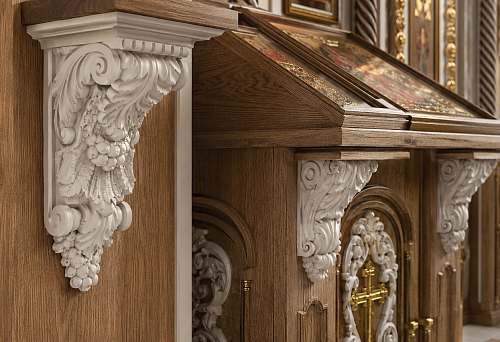
Decorative brackets and consoles. On protruding facade elements—canopies, awnings, overhanging cornices—polyurethane brackets create volume and depth. They do not compete with the slat rhythm but add a plastic pause to the linear system.
Risks of incompatibility in style and scale
This is the most honest section. Because metal slat panels and polyurethane decor may be incompatible, and understanding these risks is no less important than knowing the possibilities.
Stylistic incompatibility
The main mistake: applying historical ornamental polyurethane decor on a facade with modern metal slats. Meanders, acanthus leaves, Baroque cartouches, molded garlands—all of this categorically does not work next to aluminum slats in an industrial spirit.
Polyurethane decor on such a facade should be geometrically abstract or minimally profiled. No ornamentation. Only lines, angles, clear sections.
The only exception is a conscious postmodernist play, where the architectural project intentionally juxtaposes historical and modern elements. But this is a deliberate concept with a clear authorial decision, not a random mix.
Incompatibility in scale
The second risk is scale. Thin, elegant moldings with fine relief on a facade with large, powerful metal slats—this is a conflict of scales. A small detail gets lost against the large metal rhythm, looking accidental and out of place.
Rule of scale correspondence: the polyurethane element should have a size corresponding to the scale of the slat system. If the slats are 100 mm wide with a 150 mm pitch—the molding should be at least 80–100 mm wide. Fine decor with a large slat rhythm is a mistake.
Color incompatibility
Metal rails most often come in RAL colors: anthracite (RAL 7016), dark brown, gray, white, black. Polyurethane decor on the same facade is either painted the same color (unified system) or in a contrasting one (architectural accent). There should be no third option - 'another random color'.
Neutral white polyurethane molding against anthracite rails - works. Classic cream or terracotta polyurethane against dark metal - creates a warm contrast. Beige polyurethane decor against gray rails - blurs the contrast, loses expressiveness.
Plane incompatibility
Technically: metal rail panels are a ventilated facade with an air gap. Polyurethane decor is an element glued directly to the substrate or to the facing layer. Using polyurethane elements on a rail ventilated facade requires careful design of attachment points: the decor must be attached to the load-bearing structure, not to the rails themselves.
Modern private house facades: how it works in practice
Let's move on to specific images. A private house is perhaps the richest platform for experimenting with the combination of metal rails and polyurethane decor.
First image: black metal and white accent
Vertical aluminum rails in anthracite around the entire perimeter of the first floor. Above - plaster in the same tone or light brick. In the entrance area - a white polyurethane portal: a strict rectangular profile framing the doorway. The contrast of the black metal rhythm and the white plastic accent is a powerful architectural technique that makes a modest private house a memorable object.
What this image does: metal creates character (modern, restrained, masculine), the polyurethane portal creates an event (entrance as an accent). Together - the image of a house with a clear architectural position.
Image two: canopy with slatted visor and polyurethane brackets
Over the terrace or entrance area — a visor made of metal slats. It is supported by polyurethane brackets on the wall — geometrically strict, without ornamentation, but with volume and shadow. The slats of the visor create rhythm, the brackets — plasticity. This solution works in the style of a modern house, where metal is the main material, but the space needs warm visual accents.
Image three: facade with a horizontal belt
Two-story house. First floor — porcelain stoneware or plaster. Second — metal slatted panels of horizontal orientation. At the boundary of the floors — a polyurethane profile belt, which structures the division and simultaneously serves as an architectural detail. This is not a decorative whim — it is a competent architectural move, harking back to the classical principle of floor-by-floor division of the facade.
Image four: corner accent
The corner of a building is a traditionally complex zone. Metal slats on corner elements provide a neat wrapped profile or are cut at the corner. A polyurethane corner pilaster is an alternative that turns the corner into an architectural accent. A pilaster of strict geometric cross-section made of polyurethane against the background of metal slats creates a vertical rhythm that complements the horizontal rhythm of the slats.
Commercial buildings: metal, polyurethane, and representativeness
Commercial architecture requires a balance between representativeness and economic justification. Metal slatted systems andfacade decoration made of polyurethane— one of the most cost-effective combinations to achieve this balance.
Business center: strictness with accents
Metal vertical slats are the signature look of the business center: technological, serious, modern. Polyurethane decor is used here selectively: framing the main entrance, a horizontal belt between the technical and public levels, decorative elements above the address board or logo. This is not 'decoration' in the traditional sense—it is architectural navigation that helps visitors read the building's hierarchy.
Shopping center: a visual magnet
Shopping centers compete for attention. A metal slatted facade with a dynamic pattern already attracts the eye. Polyurethane decor in the main entrance areas and key display windows enhances the effect: it slows down the gaze, creates details that one wants to approach closer. This is the principle of large-scale gradation: the distant plan is the metallic rhythm, the middle plan is the polyurethane accents, the near plan is the details and materiality.
Administrative building: representativeness without pretentiousness
It is here that the combination of metal slats and strict polyurethane decor works most organically. MetalSlatted Façade Panelscreates a business image. Polyurethane elements—cornice, belt, framing of the main entrance—add dignity without historical stylization. This is architecture that says, 'serious decisions are made here,' but does not shout about it with baroque ornaments.
Climate and installation: technical conditions of durability
Any facade solution exists in real climatic conditions. For Russia, this is a serious topic: frosts down to -40°C in a number of regions, summer heating of surfaces up to +70°C, freeze-thaw cycles, wind loads.
Metal and climate
Aluminum slats, when heated to +70°C and cooled to -40°C, experience a total thermal expansion of about 4–5 mm per linear meter. This requires compensation gaps in the fastening system. Slats longer than 3 meters must have a sliding fastening at least at one end so that thermal expansion does not lead to deformation.
Metal slat coating - powder paint according to RAL. High-quality powder coating lasts 20-25 years without color loss or adhesion failure. Cheap coating begins to chalk and crack after 5-7 years on southern facades under direct UV.
Polyurethane and climate
Facade polyurethane with proper formulation is resistant to temperature range -60°C… +80°C. This ensures compatibility with climatic conditions across all of Russia. Water absorption of high-quality facade polyurethane is less than 0.5% by volume. This means freeze-thaw cycles do not destroy the material: water simply has nowhere to penetrate.
UV stabilizers in facade polyurethane composition ensure color and geometry preservation under direct sunlight for 10-15 years without repainting. After that - simple repainting with facade paint, which restores the decor's original appearance.
Joint installation: logic of sequence
Proper installation of metal slat panels and polyurethane decor is a matter of correct work sequence.
-
Installation of load-bearing framework for ventilated facade with metal slats.
-
Installation of base for polyurethane elements: anchor mounting of decor brackets to building load-bearing structures - not to slats.
-
Installation of metal slat panels on framework.
-
Installation of polyurethane decorative elements - after completion of slat facade. This prevents damage to decor during installation of heavy metal structures.
-
Sealing joints between polyurethane decor and base with UV- and frost-resistant silicone.
-
Final painting of polyurethane elements according to the facade color scheme.
Common construction mistake: installing decor before completing the rail system. Result: damage and chips on polyurethane from metal elements during their installation.
Mounting polyurethane decor on facades
For facade application, adhesive alone is insufficient. Mounting polyurethane decor on external surfaces must be mechanical: dowels or anchor bolts into the base, plus facade polyurethane adhesive as a sealant. Only such fastening withstands wind loads and thermal deformations of the building without risk of element detachment.
Diameter and depth of anchor fastening are determined according to wind load per building codes for the specific region. For large architectural elements (cornices, portals) — load calculation is mandatory.
Rail panels and polyurethane: design mistakes that come at a high cost
Practical look at typical failures encountered on real projects. This is an important part — not to scare, but to warn.
First mistake: decor as a 'patch'
The metal facade turned out cold and faceless. The client asks to 'add something decorative'. As a result, polyurethane decor is hung on the facade without architectural logic — where there is free space. Such decor doesn't work: it looks like an attempt to fix an architectural mistake after the fact.
The right way: decor is planned as part of the architectural concept from the very beginning. Application points for polyurethane elements are determined before installing metal battens.
Second mistake: interior polyurethane instead of facade-grade
This happens due to cost-saving or lack of knowledge. Interior moldings are cheaper than facade-grade ones. But their density, UV resistance, and frost resistance are incomparable to facade requirements. After the first winter, interior polyurethane on the facade begins to crack in places where water penetrated through pores and froze. This isn't saving money — it's double expenses: first for the material, then for removal and replacement.
Third mistake: uncoordinated fastening solutions
Metal batten panels and polyurethane decor are fastened using fundamentally different methods. Their joint installation requires coordination at the frame design stage. If the frame is designed without considering fastening points for polyurethane elements — installers have to improvise. This leads to unreliable fastening solutions and long-term risks.
Fourth mistake: underestimating the scale of decor
This has already been mentioned, but the topic deserves repeating. On a two-story house with metal battens, a 50 mm high polyurethane molding will get lost — it will only 'read' from a distance of 2–3 meters. It won't be noticeable from the street. The rule of facade decor: an element must 'read' from a distance corresponding to the building's scale. For a private house — from 15–20 meters. For a public building — from 30–50 meters.
Styles where the combination of metal and polyurethane is especially organic
Some architectural styles create the perfect context for this combination. Let's examine specifically.
Modern minimalism
The strict geometry of metal battens plus geometrically precise polyurethane profile — this is the very essence of minimalism: maximum effect with minimal means. Here, decor is not an ornament, but an architectural line that divides, structures, accentuates.
High-tech
Metal is the natural material of high-tech. Polyurethane elements in a high-tech facade should imitate or support technological precision: strict rectangular profiles, precise geometric forms, absence of any ornamentation. This is quite achievable — facade polyurethane in a geometrically strict execution looks no less technological than metal.
Neoclassicism in a modern interpretation
There are more possibilities here. Metal slats act as a modern element, polyurethane decor as a classical component. The contrast is deliberate and architecturally motivated. The key condition: the classical decor must be stylistically clear and appropriately scaled, not a random collection of historical elements.
Industrial style
Corten steel slats (with a characteristic dark-rusty patina) plus polyurethane elements painted to look like metal — this is a powerful textural play. The facade reads as a unified metal system, although in reality some elements are polyurethane. This is an honest design game that creates an interesting image.
Cost of solutions: a realistic view
Let's talk numbers. Not exact ones (the market changes), but approximate — to understand the cost ratio of various elements.
Metal slatted facade systems are an expensive pleasure. A full set (aluminum slats, frame, fasteners, installation) costs significantly more than a plaster or tile facade. It's an investment in durability and image.
Polyurethane facade decor is several times cheaper than comparable gypsum or stone with a comparable visual result. And dozens of times cheaper than hand-carved stone.
Therefore, combining metal slatted panels with polyurethane decor is an economically sound strategy: expensive where durability and technology matter (metal), economical where plasticity matters (polyurethane).
Slatted panels in the interior: when facade logic moves inside
An interesting parallel: metal slat systems and polyurethane decor are not just for facades.Slatted panels in interior designSpaces adjacent to entrance groups and atriums often extend the facade logic into the building's interior. Metal slats in a business center lobby, polyurethane molding in the same tone as the facade—this is a technique of continuous architectural narrative that creates a cohesive image from the street to the interior.
This is not just aesthetics, but also marketing: the building's brand starts outside and continues inside. For commercial properties, this is a competitive advantage.
What is important for the client to consider before making a decision
Let's conclude with a practical checklist—questions to ask yourself and the contractor before starting work.
Regarding metal slat panels:
-
What metal? Aluminum, steel, other?
-
What coating? Powder coating, anodizing, patina?
-
Who is the manufacturer of the fastening system? Is there compensation for thermal expansion?
-
Is there an access panel behind the slat screen (for servicing utility lines)?
Regarding facade polyurethane decor:
-
Facade or interior polyurethane? (This is a fundamental question.)
-
Are there UV stabilizers in the composition?
-
What mechanical fastening is used (adhesive alone is insufficient)?
-
How is the decor integrated into the overall framing system?
Regarding design:
-
Does the decor correspond to the scale of the building and the scale of the slat system?
-
Was the decor style (geometric vs. ornamental) consciously chosen in accordance with the overall facade concept?
-
Has the color system been considered (uniform color vs. contrast)?
About the company STAVROS
The quality of a facade solution begins with the quality of the material. STAVROS is a Russian manufacturer of finishing materials and architectural decor, whose catalog features a complete range for implementing professional facade concepts:Rafter panelsvarious formats for interiors and exteriors,Polyurethane molding allows creating a stylish and presentable exterior of a house, while the material retains its qualities in any weather conditions.moldings, cornices, profile belts, and architectural accents.
STAVROS manufactures products that perform in real Russian climatic conditions—from the temperate continental climate of Central Russia to the harsh Siberian climate. Each product undergoes control for geometric accuracy and compliance with stated technical specifications.
For designers and architects, STAVROS provides technical consultations on material selection, compatibility of various systems, and the correct sequence of installation work. Because the right facade solution is not just about beauty. It's architecture that serves for decades.
FAQ: Answers to popular questions
Can polyurethane decor be attached directly to metal battens?
No. Metal battens are not a load-bearing structure for decor. Polyurethane elements must be attached to the building's load-bearing structures (wall, frame). Attaching to battens creates a risk of detachment under wind loads and thermal deformations.
Is a special primer needed before installing polyurethane facade decor?
Yes. The base under polyurethane elements must be clean, dry, and treated with facade primer. This improves the adhesive's adhesion and reduces the risk of cracks at the joint between the decor and the base.
What is the minimum spacing for metal system battens for a private house?
There is no universal answer: it depends on the architectural concept. For small private houses, a spacing of 100–200 mm with a batten width of 50–80 mm is often used. This provides a detailed rhythm that works at small viewing distances.
Can polyurethane facade decor be painted in RAL color, like metal slats?
Yes. Polyurethane is well-suited for painting with facade paints. With the same tinting, the decor visually blends with the background, creating a unified system. With contrasting tinting, it becomes an architectural accent.
How long does facade polyurethane last without repainting?
High-quality facade polyurethane with UV stabilizers retains color and geometry for 10–15 years. After that, repainting restores the decor to its original appearance.
How difficult is the installation of metal slat panels for a non-specialist?
Installation of metal slat systems is professional work requiring experience with ventilated facades. For a private house, it is recommended to engage a professional installation crew with experience in metal facade systems.
How to care for metal slats on the facade?
Annual washing of the facade with clean water under pressure. Every 3–5 years, inspect the condition of fastening nodes and sealing seams. If the powder coating is damaged, local touch-up painting is needed to prevent corrosion (especially important for steel slats).