












































































Article Contents:
- Biophilic Design: Nature Inside the Home
- Wooden Slats: Organic Verticality
- Integration with Living Greenery: Vertical Gardens
- Natural Tones and Textures: Earthy Palettes
- Organic Forms: Curved, Asymmetrical
- Flexible Transformation: Adaptive Spaces
- Sliding Slatted Panels: Dynamic Zoning
- Rotating Slatted Modules: Rotating Architecture
- Folding Slatted Screens: Mobile Privacy
- Telescopic Slatted Systems: Adjustable Density
- Functional Integrations: Partition as a System
- Built-in lighting: light architecture
- Integrated Storage: Shelves and Niches
- Acoustic Solutions: Sound Absorption
- Smart Technologies: Interactivity
- Materials and Finishes: From Natural Wood to Composites
- Solid wood: premium organic quality
- MDF and Plywood: Practicality and Coloring
- Metal: industrial graphic quality
- Combined Solutions: Wood + Metal + Glass
- Stylistic Solutions: Partitions in Different Interiors
- Scandinavian: light wood, minimalism
- Loft: Metal, Dark Wood, Industrial Style
- Japanese: Bamboo, Asymmetry, Zen
- Minimalism: Monochrome, Clean Lines
- Eclecticism: Combinations, Color, Authorship
- Zoning: Functional Applications
- Living Room + Kitchen: Openness with Boundary
- Studio Bedroom: Privacy Without Walls
- Office in Living Room: Focus Without Isolation
- Entryway: Entrance Filter
- Bathroom: Moisture-Resistant Zoning
- Installation and practicality
- Mounting: floor, ceiling, wall
- Distance between slats: balance of privacy and light
- Maintenance and Durability
- Frequently asked questions
- Conclusion: a partition that breathes with the space

Open spaces combining living room, kitchen, dining room, bedroom, office into a single volume require smart zoning that divides without isolation, creates privacy without walls, structures without heaviness. A slat partition becomes the main tool for this task — a lightweight, permeable, visually almost weightless structure made of vertical or horizontal slats, allowing light, air, and sight to pass through, while clearly defining functional zones. In 2026, slat zoning evolves from a decorative trend to a functional architectural solution, integrating biophilic design, flexible transformation, and technological innovations.
Biophilic approach considers slats not as an industrial element, but as an extension of nature inside the home: wooden slats mimic tree trunks, vertical lines create forest verticality, natural wood texture, tactile warmth, organic tones connect with nature. Flexible transformation allows partitions to slide, fold, rotate, adapting to changing needs: open space for parties, intimate zones for work, privacy for sleeping. Slat partitions cease to be static — they live, breathe, transform alongside their inhabitants.


Biophilic design: nature inside the home
Biophilia — innate human inclination toward nature, desire to surround oneself with natural forms, materials, light, greenery. A wooden slat partition creates visual connection with nature, calms, reduces stress, improves well-being.




Wooden slats: organic verticality
Wooden slats — classic material for biophilic partitions. Solid wood (oak, ash, walnut, pine) with preserved natural texture, growth rings, natural color creates organic verticality, mimicking tree trunks, bamboo thickets. Vertical slats 200–270 cm high (from floor to ceiling), 20x40 mm, 30x50 mm, 40x60 mm cross-section, spaced 50–100 mm apart create rhythmic structure.
Verticality visually raises ceilings, creates a sense of growth, upward striving — natural movement of trees toward light. Gaps between slats allow light to pass, creating play of light and shadow, dynamic throughout the day as the sun moves. Light passing through slats creates striped patterns on the floor, walls — effect of sunlight filtering through leaves.
Wooden slat partitions require quality dry wood (moisture 8–12%) to avoid deformation, cracking. Finish — oil, wax, varnish — highlights texture, protects against moisture, contamination. Natural wood is eco-friendly, creates a healthy microclimate, regulates humidity, emits a light woody aroma.
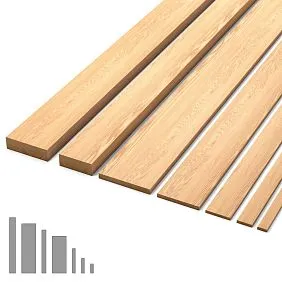
The company STAVROS offersSolid wood products, including slats, boards of various cross-sections made of oak, ash for creating biophilic partitions.
Our factory also produces:


Integration with living greenery: vertical gardens
Slat partition becomes a frame for vertical greening — integration of living plants, creating a green wall, living partition. Climbing plants (ivy, philodendron, scindapsus, tradescantia) wrap around slats, fill gaps with greenery, creating living texture. Plant pots hang from horizontal rails, integrate between vertical slats.
Vertical greening enhances the biophilic effect: living greenery purifies air, humidifies, produces oxygen, visually calms. Green slat partition transforms into a home botanical garden, micro-ecosystem. Care requires watering, feeding, pruning, but creates living breath of space.
Automated irrigation systems — drip tubes integrated into the structure — simplify care, ensure regular hydration. Plant lamps — LED strips built into the upper part of the partition — provide light for growth in spaces with insufficient natural lighting.
Get Consultation
Natural tones and textures: earthy palettes
Biophilic slat partitions use natural tones: light wood (ash, birch, white oak) — for lightness, airiness, dark wood (walnut, stained oak, wenge) — for depth, contrast, medium tones (natural oak, ash) — for versatility. Staining can mimic natural processes: patina — aging effect, brushing — texture revelation, burning — dark recesses.
Natural palettes calm, create connection with earth, forest, stone. They pair with natural interior materials: wooden floors, stone countertops, linen and cotton textiles. Biophilic partition becomes an extension of natural aesthetics.
Organic forms: curved, asymmetrical
Biophilia implies organic forms, rejection of rigid geometry. Slat partition can be curved — slats arranged in an arc, creating a smooth wave-like shape, asymmetrical — varying slat heights, creating an uneven top edge, mimicking natural relief, variable density — gaps vary, creating organic irregularity.
Curved partitions require flexible wood (steam bending, laminating) or flexible materials (bent plywood, bamboo). Asymmetry is created by individually cutting slats of different lengths. Organic forms soften space, add artistic flair, transforming functional partition into sculptural object.
Flexible transformation: adaptive spaces
Modern life requires flexibility: office in the morning, living room in the evening, bedroom at night. Transformable slat partitions allow changing space configuration with one movement.
Sliding slat panels: dynamic zoning
Sliding partitions consist of slat panels moving along guides — ceiling, floor, or combined. Panels 60–120 cm wide move parallel to each other, opening or closing openings, zoning or unifying spaces. Mechanism — roller (wheels move along rail), suspended (panels hang from ceiling guide), or automatic (electric motor).
Sliding slat partitions allow opening the kitchen to the living room for family dinner, closing the bedroom zone for privacy, separating the office for concentration. Panels can slide sideways (like a sliding closet), fold accordion-style, or hide in a wall niche. This creates dynamic zoning — space transforms according to the task.
Panel material — wooden slats on frame (aluminum, steel, wooden), MDF slats, plastic slats (for budget solutions). Sliding systems require quality guides, capable of supporting panel weight, smooth movement, reliable stops.
Rotating slat modules: rotating architecture
Rotating modules — vertical slat panels rotating around a vertical axis (like revolving doors). Rotation by 90, 180, or 360 degrees changes permeability, viewing direction, configuration. Modules can be individual — each panel rotates independently, or synchronized — connected by mechanism, rotating simultaneously.
Rotating slat modules create kinetic architecture — space changes in motion. Turning panels perpendicular creates privacy by blocking views. Turning parallel maximizes openness. Rotating axes are mounted to floor and ceiling, ensuring stability.
Rotating modules suit avant-garde, high-tech, modern interiors where interactivity and technology are valued. They create a wow effect and become a conversation piece. Materials: wood, metal, combinations.
Folding slat screens: mobile privacy
Folding screens — lightweight slat panels connected by hinges, folding accordion-style. Screens are not fixed — they can be moved, placed anywhere, folded, and stored away. Height 150–200 cm, section width 40–60 cm, number of sections 3–6. Minimal weight — 5–15 kg, allowing one person to move them.
Folding slat screens create mobile privacy: separate a sleeping area in a studio, create a closet behind a bed, zone a child’s room for two children, hide a desk from guests. This is the most flexible option — no installation required, adapts to any configuration.
Material — lightweight wood (pine, plywood), bamboo, plastic, metal frames with fabric inserts. Folding screens suit temporary solutions, rented apartments, where permanent partitions cannot be installed.
Telescopic slat systems: adjustable density
Telescopic systems allow adjusting the distance between slats, changing the partition’s permeability. Slats are mounted on movable carriages sliding along guides. Moving slats closer increases density, creating greater privacy. Moving them apart increases gaps, opening up space.
Telescopic partitions suit spaces requiring variable openness: home theater (close for concentration, open for conversation), office (close for work, open for family life), bedroom (close at night, open during the day).
The mechanism requires precise engineering — guides, carriages, stops. It’s a complex solution, but creates maximum flexibility.
Functional integrations: partition as a system
The 2026 slat partition — not just a decorative structure, but a multifunctional system integrating lighting, storage, acoustics, and technology.
Built-in lighting: architectural lighting
LED strips embedded in the slat partition create lighting architecture, transforming a functional element into a light fixture. Lighting options: perimeter — outlining the partition’s perimeter, creating a light frame; internal — between slats, illuminating from within, creating glow; directional — spotlights integrated into horizontal rails, illuminating zones; dynamic — RGB strips changing color, creating lighting scenes.
An illuminated slat partition becomes an independent light source, replacing or supplementing main lighting. In the evening, illuminated slats create cozy ambient lighting and architectural accent lighting. Control via dimmers, remote controls, smart home systems allows adjusting brightness, color, and creating scenes.
Integrated lighting requires wiring embedded into the structure during manufacturing. LED strips are energy-efficient, long-lasting (up to 50,000 hours), do not heat up, and are safe for wooden structures.
Integrated storage: shelves and niches
A slat partition may include horizontal shelves and niches, creating functional storage and decorative display. Shelves 20–40 cm wide, 15–30 cm deep, are installed between vertical slats at different levels. Shelves hold books, plants, decorative objects, photos.
Integrated storage transforms the partition into a shelving unit, combining zoning and function. This is especially valuable in small apartments, where every element must be multifunctional. Shelves may be open — continuing the partition’s transparency, or closed — with doors concealing contents.
Shelf materials — wood (matching slat color), glass (for visual lightness), metal (for industrial look). Mounting to vertical slats via hidden brackets ensuring stability.
Acoustic solutions: sound absorption
Slat partitions with integrated acoustic panels between slats absorb sound, improving room acoustics. Acoustic materials — felt, mineral wool, foam, specialized acoustic fabrics — are placed in gaps, hidden behind slats, or integrated into panels.
Acoustic slat partitions suit home theaters, music studios, open spaces, where echo, reverberation, and sound bleed between zones need reduction. Acoustics are especially important in rooms with hard surfaces (concrete, tile), creating echo.
Acoustic materials may be decorative — colored felt, patterned fabrics — adding visual expression. Combining wood and fabric creates tactile layering, warmth.
Smart technologies: interactivity
Slat partitions integrate smart technologies: electric motors for automatic opening/closing of sliding panels, motion sensors that open the partition upon approach, touch controls embedded in slats, voice control via smart home (Alexa, Google Assistant), projections — projector creating images on the slat surface.
Smart partitions create a futuristic interior where architecture responds to inhabitants. Automatic opening upon entering a zone, closing upon leaving — convenience requiring no action. Voice command "Open kitchen" moves the partition — magic of technology.
Integrating technologies requires wiring and controllers, but creates interactivity, wow effect, and status.
Materials and finishes: from natural wood to composites
Partition material determines aesthetics, durability, eco-friendliness, and cost.
Solid wood: premium organic quality
Solid wood — premium choice for biophilic partitions. Species: oak — hard, durable, noble; ash — light, with distinct grain; walnut — dark, luxurious; pine — budget, lightweight; bamboo — exotic, flexible, fast-renewable.
Solid wood requires quality drying (humidity 8-12%), oil, wax, or lacquer coating. It is eco-friendly, creates a healthy microclimate, tactilely pleasant, and long-lasting (30-50 years). The downside — higher price than MDF, plastic, requires maintenance.
The company STAVROS offersSolid wood products, including planks of various cross-sections, species for making partitions.
MDF and plywood: practicality and coloring
MDF and plywood — practical materials for slat partitions. MDF slats can be veneered (imitating solid wood), covered with PVC film (imitating texture), or primed for painting (any color). Plywood is lightweight, strong, with distinct layers creating graphic effect.
MDF/plywood are more stable than solid wood — do not crack or deform from humidity. They are cheaper, more accessible, allow coloring in any shades — white, black, gray, bright for accents. The downside — less eco-friendly (glues, resins), lack natural texture (unless veneered).
Metal: industrial graphic design
Metallic slats — steel, aluminum, brass — create industrial graphic style, modernity, contrast with wooden floors and furniture. Cross-sections 20x20 mm, 30x30 mm, profiles square, rectangular, round (pipes). Finish — powder coating (black, white, gray), anodizing (aluminum), patination (brass, copper).
Metallic partitions suit loft, industrial, high-tech interiors. They are stronger than wooden ones, withstand heavy loads, require minimal maintenance, and are long-lasting. Metal creates a cold feel, requiring combination with warm materials (wood, textiles) for balance.
Combined solutions: wood + metal + glass
Combined partitions combine several materials: wooden slats + metal frame — industrial chic, wooden slats + glass inserts — transparency + warmth, metal slats + wooden shelves — contrast of cold and warm, slats + textile panels — tactile layering.
Combinations create visual complexity, eclecticism, personalization. They allow balancing properties: metal provides strength, wood — warmth, glass — transparency. Combined partitions suit eclectic, modern, designer interiors.
Stylistic solutions: partitions in different interiors
Scandinavian: light wood, minimalism
Scandinavian slat partitions from light wood (oak, birch, whitewashed oak), vertical, with even spacing 60-80 mm. Finish — matte oil, preserving tactile feel. Height from floor to ceiling, without decorative elements. Scandinavian partitions create lightness, airiness, connection with nature.
Loft: metal, dark wood, industrial style
Loft partitions from black metal, dark wood (wenge, mahogany), with visible frame, rivets, industrial elements. Slats thick (40x60 mm, 50x70 mm), wide spacing (100-150 mm). Combination with brick, concrete, creating a brutalist look.
Japanese: bamboo, asymmetry, Zen
Japanese partitions (inspired by sedzi) from bamboo, light wood, with asymmetrical slat arrangement, integration of rice paper, fabric. Organic shapes, smooth lines. Natural color, minimalist. Japanese partitions create Zen aesthetics, meditativeness, connection with tradition.
Minimalism: monochrome, clean lines
Minimalist partitions from slats painted in wall color (white, gray, black), creating monochrome geometry. Slats thin (20x40 mm), even spacing, no decoration. Partition almost invisible, creating light zoning without visual noise.
Eclecticism: combinations, color, authorship
Eclectic partitions combine materials (wood+metal+glass), colors (natural + bright), shapes (straight + curved). Include painting, carving, non-standard configurations. Eclecticism creates individuality, visual richness, authorship.
Zoning: functional applications
Living room + kitchen: openness with boundary
Slat partition between living room and kitchen creates visual boundary, preserving openness, light, communication. It hides kitchen zone from guests, without isolating homeowners. Height 200-250 cm, length 150-300 cm. Slats vertical, allowing sight but defining separation.
Bedroom in studio: privacy without walls
In studios, slat partition separates bedroom zone, creating privacy without weight of walls. Partition does not reach ceiling (height 180-220 cm), preserving air circulation, light. Sliding or folding for flexibility — open during day, close at night.
Office in living room: focus without isolation
Work zone in living room requires visual separation for concentration. Slat partition creates psychological boundary, signaling "here is work", without isolating from family. Height 150-200 cm, length 120-200 cm. Integration of shelves for books, documents.
Entryway: entrance filter
Slat partition in entryway creates filter between entrance and living space, hiding living room from outsiders' view when door is open. It marks transition, creates ritual of entry. Height 200-270 cm, width 100-150 cm.
Bathroom: moisture-resistant zoning
The slat partition in the bathroom separates the shower from the rest of the space, the toilet from the sink area. Requires moisture-resistant materials — teak, bamboo, plastic, metal with powder coating, and moisture-protective treatments. Slat spacing with wide intervals (80-120 mm) for ventilation.
Installation and Practicality
Mounting: floor, ceiling, wall
Floor + ceiling: slats are mounted to floor and ceiling guides, creating a self-supporting structure. Reliable, suitable for tall partitions.
Only ceiling: suspended structure, slats hang from the ceiling, not touching the floor. Creates a floating effect, simplifies cleaning.
Only floor: slats are mounted to a weighted floor platform. Suitable for folding, mobile partitions.
Wall: L-shaped partition, one side mounted to the wall. Saves material, simplifies installation.
Distance between slats: balance of privacy and light
50-60 mm: dense, maximum privacy, minimal light. Suitable for bedrooms.
70-90 mm: balanced, moderate privacy, sufficient light. Universal.
100-150 mm: open, minimal privacy, maximum light. Suitable for decorative zoning.
Care and longevity
Wooden: wipe with dust, reapply oil every 1-2 years, protect from moisture.
Metallic: wipe with damp cloth, check fasteners, touch up scratches.
MDF: wipe, do not soak heavily, touch up scratches.
Durability: solid wood — 30-50 years, metal — 50+ years, MDF — 15-20 years.
Frequently Asked Questions
How much does a slat partition cost?
MDF — from 3000-5000 rubles/m², solid pine — from 5000-8000 rubles/m², solid oak — from 10000-15000 rubles/m², metal — from 8000-12000 rubles/m². Plus installation 2000-5000 rubles/m².
Can it be installed by oneself?
Simple stationary — yes, with tools available. Sliding, electric — recommended professional installation.
What slat cross-section is optimal?
For height up to 250 cm — 30x50 mm, 40x60 mm. For higher — 40x60 mm, 50x70 mm for stiffness.
Wood or metal — which to choose?
Wood — for organic warmth, biophilic connection. Metal — for strength, industrial style, longevity.
Is a lower guide needed?
For sliding — yes, for stability of movement. For stationary — not required, can be mounted only to ceiling for floating effect.
Where to buy quality slats?
From specialized manufacturers: STAVROS, guaranteeing wood quality, precision processing, required cross-sections.
Conclusion: a partition breathing with the space
In 2026, a slat partition is not a decorative trend, but a functional architectural element creating smart zoning, biophilic connection with nature, flexible space transformation. It divides, without isolating, structures while preserving airiness, creates privacy while allowing light to pass. The biophilic approach transforms slats into an extension of nature — wooden trunks, green vines, earthy tones, creating a calming connection with the organic world.
Flexible transformation makes space adaptive: sliding, rotating, folding, telescopic mechanisms allow changing configuration according to task, mood, time of day. Open for parties, intimate for work, private for sleep — one space, multiple scenarios. Integration of lighting, storage, acoustics, smart technologies transforms the partition into a multifunctional system working for comfort, aesthetics, and technology.
Materials ranging from premium solid wood to practical MDF, industrial metal, and combined solutions allow creating a partition for any style, budget, or function. Wood provides organic warmth, metal — strength and graphic appeal, combinations — eclectic complexity.
Company STAVROS — manufacturer of solid wood products, offeringof various cross-sections (20x40, 30x50, 40x60, 50x70 mm) made from oak, beech, and pine for creating slat partitions. Here you can order sets of slats of the required length, cross-section, species, with oil, lacquer, or tinting treatment.STAVROS works only with high-quality dry wood with moisture content of 8-12%, uses modern sawing and milling equipment, guarantees dimensional accuracy, clean finish, and absence of defects. Each slat undergoes quality control and is coated with eco-friendly compounds. The assortment also includes
— baseboards, door casings, moldings, decorative elements — for creating a cohesive composition.other solid wood itemsBy consulting with professionals with years of experience in woodworking, you receive advice on selecting the cross-section, species, quantity of slats, material calculation, installation recommendations, the option to order non-standard sizes, and quality guarantees. Slats from STAVROS are the foundation for creating functional, beautiful, and long-lasting partitions.
A slat partition is the breath of space, its lightness that allows light, air, and sight to circulate, while simultaneously creating structure, order, and zoning. It is an element that works quietly but powerfully, transforming an open volume into a structured living environment. Create interiors where zoning does not isolate but connects, where partitions do not block but filter, where architecture breathes alongside life — interiors built on a smart balance of openness and privacy.
A slatted partition is the breath of space, its lungs, allowing light, air, and gaze to circulate, while simultaneously creating structure, order, and zoning. It is an element that works quietly but powerfully, transforming an open volume into a structured living environment. Create interiors where zoning does not isolate but connects, where partitions do not block but filter, where architecture breathes alongside life—interiors built on a smart balance of openness and privacy.


