




























Article Contents:
- Facade as a system: why partial solutions destroy the whole
- Three principles that uphold facade unity
- Slatted panel on the facade: materials, formats, application logic
- Materials for slatted panels on the facade: what professionals choose
- Horizontal and vertical slats: what to choose and why
- Slat spacing: scale corresponding to the perception distance
- Where slatted panels on the facade work, and where they don't
- Strong positions of slatted facades
- Where slatted panels on the facade look forced
- Polyurethane facade decor: what it is, how it works, where it's needed
- How facade polyurethane fundamentally differs from interior polyurethane
- Typology of facade polyurethane decor
- How to combine slatted panels on the facade with polyurethane decor: principles of joint work
- Rule one: one language dominates
- Rule two: decor frames the slatted zone
- Rule three: color unity
- Rule four: the scale of the decor must correspond to the scale of the building
- How to unite windows, walls, cornice, and entrance area into a single whole
- Wall as background and as texture
- Windows: how polyurethane decor transforms an opening into an architectural element
- Cornice: the boundary that completes the facade
- Entrance area: the point of maximum detailing
- In which styles the combination is justified, and in which it is not
- Facade eclecticism mistakes: analysis of typical cases
- First mistake: slatted panels on part of the facade without framing
- Second mistake: different wood species on one facade
- Third mistake: rich classical decor on a modern house
- Fourth mistake: incorrect scale of slats
- Mistake five: installing slatted panels without a ventilated gap
- Mistake six: polyurethane decor painted in a contrasting color
- Mistake seven: slatted panel above the plinth without a transition element
- Slatted panel on the facade in conjunction with the interior: a system, not a coincidence
- Specific scenarios: four facades, four solutions
- First scenario: a country house in Scandinavian style
- Second scenario: a cottage in neoclassical style
- Third scenario: a modern minimalist house
- Fourth scenario: a country house in Provence style
- Technical details: fasteners, gaps, sealing
- STAVROS: facade materials that speak the same language
- FAQ: answers to common questions about slatted panels on facades and polyurethane decor
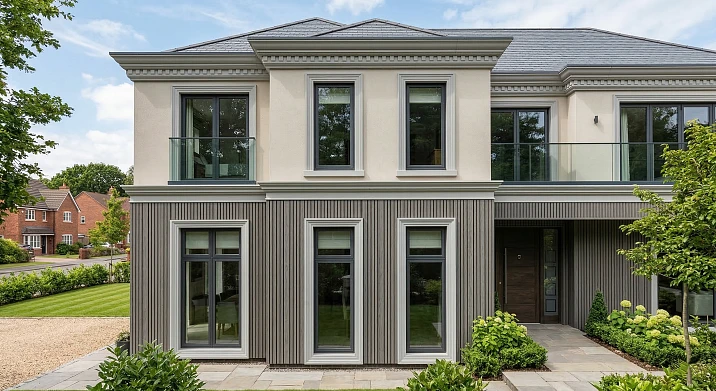
The facade is the face of the house. Not a metaphor, not a common phrase, but a literal truth: the facade reveals the owner's character, their taste, their attitude toward space and neighbors. A good facade is created as a unified statement—with its own logic, its own rhythm, its own point of view. A bad one is assembled piecemeal: something liked here, something else there, resulting in a house that looks like a contest of incompatible ideas.
Slatted panel on the facadeandfacade decoration made of polyurethane—two tools that, when skillfully combined, can create a facade with genuine architectural clarity. When unskillfully used—they become the source of that very architectural disarray we'll discuss. But before seeking answers to 'how,' we must honestly answer 'why'—why a facade cannot be designed in fragments at all.
Facade as a system: why partial solutions destroy the whole
An architect looks at a facade differently than a homeowner. The owner sees individual elements: windows, entrance door, wall cladding, decor. The architect sees a system of horizontal and vertical divisions, the relationship of masses and voids, the rhythm of repeating elements, the hierarchy of details. That's why professionally designed facades look convincing even with modest materials—while facades assembled on the 'what I liked' principle look unsettling even with expensive ones.
What happens when a facade is made piecemeal? A person chooses slatted panels for the side of the building because they saw them on a neighboring property. Adds classical polyurethane cornices because they liked them in a catalog. Installs plastic window surrounds—cheap and fast. Clads the plinth with artificial stone—'for reliability.' Paints the wall beige—'neutral.' Result: five different architectural narratives on one facade, each saying something different. The listener—a passerby, neighbor, guest—understands none of them.
The solution is not to make everything from one material. The solution is a unified architectural principle to which all elements are subordinated.

Three principles that uphold facade unity
Hierarchy principle. The facade must have a main element to which the others are subordinate. This could be a slatted panel as the primary surface, with polyurethane decor as framing. Or vice versa: a polyurethane cornice as the dominant horizontal accent, and a slatted insert as a local textural element. The key is a clear hierarchy of 'primary — secondary — accent'.
Rhythm principle. The facade lives by rhythm: repeating windows, distances between them, alternation of clad and plastered sections.Slatted Façade Panelscreate their own fine rhythm — the rhythm of slats. This rhythm should either align with the building's large-scale rhythm or intentionally oppose it (counterpoint). Random rhythm is the worst possible outcome.
Tonal unity principle. Variety of textures is acceptable — variety of tones without a system is detrimental. Three or four colors on a facade is a catastrophe. One main tone, one accent tone, one neutral tone — that is architecture.
Our factory also produces:

Slatted panel on the facade: materials, formats, application logic
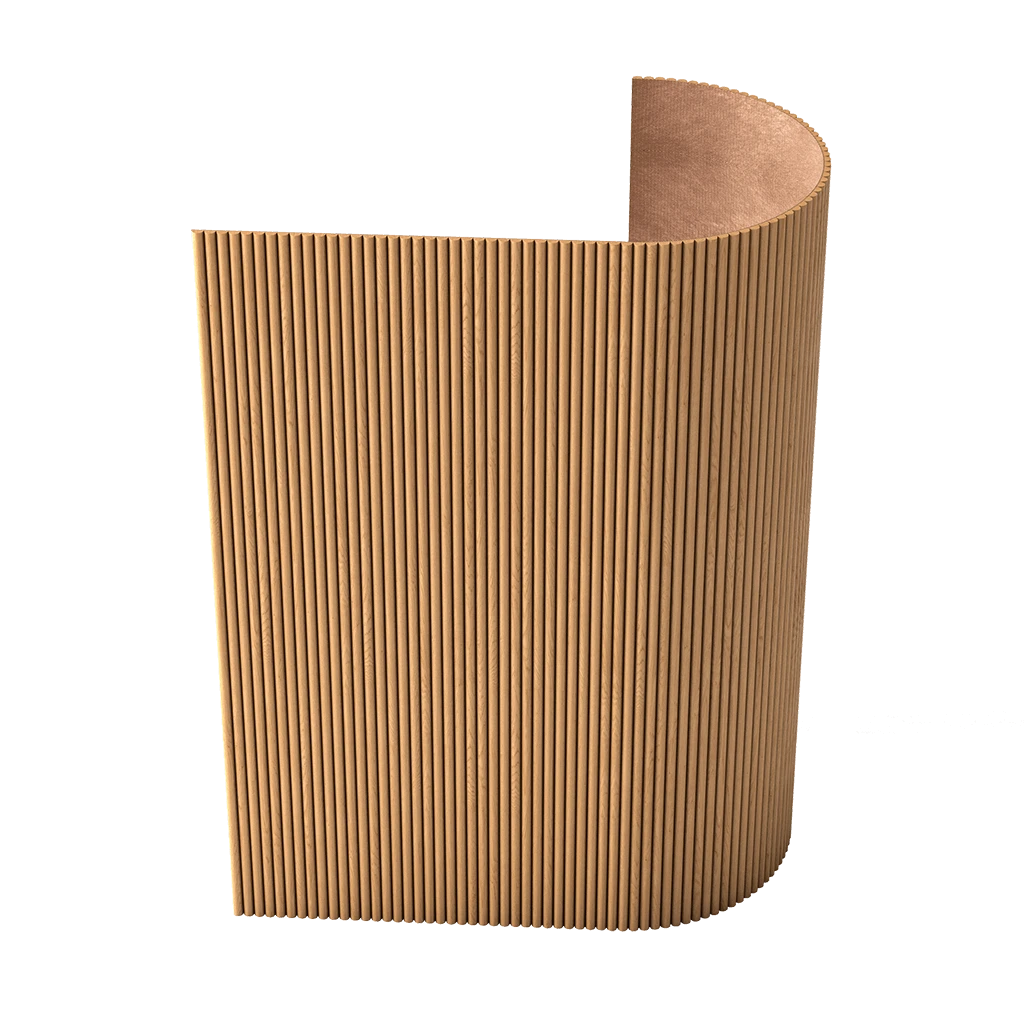
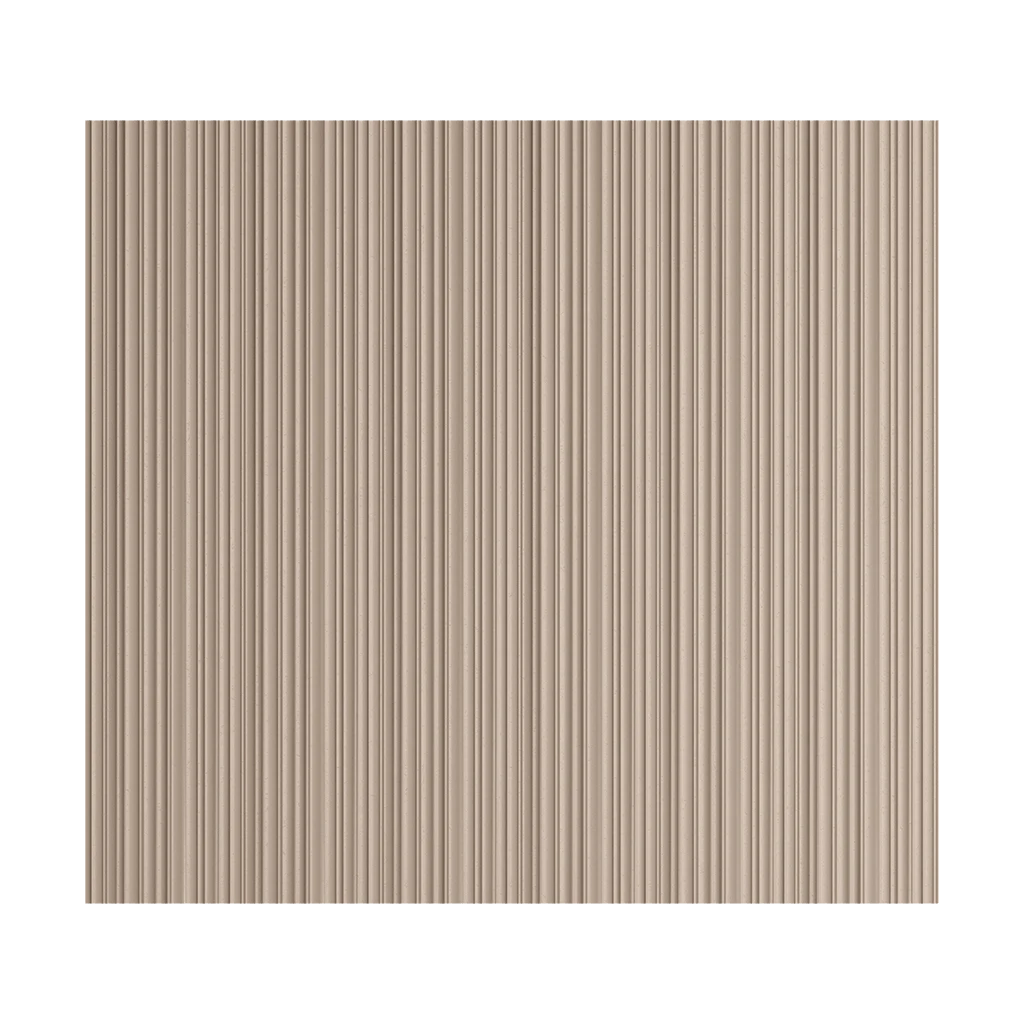
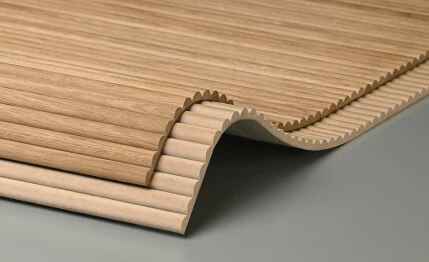
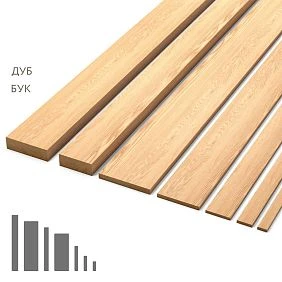
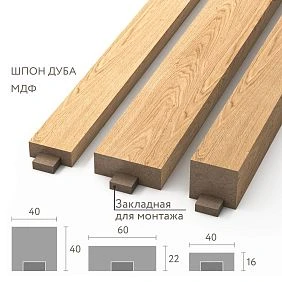
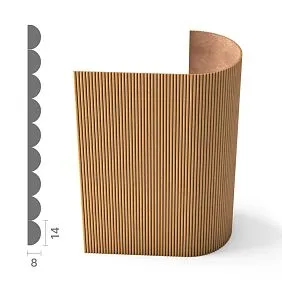
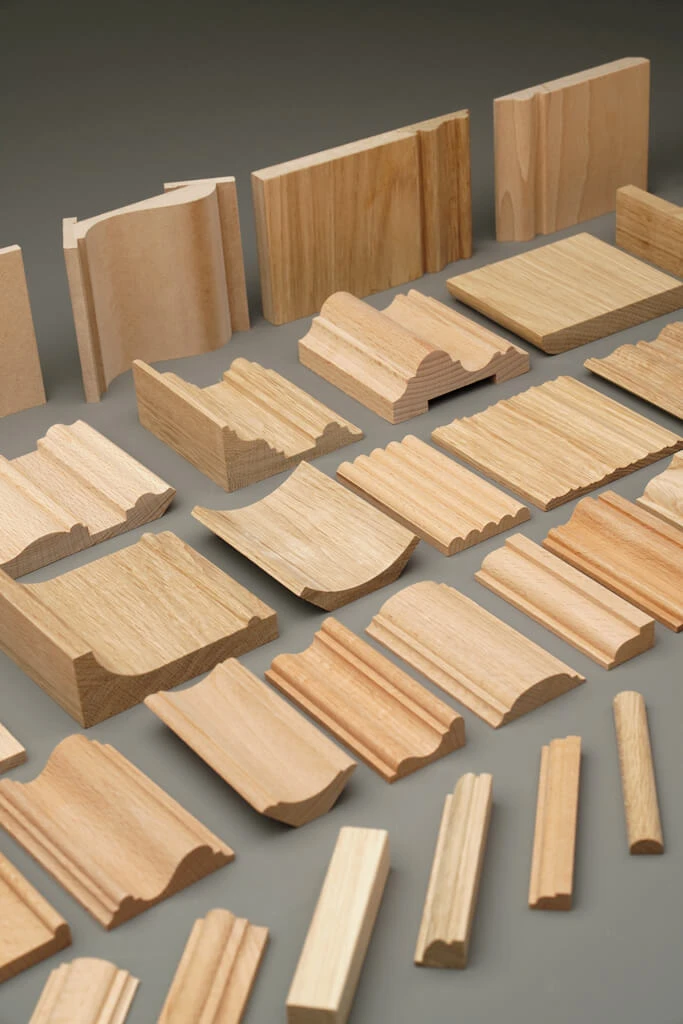
Facade slat panelis a vertically or horizontally oriented system of slats mounted on a supporting frame over the main wall. This is not just cladding: it is an architectural tool that shapes the rhythm, light and shadow, texture, and scale of the facade.
Get Consultation
Materials for slatted panels on the facade: what professionals choose
The outdoor environment is a harsh filter for any materials. Rain, frost, UV radiation, wind with abrasives, biological impact (moss, fungus, insects) — all of this continuously affects the facade material, year after year. The correct material choice determines whether it willSlatted panel on the facadelook beautiful after ten years or become a problem in three.
Thermowood. The best option if a natural wood appearance is desired on the facade. Thermomodification at 180–220°C in an oxygen-free environment radically changes the wood's structure: hygroscopicity decreases by 40–60%, biostability increases to class D1–D2 according to European classification. Thermowood on a facade without additional treatment acquires a beautiful silvery-gray tone after a few years — this is not degradation, it is patination. If the tone needs to be preserved — oil with a UV filter every 2–3 years.
WPC (wood-polymer composite). Created specifically for outdoor use. Zero water absorption, biostability without any treatment, UV stabilizers in the structure.DCP slatted panels— the workhorse of modern facade solutions. A wide palette of wood-like colors and textures that require no maintenance. The only nuance: at high temperatures (direct southern sun, dark shades) it heats up more than natural wood. Consider this when choosing a color for southern orientations.
Larch. A traditional Russian facade material. High resin content provides natural resistance to rot. With proper treatment and installation, it lasts for decades. Requires regular coating renewal every 1–2 years.Wooden slat panelsLarch on the facade is a classic solution for country houses in Scandinavian, modern, and traditional styles.
Aluminum. For commercial and modern residential architecture. Durable, not afraid of moisture, does not burn, does not rot. Aluminum slat systems are used in ventilated facade systems of large facilities, in the finishing of shopping centers, and public buildings. In private housing construction — for buildings in high-tech or loft style.
Horizontal and vertical slats: what to choose and why
The orientation of slats is not a matter of taste. It is a matter of the architectural proportions of a specific building.
Vertical slats visually elongate the building upward. They work on low houses with wide facades, creating an illusion of greater height. The vertical rhythm rhymes with the rhythm of trees — this is a natural, organic image, especially appropriate for country houses in a forest environment.
Horizontal slats emphasize the horizontal lines of the building, accentuate tiering, and create a sense of groundedness and monumentality. They work well on extended single-story buildings (Scandinavian-style houses, barn houses), as well as on the upper floors of multi-story buildings as a finishing horizontal accent.
Diagonal slats — a complex technique for the experienced. Create dynamics, movement, and unexpectedness. Require architectural justification: a diagonal that appears without reason looks like confusion.
Slat spacing: scale corresponding to the perception distance
The facade is perceived from a distance of 5–30 meters. This fundamentally differs from the perception of interior slat panels from a distance of 1–3 meters. A slat 40–50 mm wide, which looks elegant on a living room wall, appears 'too fine' on a facade—it gets lost in the overall volume.
Optimal spacing for facade slats:
-
Slat 80–100 mm, gap 20–30 mm — a dense, closed appearance of the facade.
-
Slat 80–100 mm, gap 40–60 mm — an airy, transparent rhythm, good for a partial screen.
-
Slat 120–150 mm, gap 30–40 mm — a large scale for big planes and significant viewing distance.
Exception — slat accents on limited sections of the facade (piers, entrance framing, balcony railings): a finer spacing is acceptable here because perception occurs from a close distance.
Where slat panels work on a facade and where they don't
Not every building and not every zone of it is a suitable context for a slatted facade. Understanding this prevents costly disappointments.
Strong positions of a slatted facade
Accent area of the main facade. A slatted panel not covering the entire facade, but on a key section — between windows, on the side risalit, on the upper floor — creates an expressive accent without overloading the building.
Side and rear facades. The main facade — with its own decor and its own ceremonial appearance. The sides — can be designed with slatted panels as a more 'quiet' continuation. This creates a narrative logic: ceremonial at the front, calm on the sides.
Garage sections. Garage doors — a 'silent' area of the facade, which with a conventional solution looks like an empty plane. A slatted screen above or next to the doors gives this zone architectural meaning.
Verandas, terraces, canopies. These volumes often look 'attached' to the main house. Slatted cladding on their walls and supports visually integrates them into the overall volume of the building.
Entrance area. A slatted screen or slatted canopy above the entrance door — an accent that highlights the main entrance, forms a transition from the street to the house.
Where slatted panels on the facade look forced
Completely covering the entire facade with slats without exceptions — a bold technique that requires architectural justification. On large, flat facades it can work splendidly — as on Scandinavian wooden houses. On small urban houses with many windows — it creates a feeling of a curtain that does not match the scale of the building.
A slatted facade on a brick building in a classical style — a stylistic conflict. Slats are about modernity, naturalness, geometric purity. Brick classicism is about monumentality, plasticity, historical depth. Mixing these two languages without conscious authorial intent — is the source of that very eclecticism we talked about at the beginning.
Polyurethane facade decor: what it is, how it works, where it's needed
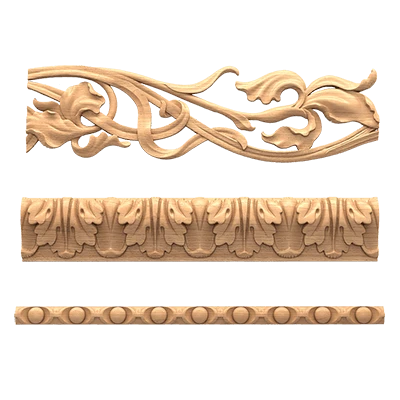
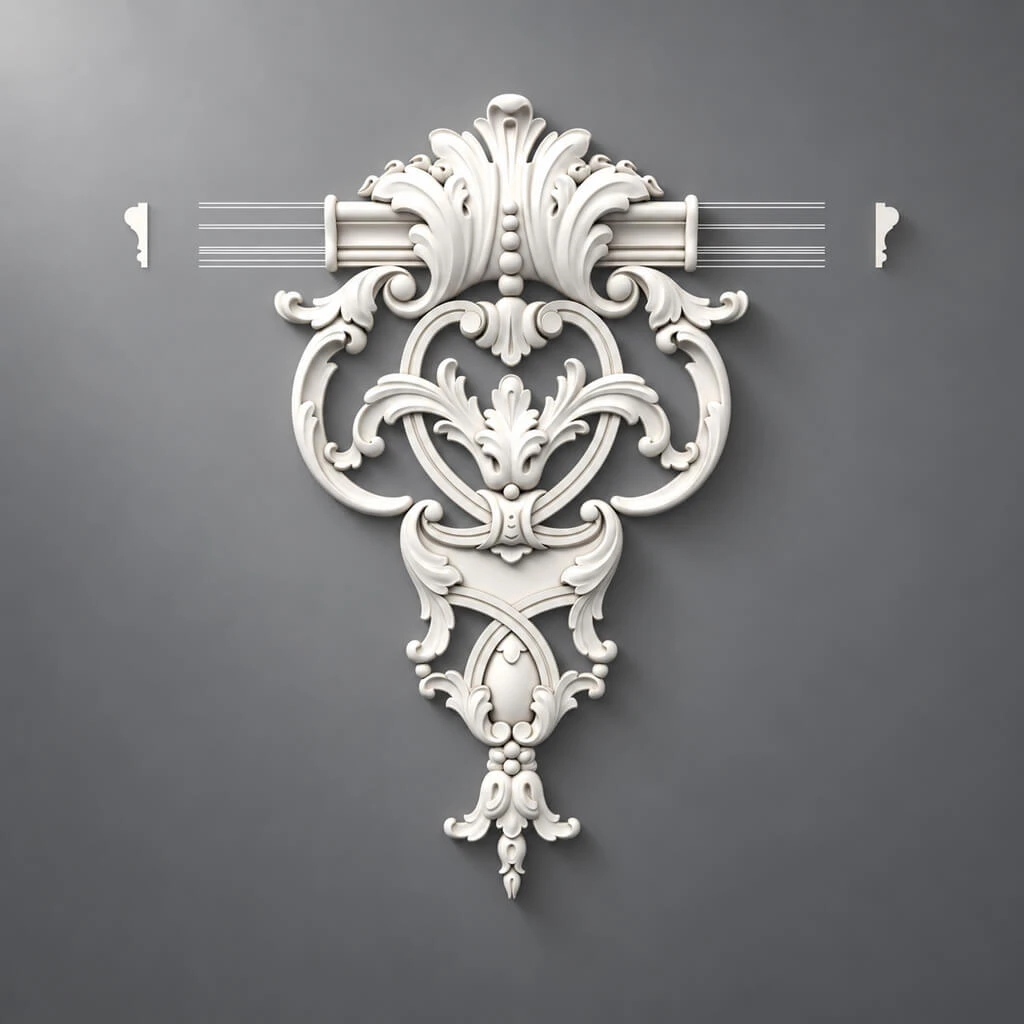
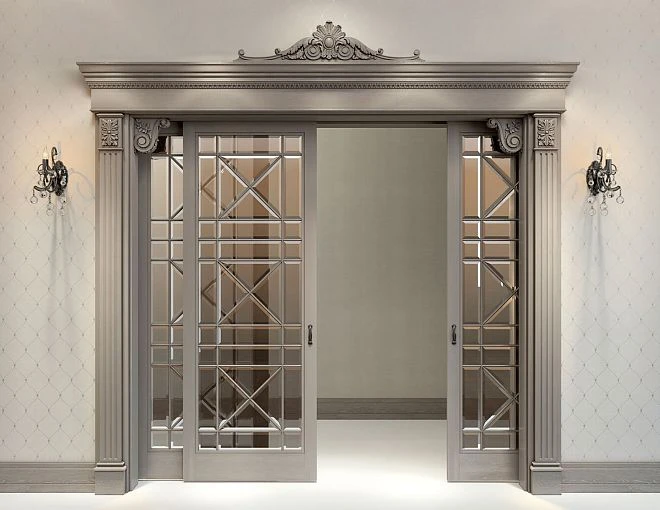
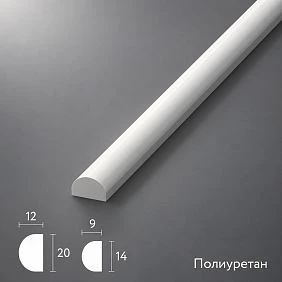
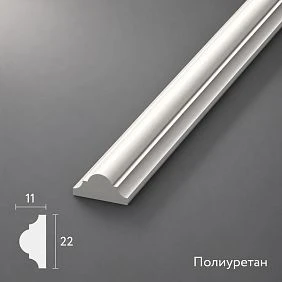
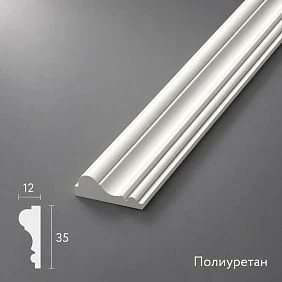
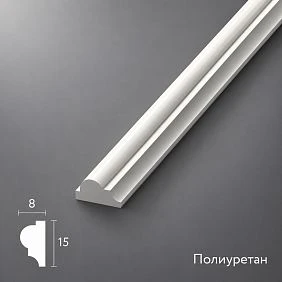
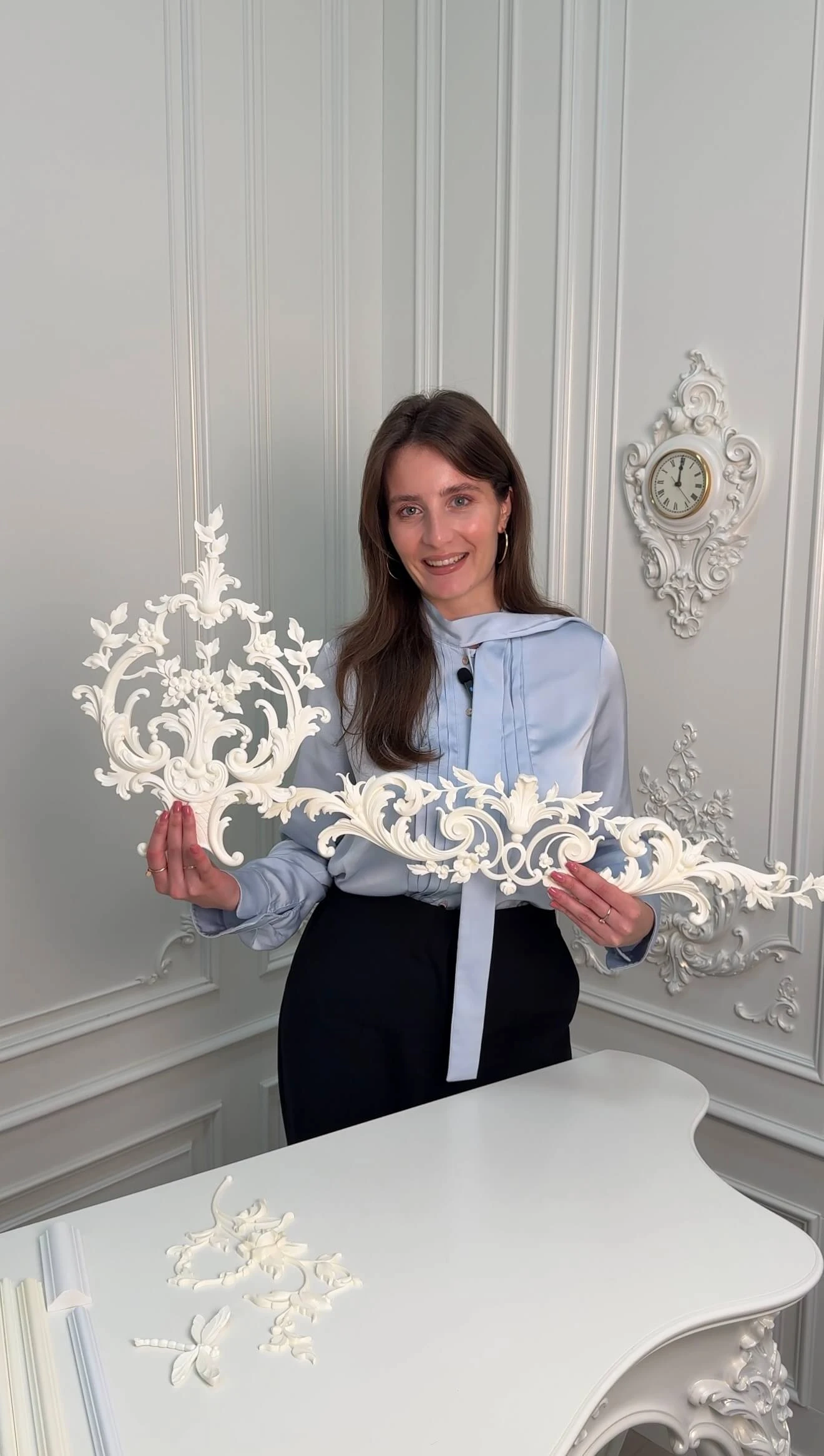
facade decoration made of polyurethane— these are specialized architectural elements for exterior application. Cornices, moldings, pilasters, pediments, architraves, balustrades, quoins, rusticated panels — all of this is available in polyurethane and is specifically designed for outdoor conditions.
How does facade polyurethane fundamentally differ from interior polyurethane?
This is a fundamental question that trips up most people. Polyurethane products for facades and interiors may look similar visually. In terms of production technology and characteristics, they are fundamentally different products.
FacadePolyurethane house decoration:
-
Density 200–280 kg/m³ compared to 80–150 kg/m³ for interior counterparts.
-
Reinforced surface layer, resistant to mechanical impacts.
-
UV-stabilized structure: does not yellow or degrade under direct sunlight.
-
Temperature range without deformation: from −60 to +80°C.
-
Factory primer or special coating for adhesion of facade paints.
-
Zero water absorption of the structure with proper surface painting.
Using interior polyurethane on a facade is a disaster in slow motion. After the first winter, cracks appear on the ends; after the first summer, yellowing and loss of shape occur. This is not an exaggeration—it's the physics of different materials.
Typology of facade polyurethane decor
To understand what kind of decor your facade needs, you need to know the typology of available elements. Let's break down the main categories.
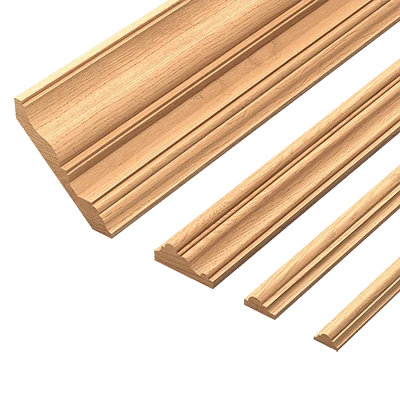
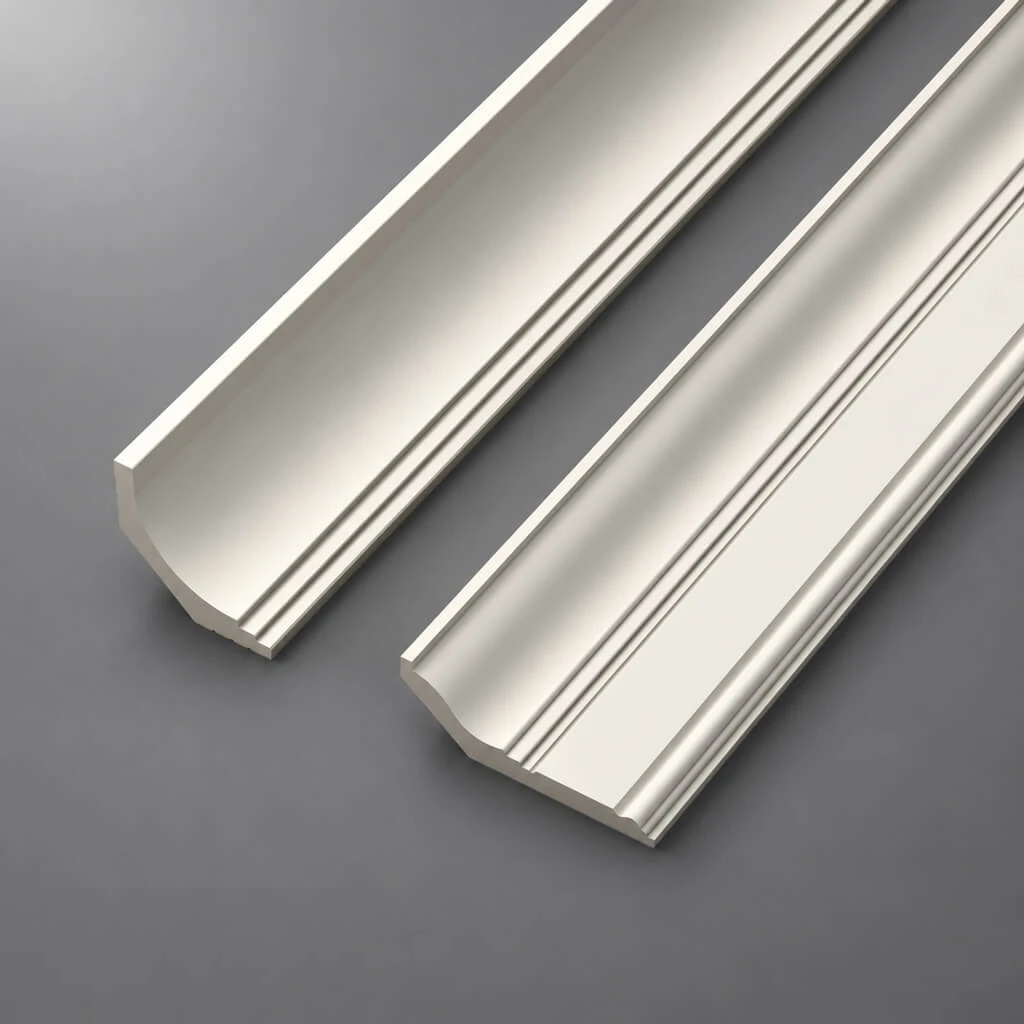
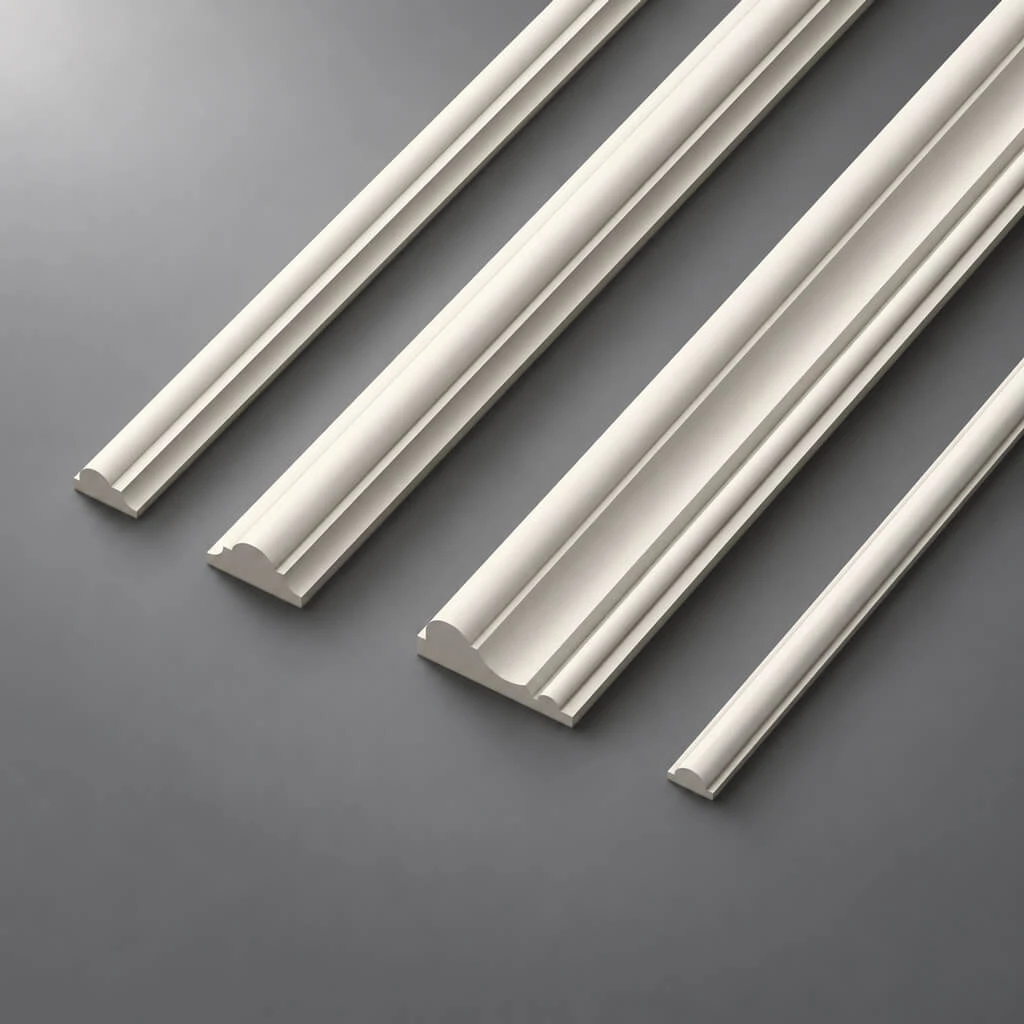
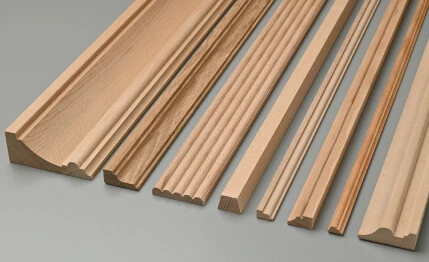
Cornices and profiles. Horizontal elements that create vertical articulation of the facade. A cornice along the top line of the facade completes the building, creating an upper boundary. An inter-floor profile divides the facade into tiers, emphasizing horizontal lines. These are the basic elements of classical facade architecture—and they are precisely what create that 'expensive' look that cannot be achieved by paint alone.
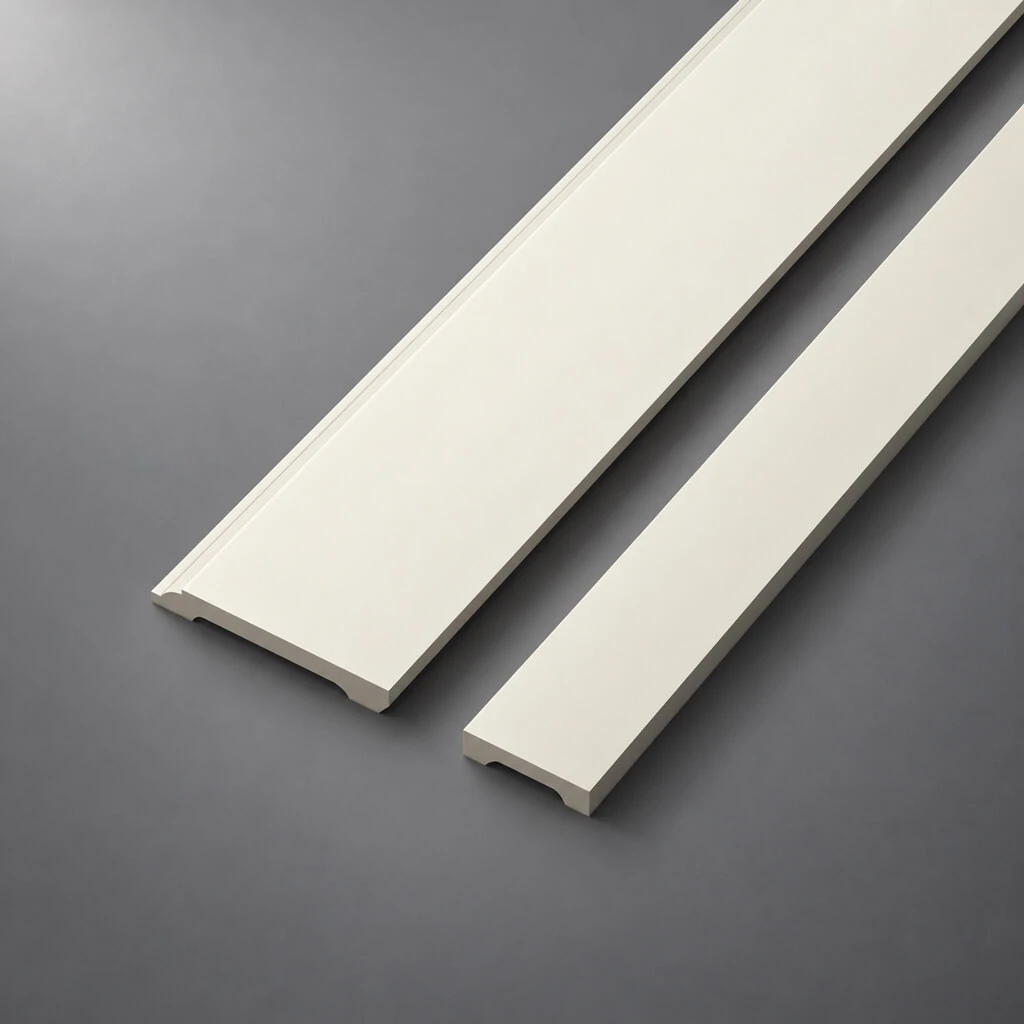
Window casings and surrounds. Decorative framing of window openings is an archetypal technique known since the Renaissance. A casing creates shadow, gives the window 'weight,' makes it an architectural event, not just a hole in the wall.Facade decoration for exterior polyurethane claddingin the form of casings is one of the most effective and budget-friendly ways to change the perception of a facade.
Pediments (Sundries). Decorative 'canopies' above windows—a horizontal or triangular profile overhanging the opening. They create chiaroscuro, protect from precipitation, and give the facade volume.
Pilasters. Flat vertical projections imitating columns. They articulate the facade vertically, create rhythm, and give the wall 'supports.' They are especially good on long horizontal facades that need a vertical contrapuntal note.
Rustication. Imitation of masonry made of roughly worked stone—horizontal bands with relief joints. Applied to the plinth part or the entire first floor. Creates a sense of massiveness, 'stone' reliability. Contrasts well with the smooth upper part of the facade.
Quoins (rusticated corners). Decorative elements on the corners of a building, imitating protruding stone masonry. They literally 'frame' the corners of the house, making them architecturally significant points.
How to combine slatted panels on the facade with polyurethane decor: principles of working together
That, in fact, is the key question.Slatted panels on the facade— is a modern tool with a geometric character. Polyurethane decor is a historical tool with a plastic character. How do they work together without destroying each other?
First rule: one language dominates
Either the facade is classical, with polyurethane decor as the system, and slatted inserts as a modern accent in limited areas. Or the facade is modern, with slatted panels as the basis, and polyurethane decor as a minimalist horizontal profile (cornice, interfloor molding) without ornament.
An equal combination of classical decor and slatted panels is the most complex technique, requiring architectural skill. In amateur execution, it almost always creates conflict.
Second rule: decor frames the slatted zone
The most workable way to combine: the slatted panel occupies a clearly defined zone of the facade, and polyurethane decor creates its boundaries — a cornice on top, a horizontal profile at the bottom, vertical pilasters on the sides. The slats are like the content of a frame. The decor is like the frame.
This reads unambiguously and convincingly. The slatted zone is perceived as a deliberate architectural choice, not as a random insert.Polyurethane house decoration in this scheme does not compete with the slats — it serves them.
Third rule: color unity
Batten panels and polyurethane decor should be in the same tonal range. Warm wooden battens and warm creamy-white decor create unity. Dark graphite WPC and dark gray polyurethane profile create unity. Warm battens and cool white decor create a break, requiring conscious work with intermediate tones.
Golden rule: decor should be two to three tones lighter or darker than the main tone of the batten panels. This creates distinction without contrast.
Rule four: the scale of the decor must correspond to the scale of the building.
A rich classical cornice 200 mm wide with egg-and-dart, ovolos, and dentils is appropriate on a three-story mansion with large windows. On a one-story cottage of 100 m², it will overwhelm the building with its scale. Here, a simple rectangular profile of 60–80 mm or a light cornice with minimal profiling is needed.
The scale of decor is the ratio of the element's size to the building's size. The smaller the building, the more modest the decor should be.
How to unite windows, walls, cornice, and entrance area into a single whole.
The facade exists in four 'dimensions': the wall plane, window and door openings, horizontal divisions (cornices, plinth), and vertical divisions (corners, pilasters, piers). All four must be addressed.
The wall as background and as texture.
The wall is the main plane of the facade. It can be a neutral background for decor (smooth plaster, monochrome coating) or itself become a texture (Slatted panel on the facadeas the main surface). Mixing both approaches within a single plane is difficult. But separating them across different parts of the facade is a correct architectural technique.
For example: the lower floor features smooth plaster with polyurethane rustication. The upper floor has vertical slatted panels made of WPC. The cornice between floors is a horizontal polyurethane profile. These are three different textures united by color harmony and a clear horizontal boundary between them.
Windows: how polyurethane decor transforms an opening into an architectural element
A window without framing is a hole in the wall. A window with a surround is an architectural element. This is not an exaggeration: it is precisely the window framing that creates the feeling that the facade is 'crafted,' not merely 'built.'
Options for framing with facade polyurethane:
-
Simple rectangular surround 60×20 mm — minimalism, suitable for modern styles.
-
Surround with profile + cornice above — a classic solution that creates shadow and volume.
-
Surround + corner blocks (quoin blocks) — deliberate classicism, a 'Baroque' accent.
-
Surround + profiled windowsill block below — horizontal lines, suitable for rationalist styles.
If slatted panels are used on the facade, window framing creates a visual break in the slatted rhythm — a 'pause' that makes the rhythm lively, not monotonous. This is a mutual reinforcement of elements.
Cornice: the boundary that completes the facade
A cornice is a horizontal line that finishes the facade at the top. Without it, the building looks 'unfinished': the wall simply ends at the roof, without an architectural transition.Facade decoration for exterior polyurethane claddingin the form of a cornice solves this task with minimal cost and maximum effect.
The cornice should be slightly lighter than the main wall — this creates a lightness, an 'airiness' to the upper boundary. A dark cornice on a light wall works only in a few styles (Neo-Gothic, dark Scandinavian palette) — in general, it 'weighs down' the facade from above.
Entry zone: the point of maximum detailing
The entry zone is the place where a person pauses, approaches closely, and examines the details. It is the only section of the facade perceived at a 'face-to-face' scale. This is precisely where the greatest detailing is justified: a rich door surround, a portal frame, decorative brackets under the canopy.
A slatted panel in the entry zone is an accent insert that forms a 'frame' for the door. Polyurethane decor above the door creates a vertical accent, distinguishing the entrance from the general facade row. These two elements together are the most effective architectural investment on the facade.
In which styles the combination is justified, and in which it is not
An honest table of style and material compatibility — something everyone designing a facade should have.
| Style | Slatted panel | Polyurethane decor | Compatibility |
|---|---|---|---|
| Modern minimalism | Main surface, WPC or thermally modified wood | Only a strict horizontal profile | High |
| Scandinavian | Horizontal slats, light wood | Thin cornice without ornament | High |
| Barnhouse | Vertical dark slats | Simple cornice | High |
| Neoclassical | Limited accent zones | Full system: cornice, trims, pilasters | Medium (if hierarchy is observed) |
| Classicism | None or only wooden shutters | Main facade finish | Low (slats are alien) |
| Provence | Wooden slats in bleached wood finish | Simple profiles, brackets | Medium |
| Hi-tech | Aluminum or dark composite decking slats | No | High without polyurethane |
| Loft | Dark slats, often metal | No | High without polyurethane |
Conclusion from the table: maximum compatibility of two materials is in modern minimalism, Scandinavian and barnhouse styles, where decor is used in simplified geometric form. Full classic is the domain of polyurethane decor without slatted panels. Pure high-tech is the domain of slats without decor.
Errors of facade eclecticism: analysis of typical cases
Error analysis is not criticism, but learning from examples. Knowing what exactly creates 'architectural collapse' makes it easier to avoid.
First error: slatted panels on part of the facade without framing
Slats simply start and end in the middle of a wall — without a horizontal profile at the top and bottom, without vertical limitation on the sides. The slatted area looks like an unfinished renovation: 'they put up a piece and abandoned it.' This is not a matter of taste — it is a matter of architectural completeness. Any slatted insert on a facade must have clear boundaries, framed either by a profile or a structural element.
Second mistake: different wood species on the same facade
On the main facade — larch slat panels in a warm yellow-orange tone. On the side — dark gray tone DPC. In the cornice zone — white polyurethane profile. Three different color stories on one building. Visual unity is destroyed: it's impossible to understand how these parts relate to each other.
Solution: a unified color tone or tonal connection between materials. If the larch is warm, the polyurethane decor is warm cream. DPC on the side facade is the same warm brown, darker than the main one. Everything in the same palette.
Third mistake: rich classical decor on a modern house
A house in the style of modern minimalism — flat roof, large panoramic windows, clean lines. And suddenly — lush Baroque cornices, architraves with pediments and keystones. This is not 'adding character' — this is an architectural contradiction that screams in two voices at once.
Polyurethane house decorationFor modern buildings — these are strict rectangular profiles, horizontal moldings, flat architraves without ornament. Simplicity of decor is not poverty. It is appropriateness.
Fourth mistake: incorrect slat scale
Small slats (40 mm) on the large facade of a three-story house — create a 'fine weave' that gets lost at a distance. Large slats (150 mm) on a one-story cottage — look coarse, disproportionate. The scale of the slats must be chosen for the specific building, taking into account the typical viewing distance.
Rule: the larger the facade, the larger the slat. Slat width in millimeters ≈ 1/200 of the facade width in millimeters (a rough guideline).
Fifth mistake: installing slat panels without a ventilated gap
The battens are attached directly to the wall without an air gap. In outdoor conditions, this is a death sentence: condensation accumulates between the wall and the back surface of the batten, the wall gets wet, the insulation (if any) loses its properties, and mold and rot appear.
Properinstallation of slatted panelsOn the facade — only through a supporting batten with an air gap of at least 20–40 mm. This is a structural requirement, without which the durability of any facade batten system is drastically reduced.
Mistake six: polyurethane decor painted in a contrasting color
The facade is white. The polyurethane trims are dark brown. The battens are natural light wood. The pediment is gold. The result: a facade where every element screams in its own key, not listening to its neighbors. Decor should highlight details, not create color chaos.
Mistake seven: batten panel above the plinth without a transition element
The batten system starts directly from the plinth without a horizontal separating profile. There is a direct joint between the rough plinth and the thin battens, which looks like an unfinished construction. Any transition between different materials on the facade must be finished with either a profile, a horizontal strip, or a structural offset.
Batton panel on the facade in conjunction with the interior: a system, not an accident
The facade and interior are not two separate projects. This is one building with one character. That is why conscious homeowners are increasingly thinking about the connection between the external appearance and the internal space.
slatted wall panels for interior finishingIn the living room, echoing the batten panels on the external facade — this is the narrative unity of the building. Looking from inside through a panoramic window at the facade battens, a person sees the continuation of the interior outside. The architectural boundary between 'inside' and 'outside' becomes transparent — not in a literal, but in a spatial sense.
Similarly, polyurethane decor works: the cornice outside andPolyurethane Decorin the interior — one profile, one tone, one scale. The hallway, where the molding rhymes with the exterior door casing — this is a detail that is felt even by those who cannot put it into words.
This approach is described in materials on the use of slat solutionsin the hallway interior— and it is applicable along the entire path from the facade to the living room.
Specific scenarios: four facades, four solutions
First scenario: a country house in Scandinavian style
Building: single-story house 12×8 m, gable roof, three windows on the main facade.
Slat panel: horizontal slats of light-toned thermowood (ash), 90 mm, 20 mm gap. Covers the entire facade.
Polyurethane decor: thin 60 mm cornice of straight profile around the perimeter, painted white. Simple rectangular casings 50×15 mm around the windows — white.
Plinth: dark gray plaster. Transition profile between the plinth and slats — aluminum corner.
Result: unity of light wood and white decor. Simplicity and dignity — without cheapness.
Scenario two: cottage in neoclassical style
Building: two-story cottage 15×10 m, height 7 m, symmetrical main facade, four windows on each floor.
Batten panel: vertical DPK battens in dark brown tone — only on side risalits and on second-floor wall sections.
Polyurethane decor: interfloor profile with simple molding, cornice along the top line, window trims with pediments on all first-floor windows, simple trims on the second, rustication of the first floor.
Color: main wall — light beige. Decor — white with a slight warm tint. Battens — dark brown (accent).
Result: classical hierarchy (main — decor, secondary — batten accents), unity of warm palette.
Scenario three: modern minimalist house
Building: two-story house 14×12 m, flat roof, large rectangular windows, laconic form.
Batten panel: vertical DPK battens in dark anthracite — on entire facade except entrance area.
Polyurethane decor: only horizontal 50mm profile-separator along the floor line between stories. No ornament, no architraves — just geometry.
Entry zone: slatted insert in light-toned contrasting DPC — frame for the entrance door.
Result: a unified dark rhythm with one light accent. Minimalism without sterility.
Scenario four: country house in Provence style
Building: small house 10×8 m, hip roof with wide overhang, terrace.
Slatted panel: horizontal battens of thermowood in bleached wood tone — only on terrace walls.
Polyurethane decor: cornice with simple profile around perimeter, brackets for wide roof overhangs, plain architraves with small pediment on main windows.
Color: walls — white. Decor — white. Battens — creamy white, slightly warmer than walls. Shutters — dark green accent.
Result: French village — without kitsch. Modest, warm, charming.
Technical details: fasteners, gaps, sealing
Even the perfect architectural solution fails without proper technology. Several key technical requirements.
Fasteners for facade slat systems. Only stainless steel A2 or A4, aluminum dowels. Galvanized steel rusts within the first 3–5 years — guaranteed streaks on wooden slats.
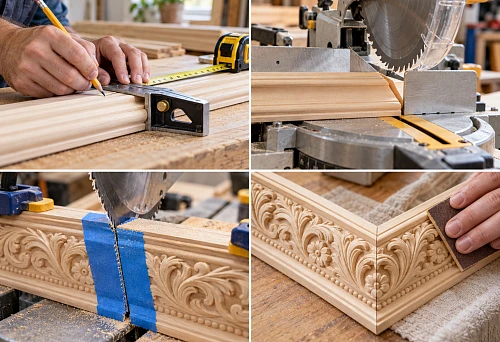
Expansion gaps. Slats expand when heated in outdoor conditions. End gap: 5–8 mm per every 2 meters of length. Fastening point gap: 1–2 mm free play to compensate for linear expansion.
Sealing wooden slat ends. All end cuts of wooden facade slats must be treated with end-grain sealer or impregnated with outdoor wood compound before installation. An unprotected end absorbs water 5–10 times faster than the side surface.
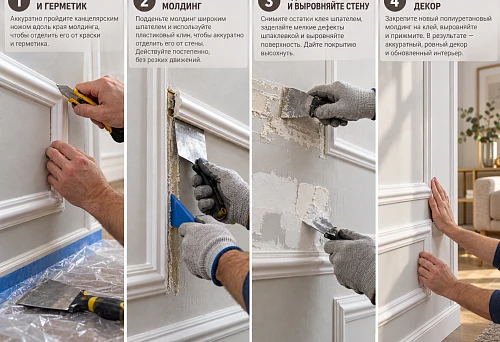
Installing polyurethane decor on the facade. Specialized polyurethane adhesive or neutral silicone — only moisture-resistant compounds. Additional mechanical fastening with dowels and stainless screws every 30–40 cm — mandatory for cornices and large elements.
Detailed technologyinstallation of slatted panelsincludes all these nuances — study it before starting facade work.
STAVROS: materials for a facade that speaks the same language
Creating a facade without architectural failure means working with materials designed to function as a unified system. STAVROS offers a complete range of solutions for this task.
slatted panels for wallsSTAVROS — wide selection of formats, species, and finishes: from larch and thermowood to modern WPC. Each product comes with clear application guidelines — what goes where, how, and why.
facade decoration made of polyurethaneSTAVROS — specialized facade products with correct density, UV-stable coatings, and precise geometry, ready for facade painting. These are not adapted interior products — these are items created for outdoor use considering the Russian climate.
STAVROS is expertise in application. Not just a supplier of individual materials, but a partner in creating a facade that looks like a unified architectural statement. Because that's exactly how a good building should look.
FAQ: answers to popular questions about slatted panels on the facade and polyurethane decor
Is approval required for installing slatted panels on the facade of a private house?
Installation of finishing materials on the facade of a private house, as a rule, does not require a separate permit if the building structure is not altered. However, in settlements with architectural regulations or in heritage conservation zones — check the requirements of local authorities.
Can wooden slats be left untreated on the facade?
Yes — provided that it is thermally modified wood or larch and you are prepared for the slats to acquire a silvery-gray tone (patination) over time. This is a natural process that does not damage the material. If you need to preserve the tone — reapply oil with UV filter every 2–3 years.
How often does polyurethane facade decor need to be repainted?
When using high-quality facade acrylic paint with UV protection — every 7–10 years. Signs that repainting is needed: loss of gloss, appearance of a chalky surface, cracks in the paint layer.
Is a slatted facade expensive?
Depends on the material. WPC facade system — mid-price segment, accessible to most. Thermowood — above average. Aluminum — high-end segment. Polyurethane decor — relatively affordable for the effects it produces. A slatted facade in WPC + basic polyurethane decor is not luxury, but a reasonable mid-range budget.
Is a slatted panel facade durable?
WPC — 25+ years without maintenance. Thermowood with coating renewal — 20–30 years. Larch with proper care — 15–25 years. Polyurethane facade decor — 20–25 years, provided periodic repainting.
Can slatted panels made of different materials be combined on one facade?
Technically — yes. Aesthetically — only if color unity is maintained. WPC and thermowood of the same tone on different sections of the facade — acceptable and even interesting. Dark WPC and light thermowood — only with clear zoning and a separating element between the zones.