












































































Article Contents:
- What is molding and why is it needed
- Main functions of molding
- Differences between molding and other trim items
- Materials for moldings
- Applications in interior design
- Wall panels and decor
- Furniture decor
- Zoning and material separation
- Specialized Applications
- Installation features
- Preparation for Installation
- Mounting methods
- Panel installation technique
- Molding finishing
- Styles and materials
- Classic Interiors
- Modern styles
- Provence and Country Style
- Neoclassicism and Modern Classicism
- Material selection by style
- Conclusion
- Frequently Asked Questions

In modern interior design, there are elements that, despite their apparent simplicity, can radically change the perception of space, adding structure, character, and individuality to it.MDF Moldingbelongs precisely to such universal details, combining practical functionality with high aesthetic value. This is not just a narrow strip — it is a tool for creating architectural compositions, zoning space, decorating furniture, and masking technical joints.
The history of using moldings in architecture and furniture production spans centuries. In classical furniture, moldings were used to create louvered constructions, dividing planes into proportional fragments, adding volume and detail. In architecture, moldings were used to divide large wall surfaces, create geometric patterns, frame windows and doors. These traditions are preserved and developed in modern design.
Moderndecorative panelsMDF moldings combine time-tested aesthetic principles with the advantages of modern material. MDF ensures dimensional stability, uniform structure, the ability to create any profiles, ecological safety at an affordable cost. After painting, MDF moldings are visually indistinguishable from wood, but lack the drawbacks of solid wood — deformation from humidity, knots, cracks.
The demand for MDF moldings in modern design is linked to their universality and accessibility. They are equally suitable for classical and modern interiors, on walls and furniture, in residential and commercial spaces. The ability to paint in any color allows moldings to be adapted to any color scheme, which interior designers and furniture manufacturers especially appreciate.


What is molding and why is it needed
Molding is a narrow profiled strip used for dividing, framing, and decorating various surfaces. Unlike wide moldings and cornices, molding usually has a width of 10 to 40 millimeters, making it more delicate but no less important as a decorative element. The cross-section of molding can be simple rectangular or complex profiled with various curves.




Main functions of molding
The dividing function is one of the primary tasks of molding. It creates a visual boundary between different finishing materials, colors, textures. On a wall, molding can separate different types of wallpaper, various shades of paint, MDF panels from each other. This boundary makes the transition neat, meaningful, architectural, rather than random and careless.
On furniture, molding separates panels, creating a framed structure. A simple smooth cabinet door, framed by molding around the perimeter with additional intersecting moldings inside, becomes a classic louvered door. This fundamentally changes the perception of furniture, making a budget construction visually expensive and substantial.
The masking function involves hiding technical joints and gaps. When two MDF panels are joined on a wall, a small gap is inevitable — either technological or caused by uneven walls. Molding installed over the joint completely hides it, creating a neat appearance. On furniture, molding masks joints between facade elements, mounting holes, minor defects.
The decorative function transforms molding from a utilitarian element into a tool for creating artistic compositions. Moldings on walls can form geometric patterns, frames, panels. On furniture, moldings create rhythm, symmetry, visual complexity. Even the simplest molding adds volume, creates play of light and shadow, enriches the visual image.
The protective function is relevant for moldings installed in areas subject to mechanical impacts. Molding on the corner of a furniture facade protects the edge from chipping. Molding on a wall at the height of chair backs absorbs impacts, protecting more fragile finishes. This extends the service life of the main materials.
Our factory also produces:


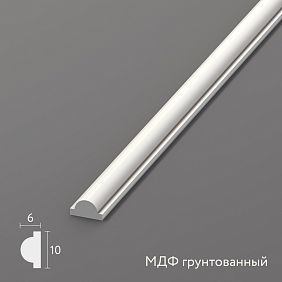
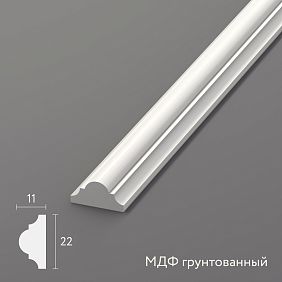
Differences between molding and other trim items
Compared to moldings, molding has a narrower width and, usually, a lower profile height. Moldings are more substantial elements, creating a pronounced relief. Moldings are more delicate, creating finer lines. If a molding is an accent, then molding is a detail working on the overall composition, not drawing excessive attention.
Compared to window and door casings, molding differs in purpose and size. Casings are specialized elements for framing door and window openings, usually 60-90 millimeters wide. Moldings are universal, can be used anywhere, have a narrower width. Although technically, a casing can be considered a type of wide molding with a specific purpose.
Compared to baseboards, molding differs in the absence of specific purpose and shape. A baseboard is an element for framing the floor, with a characteristic profile featuring a quarter or bevel for tight fitting against the wall and floor. Molding is universal and can be installed on any plane at any angle.
Compared to a stopper, molding differs in greater decorative value. A stopper is a purely functional element for fixing glass in frames, usually very thin and simple in shape. Molding can perform a similar function but usually has a more pronounced profile and decorative significance.
Get Consultation
Solid wood paneling made from pine, oak, and beech is traditional and prestigious. It has a natural texture, is warm to the touch, and is eco-friendly. Wood paneling can be varnished, oiled, stained, or painted. Drawbacks of wood include susceptibility to deformation from humidity, higher cost of quality material, and the need for careful finishing.
MDF paneling combines many advantages of wood with better dimensional stability and accessibility. MDF does not deform due to humidity fluctuations, has a perfectly smooth surface without knots or defects, and is easy to process and paint.
MDF panels combine many advantages of wood with better dimensional stability and availability. MDF does not warp due to humidity changes, has a perfectly smooth surface without knots or defects, and is easy to process and paint.Decorative panelingMDF - optimal choice for most projects in terms of price, quality, and aesthetics.
Plastic paneling is the most affordable, resistant to moisture, and easy to install. It is often used when installing PVC panels, plastic windows, and in bathrooms. Drawbacks of plastic include a cheap appearance, characteristic gloss, limited color palette, and brittleness of some types.
The versatility of paneling is evident in its wide range of applications — from wall panels to furniture decoration, from classic interiors to ultra-modern spaces. Each application area reveals its own possibilities and specific uses of this element.
Variants of Application in Interior
The versatility of panels is demonstrated by their wide range of applications—from wall panels to furniture decoration, from classic interiors to ultra-modern spaces. Each application area reveals its own possibilities and specific uses of this element.
Wall Panels and Decor
Creating wall panels — a classic application of paneling. The wall is divided into rectangular or square sections by paneling, creating a structured surface. The same finish or contrasting finish — patterned wallpaper on painted walls, decorative plaster, or another paint color — can be used within the sections. Paneling creates relief and architectural significance.
Panel dimensions and proportions are critical for a harmonious result. The classic rule is that the height of the panel relates to its width approximately as 3:2 or close to the golden ratio. Too narrow, elongated panels look awkward, while overly square panels appear static. Calculating dimensions must take into account wall size, placement of outlets, switches, and furniture.
Horizontal bands of paneling create divisions at 1/3 or 2/3 of wall height. The lower part is usually darker and more robust, while the upper part is lighter and decorative. Paneling emphasizes the boundary, making it clear and architectural. This solution is characteristic of classical, English, and colonial interiors.
Vertical paneling creates the effect of columns or vertical slats, visually increasing room height. They are installed from floor to ceiling with a specific spacing. They can be uniform across the entire wall or vary — wider in significant areas, narrower between them. A modern trend is slatted walls with variable spacing.
Vertical panels create the effect of columns or vertical slats, visually increasing the height of the room. They are installed from floor to ceiling at a specific spacing. They can be uniform across the entire wall or vary—wider at key points and narrower between them. A modern trend is slatted walls with variable spacing.
Furniture decor
Decorating facades — the primary application of paneling in furniture. Applied paneling on smooth facades of cabinets, chests, and kitchen sets creates framed structures, imitating classic louvered facades. Simple flat MDF doors become elements of expensive furniture due to applied and painted paneling.
Kitchen facades especially benefit from paneling. A rectangular frame of paneling around the door with an additional crossbar creates a classic louvered design. After a single paint job, the effect is indistinguishable from a milled facade, but the cost is significantly lower. Kitchen paneling must be coated with a durable varnish.
Decorating countertops and shelves with paneling around the perimeter creates an elegant frame. A small panel glued to the edge of a countertop visually enhances a simple particleboard or MDF surface while simultaneously protecting the edge from chipping. Shelves with paneling around the edge appear significantly richer than plain boards.
Paneling around glass inserts creates complex furniture compositions. Glass in a cabinet door is framed by paneling, forming a lattice. It can be a simple perimeter frame or a complex structure with cross elements dividing the glass into sections. This is characteristic of classic buffets, display cases, and bookshelves.
Decorative paneling on drawers creates relief on flat facades. Paneling is glued around the front panel of the drawer, sometimes with additional elements inside. After painting, it creates a three-dimensional facade instead of a flat one. This is a simple way to enhance budget furniture.
Paneling as a separator between wallpaper and paint creates a clear boundary. When wallpaper is used on the lower part of the wall and paint on the upper part, paneling at the junction makes the transition neat and architectural. Without paneling, the junction looks random, especially if the wallpaper is thick and protrudes over the paint.
Paneling between different types of panels ensures neat installation. When covering a wall with MDF panels, vertical paneling covers the joints between them. This conceals technical gaps, creates a rhythmic structure, and transforms the wall from a collection of individual panels into a unified composition.
Paneling at room corners creates architectural framing. External corners are especially prone to damage — paneling protects them. Internal corners often have gaps due to imperfectly straight walls — paneling masks them. Corner paneling makes the room more structured and complete.
Paneling corners of a room creates architectural framing. Exterior corners are especially prone to damage—paneling protects them. Interior corners often have gaps due to imperfectly straight walls—paneling conceals them. Corner paneling makes the room appear more structured and finished.
Transitions between floor coverings are handled with special paneling — thresholds. Joints between laminate and tiles, parquet and linoleum require protection and decorative treatment. Threshold paneling conceals technical gaps, creates a smooth transition, and protects the edges of coverings from damage.
Specialized Applications
Window frames made of paneling create a classic look for modern windows. Applied paneling on the glass unit divides it into sections, imitating old windows with multiple small panes. This is characteristic of country, Provence, and English cottage styles. Paneling can be glued to the outside and inside of the glass unit or placed between the glass panes.
Ceiling coffers are created using intersecting paneling on the ceiling. Paneling forms a grid of squares or rectangles, within which the ceiling can be painted in a contrasting color or left as is. A coffered ceiling is the pinnacle of decoration, transforming an ordinary room into a grand hall.
Ceiling coffers are created using intersecting panels on the ceiling. Panels form a grid of squares or rectangles, within which the ceiling can be painted in a contrasting color or left as is. A coffered ceiling is the pinnacle of decoration, transforming an ordinary room into a grand hall.
Paneling around mirrors and pictures creates elegant frames. Paneling is glued directly to the wall around the mirror or picture, creating an integrated frame. This is especially effective for mirrors in bathrooms and hallways, and for gallery-style photo and picture displays.
Installation features
Quality installation of paneling requires care, precision, and understanding of basic principles. Even the most beautiful paneling will look poor if installed carelessly with uneven lines, visible gaps, or peeling sections.
Preparation for Installation
Planning placement — the first and critically important stage. It is necessary to precisely determine where the paneling will be placed, what section sizes it will create, and how it will join at corners. It is advisable to make a sketch or computer visualization to evaluate the result before starting work. This allows adjusting dimensions and placement during the planning stage.
Marking on walls or furniture must be precise. Tools such as a level, ruler, square, and pencil are used. For wall panels, symmetry is important — distances from corners to the first panel should be equal on both sides. For furniture facades, marking is done with allowances from edges and symmetrical division of the internal space.
Surface preparation ensures good adhesion of the adhesive. The surface must be clean, dry, and degreased. Dusty, dirty, or wet surfaces will not provide reliable bonding. To improve adhesion, a primer can be used, especially on porous or loose substrates.
Acclimatization of panels - they must remain in the room for at least 24-48 hours before installation. This allows the material to adapt to temperature and humidity, preventing subsequent deformation. This is especially important for wooden panels, which are more sensitive to environmental conditions.
Panel cutting is performed with precise adherence to dimensions. For straight sections, use an electric jigsaw, fine-toothed saw, or circular saw. For corner joints, a 45-degree bevel is required using a miter box or circular saw. Cutting quality is critical - chips and unevenness will be visible after installation.
Methods of mounting
Adhesive bonding - the most common method for mounting panels on walls and furniture. Use woodworking PVA glue, polymer adhesives like "liquid nails", or specialized furniture adhesives. Apply adhesive in a thin layer to the back of the panel, position the panel onto the marked area, press firmly, and hold until initial setting.
Panel pressing must be even along the entire length. Use weights, clamps, or painter's tape for temporary fixation. It is important not to shift the panel after pressing, as this may disrupt the adhesive layer. Excess adhesive is immediately wiped off with a damp cloth.
Mounting with thin nails or screws is used as an additional method to ensure reliability or as the primary method on wooden surfaces. Use finish nails without heads, 15-25 mm long, spaced 20-30 cm apart. Nails are driven in 1-2 mm, and holes are filled with putty.
Mechanical mounting with self-tapping screws is used for wide panels or in critical areas. Screws are driven from the back of the furniture facade or pre-drilled from the front with expansion for the head. Holes are filled with putty and become invisible after painting.
Mounting with double-sided tape - a quick method for temporary structures or lightweight panels. Use high-quality foam double-sided tape for good adhesion. This method is not suitable for critical applications, as its holding power is less reliable than adhesive.
Panel Installation Technique
Creating wall panels begins with installing an outer frame around the area. First, horizontal panels are installed at the top and bottom, then vertical panels on the sides. Corners are mitered at 45 degrees for a neat appearance. The outer frame defines boundaries and provides support points for internal elements.
Dividing interior space into sections is done with vertical and horizontal panels. It is important to ensure uniform section sizes - they should be identical or proportionally different according to the design intent. Panel intersections can be cross-shaped or mitered at 45 degrees depending on the profile.
Mounting begins at the perimeter, then internal elements are installed. Each panel is carefully aligned with the marking, pressed, and secured. Constant checking of geometry with a level and square is required - even small deviations accumulate and become noticeable.
After the adhesive dries, joints are filled with acrylic putty. All joints, corner connections, and screw locations are filled with putty. After drying, the putty is sanded with fine-grit sandpaper to achieve a perfect smoothness. The quality of filling determines the final result after painting.
Panel Painting
Priming is mandatory for uncoated MDF and wooden panels. Primer creates an even surface, improves paint adhesion, and reduces paint consumption. Primer is applied with a brush, especially carefully at joints and filled areas. After drying, the surface is lightly sanded with fine abrasive.
Painting is done with quality acrylic paint in two to three thin coats. The first coat reveals preparation defects - if any, they are corrected with putty and sanding. The second coat creates the main finish. The third coat ensures perfect coverage and color saturation. Paint is applied with a brush for even coverage of profiled panels.
Panel color schemes can vary. Panels in the main surface color create a unified plane with relief structure. Contrasting panels - white on colored backgrounds or vice versa - emphasize geometry and make the composition graphic. Panels can be painted in accent colors supporting the interior color scheme.
Patina creates an aged effect characteristic of Provence, country, vintage styles. Dark patina in profile recesses highlights the relief. Light patina imitates fading. Patina is applied after the base coat, partially rubbed off from raised areas to create contrast.
Styles and Materials
The choice of panel style and material determines the interior character, alignment with the overall design concept, durability, and project cost. Different styles require different approaches to panel application.
Classic Interiors
Classic style requires panels with pronounced profiles based on architectural canons. The profile includes coves, beads, and ovals, creating rich light and shadow play. Panel width is usually medium - 20-40 mm, creating a noticeable but not overpowering relief.
Wall panels in classic interiors have strict proportions - panels are rectangular, dimensions aligned with the golden ratio. Panels are painted white or stained to match valuable wood species. Gold leaf on panels is appropriate in luxurious interiors, creating a palace-like opulence atmosphere.
Furniture in classic style actively uses panels to create latticed facades. Framed structures with crossbars create traditional forms. Panels can be smooth or carved, painted or lacquered while preserving wood texture. Consistency of panel profiles across the entire furniture is important.
Modern Styles
Minimalism uses panels very sparingly. The profile is simple, rectangular or square, without curves. Width is minimal - 10-20 mm. Panels are painted to match wall color, creating a subtle structure visible only under specific lighting. Panel quantity is minimal - only where functionally necessary.
Scandinavian style allows panels of simple forms, but more noticeable than in minimalism. Width is medium - 20-30 mm, profile smooth or slightly rounded. Color is usually white, creating a fresh, light appearance. Panels can be used to create wall panels or decorate furniture in a Scandinavian style.
Loft and industrial styles use panels specifically. These may be rough wooden planks with deliberately simple finish, metal profiles imitating structural elements. Panels emphasize construction, creating a sense of incompleteness characteristic of industrial spaces.
Provence and country
Rustic styles actively use panels to create a cozy, traditional atmosphere. Panel profiles are moderately complex, with smooth curves, no sharp edges. Width is medium - 25-35 mm. Colors are pastel - white, cream, pale blue, lavender. Patina is mandatory, creating an aged effect.
Wall panels in Provence are divided by panels into small rectangles. Inside panels, use small floral patterned wallpaper or solid color paint. Panels are artificially aged - patinated, wear marks are created on raised areas to imitate natural wear over time.
Furniture in country style is decorated with panels creating latticed facades. Panels are usually painted in light colors with patina. Panels made of natural wood with preserved texture, covered with oil or wax, may be used. The effect of handcrafted, slightly naive forms is important.
Neoclassicism and modern classicism
Neo-classical interiors use panels more sparingly than historical classicism. Profiles are simplified, decorative elements are moderate. Panel width is medium - 20-30 mm, profile with one or two elements. Colors are neutral - white, gray, beige, creating calm elegance.
Wall panels in neoclassicism have simple geometry - rectangles without excessive fragmentation. Layouts create a clear structure without overloading the space. Inside the panels, usually a single-tone finish, possibly a shade lighter or darker than the main wall, creating a subtle contrast.
Modern classical furniture uses layouts to create framed facades, but in a restrained interpretation. Layouts are smooth or with minimal profile, painted in modern colors - greys, graphite, beige. The combination of classical forms with a modern color palette creates a current look.
Material selection by style
For classical styles, wooden layouts or MDF with wood imitation are preferred. Natural texture, the possibility of patination and toning are important for creating an authentic look. MDF, after quality painting, is visually indistinguishable from wood, but more stable and cost-effective.
For modern styles, MDF layouts suitable for painting are optimal. Smooth, uniform surface without wood texture corresponds to the aesthetics of minimalism and contemporary design. Painting in any color, including bright and non-standard, allows creating modern color solutions.
For wet areas, layouts made of moisture-resistant materials are required - moisture-resistant MDF with quality paint, plastic, aluminum. Ordinary wooden and MDF layouts in a humid environment may swell, deform, and lose their coating. Specialized moisture-resistant layouts are free from these drawbacks.
Conclusion
MDF Moldingis a universal interior design tool combining functionality and decor, tradition and modern technology. From creating classical wall panels to decorating furniture facades, from concealing technical joints to creating artistic compositions - layouts demonstrate an amazing range of applications.
Layout functions are multifaceted - separating different materials, concealing joints and gaps, decorative finishing, protecting vulnerable areas. Even the simplest layout makes the interior more structured, thoughtfully designed, professionally executed. This is an investment in the quality and beauty of the space.
Variety of applicationsdecorative layoutsallows implementing any design ideas. Wall panels create architectural expressiveness, furniture decor transforms simple facades into classical forms, zoning and material separation ensure neat finishing. Specialized applications - from window frames to coffered ceilings - expand possibilities.
Quality installation is critically important for the result. Careful planning, accurate marking, correct glue selection, and careful execution ensure a professional appearance. Final finishing with joint sealing and quality painting completes the work, making layouts an integrated part of the interior.
The choice of layout style and material determines the character of the interior. Classical styles require profiled layouts made of wood or MDF with traditional finishing. Modern styles prefer simple forms and monochromatic solutions. Rustic styles use patinated layouts with an aged effect. Each style finds its interpretation of this universal element.
Company Stavros offers a wide range ofdecorative layoutsmade from quality MDF. Various profiles, from simple rectangular to complex classical, diverse sizes, and perfect surface treatment ensure the possibility of implementing any projects.
STAVROS products are made from E1 class MDF, safe for use in residential spaces. Precision dimensions, quality profile milling, smooth surface without defects guarantee a professional result. Each item undergoes inspection before shipment to the customer.
STAVROS specialists' consultation support helps correctly calculate material quantity, choose the optimal profile and size, and get installation and finishing recommendations. This saves time and money, prevents errors during project implementation.
Choosing MDF layouts from STAVROS, you get quality materials, reasonable prices, professional support, and confidence in the result. Your interior will gain structure, character, and completeness, while your furniture will acquire elegance and visual value that will delight you for many years.
Frequently asked questions
What width of layout to choose for wall panels?
For creating wall panels, the optimal layout width is 20-35 millimeters. This width creates a noticeable structure without overloading the space. For small rooms, it's better to choose narrower layouts of 20-25 millimeters, for spacious rooms - 30-35 millimeters. In high rooms with ceilings over 3 meters, layouts up to 40-50 millimeters wide can be used. It's important to coordinate layout width with the dimensions of the panels being created - wider layouts suit large panels, narrower ones suit small ones. In classical interiors, layouts are usually wider, in modern ones - narrower. The profile of the layout also affects perception - a complex profile creates a more substantial impression, while a simple rectangular profile appears lighter even at the same width.
Can layouts be installed by oneself?
Installing layouts is quite accessible for self-execution with basic skills and tools. You will need a saw or jigsaw for cutting, a miter saw or miter gauge for cutting angles at 45 degrees, a level and ruler for marking, glue, putty knife for filling joints. The main difficulty is accurate marking and cutting angles, requiring care. Straight sections are glued simply - glue is applied, the layout is pressed, held until it sets. For creating complex compositions with multiple intersections, it's better to first practice on a small area or simple project. If you lack experience working with wood, it's recommended to start with simple applications - single frames, horizontal bands. For large-scale projects with many layouts, it's advisable to involve professionals.
What glue is best for gluing MDF layouts?
For gluing MDF layouts, different types of glue are used depending on the base. On wooden and MDF surfaces, carpenter's PVA glue works best - it ensures a strong bond, is safe, and inexpensive. For gluing to painted walls or drywall, polymer construction glues like "liquid nails" or specialized MDF glues are used. They have fast setting and high strength. For furniture, professional furniture glues based on PVA or polyurethane are used, ensuring maximum bond strength. Glue is applied as a thin, even layer on the back of the layout. When pressing, glue should slightly squeeze out at the edges - this indicates sufficient amount. Setting time depends on the type of glue - from a few minutes for instant glues to an hour for PVA. Full drying usually takes 12-24 hours.
How to calculate the amount of layouts for a project?
Calculating the amount of layouts begins with creating a sketch or placement plan. Measure all areas where layouts will be installed - frame perimeters, lengths of horizontal and vertical elements, diagonals if applicable. Add up all measurements to get the total length in meters. Add 15-20 percent for cutting angles, possible errors, and reserve. Layouts are usually sold in 2-2.5 meter lengths. Divide the total length with reserve by the length of one piece, rounding up - this gives the required number of pieces. For example, to create 5 rectangular panels with a 3-meter perimeter each, you need 5×3=15 meters plus 20% reserve = 18 meters. With a 2.5-meter length, you need 18÷2.5 = 7.2, rounded up to 8 pieces. For complex projects with many angles and intersections, the reserve increases to 25-30 percent.
What color to paint the layouts?
The choice of layout color depends on the desired effect and overall color scheme. Layouts in the color of the main surface (walls or furniture facades) create a monochromatic composition, where structure is perceived only through relief and light play - a modern, elegant solution. White layouts are universal, creating a clear structure on any background, visually expanding the space - a classic choice. Contrasting layouts - dark on light backgrounds or light on dark - emphasize geometry, making the composition graphic and expressive. Layouts in accent color supporting the interior's color scheme (fabric, decor color) create color connections. Layouts with wood finish preserving texture suit eco styles, Provence, country. It's important to coordinate layout color with the color of baseboards, moldings, and cornices for stylistic unity.
How to care for MDF layouts?
Care for painted MDF layouts is simple. Regular dry cleaning with a soft cloth or brush removes dust - monthly or during general cleaning. Pay special attention to profile grooves, where dust accumulates more actively. Wet cleaning is performed as needed with a slightly damp sponge without excess water. For removing stains, use a mild soap solution or products for painted surfaces. After wet cleaning, layouts are wiped dry. Avoid abrasive sponges, stiff brushes, and aggressive chemicals that may damage the paint. In case of scratches or chips, local restoration is possible - filling with putty and repainting. After 5-7 years, you can refresh the coating with a full repaint, restoring the original freshness. MDF layouts in humid areas require protection with quality moisture-resistant paints and regular inspection of the coating condition.
How much does the installation of panels cost?
The cost of professional panel installation depends on the region, project complexity, and scope of work. On average across Russia, installing panels on walls costs 100-250 rubles per linear meter. This includes marking, cutting, mounting, and sealing joints. Complex compositions with multiple intersections and angles cost more—250-400 rubles per meter. Installing panels on furniture facades costs 150-300 rubles per meter depending on quantity and complexity. Painting panels costs an additional 80-150 rubles per meter depending on the number of layers. For a project creating wall panels in a room with 30 square meters of panels, full installation with painting will cost 5000-15000 rubles. DIY installation saves these funds but requires time, tools, and skills. For large-scale projects or lack of experience, professional installation is justified by the quality of the result.
What errors are most commonly made when working with panels?
Common errors: asymmetrical placement—distances from corners to panels differ, disrupting composition balance. Careful marking with symmetry control is essential. Inaccurate corner trimming—45-degree joints don’t align, creating gaps. Requires a sharp tool and precise cutting angle. Insufficient adhesive—panels hold poorly and detach. Adhesive must be applied evenly and slightly squeezed out when pressing. Poor joint sealing—spackled areas remain visible after painting. Spackle must be sanded to perfect smoothness. Inconsistent panel sizes—panels of different widths in one composition look chaotic. Use panels of the same profile and size for a unified composition. Lack of planning—installation without a preliminary sketch leads to disproportionate results. Always make a sketch or visualization before starting work.


