












































































Article Contents:
- Introduction
- Stages of production of stair components
- Concept and idea development
- Design and drafting
- Material selection
- Processing technologies
- Assembly and quality control
- International and national standards
- Regulatory documents and certification
- Application of digital technologies
- Ecological technologies
- Traditional production of wooden components
- Modern production of metal and composite items
- International and national standards
- Certification and Quality Control
- Aesthetic appeal
- Reliability and durability
- Ecological safety
- Digital modeling and CNC technologies
- Laser cutting and engraving
- Automation and robotization of production
- Ecological sustainability
- Social Responsibility
- Example 1: Classic Wooden Staircase
- Example 2: Modern staircase with innovative technologies
- Trends and innovations
- Ecological challenges and sustainable production
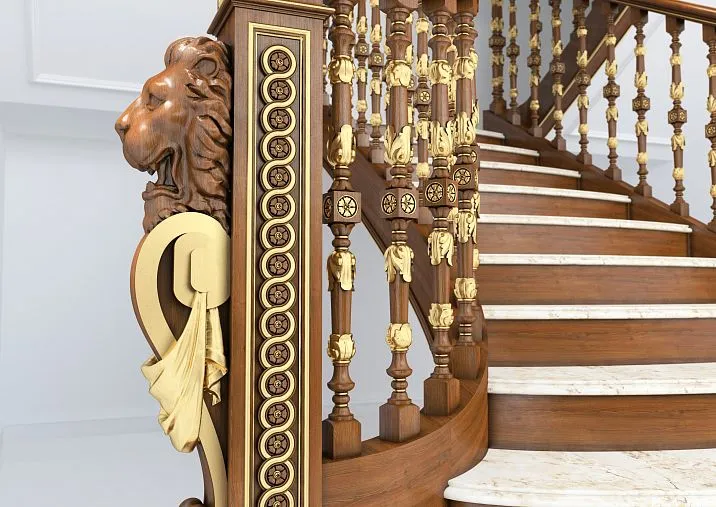
stair components – is a complex and multi-stage process, in which each detail, from concept to finished product, goes through a series of technological operations that meet the strictest quality standards. In this article, we will thoroughly examine the stages of creating stair components, modern technologies and standards in this field, as well as discuss innovative solutions that help make the final product not only functional, but also aesthetically appealing. We will pay attention to material selection, processing methods, quality control, and the specifics of producing such elements asPosts for staircase, balusters for staircases, stair railings and handrails. Our practical guide will help you understand how an idea becomes a product capable of ensuring safety, durability, and unique style of the staircase.


Introduction
The staircase is the most important element of interior design, combining functionality and aesthetics. It is precisely the staircase components that form the appearance of the structure and play a key role in ensuring its reliability and safety. The quality of production of these parts affects not only the operational reliability of the staircase but also its visual perception. Modern manufacturing technologies allow creating products that meet even the highest requirements for strength and design.
The production process begins with an idea and ends with a finished product capable of enduring the test of time. This path includes stages of concept development, design, material selection, processing, assembly, and quality control. In this article, we will examine all key stages of producing staircase components, focusing on standards, innovations, and ecological aspects.




Stages of producing staircase components
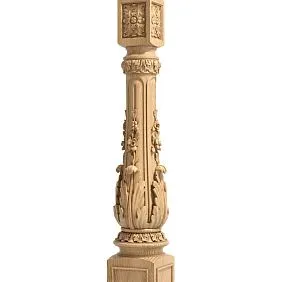
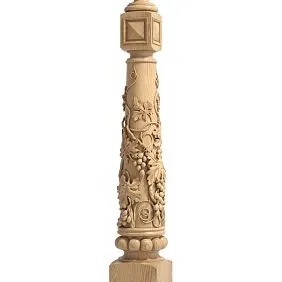
Our factory also produces:



Concept and idea development
Any production begins with an idea. To create high-quality staircase components, it is important to define the concept based on the needs of the end user and the style of the future interior. At this stage, market research is conducted, customer needs are analyzed, and current design trends are studied.
Idea development includes:
● Design concept formation.
● Defining functional requirements for components.
● Market analysis and selection of direction (traditional, modern, combined solutions).
This stage is fundamental, as the success of the project depends on a properly formulated idea.
Get Consultation
Design and drafting
After concept development, we move to the design phase. This stage includes creating detailed drawings of all components, specifying dimensions, shapes, angles of inclination, and connecting elements. Design is conducted using modern CAD systems, enabling high precision and structural optimization.
At this stage it is important:
● Prepare technical drawings and specifications for each element.
● Perform load calculations and assess structural strength.
● Develop detailed assembly and installation schematics to ensure compatibility of all elements.
Drawings serve as a guide for production and installation, so they must be as detailed and clear as possible.
Material selection
A key aspect of producing staircase components is material selection. It directly affects the durability, safety, and aesthetic appearance of the final product.
Main materials used in production:
● Natural wood. Used for creating classic constructions. Materials such as oak, beech, and larch have high strength and warm texture, giving the staircase coziness and elegance.
● Metal. Widely used in modern interiors due to its strength, wear resistance, and ability to create minimalist design.
● Composite materials. Modern composites combine the advantages of wood and metal, providing lightness, strength, and resistance to external influences.
When selecting materials, it is important to consider not only their mechanical properties but also their ecological safety, as well as their processability and finishability, to ensure that the products meet the aesthetic requirements of modern interiors.
Processing technologies
Modern material processing technologies play a key role in producing staircase components. They ensure high precision, quality, and aesthetic appeal of the products.
Main processing methods include:
● Mechanical processing. Using CNC machines allows creating products with high precision. These technologies are applied when manufacturing parts where symmetry and dimensional accuracy are crucial.
● Laser cutting. Used for creating complex decorative elements, such as carved patterns onstaircase balusters and decorative finials.
● Welding and assembly. Welding is widely used for metal components, ensuring strong connections between elements. The use of modern welding technologies allows achieving the most reliable welds.
The use of advanced processing technologies allows producing components that meet the strictest quality and aesthetic standards.
The use of advanced processing technologies allows producing components that meet the strictest standards of quality and aesthetics.
Assembly and quality control
After processing individual elements, the stage of assembling ready-made components follows. This process includes:
● Frame assembly. All supporting elements, such asPosts for staircase, are connected into a single structure.
● Installation of decorative elements. Thebalusters for staircases, stair railings and finials are installed, creating a cohesive railing.
● Quality control. Each item undergoes strict quality control. Tests are conducted for strength, dimensional accuracy, aesthetic finish, and compliance with technical standards. Only items passing inspection are released for sale.
Quality control is a guarantee that ready-made components will be reliable and long-lasting in operation.
Standards and regulations in the production of components
International and national standards
The production of components for staircases is regulated by a range of standards, both international and national. These standards establish requirements for strength, safety, environmental friendliness, and aesthetics of the products.
● International standards. ISO, ASTM, and other organizations develop norms that guarantee the reliability and safety of products during operation. These standards cover materials, testing methods, requirements for connections, and installation.
● National standards. Each country has its own regulations that take into account climatic and operational characteristics. In Russia, for example, GOSTs are mandatory, regulating the quality of wooden and metal products.
Adherence to standards is a guarantee that the product meets high requirements for safety and durability, which is especially important for structures where the risk of injury has critical significance.
Regulatory documents and certification
Manufacturers are required to certify their products. This confirms that staircase components meet all necessary requirements:
● Quality certificates. Confirm that the product has passed tests and complies with established standards.
● Regulatory documents. Include technical specifications, operating instructions, and installation recommendations that must be strictly followed during installation.
The presence of certificates and compliance with regulatory documents is an important indicator of product reliability, enabling consumers to make an informed choice.
Innovations in the production of components
Application of digital technologies
Modern production technologies are rapidly developing, and manufacturers of staircase components actively implement digital solutions:
● CAD and CAM systems. Computer modeling allows creating accurate 3D models of products, optimizing the design, and reducing development time. This is especially important when manufacturing complex decorative elements.
● CNC machines. Using computer numerical control machines ensures high precision in cutting, grinding, and processing materials. This allows creating products with minimal deviations from the specified dimensions.
● Laser cutting. Used to create complex patterns and decorative elements, which is especially relevant for manufacturing carvedbalusters for staircases and exquisite finials.
These innovations not only improve product quality but also reduce production costs, making components more accessible to the end consumer.
Ecological Technologies
In the context of global attention to environmental sustainability, manufacturers are adopting eco-friendly technologies:
● Use of natural materials. Preference is given to wood grown in ecologically clean regions, as well as recycled materials, which reduces negative impact on the environment.
● Energy-efficient technologies. Modern production lines are optimized to reduce energy consumption and minimize waste.
● Eco-friendly coatings. Lacquers and oils free of harmful substances are used, enabling the creation of a safe product for human health and the environment.
The application of eco-friendly technologies not only contributes to preserving nature but also enhances consumer trust in the brand.
Examples of Production Processes
Traditional Production of Wooden Components
In traditional production of wooden components, primary attention is given to the quality of wood and the craftsmanship of artisans:
● Raw material selection. Wood is selected based on strength, texture, and color. Popular species include oak, beech, and larch.
● Mechanical processing. Wood undergoes strict mechanical processing: sawing, planing, sanding, and polishing. Modern machines ensure precision and preserve the natural beauty of the material.
● Decorative finishing. Traditional constructions often feature carving, giving products a unique appearance. Handcrafted work by artisans makes each item unique.
● Quality control. Each batch of products undergoes careful inspection, checking strength characteristics and compliance with standards.
Modern production of metal and composite components
Modern production lines use advanced technologies to create metal and composite components:
● Metalworking. The use of CNC machines and laser cutting allows for creating metal parts with high precision. Welding and subsequent seam treatment ensure the durability of connections.
● Composite production. Composite materials are produced by mixing natural fibers with polymers, enabling the creation of lightweight, durable items capable of mimicking the appearance of natural wood.
● Production automation. Modern lines are equipped with automated quality control systems, allowing minimization of human factors and enhancing production standards.
These processes enable the production of products meeting the highest standards of quality and safety, satisfying even the most demanding customers.
Standards and regulations in the production of components
International and national standards
Strict standards govern the production of stair components, regulating every stage of manufacturing:
● International standards (ISO, ASTM). They establish requirements for material quality, testing methods, and characteristics of finished products.
● National standards (GOST). In Russia, for example, products must comply with GOSTs that take into account regional climatic and operational characteristics.
Adherence to these standards guarantees that the final product will be safe for use and will last for many years.
Certification and Quality Control
Each manufacturer is required to undergo certification, confirming compliance of products with regulatory requirements:
● Quality certificates. Products that have passed testing receive corresponding documentation, serving as a guarantee of their reliability.
● Periodic inspection. Regular checks are conducted during production, and finished products are additionally tested for compliance with standards.
The presence of certificates and strict quality control allow consumers to be confident in the durability and safety of components.
Advantages of Ready-Made Stair Components
Aesthetic appeal
Ready-made staircase components have a high level of aesthetic appeal. They can be made in various styles – from classic to modern. Thanks to innovative processing technologies, the products acquire ideal shapes and textures, allowing them to harmoniously fit into any interior.
For example,balusters for staircases with carved elements or minimaliststair railings capable of highlighting the unique style of any interior.
Reliability and durability
Thanks to strict adherence to standards and the use of advanced technologies, ready-made staircase components are characterized by high strength. The use of quality materials and innovative processing methods ensure a long service life of the products, even under intensive use.
Ecological safety
Modern manufacturing technologies allow minimizing negative impact on the environment. The use of environmentally friendly materials and energy-efficient technologies makes the products safe for health and the environment, which is especially important for residential spaces.
Innovative production technologies
Digital modeling and CNC technologies
Modern manufacturers actively use computer modeling to create accurate 3D models of components. This allows optimizing the design, improving manufacturing accuracy, and reducing production time.
CNC machines ensure high precision in cutting, grinding, and drilling, which is especially important for decorative elements such as handrails.
Laser cutting and engraving
Laser technology allows creating items with incredible precision and complex patterns. This opens new possibilities for decorating details such as balusters for staircases, making them unique and aesthetically appealing.
Automation and robotization of production
Modern production lines are equipped with automated quality control systems, which allows reducing the percentage of defective products and improving manufacturing standards. Robotization of some production stages ensures high precision and repeatability of products, which is especially important for mass production of components.
Ecological and social aspects of production
Environmental sustainability
One of the key trends in modern production is attention to ecology. Using natural and recycled materials, as well as implementing energy-efficient technologies, allows reducing environmental impact. This not only contributes to preserving natural resources but also increases consumer trust in the brand.
Social responsibility
Manufacturers, following global trends, pay great attention to social responsibility. Ensuring workplace safety, fair working conditions, and supporting local communities – all this has become an indispensable part of corporate policy of companies producing staircase components.
Examples of successful projects and case studies
Example 1: Classic Wooden Staircase
In one of the successful projects, a classic wooden staircase was created using high-quality components. In this project, the following were used:
● Posts for staircase from solid oak, specially processed.
● balusters for staircases with hand-carved details, giving the item a historical character.
● stair railings with refined finishes, ensuring comfort and safety.
● Decorative handrails, completing the composition.
This project received high praise for combining traditional craftsmanship with modern technologies, enabling the creation of a staircase that is truly a work of art.
Example 2: Modern staircase with innovative technologies
Another successful case – production of components for a modern staircase, where composite materials and automated technologies were used. Thanks to this project, it was possible to achieve:
High-precision manufacturing of parts using CNC machines.
Creation of unique decorative elements using laser cutting and engraving.
Increased eco-friendliness of products due to the use of recycled materials and energy-efficient technologies.
These solutions enabled the creation of a staircase that perfectly fits into a modern interior, featuring minimalist design and maximum functionality.
Development prospects for staircase component production
Trends and innovations
Staircase component production continues to evolve, adopting new technologies and materials. Key development directions include:
Further automation of production. Robotization and use of artificial intelligence allow for increased precision and reduced cost of products.
Development of new composite materials. This will enable the creation of lighter, stronger, and more eco-friendly products that mimic natural wood.
Product customization. Individual orders and the ability to adapt design to specific projects are becoming increasingly popular.
Environmental challenges and sustainable production
With growing attention to ecology, manufacturers are required to consider not only economic efficiency but also environmental sustainability. This includes:
Reduction of production waste.
Use of energy-efficient technologies.
Use of environmentally friendly materials and coatings.
Conclusion
Staircase component production is a complex, multi-stage process that begins with an idea and ends with a finished product meeting the strictest quality and safety standards. From concept development and design, through material selection and modern processing methods, to final quality control — each stage is crucial to the final result.
Modern technologies such as CNC machines, laser cutting, and digital modeling allow for the creation of products with high precision and unique design. At the same time, adherence to international and national standards ensures that the finished product will be safe and durable. The use of innovative materials and eco-friendly technologies makes the production process more sustainable and efficient.
Reliable and high-quality components, such asPosts for staircase, balusters for staircases, stair railings and newel posts are the cornerstone of safety and aesthetics of any staircase. Proper selection and manufacturing of these elements allow creating a structure that will please the eye, ensure reliability, and serve for many years.
If you wish to learn more about modern technologies for producing staircase components, standards, and innovative solutions, or you need high-quality products to implement your project, contact trusted suppliers. Only a comprehensive approach to production — from idea to finished product — can ensure the highest quality and reliability of the structure.
Let your choice of components become a guarantee of safety, aesthetics, and longevity of your staircase, reflecting your refined taste, pursuit of perfection, and care for every interior element.


