Article Contents:
- Design features of wall-mounted handrails
- Why choose a round cross-section
- Handrail diameter: standards and ergonomics
- Installation height of wall-mounted handrails
- Distance from the wall: gap for comfortable grip
- Choosing wood species for wall-mounted handrails
- Oak: the standard of strength
- Beech: balance of price and quality
- Ash: Strength and Elasticity
- Larch: a coniferous alternative
- Pine: budget option
- Brackets for wall-mounted handrails: types and selection
- Bracket materials
- Bracket design
- Bracket installation spacing
- Installation of wall-mounted handrails: step-by-step instructions
- Preparation and Marking
- Attaching brackets to the wall
- Installing the Handrail on Brackets
- Final finishing
- Wall-mounted handrails and balusters: combined solutions
- Treatment and finishing of wooden wall-mounted handrails
- Sanding
- Priming
- Oil finish
- Varnish finish
- Toning
- Individual and authorial solutions
- Classic style
- Scandinavian minimalism
- Loft and Industrial Style
- Modern style
- Wall-mounted handrails in public buildings
- Care for wall-mounted handrails
- Regular Cleaning
- Recoating
- Checking Mounting
- Frequently asked questions about wall-mounted handrails
- Can I install a wall-mounted handrail myself?
- What is the optimal distance from the wall?
- What handrail diameter to choose?
- How often should brackets be installed?
- Can a wall-mounted handrail be used instead of a railing?
- Which wood species to choose for damp rooms?
- Can the handrail be stained a dark color?
- How much does a wall-mounted handrail with installation cost?
- Is approval required to install a handrail in an apartment building?
- What is the load capacity of a bracket?
- Conclusion: reliability and quality from STAVROS company

Have you ever wondered why old mansions, palaces, and churches always have massive wooden handrails along the walls? This is not just a tribute to tradition—it's a solution tested over centuries, ensuring safety and comfort when ascending and descending.wall-mounted round handrail— is a functional element that is attached directly to the wall using special brackets, providing reliable hand support along the entire length of the staircase flight. Unlike handrails on balusters, the wall-mounted version does not require a complex system of vertical posts, takes up minimal space, and is visually perceived as lighter in the interior. At the same time, it performs the same critically important function—ensuring safe movement, especially for the elderly, children, and people with limited physical abilities. In this article, we will examine in detail all aspects of selecting, installing, and using wall-mounted round wooden handrails, consider technical standards, mounting methods, and design solutions for various interiors.

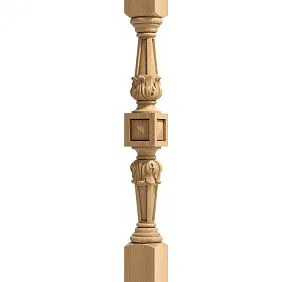


Structural features of a wall-mounted handrail
A wall-mounted handrail differs from a traditional handrail on balusters in its mounting method and visual perception. It is fixed to the wall using brackets installed at a certain interval along the entire length of the staircase flight. The distance between the wall and the center of the handrail is typically 50–70 millimeters, providing sufficient space for a comfortable hand grip.
Main structural elements of a wall-mounted handrail:
Round profile made of solid wood. A cylindrical blank with a diameter of 40–60 millimeters, most commonly 50 millimeters. The length can vary from one to six meters depending on the staircase design and production technology.
Brackets. Metal or wooden holders that are attached to the wall and hold the handrail at the required height and distance from the wall. Brackets can be open (visible) or hidden (built into the handrail).
Fastening elements. Dowels, anchors, or screws for fixing brackets to the wall. Screws or bolts for attaching the handrail to the brackets.
Decorative elements. End caps, decorative rosettes for concealing bracket mounting points, connecting couplings for joining long sections.
the staircase handrail is round wooden of the wall-mounted type is especially relevant for narrow staircases where installing balusters and massive railings is impractical. It is also ideal for staircases located between two walls, where there is physically no possibility to install freestanding balusters.




Why specifically a round cross-section
The round shape of the handrail is not a random choice but the result of centuries of experience and modern ergonomic research. When the hand grips a cylindrical surface, the load is distributed evenly across the entire contact area. There are no pressure concentration points that cause discomfort or pain during prolonged holding. The fingers naturally wrap around the round profile, creating a secure grip.
Square or rectangular handrails have corners that dig into the palm, especially during sudden movements or strong gripping. This is critical at the moment of losing balance when a person instinctively grabs the handrail with full force. Sharp edges can cause pain and even skin damage.
Oval handrails are more comfortable than rectangular ones but still fall short of round ones in versatility. An oval has major and minor axes, creating a certain orientation in space. A circle is absolutely symmetrical—no matter how you grab the handrail, the grip will always be equally comfortable.
A round cross-section is also more technologically efficient in production. Turning a cylinder on a lathe is simpler and faster than milling complex profiles. This reduces the cost of the product without losing functionality.
Our factory also produces:


Handrail diameter: standards and ergonomics
The diameter of a wall-mounted handrail should correspond to the anatomy of the human hand. A handrail that is too thin does not provide a secure grip—the hand simply slides along it. A handrail that is too thick cannot be fully gripped, which also reduces control and confidence.
The standard diameter for adult users is 50 millimeters. With this size, an adult with an average-sized hand can almost fully grip the handrail, with the thumb and index finger nearly touching. This is the ideal balance between grip reliability and comfort.
For young children, a diameter of 35–40 millimeters is recommended. Small hands cannot fully grip a standard handrail, creating a sense of insecurity. In children's institutions, play areas, and families with young children, an additional child-sized handrail is installed at a lower height and with a smaller diameter.
For people with large hands, as well as in public buildings with high usage intensity, handrails with a diameter of 60 millimeters are used. They appear more massive, withstand increased loads, and create a sense of solidity.
Important point: the diameter must be constant along the entire length of the handrail. Changes in thickness create discomfort and can lead to loss of control in a critical moment.
Get Consultation
Installation height of a wall-mounted handrail
The installation height of a wall-mounted handrail is regulated by building codes and regulations. For adult users, the standard height is 900 millimeters from the level of the step or floor to the top point of the handrail. This height ensures a natural hand position—the elbow is slightly bent, the shoulder is relaxed, and the hand is at hip level.
If the height is too low, a person has to bend over or bend their arm at an unnatural angle, causing tension in the back and shoulders. If the height is too high, the arm is stretched upward, losing grip strength and control over movement.
For children, installing an additional handrail at a height of 600–700 millimeters is recommended. This allows the child to confidently hold onto the support without stretching their arm upward. In kindergartens, schools, and homes with young children, double handrails are a standard solution.
For people using wheelchairs or walkers, additional handrails are sometimes installed at a height of 700–750 millimeters. This facilitates transitioning from the chair to the stairs or using the handrail as support when pulling up.
Important: the height is measured from the level of each step, not from the floor of the first floor. The handrail should run parallel to the staircase line, following its slope angle.
Distance from the wall: gap for comfortable gripping
One of the critical characteristics of a wall-mounted handrail is the distance from the wall to the center of the handrail. This gap provides space for the hand, allowing the fingers to fully grip the handrail without pressing against the wall.
The minimum distance according to Russian standards is 40 millimeters for interior spaces and 60 millimeters for exterior structures. In practice, the optimal distance is 50–70 millimeters. With a handrail diameter of 50 millimeters and a distance from the wall to the center of the handrail of 60 millimeters, the gap between the handrail and the wall is 35 millimeters—sufficient for the fingers to pass through.
If the gap is less than 30 millimeters, fingers press against the wall, the grip weakens, creating discomfort. With a gap exceeding 100 millimeters, the handrail protrudes too far from the wall, occupies excessive space, and visually overloads the interior.
Brackets must ensure a consistent distance along the entire length of the handrail. Any deviations create unevenness, which is felt by the hand and compromises comfort of use.
Choosing Wood Species for a Wall-Mounted Handrail
The handrail material determines its strength, durability, appearance, and tactile properties. The same wood species used for balustrade handrails are employed for wall-mounted handrails.
Oak: the standard of strength
Oak is a hard hardwood with a density of 700–800 kilograms per cubic meter. An oak handrail is practically eternal—it lasts for decades without losing its functional properties. Oak is resistant to mechanical damage, wear, and moisture. Its grain is expressive, with large pores and distinct annual rings. Color ranges from light golden to dark brown. Oak darkens with age, acquiring a noble patina.
Oak handrails are ideal for public buildings with high traffic, prestigious interiors, and classical and neoclassical styles. The drawback is the high price. An oak handrail costs two to three times more than a beech one.
Beech: balance of price and quality
Beech has a density of about 650 kilograms per cubic meter. Its structure is fine-grained and uniform. After sanding, a beech handrail becomes silky smooth. The color is light pink or creamy beige. Beech takes stains easily, allowing it to be given almost any shade.
Beech is strong and durable for interior use. The drawback is sensitivity to moisture. Beech is not recommended for bathrooms, saunas, or unheated spaces. The cost is moderate—more expensive than pine, cheaper than oak. It is the optimal choice for residential interiors.
Ash: strength and elasticity
Ash is comparable in hardness to oak but more elastic. Its grain is expressive, with contrasting stripes. Color ranges from light gray to light brown. The elasticity of ash allows for creating bent elements for spiral staircases without the risk of cracking. The cost is close to that of oak—it is a premium category.
Larch: A Coniferous Alternative
Larch is a coniferous species with a density of about 600 kilograms per cubic meter. It contains a large amount of resin, making it exceptionally resistant to moisture and rot. The color is reddish-brown. It is ideal for exterior structures, terraces, and spaces with high humidity. The cost is moderate.
Pine: budget option
Pine is the most affordable species but the least suitable for handrails. Density is about 500 kilograms per cubic meter. It is soft, easily scratched, and wears down. For wall-mounted handrails in residential homes, it is acceptable with a limited budget, but it lasts less long than oak or beech.
Brackets for Wall-Mounted Handrails: Types and Selection
A bracket is the connecting link between the wall and the handrail. The reliability of the entire system depends on the quality, design, and correct installation of the brackets.
Bracket Materials
Metal brackets. Made from stainless steel, brass, cast iron, aluminum. Metal provides maximum strength and durability. Stainless steel is corrosion-resistant, suitable for damp spaces and exterior use. Brass lends a noble appearance, suitable for classical and vintage interiors. Cast iron is massive and decorative, characteristic of historical styles. Aluminum is lightweight and inexpensive but less strong.
Wooden brackets. Made from the same species as the handrail or a contrasting one. They create stylistic unity and fit organically into interiors dominated by wood. They are less strong than metal brackets and require reinforced fastening.
Bracket Construction
Exposed brackets. Visible elements that serve not only a functional but also a decorative role. They can be simple (a straight plate or L-shaped bracket) or decorative (forged, with ornamentation, carved). Exposed brackets emphasize the presence of the handrail, making it visually weighty.
Concealed brackets. Built into the handrail or masked by decorative rosettes. They create a 'floating' handrail effect—visually, the handrail appears attached to the wall without visible fasteners. Concealed brackets are characteristic of modern and minimalist interiors.
Ring brackets. A circular ring that encircles the handrail. The handrail is inserted into the ring and secured with a screw from below or the side. Ring brackets are visually light and do not overload the space.
Bracket installation spacing
The distance between brackets determines the rigidity of the structure. Too large a spacing leads to handrail deflection under load. Too small a spacing is excessive, increases cost, and visually overloads.
The optimal spacing for metal handrails is 80–100 centimeters. For wooden handrails, which are more flexible, a spacing of 60–80 centimeters is recommended. In areas of increased load (start and end of a flight, landings), the spacing is reduced to 50–60 centimeters.
Building codes recommend a spacing of no more than one meter. In practice, one should consider the handrail material, its diameter, and expected load.
Installation of a Wall-Mounted Handrail: Step-by-Step Instructions
Correct installation ensures the reliability, safety, and durability of the structure. Installing a wall-mounted handrail is feasible for DIY with basic tool-handling skills.
Preparation and marking
Determine the handrail installation height—standardly 900 millimeters from the level of each step. Stretch a string or snap a chalk line along the staircase, marking the top line of the handrail. Verify that the line is parallel to the staircase line and runs at a constant height from each step.
Mark the bracket installation points with the chosen spacing (60–80 centimeters for wood, 80–100 for metal). The first bracket is installed 10–15 centimeters from the start of the flight, the last one—at the same distance from the end.
Attaching Brackets to the Wall
For wooden walls, use screws at least 60 millimeters long, screwed into the load-bearing beam or frame. For concrete or brick walls, drill holes with a hammer drill, install anchors, and secure the brackets with anchor bolts or screws.
Check the strength of the mounting — the bracket should not wobble or rotate. Each bracket must withstand a load of at least 100 kilograms.
Ensure all brackets are aligned and at an equal distance from the wall. Use a level and tape measure for control.
Installing the handrail on brackets
PrepareWooden round handrail for balustrades of the required length. If the flight length exceeds the handrail length, splicing will be required. The splice is made at a 45-degree angle, glued with wood glue, and additionally secured with dowels or metal pins.
Place the handrail on the brackets, check for horizontality (for horizontal sections) or alignment with the staircase angle (for inclined sections). Secure the handrail to the brackets using screws or bolts. Fastening is typically done from below or the side so it is not visible during normal use.
If concealed brackets are used, the handrail is installed into special grooves or fastening elements inside the bracket structure.
Final finishing
After installation, check the reliability of the fastening — the handrail should not wobble, sag, or shift. Fill visible fastener holes with putty, then sand. If the handrail was installed without a finish coating, apply oil, wax, or lacquer according to the technology.
Install end caps on the handrail ends to protect against moisture and provide a finished look. Decorative rosettes conceal bracket mounting points, creating an aesthetic appearance.
Wall-mounted handrail and balusters: combined solutions
In some cases, a wall-mounted handrail is used in combination with a traditional balustrade railing. This is typical for wide staircases (over 1.2 meters), where on one side there areWooden balusters with a handrail, and on the other side, adjacent to the wall, a wall-mounted handrail is installed.
This solution provides maximum safety — the user can hold onto either handrail depending on the direction of movement. When ascending, it is more natural to hold the wall-mounted handrail; when descending, the external one on the balusters, or vice versa, depending on individual habits.
It is important that both handrails are at the same height (standard 900 millimeters) and have the same diameter. This creates visual harmony and functional unity.wooden balusters for staircases and the wall-mounted handrail should be made from the same wood species and have the same finish.
Treatment and finishing of wooden wall-mounted handrails
Protective finish extends the handrail's service life and preserves its aesthetic appeal.
Sanding
First stage — multi-step sanding with abrasive materials of varying grit (from 120 to 320). Final sanding creates a perfectly smooth surface without roughness.
Priming
Primer improves adhesion of the finish coat, evens out absorbency, and enhances the grain. After the primer dries, the surface is lightly sanded with fine-grit abrasive.
Oil finish
Oil penetrates the wood structure, highlights the grain, and preserves tactile naturalness. The handrail remains warm and pleasant to the touch. Disadvantage — requires renewal every one to two years.
Lacquer finish
Lacquer forms a hard protective film, providing maximum protection against moisture and dirt. For wall-mounted handrails, high-hardness polyurethane lacquers are used. Lacquer can be matte or glossy.
Toning
Stain allows changing the wood color without losing the visibility of the grain. After tinting, a protective coating is applied.
Stylistic solutions for various interiors
Wall-mounted handrails easily adapt to any interior style.
Classic style
Dark oak handrail with glossy lacquer finish, massive brass or cast iron brackets with decorative elements. Ends are finished with carved tips or decorative balls.
Scandinavian minimalism
Light beech handrail with oil finish, thin inconspicuous brackets made of matte steel or concealed type. Simplicity, functionality, absence of decoration.
Loft and industrial style
Natural wooden handrail without tinting or with rough texture, black metal brackets made of pipes or profiles. Deliberate simplicity and honesty of materials.
Modern style
Handrail tinted gray or graphite, chrome or matte metal brackets of minimalist design. Clear lines, geometric strictness.
Wall-mounted handrails in public buildings
In public buildings, requirements for wall-mounted handrails are higher. Usage intensity can reach thousands of touches per day, so the material and finish must be maximally durable.
For commercial facilities, hardwoods are used — oak, ash. The finish is high-hardness polyurethane varnishes. Brackets are reinforced, made of stainless steel. The installation spacing is reduced to 60 centimeters to provide additional rigidity.
It is important to comply with all regulatory requirements regarding height, diameter, distance from the wall, and strength. Regular inspections and maintenance ensure user safety.
Care for wall-mounted handrails
Proper care extends service life and preserves appearance.
Regular cleaning
Wipe the handrail with a damp cloth once a week. Do not use harsh detergents or abrasives.
Recoating
Oil finish is renewed every one to two years. Varnish finish is more durable but requires professional repair if damaged.
Checking fasteners
Periodically check the reliability of bracket attachment to the wall and handrail attachment to the brackets. Tighten any loose screws and bolts.
Frequently asked questions about wall-mounted handrails
Can I install a wall-mounted handrail myself?
Yes, with basic skills and tools. It is important to mark accurately, securely fasten the brackets, and check the strength of the structure.
What is the optimal distance from the wall?
50–70 millimeters from the wall to the center of the handrail. This provides a gap of 35–45 millimeters between the handrail and the wall — sufficient for a comfortable grip.
What handrail diameter should I choose?
Standard for adults is 50 millimeters. For children — 35–40 millimeters. For large hands — 60 millimeters.
How often should brackets be installed?
For wooden handrails — every 60–80 centimeters. For metal — every 80–100 centimeters.
Can a wall-mounted handrail be used instead of a railing?
No, a wall-mounted handrail is not a railing and does not prevent falling from stairs. It serves only as a hand support. If the staircase is open on one side, a full railing with balusters is necessary.
Which wood species to choose for a damp room?
Oak or larch with a moisture-resistant finish (oil or exterior varnish). Beech is not recommended for damp rooms.
Can the handrail be stained a dark color?
Yes, stain allows changing the color from light to almost black shades. A protective coating is applied after staining.
How much does a wall-mounted handrail with installation cost?
The cost depends on the wood species, length, bracket type, and installation complexity. Approximately 2000–5000 rubles per linear meter including materials and labor.
Is approval needed to install a handrail in an apartment building?
If the staircase is common property, approval from the management company is required. In a private house, no approval is needed.
What is the load capacity of a bracket?
Each bracket must withstand at least 100 kilograms of horizontal load. This ensures safety during sudden gripping or a fall.
Conclusion: Reliability and quality from STAVROS company
A wall-mounted round handrail is not just an additional staircase element, but a critically important component of your home's safety. The correct choice of material, diameter, installation height, and fastening method ensures comfort and confidence with every ascent and descent. It is an investment in the health and safety of your family, especially elderly relatives and children.
For over twenty years, STAVROS company has been producing high-quality solid wood products for stairs and interiors. The history began in 2002 with a small creative workshop of artists Andrey Ragozin and Evgeny Tsapko. After successful participation in the reconstruction of the Konstantinovsky Palace in Strelna, the company gained recognition and began collaborating with cultural heritage sites — the Hermitage, Alexander Palace, Trinity-Izmailovsky Cathedral, Sheremetev Mansion.
Today, STAVROS offers a full range of round handrails made of beech, oak, ash, and other noble wood species. Production is located in St. Petersburg, ensuring prompt manufacturing and delivery. A large stock program allows receiving products on the day of request. If necessary, the company manufactures custom products — non-standard lengths, special processing, staining.
Every STAVROS product undergoes strict quality control. Wood moisture content of 8–12 percent is certified. Diameter accuracy ±0.5 millimeters. Sanded to 220–320 grit. Coating with professional oils, waxes, or varnishes provides protection and highlights the beauty of natural wood.
At STAVROS showrooms in Saint Petersburg and Moscow, you can view product samples, receive professional consultation from specialists, and select the optimal solution for your project. The company guarantees adherence to production timelines, quality without complaints, and delivery across all of Russia from a single piece.
Choosing wall-mounted handrails from STAVROS means choosing quality tested by time and thousands of completed projects. Natural wood, craftsmanship, attention to detail, compliance with all technical norms and standards — these are the values the company embodies in every product for over two decades. STAVROS is your reliable partner in creating safe, beautiful, and durable stair constructions.