












































































Article Contents:
- How ceiling molding changes the perception of space
- Visual correction of ceiling height
- Visual expansion and narrowing of space
- Creating stylistic accents
- Installation on a stretch ceiling: technology and nuances
- Fundamental differences from standard installation
- Step-by-step installation technology
- Features of installing a molding with lighting
- Choosing the height and profile of ceiling molding
- Determining the optimal width
- Choosing the profile according to interior style
- Material differences: extruded and injection polystyrene
- Installation and jointing features
- Preparing the base and materials
- Cutting and corner jointing techniques
- Adhesive application technology
- Preparation for painting and final finishing
- Sealing joints and defects
- Sanding and priming
- Painting Technology
- Hi Wood products: premium quality for ceiling decoration
- Conclusion

The ceiling is the fifth wall of a room, playing a crucial role in forming the overall impression of the interior. However, even a perfectly finished ceiling appears incomplete without the right trim.The ceiling molding creates a frame around the perimeter. Between them is a smooth ceiling surface. This scheme suits rooms of any size and is universally stylish. It is important to correctly choose the proportions — the rosette should not be too large relative to the room's perimeter.It is not just a decorative strip at the junction of the wall and ceiling, but a powerful tool for visual transformation of space, capable of radically changing the perception of a room.
Modern ceiling moldings made of polystyrene combine aesthetic and practical functions. They conceal technological gaps and unevenness, mask wiring and utilities, serve as a base for hidden lighting, and protect wallpaper edges from peeling. At the same time, the cost of such solutions remains affordable due to the low price of polystyrene and the possibility of self-installation.
But how to correctly choose the width and profile of the molding to visually raise a low ceiling or, conversely, make a high room cozier? How to properly install molding on a stretch ceiling without damaging the expensive fabric? What secrets of corner jointing ensure a flawless appearance? How to prepare the surface for painting for an ideal result? Answers to these questions are in our detailed guide.
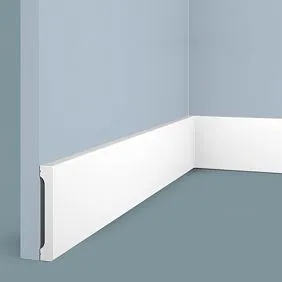
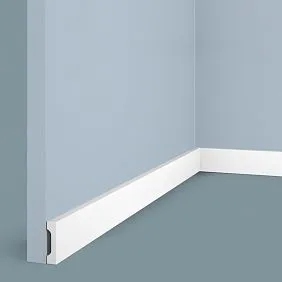
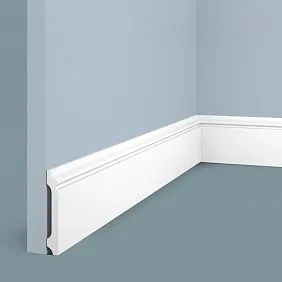

How ceiling molding changes the perception of space




Visual correction of ceiling height
Ceiling molding has an amazing ability to visually alter the proportions of a room, making it appear higher or lower depending on the design goal.
Visual elevation of a low ceiling is achieved through several methods. The first is using a narrow molding 30-50 mm wide in ceiling color. Such molding creates an illusion that the ceiling begins higher than its actual boundary. The eye perceives the white strip of molding as an extension of the ceiling, shifting the visual boundary upward by 3-5 centimeters. In a room with a 2.4-meter ceiling, these additional centimeters are critically important for comfort.
The second method is painting the molding and the upper part of the wall (15-20 cm from the ceiling) in a single light color. The boundary between the wall and ceiling blurs, creating the impression of a higher space. This method is especially effective with white or very light ceilings — the wall seems to flow into the ceiling without a clear boundary.
The third method is using molding with upward-facing lighting. An LED strip embedded in a special molding profile creates a light band along the perimeter of the room on the ceiling. The effect of a floating ceiling visually detaches it from the walls, creating an illusion of additional height. This is especially effective with glossy stretch ceilings, where the light reflects and doubles.
Visual reduction of a high ceiling is applied in rooms with ceilings higher than 3.2-3.5 meters, where excessive height creates a sense of emptiness and discomfort. A wide molding 120-200 mm in contrasting color to the ceiling visually lowers the ceiling boundary. If the ceiling is white and the molding is painted in wall color (especially dark tones), the boundary appears lower than actual. The ceiling seems to begin at the top edge of the molding, not at the junction of the wall and ceiling.
Classic proportions are achieved by installing the ceiling skirting board at a specific height according to the golden ratio rules. In classical architecture, the width of the ceiling cornice is approximately 1/20 of the room's height. For a room with a 2.7-meter ceiling, an optimal width of 130-140 mm is recommended. This proportion creates a harmonious, balanced perception of space.
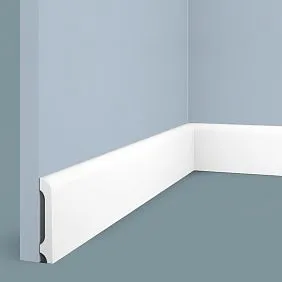
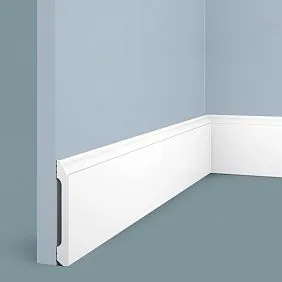
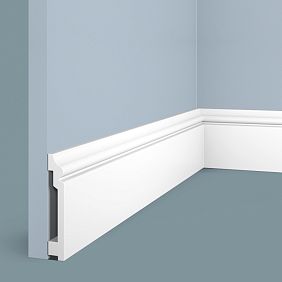
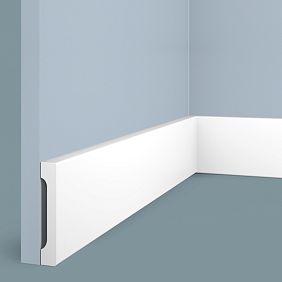
Our factory also produces:


Visual expansion and contraction of space
The ceiling skirting board affects not only the perception of height but also the sense of width and depth of the room.
Visual expansion of narrow rooms is achieved with a light skirting board painted in the ceiling's tone. In long, narrow corridors or elongated rooms, a white skirting board on a white ceiling creates a single light plane that appears more expansive. Conversely, a dark contrasting skirting board clearly defines the space, emphasizing its narrowness.
Visual contraction of overly wide rooms is achieved with a contrasting dark skirting board on a light ceiling. The dark perimeter strip creates a visual frame that seems to compress the space, making it more intimate and cozy. This is particularly relevant for large living rooms, where excess space creates a sense of emptiness.
Zoning space by skirting board color — a modern design technique. In studio apartments, different functional zones can be distinguished using skirting boards of different colors or widths. The kitchen zone — one color, the living room — another, the sleeping area — a third. This creates visual separation without partitions, preserving the sense of openness.
Correction of irregular room shapes is achieved by playing with the color and width of the skirting board on different walls. If a room has a trapezoidal shape, a wider or darker skirting board on the narrow wall visually brings it closer, aligning proportions. A light, narrow skirting board on long walls visually pushes them back.
Get Consultation
Creating stylistic accents
polystyrene ceiling moldingbecomes an important element in forming the interior style.
Classic luxury is created by wide skirting boards 120-200 mm with rich relief decoration. Ornamental motifs such as plant patterns, scrolls, geometric patterns, and molded rosettes transform an ordinary ceiling into an architectural masterpiece. Such skirting boards are especially effective when combined with ceiling rosettes and moldings, creating a unified classical composition.
Modern elegance is achieved with simple, smooth skirting boards of medium width 60-100 mm without decoration. Clean lines, perfect geometry, absence of ornamentation — characteristics of modern styles. The skirting board performs a functional role, not drawing excessive attention, yet giving the interior a sense of completion.
Minimalist invisibility is created by extremely narrow skirting boards 20-40 mm in ceiling color. Their purpose is to technically cover the junction between wall and ceiling, remaining practically invisible. In interiors where emptiness and airiness are valued, such discreet skirting boards are ideal.
Lighting effects as accents — skirting boards with built-in lighting become a standalone decorative element. Soft glow around the ceiling perimeter creates a romantic atmosphere, serves as additional lighting, and allows changing the room’s mood with a single switch press. RGB lighting enables experimenting with color, creating endless scenario variations.
Installation on a stretch ceiling: technology and nuances
Fundamental differences from standard installation
Ceiling skirting board for stretch ceilingrequires a special installation technology, fundamentally different from installation on a standard ceiling.
Mounting only to the wall — the main rule. Stretch ceiling fabric is a thin PVC film 0.15–0.35 mm thick, under tension. Any attempt to glue the skirting board to it will cause deformation of the fabric, formation of wrinkles, and possible tearing. Adhesive contacting PVC may cause discoloration or chemical damage. The only correct method — mounting the skirting board exclusively to the wall, without touching the stretch ceiling fabric.
Wall preparation becomes critically important. Since the skirting board is mounted only to the wall without support from the ceiling, the base must be perfectly prepared. The wall section up to the skirting board height plus 5 cm must be leveled, cleaned of peeling paint, whitewash, and weak plaster. Any bumps or hollows will result in gaps between the skirting board and the wall, compromising the reliability of the mounting. Deep-penetration acrylic primer is mandatory.
Choosing lightweight profiles is necessary for reliable mounting. Heavy, wide skirting boards create significant leverage that over time may detach them from the wall. Optimal profiles are polystyrene with width up to 100 mm. Wider elements require additional fixation measures or use of lighter materials — low-density extruded polystyrene.
A 1–3 mm technological gap between the skirting board and the fabric is a normal phenomenon with correct installation. The skirting board is glued to the wall, covering the gap between the wall and the stretch ceiling, but not touching the fabric itself. This small gap is completely invisible from floor level and allows free thermal deformation of the stretch ceiling.
Step-by-step installation technology
Correct sequence of actions guarantees the safety of the stretch ceiling and longevity of the result.
Protecting the stretch ceiling fabric — the first mandatory step. Before starting work, apply painter’s tape 5 cm wide along the skirting board installation line on the stretch ceiling fabric. This protects against accidental glue contact, which is practically impossible to remove from PVC film without traces. Alternative — a strip of polyethylene film laid between the future skirting board position and the fabric.
Marking the installation line is done on the wall. Mark several control points at the same height from the ceiling (usually 2–3 mm below the edge of the stretch ceiling trim). Check the horizontal level with a level. These points make it easier to align the skirting board during gluing, maintaining a straight line.
Corner cutting is performed using the standard method with a 45-degree miter. The skirting board is installed vertically in the miter, as it will stand on the wall. Cut smoothly without pressing to avoid chipping. Check the fit of the elements before gluing — the gap should not exceed 0.5–1 mm.
Glue application is performed ONLY on the part of the skirting board that contacts the wall. Use high-quality acrylic-based polystyrene glue or solvent-free liquid nails. Apply glue in a snake or dotted line along the entire length. The upper part of the skirting board (facing the ceiling) must remain completely dry, with not a single drop of glue. This is critically important.
Gluing to the wall is performed by carefully pressing the skirting board horizontally against the wall, without attempting to press the upper edge against the ceiling. Correct technique: place palms at the midpoint of the skirting board height, applying pressure perpendicular to the wall. Press evenly along the entire length for 30–60 seconds. If the upper edge does not touch the fabric, remaining 1–3 mm away — this is correct.
Temporary fixation with painter’s tape ensures pressure during glue drying. Apply tape strips every 50–70 cm, one end to the skirting board, the other to the wall above the skirting board. Create tension pressing the skirting board to the wall. Leave for 12–24 hours, then carefully remove.
Gap sealing with sealant is performed after the glue dries. If a gap forms between the top edge of the skirting board and the ceiling, carefully fill it with white acrylic sealant. Move the caulking gun nozzle evenly along the gap, remove excess with a damp finger. The sealant remains elastic, not creating a rigid bond with the fabric.
Features of installing a lighted skirting board
Installing a baseboard with built-in LED lighting under a suspended ceiling requires additional precautions.
Electrical wiring must be installed BEFORE mounting the suspended ceiling. This is a critical step — after installation, access to the space above the ceiling will be permanently sealed. Run power cables from the power supply to the baseboard installation points, leaving a 50-100 cm reserve length. Secure the cables to the ceiling structure and route the ends downward along the walls.
The power supply unit placement must allow for service access. Do not install it in the space above the ceiling, from which it cannot be reached for repair. Optimal locations: niche behind a cabinet, technical cabinet, or attic. Ensure ventilation — the power supply unit generates heat.
The power of the lighting is limited by temperature considerations. PVC ceiling material is sensitive to heat — above 65-70 degrees, it softens and deforms. Use only LED strips with power not exceeding 10 watts per meter. Maintain a minimum distance of 5 cm between the strip and the ceiling material. Incandescent and halogen sources are strictly prohibited.
The baseboard with lighting is installed using the described mounting technique, fixed only to the wall. After installation and drying of the adhesive, lay the LED strip into the special groove of the baseboard, directing the diodes toward the ceiling. Connect to the power cables, carefully insulate the connections. Test operation and temperature regime.
Temperature monitoring is mandatory after turning on the lighting. Turn on at maximum brightness and leave it on for 2-3 hours. Periodically check the temperature of the ceiling material near the lighting by hand. The ceiling material must not be hot — only slight warmth is acceptable. If noticeable heating occurs, reduce brightness or replace with a less powerful strip.
Choosing the height and profile of the ceiling baseboard
Determining optimal width
The width of the ceiling baseboard (horizontal distance from the wall to the edge protruding onto the ceiling) is a key parameter affecting interior perception.
For low ceilings 2.3-2.5 meters, narrow baseboards 30-60 mm wide are optimal. Wider profiles visually lower an already low ceiling, creating a sense of cramped space. A narrow, elegant baseboard painted to match the ceiling visually lifts it, especially if walls are darker. Avoid contrasting dark baseboards on light ceilings — contrast will emphasize the boundary, visually lowering height.
For standard ceilings 2.6-2.8 meters, medium-width baseboards 60-100 mm are suitable. This is a universal range allowing most design solutions. You can experiment with profiles — from simple smooth to moderately decorated. Such width creates a noticeable but non-dominant transition between wall and ceiling.
For high ceilings 2.9-3.2 meters, baseboards 90-150 mm wide are recommended. Larger elements are proportionate to large surfaces and do not appear small at height. A narrow baseboard on a high ceiling will look short and fail to make an impression. You can use profiles with pronounced relief, which are clearly visible even from floor level.
For very high ceilings from 3.3 meters, wide baseboards 120-200 mm are suitable, possibly multi-level compositions with several profiles. Such large-scale elements create architectural expressiveness characteristic of historical interiors. Combined with ceiling rose fixtures and moldings, they form a luxurious classical composition.
Room area also affects width selection. A small room 10-12 sq. m cannot tolerate a wide, bulky baseboard even with sufficient ceiling height — it will overwhelm the space. A spacious living room 30-40 sq. m requires proportionate elements — a narrow baseboard will disappear. Rule: for every 10 sq. m of area, add 10-15 mm to baseboard width.
Choosing profile according to interior style
Profile shape determines the stylistic tone of the baseboard and its compatibility with the overall interior concept.
Smooth profiles without relief — minimalist strips with rectangular or slightly rounded cross-sections. Absolutely smooth surface, no decoration, clean geometry. Suitable for modern styles — minimalism, Scandinavian, high-tech, contemporary. Create a neat transition between wall and ceiling, without drawing attention. Price is the most affordable in the category.
Profiles with simple bevels have one slanted edge at 30-45 degrees. The bevel creates a subtle play of light and shadow, adding graphic appeal without excess. Universal solution suitable for transitional styles between classic and modern. Looks more expressive than a smooth profile, but more restrained than decorated variants.
Profiles with decorative grooves have one or several horizontal grooves creating rhythmic relief. Grooves can be wide or narrow, forming a simple geometric ornament. Such a profile adds architectural character while remaining relatively minimalist. Suitable for neoclassicism, modern classicism, eclectic interiors.
Profiles with classic ornament mimic traditional plaster moldings. Plant motifs — acanthus leaves, grapevines, floral rosettes. Geometric elements — meanders, beads, Ionic capitals, teeth. Relief is volumetric, clearly readable, casting expressive shadows. Suitable for classic styles — Baroque, Empire, Classicism — creating a sense of luxury and solidity.
Multi-level complex profiles consist of several protrusions and recesses, creating multi-planar relief. Each level casts its own shadow, forming complex light-and-shadow play. Used in luxury interiors, spacious rooms with high ceilings. Require appropriate surroundings — in simple interiors, they will appear inappropriate.
Material differences: extruded and injection polystyrene
Ceiling baseboard made of extruded polystyreneDiffers from injection polystyrene not only in manufacturing technology but also in operational characteristics.
Extruded polystyrene is obtained by extruding molten polymer through a forming head with a foaming agent added. The resulting structure is smooth, homogeneous, with closed small pores. Surface is dense, with characteristic slight gloss. Water absorption is minimal — less than 0.2 percent. Strength is higher than injection polystyrene. Cost is lower by 20-30 percent. Suitable for any rooms, including humid ones.
Injection polystyrene is produced by sintering granules under high pressure. Structure resembles foam — individual granules may be visible. Surface is matte, slightly porous. Density may vary from low to high depending on production mode. Allows obtaining more complex relief shapes with clear detailing. Cost is higher, especially for models with rich decoration.
Choosing between extruded and injection polystyrene depends on the task. For simple smooth profiles in modern interiors, extruded is optimal — cheaper, stronger, more moisture-resistant. For classic interiors with relief decoration, injection polystyrene is preferable — allows creating complex volumetric ornaments with clear detailing.
Installation and jointing features
Preparation of the base and materials
Quality preparation is the foundation of successful installation, ensuring long-term durability and flawless appearance.
Cleaning the ceiling and upper wall surface begins with removing all dirt, dust, cobwebs, and remnants of old materials. If the ceiling was painted white — the paint must be completely washed off with warm water and vinegar or special paint remover. White paint does not provide reliable adhesive bond for the adhesive, and the baseboard may detach. Remove old wallpaper on the ceiling and upper wall section by width of the baseboard plus 5 cm.
Base flatness check is performed by applying a long straightedge or level board to the junction of the wall and ceiling. Any unevenness deeper than 3-5 mm must be corrected. Bumps are sanded or ground down, and dips are filled with putty. After the putty dries, the surface is sanded to smoothness. An uneven base is the main cause of gaps between the skirting board and the surface.
Wall and ceiling priming is mandatory to improve adhesive bond. Use an acrylic deep-penetration primer. Apply with a roller or brush to a 10-15 cm wide area from the junction line. The primer strengthens the base, reduces absorption, and ensures better adhesive bond. Drying time is 4-6 hours. On very porous surfaces, apply two coats.
Acclimatization of skirting boards is necessary, especially if the material was stored in a cold room or delivered in winter. Bring packaged skirting boards into the installation room 24-48 hours before starting work. The material temperature should match the room temperature (ideally +18-24 degrees). This prevents thermal deformation after installation.
Checking the kit contents and laying out the elements helps plan the installation. Lay out the skirting boards, estimate the layout around the room’s perimeter, identify joint locations. Ideally, joints should avoid the most visible areas. Number the elements on the back with a pencil in the order of installation.
Technique for cutting and joining corners
Perfect corner joints are a sign of professional installation, requiring precision and care.
Using a miter box is the main tool for accurate cutting. A miter box is a U-shaped tray with slots for different angles. For ceiling skirting boards, use 45-degree slots. Place the skirting board in the miter box upside down relative to installation — the side that will contact the ceiling is pressed against the bottom of the box, and the side contacting the wall is pressed against the far wall of the box.
Cutting for an internal corner is done as follows. The left element is cut so that, viewed from above, the cut runs from left-down to right-up. The right element is mirrored — the cut runs from right-down to left-up. After cutting, place the elements together in the corner — they should form a perfect 90-degree angle with no gap. If a gap exists, adjust it with sandpaper.
Cutting for an external corner (rare but possible on protrusions or columns) is done in the opposite direction. The cuts run in the opposite direction compared to internal corners. External corners are more noticeable and require special precision.
Using pre-made corner elements is an alternative to manual cutting. Many manufacturers offer special corner pieces for their skirting board collections. They eliminate the need for precise 45-degree cuts and guarantee perfect joints. This is especially important for skirting boards with relief patterns, where even minor cutting inaccuracies will disrupt the pattern alignment. Corner elements cost 200-600 rubles each.
Checking the joint before gluing is mandatory. Place the cut elements together in the corner without glue and assess the joint quality. The gap should not exceed 0.5-1 mm. Check pattern alignment on relief skirting boards. If the joint is not perfect, adjust the cut with sandpaper or re-cut.
Longitudinal joints on straight sections are made butt-to-butt with glue applied to the ends. Ends must be cut strictly perpendicular to the skirting board length — use the 90-degree slot in the miter box. Try to place straight joints in less visible areas — behind curtains, above doors, in dark corners.
Gluing technique
Correct gluing technique ensures secure and long-lasting adhesion.
Choosing the right glue is critical. Suitable for polystyrene: specialized acrylic-based polystyrene glue (optimal), universal solvent-free liquid nails (acceptable but with higher consumption), MS-polymer glue (most reliable but expensive). Solvent-based glues are strictly prohibited — they degrade polystyrene. Also, avoid thermogel — insufficient strength for ceiling applications.
Glue is applied to both surfaces where the skirting board will adhere — to the ceiling and to the wall. Apply glue in a snake-like or dotted line along the full length of each surface. Do not apply excessive amounts — when pressed, glue will squeeze out, forming drips. Optimal: a continuous line 5-7 mm thick on each surface.
Gluing to the base begins with corners. Place the first element at the installation site, aligning the corner cut with the corner line. Press gently and evenly with your entire palm against the ceiling and wall simultaneously. Do not press with your fingers — soft polystyrene easily deforms, leaving dents. Hold the press for 30-60 seconds until the glue begins to set.
Excess glue must be removed immediately while it is still wet. Carefully wipe away glue squeezed out at the edges with a damp cloth or rag. If the glue is acrylic, it easily washes off with water. Work quickly — acrylic glue sets in 10-15 minutes, and dried glue is harder to remove.
Temporary fixation is required until the glue fully dries. Use painter’s tape, applying strips every 50-70 cm from the skirting board to the ceiling and wall. You can prop up the skirting board from below with a stepladder or chair, placing a soft cloth underneath to protect against scratches. For heavy, wide skirting boards, use additional fixation with thin finishing nails in inconspicuous spots (later remove them and fill holes with putty).
Glue drying time is 12-24 hours depending on glue type, room temperature, and humidity. Do not touch the skirting boards or remove temporary fixation until fully dry. Only after complete drying can you proceed with joint filling and final finishing.
Preparation for painting and final finishing
Joint and defect filling
After the glue dries, skirting boards require careful finishing before painting.
Inspecting all joints begins with careful assessment of installation quality. Walk along all installed skirting boards under good lighting, preferably with a portable lamp. Mark all areas with gaps, cracks, or poor fit. Pay special attention to corner joints and longitudinal element connections.
Filling gaps with putty is done using acrylic finishing putty. Use a narrow putty knife 3-5 cm wide. Apply putty, pressing it into the gap to fully fill it. Level it flush with the skirting board surface. For deep gaps (over 3 mm), apply two coats with intermediate drying — the first coat fills the depth, the second smooths the surface.
Filling mounting holes is done if finishing nails were used for additional fixation. Remove the nails, fill the holes with putty, and level them. After drying, the holes will be invisible.
Filling gaps between the skirting board and surface is done if the base was not sufficiently flat. Narrow gaps up to 2-3 mm fill with acrylic sealant — it remains elastic, compensating for minor movements. Wider gaps fill with putty. Form a neat seam, immediately wiping away excess with a damp cloth.
Putty drying time is 2-4 hours for thin layers, up to 12 hours for thick layers. Do not rush sanding — under-dried putty will smear and clog sandpaper pores. Test readiness with your finger — if the putty does not indent and does not feel cold, it is dry.
Sanding and priming
Surface preparation for painting determines the quality of the final finish.
Sanding filled areas is done with fine-grit sandpaper P180-P240. Sand gently with circular motions without heavy pressure. Polystyrene is a soft material — excessive force will leave scratches or dents. The goal is to make filled areas perfectly smooth and blend seamlessly with the main skirting board surface.
Sanding the entire skirting board surface is not necessary if the surface is originally smooth. It is sufficient to treat only problem areas. However, if the skirting board has roughness, manufacturing blobs, or minor defects, light overall sanding will improve the painting result.
Removing dust after sanding is critically important. Dust left on the surface will disrupt the adhesion of primer and paint. Wipe the skirting boards with a dry microfiber cloth, then slightly damp (not wet!) cloth. You can use a soft vacuum cleaner attachment. Allow the surface to dry completely before priming.
Priming the entire skirting board surface is mandatory for quality painting. Use water-based acrylic primer. Apply in a thin, even layer with a medium-sized brush. For smooth areas, you can use a small velvet roller. For textured areas, use a brush to ensure all recesses are filled. The primer will create a uniform surface with even absorption, allowing paint to lay evenly without streaks.
The drying time for primer is 2-4 hours depending on room temperature and humidity. Do not rush the painting process — an under-dried primer will not provide adequate adhesion for paint. Check readiness by touch — the surface should be dry and not tacky.
Protect adjacent surfaces before priming. Apply painter’s tape to the ceiling and wall along the skirting board, leaving 1-2 mm from the edge. This ensures clean lines during painting. Cover the floor with plastic sheeting or old newspapers, extending 40-50 cm from the wall.
Painting Technology
Correct paintingceiling skirting board polystyrene buytransforms into a finished decorative element.
Paint selection is limited to water-based compositions. Use acrylic, latex, or water-emulsion paints marked "for interior use." Solvent-based paints are strictly prohibited — they degrade polystyrene, causing it to dissolve and deform. Choose sheen level as desired: matte conceals minor defects and creates a classic look; satin is practical and easy to clean; glossy highlights the relief shape but reveals all flaws.
Painting tools are selected based on the skirting board profile. For smooth skirting boards, a velvet roller 10-15 cm wide is optimal — provides even coverage without bristles. For textured skirting boards, use a 5-7 cm wide brush with medium-stiff synthetic bristles. For filling deep ornament recesses, use a thin 2-3 cm brush.
The first paint layer is applied thinly and evenly. Mix paint thoroughly before use. Dip the brush or roller, lightly squeezing out excess paint at the edge of the can. Apply paint with long, continuous strokes along the skirting board. When using a brush, avoid pressing too hard — this leaves brush marks. Carefully paint textured areas, ensuring paint fills all recesses.
Do not apply a thick layer at once — better to apply two or three thin layers than one thick layer with drips. The first layer dries in 2-4 hours at room temperature. For full drying, allow 6-8 hours or preferably a full day.
Do not apply a thick layer at once — better two or three thin layers than one thick layer with drips. The drying time for the first layer is 2–4 hours at room temperature. For complete drying, allow 6–8 hours or preferably one full day.
Inter-layer sanding improves the quality of the final finish. After the first layer is fully dry, inspect the painted surface. If there are rough spots, raised brush bristles, or minor defects — lightly sand them with fine sandpaper P320-P400. Sand very lightly, barely touching the surface. Remove dust with a damp cloth, then allow to dry.
The second paint layer is applied after the first layer is fully dry. The application technique is the same, but the second layer can be slightly thicker than the first. For better coverage, apply the second layer perpendicular to the first — if the first layer was applied along the skirting board, apply the second layer with crosswise strokes. After the second layer dries, you typically achieve an ideal finish.
A third layer may be required when painting in saturated dark colors or if the paint has insufficient coverage. Remember: three thin layers are better than two thick ones.
Painter’s tape removal is performed after the final paint layer is fully dry — after 6-12 hours. Carefully peel the tape at a sharp angle, slowly, to avoid damaging the paint edges. If the paint has dried too much and sticks to the tape — trim the edge with a sharp office knife before removing the tape.
Hi Wood product: premium quality for ceiling decoration
South Korean brand Hi Wood (Hai Wood, Hai Wood) — a globally recognized leader in producing decorative polystyrene elements, including premium-grade ceiling skirting boards. Over 30 years of experience, use of environmentally clean high-density plant polymer, international quality certifications — all of this makes HiWood products the benchmark in their segment.
The product range includes more than 150 models of ceiling skirting boards with varying widths, profiles, and styles. From compact smooth profiles 30 mm wide for minimalist interiors to luxurious decorative cornices 200 mm wide with rich relief for classic spaces. Specialized lines for concealed lighting with structural shelves for LED strips open up limitless possibilities for creating lighting effects.
Technical specifications are impressive: the plant polymer density is 50-65 kg per cubic meter — 2-3 times higher than standard polystyrene. This ensures exceptional strength, sharp relief, and durability. Profile geometry accuracy with deviation no more than 0.3-0.5 mm guarantees perfect element alignment at corners.
Ecological safety is confirmed by the Korea Eco-Label certification — the material does not emit harmful substances and is safe for health. UV resistance, thanks to a patented stabilization system, completely eliminates yellowing even under constant sunlight exposure — a 20-year guarantee of maintaining white color.
Company STAVROS — official partner and supplier of Hi Wood products in Russia — offers a full range of ceiling skirting boards, cornices, moldings, outlets, and other decorative elements. Working directly with the manufacturer, STAVROS guarantees authentic products, fair prices, professional advice on selection and installation, and organized logistics with delivery throughout Russia.
Conclusion
Polystyrene ceiling skirting boards have evolved from a simple decorative element into a powerful visual transformation tool for interiors. Properly selected and professionally installed, they can visually raise a low ceiling, make a narrow space feel more spacious, add classic luxury, or emphasize minimalist aesthetics.
Installation on stretch ceilings requires strict adherence to mounting technology — exclusively to the wall without contact with the fabric. This feature makes wall preparation critically important — the quality of wall leveling and priming determines the reliability and longevity of the mounting.
The choice of width and profile should correspond to ceiling height, room area, and interior style. Narrow smooth profiles for low ceilings and modern styles, wide decorative profiles for high ceilings and classic interiors — following these proportions guarantees a harmonious result.
Quality corner joints, careful seam sealing, proper surface preparation for painting, and professional painting transform a simple polystyrene skirting board into a premium decorative element. Attention to detail at every stage — from material selection to final finishing — determines the difference between amateur and professional results.
Modern materials and technologies make creating a beautiful finished interior accessible to everyone. Polystyrene ceiling skirting boards — a smart investment in the aesthetics and comfort of your home, which will pay off for decades with flawless service and daily aesthetic enjoyment.


