Article Contents:
- What are polyurethane moldings and what are they used for
- What is included in the concept of moldings
- Where are moldings used in interior design
- Why polyurethane moldings are in demand in Moscow
- What polyurethane moldings can be bought in Moscow
- Smooth moldings
- Relief moldings
- Narrow moldings
- Wide moldings
- Wall Moldings
- Ceiling Moldings
- What tasks are polyurethane moldings purchased for
- For decorative wall frames
- For an accent wall
- For decorating a classic interior
- For neoclassical style
- For Modern Interiors
- For visual zoning of space
- How to choose polyurethane moldings by room
- living room
- for the bedroom
- For the hallway
- For Office
- For Kitchen
- For Country Houses
- How to choose moldings by interior style
- For classic style
- For neoclassical style
- For Modern Interiors
- For restrained decorative design
- How not to overload space with moldings
- How to choose the size and shape of moldings
- When to choose narrow molding
- When a wide profile is needed
- How to account for ceiling height
- How to relate molding to wall area
- How to choose profile relief
- What to buy: smooth or relief moldings
- How to combine moldings with other decor
- Moldings and Cornices
- Moldings and baseboards
- Moldings and ceiling decor
- How to assemble a cohesive composition without visual noise
- How to buy polyurethane moldings in Moscow without mistakes
- Determine where the moldings will be used
- Choose the profile type
- Check the wall and molding dimensions
- Plan the composition in advance
- Consider the style of the entire room
- Don't choose based on photos alone
- Common mistakes when choosing polyurethane moldings
- Too wide molding for a small room
- Too active relief for a calm interior
- Lack of a general layout scheme
- Selection by photo without considering actual dimensions
- Overloading the wall with too many frames
- Combination of moldings, cornices, and baseboards from different styles
- Using moldings without considering ceiling height
- For which projects in Moscow are moldings most often purchased
- For Apartments
- For Country Houses
- For commercial interiors
- For a design project
- For renovation with a decorative accent
- FAQ: answers to common questions about polyurethane moldings in Moscow
- What are polyurethane moldings for interior?
- Which moldings are best to buy for walls?
- What is the difference between smooth and relief moldings?
- Which moldings to choose for a classic interior?
- Are polyurethane moldings suitable for a modern interior?
- How to choose moldings according to wall size?
- Can moldings be combined with cornices and baseboards?
- How to avoid mistakes when buying moldings in Moscow?
- What is better for a small room: narrow or wide moldings?
- Where is it appropriate to use wall moldings?
- Conclusion

There are things in an interior that everyone notices—but few can explain why one room feels complete, while another seems unfinished. Most often, the difference lies precisely in moldings. This decorative profile creates wall geometry, sets rhythm, forms frames, and makes the space visually ordered. Polyurethane moldings in Moscow are bought for exactly this—for their ability to turn a smooth plastered wall into an architectural statement.
Under the query 'buy polyurethane moldings Moscow,' people usually search for wall and ceiling moldings for decorative frames, accent walls, zoning, and stylistic interior design in apartments, houses, and commercial properties. But before moving on to selection and purchase, it is important to understand three things: what specific task the molding solves in your space, what type of profile matches the interior style, and what sizes are appropriate in that space.
Full range — in the sectionMoldings made of polyurethaneSTAVROS. Here you'll find smooth and textured profiles, narrow and wide options, collections for classic, neoclassical, and contemporary interiors. And this material is a detailed practical guide on selection.




What are polyurethane moldings and what are they used for




What is included in the concept of moldings
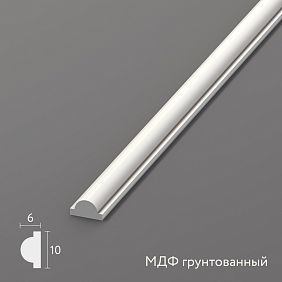
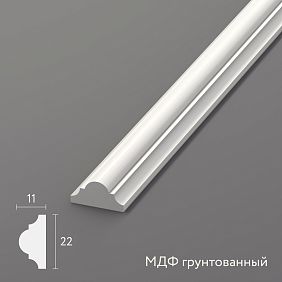
A molding is a linear decorative profile with a specific cross-section. Essentially, it's a strip with a molded relief that is mounted on walls or ceilings to create decorative lines, frames, dividers, and other geometric elements of interior composition.
Polyurethane molding is manufactured by injection molding from foamed polyurethane with a density of 200–420 kg/m³. The surface of the product replicates all the details of classical stucco — clear relief, smooth edges, a smooth base for painting. At the same time, the material is 5–7 times lighter than plaster, does not absorb moisture, does not crack due to building movement, and is easily mounted with construction adhesive without additional fasteners.
The standard length of a molding is 2 meters. The profile width ranges from 15 to 150 mm and more, depending on the collection and purpose. The surface can be painted any color with acrylic paint, or have patina, gilding, or decorative glazing applied.
Our factory also produces:


Where are moldings used in interiors
The application of moldings covers almost all vertical and horizontal planes of an interior:
-
Walls — framed panels, horizontal dividers, accent verticals, framing of openings
-
Ceiling – coffered grids, frames on the ceiling plane, reinforcement of ceiling cornices
-
Wall and ceiling transition – moldings are used as an addition to the cornice or as an independent element
-
Furniture fronts – framing of cabinet doors, accent frames on fronts
-
Interior panels and portals – decorative inserts in niches, framing of fireplace portals
Molding is one of the most versatile decorative tools in interior design. One element, multiplied by rhythm and geometry, transforms a wall into a work of architectural finishing.
Get Consultation
Why polyurethane moldings are in demand in Moscow
The Moscow decorative finishing market is one of the most active in Russia. The reasons why polyurethane moldings occupy a leading position in it are obvious:
-
Lightness and ease of installation – adhesive, level, precise cutting. No dowels, no special crew required
-
Resistance to operating conditions – temperature fluctuations in apartments with irregular heating, humidity in hallways and kitchens, mechanical loads
-
Wide price range – affordable solutions for standard apartments and developed collections for design projects
-
Precise detailing — relief at the level of plaster stucco, which after painting is almost indistinguishable from the original
-
Range for any task — from the thinnest smooth profiles for minimalism to rich ornamented collections for classic styles
What polyurethane moldings can be bought in Moscow
Smooth moldings
A smooth molding is a profile without ornamentation, with clearly defined geometric edges. The cross-section can be straight, stepped, with chamfers, with concave or convex elements — but without any relief pattern.
Smooth polyurethane moldings are the perfect choice for:
-
Modern and minimalist interiors, where decor works through form rather than ornament
-
Scandinavian and Nordic style — laconic frames on white walls
-
Transitional solutions — when you want structure on walls without clearly expressed stylistic decor
-
Ceiling coffers in modern spaces
Smooth molding creates a shadow—and it is this shadow that becomes the decoration. A thin protruding profile on a wall or ceiling under side lighting produces a clear shadow line, which reads as a boundary, as rhythm, as architecture.
Relief moldings
Relief molding is a profile with ornamentation: floral motifs, geometric patterns, acanthus leaves, volutes, meanders, garlands. The richness of the ornament varies from barely perceptible relief to rich sculptural detailing.
Relief moldings are suitable for:
-
Classical interiors with rich stucco decoration
-
Neoclassical—moderate ornamentation with precise proportions
-
Art Deco—geometric relief with pronounced rhythm
-
Design projects where decorative richness is important
Key rule: the richer the molding's ornament, the stricter the requirements for consistency with other decorative elements in the interior. Relief molding sets the tone—and the cornice, baseboard, and rosette must match it.
Narrow moldings
Narrow molding — width from 15 to 40 mm. It is a delicate tool for fine work with wall geometry. It does not draw attention to itself, does not create visual heaviness, but forms clear lines and frames.
When narrow moldings are chosen:
-
In small spaces — hallways, small bedrooms, kitchens, offices
-
For ceilings up to 2.7 m — to avoid overloading the space
-
When a neat frame is needed around a mirror, TV, or headboard
-
In modern and laconic interiors
NarrowMoldings made of polyurethane— is an excellent solution for those renovating Moscow studio apartments or small bedrooms where every centimeter counts.
Wide moldings
Wide molding — width from 60 to 150 mm and more. It is an expressive decorative profile that works in large-scale spaces and creates a strong visual accent.
When wide moldings are chosen:
-
In spacious living rooms from 25 m² with ceilings from 2.8 m
-
In country houses with high ceilings from 3 m
-
For creating large framed panels on accent walls
-
In classic and neoclassical interiors, where the scale of decor matches the scale of the hall
A wide profile requires space. In a small room, it looms and compresses. In a spacious hall, it unfolds and sets the architectural character.
Moldings — decorative overlays of various profiles — are used to create wall panels. The classic scheme — dividing the wall into three tiers using horizontal moldings. The lower tier — panels 90-120 cm high from the skirting board. The middle — main zone up to the frieze. The upper — frieze 30-50 cm below the cornice.
Wall decorative moldings are a category that includes all linear profiles intended for vertical surfaces. Their purpose is to create wall geometry: frames, dividers, verticals and horizontals that turn a flat wall into an architectural plane.
Application of wall moldings:
-
Framed panels behind a sofa, behind a bed, in niches
-
Horizontal divider in the middle of the wall for panel design
-
Vertical rhythms creating an illusion of height
-
Framing of door and window openings - architraves
In the sectionWall DecorSTAVROS offers wall moldings in collections of various stylistic directions - from strict geometry to classic ornaments.
Ceiling moldings
Ceiling moldings are used on the horizontal plane - to create coffered grids, frames around ceiling rosettes, geometric accents on the ceiling surface. They often work in tandem with cornices, enhancing the ceiling system.
A ceiling molding is a profile mounted on the ceiling plane, not at the junction of the wall and ceiling (that is the function of a cornice). The difference is fundamental: the cornice is transitional, the ceiling molding creates geometry within the ceiling field.
All ceiling elements - in the sectionceiling decor.
What tasks are polyurethane moldings purchased for
For decorative frames on walls
This is the most popular task. Moldings form rectangular or square frames on the wall, which visually structure the plane. Inside the frames, the wall can be painted in a separate shade, wallpapered, or simply highlighted by the relief of the profile.
Frame panels made of moldings are appropriate:
-
Behind the sofa in the living room — an accent wall
-
Behind the bed in the bedroom — an architectural backdrop
-
In hallway niches — structuring a small space
-
In the study — a strict decorative rhythm
For frames, moldings with a width of 30–60 mm are most often used. Corner elements are joined at a 45-degree angle — precise cutting is critical for a neat result.
For an accent wall
Accent walls are one of the main interior design techniques of the last decade. Moldings turn an ordinary painted wall into a decorative architectural plane. One molding + another molding forming a large frame + a rich color inside — and the wall becomes the main visual statement of the room.
For decorating a classic interior
In a classic interior, moldings are an essential element of the wall system. Relief profiles with floral motifs, wall frames, horizontal dividers, framing of openings — all this forms decorative architecture that distinguishes classic style from simple finishing.
For neoclassical style
Neoclassicism is the style where moldings are used most actively. Moderate ornamentation with precise proportions, frames on accent walls, coordinated in scale with cornices and baseboards — this is the neoclassical wall system.
Polyurethane moldings for neoclassicism — in the STAVROS collections with moderate relief, where the profile is legible without overload and maintains clean lines.
For a modern interior
Modern interiors embrace moldings through minimalism. Smooth profiles of 20–40 mm, clean frames without ornamentation, thin dividers on accent walls. Here, molding is not decoration but an architectural tool.
In open-plan interiors, moldings are used for visual zoning: a profile frame on the wall defines an area without a physical partition.
For visual zoning of space
Moldings are one of the few decorative tools that work not only aesthetically but also spatially. Vertical profiles on walls draw the eye upward—creating a sense of height. A horizontal divider splits the wall into zones—creating a sense of scale and order.
In Moscow apartments with non-standard layouts and open living room-kitchens, moldings help define zones without construction partitions.
How to choose polyurethane moldings for a room
For the living room
The living room is a space for rich decor. Here, moldings work at full capacity: framed panels on an accent wall, a horizontal divider, decorative verticals. In Moscow living rooms of 20–30 m² with a ceiling height of 2.7 m, the optimal molding width for frames is 40–60 mm.
Smooth molding for a modern living room. Embossed for neoclassical. Wide decorative profile for a country house living room with a 3 m ceiling. Molding frames behind the sofa—a classic technique that works in any stylistic key.
For the bedroom
In the bedroom, the main accent is the wall behind the headboard. A framed panel made of moldings creates an architectural backdrop for the bed. This can be one large frame or several vertical sections—depending on the width of the bed and the height of the wall.
Molding width for the bedroom—25–50 mm. Ornamentation—moderate or smooth. The principle: the frame should emphasize the bed, not compete with it.
For the hallway
The hallway is a compact space with high traffic. Vertical moldings on the walls visually stretch the space upward, creating a sense of greater height. A horizontal divider at 90–100 cm from the floor provides a lower zone for painting in a rich color—practical and striking.
Molding width for the hallway is 20–40 mm. A thin, smooth profile works better than a relief one in a small space.
For an office
A study requires strictness and representativeness. Vertical moldings on the walls, framed panels behind the desk or behind bookshelves, possibly a horizontal divider—all this forms the atmosphere of a serious workspace.
For a study with classic furniture, a relief molding of 50–80 mm is appropriate. For a modern, laconic study—a smooth one of 30–50 mm.
For Kitchen
In the kitchen, moldings are used cautiously: areas near the stove and sink are better left without decoration. But in the dining area or on the wall opposite the work surface, a framed panel made of moldings looks organic.
Polyurethane molding is resistant to wet cleaning and steam loads—this is crucial for kitchen use.
For a country house
Country houses in the Moscow region—space for large-scale solutions. Ceilings from 3 m, spacious living rooms, halls, studies. Here, wide moldings from 60 to 120 mm, relief profiles for classic and neoclassical collections, full wall systems with paneling are appropriate.
How to choose moldings according to interior style
For classic style
Classic interior requires ornamented moldings with developed relief. Width—from 60 to 120 mm. Ornament—leaves, acanthus motifs, geometric patterns, floral garlands. All moldings in a classic interior should belong to one decorative family—with a coordinated relief character.
Framed panels made of moldings in classic style are built on the principle: equal horizontal spaces between frames, symmetry of verticals, uniform frame size on each wall.
For neoclassical style
Neoclassical molding is about balance. Moderate ornamentation or a clean geometric profile. Width: 40–80 mm. Relief: legible but not overwhelming.
Neoclassicism allows mixing smooth and slightly relief profiles in one interior — provided they are coordinated in scale and belong to the same stylistic direction.
For a modern interior
Smooth molding is the only appropriate choice for a modern interior. Clean geometry, thin profile 20–45 mm, no ornamentation. Molding in a modern interior creates structure through light and shadow, not through pattern.
Popular solution: white smooth moldings on a white wall. The frames are legible only due to relief and shadow — a delicate, elegant effect.
For restrained decorative design
Between modernity and neoclassicism, there is a whole range of restrained solutions. Molding with a barely perceptible relief — not entirely smooth, but not explicitly ornamented — works as a transitional solution. It is appropriate in interiors where one wants 'a bit of classic' without a clear stylistic affiliation.
How not to overload a space with moldings
Overloading is a common mistake when working with moldings. How to avoid it:
-
One accent — one accent wall with frames. The remaining walls are neutral
-
Proportionality — the width of the molding corresponds to the scale of the frame and the room
-
Breathing interval — there should be enough space between frames (usually at least 10–15 cm)
-
Uniform profile — all moldings in one room from the same collection
-
Limited number of frames — 3–4 on a wall look thoughtful, 8–10 look overloaded
How to choose the size and shape of moldings
When to choose a narrow molding
Narrow profile (15–40 mm) is appropriate:
-
In rooms up to 15 m² or with ceilings up to 2.6 m
-
For delicate frames around small objects
-
In modern interiors — for geometry without bulkiness
-
When the molding should be present but not accentuated
When a wide profile is needed
Wide molding (60–120 mm or more) is justified:
-
In rooms from 25–30 m² with ceilings from 2.8 m
-
To create expressive accent frames
-
In classic and neoclassical styles with rich decor
-
In country houses with high ceilings
How to consider ceiling height
Ceiling height is the main technical parameter when choosing molding width. Practical guidelines:
-
Ceiling up to 2.6 m → molding for frames 20–40 mm
-
Ceiling 2.6–2.8 m → molding 35–60 mm
-
Ceiling 2.8–3 m → molding 50–80 mm
-
Ceiling from 3 m → molding 60–120 mm
These are not strict rules, but reliable guidelines. Deviating from these ranges leads to visual discomfort: either the molding gets lost on the wall, or it feels overwhelming in scale.
How to relate molding to wall area
The width of a molding frame should be proportional to the wall. A simple rule: the frame occupies 60–75% of the width of the allotted wall section. If there are several frames — equal spacing between them.
For a wall 3 m wide: three vertical sections of 80–90 cm each — this is an even rhythm. Two large frames of 110–120 cm with equal margins — a more large-scale solution.
How to choose profile relief
The degree of relief is chosen based on the decorative richness of the interior:
-
Minimal or zero relief (smooth) → modern, Scandinavian, minimalist style
-
Moderate relief → neoclassical, transitional styles
-
Rich ornamented relief → classic, art deco, rich neoclassicism
Important: the relief of the molding must match the relief of the cornice, baseboard, and other decorative elements in the same space.
What to buy: smooth or relief moldings
This is one of the most common questions when ordering. And the answer is not difficult if you ask the question correctly.
| Parameter | Smooth molding | Relief molding |
|---|---|---|
| Interior style | Modern, minimalism, Scandinavian | Classic, neoclassicism, art deco |
| Ornament | No | Floral, geometric, mixed |
| Decorative richness | Restrained | Expressive |
| Profile Width | 15–60 mm | 40–150 mm |
| Room | Apartments, small spaces | Country houses, spacious living rooms |
| Effect | Structure through geometry and shadow | Structure through ornament and volume |
Practical rule: if in doubt — choose smooth. Smooth molding fits in more interiors, carries less risk of error, and pairs more easily with other elements. Relief molding is chosen when the interior style is clearly defined and the molding must become an organic part of it.
How to combine moldings with other decor
Moldings and cornices
This is the most common combination in residential interiors. The cornice creates the upper horizontal line along the perimeter of the ceiling, while moldings set the rhythm on the walls. For the pairing to work, both elements must belong to the same stylistic direction.
For a modern interior: smooth cornice + smooth moldings. For neoclassicism: cornice with moderate ornamentation + moldings with coordinated relief. For classic style: developed cornice + relief moldings from the same collection.
Polyurethane ceiling cornices— in the corresponding section of the STAVROS catalog.
Moldings and baseboards
Molding and baseboard create the horizontal rhythm of the interior: molding in the middle part of the wall, baseboard at the base. They should match in style and, preferably, in the scale of the ornament.
Popular solution: high baseboard 120–150 mm + horizontal molding at a height of 90–100 cm from the floor. The lower zone (between the baseboard and molding) is painted in a saturated tone — a classic paneling technique.
polyurethane baseboards— in the catalog section, stylistically coordinated with the moldings.
Moldings and ceiling decor
Moldings on the ceiling create coffered grids and frames. This is the third level of the ceiling system — after the cornice and rosette. Coffers made from moldings break the ceiling plane into cells, creating multi-level depth.
Ceiling moldings for coffers — in the sectionceiling decor.
How to assemble a cohesive composition without visual noise
The noiseless system is built on three principles:
-
One style — smooth with smooth, ornamented with ornamented. No mixing of styles.
-
One scale — the width of the molding, cornice, and baseboard should be proportional to each other. A gap of more than two times is already a conflict.
-
One accent — if the walls are richly decorated with frames, the ceiling can be laconic. If the ceiling system is complex — the walls are simpler. Two strong accents compete.
How to buy polyurethane moldings in Moscow without mistakes
Determine where the moldings will be used
The first question is not 'what is beautiful,' but 'exactly where.' The wall behind the sofa? The ceiling? Framing an opening? Each of these tasks requires its own type of profile and its own scale.
Choose the type of profile
Smooth or textured. Narrow or wide. Wall-mounted or ceiling-mounted. After determining the application area and interior style, this choice is made quickly.
Check the dimensions of the wall and the molding.
Measure the ceiling height, wall width, and intended frame size. Check the profile width in the product card. A molding width of 25–30 mm for a frame is delicate. A width of 60–80 mm is expressive. Over 100 mm is large-scale and requires ample space.
Plan the composition in advance.
Sketch a layout: how many frames, what size, and with what intervals. This allows for accurate calculation of the number of moldings and corner elements. Add a 10–15% surplus for trimming.
Consider the style of the entire room.
The molding should fit into the existing interior. Check: does the selected profile match the style of the furniture, cornice, baseboard, and overall color palette?
Don't choose based solely on photos.
Photographs don't convey scale. A molding that looks delicate in a catalog might be 90 mm wide. Always check the dimensions—and try them against the actual wall parameters.
Common mistakes when choosing polyurethane moldings.
Here are real mistakes that even experienced renovators make.
Too wide molding for a small room
80 mm molding in a 12 m² room with 2.5 m ceilings is a theatrical set piece, not an interior element. The scale of decor should match the scale of the space.
Too active relief for a calm interior
Richly ornamented molding in a minimalist interior with white walls and laconic furniture is a style conflict that catches the eye. The decorative intensity of the molding should match the overall character of the interior.
Lack of a general placement scheme
Frames of different sizes, placed without a system—different heights, different widths, without rhythm—is chaos, not decor. Before installation, a clear plan is needed: where each frame will go, what size, with what intervals.
Choosing from a photo without considering actual dimensions
"Saw it online—looks great" is not an argument without checking the dimensions. Molding that looks good in a country house living room with 3.5 m ceilings may not fit in an apartment with 2.6 m ceilings.
Overloading the wall with too many frames
Eight frames on one wall in a standard room is too many. Three to four well-placed frames look thoughtful. The principle: less is more, but more precise.
Combining moldings, cornices, and baseboards from different stylistic approaches
Classical relief molding + smooth modern cornice + decorative art deco baseboard = three different interiors in one room. The style of all horizontal decorative elements must be coordinated.
Using moldings without considering ceiling height
A 100 mm wide molding on a 2.5 m ceiling visually lowers the already modest height. Ceiling height is the primary parameter when choosing the width of any decorative profile.
For which projects in Moscow are moldings most often purchased
For apartments
City apartments are the most common request. Moldings for framed panels in the living room, for an accent wall in the bedroom, vertical profiles in the hallway — this is the basic set of decorative finishing that genuinely changes the perception of the interior without a major renovation.
Easy glue-on installation, light weight, and the ability to paint any color after installation make buying polyurethane moldings in Moscow a quick and affordable solution.
For a country house
Country houses in the Moscow region are the perfect space for large-scale molding solutions. High ceilings from 3 m, spacious living rooms, halls, and studies. Wide profiles 80–120 mm, rich classical collections, full wall systems with paneling — all of this fits organically in a country format.
For commercial interiors
Offices, restaurants, meeting rooms, showrooms. Moldings create an atmosphere of representativeness and professionalism. Polyurethane is resistant to everyday use and allows repainting when updating the concept — this is important for commercial properties with periodic redesigns.
For a design project
In design projects, moldings are chosen for their precision of detail, stylistic unity within the collection, and the ability to create a complete wall system from coordinated elements. The catalogof polyurethane moldingsSTAVROS covers all stylistic directions — from strict geometry to rich classicism.
For renovation with a decorative accent
More and more Moscow clients consider decorative finishing with moldings as a deliberate step, not an optional addition. A framed panel made from moldings transforms an ordinary room into a space with character in just a few hours of work — and this doesn't require replacing furniture or completely repainting the walls.
FAQ: answers to common questions about polyurethane moldings in Moscow
What are polyurethane moldings for interiors?
These are linear decorative profiles made of expanded polyurethane, which are mounted on walls and ceilings to create frames, dividers, panels, and other geometric elements. They replicate the relief of classical stucco, while weighing 5–7 times less than plaster and are easily attached with adhesive. The full range is in the sectionMoldings made of polyurethane.
Which moldings are best to buy for walls?
For walls with frames — molding 30–60 mm wide depending on ceiling height and area. For a modern interior — a smooth profile. For neoclassicism — moderately relief. For classicism — ornamented with a developed profile. All options are in the sectionWall Decor.
How do smooth and relief moldings differ?
Smooth molding — without ornament, structure through geometry and shadow. Relief molding — with ornament, structure through pattern and volume. Smooth — for modern styles. Relief — for classic and neoclassical.
Which moldings to choose for a classic interior?
Ornamented moldings with floral or geometric relief, width from 60 to 120 mm, from the same collection as cornices and baseboards. All elements must belong to the same decorative family.
Are polyurethane moldings suitable for a modern interior?
Yes — through the principle of minimalism. A smooth thin profile of 20–40 mm creates structure without ornament. Thin white frames on a white wall — a delicate, elegant technique that works perfectly in modern Moscow apartments.
How to choose moldings according to wall size?
Measure the ceiling height and wall width. For a 2.7 m ceiling — molding 35–60 mm. For 3 m — 60–90 mm. Frame width — 60–75% of the wall section width. Interval between frames — at least 10–15 cm.
Can moldings be combined with cornices and baseboards?
Not just can — should. Cornice, moldings, and baseboards — three horizontal elements of one wall system.Crown MoldingandBaseboardsare selected to match the moldings in style and ornament scale.
How to avoid mistakes when buying moldings in Moscow?
Three rules: 1) ceiling height first → then molding width; 2) determine the style → choose the degree of relief; 3) plan the layout scheme → calculate the quantity with a 10–15% reserve.
What is better for a small room: narrow or wide moldings?
Narrow — 15–40 mm. A wide molding in a small room creates a feeling of pressure. A narrow smooth profile adds structure without overloading the space.
Where is it appropriate to use wall moldings?
In living rooms behind the sofa, in bedrooms behind the bed, in studies on the work wall, in hallways for structuring space, in kitchens in the dining area. Anywhere a flat wall requires architectural character.
Conclusion
Polyurethane molding is not just a decorative strip. It is a tool that works with wall geometry, sets rhythm, creates frames, and turns a finished room into a thoughtful interior. It should be chosen not on the principle of 'I like it,' but on the principle of 'it fits': fits the ceiling height, fits the task, fits the style, fits the scale of the room.
Buying polyurethane moldings in Moscow without mistakes is possible if you take three steps: determine the place of application → choose the profile type → check the dimensions and style compliance. Everything else is a matter of assortment. Go to the section Moldings made of polyurethane and choose from collections that cover the entire range — from minimalist smooth profiles to developed classical ornaments.
For wall solutions — Wall Decor. For ceiling — ceiling decor. For comprehensive design — full catalogPolyurethane moldings, whereCrown Molding, Baseboards, ceiling rosettesandDecorative Inserts are waiting to become part of your interior.
STAVROS is a manufacturer and supplier of polyurethane moldings and decorative elements for interiors in Moscow and throughout Russia. The STAVROS catalog includes a wide range of moldings — smooth and textured, narrow and wide, for walls and ceilings, in styles from modern minimalism to rich classicism. STAVROS offers stylistically coordinated collections where moldings, cornices, baseboards, and rosettes form cohesive decorative systems — for creating interiors where every detail contributes to the overall result.