Article Contents:
- What is Furniture Molding and Where is it Used
- Furniture facades
- Kitchen cabinets
- Wardrobes, Dressers, and Cabinets
- Display Cases and Sideboards
- Which Types of Furniture Molding are Most Commonly Used
- Moldings
- Planks
- Cornices
- Angles
- Bars
- Carved moldings
- Furniture Moldings: When They Are Needed and What Problems They Solve
- Front Framing: Frame Effect Without Milling
- Frame Compositions: One Front — Multiple Levels
- Visual furniture upscaling
- Classic and neoclassic
- Modern furniture decor
- Slats for furniture and facades: when they are better than moldings
- Vertical rhythm and slatted facade
- Cabinet and dresser facades
- Slatted inserts in frame facades
- Combination with wall decor
- Japandi style and modern interior
- Furniture cornices: how to finish the top of a wardrobe, kitchen or sideboard
- Furniture top line
- Classic interior: carved cornice as a crown
- Combination with moldings and facades
- When a carved cornice is needed
- What to choose for furniture facades: smooth, geometric, or carved profile
- Smooth profile: modernity and purity
- Geometric profile: precision and rhythm
- Carved profile: history and status
- For kitchen fronts
- For case furniture: cabinets, dressers, nightstands
- What material is best to buy molding for furniture from
- Solid oak
- Solid beech
- MDF
- For painting or with a finish coating
- When natural solid wood is needed
- How to calculate the amount of molding for furniture before ordering
- Calculation for one facade
- Calculation for a kitchen
- Calculation for a wardrobe or chest of drawers
- Series of identical facades
- When an order based on a drawing is needed
- What determines the price of furniture molding
- Material
- Profile complexity
- Profile width
- Segment length and batch volume
- Custom Order
- Unified visual system: when furniture and wall molding speak with one voice
- Where to buy furniture molding without mistakes
- Which furniture the profile is selected for
- How to choose compatible elements
- When to use a ready-made profile from the catalog
- When an individual order is needed
- Which catalog pages to view
- About the Company STAVROS
- FAQ: popular questions about furniture moldings
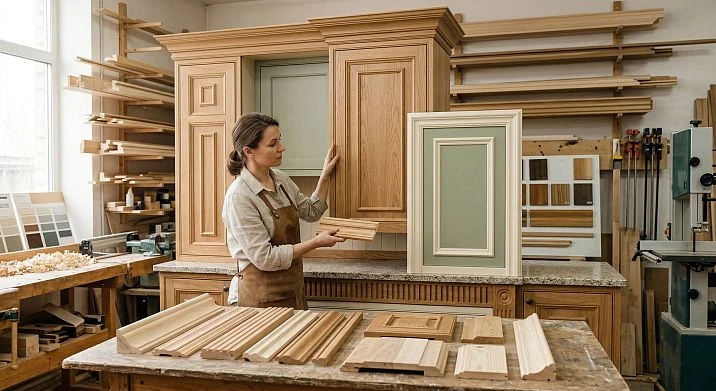
Furniture moldings are a group of profile products made of wood or MDF that are used to decorate facades, bodies, top and bottom lines of furniture structures. Moldings, rails, cornices, corners, bars, carved overlays—each element solves its own task. And if you are reading this article, it means you have a specific question: what exactly to buy, which profile to choose, and how not to make a mistake. We will answer honestly, in detail, and to the point.
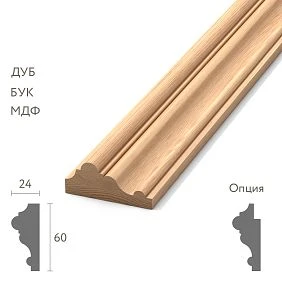
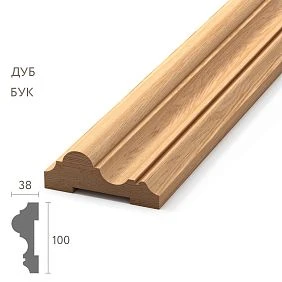
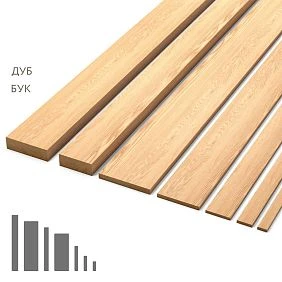
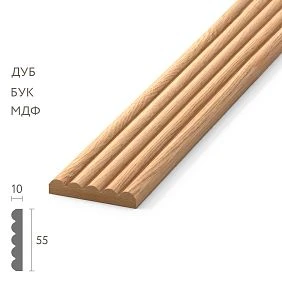
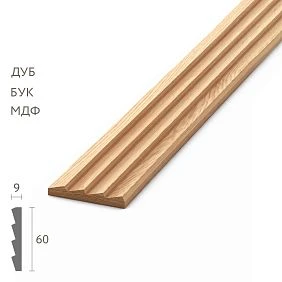
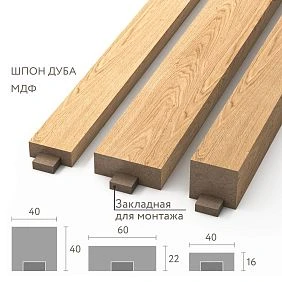
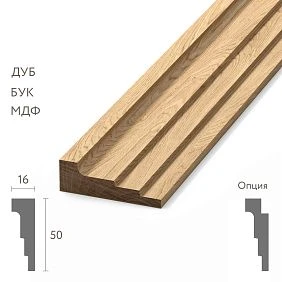
What are furniture moldings and where are they used
The word 'moldings' means profile products sold by the linear meter. In the furniture context, these are decorative and structural elements that are mounted on facades, side panels, top crowns, and plinths of furniture. They can be overlay (glued onto the facade), frame (creating a frame inside the facade), or structural (forming a cornice, overhang, or base).
The scope of application of furniture moldings is significantly wider than it seems at first glance.




Furniture facades
This is the main area of application. A molding glued along the perimeter of a facade door instantly transforms a flat rectangle into a framed panel structure—visually more complex, more 'expensive,' and more lively. Two moldings of different widths on one facade—and you already have a classic two-level decor, which was previously available only through expensive custom door milling.
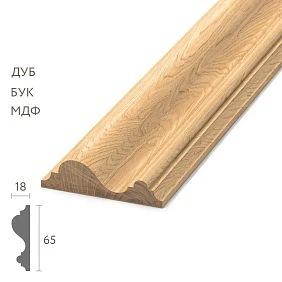
Moldings for furniture facadesThe STAVROS catalog allows you to achieve exactly this—through overlay mounting—a result indistinguishable from custom-made.
Our factory also produces:
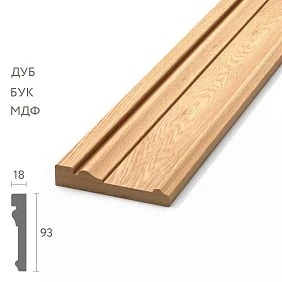
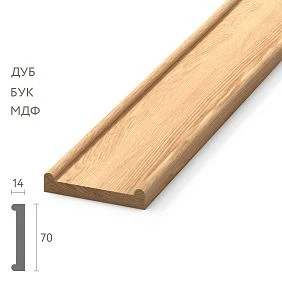
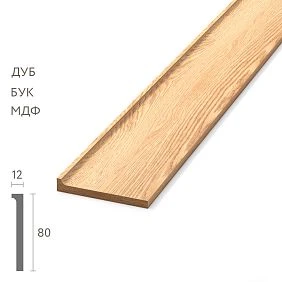
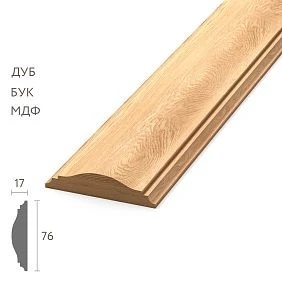
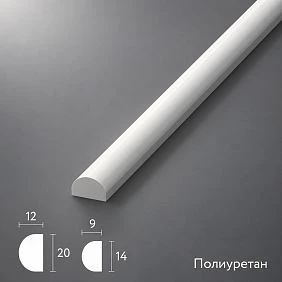
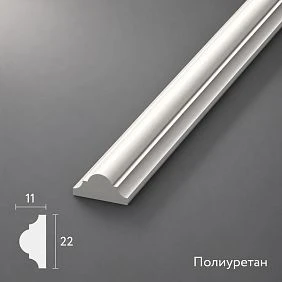
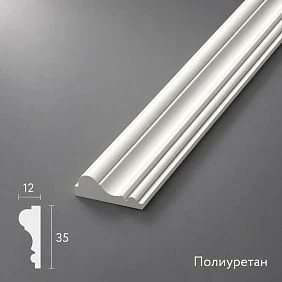
Kitchen cabinets
The kitchen is the most demanding space. Here, furniture molding carries a dual load: decorative and protective. Molding on upper cabinet fronts, cornices along the top line, and baseboard profiles along the bottom—all create a unified architectural frame around the kitchen area. Without these elements, even a high-quality set looks 'unfinished,' like a frame without a painting.
Get Consultation
Cabinets, dressers, and chests
Case furniture with flat fronts is the most common object for decorating with molding. A sliding wardrobe in the bedroom, a dresser in the hallway, a TV stand—adding decorative strips to front doors or molding around the perimeter of the case radically changes their appearance. This is especially relevant when updating existing furniture: it's much cheaper to decorate an old cabinet with molding than to buy a new one.
Display cabinets and buffets
A buffet, bookcase, display cabinet with glass inserts—heredecorative furniture moldingworks as an architectural frame. Frame molding around glass inserts, cornices along the top of the buffet, vertical strips dividing the front into sections—these are the details that turn furniture into an item worthy of a classic interior.
What types of furniture molding are most commonly used
The furniture molding market is rich, but all nomenclature is divided into several clear groups. It's important to understand what each of them is responsible for.
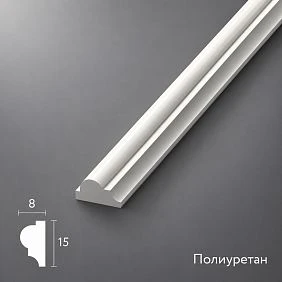
Moldings are linear profiles used to create framed compositions, zone walls, and frame openings. They come in various widths (from 20 to 150 mm) and relief complexity — from smooth to richly decorated.
Molding is a profile strip with decorative relief, whose main function is to create frames, lines, and transitions on furniture surfaces. It is the most versatile element of furniture decor: it works as a frame for the front panel, a zone divider, and an element of an ornamental strip.
STAVROSMoldings for furnitureare available in a wide range: from smooth and shaped profiles 20–40 mm wide to complex carved series 80–120 mm wide. Materials include solid oak, solid beech, and high-density MDF for painting.
Planks
Battens are rectangular or square profiles that create a vertical or horizontal rhythm on a surface. In modern furniture, they give the effect of a lattice, palisade, or slatted front. In classic styles, they structure the surface through regular intervals. Decorativefurniture railsmade of oak and beech are one of the most requested elements in modern furniture decor.
Crown mouldings
Cornice is the top profile that completes the furniture carcass along the ceiling line or the top plane of the cabinet. It is the cornice that 'closes' the furniture, creates a transition to the ceiling plane, and sets the vertical scale of the entire structure. Without a cornice, a cabinet looks 'cut off'; with the right cornice, it achieves architectural completeness.
Corner pieces
Woodenfurniture corner piecesare L-shaped cross-section profiles that cover and decorate the external corners of carcasses: cabinet sides, dresser edges, transitions between panels. Functionally, they protect ends from damage. Decoratively, they provide clear vertical accents.
Blocks
Furnitureblocks and moldingsWith square or rectangular cross-section are used as inserts, dividers, legs, horizontal rails in frame structures. They also serve as the basis for creating frame-and-panel facades on flat cases.
Carved millwork
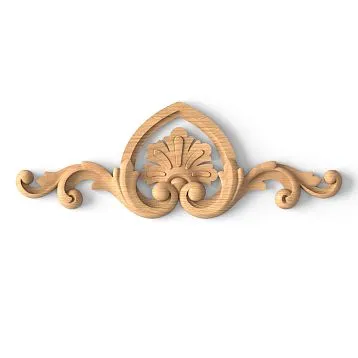
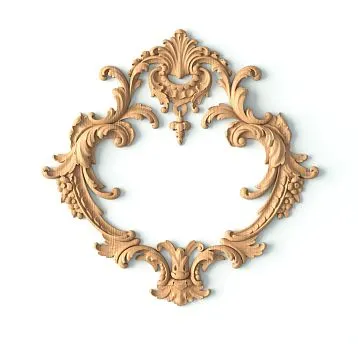
Carved moldings are the highest level of furniture decor. Complex ornamentation, multi-level relief, floral and geometric motifs are elements that elevate furniture from the 'good' category to the 'exceptional' category. In the STAVROS catalog, carved profiles are made from solid oak with 3D milling and hand finishing.
Furniture moldings: when they are needed and what tasks they solve
Molding is the most flexible tool in furniture decor. Not rules or limitations, but possibilities. Let's consider specific scenarios.
Framing facades: frame effect without milling
The most common technique: molding is glued around the perimeter of the facade door, creating a frame around the central panel. The effect is similar to a frame-and-panel facade, but without milling and without expensive production retooling. For application, PVA glue, clamps, and steady hands are sufficient.
The width of molding for frame framing is 20–40 mm. Wider molding (50 mm and above) is suitable for large cabinet doors and large-format kitchen facades.
Frame compositions: one facade — several levels
Double framing: a narrow outer molding + a wider inner one (or vice versa) — this is already classic two-level furniture decor. This scheme works well on kitchen facades, bedroom cabinets, and buffet doors. Important: with two moldings, they must be compatible in style — either both smooth, or both with relief of the same character.
Visual upscaling of furniture
There is a direct correlation: molding on a facade is perceived as a sign of more expensive furniture. This is not an illusion—it's a real design effect. A flat facade reads as a budget solution. A facade with molding framing reads as a custom-made piece. Furniture buyers sense this intuitively, even if they can't explain the difference.
For furniture manufacturers and carpentry workshops, this translates into a specific margin:Wooden moldings for furniturecosting 300–700 rubles per linear meter on a facade adds incomparably more to the perceived value of the piece than their actual cost.
Classicism and neoclassicism
Classical furniture is unthinkable without moldings. Framed facades, cornice belts, plinth profiles, vertical pilasters—all of these are implemented through millwork. For classical styles, profiles with figured or carved relief are chosen: ovolo, fillet, ogee, cyma reversa, astragal—each historical profile carries its own meaning.
Moldings and cornices for furniturein a classical execution made of oak—these are solutions that have been used for decades in prestigious interiors: studies, libraries, dining rooms.
Modern furniture decor
Modern molding is minimalist, geometrically precise, without historical allusions. A rectangular cross-section with one or two bevels, a smooth surface for painting, clean lines without scrolls. In interiors of the 'modern classic,' 'neoclassical,' and even 'warm minimalism' styles, such moldings create expressive decor without excess.
Battens for furniture and facades: when they are better than moldings
Battens and moldings solve different problems. Confusing them means getting a result different from what was expected.
Vertical rhythm and battened facade
Decorative slats are a tool of rhythm. Several vertical slats with equal spacing on a cabinet facade create a 'slatted' effect—one of the most popular furniture trends in recent years. It is simultaneously texture, structure, and movement. Slats do not create a frame—they create a surface.
Wooden battens for furnitureMade from oak with sections of 15×15, 20×20, 25×25 mm—the main format for slatted facades in modern interiors. The spacing between slats ranges from 15 to 40 mm depending on the desired rhythm density.
Cabinet and dresser facades
Slatted decor on cabinet doors is about modern, Scandinavian, Japanese (Japandi) interiors. Thin slats with wide gaps—a light, airy rhythm. Wide slats with narrow gaps—a dense, monolithic effect. Horizontal slats on a dresser—a striped horizontal line that visually widens the piece. Vertical slats on a tall cabinet—slimness, upward movement.
Slatted inserts in framed facades
Slats combine excellently with moldings: the molding forms a frame around the perimeter of the facade, and inside it—slats with small spacing. This allows combining the classic architecture of the facade with modern decorative filling.
Combination with wall decor
When slatted decor transitions from the wall to the furniture—the interior gains a rare quality: visual continuity.Decorative strips for furnitureMade from the same profile as the wall slats, they create a feeling as if the furniture 'grows' out of the wall—this is an expensive designer technique realized through the unity of material and profile.
Japandi style and modern interior
Japanese minimalism plus Scandinavian warmth — this combination currently dominates modern residential design. And wooden slats are one of its main tools. Thin oak slats in a natural tone, without excessive coating, against a light or gray-beige background — the quintessence of this style.
Cornices for furniture: how to finish the top of a cabinet, kitchen, or sideboard
A cornice is the final point. That element which either provides a spectacular finish or, if absent, leaves the question open.
The top line of furniture
Look at a cabinet without a cornice: a flat horizontal line of the top lid, in no way connected to the ceiling — this 'gap' between the furniture and the ceiling always troubles the eye. A cornice closes it, creates a smooth transition, and gives the entire structure completeness. That is why in good furniture, a cornice is a mandatory element, not an option.
Furniture crown moldingMade of solid oak or beech, it is mounted along the top line of a cabinet, kitchen set, or sideboard. It can be straight (a horizontal profile without overhang) or with a forward overhang (creates a 'shadow' underneath and adds volume to the entire upper zone).
Classic interior: a carved cornice as a crown
In classic interiorCornices for furniture— is the true crown of the entire architectural solution. A wide carved cornice with a cyma profile, a shelf, a cavetto, finished with an ornamental strip — this is the classic three-part scheme of an order in miniature. Such a cornice 'connects' the furniture with the room's architecture, making it part of a unified interior statement.
Combination with moldings and facades
The cornice works in a system with other elements of furniture trim: front moldings, plinth profiles, vertical pilasters. If the moldings on the doors are shaped, the cornice should contain a related profile. If the moldings are smooth, the cornice is also laconic. Inconsistency of styles between different furniture elements is one of the most common mistakes in DIY decorating.
When a carved cornice is needed
A carved cornice is appropriate in interiors with high ceilings (from 3 m), in classic living rooms, dining rooms, and studies, with furniture in Renaissance, Baroque, and Classicism styles. In a modern interior with low ceilings, a carved cornice is an overload. Here, a laconic profile with one or two bevels is sufficient.
What to choose for furniture fronts: smooth, geometric, or carved profile
Three profile styles — three different design languages. The question is not which one is 'better,' but which one matches your interior.
Smooth profile: modernity and purity
A smooth profile without relief — minimalism, clean planes, emphasis on form, not decoration. This is the language of modern and Scandinavian interiors. A smooth beech molding under white matte enamel on a white front is almost invisible but an important structural accent.
A smooth profile with a cross-section of 20–30 mm is the most universal choice for modern kitchens, sliding wardrobes in minimalist bedrooms, and modular storage systems.
Geometric profile: precision and rhythm
Geometric molding is a profile with clear straight or angular edges: bevels, chamfers, steps, rectangular ledges. Without plant ornaments, without historical allusions — only geometry. This is the language of Art Deco, modern classics, 'warm minimalism'.
Geometric profiles work well on dark oak furniture with matte varnish: sharp edges create clear shadows, and the profile remains legible even against a rich dark background.
Carved profile: history and status
A carved profile is the language of classicism, tradition, and craftsmanship. It doesn't try to be inconspicuous: ornamentation, relief, and the play of light and shadow all work together to create an atmosphere of significance and solidity.Wood moldings and furniture overlays from the STAVROS catalog is precisely the level of detail that meets this requirement.
A carved profile is appropriate on solid wood furniture, in interiors with moldings, and in formal spaces. On a kitchen with laminated fronts, it is excessive.
For kitchen fronts
The kitchen is a special case. Here, functional requirements are added to decorative ones: millwork must withstand humidity, temperature fluctuations, and periodic wiping. Recommended: solid wood with varnish or oil-wax finish, or MDF with a hard primer-enamel. The profile should be moderate, without deep grooves where grease can accumulate.
For case goods: wardrobes, dressers, cabinets
For the bedroom and living room, practicality requirements are lower, but aesthetic demands are higher. Here, more complex relief, a wider profile, and more refined finishes can be allowed.Solid wood millwork and STAVROS furniture is a unified system where furniture and interior millwork are designed in a consistent style and material.
What material is best to buy furniture molding from?
Choosing a material is choosing a compromise between budget, aesthetics, and operating conditions.
Solid oak
Oak is density, hardness, a pronounced texture with large pores and characteristic medullary rays. Oak furniture molding: maximum durability (30–50 years), rich appearance, takes well to tinting from light walnut to dark wenge. The downside is the price is higher than beech.
Solid oak molding— the right choice for furniture that is built to last for decades, for executive interiors, for classic styles, and for furniture intended to be passed down to future generations.
Solid beech
Beech is dense, uniform, with a fine structure without a pronounced pattern. It is the ideal material for milling fine relief and for subsequent painting: the beech surface accepts enamel without spotting, giving an even, clean color. Slightly cheaper than oak.
Beech is chosen for furniture for painting: white, gray, cream interiors. Beech moldings in white matte enamel are a classic of modern kitchen design.
MDF
High-density MDF is not 'worse', it's a 'different' material. It is isotropic (the same in all directions), has no texture, and mills perfectly down to the finest details. For painting — indispensable where precise, small profiles are needed. Less durable in high humidity compared to solid wood. Cheaper.
For painting or with a finish
'For painting' — a profile without a finish, ready for primer, enamel, or tinting. Suitable for those who want a specific color or tone for their project. Finished coating (tinting, varnish, oil-wax) — a product ready for installation. Saves time but limits color choice.
When solid wood is needed
Natural solid wood is always needed when: the furniture involves an open texture (without paint); the item claims durability of more than 20–30 years; the interior is a classic or natural style with exposed wood; the furniture will be restored or repainted in the future.
How to calculate linear footage for furniture before ordering
Calculation is not unnecessary math; it saves money and nerves. A 10% error will result in either overpaying for extra meters or delays due to additional purchases.
Calculation for one front panel
If molding goes around the perimeter of the door (frame effect):
-
Front panel perimeter 40×70 cm: (40+70)×2 = 220 cm = 2.2 m
-
Allowance for corners (45° + waste): +20% = 0.44 m
-
Total: 2.64 m → take 3 m
Calculation for a kitchen
Typical kitchen set with 8 upper and 6 lower front panels:
-
Total perimeter of all front panels — from 30 to 50 linear meters depending on sizes
-
Stock +20%
-
For the cornice along the top row: length of the top row of cabinets + two side overhangs + 15% stock
Calculation for a cabinet or chest of drawers
For slatted decor on a cabinet: slat height = front height minus top and bottom gaps. Number of slats = front width / (slat width + spacing). Multiply by the number of doors. Plus 10–15% stock for trimming.
Series of identical fronts
For a series of identical fronts, sum the linear footage for one front and multiply by the quantity. Stock for the series — 10% (less than for a single item, as cutting is sequential and waste is lower).
When a custom order from a drawing is needed
If you have non-standard furniture — curved fronts, radius profiles, atypical cross-sections — the calculation is based on a drawing. STAVROS performs manufacturing according to individual technical specifications with cost calculation after approval.
What determines the price of furniture linear footage
Transparency in pricing is respect for the client. Let's break it down honestly.
Material
Oak is on average 15–25% more expensive than beech. MDF is cheaper than both for simple profiles, but with complex milling the difference is leveled out. Solid wood is always more expensive than pressed materials — and always more durable.
Profile complexity
Smooth rectangular molding 20×10 mm — minimal processing, minimal price. Shaped profile with two radius transitions — several passes of the cutter, more expensive. Carved ornament — 3D milling, manual finishing, significant time and precision. Price increases proportionally to complexity.
Profile width
Greater width = more material per linear meter = higher price. This is a linear relationship.
Length of the segment and volume of the batch
Retail purchase of 2–3 meters — price is maximum. Batch of 20–50 m and more — wholesale discount. For furniture manufacturers and carpentry workshops working regularly, wholesale from STAVROS is real savings in the cost structure of products.
Custom order
Non-standard profile, unique ornament, atypical cross-section — this is custom production with calculation upon agreement. Minimum print run — check with the manager.
| Type of molding | Material | Approximate range |
|---|---|---|
| Smooth molding, 20–30 mm | Beech/MDF | from 150–400 rub./m |
| Figured molding, 30–50 mm | Oak/beech | from 400–900 RUB/m |
| Carved molding, 50–80 mm | Oak | from 1,500–4,000 RUB/m |
| Furniture cornice | Oak/beech | from 600–3,500 RUB/m |
| Decorative strip | Oak/beech | from 200–600 RUB/m |
Unified visual system: when furniture and wall moldings speak with one voice
The strongest design effect is achieved not when furniture is beautiful and walls are 'just white', but when moldings on walls and moldings on furniture fronts share the same profile, material, and finish. This is called 'visual rhythm' or 'visual rhymes'—a principle professional designers use as a fundamental tool for creating a cohesive interior.
Furniture decor and furniture lines— a separate topic that specifically discusses this strategy: how wall decor lines continue furniture lines, creating a continuous architectural space.
In practice, this means: when choosing furniture molding for facades, immediately think about the same profile for wall application. A horizontal belt on the wall at a height of 90 cm + the same profile at the level of the kitchen countertop — this is already an architectural horizontal that 'unites' the entire space.
decorative inlays for furniturefrom the STAVROS catalog complement this system: overlay rosettes, corner elements, decorative inserts — details that are placed pointwise but create accents that enhance the overall decorative rhythm.
Where to buy furniture moldings without mistakes
For which furniture is the profile selected
Before ordering — answer three questions:
-
What interior and furniture style? (Classic, contemporary, neoclassical, minimalism)
-
What furniture material? (Solid wood, MDF, veneer, laminate)
-
What finish is planned? (For painting, for tinting, natural wood)
Answers to these three questions will narrow the selection from 'a hundred catalog positions' to 'ten truly suitable ones'.
How to select compatible elements
Molding, cornice, and slats for one piece of furniture should be made from the same material or maximally similar materials. Mixing oak and beech is acceptable with identical tinting. Mixing solid wood and MDF on visible surfaces is undesirable—the difference in texture will be noticeable.
When to choose a ready-made profile from the catalog
In 90% of cases—exactly then. The STAVROS catalog is sufficiently broad to cover most furniture decor tasks. If the needed profile is in stock—order the standard: it's faster and cheaper.
When an individual order is needed
Non-standard cross-section, proprietary ornament, unique profile for an author's design project—this is custom production. STAVROS fulfills such orders with appropriate production runs and full coordination of parameters and cost.
Which catalog pages to view
-
Moldings and cornices for solid wood furniture— main catalog of oak and beech millwork
-
Moldings by product type— moldings filter
-
rails— decorative battens for furniture and walls
-
corners— wooden corners for cabinets
-
blocks and moldings— structural elements for frame constructions
-
Decorative Inserts— overlay elements for accent decor
About the company STAVROS
STAVROS — a Russian manufacturer of wooden moldings, cornices, battens, and decorative items made from solid oak and beech. Founded in 2002, it began with the restoration of historical interiors — the Hermitage, Konstantinovsky Palace, Alexander Palace. Today — full-cycle production in St. Petersburg.
STAVROS standards: wood drying to 8–12%, four-sided planing on German equipment, 3D milling with geometry tolerance of ±0.1 mm per linear meter, manual finishing of complex profiles. Assortment — over 50 series of moldings, cornices, battens, corners, overlays. Retail and wholesale, custom project manufacturing.
Showrooms in Moscow and St. Petersburg. Contact us to confirm shipping to your destination. and CIS. Phone: 8 (800) 555-46-75 (toll-free within Russia).
FAQ: popular questions about furniture moldings
What is furniture molding?
These are profile products made of wood or MDF used for decorating furniture fronts, cabinets, and top lines of furniture structures. Moldings, battens, cornices, corners, blocks — all these are varieties of furniture molding.
How does furniture molding differ from construction molding?
Construction molding—baseboards, casings, glazing beads—is intended for finishing walls, floors, and openings. Furniture molding—moldings, slats, cornices—is specifically designed for decorating furniture fronts and cases. There are no fundamental structural differences, but furniture molding typically has a finer and more precise relief, optimized for furniture scales.
Which moldings are better for furniture fronts?
Depends on the style. For modern interiors—smooth or geometric profile 20–35 mm. For classic—figured or carved, 40–70 mm. For neoclassical—geometric with moderate relief.
When is it better to choose slats instead of moldings?
Slats are chosen when rhythm and texture (slatted front) are needed, not a frame. Moldings—when a frame structure and architectural framing of a panel are needed. In modern interiors, slats are more common; in classic ones—moldings.
Which cornice is suitable for classic furniture?
Wide (60–100 mm) carved oak cornice with a goose-shelf-heel profile and wenge-toned or patinated finish. Forward projection of at least 40 mm to create 'shadow' and volume.
What is better for furniture: solid wood or MDF?
Solid wood—for furniture that lasts decades and under natural finish. MDF—for painting and with a limited budget. Both materials are good when applied correctly; incorrectly—MDF in high humidity (kitchen, bathroom) without proper coating.
How to calculate the linear footage for a facade?
Perimeter of the facade (sum of all sides) + 20% for waste from miter cuts. For a frame molding facade of 40×60 cm: (40+60)×2 = 200 cm + 40 cm = 2.4 m. Take 2.5 m with a margin.
Can I order custom-sized furniture molding?
Yes. STAVROS manufactures custom profiles according to drawings and technical specifications. Terms and minimum order quantity — please check with a manager by phone 8 (800) 555-46-75.
What type of molding is suitable for kitchens and cabinets?
For kitchens — a profile with lacquer or oil-wax coating, resistant to moisture. Cross-section without deep grooves. For cabinets in bedrooms and living rooms — a wider selection, complex relief and carving can be used.
What affects the price of furniture molding?
Material (oak is more expensive than beech), profile width, complexity of relief and carving, finish coating, order volume (bulk is cheaper than retail), custom manufacturing to order.