












































































Article Contents:
- Why the Countertop Material Determines the Support Construction
- Solid Wood: Compensating for Movement and Moisture
- Stone Countertops: Weight Distribution and Support Points
- Composite Materials: Base Geometry and Load Distribution
- Types of Support Constructions: Function and Form
- Four-Point Support: Classic and Stability
- Central Support: Free Space Under the Countertop
- Two-Point Support: Elegance and Functionality
- Frame Constructions: Maximum Strength for Large Formats
- Support Materials: Characteristics and Application Areas
- Wooden Supports: Warmth and Tradition
- Metal Supports: Strength and Modernity
- Combined Solutions: Balance of Properties
- Load Calculation: Engineering Approach to Selection
- Static Load: Weight of the Countertop and Its Contents
- Dynamic Load: Impacts and Vibrations
- Uneven Distribution and Cantilever Loads
- Countertop Attachment to Support: Technologies and Nuances
- Rigid Attachment: For Composites and Stable Materials
- Sliding Attachment: For Solid Wood
- Adhesive Attachment: For Stone and Acrylic Stone
- Combined Attachment: Reliability and Universality
- Aesthetics and Style: Support as a Design Element
- Classic Supports: Carving and Precision Forms
- Modern Minimalist Constructions
- Industrial Style: Roughness and Functionality
- Scandinavian Style: Lightness and Naturalness
- Common Mistakes When Choosing and Installing Support
- Insufficient Load Assessment
- Ignoring the Properties of the Countertop Material
- Incorrect Support Placement
- Lack of Compensation for Floor Irregularities
- Over- or Under-Tightening Fasteners
- Special Solutions for Non-Standard Tasks
- Folding Tables: Supports with Transformation Mechanisms
- Adjustable Height Tables: Raising Mechanisms
- Cantilever Tables: Wall Mounting
- Outdoor Tables: Protection from Moisture and Temperature
- Maintenance and Care of Supports
- Regular Fastener Checks
- Protection from Moisture and Mechanical Damage
- Updating Finishes
- Protection of Floor from Scratches
- Where to Buy Quality Supports: Criteria for Choosing a Manufacturer
- Manufacturer Reputation and Reviews
- Option for Custom Orders
- Materials and Technologies
- Warranties and Service
- Frequently Asked Questions About Supports
- Can One Support Be Used for Different Countertops?
- How to Determine if a Support Is Suitable for My Countertop?
- Can I Make a Support Myself?
- How Much Does a Quality Support Cost?
- How Often Should I Check and Maintain the Support?
- What to Do If the Table Rocks?
- Can Supports of Different Styles Be Combined?
- How to Protect Wooden Supports from Moisture in the Kitchen?
- Can a Stone Countertop Be Mounted on a Wooden Support?
- What Is Better for Heavy Countertops — Four Legs or Central Support?
- Conclusion: Investment in Longevity and Comfort

Choosingcountertop supportsChoosing countertop supports is not just buying a support, but a thoughtful engineering solution that determines the lifespan of the entire structure, its stability, and its aesthetics. Each countertop material dictates its own requirements for the support: solid wood requires compensation for natural wood deformation, stone needs a strong load-bearing base, and composite materials require even distribution of support points. An error in selection will lead to cracks, warping, or premature destruction of the expensive surface.


Why the Countertop Material Determines the Support Construction
Any countertop is not a static slab, but a living system with its own physical characteristics. Natural wood breathes, absorbs moisture, expands and contracts depending on the season. Stone has enormous weight, but is brittle under bending. Composites are stable, but require precise geometry of support points. It is precisely these features that determine the requirements for the support.
When you install a solid wood countertop on a rigid metal frame without compensating gaps, you create a conflict: wood wants to move, while metal restrains it. The result is predictable — cracks along the grain, material chipping at fastener locations, deformation. For stone, the problem is different: its weight requires not just strong supports, but correct calculation of support points and load distribution on each of them.




Solid wood: compensation for movement and humidity
Solid wood countertops can change their linear dimensions by 3-8% depending on the species and air humidity. Oak, beech, ash — all of them obey the laws of nature.Furniture legsFor such countertops, either micro-movements must be allowed, or they must be installed with compensating elements.
Optimal substructure design for solid wood includes a mounting system that rigidly fixes the countertop along one axis (usually the central line), but allows it to freely expand or contract in the transverse direction. This is achieved using slots, sliding mounting plates, or special Z-shaped metal clips. If the countertop is mounted onwooden planks on the wallor on a solid wood frame, it is important that the grain direction of the frame and countertop coincide — this minimizes internal stresses.
For rectangular tables up to 180 cm in length, two supports spaced 15-20 cm from the ends are sufficient. For longer tables, additional intermediate supports are required. Ignoring this rule leads to sagging in the center of the countertop and cracking. In this case, it is important thatFurniture supportwas sufficiently massive — thin metal pins will not provide the required contact area and will create localized stress zones.
Our factory also produces:


Stone countertops: weight distribution and support points
Marble, granite, quartz aggregate — materials with exceptional hardness but low flexural strength. A 20 mm thick natural marble countertop may crack due to improper installation, even if it visually appears monolithic. The weight of a stone countertop covering 2 m² can reach 100-150 kg, and this weight must be distributed evenly.
The key concept here is the support point. For stone, it is unacceptable for the entire load to be borne by two narrow lines along the edges. The optimal scheme is either a continuous frame surrounding the perimeter of the countertop or a grid structure with support element spacing no greater than 60-80 cm. Cast ironLegs for tableswith a wide flange or massive cross-shaped metal bases — a classic solution for stone.
Special attention is paid to anchor connections. Stone countertops are not rigidly attached to the substructure — elastic gaskets or adhesive compounds must be used between the countertop and support to dampen vibrations and compensate for micro-irregularities. Rigid bolted connections create point stresses, and under impact or sudden temperature changes, the stone may crack precisely at the fastening point.
Weight distribution also considers asymmetrical countertops — for example, with a cantilevered extension. In this case, either the substructure's center of gravity must be shifted closer to the protruding part, or counterweights must be used. Ignoring this rule turns the table into a hazardous object — it may tip over under minimal load on the edge.
Get Consultation
Composite materials: base geometry and even load distribution
MDF, HPL plastics, acrylic stone — all these materials share one characteristic: they are geometrically stable but less strong than solid wood or natural stone. Composite countertops do not 'breathe', but they may sag under load if supports are improperly placed.
The base geometry for composite countertops must ensure maximum contact points. While solid wood may be mounted on two supports, a 38 mm thick MDF countertop requires either a continuous frame or a grid with spacing no greater than 50 cm. This is due to the fact that composites have a lower modulus of elasticity — they deform more easily.
For composite countertops, often useFurniture Legs and Supports, connected by beams. Such a construction creates a rigid spatial frame that prevents sagging. It is important that the areas where legs are attached to the countertop are reinforced — either with additional metal plates or by locally increasing the composite thickness.
Acrylic stone requires a special approach. Despite its strength, it is sensitive to point loads and thermal expansion. The substructure for acrylic must have at least four supports per square meter of area, and the countertop must be attached using elastic adhesive or silicone gaskets. Rigid bolted connections are unacceptable here — acrylic may crack during tightening.
Types of table bases: function and form
There are many types of table bases, and each is designed to solve specific tasks. The choice cannot be random — it is dictated by the countertop's size, weight, interior style, and functional purpose of the table.
, placed at the corners — the oldest and most reliable scheme. It ensures even load distribution and maximum stability on any surface. This is the ideal option for rectangular and square countertops of medium size — up to 2 meters in length.
FourTable legsThe key advantage — the ability to precisely adjust height. Even if the floor has a slight slope, each leg can be individually adjusted. For wooden countertops, the four-legged scheme is supplemented with cross braces — horizontal beams that connect
to each other and create additional rigidity.Legs for chairsThe only drawback is limited freedom to place chairs or stools. Corner supports may interfere with seating, especially if the table is intended for a large number of guests. In this case, it is worth considering alternative constructions.
The only drawback is limited freedom in placing chairs or seats. Corner supports may interfere during seating, especially if the table is intended for a large number of guests. In this case, it makes sense to consider alternative constructions.
Central support: freedom of space under the countertop
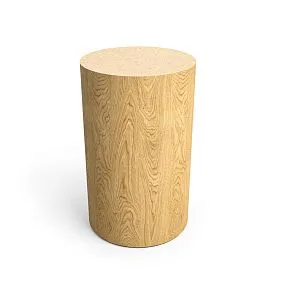
Single-pedestal base — a massive central column or cross-shaped base located precisely in the center of the countertop. This construction is ideal for round and small square tables, leaving maximum free space for legs and allowing easy placement of any number of chairs.
However, a central support requires precise calculation. All the load is concentrated at one point, and if the countertop is heavy, the base must be massive and low. For stone countertops, use cast iron or steel crosses with arms at least one-third the diameter of the countertop. For solid wood, suitable are precisionwooden balusters, mounted on a wide cross base.
Central support does not work well with rectangular tops — under load at the edge, it creates an overturning moment. If the top length exceeds 120 cm, either increase the base area or switch to a two-support scheme.
Two-support base: elegance and functionality
Two massive bases located closer to the ends of the top — a compromise between the stability of a four-support scheme and the freedom of a central support. This option is ideal for long dining tables and worktops.
Each support in a two-support structure must withstand at least half of the total top weight plus useful load. For stone, this means using T-shaped or H-shaped metal bases; for solid wood, heavy wooden pedestals or lyres. It is important that the distance from the top edge to the center of the support is 10–15% of the total length — this prevents sagging of cantilever sections.
Two-support bases are often used in combination with a telescoping table mechanism. In this case, the supports are mounted on guides that allow them to spread apart as the top length increases. Such a construction requires precise engineering —buy legs for a table— with a synchronized mechanism, only available from specialized manufacturers.
Frame constructions: maximum strength for large formats
When the top exceeds 2.5 meters in length or has a complex configuration, a frame base is required. This is a welded or assembled structure made of metal profile that covers the entire perimeter of the top or forms a grid beneath it.
Frame bases allow even weight distribution across the entire surface and eliminate sagging even for thin composite tops. They are indispensable for bar counters, long workbenches in workshops, and kitchen islands. For wooden tops, the frame is supplementedsupports for furniture— with adjustable legs installed at the corners and intermediate points.
Aesthetically, the frame is less expressive than turned legs or designer bases, but it can be concealed with a fascia — a decorative panel that covers the base from all sides. This solution is popular in classic interiors, where monolithic unity and visual purity of forms are important.
Base materials: characteristics and application areas
Choosing base material is not only an aesthetic issue but also a functional one. Wood, metal, hybrid solutions — each has its advantages and limitations.
Wooden bases: warmth and tradition
Wood is a natural choice for solid wooden tops.wooden cornice— or turned balusters convey the warmth of the material, creating a unified style. For bases, use hardwoods — oak, beech, ash — which withstand significant loads and deform minimally.
A wooden base for stone or composite tops is rare, but such solutions appear in custom furniture. Here, it is important to consider that wood performs much better under compression than under bending. Therefore, the construction must be massive, with thick stringers and additional bracing.
The main drawback of wood is sensitivity to humidity and temperature. In rooms with unstable climate, a wooden base may crack or deform. Protection is achieved through multi-layer lacquer or oil coating, but this does not provide absolute guarantee.
Metal bases: strength and modernity
Steel, cast iron, aluminum — metals offer maximum strength with minimal cross-sectional dimensions. Metal bases withstand any load, do not deform, and require no complex maintenance. This is the ideal choice for stone tops, large formats, and industrial interiors.
40x40 or 50x50 mm steel profile tubes create a rigid frame capable of supporting a top weighing up to 200 kg. Cast iron bases with wide flanges provide stability for round and square tables. Aluminum constructions are lightweight and elegant but require reinforcement at the points of attachment to the top.
Metal combines beautifully with wood — the contrast between warm solid wood and cold metal creates an expressive texture. For this, usebuy furniture legs in Moscow— decorative elements or paint to match the wood tone.
The drawback of metal is acoustic rigidity. When striking a metal base, the top resonates, creating an unpleasant sound. This problem is solved by installing rubber or felt pads between the metal and the top.
Hybrid solutions: balance of properties
Combining wood and metal in one base allows using the advantages of both materials. The steel frame provides strength and rigidity, while wooden elements offer visual warmth and connection to the top. Such constructions are popular in modern interiors, where functionality and aesthetics are valued.
A typical example is steel stringers with wooden legs. Stringers take on the main load, while legs serve a decorative function and create stylistic unity. Another option is steel supports with wooden caps, which conceal the technical construction and add volume to the base.
ForBuy furniture legsFor hybrid-type bases, proper material connection is crucial. Wood and metal have different coefficients of thermal expansion, so rigid fastening may cause wood cracking. Use threaded connections with compensating washers or adhesive compounds with elastic additives.
Load calculation: an engineering approach to selection
Visually attractive bases may be functionally unacceptable if real loads are not considered. Engineering calculation is not overcaution — it is necessary, especially for large-format tables or heavy material tops.
Static load: weight of the tabletop and its contents
The first parameter is the tabletop's own weight. For a 40 mm thick oak slab, density is approximately 700 kg/m³. A 200x100 cm tabletop weighs about 56 kg. A marble tabletop of the same dimensions and 30 mm thickness weighs about 150 kg. Composite materials are lighter — a 38 mm thick particleboard weighs about 25 kg per m².
To the self-weight is added useful load — dishes, equipment, decor. For a dining table, the calculated useful load is 50-100 kg depending on purpose. A workshop workbench may be loaded up to 200 kg.
Total static load is distributed among the legs. If the table has four legs, each leg bears a quarter of the total weight plus a safety factor of 1.3-1.5. This means that for a total load of 200 kg, each leg must withstand at least 65 kg. ForBuy chair legslegs with a permissible load of 80 kg are suitable.
Dynamic load: impacts and vibrations
A table is not a static structure. Heavy items are placed on it, people lean on it, sometimes even sit on it. Dynamic load may be several times greater than static load. When a heavy book falls onto the tabletop, an impact load arises, which is transmitted to the base.
To account for dynamics, a safety factor of 2-3 is used. This means that if the calculated static load on one leg is 50 kg, the actual load must be at least 100 kg. This is especially important for tables in public spaces — cafes, libraries, coworking spaces.
Vibrational loads occur during equipment operation — sewing machines, lathes, printers. They require additional base stiffness and use of vibration-damping elements. For this, rubber or silicone gaskets are installed between the tabletop and legs, which absorb vibrations.
Uneven distribution and cantilever loads
The ideal case is when the weight is evenly distributed across the entire tabletop area. In reality, most of the load falls on one edge or corner. A person leans on the edge of the table, places a heavy object in the corner — and a cantilever load arises.
Cantilever load creates a moment that tends to tip the table over. The farther from the support the load is located, the greater this moment. To prevent tipping, either increase the base of the table (distance between the outermost supports), or use counterweights, or mount the tabletop to the wall.
Calculating cantilever load takes into account the lever arm. If a 20 kg load is placed 30 cm from the edge of the tabletop, and the edge extends 10 cm beyond the support, a moment of 200 kg·cm arises. To compensate, the opposite support must create an equal moment, which requires either increasing its weight or increasing the distance to the center of the tabletop.
Tabletop mounting to the base: technologies and nuances
The method of attaching the tabletop to the base determines not only the strength of the structure, but also its durability. Incorrect mounting leads to cracks, loosening, and gradual material degradation.
Rigid mounting: for composites and stable materials
Composite tabletops are rigidly mounted to the base — using screws, bolts, or screws. Metal brackets, Z-shaped plates, mounting strips are used. Fasteners are installed at several points around the perimeter of the tabletop with a spacing of 30-50 cm.
It is important not to over-tighten the fasteners. Excessive tightening deforms the composite, creating internal stresses. Use a torque wrench or tighten by hand while monitoring the torque. For particleboard and MDF, it is recommended to pre-drill holes — this prevents material cracking.
Washers must be installed under screw heads to increase contact area and prevent composite compression. For tabletops with decorative finishes, use concealed fasteners hidden under overlay elements or in technological grooves.
Sliding mounting: for solid wood
Wooden tabletops require a special approach. Sliding mounting allows wood to expand and contract without creating stress. The main tool is Z-shaped metal clips, which are rigidly attached to the base frame at one end, and slide into a groove on the underside of the tabletop at the other end.
The groove is milled to a depth of 8-10 mm and width of 12-15 mm along the entire perimeter of the tabletop, 3-5 cm from the edge. The clip slides into the groove with a 1-2 mm clearance, allowing the tabletop to move. At the same time, it is securely pressed against the base and cannot lift up.
An alternative to clips are 'eights' or special furniture clamps with grooves. They work on the same principle: one part is rigidly attached to the frame, the other slides freely into a hole in the tabletop. It is important that the central line of the tabletop is rigidly fixed — this is the point around which expansion occurs in both directions.
Adhesive mounting: for stone and acrylic stone
Stone tabletops are not drilled or screwed — they are installed using adhesive. Special epoxy or polyurethane-based adhesives are used, which have high shear and compressive strength, yet retain minimal elasticity.
Adhesive is applied to the upper surface of the base in an even layer 2-3 mm thick. The tabletop is placed on top and pressed down. The adhesive sets in 24 hours, during which the tabletop must not be loaded. For heavy tabletops, additional fixation using weights or clamps is used.
Acrylic stone is mounted similarly, but using a special acrylic adhesive that chemically bonds the materials. Such a connection is stronger than the stone itself. It is important that the base surface is perfectly flat — any irregularities over 0.5 mm create voids where the adhesive does not work.
Combined mounting: reliability and universality
For heavy tabletops or tables with increased load, combined mounting — adhesive plus mechanical fastening — is used. This is especially relevant forlegs for kitchen table to buyThe table is subjected to intensive use.
The countertop is first glued to the base, then after 24 hours additionally secured with self-tapping screws or bolts. Mechanical fastening does not bear the main load; it merely reinforces the glued joint and prevents the countertop from shifting under lateral loads.
Another combination option — glue plus hidden dowels or nails. Wooden or metal pins are inserted into holes on the countertop and base, then secured with glue. This connection is strong, visually clean, and does not require visible fasteners.
Aesthetics and style: base as a design element
The base is not only a function but also a form. It can be neutral, hidden behind a skirt, or, conversely, an accent element of interior design. The style of the base is determined by the overall concept of the space.
Classic bases: carving and refined shapes
Classic style requires massive, detailed bases with finely turned legs, carved elements, and patina. Legs in the shape ofWooden balusterswith fluting, capitals, and bases — this is the hallmark of classic furniture.
carved aprons with floral motifs,decorative rose outletsat the points of element connection, gilding or patination — all these details create a sense of luxury and tradition. For such bases, use oak, beech, walnut — species with pronounced grain.
A classic base harmonizes well with heavy wooden countertops but can also be combined with marble. The key is to maintain proportions: if the countertop is light, the base should not be overly massive, and vice versa.
Modern minimalist constructions
Minimalism rejects decoration and focuses on the purity of lines. A modern base is thin metal profiles, simple geometric shapes, and no visible fasteners. Color is neutral — black, white, gray, matte steel.
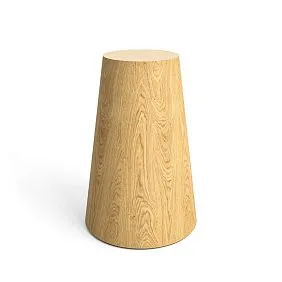
T-shaped and X-shaped bases made of steel plates 10-15 mm thick are popular. They create a sense of lightness and airiness while ensuring high strength. Forfurniture legin a minimalist style, a conical shape or a plain cylinder without decoration is characteristic.
A minimalist base is universal — it suits any countertop, from solid to composite. Its purpose is not to draw attention but to create a functional base for an expressive countertop.
Industrial style: roughness and functionality
Loft and industrial styles emphasize open technicality. Bases made of black steel pipes, welded seams, rough paint — this is the aesthetic of factories and workshops. No camouflage, no polishing — only honest construction.
Often, old cast iron bases from industrial equipment or their replicas are used. Massive cross-braces with cast elements, rust as decoration, asymmetry, and deliberate roughness — all this creates contrast with modern countertops. Forwooden baseboards for flooran industrial table may seem out of place, but precisely this contrast creates expressiveness.
An industrial base requires strong countertops — thick solid wood, concrete, metal. Thin composite plates are inappropriate here — they cannot withstand the visual weight of the structure.
Scandinavian style: lightness and naturalness
Scandinavian design values the naturalness of materials, simplicity of forms, and functionality. A base in this style — thin conical legs made of light-colored wood (oak, beech, birch), simple connections, minimal decoration.
A characteristic feature — legs set at an angle, which creates a sense of lightness and stability simultaneously. ForLegs for a table to buy in Moscowin Scandinavian style, precision of execution is crucial — any carelessness destroys the concept.
A Scandinavian base harmonizes with light-toned solid wood, linoleum, laminate — materials that emphasize the naturalness and purity of space. It is not suitable for heavy stone countertops — here, balance is needed.
Common mistakes when choosing and installing a base
Even a quality base may fail to meet its purpose if errors are made during selection or installation. Let's consider typical mistakes and how to avoid them.
Insufficient assessment of load
Many choose a base based on visual aesthetics, ignoring actual loads. Thin metal pins look elegant but cannot support a stone countertop.Legs for coffee tablesNot suitable for dining tables with a load capacity of 100 kg.
Before purchasing, calculate the total weight of the countertop, add the useful load, multiply by the safety factor of 1.5. Divide the result by the number of supports. This is the minimum load each leg must withstand. Do not rely on the seller's claims — verify the specifications in the documentation.
Ignoring the properties of the countertop material
Solid wood is mounted differently than composite. Stone requires elastic pads. Acrylic is sensitive to point loads. Ignoring these characteristics leads to rapid countertop destruction. Cracks in solid wood along the grain, chipping on stone, compression of composite — all are consequences of improper mounting.
Before installation, study the manufacturer's recommendations for the countertop. For solid wood, use sliding fasteners; for stone, use elastic adhesive; for composite, ensure even distribution of mounting points.
Incorrect placement of supports
Supports placed too close to the center of the countertop create cantilever sections that sag under load. Supports placed too close to the edge interfere with installation. The optimal distance from the center of the support to the edge of the countertop is 10-15% of the total length.
For rectangular tables, supports are placed symmetrically relative to the center. For tables with irregular shapes, calculate the center of gravity. Asymmetric countertops require shifting supports toward the heavier side.
Lack of compensation for floor unevenness
Even in new buildings, floors are rarely perfectly level. A 1-2 mm drop per meter is normal. For a table, this means one or two legs may not touch the floor, creating uneven load distribution and wobbling.
Use adjustable supports with threaded elements to level the table. If the base is not adjustable, place felt, rubber, or plastic pads under shorter legs. Do not use paper or cardboard — they deform quickly.
Excessive or insufficient tightening of fasteners
Over-tightened screws compress composite materials, create cracks in solid wood, and deform metal parts. Under-tightened screws do not provide rigid fixation, and the countertop will start to wobble over time.
Use a torque wrench or tighten fasteners by hand until the element is snug but not deformed. For composites, the tightening torque should not exceed 3-5 Nm; for solid wood, 5-8 Nm. Check the tightness periodically — fasteners may loosen over time.
Special solutions for non-standard tasks
Some tables require unique pedestals that do not fit standard schemes. Let's consider a few non-standard cases.
Foldable tables: bases with transformation mechanisms
A foldable table is a structure whose length increases due to inserted sections. The base for such a table must either extend along with the countertop or provide support for the increased length.
Synchronous mechanism — supports are mounted on rails and spread apart as the countertop extends. This is a complex engineering system requiring precise fitting. Asynchronous mechanism — supports remain stationary, and the inserted section rests on additional extendable legs or rails that move along with the countertop.
For foldable tables, the rigidity of the rails is critical. If they sag, the table becomes unstable. Use steel profile rails with reinforcement or wooden rails at least 30 mm thick.
Height-adjustable tables: lifting mechanisms
Height-adjustable tables are popular in offices and workshops. The base for such a table includes a mechanical or electric drive that changes the distance between the supports and the countertop.
Mechanical drive — a screw mechanism rotated manually to move the countertop up or down. Electric drive uses a motor and is controlled by a button. Both options require a sturdy frame that withstands not only vertical but also horizontal loads.
For height-adjustable tables, support synchronization is crucial. If one side rises faster than the other, the countertop will tilt. Use mechanisms with rigidly connected drives or electronic synchronization.
Console tables: wall mounting
A console table has no supports on one side — it is mounted to the wall. All the load is borne by anchor connections, which must withstand not only the weight of the countertop but also bending moments.
Use strong steel brackets mounted into load-bearing walls via anchor bolts. The distance between brackets should not exceed 60 cm for composites and 80 cm for solid wood. For stone countertops, a continuous frame welded to anchors is required.
Console tables require a perfectly flat and strong wall. Gypsum board, aerated concrete, hollow brick are unsuitable — anchors will pull out under load. Use only monolithic concrete or solid brick walls.
Outdoor tables: protection against moisture and temperature
Outdoor tables are exposed to precipitation, ultraviolet radiation, and temperature fluctuations. The base for such a table must be either stainless steel or wood treated with protective coatings.
Outdoor table pedestals are made from cedar, teak, or oak — species resistant to rot. All elements are treated with antiseptics and coated with outdoor oil or varnish. Metal pedestals are galvanized or painted with powder coating.
Outdoor table mounting should allow for disassembly for winter storage. Use bolted connections that are easy to disassemble. If the table remains outdoors year-round, provide drainage holes for water runoff.
Pedestal Maintenance
Pedestals require minimal but regular maintenance. Neglecting maintenance leads to loosening, corrosion, and material degradation.
Regular Bolt Inspection
Fasteners loosen over time due to vibrations, temperature fluctuations, and material shrinkage. Check and tighten all bolts, screws, and clamps every six months. If you find loosened fasteners, tighten them, but do not over-tighten.
For wooden pedestals, checking joints is especially important. Wood dries out, and gaps in dowel joints increase. If a joint has loosened, disassemble it, clean off old glue, apply fresh glue, and reassemble.
Protection from moisture and mechanical damage
Wooden pedestals fear moisture. Spilled liquids on legs or aprons absorb and cause swelling, deformation, and rot. Wipe spills immediately, ventilate the room, and maintain stable humidity at 40–60%.
Metal pedestals are protected by paint or coating. Scratches and chips expose metal, which begins to rust. Periodically inspect the coating and touch up damaged areas. For stainless steel, use special polishes that create a protective film.
Coating renewal
The varnish on wooden pedestals wears over time, becomes matte, and cracks. This is not only an aesthetic defect but also a threat — unprotected wood absorbs moisture and dirt. Every 3–5 years, renew the coating: remove old varnish by sanding or stripping, apply new varnish in 2–3 coats with intermediate sanding.
Painting metal pedestals also requires renewal. Powder coating lasts 5–7 years, then begins to flake. Remove old paint with sandblasting or mechanically, degrease the surface, apply primer and paint in multiple layers.
Floor protection from scratches
Table legs leave scratches on the floor when moved. Install felt, silicone, or plastic caps on leg ends. These not only protect the floor but also reduce noise during table movement.
Leg caps wear over time and require replacement. Check their condition monthly. If a cap comes off, replace it immediately — a bare leg can leave dozens of scratches on parquet or laminate in one day.
Where to buy quality pedestals: criteria for choosing a manufacturer
The market offers a vast array of pedestals — from Chinese replicas to custom-made pieces. How to avoid choosing incorrectly?
Manufacturer Reputation and Reviews
Look for manufacturers with long-standing experience and positive reviews. Research forums, specialized resources, and talk to craftsmen. A good manufacturer is open to dialogue, provides detailed documentation, and offers warranties.
Beware of extremely low prices. A quality wooden pedestal cannot be cheap — costs include materials, labor, drying, and finishing. Cheap alternatives are made from raw wood, with improper technology and no quality control.
Option for custom order
Standard pedestals do not always fit specific tabletops. Look for manufacturers offering custom-made pedestals to your dimensions and drawings. This is more expensive but guarantees perfect fit.
Custom orders require providing exact dimensions, drawings, and material samples. A good manufacturer will consult you on construction choices, calculate loads, and suggest optimal solutions.
Materials and technologies
Clarify which materials the manufacturer uses. For wooden pedestals, wood species (oak, beech, ash are better than pine), moisture content (no more than 10–12%), and joint methods (dowel, peg, bolts) matter. For metal pedestals — metal type (steel, stainless steel, aluminum), surface treatment (painting, galvanizing, polishing).
Production technologies also matter. Handmade work ensures high quality but costs more. Industrial production is cheaper but requires quality control. Avoid handmade items produced without adhering to standards.
Warranties and Service
A quality pedestal lasts decades, but the manufacturer must provide a warranty on construction and materials. Standard warranty — 1–2 years for manufacturing defects. Some manufacturers offer extended warranties up to 5 years.
Service includes installation consultations, fastener selection assistance, and maintenance recommendations. A good manufacturer does not abandon customers after sale but maintains contact and resolves arising issues.
Frequently Asked Questions about Pedestals
Can one base be used with different tabletops?
Yes, if the pedestal is universal — adjustable in height and with neutral mounting. However, consider the weight and material of the tabletop. A pedestal designed for composite may not withstand stone. If you plan to change tabletops, choose a pedestal with extra strength and universal mounting.
How to determine if a pedestal suits my tabletop?
Calculate the total weight of the tabletop and useful load. Divide by the number of supports, multiply by 1.5. Each support must withstand the resulting value. Confirm with the manufacturer the allowable load per leg and compare with your calculation. Also consider the tabletop material — for solid wood, use sliding mounts; for stone, use elastic pads.
Theoretically yes, if you have the necessary equipment, skills, and materials. You will need a jointer to flatten lumber, a jointer or planer to trim to size, a router for cutting dados and forming tenons, a drill, saw, and clamps. The wood must be kiln-dried to the required moisture content. The process will take several days of pure working time. For your first attempt, the result may be far from professional quality.
Yes, if you have experience working with wood or metal, necessary tools, and understanding of construction. Wooden pedestals require precise joints; metal ones require welding and finishing. Errors in calculations or manufacturing lead to instability or table collapse. For complex constructions, it’s better to consult professionals.
How much does a quality pedestal cost?
The price depends on the material, size, and complexity. A simple four-legged oak base costs from 8000-15000 rubles. A steel metal base — from 10000-20000 rubles. Authorial or unique designs may cost 30000-50000 rubles and more. Do not skimp on the base — it determines the longevity of the entire table.
How often should you inspect and maintain the base?
Check the tightness of fasteners and condition of protective caps on legs every half-year. Conduct a more thorough inspection once a year — check joints, cracks, and signs of corrosion. Immediately address any defects found. Regular care can extend the base’s service life several times over.
What to do if the table wobbles?
First, check the floor — it may be uneven, and one leg may not touch the surface. Level the table using adjustable legs or shims. If the floor is level, check the tightness of fasteners — loose connections cause wobble. Tighten all bolts and screws. If the problem persists, the base may have deformed or was originally manufactured incorrectly — in this case, replacement or repair is required.
Can you combine bases of different styles?
Technically yes, but aesthetically it’s risky. Ornate carved legs don’t pair well with minimalist tabletops. An industrial black metal base clashes with elegant light wood. If you want to create an eclectic interior, proceed carefully — use unifying elements (color, material, texture) so different styles don’t appear as a random assortment.
How to protect a wooden base from moisture in the kitchen?
Use multi-layered oil or lacquer coating to create a water-repellent film. Wipe up any spilled liquids immediately — do not leave the base wet. Ensure good kitchen ventilation — high humidity is harmful to wood. Renew protective coating once a year. If the wood has swollen, dry it out and reapply oil.
Can you mount a stone tabletop on a wooden base?
Yes, if the wooden base is sufficiently heavy and rigid. Wood performs well under compression, and a stone tabletop won’t deform it if the load is evenly distributed. Mounting is done with flexible adhesive or through shims. It’s crucial that the top surface of the base is perfectly flat — any unevenness creates stress in the stone.
What’s better for heavy tabletops — four legs or central support?
For heavy tabletops, four legs or a frame structure are preferable — they ensure even load distribution. Central support suits only round or small square tables with a heavy base. If the tabletop diameter exceeds 120 cm and the weight exceeds 80 kg, the central support must be exceptionally strong — cast iron or steel with a large-radius crossbar.
Conclusion: Investment in durability and comfort
Choosing a base for a tabletop is a decision that determines the functionality, safety, and aesthetics of the table for many years. Neglecting engineering calculations, ignoring the characteristics of the tabletop material, or cutting corners on quality — all of this leads to rapid structural failure and additional costs for repairs or replacements.
QualityCountertop substructure— is not just a support, but an engineering solution that considers weight distribution, support points, anchor connections, and base geometry. A properly selected and installed base serves for decades, ensuring stability, reliability, and visual harmony.
Company STAVROS offers a wide rangefurniture legs— for any type of tabletop — from classic wood to modern composite and stone. Decades of experience, precise adherence to technology, quality materials, and individual approach to each project make STAVROS a reliable partner for those who value quality and longevity. Choosing STAVROS products means investing in the comfort, safety, and aesthetics of your interior for many years.


