Article Contents:
- What is impact-resistant polystyrene and how does it surpass conventional materials
- Physical characteristics of impact-resistant polystyrene
- Where and why ceiling skirting boards made of impact-resistant polystyrene are used
- Skirting board molding: decorative function and protective role
- Comparison with gypsum molding and polyurethane moldings
- Impact-resistant wall molding and ceiling skirting board: what's the difference
- When to choose molding and when to choose skirting board
- Polyurethane skirting boards: alternative or addition
- Aesthetic possibilities of modern decoration
- Installation of ceiling skirting board made of impact-resistant polystyrene
- Surface Preparation
- Cutting and fitting corners
- Choosing adhesive and gluing technique
- Sealing joints and painting
- Maintenance and operation of ceiling skirting board in public premises
- Wet cleaning and washing
- Minor repairs and restoration
- Repainting and refreshing appearance
- Frequently asked questions about ceiling skirting boards made of impact-resistant polystyrene
- Can impact-resistant polystyrene be used in damp rooms?
- How does impact-resistant polystyrene differ from regular foam?
- How long does a ceiling skirting board made of impact-resistant polystyrene last?
- Can polystyrene skirting board be bent for curved surfaces?
- What is the cost of impact-resistant ceiling skirting board compared to polyurethane?
- Is special tooling required for installation?
- Buying ceiling skirting board made of impact-resistant polystyrene: what to pay attention to
- Manufacturer and Certification
- Sizes and profile
- Color and painting capability
- Quantity and material calculation
- Conclusion: choosing quality and durability

When it comes to decorating corridors, hotel lobbies, office centers, or educational institutions, the issue of finishing durability becomes particularly acute. Daily traffic, accidental impacts, contact with furniture and equipment—all of this subjects decorative elements to serious tests. Ceiling skirting board made of impact-resistant polystyrene becomes the very solution that combines the aesthetics of classic interiors with the necessary protective function.
Why specifically a ceiling skirting board made of durable material? The fact is that the upper part of the wall, the transition from the vertical plane to the horizontal ceiling surface—this is the zone that shapes the visual perception of the entire room. A beautifully designed ceiling skirting board gives completeness to the space, conceals technological gaps, masks unevenness, and in the case of using impact-resistant materials, also withstands mechanical impacts without chips or cracks.
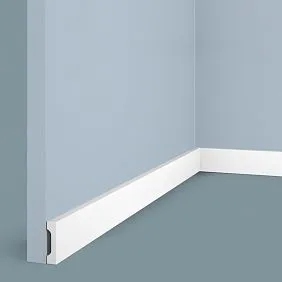
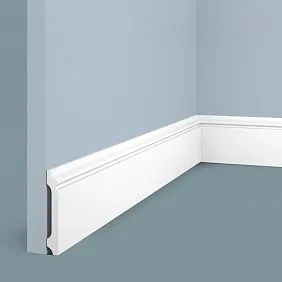


What is impact-resistant polystyrene and how does it surpass conventional materials
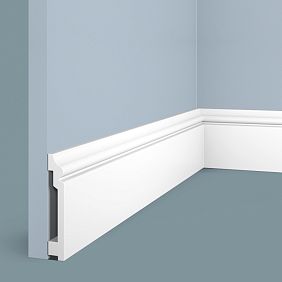
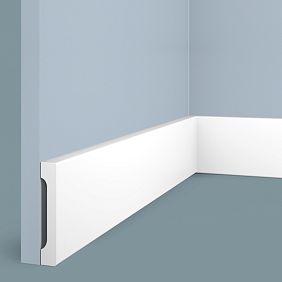
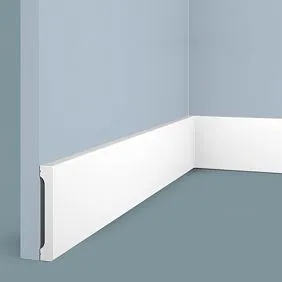
High-density polystyrene, used for manufacturing ceiling skirting boards, is a polymer material with a density ranging from 650 to 700 kg/m³. This density is several times higher than that of regular foam or expanded polystyrene, which are traditionally used in budget finishing.
The material's impact resistance is achieved through a modified polymer structure. During production, reinforcing additives are introduced into the composition, which increase the material's resistance to point loads and impacts. If ordinary polystyrene foam can crack from impact or pressure, thenpolyurethane cornice moldingsand impact-resistant polystyrene maintain integrity even under significant mechanical stress.
It is important to understand the difference between a ceiling skirting board made of polystyrene anddecorative polyurethane molding. Polyurethane products have even higher strength and flexibility, making them ideal for complex architectural forms and facade decor. However, for interior ceiling skirting boards in corridors and public areas, impact-resistant polystyrene offers an optimal balance of strength, weight, and cost.




Physical characteristics of impact-resistant polystyrene
The material withstands temperature fluctuations from -40 to +70 degrees Celsius without losing its shape and structure. Moisture resistance reaches 100%, allowing the use of such trim even in rooms with high humidity — technical corridors, passages between buildings, sports complexes.
Hardness on the Shore scale is D 60-75 units. This means the material is resistant to scratches, dents, and abrasion. Compressive strength — from 150 to 280 kPa, which is 2-3 times higher than that of standard polystyrene foam skirting boards. Flexural strength varies from 350 to 550 kPa, thanks to which long skirting boards do not sag or deform after installation.
Impact toughness — a key parameter for public spaces — is 5-8 kJ/m². This means the material can absorb impact energy without destruction. For example, an accidental impact from luggage, a cart, or furniture will not leave visible damage on the skirting board surface.
Our factory also produces:


Where and why impact-resistant polystyrene ceiling skirting boards are used
Corridors of residential apartment buildings, entrances, stairwells — these are high-traffic areas where people move furniture, bring in large items, and sometimes accidentally bump into walls. Ceiling skirting boards in such places often suffer first. Using impact-resistant material extends the service life of the finish by 2-3 times compared to ordinary skirting boards.
Hotels, motels, hostels — here aesthetics must combine with practicality. Guests move with suitcases, cleaning staff use equipment that can hit walls. Ceiling skirting boards made of impact-resistant polystyrene maintain a neat appearance even under intensive use.
Office centers and business parks require high-quality finishing that will not need frequent repairs. In corridors, meeting rooms, open-space areas, ceiling skirting boards emphasize the status of the premises, and impact resistance guarantees that the decor will not suffer from office furniture or equipment.
Medical institutions, clinics, polyclinics — here there are special requirements for hygiene and durability. Impact-resistant polystyrene is easy to clean, does not absorb moisture, does not form mold, and its resistance to mechanical damage ensures long-term maintenance of sanitary standards.
Educational institutions — schools, institutes, kindergartens — places where people's activity is especially high. Ceiling skirting boards in corridors and classrooms must withstand not only time but also careless handling. Impact-resistant material handles this task flawlessly.
Get Consultation
Molding skirting board: decorative function and protective role
The concept of 'molding skirting board' is often associated with exquisite interiors, where each decorative element emphasizes the architectural style. TraditionallyPolyurethane moldingswas used in palace halls, residences, and mansions. Today, these technologies are available for public and commercial spaces thanks to modern materials.
Ceiling skirting boards made of impact-resistant polystyrene can imitate classic plaster molding — with refined profiles, ornaments, and relief patterns. At the same time, it is significantly lighter than plaster, easier to install, and does not require special skills for installation. Visually, such a skirting board is indistinguishable from expensive molding, but its performance characteristics surpass traditional materials.
The decorative function lies in creating a visual boundary between the wall and the ceiling. The skirting board emphasizes the geometry of the room, makes the ceiling visually higher, and the space more structured. In classic interiors, a snow-white ceiling skirting board with fine relief becomes an elegant accent that does not overload the overall composition.
The protective role is no less important. The ceiling area is a place where dust often accumulates, cobwebs form, and leaks from upstairs neighbors occur. A high-quality ceiling skirting board made of impact-resistant polystyrene hermetically seals the joint, preventing moisture and dirt from penetrating into the gaps between the wall and ceiling.
Comparison with plaster molding and polyurethane moldings
Plaster molding weighs 5-7 times more than a polystyrene skirting board of similar dimensions. This complicates transportation, installation, and creates additional load on structures. Plaster is fragile, easily cracks upon impact, and requires careful handling. Polystyrene, on the other hand, is flexible and stable.
Impact-resistant wall moldingmade of polyurethane surpasses polystyrene in strength and durability, but costs more. For ceiling skirting boards in corridors, where the main load comes from accidental impacts and wet cleaning, high-density polystyrene provides sufficient protection at lower costs.
Impact-resistant wall molding and ceiling skirting board: what's the difference
Many confuse wall molding and ceiling skirting boards, considering them interchangeable. In fact, these are two different types of trim, each performing its own function.
Wall molding is installed on vertical surfaces — walls. It can divide space into zones, frame doors and windows, and create decorative panels.Impact-resistant moldings made of polyurethaneare used in high-traffic areas where walls are subjected to mechanical impacts — in halls, lobbies, and on staircases.
Ceiling skirting, on the other hand, is designed to finish the joint between the wall and ceiling. It is positioned horizontally right under the ceiling and serves as a transitional element between the two planes. The profile shape of ceiling skirting is usually more complex, with curves and protrusions that ensure a tight fit to both surfaces.
However, the concept of 'impact-resistant wall molding' is often applied to ceiling skirting as well when referring to spaces where the decor is subjected to increased loads. For example, in gyms where balls might accidentally hit the wall and affect the upper part of the finish, or in warehouses where forklifts and carts move close to the walls.
When to choose molding and when to choose skirting
If the task is to finish the joint between the wall and ceiling, give the room a finished look, hide imperfections, and protect the upper zone from mechanical damage, choose ceiling skirting made of impact-resistant polystyrene.
If you need to divide the wall into decorative zones, create panels, frame niches or doorways, use wall moldings. In case of high loads, choose Moldings made of polyurethanethat offer maximum strength.
For comprehensive interior finishing, you can combine both types of trim, creating a harmonious composition of ceiling skirting and wall moldings in a unified style.
Polyurethane skirting: alternative or addition
When it comes to choosing between polystyrene and polyurethane, it's important to understand the characteristics of each material. Polyurethane Baseboardsoffer exceptional flexibility, allowing them to wrap around curved surfaces, columns, and bay windows. Polyurethane is moisture-resistant, does not crack, and does not deform under temperature fluctuations.
The strength of polyurethane skirting is higher than that of polystyrene ones. The material withstands stronger impacts without leaving dents or chips. This makes polyurethane an ideal choice for facade finishing, where the decor is exposed to wind, rain, hail, and temperature fluctuations.
However, polyurethane skirting is more expensive than polystyrene ones. For interior finishing of corridors and public spaces where there are no extreme operating conditions, impact-resistant polystyrene offers a sufficient level of protection at a lower cost.
Both materials can be used in one project: polyurethane skirting in areas with particularly high loads — near entrance groups, in first-floor lobbies, and polystyrene ones — in corridors on upper floors where traffic is lower.
Technological advantages of polyurethane
Decorative polyurethane moldingis produced by pressure casting in molds. This allows creating elements with the finest details — scrolls, rosettes, ornaments. The surface of polyurethane is perfectly smooth, without pores or irregularities, which facilitates painting and maintenance.
Polyurethane does not absorb odors, does not support combustion, and does not release toxic substances even when heated. These qualities are important for public buildings where strict fire safety and sanitation standards apply.
The service life of polyurethane products exceeds 30-50 years without loss of appearance and functionality. Polystyrene lasts 15-25 years, which is also a good indicator for interior finishing.
Installation of ceiling skirting made of impact-resistant polystyrene
The process of installing ceiling skirting does not require professional skills, but following the technology ensures reliability and aesthetic results. Let's consider the installation stages in detail.
Surface preparation
The wall and ceiling must be dry, clean, without peeling paint or plaster. If the surface is uneven, it is recommended to level it with putty so that the skirting fits tightly along its entire length. Dust and dirt are removed with a damp cloth, after which the surface must dry completely.
Before installation, it is useful to mark. Measure the length of the walls and calculate the number of skirting boards, taking into account joints and corner connections. The standard length of one skirting board is 2 meters, which simplifies transportation and installation.
Cutting and fitting corners
The most difficult part of installation is finishing the corners. For internal corners, skirting boards are cut at a 45-degree angle using a miter box. It is important that the cuts are even and symmetrical, otherwise the joint will be noticeable.
For external corners (protruding), the same technique is applied. If the angle is not right (not 90 degrees), additional fitting will be required. In this case, it is better to first make a rough cut, try the skirting board, and trim again if necessary.
There are ready-made corner elements for ceiling skirting that simplify installation. They are glued in the corners, and straight sections of skirting are joined to them without complex cutting.
Choice of adhesive and gluing technology
For installing polystyrene ceiling skirting, special adhesives based on acrylic or polymer are used. Compositions such as 'liquid nails,' 'Moment Montage,' and adhesive for polystyrene are suitable. It is important that the adhesive does not contain solvents that could damage the material's structure.
The adhesive is applied in a thin strip to the back side of the skirting — on both surfaces that will contact the wall and ceiling. Then the skirting is placed at the installation site and pressed for a few seconds. Excess adhesive that protrudes from under the skirting is carefully removed with a damp cloth before it hardens.
If the wall or ceiling has significant irregularities, additional fixation with screws or dowels may be required. After the adhesive dries, the fasteners are removed, and the holes are filled with putty.
Joint sealing and painting
Joints between skirting boards and corner elements are filled with acrylic sealant or finishing putty. After drying, the surface is sanded with fine sandpaper until smooth.
Painting is the final stage, which not only gives the skirting the desired color but also additionally protects the material. Acrylic or latex water-based paints are used. Apply 2-3 thin coats with intermediate drying. For a more expressive effect, patination can be applied — applying contrasting paint into the recesses of the relief, creating an effect of aged stucco.
Care and Maintenance of Ceiling Skirting Boards in Public Spaces
Impact-resistant polystyrene does not require complex care, but following simple rules extends its service life and maintains its presentable appearance.
Wet Cleaning and Wiping
Ceiling skirting boards can be wiped with a damp cloth and mild detergent. Do not use abrasive sponges or aggressive chemicals, as they can damage the painted surface. Dust is removed with a soft brush or dry cloth.
If stains appear on the skirting board (e.g., from a leak), they can be carefully washed off with warm soapy water. After cleaning, the surface should be dried.
Minor Repairs and Restoration
In case of accidental damage—a scratch or small chip—the defect is easily remedied. A scratch can be painted over with a matching color paint. A chip is filled with putty, sanded, and touched up. Thanks to the material's homogeneous structure, the repaired area will be almost invisible.
If the damage is significant, it's easier to replace a section of the baseboard. The damaged piece is carefully cut out, and a new one is glued in its place. The joints are filled with putty and painted.
Repainting and Refreshing the Appearance
Ceiling skirting boards made of polystyrene can be repainted an unlimited number of times. This allows for updating the interior without replacing the decor. Before painting, the surface is cleaned of dust and degreased. Old paint, if it adheres firmly, does not need to be removed—the new layer is applied on top.
To refresh the color, one coat of paint is sufficient. If the color is changed drastically (e.g., from white to dark), 2-3 coats will be required.
Frequently Asked Questions about Ceiling Skirting Boards Made of Impact-Resistant Polystyrene
Can impact-resistant polystyrene be used in damp areas?
Yes, impact-resistant polystyrene is 100% moisture-resistant. The material does not absorb water, does not swell, and does not deform upon contact with moisture. This makes it suitable for corridors with high humidity, technical rooms, and even bathrooms and swimming pools (although polyurethane is more often recommended for such areas).
How does impact-resistant polystyrene differ from ordinary foam?
Ordinary foam has low density (15-30 kg/m³), is brittle, and easily breaks and crumbles. Impact-resistant polystyrene has a density of 650-700 kg/m³, which is 20-40 times higher. It is hard, impact-resistant, does not crumble, and has a smooth surface without visible granules.
How long does a ceiling skirting board made of impact-resistant polystyrene last?
With proper installation and care, the service life is 15-25 years. The material does not lose its shape, does not yellow (if painted with quality paint), and does not crack. In public spaces where mechanical impacts occur daily, the skirting board maintains its integrity throughout its entire service life.
Can a polystyrene skirting board be bent for curved surfaces?
flexible polyurethane moldingsPolystyrene does not have the flexibility of polyurethane. For curved sections—columns, arches, bay windows—it is better to use. However, for slight deviations from a straight line, a polystyrene skirting board can be slightly bent during installation by heating it with a hairdryer.
What is the cost of impact-resistant ceiling skirting board compared to polyurethane?
Impact-resistant polystyrene is 30-50% cheaper than polyurethane for comparable sizes and designs. This makes it an economically advantageous solution for large-scale projects—finishing long corridors, multi-story office buildings, shopping centers.
Is special tooling required for installation?
No, a minimal set of tools is required for installation: a miter box for cutting corners, a fine-toothed saw or utility knife, tape measure, pencil, glue spatula, paintbrush. All of these are available at any hardware store.
Buying Ceiling Skirting Board Made of Impact-Resistant Polystyrene: What to Look For
When selecting and purchasing ceiling skirting board, it is important to consider several key factors that affect quality, appearance, and durability.
Manufacturer and certification
High-quality impact-resistant polystyrene is produced by European and Korean companies. The material should have certificates of conformity confirming environmental safety and compliance with building standards.Polystyrene skirting boards from HI WOODProducts from South Korea have a density of 680 kg/m³ and possess all the necessary characteristics for use in public spaces.
Dimensions and profile
Ceiling skirting height is selected based on ceiling height and room scale. For standard ceilings of 2.5-2.7 meters, skirting boards with a height of 50-80 mm are suitable. For high ceilings (3 meters and above), skirting boards of 100-140 mm are used, which visually emphasize the scale of the space.
The skirting profile can be simple—a smooth surface with one or two protrusions, or complex—with relief patterns imitating classic stucco. The choice depends on the interior style.
Color and paintability
Most ceiling skirting boards are sold in white for painting. This is a universal solution that allows you to choose any shade according to the design. High-quality polystyrene has a perfectly white surface without yellowness or stains.
Some manufacturers offer pre-painted skirting boards, but the color selection is limited. It is recommended to buy white ones and paint them yourself or with the help of professionals.
Quantity and material calculation
Measure the perimeter of the room and add 10-15% reserve for trimming and possible errors. The standard length of a skirting board is 2 meters. For a room with a perimeter of 40 meters, 20 skirting boards + 2-3 spares = 22-23 pieces will be required.
Do not forget to account for corner elements if they are used. The number of internal and external corners is counted in advance.
Conclusion: Choosing quality and durability
Ceiling skirting made of impact-resistant polystyrene is a sensible investment in finishing that pays off with durability, practicality, and aesthetics. For corridors, halls, offices, and public spaces where decor is subjected to daily loads, this material provides the necessary protection without compromising appearance.
The combination of affordable cost, ease of installation, resistance to impacts and moisture makes impact-resistant polystyrene the optimal choice for large-scale projects. The ability to paint and repaint allows for easy interior updates, and minimal maintenance preserves presentability for many years.
Company STAVROS offers a wide rangepolyurethane and polystyrene skirting boards, decorative molding, molding and cornicesfor professional finishing of any scale. High-quality materials, European and Korean manufacturers, prompt delivery, and specialist consultations will help implement projects of any complexity. Choosing STAVROS means choosing reliability, style, and durability.