Article Contents:
- Philosophy of durability: when beauty must withstand impacts
- Anatomy of a corridor: why the law of the jungle rules here
- Mechanical loads: a catalog of daily tests
- Climatic and chemical factors
- Aesthetic requirements: when functionality must not kill beauty
- Polystyrene or polyurethane: the battle of titans for corridors
- Polystyrene: lightness and cost-effectiveness
- Polyurethane: maximum strength and detail
- Hybrid strategy: a smart combination
- Technical specifications: numbers that determine durability
- Density and weight: balancing strength and practicality
- Mechanical strength: what the material withstands
- Temperature and chemical resistance
- Design possibilities: from minimalism to luxury
- Simple profiles: functionality and minimalism
- Medium complexity: balancing decor and practicality
- Complex profiles: luxury without sacrificing strength
- Installation in aggressive environments: reliability technology
- Foundation preparation: foundation of longevity
- Adhesive compounds: the chemistry of bonding
- Installation technique: step-by-step algorithm
- Commercial spaces: where impact resistance pays off many times over
- Hotels: where first impressions cost money
- Office centers: prestige without compromise
- Shopping malls: the extreme of daily operation
- Medical and educational institutions: hygiene and durability
- Economics of the solution: calculating benefits over the long term
- Comparative Cost of Materials
- Cost of ownership: lifecycle
- Intangible factors
- Frequently Asked Questions
- Conclusion: Strength as a Quality Standard

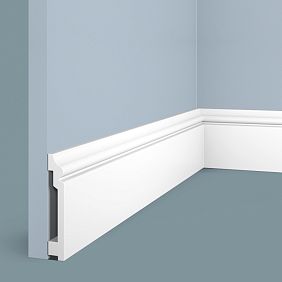
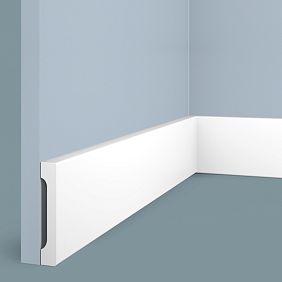
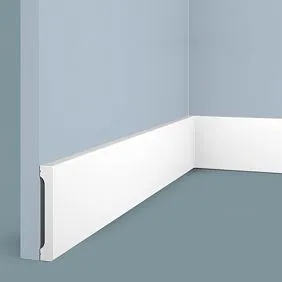
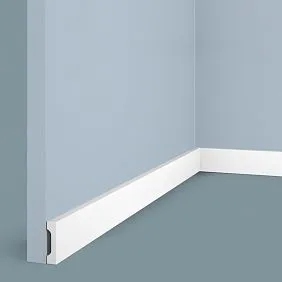
There are places where decor undergoes daily strength tests. Corridors of apartment buildings, office lobbies, hotel floors, shopping centers — here, beauty without reliability becomes consumable. Carts with loads, wheeled suitcases, accidental impacts during furniture moving, children's bicycles and scooters — ordinary polystyrene or fragile plaster shatter to pieces. But there exists a material capable of combining the elegance of classical molding with the strength of a modern composite. Let's examine whyimpact-resistant polystyrene ceiling skirting boardbecomes the standard for passage zones and commercial interiors.
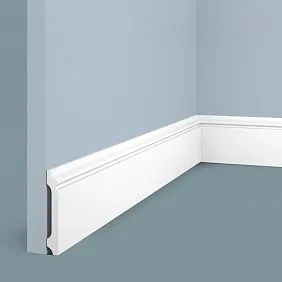

The Philosophy of Strength: When Beauty Must Withstand Impacts
The traditional approach to interior decor views molding as a work of art requiring careful handling. This works in museum halls but fails in real life. Modern materials have rewritten the rules: decor can be simultaneously elegant and indestructible. High-density polystyrene with impact-resistant modifiers is a technological breakthrough that few notice but which has changed the very possibility of using molding in aggressive conditions.
What does the term 'impact-resistant' mean when applied to a ceiling skirting board? Standard extruded polystyrene has an impact toughness of about 6-8 kilojoules per square meter. Under sudden mechanical impact, the material cracks, chips, crumbles. Modified polystyrene with the addition of butadiene and rubber inclusions achieves indicators of 50-70 kJ/m² — almost ten times higher. Practically, this means that an accidental hit from a mop, a corner struck by luggage, or an impact from a soccer ball leaves no marks. The material absorbs the impact energy, slightly deforms, and returns to its original shape without cracks or chips.
Density is the second critical parameter. Ordinary extruded polystyrene has a density of 25-35 kg/m³. Impact-resistant modified polystyrene — 45-65 kg/m³. Almost twice as dense! These are not just numbers. Each additional kilogram per cubic meter means additional molecular bonds, additional structural integrity, additional resistance to indentation and scratching.
Flexural strength increases from 150-250 kilopascals to 250-400 kPa. This is critical when installing long ceiling skirting boards, which must not sag under their own weight over spans of 2-3 meters. It is important during transportation — elements do not break with careless handling. It is valuable in operation — accidental pressure during cleaning or repair does not deform the profile.




The Anatomy of a Corridor: Why the Law of the Jungle Rules Here
A corridor is not a decorative space. It is a transport artery, a logistics hub, a zone of intensive movement. Conflicting requirements converge here: aesthetics must match living rooms, but strength must match production workshops.
Our factory also produces:


Mechanical Loads: A Catalog of Daily Trials
Moving furniture — sofas, wardrobes, dressers are carried through corridors during moves, rearrangements, repairs. Sharp corners of case furniture hit walls at a height of 60-120 cm — precisely wherewall moldingsare located. Ordinary polystyrene chips upon first contact. Impact-resistant withstands dozens of such collisions.
Bicycles, scooters, children's strollers in residential buildings are a daily reality. Wheels scratch walls, handlebars hit corners, metal parts leave marks. Skirting boards and moldings take the hit. Materials with low impact resistance do not survive even a season.
Wheeled luggage in hotels, suitcases in airport corridors, carts with loads in office centers — all this creates constant mechanical impact. Impacts, friction, pressure. Decor in such zones is either durable or constantly requires replacement.
Cleaning equipment — vacuum cleaners, mops, floor scrubbers regularly contact skirting boards. In residential premises, this is once a week. In commercial spaces — daily, sometimes twice a day. The material must withstand repeated friction without surface abrasion and structural destruction.
Get Consultation
Climatic and Chemical Factors
Humidity in corridors is unstable. Wet shoes in winter, open windows in summer, wet cleaning — fluctuations from 40% to 80% humidity are common. Plaster molding absorbs moisture, swells, cracks upon drying. Wood warps. Polystyrene is absolutely inert to moisture — moisture absorption rate less than 0.1%. The material does not swell, deform, or lose strength in a humid environment.
Temperature fluctuations — from cool air from the entrance in winter to summer heat. The difference can be 15-20 degrees within a day. Polystyrene has a low coefficient of thermal expansion — about 5-7×10⁻⁵ per degree Celsius. This means that a two-meter skirting board with a temperature fluctuation of 20 degrees will change length by only 2-3 millimeters — a magnitude easily compensated by elastic adhesive in the joints.
Cleaning agents used during cleaning contain alkalis, acids, solvents. Polystyrene is resistant to most household chemicals. The exception is organic solvents like acetone, but they are rarely used in households. Ordinary cleaning compositions do not destroy the material, change its color, or affect its strength.
Aesthetic Requirements: When Functionality Must Not Kill Beauty
The corridor is the first thing a guest sees upon entering a home or office. It is a business card, forming the first impression. Cracked skirting boards, chipped molding corners, scuffed cornices speak of sloppiness, cost-cutting on quality, lack of attention to detail. In a living space, this is unpleasant. In a commercial one — ruinous for reputation.
Impact-resistant ceiling skirting board anddecorative polyurethane elementssolve the dilemma. The material is as strong as stone but looks like classical plaster molding. After priming and painting, visual distinction is practically impossible. Clarity of relief, depth of profile, elegance of lines — all are in place. But at the same time, the service life is 5-10 times longer.
Polystyrene or Polyurethane: The Battle of Titans for Corridors
When it comes to durable decor, a choice arises between modified polystyrene and polyurethane. Both materials are stronger than standard expanded polystyrene but differ fundamentally.
Polystyrene: Lightness and Cost-Effectiveness
A density of 45-65 kg/m³ makes polystyrene skirting boards and cornices noticeably lighter than polyurethane ones (density 180-250 kg/m³). A linear meter of ceiling skirting board 100 mm wide weighs about 200-300 grams compared to 600-900 for polyurethane. This simplifies installation, reduces load on adhesive joints, and allows working alone.
The cost of polystyrene profiles is 30-50% lower than polyurethane ones. For extended corridors where the footage of moldings and skirting boards is large, the difference amounts to thousands of rubles. With a limited budget, polystyrene is a rational choice without sacrificing quality.
Processing is simpler: the material can be easily cut with a regular fine-toothed hacksaw, a utility knife, or a miter saw. No specialized tools are required. The cuts come out clean, without chipping. This is important for DIY installation — the entry threshold is lower.
A limitation of polystyrene is its lesser ability to reproduce fine details in complex ornaments. The material is good for simple and medium profiles — coves, flutes, simple floral motifs. However, intricate, jewelry-like carving with undercuts and multi-level relief is reproduced less effectively than in polyurethane.
Polyurethane: maximum strength and detail
Polyurethane is denser, heavier, more expensive, but possesses unparalleled impact resistance. The material doesn't just withstand impacts — it springs back, returning to its original shape. It can be scratched, but requires significant force. It is practically impossible to shatter — the material is not brittle and does not crumble.
Polyurethane moldingsIt reproduces the finest details of an ornament. Pressure casting ensures perfect repeatability of the most complex forms. Rosettes with multi-layered petals, cornices with deep undercuts, moldings with plant-like scrolls — polyurethane conveys everything with museum-like precision.
The elasticity of polyurethane allows it to be used on imperfectly flat surfaces. The material adapts to minor wall and ceiling irregularities without forming gaps. Polystyrene is stiffer and requires more thorough surface preparation.
The service life of polyurethane molding can reach 50-70 years. The material does not age, does not yellow (with proper painting), and does not lose strength. For commercial spaces with a long-term operational horizon, this is critical.
Hybrid strategy: a sensible combination
The optimal solution for corridors is a combination of materials based on load zones. Ceiling cornices and baseboards, located under the ceiling out of reach of mechanical impacts, are made of polystyrene. Savings without compromising reliability — impact resistance under the ceiling is not critical.
Wall moldings at a height of 60-120 cm, where there is a high risk of mechanical damage, are installed from polyurethane or impact-resistant polystyrene. Here, strength is paramount.
Floor baseboards, which take hits from vacuum cleaners, furniture, and shoes, must be impact-resistant — modified polystyrene or polyurethane. Compromise is unacceptable — this is the most heavily loaded zone.
Decorative accents — rosettes, overlays, corner elements — are placed outside zones of mechanical risk and can be made from any material, including plaster. Their role is aesthetic; strength is secondary.
Technical specifications: numbers that determine durability
Abstract claims about strength are worthless. Let's examine specific parameters that can be measured and verified.
Density and weight: the balance of strength and practicality
Standard extruded polystyrene: density 25-35 kg/m³, a linear meter of a 100×15 mm baseboard weighs 120-180 grams. Lightweight, cheap, but brittle.
Impact-resistant modified polystyrene: density 45-65 kg/m³, the same baseboard weighs 220-320 grams. Almost twice as heavy, but strength increases manifold.
Standard density polyurethane: 180-250 kg/m³, a 100×15 mm baseboard weighs 600-900 grams. 3-4 times heavier than polystyrene, maximum strength.
High-density polyurethane (premium): 300-400 kg/m³, the weight of the same baseboard is 900-1200 grams. Used in particularly high-load zones — entrance areas of five-star hotels, corporate representative lobbies, museums with high visitor traffic.
Mechanical strength: what the material can withstand
Flexural strength — the ability to resist bending loads. Critical for long elements mounted horizontally. Standard polystyrene — 150-250 kPa. Impact-resistant polystyrene — 250-400 kPa. Polyurethane — 400-600 kPa. This means that a two-meter cornice made of polyurethane will not sag under its own weight, even if fastened only at the edges. A polystyrene one will require intermediate fastenings.
Compressive strength — resistance to pressure. Important for floor baseboards that may bear the weight of heavy objects. Standard polystyrene — 100-200 kPa. Impact-resistant — 200-350 kPa. Polyurethane — 350-500 kPa. If you push a wardrobe flush against the wall and it presses on the baseboard — a polyurethane one will not deform, a polystyrene one may dent.
Impact toughness — the ability to absorb impact energy without destruction. A key parameter for high-traffic areas. Standard polystyrene — 6-8 kJ/m². Impact-resistant polystyrene — 50-70 kJ/m². Polyurethane — 80-120 kJ/m². Tests show: an impact from a 500-gram steel ball dropped from a height of 2 meters leaves no marks on impact-resistant polystyrene and polyurethane. Standard polystyrene shatters.
Temperature and chemical resistance
Operating temperature range for polystyrene: from -40°C to +70°C. At higher temperatures, softening and deformation begin. This is not a problem in interiors but limits use near powerful heat sources — radiators without screens, industrial heaters.
Polyurethane withstands from -50°C to +90°C. A wider range makes it suitable for extreme conditions — unheated premises in northern regions, zones near heating and ventilation systems.
Coefficient of thermal expansion for polystyrene is 5-7×10⁻⁵ 1/°C. A two-meter element, when heated by 20 degrees, will lengthen by 2-2.8 mm. Polyurethane — 4-6×10⁻⁵ 1/°C, expansion of 1.6-2.4 mm. The difference is small; both materials are stable.
Water absorption — a critical parameter for corridors where humidity is unstable. Polystyrene — less than 0.1% by mass. Polyurethane — 0.05-0.15%. Both materials practically do not absorb water. For comparison: plaster absorbs 5-15%, wood 8-18%. Synthetic materials are unrivaled.
Chemical resistance to household cleaning agents is excellent for both materials. Alkaline and acidic solutions of weak and medium concentration do not damage the structure. The exception is concentrated organic solvents (acetone, toluene, xylene), which dissolve polystyrene. Polyurethane is more resistant even to these.
Design possibilities: from minimalism to luxury
Strength should not kill beauty. Modern technologies allow creating impact-resistant profiles of any complexity.
Simple profiles: functionality and minimalism
Smooth covings with a simple radius profile are a universal solution for modern interiors. Width from 30 to 120 mm, minimum thickness 8-12 mm. Such cornices create a smooth transition between wall and ceiling without decorative overload. Ideal for offices, medical facilities, educational institutions where strictness and purity of lines are important.
Rectangular moldings with slight convexity are a classic that never goes out of style. Profile height 40-80 mm, relief depth 5-10 mm. Used for horizontal wall division, framing doorways, creating panels. Laconic, elegant, universal.
Stepped profiles with multiple levels are a geometric alternative to classic covings. Create expressive play of light and shadow, suitable for industrial and modern styles. Step height 3-5 mm, number of levels 2-4.
Medium complexity: balance of decor and practicality
Profiles with flutes — vertical grooves create a classic architectural motif. Number of flutes from 5 to 20 across profile width, depth 2-4 mm. Such moldings and cornices add historicity, referencing antiquity and classicism. Suitable for representative interiors.
Moldings with beads — convex rounded elements alternating with flat or concave ones. Create rhythmic relief, suitable for neoclassical interiors. Impact-resistant polystyrene accurately reproduces such forms.
Vegetal motifs of medium detail — stylized leaves, flowers, grapevines. Relief depth 5-10 mm. Impact-resistant polystyrene handles such forms, although finest undercuts may be less sharp than in polyurethane.
Complex profiles: luxury without sacrificing strength
Polyurethane allows creating profiles with deep multi-level relief. Baroque cornices with acanthus leaves, scrolls, rosettes. Relief depth up to 30-40 mm, many undercuts and protruding elements. After painting, such a cornice is indistinguishable from plaster, but withstands mechanical loads unimaginable for fragile plaster.
Dentil friezes — classic Greek 'meander' ornament, repeating geometric elements. Replication accuracy is critical — slightest distortions destroy the rhythm. Pressure casting of polyurethane ensures perfect element identity.
Coffered profiles for creating volumetric ceiling compositions. Combination of wide frames, inner moldings, corner elements, rosettes. Such constructions are rare in corridors, but in halls, vestibules, representative areas create impressive effect.
Installation in aggressive environment: reliability technology
Durable material requires proper installation. Installation errors negate the advantages of impact resistance.
Foundation Preparation: The Foundation of Longevity
Surface must be dry — moisture content no more than 4-6%. Moisture under skirting or cornice leads to adhesive delamination. In new buildings with 'wet' processes (plastering, screeding) requires drying for at least 3-4 weeks.
Base strength is checked with a simple test: run your palm over the wall — if a white trace (chalk, lime) remains, the surface is crumbling. Deep penetration primer is necessary. It will bind loose particles, create a dense base. Primer is applied in two layers with intermediate drying of 4-6 hours.
Surface evenness is critical for tight fit. Deviations over 5 mm over two-meter length require leveling. Skirting or cornice installed on uneven surface pulls away, gaps form. Polyurethane is more flexible, adapts to unevenness better than polystyrene.
Old coatings — wallpaper, paint — must be securely fixed. If they are peeling, they will tear off together with new decor. It is better to remove unreliable coatings down to plaster or drywall.
Adhesive compositions: chemistry of bonding
Universal mounting adhesives on polymer base — Moment Montage, Titan, Macroflex. Suitable for polystyrene and polyurethane, set in 15-30 seconds, final polymerization in 24 hours. Adhesive is applied in a zigzag strip on the back side of element with 5 mm indentation from edges.
Acrylic adhesives — less strong but eco-friendly, without solvents and odor. Setting time 1-2 minutes, full strength after 48 hours. Suitable for residential premises where safety is important.
Specialized adhesives for polyurethane moldings — Orac Decofix, Europlast. Developed considering material properties, provide maximum adhesion. 30-50% more expensive than universal ones, but more reliable.
Additional mechanical fastening is recommended for heavy polyurethane elements wider than 120 mm. Headless finishing nails or special dowels are used. After adhesive polymerization, fasteners can be removed or left for additional security.
Installation technique: step-by-step algorithm
Step 1: Material acclimatization. Elements brought from cold storage must be kept in the room for 24-48 hours. Thermal expansion can be several millimeters over two-meter length — if cold element is glued, after heating it will expand, joints will separate.
Step 2: Marking. Use laser level for horizontal lines. Mark position of lower edge of ceiling skirting around entire perimeter. For wall moldings, mark center line from which element will be positioned symmetrically.
Step 3: Corner cutting. Internal and external corners are cut at 45° using miter box or miter saw. Test fit elements without adhesive — joint must be tight without gaps. If there is a gap, recut.
Step 4: Adhesive application. Snake pattern of adhesive along center of back side with branches to edges. Don't economize — excess will squeeze out and be removed, but voids are unacceptable.
Step 5: Pressing and fixation. Apply element to marking, press firmly along entire length. Maintain pressure for 30-40 seconds until initial setting. Long elements are more convenient to install with two people.
Step 6: Removing excess glue. Immediately wipe away any squeezed-out glue with a damp sponge. Dried glue will have to be scraped off, risking scratching the surface.
Step 7: Filling the joints. After 24 hours, when the glue has polymerized, fill the joints with acrylic sealant. Apply a thin bead and smooth it with a wet finger. After drying, sand the joints with fine-grit sandpaper.
Step 8: Priming and painting. Prime the molding with acrylic primer. After drying (2-4 hours), apply paint in two to three coats. Use a brush for textured areas and a roller for flat surfaces.
Commercial spaces: where impact resistance pays for itself many times over
A residential hallway is one thing. A commercial space with a daily flow of hundreds of people is quite another. Here, impact-resistant molding is not a luxury but a necessity.
Hotels: where first impressions cost money
Hotel floor corridors are zones of constant movement with luggage. Suitcases on wheels, bags, boxes—all of these hit the walls when passing through narrow spaces. Ordinary molding becomes chipped within a month. Repairs are costly not only financially but also reputationally—guests see scuffed walls, forming an impression of neglect.
Impact-resistant ceiling skirting boardand floor skirting made from modified polystyrene or polyurethane solve the problem. Service life is 10-15 years without repairs. Savings on maintenance offset the premium cost within 2-3 years.
Color matters: white skirting boards quickly get dirty from luggage wheels. Beige, light gray tones are more practical, as dirt is less noticeable on them. Or use dark accent moldings on the lower part of the wall, which take the main impact.
Office centers: prestige without compromise
Office corridors and lobbies are representative areas that shape a company's image. Carelessness is unacceptable here. At the same time, these are functional spaces with moving furniture, equipment, and document carts.
Impact-resistant wall moldingat a height of 90-110 cm protects walls from damage by carts and furniture. It acts as a bumper, absorbing impacts. At the same time, it looks like an element of classical architecture, not revealing its utilitarian function.
Ceiling cornices in offices are often wide (120-180 mm), creating a sense of solidity. They require less impact resistance—there are no mechanical impacts near the ceiling. But flexural strength is critical—long spans without sagging.
Shopping malls: the extreme of daily use
Shopping mall foot traffic is measured in thousands of people per day. Shopping carts, strollers, teenagers on rollerblades and skateboards (where prohibited, but it happens), cleaning equipment. The molding undergoes trials comparable to industrial conditions.
Only impact-resistant materials survive in such an environment. Ordinary polystyrene deteriorates within weeks. Plaster doesn't last a day.Decorative elements of commercial interiorsmust be either durable or absent.
Color solutions for shopping malls are contrasting. White ceiling molding on colored walls. Or dark moldings in high-risk zones. Dirt and damage on contrasting surfaces are less noticeable than on monochrome ones.
Medical and educational institutions: hygiene and durability
Hospitals, clinics, schools, kindergartens—here, the molding must withstand not only mechanical loads but also frequent wet cleaning with disinfectants. Polystyrene and polyurethane are inert to most disinfectants, do not absorb moisture, and do not create a favorable environment for bacteria and fungi.
Gurneys, wheelchairs, carts with medical equipment in hospitals pose a constant threat to the molding. Impact-resistant skirting boards and moldings are not a luxury but a budget-saving measure. Repairing corridors annually is more expensive than installing reliable material once.
In kindergartens and schools, mechanical impacts are even more intense. Children hit walls with balls, scratch with sharp objects, draw with markers. Impact-resistant painted polystyrene withstands this without consequences. Drawings wash off, scratches are superficial and barely noticeable, impacts do not leave chips.
Economics of the solution: calculating the long-term benefit
Impact-resistant molding is 40-70% more expensive than standard. But the economic sense is revealed in the long term.
Comparative material cost
Ceiling skirting board, width 100 mm, length 2 meters:
-
Standard extruded polystyrene — 150-250 rubles
-
Impact-resistant modified polystyrene — 300-450 rubles
-
Standard density polyurethane — 600-900 rubles
-
High-density polyurethane — 1000-1400 rubles
The difference is significant. For a corridor with a 20-meter perimeter, 10 baseboards (20 meters) will be required: standard polystyrene — 1500-2500 rubles, impact-resistant — 3000-4500 rubles, polyurethane — 6000-9000 rubles.
An overpayment of 1500-6500 rubles seems substantial. But now let's calculate the full cycle.
Cost of ownership: lifecycle
Standard polystyrene in a heavily used corridor requires replacement after 2-3 years. The cost of repurchasing materials plus labor (removing the old, installing the new, painting) — another 4000-6000 rubles. Over 15 years — 5-7 replacement cycles. Total: 25000-40000 rubles.
Impact-resistant polystyrene lasts 10-12 years. One replacement over a 15-year period. Total: initial 3000-4500 rubles + one replacement 6000-9000 rubles = 9000-13500 rubles.
Polyurethane lasts 15-20 years or more. No replacements during the standard period. Total: 6000-9000 rubles for the entire period.
Savings from impact-resistant materials — 15000-30000 rubles on one corridor over 15 years. In an apartment building with dozens of floors, in a hotel with hundreds of rooms, the figures turn into millions.
Intangible factors
Reputational losses from damaged decor are difficult to quantify in rubles, but they are real. A guest who sees chips and cracks in a hotel corridor subconsciously transfers the impression of carelessness to the entire hotel. A client visiting an office with cracked baseboards may doubt the company's financial stability.
Time costs for repairs — closing off areas, inconvenience for residents or employees, paint odor. In commercial premises, repairs are often done at night, increasing labor costs by 30-50%. Impact-resistant decor minimizes the frequency of repairs.
Environmental friendliness — less demolition means less construction waste. Durable decor aligns with sustainability principles, which is important for companies with ESG strategies.
Frequently asked questions
How does impact-resistant polystyrene differ from regular foam?
These are fundamentally different materials. Foam (expanded polystyrene) has a density of 15-25 kg/m³, consists of fused granules, and crumbles easily. Impact-resistant extruded polystyrene with a density of 45-65 kg/m³ is a monolithic material with added rubber modifiers. The difference is like between pumice and rubber.
Can impact-resistant baseboards be painted?
Not only can they be painted, but they should be. The material is supplied white, ready for painting. Acrylic, latex, and alkyd paints are used. Primer is mandatory — it improves adhesion and prevents the material from yellowing over time.
Can such decor withstand cleaning with chemicals?
Yes, polystyrene and polyurethane are resistant to household cleaners, water-based disinfectants, weak alkalis, and acids. Avoid organic solvents (acetone, white spirit) — they dissolve polystyrene.
Is additional protection needed in the most heavily loaded areas?
In extreme conditions (loading zones, technical corridors with cart and equipment traffic), metal or plastic protective overlays over the decor are recommended. Alternatively, the decor can be placed above the risk zone (from 150 cm above the floor).
Which material to choose for a corridor in a regular apartment?
For a residential corridor with moderate load, impact-resistant polystyrene is optimal. It is cheaper than polyurethane but durable enough for domestic conditions. Polyurethane — if the budget allows and maximum durability is important.
How long does installation take?
A corridor of 15-20 meters perimeter can be finished by one person in 4-6 hours of pure time (excluding glue and paint drying time). A professional crew — in 2-3 hours.
Are these materials flammable?
Polystyrene and polyurethane are combustible materials of class G3-G4. They ignite upon contact with open flame but do not sustain combustion independently. To improve fire safety, use paints with flame retardants.
Can they be used in damp areas?
Yes, both materials are completely moisture-resistant. Suitable for bathrooms, kitchens, swimming pools, saunas (with a temperature caveat — polystyrene up to +70°C, polyurethane up to +90°C).
What to do if an element is damaged after all?
Minor scratches are sanded with fine sandpaper and repainted. Deep chips are filled with acrylic putty, sanded, and painted. For significant damage, it's easier to replace the damaged section — elements can be cut and joined.
Conclusion: strength as a quality standard
The era when decor was considered a fragile ornament requiring careful handling is fading. Modern interiors—both residential and commercial—are functional, intensively used, and subjected to loads. Decorative elements must not only adorn but also withstand reality.
Impact-resistant ceiling skirting made of polystyrene andPolyurethane moldings—a technological response to the challenges of our time. Materials that combine classic aesthetics with modern reliability. Corridors, halls, and high-traffic zones cease to be a source of constant repair costs and become durable spaces that maintain their presentability for decades.
The company STAVROS specializes in supplying impact-resistant decorative elements for residential and commercial interiors. The range includesceiling and floor skirting boards, cornices, moldings, decorative overlays made of modified polystyrene and polyurethane of various densities.
STAVROS is an official partner of the South Korean manufacturer HI WOOD—a world leader in the production of high-density polystyrene profiles. Material density 680 kg/m³, 100% moisture resistance, bending strength up to 400 kPa—characteristics verified by certification tests and years of operation in thousands of facilities.
STAVROS products are used in projects of various scales—from private apartments to large commercial facilities. Hotels of the Marriott and Hilton chains, Class A office centers, shopping galleries, medical institutions, educational complexes—the application geography covers all of Russia and CIS countries.
The company provides full-cycle support: professional consultation on material selection considering operating conditions, calculation of required quantities, delivery from the Moscow warehouse to any region, technical installation support, warranty service. The stock program allows shipping orders on the day of request.
STAVROS offers not just materials, but comprehensive solutions for creating reliable interiors. The company's engineers develop individual finishing schemes considering the specifics of the facility—intensity of use, design concept, budget constraints. The result—interiors that maintain impeccable appearance for years, saving the customer money and confirming the reputation for quality.
By turning to STAVROS, you choose not a compromise between beauty and strength, but their harmonious combination. Your corridors, halls, and high-traffic zones deserve decor that will withstand any trials and remain elegant, as on the day of installation.