Article Contents:
- History and traditions of oak skirting boards in architecture
- Anatomy of oak wood — what makes it special
- Technological process of producing oak skirting boards
- Log preparation and drying
- Profiling and processing
- Final surface finishing
- Typology of oak skirting boards by construction
- Solid skirting board from solid oak
- Glued oak baseboard
- Veneered skirting board in oak finish
- Dimensional Scale and Standards
- Baseboard height
- Thickness and length
- Finishes and options for final treatment
- Lacquered finishes
- Oil finishes
- Staining and Toning
- Integration of oak skirting board into various interior styles
- Classic style
- Modern minimalism
- Scandinavian Style
- Loft and Industrial Style
- Technical aspects of installing oak skirting board
- Preparation for Installation
- Mounting methods
- Trimming joints and corners
- Operation and maintenance of oak baseboards
- Regular Maintenance
- Prevention of damage
- Repair and restoration
- Ecological and health-preserving aspects
- Ecological safety
- Impact on room microclimate
- Economic aspects of using oak skirting board
- Cost of Ownership Analysis
- Impact on property value
- Innovations in producing oak skirting boards
- Thermally modified wood
- Multifunctional skirting boards
- Digital Production Technologies
- Regional characteristics of using oak skirting boards
- Regions with high humidity
- Dry regions
- Northern Regions
- Combining oak skirting board with various interior elements
- Doors and door casings
- Floor coverings
- Ceiling elements
- Features of choosing oak skirting board for different rooms
- Living room and bedroom
- Kitchen and dining room
- Bathroom
- Children's room
- Design trends in using oak skirting board
- High Baseboards
- Hidden skirting boards
- Colored and textured surfaces
- Conclusion
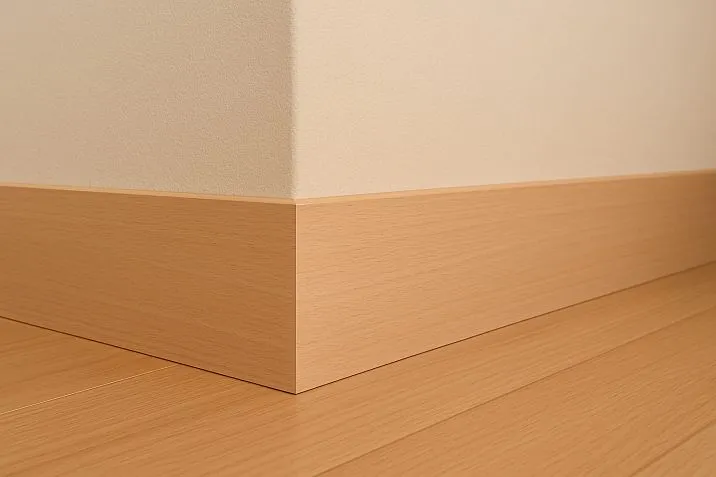
The world of flooring is rapidly evolving, but there are elements that remain unchanged benchmarks of quality and elegance. Among them, oak skirting board holds a special place — a detail capable of transforming an ordinary room into a space radiating nobility and sophistication. If you are wondering where to buy oak skirting boardthis article will be your comprehensive guide to the world of premium finishing materials.


History and traditions of oak skirting board in architecture
The use of oak in construction and finishing dates back to ancient times. This tree species has long been considered a symbol of strength, durability, and high social status. In medieval castles and palaces, oak panels and skirting boards were an integral part of the interior, highlighting the owner's status and creating an atmosphere of grandeur.
In Russian architectural tradition, oak held a special place. Boyar palaces and merchant houses were adorned with oak decorative elements, including massive skirting boards with carved ornaments. This tradition has not disappeared to this day — modern high-class interiors still include oak elements as a symbol of respectability and impeccable taste.
The evolution of oak processing technologies has allowed to expand the possibilities of applying this tree species. buy oak skirting board Today, it can be processed in various ways and profiles, making it a universal solution for any style.




Anatomy of oak wood — what makes it special
To understand the advantages of oak skirting board, it is necessary to delve into the structure of the wood itself. Oak belongs to ring-porous species, meaning it has clearly defined annual rings with different wood density in early and late growth zones.
Microstructural features of oak:
- Density from 670 to 800 kg/m³ depending on growing conditions
- Cellulose content around 45-47%
- High lignin content (25-30%), providing strength
- Presence of tannins (up to 8%), imparting natural resistance to biological damage
These characteristics make oak an ideal material for producing skirting boards that must withstand mechanical loads, humidity fluctuations, and maintain an attractive appearance for decades.
The color palette of natural oak ranges from light yellow to brownish-yellow with characteristic darker streaks. The sapwood is usually lighter than the heartwood, creating a natural tonal play on the surface of the finished product.
Our factory also produces:


Technological process of producing oak skirting boards
Creating a quality oak skirting board is a complex technological process requiring precise adherence to multiple parameters.
Get Consultation
Wood Preparation and Drying
The process begins with careful selection of timber. For manufacturing premium skirting boards, oak aged at least 80-100 years is used, when the wood reaches optimal density and stability.
Kiln drying — a critically important stage determining the quality of the future product. Timber is dried in special kilns under strictly controlled conditions:
- Temperature: 40-60°C initially, increasing to 80°C
- Humidity: gradually reduced from 85% to 10-12%
- Duration: 2 to 6 weeks depending on the thickness of the blanks
Profiling and processing
After reaching the target moisture content of 8-10%, the timber undergoes mechanical processing. Modern CNC routers allow creating skirting boards of the most complex profiles with precision down to tenths of a millimeter.
Popular oak skirting board profiles:
- Classic European profile with rounded top edge
- Modern minimalist rectangular profile
- Traditional Russian profile with 45° beveled edges
- Designer profiles with decorative elements
Surface finish largely determines the appearance of the finished skirting board. The process includes multi-stage sanding with gradually decreasing abrasive grit from P100 to P320.
The surface quality of oak skirting board largely determines its appearance and performance characteristics. The process includes several stages of sanding with gradually decreasing abrasive grit from P80 to P240.
After sanding, the surface is cleaned and coated with a protective-decorative finish. The choice of coating type depends on the intended usage conditions and design requirements.
Oak skirting board classification by construction
The modern market offers several main types of oak skirting boards, each with its own advantages and area of application.
Solid skirting board made from solid oak
This is an elite product segment, where buy oak skirting board means obtaining a product from a single piece of wood without gluing or composite elements.
Advantages of solid oak skirting board:
- Maximum durability (more than 50 years of service)
- Ability for multiple restorations
- Full ecological safety
- Unique texture of each item
- High prestige and status
Production features: For manufacturing solid skirting boards, only high-quality sections of the trunk without knots, cracks, or other defects are selected. This makes such products more expensive but also of higher quality.
Glued oak skirting board
It is manufactured by gluing several oak wood laminates together. This technology allows eliminating internal stresses in the wood and obtaining a more stable product.
Technological advantages:
- Increased geometric stability
- Ability to manufacture longer items
- More rational use of raw materials
- Optimal price-to-quality ratio
Veneered skirting board under oak
The base is made from coniferous wood or MDF, with a natural oak veneer of 0.6–4 mm thickness glued on top.
Characteristics of veneered products:
- Appearance identical to solid wood
- Affordable cost
- High dimensional stability
- Wide range of shades and textures
Size range and standards
Choosing the right skirting board size is critically important for creating a harmonious interior. Modern manufacturers offer a wide range of oak skirting board sizes.
Baseboard height
50–60 mm — minimum height suitable for small rooms with low ceilings. Such skirting boards create a sense of lightness and do not visually overload the space.
70–80 mm — standard height, optimal for most residential rooms. Provides good protection for walls against mechanical damage during cleaning.
90–110 mm — increased height for rooms with high ceilings (over 3 meters). Creates a more formal and prestigious appearance.
120–200 mm — tall skirting boards for special design solutions. Often used in classical and neoclassical interiors.
Thickness and length
The thickness of standard oak skirting boards ranges from 12 to 25 mm. For solid pieces, the thickness is typically 18-22 mm, providing sufficient strength while maintaining a reasonable weight.
Plank length is usually:
- 1.2 m — for small rooms and complex geometries
- 2.0-2.4 m — standard length for most applications
- 3.0-4.0 m — long planks for minimizing joints
Finishes and surface treatment options
The type of finish on oak skirting boards largely determines its performance characteristics and appearance.
Lacquer Coatings
Polyurethane varnishes — the most common type of finish for oak skirting boards. Provide excellent protection against moisture, wear, and mechanical damage.
Characteristics of high-quality polyurethane finish:
- Hardness by Knoop: 120-180 seconds
- Adhesion to wood: at least 2 points
- Wear resistance: class AC3-AC4
- Time for full curing: 24-48 hours
Acrylic varnishes — an eco-friendly alternative to polyurethane finishes. Have lower chemical resistance but are completely safe for health.
Oil finishes
Natural oils penetrate deeply into the wood structure, highlighting its natural texture and allowing the material to breathe.
Advantages of oil-based finish:
- Preservation of the natural wood texture
- Possibility of local coating repair
- Antistatic properties
- Humidity regulation in the room
Oil-wax blends combine the advantages of oils and waxes, creating a protective film on the wood surface with a natural matte sheen.
Staining and toning
Staining allows changing the color of oak wood while preserving its natural texture. Modern stains provide even coloring and do not obscure the natural wood grain.
Popular shades:
- Golden oak — warm honey tone
- Cognac oak — noble brown color
- Stained oak — dark brown, almost black
- White oak — light tones with preserved texture
- Wenge — exotic dark tone
Integration of oak skirting boards into various interior styles
The versatility of oak skirting boards allows their use in the most diverse stylistic directions.
Classic style
In classic interiors, oak skirting boards often have complex profiles with decorative elements: grooves, beads, and moldings. The height of such skirting boards is usually 100-150 mm, and the finish can vary from natural oak color to noble dark shades.
Features of classic oak skirting boards:
- Complex multi-step profiles
- Use of gilding or patination
- Matching the overall color palette of the interior
- Harmony with molded elements and cornices
Modern minimalism
Modern interiors require baseboards with simple geometric shapes without excessive decoration. Here buy oak skirting board a rectangular profile 60-80 mm high with matte or semi-matte finish.
Characteristic features of a minimalist oak baseboard:
- Clear straight lines
- Absence of decorative elements
- Neutral colors
- Visual lightness
Scandinavian style
Scandinavian interiors prefer light wood tones. White oak or oak with white oil finish fits perfectly into the concept of northern minimalism.
Loft and industrial style
In loft interiors, oak baseboards can contrast with industrial materials: concrete, metal, brick. Often, aged wood or baseboards with intentionally rough surface finish are used.
Technical aspects of installing oak baseboards
Quality installation of oak baseboards requires adherence to technical rules and use of appropriate materials.
Preparation for Installation
Material acclimatization — a critically important stage. Oak baseboards must remain in the installation room for at least 48-72 hours to equalize moisture with the surrounding environment.
Wall surface preparation: Walls must be flat, dry, and free of dust. Irregularities exceeding 2 mm per meter of length must be leveled.
Marking and planning: Before installation, a cutting plan for the baseboard must be prepared, taking into account the placement of joints in the least noticeable areas.
Methods of mounting
Mechanical fastening with self-tapping screws — the most reliable method for solid oak baseboards. Self-tapping screws 50-70 mm long are screwed into the wall through the baseboard at intervals of 40-60 cm.
Technology of hidden fastening:
- Pre-drilling holes of 8-10 mm diameter to a depth of 15-20 mm
- Screwing the screw until the head is recessed by 3-5 mm
- Filling holes with wooden plugs using glue
- Sanding and finishing plugs to match the baseboard color
Mounting with clips — a modern method of hidden installation suitable for baseboards with special grooves. Clips are mounted to the wall, and the baseboard clicks into place without visible fasteners.
Mounting with adhesive — used for lightweight veneered baseboards on flat walls. Polyurethane or MS-polymer adhesives with high adhesion to wood and mineral substrates are used.
Joint and corner finishing
Internal corners are finished by cutting baseboards at a 45° angle using a miter gauge or a circular saw. Professional equipment is recommended for achieving a perfectly flush joint.
External corners require special attention, as they are most noticeable. Cutting is done with a slight allowance, followed by fitting to the exact location.
Pre-fabricated corner elements — a modern solution that avoids complex cutting. Manufacturers offer pre-fabricated internal and external corners matching the baseboard profile.
Operation and care of oak baseboards
Proper care ensures the preservation of the original appearance of oak baseboards throughout their service life.
Regular Maintenance
Dry cleaning is performed weekly using a soft microfiber cloth or a vacuum cleaner with a delicate surface attachment. It is important to remove dust from profiled elements where it may accumulate.
Wet cleaning is performed as needed with slightly damp cloth. Avoid using excessive water and aggressive cleaning agents.
Special care products:
- For varnished surfaces — silicone-based polishes
- For oil-based finishes — special cleaners and regenerating compounds
- For tinted surfaces — products without whitening agents
Damage Prevention
Protection against mechanical impacts: Use protective caps on furniture legs, avoid striking with hard objects.
Humidity control: Maintain relative air humidity within the 40-60% range to prevent wood cracking or swelling.
UV protection: Direct sunlight can cause color changes in oak wood. Use blinds or curtains in rooms with large windows.
Repair and Restoration
One of the main advantages of oak skirting boards is their restorability.
Removing minor scratches: Surface scratches on varnished surfaces can be removed using special wax pencils or touch-up markers.
Oil finish renewal: Oil finishes require periodic renewal every 3-5 years. The process includes light sanding with P220 grit and applying a new layer of oil.
Major restoration: Large oak skirting boards can be fully restored: remove the old finish, sand the surface, and apply a new finish. This allows the item to look brand new.
Ecological and health-preserving aspects
In today's world, ecological and health safety issues are becoming increasingly important when selecting finishing materials.
Ecological safety
Oak as a renewable resource: With proper forest management, oak forests are a sustainable ecosystem. Many manufacturers obtain FSC or PEFC certification, guaranteeing responsible forestry.
Carbon footprint: Oak wood sequesters carbon throughout the product's lifespan, helping to reduce atmospheric CO2 concentration.
Waste disposal: At the end of its service life, an oak skirting board can be recycled or used as biomass, closing the material usage cycle.
Impact on room microclimate
Humidity regulation: Natural oak wood can absorb and release moisture, helping to maintain a comfortable microclimate in the room.
Antibacterial properties: Tannins contained in oak wood have natural antibacterial and antifungal properties.
No emission of harmful substances: High-quality oak skirting boards with eco-friendly finishes do not emit formaldehyde or other harmful substances.
Economic aspects of using oak skirting boards
When planning a repair budget, consider oak skirting boards not as expenses, but as a long-term investment.
Analysis of ownership cost
Initial costs for high-quality oak skirting boards may be significant, but they are offset by the material's longevity.
Comparison with alternatives:
- MDF skirting board: replacement every 8-10 years
- Plastic skirting board: replacement every 5-7 years
- Oak skirting board: service life of 50+ years
Restorability: Unlike composite materials, oak skirting boards can be restored multiple times, significantly extending their service life.
Impact on property value
High-quality oak interior elements, including skirting boards, increase property's assessed value. Buyers are willing to pay extra for apartments and homes with quality natural wood finishes.
Statistics show: The presence of high-quality wooden interior elements can increase property value by 5-15% compared to similar properties with budget finishes.
Innovations in the production of oak skirting boards
Modern technologies open up new possibilities in the production and application of oak skirting boards.
Thermally modified wood
Thermo-treatment of oak at 180-220°C alters the wood structure at the molecular level, improving its properties:
- Increased dimensional stability
- Improved moisture resistance
- Increased surface hardness
- More uniform color throughout the cross-section
Multi-functional skirting boards
Skirting boards with cable channels allow for concealed installation of electrical wires, internet cables, and other communications. This is especially relevant in the era of smart homes and numerous electronic devices.
Skirting boards with built-in lighting create an impressive decorative illumination and can serve as night lighting for the room.
Digital production technologies
3D modeling allows creating complex individual skirting board profiles tailored to specific design projects.
CNC processing ensures ideal geometry and repeatability of products, which is especially important when producing large batches.
Regional characteristics of oak skirting board application
Climate conditions in different regions impose specific requirements on the properties of oak skirting boards.
Regions with high humidity
In coastal areas and regions with humid climates, special attention is paid to protecting wood from moisture exposure:
- Mandatory use of moisture-protective impregnations
- Preference for oil-based finishes over lacquered ones
- Increased technological gaps during installation
Arid regions
In regions with low air humidity, it is important to prevent wood from drying out and cracking:
- Use of stabilized wood
- Control of humidity in rooms
- Use of flexible sealants at joints
Northern regions
In conditions of sharp temperature fluctuations, the geometric stability of the skirting board is especially important:
- Preference for glued constructions
- Extended acclimatization period for the material
- Use of compensatory gaps
Combining oak skirting boards with various interior elements
A thoughtful combination of oak skirting with other interior elements creates a harmonious and finished look.
Doors and door casings
Principle of material unity: The ideal combination is achieved by using oak doors, door casings, and skirting boards made from the same wood species with identical surface treatment.
Contrast play: In modern interiors, a contrasting combination of dark oak skirting with light doors—or vice versa—is successfully applied.
Floor Coverings
With oak parquet: A classic combination requiring precise color and texture matching. The skirting should either exactly match the floor or contrast with it.
With laminate: Oak skirting enhances even budget laminate, giving the interior a more upscale and refined appearance.
With ceramic tiles: The combination of cool ceramic with warm wood creates an interesting and modern effect.
Ceiling Elements
Crown mouldings and mouldings: To create a classic interior, oak skirting must harmonize with ceiling elements in style and color scheme.
Features of selecting oak skirting for different rooms
Each room has its own usage characteristics that must be considered when selecting oak skirting.
Living room and bedroom
These are rooms with relatively stable usage conditions, where any type of oak skirting can be used:
- Solid pieces for creating an impressive appearance
- High skirting (100-150 mm) for visually increasing ceiling height
- Various coating options depending on interior style
Kitchen and dining room
High humidity and potential contamination require a special approach:
- Preference for lacquered coatings with high moisture resistance
- Additional sealing of joints
- Regular treatment with protective compounds
Bathroom
Using oak skirting in the bathroom is possible only under special conditions:
- Mandatory treatment with moisture-protective compounds
- Quality ventilation of the room
- Use of special sealants for joints
Children's room
Safety and eco-friendliness — primary requirements:
- Use of water-based coatings without harmful solvents
- Rounded profile corners for child safety
- Increased resistance to mechanical impacts
Design trends in using oak skirting
Modern interior design trends open up new possibilities for using oak skirting.
High skirting boards
The trend for high skirting (150-250 mm) allows creating striking interiors with visually increased room height. Such skirting is often used as a decorative element, replacing traditional panels.
Hidden skirting
Innovative solution — skirting recessed into the wall at the same level as the floor finish. Creates a "floating" floor effect and emphasizes minimalist design.
Modern technologies allow creating oak skirting boards with unusual colors and textures:
Brushed surface with emphasized texture
- Color toning in non-traditional shades
- Combined coatings with metallic effect
- Combined coatings with metallic effect
Conclusion
Choosing oak skirting boards is a decision in favor of quality, durability, and impeccable style. The modern market offers a wide range of solutions for any budget and design preferences. The key when choosing is to focus on material quality, manufacturer reputation, and suitability of the product to operating conditions.
When you decide buy oak skirting board, you are investing in the long-term beauty and functionality of your interior. A properly selected and professionally installed oak skirting board will be the finishing touch that highlights the individuality and elegance of your home.
STAVROS Company holds leading positions in the Russian market for premium finishing materials made of natural wood. The STAVROS catalog features a wide selection of oak skirting boards in various profiles, sizes, and surface treatments. Highly qualified STAVROS specialists will help you choose the optimal solution for any interior, providing professional consultation at every stage of selection and purchase. STAVROS's long-standing experience with premium materials guarantees the highest product quality and impeccable service for every client.