Article Contents:
- Oak skirting board: why solid oak is unrivaled
- Natural anatomy of oak
- Technical characteristics of oak wood
- Aesthetics of oak texture
- Beech skirting board: a warm alternative with special properties
- Beech: character and structure
- Steaming: unique beech processing technology
- Beech skirting board: where it is appropriate
- Round stair molding: anatomy of safety
- What is a round handrail
- Solid or laminated handrail: which is better
- Surface treatment of round handrail
- Wooden balusters: verticals of safety and beauty
- Role of balusters in staircase construction
- Baluster shapes: from classic to modern
- Baluster installation: reliability technology
- Production: from forest to your home
- Log preparation and drying
- Planing and profiling
- Finishing and packaging
- Skirting board installation: rules and nuances
- Foundation Preparation
- Skirting board fastening
- Corner joints
- Staircase with wooden railings: safety project
- Staircase design
- Stair railing construction
- Staircase finishing
- Stylistic solutions: from classic to high-tech
- Classic Interior
- Scandinavian minimalism
- Industrial loft
- Organic modern
- Care and maintenance: how to extend wood's lifespan
- Daily care
- Restoration of coatings
- Repair of damage
- Project economics: investment for decades
- Cost of oak skirting board
- Cost of staircase with wooden railings
- Return on investment
- Frequently Asked Questions
- What is better: oak or beech skirting board?
- Can oak skirting board be used with parquet made from a different wood species?
- How to care for a round oak handrail?
- What handrail diameter is optimal for a private house?
- Should oak skirting board be coated with varnish or oil?
- How long does it take to install skirting board in an apartment?
- Can old oak skirting board be restored?
- What wood species are used for balusters besides oak and beech?
- How to match the skirting board color to the interior?
- Where to buy quality oak skirting board and stair handrails?
- Conclusion: choice of professionals
- Why STAVROS is the choice of thousands of customers
- Real stories: how skirting board and staircase change lives
- Invest in quality — enjoy it for decades

Have you ever thought about what exactly distinguishes a dwelling where you want to be from a faceless box-like apartment? It's not just about furniture, not about wall color, and not even about the area of the space. The secret lies in the details — in those elements that are not noticeable at first glance but create a sense of integrity, completeness, and aristocracy.buy oak skirting board— means laying the foundation for a noble interior, where every centimeter is thought out and made from solid wood. And in combination withoak round handrailyour staircase will become not just a functional structure, but a true masterpiece of joinery art.
Why exactly oak and beech? Because these species have been tested for centuries; they embody strength, durability, and the natural beauty of wood.Oak skirting boardwill withstand decades of use without losing shape, color, or texture.Round beech handrailswill provide tactile pleasure to everyone who climbs the stairs. Today, we will deeply immerse ourselves in the world of elite wooden moldings — from production technology to stylistic solutions.




Oak skirting board: why solid oak is unrivaled




Natural anatomy of oak
Oak is not just a tree; it is a living legend of European forests. Botanically, the genus Quercus includes over five hundred species, but for joinery, the most valuable are European oak (Quercus robur) and sessile oak (Quercus petraea). Oak wood has a density of six hundred fifty to eight hundred kilograms per cubic meter — this means that each cubic meter weighs almost a ton, providing incredible strength and resistance to mechanical loads.
The structure of oak wood is unique. Annual rings are clearly defined, medullary rays are visible on a radial cut as light, shiny stripes — this feature creates a characteristic pattern that cannot be confused with any other species. The sapwood (outer young part of the trunk) is light yellow, while the heartwood (central old part) ranges from light brown to rich chocolate shade.Solid oak skirting boardis made exclusively from heartwood — it has a high content of tannins, which protect the wood from rot, fungi, and insect pests.
Tannins are natural polyphenols that give oak its astringent smell and slightly bitter taste (if you bite a splinter). It is they that make oak so durable. Tannin content reaches eight to ten percent of the wood's mass. Thanks to this, oak products can be used in conditions of high humidity, temperature fluctuations, and mechanical loads without losing their characteristics.
Our factory also produces:
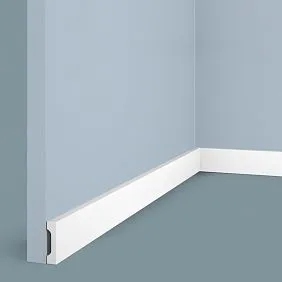
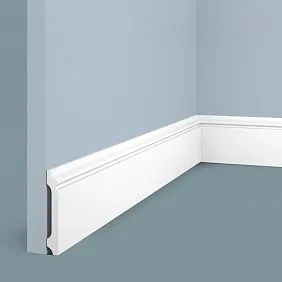


Technical characteristics of oak wood
When you choosebeech skirting boardor oak, it is important to understand the parameters of the material. The compressive strength of oak along the grain is fifty-eight megapascals, while its bending strength is one hundred five megapascals. This means that an oak plank can withstand colossal loads without deformation.
Brinell hardness is three point eight units. For comparison: pine has a value of about two units, and beech — four. Oak is in the golden mean — hard enough not to get scratched from accidental impacts by a vacuum cleaner or furniture legs, but not so hard that it is difficult to process.
An elastic modulus of thirteen thousand megapascals means that oak has good elasticity — under load it bends, but after the load is removed, it returns to its original shape. This is critical for stair elements, where constant loads from walking should not cause residual deformations.
Oak shrinkage is moderate: along the fibers only zero point one percent, across the fibers in the radial direction four percent, in the tangential — eight percent. This means that with proper kiln drying to a moisture content of eight — twelve percent, oak skirting board retains stable dimensions and does not warp after installation.
Get Consultation
Aesthetics of oak texture
The beauty of oak lies in its expressiveness. Each plank is unique: the pattern of annual rings, tonal transitions, medullary rays create a unique composition. With tangential sawing (along the trunk, tangent to the annual rings), a wavy 'flame' pattern is obtained. With radial sawing (perpendicular to the annual rings), medullary rays appear — light stripes that give the wood a noble shine.
Wooden oak skirting board pricedepends on the sawing method and wood grade. Radial sawing is more expensive, since fewer radial boards can be obtained from one log, but such wood is more stable and beautiful. The 'Select' grade has no knots, is uniform in color, ideal for classic interiors. The 'Natur' grade allows small knots and color variations, creating a more lively, rustic look. The 'Rustic' grade includes large knots, cracks, sapwood — suitable for country or loft style.
The color of oak is also diverse. Freshly sawn oak is light yellow or pinkish-brown. After kiln drying, the color intensifies, becoming golden-brown. Under the influence of ultraviolet light, oak darkens, acquiring a noble nutty hue. Tinting with oils and stains allows you to achieve almost any color — from bleached Scandinavian to black wenge.
Beech skirting board: a warm alternative with special properties
Beech: character and structure
Oriental beech (Fagus orientalis) is the second most popular species for the production of floor skirting boards and stair elements. The density of beech is slightly less than that of oak — six hundred twenty — six hundred eighty kilograms per cubic meter, but in strength it is not inferior: compressive strength is sixty-two megapascals, bending strength — one hundred twenty megapascals. Beech is even stronger than oak in bending, making it ideal for elements experiencing dynamic loads.
Beech wood is homogeneous, fine-pored, without a pronounced texture. Color varies from light pink to reddish-brown, medullary rays are noticeable on radial sawing, but less contrasting than in oak. This homogeneity is an advantage: beech skirting board looks calm, neutral, easily integrates into any interior.
An important feature of beech is hygroscopicity. Beech actively absorbs and releases moisture depending on the room's climate. This can be a disadvantage (with sharp fluctuations in humidity, beech products can deform), but under stable conditions (temperature eighteen — twenty-four degrees, humidity forty-five — sixty-five percent) beech behaves perfectly. Modern kiln drying and impregnation with stabilizing compounds minimize this risk.
Steaming: a unique beech processing technology
Beech is the only common species that undergoes steaming. Freshly dried beech is placed in an autoclave, where at a temperature of one hundred — one hundred ten degrees and a pressure of three — four atmospheres, steam treatment takes place for twenty-four — forty-eight hours. Steaming evens out the color (pink and whitish spots disappear, the wood acquires a uniform reddish-brown hue), increases formability (after steaming, beech can be bent with a minimal radius, creating curved elements), partially stabilizes the wood (hygroscopicity is reduced).
Steamed beech is called 'thermobeech' or 'red beech'. It is more expensive than regular beech, but has better characteristics.Round beech balustradeis often made precisely from steamed beech, as this allows obtaining a perfectly round cross-section without internal stresses.
Beech skirting board: where it is appropriate
If oak is status and history, then beech is warmth and modernity. Beech skirting board perfectly combines with beech parquet, laminate under beech, light furniture. Its neutral tone does not draw attention, but creates completeness. In Scandinavian interiors, where light species and minimalism are valued, beech is indispensable.
Beech skirting board is twenty — thirty percent cheaper than oak, making it affordable for the mid-price segment. At the same time, in terms of strength and durability, it is almost as good as oak. The service life of beech skirting board is thirty — forty years with proper care.
Beech takes tinting excellently. If you need to age an interior under oak, but the budget is limited, beech skirting board is tinted with a stain 'under oak' — visually only a specialist can distinguish them. Beech is also ideal for painting with enamels — its fine-pored structure ensures an even coating without bald spots.
Round stair molding: the anatomy of safety
What is a round handrail
Round oak handrailis a cylindrical wooden blank of constant diameter, which is installed on balusters or brackets of a stair railing. The main function of the handrail is to ensure safety during ascent and descent. The hand must confidently grasp the handrail, feeling a solid support. A round cross-section is optimal for this purpose — it is ergonomic, comfortable, and has no sharp edges.
The standard diameter of a stair handrail is forty-five — fifty-five millimeters. With a diameter of forty-five millimeters, an adult hand completely grasps the handrail, the thumb and index finger almost meet — this gives maximum control. With a diameter of fifty millimeters, the grip is slightly less full, but the handrail feels more massive, solid. With a diameter of fifty-five millimeters, children and women with small hands may find it difficult to grasp the handrail — this size is suitable for public buildings with high loads.
The length of round molding can reach six meters. For private houses, blanks with a length of three — four meters are usually used, as this allows installing a handrail without joints on most stair flights. Handrail joints are a weak point of the structure, so the fewer joints, the more reliable the system.
Solid or laminated handrail: which is better
A solid handrail is turned from a single piece of oak or beech solid wood. Advantages: prestige (one solid piece is always more valuable than a composite one), natural texture (the grain pattern is uninterrupted), absence of glue seams. Disadvantages: length limitation (maximum three — four meters due to the length of the original piece), risk of cracking (internal stresses in the wood can cause cracks), high cost (requires a select piece without knots).
A laminated handrail is made from several lamellas (narrow strips), glued together along the grain. Advantages: geometric stability (glue joints compensate for internal stresses, the handrail does not warp or crack), any length (a handrail six meters long or more can be made), lower cost (shorter blanks can be used). Disadvantages: presence of glue seams (with low-quality gluing, seams may be noticeable), slightly less prestigious status.
Modern gluing technologies are so advanced that the seams are practically invisible after sanding and finishing.Round oak balustradeGlued-type handrails last as long as solid wood but have no risk of cracking. For most projects, glued handrails are the optimal choice.
Surface treatment of round handrails
After turning on a lathe, the handrail has a rough surface with tool marks. Sanding is a critically important step. The handrail is sanded with abrasives of progressively increasing grit: P80 (coarse sanding, removing tool marks) → P120 (intermediate) → P180 (fine) → P240 (finish). After P240 sanding, the surface becomes silky smooth, free of scratches, and ready for coating application.
The final finish is chosen depending on operating conditions. Oil-wax compositions highlight the natural oak texture, feel pleasant to the touch, but require regular renewal (every one to two years). Polyurethane varnishes create a durable film that protects against moisture and abrasion, last five to seven years without renewal, but feel cooler and less natural. Water-based varnishes are eco-friendly, dry quickly, are odorless, but are less wear-resistant than polyurethane ones.
For handrails experiencing constant contact with hands, hard oils based on linseed and tung oils with the addition of beeswax are recommended. Such compositions penetrate the wood, strengthen the surface layer, and create a silky tactile surface that does not slip even in wet conditions.
Wooden balusters: verticals of safety and beauty
The role of balusters in staircase construction
Wooden balusters for stairsThese are vertical posts installed between steps and the handrail. The main functions of balusters are: preventing falls from the staircase (balusters create a solid or openwork infill for the flight, preventing a person from falling through), supporting the handrail (balusters transfer the load from the handrail to the steps), decorative design (the shape and carving of balusters define the staircase's style).
Building codes specify that the distance between balusters should not exceed one hundred twenty millimeters if there are children in the house. This prevents a child from slipping between the posts. In homes without children, a distance of up to one hundred fifty millimeters is permissible. The height of a baluster from the step to the lower edge of the handrail is eight hundred fifty to nine hundred millimeters — a comfortable height for an average-height adult.
The cross-section of balusters varies from thirty to fifty millimeters. Thin balusters (thirty to thirty-five millimeters) look elegant, airy, and are suitable for classical and baroque interiors. Thick balusters (forty-five to fifty millimeters) are more massive, reliable, and appropriate in country and rustic styles.
Baluster shapes: from classic to modern
Classical balusters have a complex turned profile with alternating convex and concave elements. A typical classical baluster from bottom to top consists of: a base (square or round, attached to the step), a lower stem (cylindrical element), a decorative ring (thin disc), a vase (expansion in the shape of a vase or an antique column baluster), a neck (thinning), and a head (expansion supporting the handrail). Such a baluster can have up to seven to ten different profile elements, creating a rich play of light and shadow.
Modern balusters are more concise. A simple cylinder of constant diameter, or a slightly conical shape (thickening at the bottom, thinning at the top), or a square cross-section with chamfers — minimalism does not require excessive decoration. Such balusters are suitable for Scandinavian, minimalist, modernist interiors.
Carved balusters are the highest degree of craftsmanship. Carving can be geometric (diamonds, squares, zigzags), floral (leaves, grapevines, flowers), or figurative (sculptural elements, mascaron). Carved balusters are made by hand or on CNC machines. Hand carving is exclusive and expensive, each baluster is unique. CNC carving is repeatable, cheaper, but lacks the 'liveliness' of handwork.
Installing balusters: technology of reliability
Balusters are attached to steps in three main ways. Dowel mounting is a classic method: holes with a diameter of eight to ten millimeters and a depth of thirty to forty millimeters are drilled in the step and in the base of the baluster, a wooden or metal dowel coated with glue is inserted, and the baluster is fitted onto the dowel. Strength is high, disassembly is practically impossible.
Stud mounting is a modern method: a metal threaded stud (diameter six to eight millimeters) is installed in the step, a blind threaded hole is drilled in the base of the baluster, and the baluster is screwed onto the stud. Strength is high, disassembly for repair or replacement is possible. Used in most modern staircases.
Groove mounting is a decorative method: a groove with a width of thirty to forty millimeters and a depth of twenty to thirty millimeters is milled along the step, balusters have a flat base that fits into the groove and are fixed with glue and dowels. Creates a 'ship-like' railing effect with tightly standing balusters. The method is labor-intensive but beautiful.
The upper part of balusters is also attached to the handrail in three ways. Mortising into a groove — the handrail is milled from below with a groove, the baluster heads fit into the groove and are fixed with glue. Stud mounting — a stud is installed in the baluster head, holes are drilled in the handrail, and balusters are inserted into the holes. Overlay handrail — the handrail is laid on top of the balusters and attached with screws through the heads.
Production: from forest to your home
Wood Preparation and Drying
The quality of any wooden product begins with proper harvesting. Oak is felled in winter when sap flow is minimal — winter wood has less moisture and cracks less during drying. Felled logs are sawn into boards with a thickness of forty to sixty millimeters (with allowance for shrinkage and planing). Boards are sorted by quality, removing those with rot, fungus, or through knots.
Natural drying lasts one to two years: boards are stacked outdoors under a canopy, with spacers inserted between boards for air circulation. Moisture content decreases to twenty to thirty percent. Then comes kiln drying: boards are placed in a drying chamber where the temperature is maintained at forty to sixty degrees, and air humidity is regulated automatically. The process takes two to four weeks. Wood moisture content is brought to eight to twelve percent.
Over-drying is not allowed (moisture content below seven percent): wood becomes brittle and cracks. Under-drying is also dangerous (moisture content above fifteen percent): products will continue to dry after installation, leading to gaps and deformations. Moisture control is a mandatory production stage.
Planing and profiling
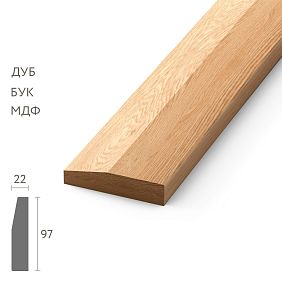
Dry boards go to a four-sided planer, where all four faces are processed simultaneously. This results in a beam of precise cross-section with smooth surfaces. For baseboards, beams with cross-sections of eighty by twenty millimeters, one hundred by twenty millimeters, one hundred twenty by twenty-five millimeters are used.
Profiling is performed on milling machines. Cutters remove material, creating the decorative profile of the baseboard. A simple European baseboard has a rectangular cross-section with a slight rounding of the top edge. A shaped baseboard can have coves, beads, chamfers — complex relief that emphasizes the product's prestige.
For round molding, a square-section beam is mounted in a lathe. Cutters turn a cylinder by removing excess material. The process runs at high speeds (one thousand five hundred to two thousand revolutions per minute), generating a lot of chips. After turning, the surface is sanded directly on the machine with abrasive belts.
Final processing and packaging
After mechanical processing, products are sanded on wide-belt sanding machines. The abrasive belt moves at high speed, removing a thin layer of wood and leveling the surface. Abrasive sequence: P120 → P180 → P240. After P240, the surface is perfectly smooth, ready for coating application.
Coating is applied by spraying in painting booths or dipping in vats with the composition. For baseboards, dipping is often used — the product is immersed in a vat with primer or oil, impregnated on all sides, then excess drips off. For handrails, spraying is used — the composition is applied with a pneumatic gun in a thin, even layer.
Coating drying is performed in convection chambers at a temperature of forty to sixty degrees. Drying time depends on the type of coating: water-based varnishes dry for two to four hours, polyurethane ones for six to eight hours, oils for twelve to twenty-four hours. After drying, the products are packaged in shrink film or cardboard boxes to protect them from dust and mechanical damage during transportation.
Skirting board installation: rules and nuances
Foundation Preparation
Before installing the skirting board, the walls must be leveled, painted, or wallpapered. The floor must be completely laid, including the final covering (parquet, laminate, tile). A five to ten millimeter expansion gap is left between the floor and the wall — it is necessary for the thermal expansion of the flooring. The skirting board will cover this gap but should not press the flooring tightly against the wall.
Walls must be even. If the wall has waves, bumps, or depressions, the skirting board will not fit tightly, and gaps will form. Checking for evenness is done with a long straightedge or laser level. Irregularities exceeding three millimeters must be corrected with plaster or filler.
Skirting board fastening
There are three main methods for fastening skirting boards. Glue fastening is a quick method: polyurethane adhesive is applied in a zigzag line to the back of the skirting board, the skirting board is pressed against the wall, and fixed with painter's tape or a weight for twenty-four hours. Advantages: invisible fastening, clean front surface. Disadvantages: removal destroys the skirting board, repair is impossible, requires a perfectly even wall.
Fastening with screws is a reliable method: holes with a diameter of three millimeters are drilled through the skirting board at intervals of fifty to seventy centimeters, screws are driven into the wall (into dowels if the wall is concrete or brick), the screw heads are countersunk two millimeters below the surface, and the holes are filled with wax-colored wood filler. Advantages: strong fastening, possibility of removal, compensation for wall irregularities. Disadvantages: visible fastening points (even when filled), labor-intensive.
Fastening with hidden clips is a modern method: metal clips (brackets with teeth) are screwed to the wall, a groove is milled on the back of the skirting board, and the skirting board is snapped onto the clips with the teeth in the groove. Advantages: invisible fastening, easy removal, compensation for irregularities. Disadvantages: more expensive than other methods, requires a special tool for milling the groove.
Corner Joints
Internal corners (a ninety-degree angle between walls inside a room) are joined by cutting at a forty-five-degree angle: both skirting boards are cut with a miter saw at a forty-five-degree angle and joined in the corner. If the angle is not exactly ninety degrees (walls are out of plumb), each skirting board is cut at an angle (the sum of the angles should equal the angle between the walls). The joint is coated with glue and pressed. After the glue dries, the joint is almost invisible.
External corners (a ninety-degree angle protruding into the room, e.g., a column corner or wall protrusion) are also joined at forty-five degrees, but here the joint is visible from all sides, requiring perfect fitting. An alternative is using ready-made corner elements: a decorative corner piece is installed on the corner, and the skirting boards meet it with straight ends. The method is simpler, but the corners are noticeable and disrupt visual continuity.
Lengthwise joints (when one skirting board is not enough for the entire wall) are made at a ninety-degree or forty-five-degree angle. A ninety-degree joint is simpler but noticeable. A forty-five-degree joint is less noticeable but more difficult to execute. The joint is always placed in the least noticeable location — behind furniture, in a dark corner.
Staircase with wooden railings: a safety project
Staircase design
Wooden balusters and railings— a system where each element is interconnected. Design begins with determining staircase parameters: rise height (distance from the first-floor floor to the second-floor floor), number of steps, flight width. The optimal step width is twenty-eight to thirty-two centimeters, step rise height is sixteen to eighteen centimeters. With such parameters, the ascent is comfortable for a person of average height.
The staircase slope angle is thirty to forty degrees. With a smaller angle, the staircase takes up a lot of space; with a larger one, the ascent becomes difficult, especially for children and the elderly. The handrail should be positioned at a height of ninety to one hundred centimeters from the step nosing — this is a comfortable height for hand support.
The number of balusters is calculated based on the distance between them: no more than twelve centimeters. For a step width of ninety centimeters, two balusters (at the edges) or three (at the edges and in the center) are installed. The more balusters, the more delicate and elegant the railing looks, but the more expensive the project.
Stair railing structure
The railing consists of posts (massive support posts at the beginning, end, and turns of the staircase with a cross-section of eighty by eighty or one hundred by one hundred millimeters), balusters (thin intermediate posts with a cross-section of thirty to fifty millimeters), and a handrail (horizontal or inclined element for hand support, with a diameter of forty-five to fifty-five millimeters).
Posts are installed first. They are fastened to the steps via metal anchors or threaded rods. The post must be strictly vertical, checked with a level. A tenon or threaded insert for handrail attachment is installed at the top of the post.
Balusters are installed between the posts. The lower part is fastened to the steps with threaded rods or dowels. The upper part remains free for now. The distance between balusters is verified with a template — a slat with marks ensuring uniform intervals.
The handrail is laid on top of the balusters and posts. If the staircase is straight, the handrail is simply laid horizontally. If there are inclined flights and horizontal landings, the handrail is cut at the required angles and joined. The handrail is fastened to the balusters with screws from below (through the baluster heads) or with glue.
Staircase finishing
After assembly, the staircase is sanded in place. All surfaces are worked over with eccentric sanders, removing minor scratches, installation marks, and leveling joints. Dust is thoroughly removed with a vacuum and a damp cloth.
Staircase coating is a critical stage. Steps experience maximum loads, so a wear-resistant coating is required. Water-based polyurethane varnishes are the optimal choice: environmentally friendly, odorless, quick-drying, and form a durable, elastic film. Three to four coats are applied with intermediate sanding using P320 abrasive.
Handrails are coated with oil or hard wax — these compositions are pleasant to the touch, non-slip, and easy to renew. Balusters are coated with the same composition as the steps for visual unity. Posts can be painted in a contrasting color (e.g., white posts against dark oak steps) — this creates a graphic effect.
Stylistic Solutions: From Classic to High-Tech
Classic interior
Classic style requires oak skirting boards with a height of one hundred to one hundred twenty millimeters and a shaped profile. Color — dark walnut or natural oak with a varnish coating emphasizing the grain. Staircase with carved balusters, massive posts with capitals, and a wide handrail with a diameter of fifty-five millimeters. All made of oak or stained beech to resemble oak.
Details: skirting board corners are decorated with decorative rosettes, figured posts with carvings are installed at staircase turns, the handrail is coated with glossy varnish, polished to a mirror shine. Color palette — warm brown tones, golden shades, patina on carved elements.
Scandinavian minimalism
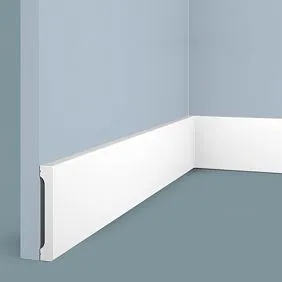
Scandinavian style prefers light beech or whitewashed oak. Skirting boards are narrow — sixty to seventy millimeters, with a simple rectangular cross-section, painted with white or gray matte enamel. Staircase with thin balusters of square cross-section thirty by thirty millimeters, painted white. Handrail is round with a diameter of forty-five millimeters made of light beech, coated with matte oil.
Details: minimal decor, emphasis on functionality, clean lines, light tones. Skirting boards blend with the walls, almost invisible. Staircase is airy, light, does not overload the space. Coatings are matte, tactilely pleasant, without shine.
Industrial Loft
Loft style combines rough and noble elements. Skirting boards are made of dark oak grade 'Rustic' with knots and cracks, height eighty to one hundred millimeters, without coating or with oil emphasizing naturalness. Staircase on a metal frame with oak steps, without risers (open construction). Railing made of black metal pipes, handrail is round oak with a diameter of fifty millimeters, contrasting with the metal.
Details: deliberate roughness of finish, preservation of saw and axe marks, brutal combinations of wood and metal, dark saturated tones, matte coatings. Baseboards are massive, noticeable, emphasizing the connection between floor and wall. The staircase is an architectural accent, the center of the composition.
Organic Modern
Modern requires smooth lines. Baseboards are beech, ninety to one hundred millimeters high, with coves and beads, painted in pastel tones (beige, light gray, olive). Staircase with curved balusters (steamed beech allows for creating curved shapes), a curved handrail following the line of ascent with smooth transitions on landings.
Details: absence of sharp corners, everything is rounded, flowing from one to another. Baseboards may have a figured top, imitating a plant ornament. The staircase as a sculpture, where every line is thought out. Coatings are silky-matte, colors are natural, non-contrasting.
Care and Maintenance: How to Extend the Life of Wood
Daily Care
Oak and beech products do not require complex care but need regular attention. Baseboards are wiped with a soft dry cloth or vacuumed with a soft brush once a week to remove dust. Wet cleaning is permissible once a month: moisten a cloth, wring it out well (it should be almost dry), quickly wipe the baseboard without lingering in one spot. Excess water is dangerous—wood will absorb moisture, may swell, darken.
Stair handrails are wiped daily with a damp cloth, as they retain handprints, sweat, and grease. Use special wood care products that clean and simultaneously care for the coating. Do not use aggressive detergents, abrasive sponges, chlorine-containing bleaches—they damage the coating, discolor the wood.
Restoration of Finishes
Oil-wax coatings require renewal every one to two years. The surface is lightly sanded with P320 abrasive (removing dirt and the top oxidized layer of oil), wiped free of dust, a fresh layer of oil is applied with a soft cloth, rubbed in with circular motions, allowed to absorb for thirty minutes, excess is removed with a dry cloth. After twelve hours, the coating is ready for use.
Lacquer coatings last five to seven years without renewal. Signs of wear: matte areas in places of frequent contact, minor scratches, darkening. Lacquer restoration requires complete removal of the old layer: sanding with P120 abrasive down to the wood, dust removal, primer application, drying, applying lacquer in two to three coats with intermediate sanding. The process is labor-intensive, takes three to four days, but the result is like a new product.
Repair of damage
Minor scratches are filled with a wax crayon matching the wood color: run the crayon over the scratch, wax fills it, polish with a soft cloth. The mark is almost invisible. Deep scratches and chips require putty: wood putty is applied with a spatula, excess is removed, after drying it is sanded, tinted with stain or acrylic paint to match the wood color, coated with lacquer.
Cracks in solid oak (if they appear from excessive dryness or sudden humidity changes) are filled with epoxy resin mixed with wood dust: resin is mixed with dust to a paste-like consistency, the crack is filled, leveled, after curing it is sanded, tinted, varnished. Professional repair makes the crack practically invisible.
Project Economics: An Investment for Decades
Cost of Oak Baseboard
Price per linear meter of oak baseboard depends on profile, wood grade, coating. Simple Euro baseboard of 'Natur' grade without coating costs from eight hundred rubles per meter. Figured baseboard of 'Select' grade with lacquer coating—from two thousand rubles per meter. Exclusive wide baseboard one hundred fifty millimeters high with carving—from four thousand rubles per meter.
For an apartment of one hundred square meters with a wall perimeter of about one hundred twenty meters (considering all rooms, corridors, minus doorways), one hundred twenty meters of baseboard will be needed. At an average price of one thousand five hundred rubles per meter, the total cost of baseboard will be one hundred eighty thousand rubles. Installation plus twenty to thirty thousand rubles. Total about two hundred ten thousand rubles.
Beech baseboard is twenty to thirty percent cheaper: the same apartment will cost one hundred fifty to one hundred seventy thousand rubles with installation.
Cost of Staircase with Wooden Railings
Staircase is a more complex and expensive project. A standard flight staircase to the second floor (rise height three meters, twelve steps, flight width ninety centimeters) made of oak costs from two hundred fifty thousand rubles for the structure without railing. Railing with balusters, posts, handrails adds one hundred fifty to two hundred thousand rubles. Total full staircase four hundred to four hundred fifty thousand rubles.
Beech staircase is twenty percent cheaper: three hundred twenty to three hundred fifty thousand rubles. Combined staircase (oak steps, beech balusters and handrails)—optimal balance of price and quality, three hundred fifty to four hundred thousand rubles.
Return on investment
Oak baseboard lasts fifty to seventy years without replacement. Plastic baseboard lasts ten to fifteen years. Over fifty years, four plastic replacements will be needed. Price of plastic baseboard two hundred rubles per meter, for the same apartment twenty-four thousand rubles for material plus installation fifteen thousand—total thirty-nine thousand. Four replacements—one hundred fifty-six thousand rubles. Oak baseboard (two hundred ten thousand) is more expensive initially but cheaper in the long run.
Additionally, oak baseboard increases property value by five to ten percent. An apartment worth ten million rubles with oak baseboards and staircase sells for ten million five hundred thousand to eleven million. Investments in wood are recouped upon sale.
Frequently asked questions
What is Better: Oak or Beech Baseboard?
Oak is harder, more prestigious, has expressive texture, lasts longer (fifty to seventy years), but is thirty percent more expensive. Beech is slightly softer, more uniform in color, easier to process, cheaper, lasts thirty to fifty years. For representative interiors where status matters—oak. For modern light interiors with a limited budget—beech. Both options are quality and durable.
Can Oak Baseboard Be Used with Parquet of Another Wood Species?
Yes, and it is often done. Oak baseboard pairs with ash, walnut, cherry parquet. The main thing is to correctly select the baseboard tint to harmonize with the floor. The baseboard can be made contrasting (dark baseboard with light floor or vice versa)—this creates a graphic effect.
How to Care for a Round Oak Handrail?
Wipe daily with a damp cloth without detergents (warm water removes grease and dirt). Wipe monthly with a special wood care product (cleans and nourishes the coating). Renew oil-wax coating every one to two years (if the handrail is oiled): lightly sand with P320, apply a fresh layer of oil, rub in, let dry.
What Handrail Diameter is Optimal for a Private House?
Forty-five to fifty millimeters. Forty-five millimeters—for small staircases where structural lightness is important. Fifty millimeters—standard, suitable for most cases, convenient for adults and children. Fifty-five millimeters—for wide staircases in large houses where solidity is important.
Should Oak Baseboard Be Coated with Lacquer or Oil?
Absolutely. Without coating, oak darkens, absorbs dirt, and can develop mold in humid conditions. Varnish creates a durable protective film, is easy to clean, and lasts five to seven years. Oil penetrates the wood, highlights the grain, feels pleasant to the touch, and requires renewal every one to two years. The choice depends on preferences and operating conditions.
How long does it take to install baseboards in an apartment?
For an apartment with an area of one hundred square meters (wall perimeter of one hundred twenty meters), an experienced two-person crew will install baseboards in two to three working days. Day one: marking, cutting corners, preliminary installation. Day two: fastening with screws or adhesive, filling holes. Day three (if needed): final sanding of joints, touch-up painting.
Can old oak baseboards be restored?
Yes, this is one of the main advantages of solid wood. The baseboard is removed, the old coating is stripped by sanding down to clean wood, damage is repaired with putty, it is sanded again, primed, coated with varnish or oil, and reinstalled. The baseboard looks like new and lasts for decades more. A plastic baseboard can only be thrown away after damage.
What types of wood are used for balusters besides oak and beech?
Ash - a light, hard wood with expressive grain, stronger than beech, more expensive. Larch - a coniferous species, dense, moisture-resistant, suitable for outdoor stairs or in saunas. Pine - soft, inexpensive, suitable for budget projects, but less durable. Exotic species (merbau, teak, iroko) - very hard, beautiful, expensive, used in premium projects.
How to match the color of the skirting board to the interior?
There are three approaches: matching the floor (baseboard blends with the floor, visually expands the space), matching the walls (baseboard is inconspicuous, emphasis on furniture and decor), contrasting (baseboard stands out, creates graphic lines, emphasizes lines). For classic interiors - match the floor. For minimalism - match the walls. For modern styles - contrasting.
Where to buy quality oak baseboards and stair handrails?
At specialized companies that manufacture solid wood products. Advantages of buying from a manufacturer: full quality control at all stages, ability to produce custom sizes and profiles, product warranty, consultations on installation and care. It is not recommended to buy cheap baseboards at construction markets - often it's low-grade wood with high moisture content that warps after installation.
Conclusion: Choosing professionals
When it comes to creating an interior that will delight for decades, there are no small details.Solid oak skirting boardandRound oak balustrade— these are not just finishing materials, they are an investment in the comfort, safety, and aesthetics of your home.
Company STAVROS has been producing solid oak and beech products for over fifteen years, combining traditions of carpentry craftsmanship with modern technologies. Each plank undergoes multi-stage quality control - from wood selection to final packaging. STAVROS specialists will help select optimal profiles, calculate material quantity, and consult on installation and care.
The production facility is equipped with European machinery: drying chambers with automatic humidity control, German-made four-sided planers, CNC milling machines for creating complex profiles, and lathe complexes for producing round moldings of any diameter. All this ensures consistent quality for every batch of products.
Choosing STAVROS products, you get not just wooden planks, but a comprehensive solution for your interior. The assortment includes dozens of baseboard profiles - from laconic Scandinavian to luxurious classic with rich carving.Wooden balusters for stairsSTAVROS are manufactured in various styles: from simple cylindrical to complex carved forms with floral ornaments.
An important advantage of working with STAVROS is the possibility of manufacturing products according to individual drawings. If standard profiles do not suit the specifics of your project, technologists will develop a unique shape, select wood species, tinting, and coating. The minimum order quantity for a custom order is from fifty linear meters, making exclusive solutions accessible not only for palaces but also for private homes.
The environmental safety of STAVROS products is confirmed by certificates. Only wood from responsibly managed forests (FSC certification) is used, and adhesives and coatings comply with European E1 class standards (minimal formaldehyde content). The products are absolutely safe for children's rooms, bedrooms, kitchens - anywhere people spend most of their time.
The warranty on STAVROS products is five years for the absence of manufacturing defects. This is not a formality - the company truly takes responsibility for quality. If cracking, warping, or coating delamination due to manufacturer's fault (not as a result of improper installation or use) is discovered during the warranty period, the products will be replaced free of charge.
The STAVROS logistics service organizes delivery to Moscow, St. Petersburg, and other cities in Russia. Products are packaged in protective film and cardboard boxes, preventing damage during transportation. For large projects (cottages, apartment buildings), delivery by truck with unloading on-site is possible.
The service department consults on installation, care, and restoration. If you are not ready to install baseboards and stairs yourself, STAVROS recommends verified installation crews with years of experience working with solid oak and beech. The warranty on installation work is one year, providing additional confidence in the result.
Why STAVROS is the choice of thousands of clients
Over the years, STAVROS has implemented hundreds of projects - from modest city apartments to luxurious country residences. Regular clients return, recommend to acquaintances, and leave grateful reviews. What makes STAVROS a leader in the wooden products market?
First, transparency. Prices on the website correspond to reality, there are no hidden fees, unexpected coefficients, or markups. Managers honestly discuss the properties of various wood species, do not push the most expensive options, and help choose the optimal price-quality ratio for a specific budget.
Second, speed. Standard items are shipped from the warehouse within three to five working days. Custom-made products are manufactured in ten to fourteen working days (simple profiles) or up to three weeks (complex carved elements). This is significantly faster than many competitors, where waiting can take months.
Third, flexibility. If the standard baseboard length doesn't fit, STAVROS will manufacture the required length. If a non-standard tint color is needed, technologists will select a stain to match the sample. If a project requires joining with imported elements, STAVROS will adapt profiles to European or American standards.
Fourth, service culture. Polite managers, competent consultations, strict adherence to deadlines, attention to every detail - all this creates a comfortable interaction. A STAVROS client feels like a partner, not a faceless buyer.
Real stories: how baseboards and stairs change lives
The Ivanov family purchased a country house with finished interiors, but with plastic baseboards and a metal staircase. The interior seemed cold, unwelcoming, despite expensive furniture. After replacing the baseboards with oak ones and installing wooden stair railings, the house transformed. Warmth, coziness, and a feeling of a real home, not an exhibition space, appeared. The children stopped being afraid of the stairs (metal railings were cold and slippery), the wife enjoys hosting guests, proud of the noble interior.
Architect Sergei was designing a modern apartment in a minimalist style. The client insisted on a black-and-white palette without wood. Sergei convinced them to add beech baseboards painted light gray - they softened the coldness of minimalism, added tactility. The apartment won an award at an architectural competition, and the beech baseboards became the 'highlight' of the project, written about in industry publications.
Restorer Maria was restoring a 19th-century manor house. The original oak baseboards and staircase were partially preserved but required the addition of missing elements. STAVROS produced copies of historical profiles based on preserved samples, aging them with special technologies. After installation, it is impossible to distinguish the new elements from the century-old ones—the manor regained its integrity and received cultural heritage status.
Invest in quality—enjoy it for decades.
Wood lives, breathes, and changes with you.Wooden oak skirting board pricewhich may seem high at first glance, pays for itself within just a few years of use. You won't replace baseboards every ten years, spending time, nerves, and money on removing the old and installing the new. You install once and forget—an oak baseboard will serve for half a century, outlasting several wall and floor renovations.
Round oak handrailwill ensure your family's safety for decades. Children will grow up holding onto this handrail, grandchildren will learn to walk on this staircase. The wood will retain the warmth of your hands and become part of your family's history.
Nature created oak and beech as perfect materials for human dwellings. STAVROS technologies preserve this perfection, shaping the wood into the desired form without compromising its natural properties. The result is products that serve for generations, delight the eye, provide tactile pleasure, and fill the home with nobility and warmth.
Don't skimp on the foundation—invest in quality.Oak skirting boardandRound oak handrailfrom STAVROS is the choice of those who value durability, beauty, and responsibility toward the future. Your home deserves the best. Wood is the best thing nature has created for humans. STAVROS is the best thing humans have created from wood.
Visit the STAVROS website, explore the catalog, order samples, and consult with specialists. The first step toward your dream home begins with the right choice of materials. Make that choice today—enjoy the results for a lifetime.