








































Article Contents:
- MDF Skirting Board in Moscow: Which Profile to Choose for Floor and Interior
- What MDF Skirting Boards Can Be Bought in Moscow
- White MDF Skirting Boards for Painting
- MDF Skirting Boards in Ready-Made Colors
- Modern Straight Profiles
- Classical shaped profiles
- How to Choose MDF Skirting Board by Height and Shape
- 60–70 mm for compact rooms
- 80 mm as a Universal Size
- 100–120 mm for a Prestigious Interior
- Straight Profile
- Profile with beading
- Rail profile
- How to choose MDF skirting board for floor covering
- For laminate
- For parquet
- For engineered board
- For quartz vinyl
- For wooden floor
- How to choose MDF skirting board for doors, architraves and walls
- For white doors
- For wood-tone floor
- For painted walls
- For architraves and portal
- Which MDF skirting board to choose according to interior style
- Modern Interior
- Neoclassicism
- Classic
- Minimalism
- What to buy together with MDF skirting board
- Moldings and Cornices
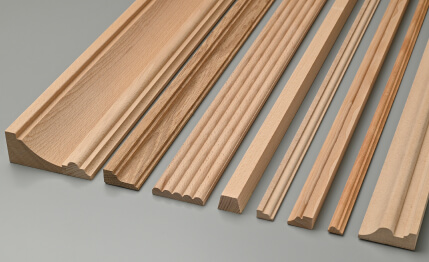
- Wooden Molding
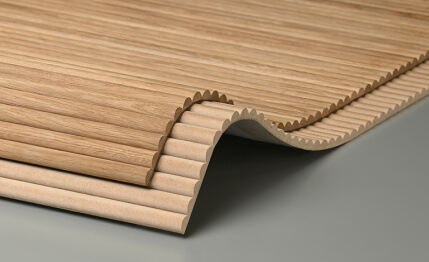
- Slatted panels
- Decor for moldings
- Where to buy MDF skirting board in Moscow
- Common mistakes when choosing
- Incorrect profile height
- Error in color and finish
- Incompatibility with architraves
- Purchase without volume calculation
- Additional frequently asked questions
- Conclusion
- About the Company STAVROS
- Frequently Asked Questions

If you are renovating a Moscow apartment and have reached the final stage — installing skirting boards — now is the time to pause and make a truly conscious choice. BecauseMDF skirting board in Moscowis not just a 'piece of wood by the wall'. It is the final architectural accent that either brings the interior together into a cohesive picture or ruins even the most expensive finish with one wrong decision.
MDF skirting boards today hold a confident place among the most in-demand finishing materials — both in Moscow housing and commercial spaces. The reasons are simple: stable geometry, a wide choice of profiles and finishes, affordable price, compatibility with any floor covering. But it is precisely this diversity that often causes confusion. How to choose the right profile? What height to take? What color will suit the doors and floor?
You will get comprehensive answers to these questions below — without fluff, without marketing spells, only real expertise and specific recommendations.




MDF Skirting in Moscow: Which Profile to Choose for Floor and Interior
First of all — let's clarify the terminology, because confusion arises here constantly. 'Skirting for MDF' and 'MDF skirting' are different, though related, concepts. In the first case, it refers to a skirting board selected to match an MDF floor covering or panels — i.e., based on compatibility. In the second — to a skirting board made from MDF. In most Moscow projects, both meanings intersect: people want to buy precisely an MDF skirting board that will look good next to MDF laminate or MDF wall panels.
What you need to understand right away: the choice of MDF skirting in Moscow should start not with color or price, but with three key parameters — profile, height, and finish. It is this trio that determines whether the skirting will fit into your interior or will look like a foreign element.
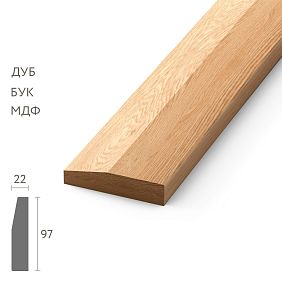
Profile — this is the cross-section of the skirting, its silhouette. Straight or with a bead, with a rail or with a chamfer — each profile carries a certain stylistic load. Modern loft requires a straight plank without extra decorations. A classic living room with moldings — a shaped profile with expressive transitions.
Height — this is how high the skirting rises above the floor. 60 mm looks modest and appropriate in small spaces. 100–120 mm add representativeness to the interior but require corresponding ceilings and style.
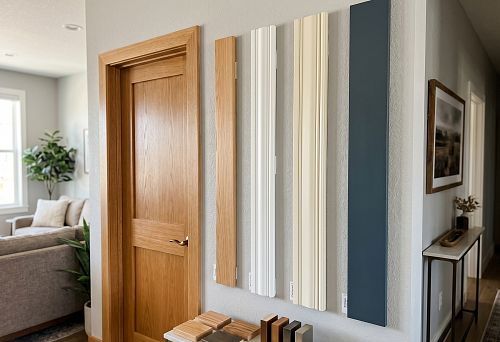
Finish — white for painting, pre-painted, oak, wenge, or a non-standard color — this choice determines the visual connection of the skirting with the other elements: floor, doors, architraves, furniture.
When all three parameters are correctly selected, buyingMDF skirting boards in Moscowbecomes not a purchase of 'something suitable', but a targeted solution for a specific interior.




What MDF skirting boards can be bought in Moscow
The Moscow market offers a huge selection — from frankly cheap products of questionable quality to professionally manufactured profiles with precise geometry and durable coating. Let's examine the key categories that are actually in demand in capital projects.
Our factory also produces:


White MDF skirting boards for painting
This is perhaps the most popular option in Moscow apartments over the last five years. An MDF skirting board for painting is a product with a primed or fully prepared surface that can be painted any color: from classic white to rich anthracite or powder pink.
Why is this advantageous? Firstly, you choose the final color yourself — at the moment when it's already clear what wallpaper, what doors, and what furniture. Secondly, such a skirting board allows you to achieve a perfect match to the tone of the walls or door frames, which is unattainable when buying ready-made colored products. Thirdly, when changing the interior — for example, when repainting walls — the skirting board can easily be updated with a fresh coat of paint without replacement.
It's worth buying a white MDF skirting board for painting in those projects where color accuracy is important: designer apartments with RAL tinting, Scandinavian interiors, projects with accent colors.
Get Consultation
MDF skirting boards in ready-made colors
If you don't want to bother with painting or the renovation is done in standard white tones, a pre-finished white MDF skirting board will be the optimal solution. The factory-applied acrylic enamel coating provides a smooth, mechanically resistant surface without streaks or unevenness.
Besides white, there are also imitations of natural wood available for sale — light oak, grey oak, wenge. High-resolution digital printing reproduces the annual ring pattern with sufficient accuracy to visually 'match' the skirting board with laminate or parquet of a similar shade.
Modern straight profiles
A straight profile is minimalism in its purest form: a plank with a clean rectangular cross-section, no mouldings, no transitions, no decorative details. This is exactly the type of skirting board needed for interiors that value clean lines: Scandinavian style, contemporary, high-tech, Japanese minimalism.
Modern MDF skirting boards— are not just 'simple'. These are profiles with precise proportions, where every detail matters: the bevel angle, the radius of the top edge rounding, the geometric accuracy along the entire length of the plank.
Purchasing a modern straight profile in Moscow is especially relevant for new-build apartments with open-plan layouts, where you want to preserve a sense of space and not overload the interior with decorative details.
Classical shaped profiles
A shaped profile is a platform for those building an interior around architectural details. Horizontal relief transitions, S-shaped curves, a 'step' along the top edge — all this gives the skirting board expressiveness and works in tandem with shaped architraves, wall mouldings, and plaster cornices.
Classic MDF Skirting Boardsare distinguished by smooth curved lines and elegant profiles that fit organically into neoclassical, classic, and Provence styles. The finish is predominantly white or primed for painting, allowing for a unified white outline around the perimeter of the room.
Important: classic decorative skirting requires precise matching to door frames and cornices. If you already have doors with decorative frames, the skirting must 'speak' the same architectural language.
How to choose MDF skirting by height and shape
Skirting height is not just about aesthetics. It's about the geometry of the space. An incorrectly chosen height makes ceilings appear lower, walls narrower, and the entire interior unbalanced.
60–70 mm for compact spaces
A 60 mm high skirting is for rooms with ceilings up to 2.6–2.7 meters. This is the standard ceiling height in Soviet-era buildings, small Moscow apartments, and bedrooms with low ceilings. A narrow skirting doesn't steal visual space and allows walls to 'breathe'.
Buying a white MDF skirting 60–70 mm high is the right choice for hallways, bathrooms, and small bedrooms. Here it's important not to overload the space and maintain lightness.
70 mm is slightly more versatile: suitable for rooms with ceilings 2.6–2.8 meters and works in both minimalist and classic interiors.
80 mm as a universal size
80 mm MDF skirting is the perennial sales leader and the most in-demand size in Moscow projects. It works optimally in standard apartments with ceilings 2.6–2.9 meters, provides reliable protection for the lower edge of the wall, and doesn't look bulky.
80 mm is the balance point: noticeable enough to become an architectural element, but not so wide as to 'pull' the ceiling down. That's why buying a high 80 mm MDF skirting is chosen for both living rooms and bedrooms and home offices.
Wide 80 mm MDF skirting in white, paintable finish, is one of the most popular requests in Moscow construction showrooms.
100–120 mm for a status interior
A skirting board with a height of 100–120 mm is already a statement. It is chosen for spacious rooms with ceilings from 2.9–3.0 meters and above, for living rooms with moldings, for classic studies. A wide MDF skirting board in this range adds weight, solemnity, and respectability to the space.
To buy a wide MDF skirting board 100–120 mm means to bet on architectural expressiveness. This is a solution for those who build an interior as a complete work, where every detail works for the overall image.
Important rule: the height of the skirting board should be approximately 1/30–1/35 of the room height. For a room with a 3-meter ceiling — 90–100 mm. For 2.7 meters — 80 mm. This is not dogma, but a guideline that helps avoid obvious mistakes.
Straight profile
Straight profile — a flat rectangular cross-section — works in modern, minimalist, Scandinavian, Japanese, and industrial interiors. No decorations, only pure geometry. It is worth buying a straight MDF skirting board where the walls are plain, the furniture is without excessive decorativeness, and the interior is built on space and light.
Profile with a bead
A bead is a horizontal relief transition on the front plane of the skirting board. One or several 'steps' give the profile architectural expressiveness without heaviness. Buying a shaped MDF skirting board with a bead is the right choice for neoclassical, modern classic, and Provence style.
Profile 'slat'
Slat — a minimalist profile with a thin cross-section, almost without protrusion. Creates the effect of a shadow seam between the floor and wall, which is popular in modern interiors with an emphasis on horizontal lines. A hidden MDF skirting board in this execution is a frequent request for Moscow designer apartments in contemporary and minimalist styles.
How to choose an MDF skirting board to match the floor covering
One of the most common questions when buying a skirting board is how important compatibility with a specific floor covering is. The answer: very important. Not only in terms of color, but also in terms of technical requirements.
For laminate
Laminate is a floating floor covering. This means it expands and contracts with changes in humidity and temperature. When buying an MDF skirting board for laminate, you need to consider this nuance: the skirting board should not press the laminate against the wall, it should only cover the expansion gap. It should be attached only to the wall, with no contact with the floor.
Regarding color: the skirting board for laminate is chosen either to match the floor covering (inconspicuous skirting) or as a contrasting white — for a clear visual boundary. The second option currently dominates in Moscow apartments: a white MDF skirting board against a dark or gray laminate looks fresh and modern.
For parquet
Parquet is a natural material with high aesthetic requirements. When buying an MDF skirting board for parquet, choose one with a finish that either harmonizes with the wood tone or creates an intentional contrast. A white paintable skirting board paired with natural oak parquet is a classic and fail-safe combination.
Technically: parquet is also a floating floor covering (if not glued down), so the requirements are the same — an expansion gap and attachment only to the wall.
For engineered wood
Engineered wood is a multi-layer product with a natural veneer top layer. Aesthetically, it is close to solid wood parquet but behaves more stably. When buying an MDF skirting board for engineered wood, pay attention to the veneer color: the rule 'skirting board slightly darker than the floor' works excellently here, creating a light visual frame.
For quartz vinyl
Quartz vinyl is a modern floor covering that is actively gaining popularity on the Moscow market due to its moisture resistance and ease of installation. It comes in a huge variety of colors and textures. Buying an MDF skirting board for quartz vinyl is not difficult: a straight white profile almost always works here, as quartz vinyl often imitates wood or stone, and a neutral white skirting board does not compete with the covering but frames it.
Note: quartz vinyl is also a floating floor covering. An expansion gap and attachment only to the wall is a mandatory rule.
For wood-look flooring
'Wood-look flooring' is a collective term for laminate, engineered wood, and quartz vinyl with a wood texture. It's better to buy an MDF skirting board for wood-look flooring in a neutral white or a tone as close as possible to the covering. The task of the skirting board here is not to distract attention from the floor, but to neatly finish its contour at the wall.
How to choose MDF skirting boards for doors, architraves, and walls
This is an aspect of selection that is often overlooked—and later regretted. Skirting boards and architraves are elements of the same architectural system. They should 'speak' the same language: in profile, color, and proportions.
For white doors
White doors are the most popular choice in Moscow apartments. It makes sense to buy white MDF skirting boards for them, preferably in the same shade of white as the doors. It sounds simple, but the nuance is that 'white' can be very different: warm milky, cold snowy, slightly creamy. When choosing, compare the skirting board with the door frame in the same lighting.
By profile: if the doors have shaped architraves, the skirting board should have at least minimal relief. If the doors are smooth—a straight profile.
For wood-toned flooring
When the floor is warm oak or walnut wenge, and the doors are dark brown or beige, the skirting board can be chosen to match the floor or walls. MDF skirting boards in a ready-made 'oak' color give a sense of continuity—the floor seems to smoothly 'flow' into the wall.
For painted walls
If the walls are painted in a non-standard color—powder, soot, dark green—a paintable skirting board becomes the perfect solution. It is painted the same color as the wall—and it disappears, not disrupting the uniformity of the plane. This is a designer technique of the 'invisible skirting board,' which makes the room more spacious.
For architraves and portals
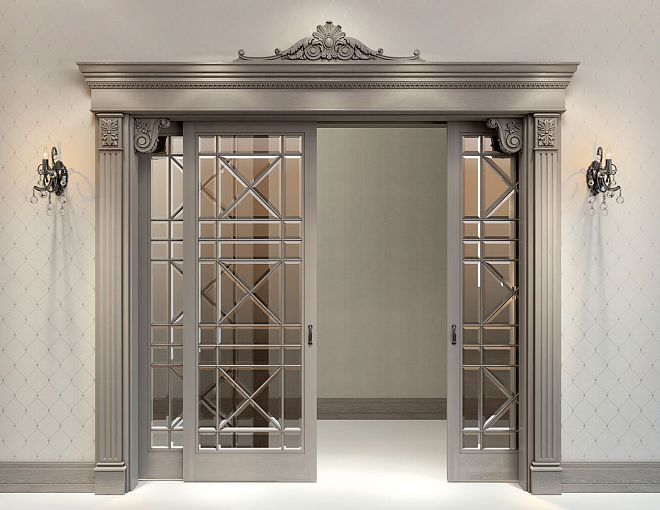
Architraves are the direct pair for skirting boards. If you have architraves with a classic profile, you need to buy MDF skirting boards to match the architraves with a similar cross-section pattern. This is called a 'unified architectural system': when all wooden or MDF elements in the interior visually form one collection.
Profile linemolding productsfrom a competent manufacturer is designed exactly this way: skirting board, architrave, cornice, molding — everything is interconnected and complements each other.
Which MDF skirting board to choose according to interior style
Interior style is not a trendy word from Instagram, but a specific set of visual principles. And each style dictates its own requirements for the skirting board.
Modern interior
Contemporary interior — also known as contemporary — is built on a balance between functionality and aesthetics. Straight lines, neutral colors, textures. Skirting board for a contemporary interior: straight profile, height 70–100 mm, white or matching the wall, without decorative details.
Modern MDF skirting boardsfrom STAVROS is exactly for this: precise geometry, smooth finish, neat proportions. Buying a contemporary MDF skirting board means giving the interior a final touch without unnecessary noise.
Neoclassicism
Neoclassicism today is one of the most popular requests in Moscow design studios. This is a modern space with classical architectural quotes: moldings on walls, stucco cornices, doors with decorative inserts. Skirting board for neoclassicism: shaped profile with one or two beads, height 80–100 mm, white or for painting.
Buying a classic MDF skirting board with a shaped profile is a mandatory condition for a neoclassical interior. A straight profile here would clash with the other architectural details.
Classic
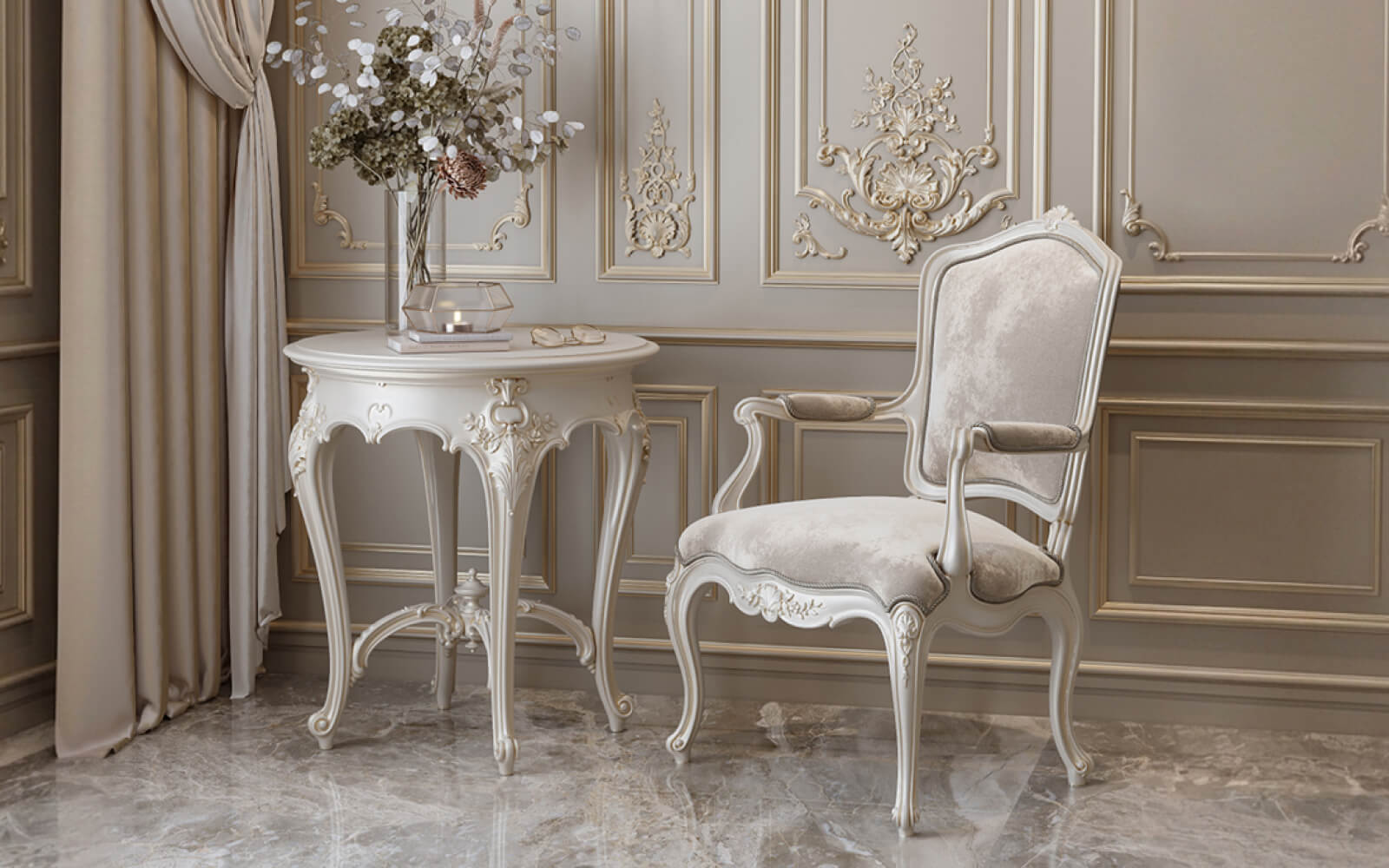
Strict classicism is richness of details, symmetry, expensive materials. Skirting board for a classic interior: expressive shaped profile, height 100–120 mm, snow-white finish or gilding, combination with lush cornices and voluminous moldings.
Classic MDF Skirting Boards— this is exactly the type of product that fits in such interiors. Smooth lines, elegant shapes, and profile height emphasize the solemnity of the space.
Minimalism
Minimalism is an interior where every item is justified. Here, the baseboard should be as inconspicuous as possible: a straight profile, minimal height (60–70 mm), or even a hidden baseboard with a shadow joint. White or matching the wall color — this way the baseboard 'dissolves' into the surface.
Buying a hidden MDF baseboard for a minimalist interior creates the effect of 'floating' walls, giving the space lightness and airiness. Especially popular in Moscow designer studio apartments with panoramic windows.
What to buy together with MDF baseboard
A well-designed interior is a system. The baseboard is just one detail. To make the space look cohesive and complete, it needs to be complemented with accompanying elements. Here's what to consider along with purchasing the baseboard.
Moldings and cornices
Moldings — decorative wall profiles — create the effect of panels, frames, and architectural bands. They elevate the interior to another level, especially in neoclassical and classic styles. Cornices finish the ceiling part, visually increasing the height of the room.
Baseboard, molding, and cornice — this is a unified architectural collection. If you choose them from the same line, the interior gains a cohesive look: all wooden elements 'sound' in unison. View the full catalog molding products— it contains compatible profiles that work as a system.
Wooden millwork
Wooden millwork — these are baseboards, trims, and cornices made of solid oak or beech. If your interior is built on natural materials — oak parquet, wooden doors, solid wood furniture — a wooden baseboard will become an organic continuation of this theme. Floor baseboards made of natural wood and MDF profiles can be combined in different zones while maintaining a unified color palette.
View the entire rangefloor baseboards— wooden and MDF — conveniently in a single catalog, featuring items from 60 to 120 mm in various finishes.
Rack panels
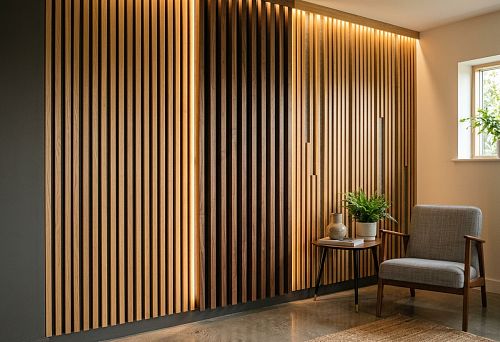
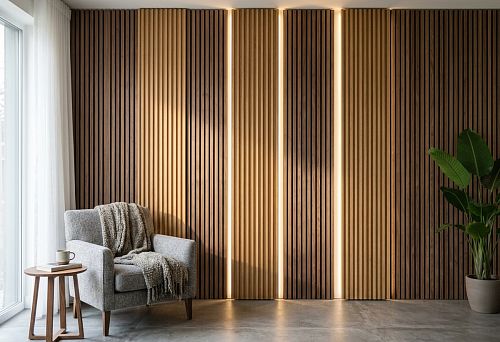
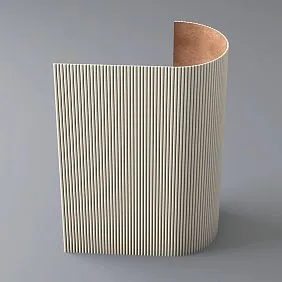
Slatted panels are one of the main trends in Moscow interior design in recent years. Vertical wooden slats on the wall create texture, depth, and dimension that neither plaster nor wallpaper can provide. Combined with an MDF skirting board, a slatted panel forms a complete decorative system: slats on the wall plus a neat skirting board at the bottom.
Rafter panelsSTAVROS — wooden profiles with precise geometry for installation on walls and ceilings. They are compatible with the line of skirting boards and moldings in style and color palette.
Decor for moldings
Moldings are not just profiles. They are also decorative inserts: rosettes, ornaments, corner elements. They turn simple molding frames into true architectural pictures. If you have chosen a classic or neoclassical interior, decor for moldings is a logical addition to the skirting board and cornice.
Where to buy MDF skirting board in Moscow
The main practical question: where exactly to buy MDF skirting board in Moscow with guaranteed quality, a normal assortment, and a reasonable price?
The answer is simple: from the manufacturer or an authorized store with a real warehouse. Because that is exactly where you will get:
Availability. You need a specific profile, specific height, specific finish — and all of it immediately, without waiting three weeks for delivery. The full line of skirting boards is available in STAVROS Moscow warehouses: straight and shaped profiles, height from 60 to 120 mm, white and paintable.
Choice by profile. Straight, with a bead, with a rail, concealed — each type of skirting board in one place, with the ability to compare 'in person,' hold in your hands, evaluate the cross-section and finish.
Choice by finish. White matte, white glossy, paintable, oak-like — color options need to be viewed in natural light, not on a monitor screen. This is possible in the showroom.
Selection by height. Size range 60/70/80/100/120 mm — a good supplier has all items in stock, not just 80 mm 'because it's the most popular.'
Go to catalog. View the full range of MDF skirting boards, compare profiles and finishes, place an order with delivery in Moscow in theMDF skirting board catalog — all current items with prices and specifications are presented here.
Delivery. Buy MDF skirting board in Moscow with delivery — a convenient option for those who cannot or do not want to deal with transporting long planks (standard length 2400–2800 mm). Delivery in Moscow and the region — within agreed timeframes, without damage, with professional packaging.
Common mistakes when choosing
Over decades of work in this field, understanding accumulates: the same mistakes are repeated again and again. Here are the most typical ones — and how to avoid them.
Incorrect profile height
The most common mistake is choosing a skirting board 'by eye,' without considering ceiling height and room proportions. Result: a 120-millimeter skirting board in an apartment with 2.6-meter ceilings visually 'weighs down' the entire space. Or vice versa — a 60-millimeter profile in a tall living room looks like a strip of tape.
The rule is simple: before buying, measure the ceiling height and select the skirting board height using the formula 1/30–1/35 of the room height. With a 2.7 m ceiling, the optimum is 80 mm. With 3.0 m — 90–100 mm.
Color and finish mistake
Choosing a baseboard from a website photo or catalog image is a risk. Color reproduction on screen is distorted depending on the monitor and lighting. A 'white' baseboard in the catalog may turn out to be creamy or cool-toned—and this will be noticeable next to doors of a different white.
Before ordering a large batch—request a sample or visit the showroom. A few minutes spent comparing it with door casings and door frames will save you several hours of work replacing the baseboard.
Incompatibility with door casings
Another typical mistake is choosing baseboards and door casings from different collections, with different profiles. It turns out that the baseboard has a straight profile, while the casings have a shaped one with several levels. These two details 'conflict' with each other, disrupting the integrity of the interior.
Solution: choose baseboards and door casings from the same collection or from the same manufacturer who developed them as a unified system.Skirting board for MDFIn this approach, it is part of a larger architectural story, not just a 'floor trim addition.'
Purchasing without calculating the volume
'I'll take some extra'—this phrase begins a story of either material shortage or a pile of unnecessary leftovers. The correct calculation: measure the perimeter of all rooms, subtract door openings (standard opening width is 0.9–1.0 m), add 10–15% for cutting at corners and possible defects. The result is the exact footage with a small margin.
Remember: baseboards have a standard length of 2400 mm. For a room with a perimeter of 16 meters, about 7 planks will be needed. Plus a margin.
Additional questions most frequently asked
When a customer comes for MDF skirting boards, the conversation usually doesn't stop at 'what height?'. Here are the questions that almost always come up.
Is a gap needed between the skirting board and laminate?
Yes, definitely. The skirting board is attached to the wall, not touching the floor covering. This allows the laminate to expand freely with changes in temperature and humidity. The standard technological gap between the wall and laminate is 8–10 mm, and the skirting board covers this gap.
Can MDF skirting boards be painted after installation?
Yes. MDF skirting boards for painting are specifically designed for this. Primer improves adhesion, and paint is applied in 2–3 coats. Interior water-based paints are suitable — odorless, with good coverage. After installation, painting is most convenient with a thin brush along the edge.
What thickness of MDF skirting board is considered optimal?
The optimal thickness is 14–18 mm. Less than 14 mm — risk of deformation during installation. 16 mm — the gold standard for residential spaces. 18–22 mm — for high-traffic areas or for wide profiles of 100–120 mm.
How to properly join skirting boards in corners?
Internal corners — miter cut at 45° or use ready-made corner elements. External corners — miter cut at 45° with precise fitting. When working with MDF, use a miter saw with a fine-toothed blade (80–100 teeth) — this prevents chipping on the front surface.
Can wooden skirting boards and MDF skirting boards be combined in one apartment?
Yes. A common practice: in the living room — an oak wooden skirting board to match the parquet, in bedrooms and the hallway — white MDF skirting. It's important to maintain unity in profile and proportions so the transition doesn't look random.
Conclusion
MDF skirting is a detail that, when chosen correctly, works unnoticed, but this very inconspicuousness is a sign of craftsmanship. When the profile matches the style, the height suits the ceilings, and the color complements the doors and floor, the interior gains that completeness which signifies real work.
For those who chooseMDF skirting boards in Moscow, it's important to understand: this is not just a 'rough' material. It's an architectural element that forms the horizontal contour of the entire room.
Decided on the profile and style? Check outModern MDF skirting boards— straight profiles with precise geometry for modern interiors — andClassic MDF Skirting Boards— shaped profiles for neoclassical and traditional styles. Need a comprehensive system? Go to theMDF skirting catalog— there you'll find the full range with sizes, finishes, and prices.
About the company STAVROS
STAVROS is a Russian manufacturer of premium-class architectural wood and MDF moldings. The company produces skirting boards, moldings, cornices, architraves, paneling, and decorative elements, which are developed as a unified interior system. Production is equipped with modern European machinery with multi-stage quality control at every stage — from raw material selection to the final finish.
The STAVROS MDF skirting board range covers heights from 60 to 120 mm, several profile types — straight, shaped, with a molded edge, concealed — as well as a wide spectrum of finishes: white for painting, ready-made white, oak, wenge. All products are compatible with parquet, laminate, engineered wood, and quartz vinyl. Delivery — across all of Russia, including Moscow and St. Petersburg, from the warehouse within agreed timeframes.
STAVROS works with private clients, interior designers, construction and furniture companies, architects — for everyone who values precision, quality, and a systematic approach to details.
Frequently asked questions
What height of MDF skirting board should I choose for an apartment with 2.7-meter ceilings?
The optimal height is 80 mm. This is the most universal size for standard Moscow apartments with ceilings of 2.6–2.9 meters. It looks proportional, covers a sufficient gap at the floor, and suits both modern and classic interiors.
What is the difference between an MDF skirting board for painting and a ready-made white skirting board?
An MDF skirting board for painting is supplied with a primed surface, ready to be painted any color. A ready-made white skirting board has a factory-applied acrylic enamel coating. The first is for those who want an exact match to the interior's color tone. The second is for those who want a quick result without additional work.
Can MDF skirting boards be installed in the kitchen and hallway?
Yes, with caveats. In the kitchen, it is recommended to use a skirting board with a moisture-resistant coating or a skirting board with a cable channel made of moisture-resistant MDF. In the hallway — standard MDF skirting board is suitable without restrictions.
How to calculate the amount of skirting board needed for an apartment?
Measure the perimeter of all rooms where installation is planned. Subtract the width of doorways (usually 0.9–1.0 m). Divide by the length of a plank (2400 mm) and add 10–15% for cutting in corners. Round up — you will get the required number of planks.
Should MDF baseboards be attached to the floor or only to the wall?
Only to the wall. This is especially important with floating floor coverings (laminate, engineered wood, quartz vinyl): the baseboard should not block the movement of the floor covering. Attach it to the wall, with a 1–2 mm gap between the bottom edge of the baseboard and the floor.
Can MDF baseboards be combined with wooden ones in the same apartment?
Yes, this is a common practice. For example: oak wooden baseboard in the living room with parquet, white MDF baseboard in other rooms. It is important to maintain a unified profile and keep the same height in all rooms—this creates visual harmony during transitions between rooms.
What is better—white MDF baseboard or baseboard matching the floor color?
It depends on the style. White baseboard is a universal solution that creates a clear visual boundary between the floor and the wall. A baseboard matching the floor color gives a sense of continuity and makes the floor appear visually larger. White currently dominates in Moscow projects, but a baseboard matching the floor color is appropriate in classic and ethnic interiors.