












































































Article Contents:
- Parquet: when every wood species detail matters
- Color harmony: matching tone or contrast
- Height and profile: historical context
- Engineered board: balance of naturalness and technology
- Expansion gap: critical parameter
- Stylistic solutions for engineered board
- Laminate: technology demands compatibility
- Expansion gap: why laminate needs more space
- Mounting: clips as standard
- Solid board: when skirting board is continuation of floor
- Color synchronization: complexity and solutions
- Expansion gap: solid wood is more fussy
- Vinyl and quartzvinyl coverings: hybrid aesthetics
- Expansion gap: less than laminate
- Vinyl flooring: eco-friendliness demands compatibility
- Composite coverings: transitions and joints
- Ceiling height and proportions: visual mathematics
- Moisture resistance and specialized rooms
- Mounting: traditions and innovations
- Frequently asked questions: practical solutions
- Conclusion: conscious choice creates perfection
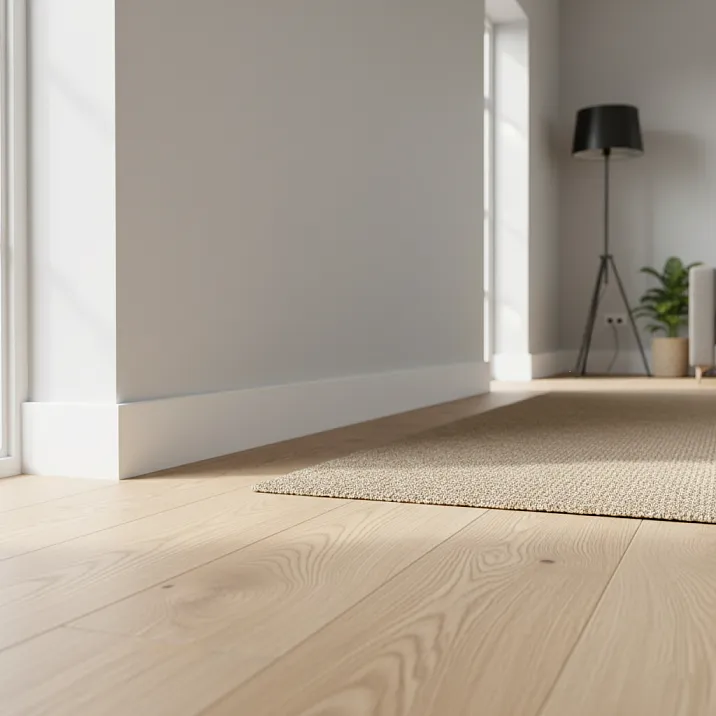
The floor installation is complete. The parquet is sanded and oiled, the engineered board is snapped into place, the laminate is laid in perfectly even rows. It seems the work is done. But step back a few steps — and your gaze catches on this compensatory gap at the walls, technically necessary but aesthetically unacceptable. It is here that Wooden baseboard— it is not just a decorative strip, but a technical element that must perfectly match the type of floor covering, compensate for its characteristics, complement texture and color. Choosing skirting board for parquet differs radically from choosing for laminate. Engineered board requires one approach, solid wood — completely another. In this material — full breakdown of all nuances that turn intuitive choice into conscious decision, based on understanding of materials, their behavior, visual effects and technical requirements.


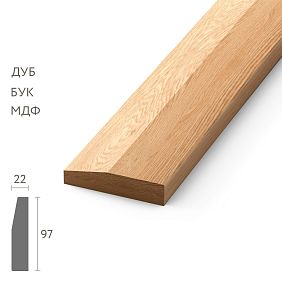


Parquet: when every wood species detail matters
Solid parquet — aristocrat among floor coverings. Small planks from solid wood, laid in geometric pattern, create a unique surface where every centimeter is the result of parquet craftsman’s skill. Such a floor requires appropriate framing, where Wooden baseboardbecomes logical continuation of the concept of naturalness and quality.
Main rule when choosing skirting board for parquet — match wood species. If the floor is laid with oak planks, the skirting board must also be oak. Not 'similar to oak', not 'toned to match oak', but actually oak. The reason is not only aesthetics, although the texture of solid wood cannot be perfectly imitated by any finish. The issue is material behavior: different wood species react differently to changes in humidity and temperature. Oak is stable, changes little in size. If you place a pine skirting board next to oak parquet, the latter will expand and contract differently, creating stress at the joints, possible deformations.
Exceptions are cases when parquet is laid with exotic wood: wenge, teak, merbau. Finding skirting board from the same species is difficult and expensive. Here compromise is acceptable: skirting board from local hardwood (oak, beech), toned to match the parquet. The main thing — hardness should be comparable. Pine skirting board (2.5) won’t suit merbau (hardness 4.0–4.5 on Brinell scale), but oak (3.7–3.9) fits perfectly.




Color harmony: matching tone or contrast
Classic approach — baseboard in the same tone as the parquet. If the floor is light oak, the baseboard is also light oak. If the parquet is stained dark chocolate, the baseboard matches this shade. This solution creates visual continuity, expands the space, and makes the room calm and harmonious.wooden skirting board purchaseMatching the floor — a safe choice that will never go out of style.
Contrasting approach — bolder. A dark baseboard against a light floor or a light one against a dark one creates a clear boundary, emphasizes the room's geometry, visually lifts or lowers the space. But here precision matters: an incorrectly chosen contrast can ruin the interior's cohesion and create a sense of disjointedness. Rule: a contrasting baseboard should harmonize with other interior elements — door casings, furniture, decor. If the room has white doors with white casings, a white baseboard against a dark parquet looks natural, creating a unified system of white accents.
Subtle approach — the golden middle. A baseboard one or two tones darker or lighter than the parquet creates a soft transition, adds depth, without disrupting harmony. This method is especially effective with medium-toned parquet — walnut, teak, medium oak.wooden baseboards for floorSlightly darker tones create a visual base, as if framing the floor with shadow.
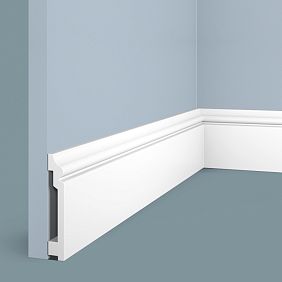
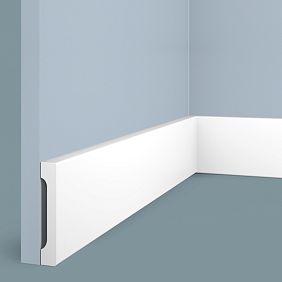
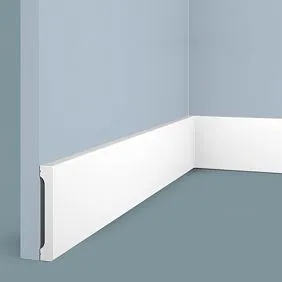
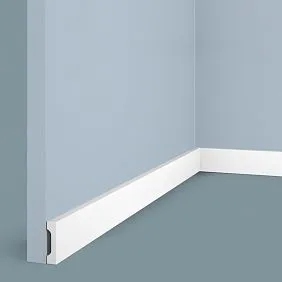
Our factory also produces:
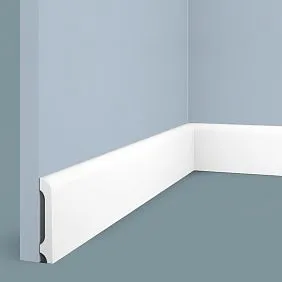
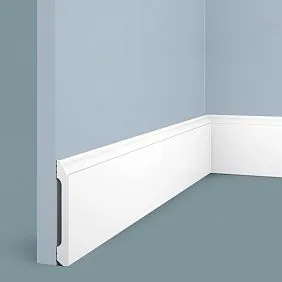

Height and profile: historical context
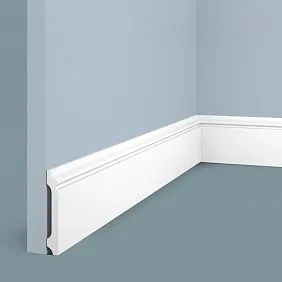
Solid parquet — a covering with history dating back to palace halls and aristocratic mansions. In such interiors, baseboards were tall (100–200 mm), with an expressive classical profile, often adorned with carving or gilding. A modern interpretation of this tradition suggests a height of 80–120 mm and a classical profile without excessive ornamentation.
For parquet in modern interiors (Scandinavian, minimalism), lower baseboards (60–80 mm) with straight or slightly rounded profiles are acceptable. But even here, balance is important: a too-low and simple baseboard next to expensive parquet looks inappropriate, creating an impression of incompleteness or cost-cutting on important details.
Get Consultation
Engineered board: balance of naturalness and technology
Engineered board — a compromise between solid wood and laminate. Top layer of natural veneer (usually 3–6 mm), core of plywood or HDF, locking system. Visually, it is indistinguishable from solid wood, but technically behaves more stably, reacts less to humidity, and is easier to install. Various types of baseboards are suitable, but the choice must consider material nuances.
Wooden baseboard — a natural choice that highlights the naturalness of the top layer. The baseboard species should match the veneer species of the engineered board: if the board is oak, the baseboard should be oak. If the board is ash, the baseboard should be ash. This creates visual unity where it is impossible to distinguish where the floor ends and the wall begins.Wooden baseboardSolid wood baseboard next to engineered board does not create a sense of 'fake' — on the contrary, it emphasizes that the top layer of the floor is made of real wood.
Important nuance: engineered board is often finished with oil or lacquer during production, creating a matte or semi-matte surface. The baseboard must have the same finish and gloss level. A glossy baseboard next to a matte floor (or vice versa) looks discordant. Manufacturers of engineered board often offer baseboards from the same collection — this is the ideal option, guaranteeing exact color, texture, and finish match.
Expansion gap: critical parameter
Engineered board, despite its multi-layer construction, is still subject to temperature and humidity deformation, though to a lesser extent than solid wood. Manufacturers recommend leaving a compensatory gap of 8–12 mm around the room perimeter. This gap must be fully covered by the baseboard, but the baseboard is attached only to the wall, never to the floor.
Baseboard width (distance from wall to front surface) is usually 15–22 mm, which with a margin covers the 8–12 mm expansion gap. But if walls are uneven, the gap may vary: sometimes 8 mm, sometimes 15 mm. Here precision in installation is crucial: an experienced craftsman maintains an equal gap around the entire perimeter, using calibrated shims. If the gap is uneven, gaps form between the baseboard and floor, requiring sealing — an aesthetically imperfect solution.
Clip mounting — modern technology, especially popular for engineered board. Clips (also called clamps or brackets) are metal or plastic elements mounted to the wall with screws or anchors spaced 40–50 cm apart. The baseboard has a special groove on its back that slips over the clip's protrusion and clicks into place. Advantages are obvious: quick installation, no visible fasteners, easy removal without damaging the baseboard or wall.
Clip system is especially convenient for baseboards with cable channels: the front panel is removed, wires are laid inside, and the panel clicks back into place. For wooden baseboards, clip mounting is less common than for MDF or plastic, but there are special solid wood models with appropriate construction.wooden baseboardMounted on clips — a technological solution combining traditional solid wood aesthetics with modern installation convenience.
Stylistic solutions for engineered board
Engineered board is stylistically versatile: it fits equally well in classic interiors (especially models with beveled edges and brushed finishes) and modern ones (smooth planks without bevels, matte finish). The baseboard should match this style.
For classic interiors, baseboards 80–100 mm high with a decorative profile, made from the same species as the board's top layer, are suitable. If the board has an aged effect (brushed, distressed, patina), the baseboard can replicate this finish, creating a unified ensemble.
For modern interiors, baseboards 60–80 mm high with a straight profile, matte finish, and minimal decoration are preferred. Color — either matching the floor tone or contrasting (often a light baseboard against a dark floor), harmonizing with walls or doors.
Laminate: technology demands compatibility
Laminate — the most democratic flooring covering, imitating wood, stone, tile in virtually any texture and color. Its base is HDF (high-density fiberboard), covered with decorative film and protective layer. Laminate is not wood, but often imitates it so convincingly that it is visually almost indistinguishable. This creates a dilemma when choosing a baseboard: use natural wood or a material similar to laminate?
Wooden baseboard for laminate — a solution for those who value naturalness and wish to create a contrast between artificial flooring and natural trim. This works when the laminate is high-quality, realistically mimicking wood, and the interior leans toward natural materials.Wooden baseboardA baseboard of oak or ash next to laminate 'oak' creates an interesting effect: from afar, it appears that the floor and baseboard are made of the same material, but tactilely and visually up close, the difference is noticeable. Wood is warm, alive, with natural texture variations. Laminate is cold, uniform, with repeating patterns.
Here, precise color matching is crucial. Laminate manufacturers offer dozens of 'oak', 'ash', 'walnut' variants, differing in tone, saturation, and pattern. Finding a wooden baseboard identical in color is difficult — staining is required. Alternative: a contrasting baseboard that does not attempt to imitate the floor but deliberately differs. For example, light whitewashed oak against dark 'walnut' laminate or dark wenge against light 'oak' laminate.
MDF or plastic baseboard — a more logical technical choice. MDF baseboards with decorative film are produced in the same collections as laminate, ensuring exact color and texture match. They are cheaper than wooden ones, lighter, often feature built-in cable channels, and are compatible with clip mounting systems. Plastic baseboards (from PVC or polyurethane) are even more affordable, flexible (suitable for uneven walls), and moisture-resistant (ideal for kitchens and bathrooms). However, they lack the tactile warmth and nobility of wood.
Expansion Gap: Why laminate needs more space
Laminate is a floating finish, not attached to the base or walls. Each plank is connected to its neighbor via a locking joint, forming a single sheet that lies freely. As temperature and humidity change, the HDF base expands or contracts, with an amplitude greater than that of natural wood. Therefore, manufacturers require a compensatory gap of 10–15 millimeters around the perimeter, and in large rooms (over 25–30 square meters) — expansion joints every 8–10 meters.
Solutions to the problem:
Solutions to the problem:
-
Wall leveling before installing laminate — ideal but expensive.
-
Flexible PVC skirting that follows the wall contour and covers even uneven gaps.
-
Sealing the gap with acrylic caulk in skirting color before installation.
-
Wide skirting (25–30 millimeters) covering large gaps.
wooden baseboards for floorSolid wood is usually not flexible, so for laminate on uneven walls, MDF or plastic is preferable. But if walls are properly leveled, wooden skirting creates a noble frame even for budget laminate.
Mounting: Clips as standard
For laminate, the clip system for skirting has become almost standard. Laminate manufacturers (Quick-Step, Tarkett, Egger, Kronopol, etc.) offer MDF or plastic skirting with clip-adapted construction. Installation is simple:
-
Marking the clip installation line (usually 10–15 millimeters from the floor).
-
Attaching clips to the wall with screws or anchors every 40–50 centimeters. Clips are mandatory at corners and plank joints.
-
Snap the skirting onto the clips: press the plank against the wall and gently secure it on each clip (a distinct click sound will be heard).
-
Installing corner pieces and end caps.
Advantages of clip mounting:
-
Speed: installing 20 meters of skirting takes 30–40 minutes.
-
Reversibility: skirting can be easily removed (e.g., for repair or cable replacement) and reinstalled without damage.
-
Aesthetics: no visible screw or nail heads.
-
Flexibility: some systems allow compensating minor wall irregularities via clip movement.
For solid wood skirting, clip mounting is used less often (solid wood is heavier than MDF, requiring stronger clips), but specialized systems exist.wooden skirting board purchaseSolid wood skirting with clip mounting is available from manufacturers focused on modern technologies.
Solid wood plank: when skirting is an extension of the floor
Solid wood plank — a single piece of wood, usually 15–22 millimeters thick, 60–200 millimeters wide, up to 2–3 meters long. This is the most expensive and prestigious finish, embodying naturalness, durability, and status. It is suitable only forWooden baseboardsolid wood skirting — compromises are inappropriate here.
Solid wood plank is installed on adhesive (to screed or plywood) or on joists with mechanical fastening. After installation, it is sanded and finished with oil or varnish — a process similar to finishing solid parquet. Skirting must be treated identically: if the floor is finished with matte oil, skirting should be treated with the same oil. If the floor is varnished with semi-gloss varnish, skirting should also be varnished to the same gloss level.
Species matching is critical. Oak solid wood plank — oak skirting, ash — ash, walnut — walnut. The grain must match not only by species but also by cutting method. Radial cut (grain runs parallel to the face, creating straight lines) requires radial skirting. Tangential cut (grain runs at an angle, creating expressive waves and swirls) — tangential skirting. Mixing creates visual dissonance, especially noticeable on light species.
Color synchronization: complexity and solutions
Solid wood plank — a natural material where each plank is unique in tone and texture. Even planks from the same batch differ in shade. Finding skirting that perfectly matches in color is practically impossible — staining is required. Professional approach: after laying and sanding the floor, but before applying the final finish, skirting is also sanded, then both floor and skirting are stained simultaneously with the same product. This guarantees identical tone. After staining, both floor and skirting are finished with the same oil or varnish.
Alternative approach — intentional difference of one to two tones. A skirting board slightly darker than the floor creates a visual base, framing, and emphasizes spatial boundaries. This works well in classic and traditional interiors where architectural structure is important. In modern minimalist spaces, maximum matching is preferred, where the floor and skirting board merge into a single surface.
Expansion gap: solid wood is more sensitive
Solid wood flooring reacts more actively to humidity changes than engineered or laminate. Wood is hygroscopic: it absorbs moisture from the air when humidity increases (in summer, during rainy weather) and releases it when humidity decreases (in winter, during heating season). Accordingly, the wood expands and contracts in width (minimal changes along the grain, significant across the grain).
Manufacturers recommend a compensatory gap of 10–15 millimeters for standard-sized rooms (up to 20–25 square meters). For larger rooms or regions with sharp seasonal humidity fluctuations, the gap increases to 15–20 millimeters. This imposes requirements on the skirting board: its width must guarantee coverage of the maximum gap.
StandardWooden baseboardA standard skirting board width of 18–22 millimeters covers a 10–15 millimeter gap with a safety margin. But if the gap is 15–20 millimeters, a wider skirting board (25–30 millimeters) or an additional filler strip installed between the floor and the skirting board will be required.
Important nuance: the solid wood skirting board itself also reacts to humidity, though to a lesser extent (it is mounted to the wall, limiting its movement). The skirting board must acclimate in the room for at least 48–72 hours before installation to equalize its moisture content with the air’s humidity. Installing a freshly delivered skirting board may lead to deformation after installation.
Vinyl flooring and quartz vinyl: hybrid aesthetics
Vinyl coverings (LVT — luxury vinyl tile) and quartz vinyl flooring are a relatively new class of materials combining the water resistance of plastic with realistic imitation of wood or stone. Base — PVC with fillers (quartz sand in quartz vinyl, up to 70–80% by mass), decorative layer with photo print, protective polyurethane coating. Installed using adhesive or click-lock method (floating installation).
Various skirting boards are suitable for vinyl flooring: from plastic to wooden. The choice depends on interior style and desired effect.
Plastic skirting board (PVC) — a logical material combination. Both are water-resistant, resistant to moisture, do not deform, and do not rot. Quartz vinyl manufacturers often offer skirting boards from the same collection, precisely matching in color and texture. Such a skirting board is ideal for bathrooms, kitchens, hallways, where high humidity or water exposure risk exists.
Wooden skirting board with vinyl flooring — a contrast between natural and artificial. This works when vinyl realistically imitates wood, and the interior leans toward natural materials.Wooden baseboardFrom oak or ash next to quartz vinyl 'oak' creates an interesting mix: visually it appears as if everything is made of wood, but tactilely the difference is noticeable. Wood is warm, plastic is cold. Wood breathes, plastic is inert.
Important: wooden skirting boards in high-humidity rooms (bathrooms, kitchens) require a moisture-resistant finish — multi-layer lacquer or wax-oil with water-repellent properties. Otherwise, it may deform, darken, or develop mold.
Expansion gap: less than laminate
Quartz vinyl and LVT are more stable than laminate: quartz filler reduces thermal expansion, and the material reacts less to humidity. Manufacturers recommend a 5–8 millimeter gap around the perimeter — half the amount required for laminate. This simplifies the task: even a narrow skirting board (15–18 millimeters) will reliably cover such a gap.
Vinyl flooring with adhesive installation (fully bonded to the substrate) practically requires no compensatory gap — the material is fixed, movement is minimal. However, even here it is recommended to leave 3–5 millimeters to account for unexpected substrate deformation.
Skirting board attachment to vinyl flooring — only to the wall, never to the floor. Even if the flooring is glued, the skirting board must not press against it — this restricts the material’s micro-movements and may cause bulging or delamination.
Cork flooring: eco-friendliness requires compatibility
Cork flooring — an exotic option in the world of flooring. Cork (cork oak bark) is pressed into planks or tiles, then coated with protective lacquer or vinyl. The result — a warm, soft, eco-friendly surface with unique texture and tactile properties. Cork flooring pairs well with natural skirting boards that emphasize the eco-friendly concept.
Cork skirting board — an ideal material combination. Cork flooring manufacturers offer skirting boards made from the same cork, matching in color and texture. Such a skirting board is soft, elastic, easily follows the contours of uneven walls, eco-friendly, and pleasant to the touch. The downside — relative softness: cork is easily damaged by impacts.
Wooden skirting board — a more durable alternative.Wooden baseboardLight-colored wood species (ash, light oak, birch) harmonize with cork’s natural honey-brown tone. Tinting can be used to bring the wood’s color closer to cork’s. The advantage of wood — hardness and resistance to damage.
Cork flooring requires a compensatory gap of 8–10 millimeters — cork, despite its stability, is still an organic material reacting to humidity. A standard-width skirting board (18–22 millimeters) easily covers such a gap.
Composite flooring: transitions and joints
In modern apartments, different flooring types are often combined: parquet in the living room, tiles in the hallway, laminate in bedrooms, vinyl on the kitchen. Transition elements — thresholds or profiles — are required at flooring junctions to level the height and cover the seam. But the question arises: what skirting board to use in rooms with different flooring?
A single skirting board throughout the apartment — a modern approach creating visual unity. A neutral option is chosen, coordinating with all flooring types: white or light-gray skirting board matching wall color, or light wood skirting board (white oak, ash) harmonizing with various floors. This approach visually unifies the space, making the apartment feel cohesive rather than a collection of separate rooms.
Individual skirting board for each flooring type — a classic approach. In the living room with parquet — oak skirting board matching the floor, in the bedroom with laminate — MDF skirting board from the laminate collection, in the hallway with tiles — moisture-resistant plastic or ceramic. This method requires transitions at doorways: skirting boards of different types meet at a 45-degree angle or are separated by a door casing.
The transition profile at the junction of flooring types (e.g., between parquet in the living room and tiles in the hallway) must harmonize with both skirting boards. Optimal — a universal metal profile (aluminum, brass) with powder-coated finish in neutral colors (silver, gold, bronze).
Ceiling height and proportions: visual mathematics
Skirting board height dramatically affects the perception of space. The right choice can visually raise a low ceiling or balance the proportions of a spacious room. The wrong choice — creates disharmony, a feeling of confinement or incompleteness.
Low ceilings (2.4–2.6 meters): baseboard 50–70 millimeters, straight or slightly rounded profile. Color — matching walls or one tone darker than the floor. Avoid tall baseboards (over 80 millimeters) and dark contrasts — they visually 'press down,' reducing perceived height.
Medium ceilings (2.7–2.9 meters): baseboard 70–90 millimeters, any profile (straight, classic, decorative). Color is universal — matching floor, walls, or contrasting. This is standard height, allowing any experiments.
High ceilings (3.0–3.5 meters): baseboard 90–130 millimeters, classic or tall profile. Color preferably contrasting or nuanced, emphasizing architecture. A too-low baseboard (less than 70 millimeters) in a high-ceilinged room looks disproportionate and creates an unfinished impression.
Very high ceilings (over 3.5 meters): baseboard 130–200 millimeters, must be profiled, often supplementedmoldingsordecorative elements. Such ceilings are typical for historical buildings, lofts, country houses, where the baseboard becomes an architectural element creating visual structure.
Formula for calculating optimal height: ceiling height in millimeters × 0.025–0.035. For a 2.7-meter ceiling: 2700 × 0.03 = 81 millimeters — optimum in the 70–90 millimeter range.
Moisture resistance and specialized rooms
Not all rooms are the same in terms of operating conditions. A parquet-floored living room and a tiled bathroom require different approaches to baseboard selection.
Dry rooms (living rooms, bedrooms, offices): humidity 40–60%, temperature stable. Here anyWooden baseboardserves for decades without special coating requirements. Standard lacquer or oil is sufficient.
Rooms with variable humidity (kitchens, hallways): humidity fluctuates 50–70%, possible water splashes, increased humidity from cooking or wet shoes. Requires baseboard from moisture-resistant species (oak, larch, teak) with reinforced coating (multi-layer lacquer or oil-wax).
Wet rooms (bathrooms, showers, saunas): humidity 70–90%, direct contact with water. Wooden baseboard is possible, but only from highly moisture-resistant species (teak, larch, merbau) with professional moisture protection. Alternative — plastic, ceramic, or metal baseboard, not afraid of water.
For bathrooms with tiled floors, ceramic baseboard (narrow tiles laid vertically) or baseboard from the same ceramic tile as the floor is often used. This creates a monolithic look where the floor and walls visually merge.buy wooden skirting boardcan be used in the bathroom, but with awareness of risks and readiness for regular maintenance.
Mounting: traditions and innovations
Mounting method depends on wall material, baseboard type, aesthetic requirements, and demountability.
Mounting with nails — traditional method for wooden walls. Finishing nails (thin, small-headed) are driven at an angle from top to bottom with 40–60 cm spacing. Nail heads are pressed down with a nail set, holes are filled with putty. Method is simple but requires skill and is unsuitable for stone or concrete walls.
Mounting with screws — universal method. Holes are drilled in the wall, plastic anchors inserted, baseboard secured with concealed-head screws. Mounting spacing 50–70 cm. Holes are filled with putty or covered with decorative plugs. Reliable, suitable for any walls, but labor-intensive.
Mounting with adhesive (liquid nails, construction adhesive) — method for flat walls and lightweight baseboards. Adhesive is applied in zigzag pattern on the back, baseboard pressed against the wall, secured with tape until cured (12–24 hours). Aesthetically pleasing (no visible fasteners), but irreversible: removing baseboard without damage is nearly impossible.
Mounting with clips — modern system described above. Ideal for MDF baseboards, suitable for special wooden models. Fast, aesthetic, reversible.Wooden baseboardon clips — choice for those who value technology and the possibility of changes.
Combined mounting (adhesive + screws) ensures maximum reliability: adhesive secures the baseboard along its entire length, screws fix it until cured and prevent detachment.
Frequently Asked Questions: Practical Solutions
How to choose baseboard color if I can't decide: matching floor or walls?
Universal rule: to expand space, choose baseboard matching walls (visually raises ceiling), to create cozy atmosphere — matching floor (creates visual base). If unsure, take material samples (floor tiles, wall paint, baseboard) and compare under natural room lighting.
Is a baseboard with cable channel needed if wiring is already installed in walls?
Even if all cables are currently concealed, technology changes. Perhaps next year you’ll need to run an internet cable, install an additional outlet, or wire a smart home. A baseboard with cable channel is a future-proof investment, adding little to cost but greatly simplifying life.
Can wooden skirting boards be installed on uneven walls?
Possible, but with conditions. If unevenness does not exceed 3–5 millimeters per linear meter, a baseboard with flexible back edge compensates for this. With larger unevenness, gaps form requiring acrylic sealant or putty. Alternative — wall leveling before installation.
What gap should be left between laminate and wall?
Standard — 10–12 millimeters for rooms up to 25 square meters. For larger rooms or winter installation (when humidity is lower), increase gap to 15 millimeters. Use calibrated shims to ensure uniform distance around the entire perimeter.
Should baseboard be installed before or after wallpapering?
Professionals install baseboards after wallpapering: this allows wallpaper to be trimmed closely to the floor, while the baseboard covers the bottom edge, creating a neat joint. If the baseboard is white or will be painted to match the walls, it can be installed before wallpapering and painted together with the walls.
How to join baseboards of different heights in doorways?
The optimal solution is to use the door casing as a divider: baseboards meet the casing from both sides without direct jointing. If there are no doors, the joint is made at a 45-degree angle, with the higher baseboard being trimmed to form a smooth transition to the lower one.
Which baseboard is suitable for a heated floor?
Any baseboard is suitable for a heated floor — it does not contact the heating elements. The only requirement: increase the expansion gap by 2–3 millimeters (the thermal expansion of the floor covering on a heated floor is greater). Wooden baseboards are unaffected, as they are mounted to the wall, not the floor.
Is it necessary to treat the baseboard before installation?
Qualitywooden skirting board purchaseIt can be installed with a final finish that does not require additional treatment. If you purchase an untreated baseboard (for painting or tinting), treat it before installation: sanding, tinting, coating, and drying. Treating after installation is more difficult and less effective.
Can the same baseboard be used for parquet and laminate in different rooms?
Yes, if you choose a neutral option: light-colored wooden baseboard from oak or ash, or white/grey baseboard matching the wall color. This approach creates visual unity throughout the apartment, where different floor coverings are unified by a common trim.
How to care for wooden baseboard?
Wipe with dry or slightly damp cloth once a week. Every 3–6 months, use wood polish (for lacquered surfaces) or oil (for oil-based finishes). Avoid abrasives, aggressive chemicals, and excessive moisture. For scratches, use a matching wax pencil or locally renew the finish.
Conclusion: thoughtful selection creates perfection
ChoosingSolid Wood Skirting BoardChoosing the right baseboard for a specific floor covering — not an intuitive process, but the result of understanding materials, their properties, visual effects, and technical requirements. Parquet demands precise species matching and color harmony. Engineered wood — a balance of naturalness and technology, accounting for expansion gaps. Laminate — understanding that baseboards can be either wood (contrast) or MDF (harmonious imitation). Solid wood — maximum compatibility in all aspects: species, texture, finish. Vinyl coverings — flexibility in approach, where the choice between plastic and wood is determined by interior design concept.
Expansion gap — not an annoying necessity, but a technical requirement ensuring the longevity of the floor covering. The correct baseboard elegantly covers this gap, becoming not just a masking element, but an architectural detail that completes the space. Clip mounting — a modern technology simplifying installation and removal, especially relevant for baseboards with cable channels.
Height, profile, color, material, mounting method — each parameter affects the final result. The correct combination of all factors creates an interior where every detail is in its place, where floor and walls interact harmoniously, where technical necessity transforms into aesthetic perfection.
STAVROS company offers a wide range of solid wood baseboards made from oak, ash, beech, and larch, suitable for any type of floor covering. The STAVROS catalog features baseboards of various heights (from 50 to 150 mm), profiles (straight, classic, high), and finishes (lacquer, oil, enamel). Each product is made from properly dried wood, undergoes multi-stage processing, and is controlled at every stage of production.
STAVROS specialists will help select the right baseboard for your specific floor covering, calculate the required amount of material and accessories, and provide installation and care recommendations. The kit includes all necessary elements: internal and external corners, connectors, plugs, ensuring a professional result.
to buy wooden baseboardChoosing STAVROS — means selecting quality proven over time, naturalness certified by certificates, aesthetics meeting global standards.Furniture legs, balusters for staircases, Wooden planks, Moldings, Furniture HandlesBaseboards and wooden trim — all made from solid natural wood, all with quality guarantee, all from STAVROS, where every interior detail is crafted with love for wood and respect for your home.


