












































































Article Contents:
- Why you need baseboard: more than decoration
- Closing the temperature gap
- Protecting the lower part of the wall
- Cable and utility concealment
- Visual completeness of the interior
- Types of wooden baseboards: solid wood vs. veneer
- Baseboard made of solid wood
- Veneered baseboard
- MDF laminated baseboard
- Baseboard height: from miniature to monumental
- Low baseboard (40-60 mm)
- Standard baseboard (70-90 mm)
- High baseboard (100-140 mm)
- Very high baseboard (150-200+ mm)
- Baseboard profiles: from simple to decorative
- Rectangular (smooth) profile
- Rounded profile
- Decorative (profiled) profile
- Baseboard with cable channel
- How to choose baseboard: step-by-step guide
- Step 1: Determine the material
- Step 2: Choose the wood species
- Step 3: Select the tone and finish
- Step 4: Determine the height
- Step 5: Choose the profile
- Step 6: Calculate the quantity
- Step 7: Assess quality when purchasing
- Baseboard installation: methods of mounting
- Adhesive mounting
- Mounting with screws or nails
- Mounting with clips (clip system)
- Care for wooden baseboards
- Regular Cleaning
- Protection against damage
- Recoating
- Repair of damage
- Where to buy: tips for choosing a store
- Specialized flooring stores
- Online stores
- Manufacturers and factories
- Frequently Asked Questions
- Conclusion: skirting as interior finishing

Imagine a room with perfect parquet. The wood grain plays with the light, each plank perfectly fitted. But along the walls — a gap. The technological gap between the floor and the wall, necessary for wood's thermal expansion. And this gap ruins the entire picture. Until the skirting appears.
One thin strip along the wall — and the interior achieves completion. The gap disappears. The transition from floor to wall becomes elegant. The space gains structure.Wooden baseboard— not just a technical necessity. It's the final touch that turns renovation into interior design.
This article is a conversation with a professional with fifty years of experience working with wood, floors, and interiors. We will examine all types of wooden skirting from miniature 40 millimeters to monumental 200 millimeters, discuss wood species from budget pine to premium oak, explain the difference between veneered and solid wood, and show what to look for when purchasing to avoid mistakes.
Ready to learn everything about what frames your floor? Let's begin.


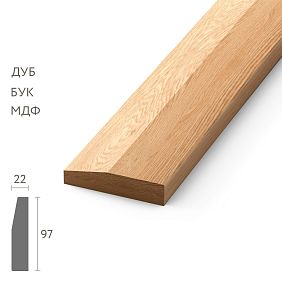


Why skirting is needed: more than decoration
Many consider skirting purely decorative. A beautiful strip covering the junction between floor and wall. But skirting has many more functions.




Closing the thermal gap
Wooden floor (parquet, solid board, parquet board) is laid with a 10-15 millimeter gap from walls. This gap is necessary for thermal-hygrometric deformations of wood. In summer, wood expands (absorbs moisture from air), in winter it contracts (releases moisture during heating). Without a gap, the floor will press against walls, swell, and form waves.
Skirting covers this technological gap, making it invisible. Without skirting, the gap around the room looks messy, collects dust and dirt.
Our factory also produces:
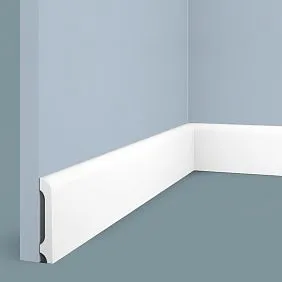
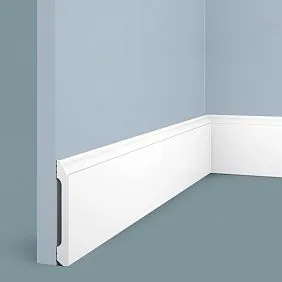
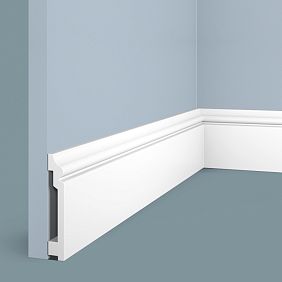

Protection of the lower part of the wall
Lower parts of walls are prone to dirt, impacts, scratches. A mop during floor cleaning touches the wall, leaving wet marks. A vacuum cleaner hits the wall, leaving black streaks. Furniture (chairs, sofas, couches) is pushed close, scratching wallpaper or paint.
Skirting takes all these impacts, protecting wall finishes. A dirty or scratched skirting is easy to clean, sand, and repaint. Damaged wallpaper or plaster will require replacing the entire wall.
Get Consultation
Cable and utility concealment
Modern skirtings often have a cable channel — a groove or cavity for laying wires. Wires from TV, internet cables, and floor lamp wires are hidden inside the skirting, not spoiling the interior's appearance.
Even if the skirting has no cable channel, thin wires can be laid behind it (they will run in the gap between skirting and wall).
Visual completion of the interior
Skirting is a frame surrounding the floor. It creates a clear boundary between floor and walls, structures space, adds graphic elements. A room without skirting looks unfinished, like a painting without a frame.
The color and height of skirting affect the perception of space. Skirting in the same tone as the floor visually expands the floor, making the room appear larger. Skirting in the same tone as walls blends with them, becoming invisible. Contrasting skirting (dark on light walls or light on dark walls) creates a graphic line, adding expressiveness.
The height of skirting changes proportions. A tall skirting (120-200 millimeters) visually lowers the ceiling height, creates coziness, adds monumentality (characteristic of classical interiors). A low skirting (40-70 millimeters) visually increases height, creates lightness (characteristic of modern minimalist interiors).
Types of wooden skirtings: solid wood vs. veneer
Skirting made of solid wood
Skirting fully made from a single piece of wood. The most traditional, reliable, and durable option.
Advantages: maximum strength (resists impacts, does not crack), longevity (lasts for decades, as long as the floor), repairability (can be sanded, painted, restored multiple times — the solid wood remains solid throughout its depth), naturalness (100% wood, eco-friendly, pleasant to the touch), noble appearance (natural wood texture is visible on the surface).
Disadvantages: high price (2-5 times more expensive than veneered), weight (a solid oak skirting board weighs 1.5-2 kilograms per linear meter), reaction to humidity (solid wood absorbs and releases moisture, may deform under sudden changes — requires stable room humidity of 40-60%, protective coating).
Wood species for solid skirting boards:
Oak — the king of flooring and skirting boards. Density 700 kg/m³, high hardness, exceptional strength. An oak skirting board will last several generations, is not afraid of moisture (tannins make oak resistant to rot), impacts, scratches. Expressive texture with clear annual rings, color from light straw to dark brown (depends on processing). Price 800-2500 rubles per linear meter (depends on height, profile, finish).
Ash — comparable in strength to oak (density 700 kg/m³), expressive texture similar to oak but lighter, color from light yellow to gray-white. Easily stains, often used as an alternative to oak (20-30% cheaper). Price 600-2000 rubles per linear meter.
Beech — density 650 kg/m³, sufficiently strong, fine uniform texture, pink or yellowish-white color. Easy to process and sand. Minus — hygroscopic (absorbs more moisture than oak, may warp in humid rooms). Price 500-1500 rubles per linear meter.
Larch — coniferous species, but denser than pine (density 650 kg/m³), strong, resinous (resins protect against moisture and rot). Texture with expressive annual rings, color yellowish-red. Good choice for humid rooms (bathrooms, kitchens, hallways). Price 400-1200 rubles per linear meter.
Pine — the most affordable species (density 520 kg/m³), soft, easy to process. Texture with bright resin streaks, light yellowish color. Minus — soft (easily dents from impacts), resinous (resin may protrude on the surface). Suitable for light usage conditions (bedrooms, living rooms without heavy traffic). Price 200-600 rubles per linear meter.
Walnut — premium species, density 600-650 kg/m³, strong, noble texture with beautiful wavy lines, color from light brown to chocolate. Expensive (price 1500-4000 rubles per linear meter), used in luxury interiors.
Veneered skirting board
Base made of cheaper wood (pine, spruce) or MDF, covered with thin veneer (slice 0.6-3 millimeters) of valuable species (oak, ash, walnut).
Advantages: lower price than solid wood by 40-70% (veneered oak skirting board costs 400-1200 rubles per linear meter versus 800-2500 for solid wood), geometric stability (base made of pine or MDF reacts less to humidity, skirting board does not warp or twist), visually indistinguishable from solid wood (quality natural veneer of valuable species looks like solid wood), lightweight (weighs less than solid wood, easier to install).
Disadvantages: lesser repairability (thin veneer 0.6-3 millimeters — deep sanding may wear down to the base), shorter service life than solid wood (veneer may delaminate upon damage or moisture exposure — although quality veneered skirting board lasts 20-30 years without issues), if MDF base — afraid of water (when wet, MDF swells and deforms).
Types of veneer:
Natural veneer — thin slice of natural wood of valuable species. Has natural texture, color, wood grain pattern (each plank is unique). Thickness 0.6-3 millimeters. Adheres to base under pressure. Quality natural veneer is visually and tactilely indistinguishable from solid wood.
Fine-line (reconstructed veneer) — veneer made from fast-growing species (poplar, abachi) with subsequent coloring and embossing to resemble valuable species. Results in uniform texture without knots, cracks, color variations. Looks more artificial than natural veneer, but is 30-50% cheaper.
MDF laminated skirting board
Base made of MDF, covered with laminating film with wood pattern (photoprint).
Advantages: lowest price (150-400 rubles per linear meter), wide range of colors and textures (can match any laminate or linoleum), not afraid of moisture (film is waterproof), lightweight, easy to install.
Disadvantages: artificial appearance (printed film lacks the depth and volume of natural wood, looks flat, especially up close), low strength (MDF is brittle and may crack under impact), zero repairability (damaged film cannot be restored, requires replacement), short service life (film fades in sunlight, wears out, peels off after 5-10 years).
Applications: budget interiors, temporary finishes, rooms with laminate or linoleum (where natural wood is not required), temporary housing.
Skirting board height: from miniature to monumental
Height (width) of skirting board — distance from floor to top edge. Standard height 50-80 millimeters, but range is much wider: from 40 to 200 millimeters and more.
Low skirting board (40-60 mm)
Minimalist, unobtrusive. Creates a neat, thin line along the wall, not drawing attention.
Suitable for: modern minimalist interiors, Scandinavian style, high-tech, loft (where visual lightness and absence of unnecessary elements are valued); rooms with low ceilings (2.5-2.6 meters — low skirting board does not visually lower the ceiling); small rooms (small rooms, narrow hallways — low skirting board does not clutter space).
Features: covers only the technological gap (does not protect the wall above), little space for cable channel (usually none or very narrow), visually elongates walls (skirting board line runs low, making the wall appear higher).
Price: solid oak 40-60 mm — 600-1200 rubles per linear meter; veneered oak — 300-700 rubles per linear meter.
Standard skirting board (70-90 mm)
Universal height, suitable for most interiors and conditions. Covers the gap, protects the wall, does not overload space.
For which interiors: classic interiors (classic, neoclassic without excessive ornamentation), modern interiors (modern classic, eclectic), any rooms with standard ceilings (2.7-3 meters).
Features: optimal combination of functionality and aesthetics (sufficiently high to protect the wall and accommodate cable channels, sufficiently low to avoid cluttering), wide selection of profiles (smooth, decorative, grooved, routed), suitable for most types of flooring (parquet, solid wood, engineered wood, laminate).
Price: solid oak 70-90 mm — 800-1800 rubles per linear meter; veneered oak — 400-1000 rubles per linear meter.
High baseboard (100-140 mm)
A noticeable, expressive interior element. Creates monumentality, classic elegance.
For which interiors: palace-style classic interiors (recreating historical interiors, museums, palaces), spacious rooms with high ceilings (from 3.2 meters — high baseboard balances proportions), luxury real estate (country houses, mansions, apartments in historic buildings).
Features: strong wall protection (high baseboard protects the wall fully from mops, vacuum cleaners, furniture), spacious cable channel (can accommodate multiple cables, thick wires), visually lowers the ceiling (the baseboard line is high, making the wall appear lower — use in high rooms).
Price: solid oak 100-140 mm — 1200-2500 rubles per linear meter; veneered oak — 600-1500 rubles per linear meter.
Very high baseboard (150-200+ mm)
Monumental element, almost a panel. Used in palace, museum interiors, sometimes in modern minimalist spaces as a contrasting graphic element.
For which interiors: palace-style classic interiors (recreating historical interiors, museums, palaces), very high rooms (ceilings 4-5 meters and above — in Stalinist buildings, lofts, converted industrial buildings), modern minimalist interiors with contrasting graphic elements (white high baseboard on dark walls or dark on white — creates a strong graphic effect).
Features: essentially a wall panel (sometimes such baseboards are called "plinth panels"), mounted not only to the wall but also to the floor (for rigidity), often custom-made (few ready-made models), very expensive (solid oak 150-200 mm — 2000-5000+ rubles per linear meter).
Baseboard profiles: from simple to decorative
Baseboard profile — the shape of its cross-section, relief of the front surface.
Rectangular (smooth) profile
Baseboard with rectangular cross-section, no relief, flat front surface. Minimalist, modern.
For which styles: minimalism, Scandinavian, high-tech, loft, modern interiors (where simplicity, conciseness, absence of decoration are valued).
Features: easiest to manufacture (20-40% cheaper than decorative profiles), easy to paint (flat surface, no hard-to-reach areas), universal (fits any floor and walls).
Rounded profile
Top part of the baseboard has a smooth rounded edge (radius 5-20 mm). Soft lines, visual lightness.
For which styles: Scandinavian, modern classic, neoclassic, eclectic (transitional variant between minimalism and classicism).
Features: softer than rectangular (rounding softens the line, making the baseboard visually thinner), less dust accumulation (dust does not linger on rounded surfaces, easier to wipe).
Decorative (profiled) profile
Baseboard has a complex relief profile with protrusions, grooves, routed details. Classic, traditional.
Decorative profile elements: round (convex semicircular element), concave (concave element), ogee (smooth transition from vertical to horizontal part), grooves (vertical channels), beads (row of small semicircular protrusions).
For which styles: classic, neoclassic, baroque, empire, Provence, country (traditional styles where decorative detail and relief are valued).
Features: visually richer than smooth (relief creates play of light and shadow, adds volume, expressiveness), more expensive than smooth by 30-60% (harder to manufacture — requires routing), harder to paint (paint must reach all recesses of the relief), dust accumulates (dust lingers in relief recesses, harder to clean).
Baseboard with cable channel
Baseboard has a recess or cavity on the back side for cable routing. Can be single-channel (for 1-3 cables) or multi-channel (for many cables).
Types of cable channels: simple recess on the back side (wires are laid into the recess, pressed against the wall by the baseboard); removable cover (baseboard consists of a wall-mounted base and a removable front panel — wires are laid into the base, covered by the panel — convenient to add or change cables without removing the baseboard).
Advantages: wires are hidden (interior is neat, no wires visible), wire protection (baseboard protects cables from damage), easy installation (no need to notch walls or run wires through the floor).
Disadvantages: 20-40% more expensive than regular baseboards, limited number of wires (cable channel has limited capacity).
How to choose baseboard: step-by-step guide
Step 1: Determine material
Solid wood — if you have solid wood parquet, solid wood planks, or engineered boards from premium species (oak, beech, walnut). The baseboard should match the floor in species and tone. Also, solid wood — if budget allows and you value naturalness, durability, and repairability.
Veneered — if you have parquet boards, engineered boards with veneer, and a medium budget. Veneered baseboard offers 80-90% of solid wood quality at 50-70% of the price.
MDF laminated — if you have laminate, linoleum, budget-friendly finishes, or rental housing. It doesn’t make sense to install an oak baseboard on laminate costing 500 rubles per square meter.
Step 2: Choose wood species
The baseboard species should match the floor species. Oak parquet — oak baseboard. Beech board — beech baseboard.
If the floor is made of exotic wood (merbau, iroko, teak), finding a baseboard of the same species is difficult and expensive. Options: order a custom baseboard from the same species (expensive, time-consuming), choose a baseboard from another species with the closest tone (oak tinted to match merbau, beech tinted to match teak), use a veneered baseboard with exotic wood veneer (cheaper than solid wood, easier to find).
Step 3: Select tone and finish
The baseboard should match the floor in tone or be 1-2 tones lighter/darker (for a subtle contrast).
Ways to select tone:
Take a floor sample to the store — cut a small piece of floor plank (or bring a spare plank), bring it to the baseboard store, place the baseboard samples against the sample, and find the closest tone.
Take baseboard samples home — some stores provide baseboard samples (10-20 cm pieces) for home try-on. Place them against the floor under both daylight and artificial lighting, and choose the best option.
Order tinting — if you can’t find a baseboard in the desired tone, order an untreated (natural wood color) baseboard and tint it to the desired color. The master will match the tone to your floor, stain it with stain, oil, or lacquer.
Types of baseboard finishes:
Lacquer — transparent glossy or matte finish, highlighting wood texture, protecting against moisture and scratches. Lacquered baseboards are easy to clean and long-lasting (lacquer lasts 10-15 years without renewal). Available in glossy (shiny, reflects light, highlights relief), semi-glossy (light sheen), matte (no sheen, velvety).
Oil — natural finish, absorbed into wood, creating a soft silk-like surface. Highlights natural wood color and texture, pleasant to the touch, more eco-friendly than lacquer. Drawbacks — requires renewal every 3-5 years, less moisture-resistant than lacquer.
Wax — natural finish based on beeswax, creating a soft sheen, pleasant to the touch. Eco-friendly, highlights texture. Drawbacks — low wear resistance (wears off, requires renewal every 2-3 years), afraid of water.
Paint — opaque finish, completely hiding wood texture. Used to create contrasts (white baseboard on dark floor or dark on light), in styles like Provence, country, Scandinavian (where baseboards are painted white, gray, pastel tones).
Step 4: Determine height
Low ceiling (2.5–2.7 m) — baseboard 40–70 mm (does not lower the ceiling).
Standard ceiling (2.7–3 m) — baseboard 70–90 mm (universal height).
High ceiling (3–3.5 m) — baseboard 90–120 mm (balances proportions).
Very high ceiling (3.5+ m) — baseboard 120–200 mm (fills space, creates monumentality).
Also consider room size. In a small room (10–15 m²), a tall baseboard (100+ mm) will look bulky. In a spacious room (30+ m²), a low baseboard (40–60 mm) will be lost.
Step 5: Choose profile
Modern interiors (minimalism, Scandinavian, loft, high-tech) — rectangular or rounded smooth profile.
Classic interiors (classical, neoclassical, baroque, Provence) — decorative profile with relief (grooves, scrolls, flutes).
Eclecticism — rounded profile (compromise between minimalism and classic).
Step 6: Calculate the quantity
Measure the room's perimeter (sum of all wall lengths). Subtract the width of door openings (baseboard is not installed in openings). Add 10% for trimming and reserve.
Example: room 4×5 meters, perimeter 18 meters, one door opening 0.9 meters wide. Needed: 18 - 0.9 = 17.1 meters, +10% = 18.8 meters. Baseboard is sold in planks of 2.2–2.5 meters. Needed: 18.8 / 2.5 = 7.5, round up to 8 planks.
Step 7: Assess quality when purchasing
Geometry: planks must be straight, not warped. Place a plank against a flat surface (floor, table) — it should not rock, and the gap between the plank and surface should not exceed 1–2 millimeters.
Wood quality: for solid wood — no large knots (small healthy knots up to 5 mm diameter are acceptable), cracks, rot, resin pockets. For veneered — veneer is glued evenly, without bubbles or delamination.
Surface finish quality: surface is smooth, without roughness, burrs, dents. Run your hand over it — it should feel silky. Profile (if decorative) is sharp, without blurring or chipping.
Finish quality: varnish or oil is applied evenly, without streaks, bubbles, or uncoated areas. The tone is uniform along the entire length of the plank (minor variations characteristic of natural wood are acceptable, but sharp color changes should not occur).
Wood moisture: quality baseboard is made from wood with 8–12% moisture (kiln-dried). Too moist wood (15%+) will shrink after installation, creating gaps. Too dry wood (less than 6%) will absorb moisture and swell. Moisture can be checked with a moisture meter (ask the seller to measure) or by touch (dry wood is light, and tapping produces a clear sound; moist wood is heavier and produces a dull sound).
Baseboard installation: mounting methods
Mounting with adhesive
Baseboard is glued to the wall using mounting adhesive (liquid nails, polyurethane adhesive).
Advantages: fast (installation of a room in 2–3 hours), does not damage baseboard (no holes from nails or screws), hidden mounting (fasteners are not visible from the outside).
Disadvantages: requires a flat wall (if the wall is uneven, gaps will appear between the baseboard and the wall), difficult to remove (glued baseboard is hard to detach and often breaks), not suitable for baseboards with cable channels (cannot remove the panel to run wires).
Technology: wall must be flat, clean, dry, and primed. Adhesive is applied to the back of the baseboard in a zigzag or dot pattern with 10–15 cm spacing. Baseboard is pressed against the wall and held for 30–60 seconds (adhesive setting time). Excess adhesive is wiped off immediately with a damp cloth.
Mounting with screws or nails
Baseboard is mounted to the wall using screws (with anchors in concrete or brick walls) or finish nails (in wooden walls, frame partitions).
Advantages: secure (baseboard holds firmly, won't come loose), suitable for uneven walls (screws pull the baseboard to the wall, compensating for unevenness), easy to remove and reinstall (unscrew the screws — remove the baseboard without damage).
Disadvantages: fasteners are visible (screw heads or nail heads are visible from the outside — require masking with wax pencil or wood putty), longer installation time (drilling holes and screwing — room installation takes 4–6 hours).
Technology:
-
Marking screw holes in the baseboard (spacing 40–60 cm, first hole 10 cm from the edge).
-
Drilling holes in the baseboard (drill bit diameter equals the unthreaded screw diameter, so the screw passes freely through the baseboard).
-
Counterbore — enlarging the top of the hole with a larger drill bit by 3–5 mm (so the screw head sinks into the baseboard, not protruding).
-
Place the baseboard against the wall, mark drilling points on the wall through the holes.
-
Drill holes in the wall (for concrete or brick — use a drill with a 6 mm bit), insert anchors.
-
Place the baseboard, screw in the screws (screw heads should sink into the baseboard by 1–2 mm).
-
Mask screw heads with wax pencil in the baseboard's color or with acrylic wood putty.
Mounting with clips (clip system)
Special mounting system where plastic or metal clips (planks with latches) are mounted to the wall, and the baseboard with a groove on the back is latched onto them.
Advantages: hidden mounting (fasteners are not visible from the outside), easy to remove and reinstall (baseboard is removed and re-latched without damage — convenient for accessing cable channels or for repairs), suitable for baseboards with cable channels.
Disadvantages: 30-50% more expensive than regular baseboards (clips cost money), requires a flat wall (if the wall is uneven, the baseboard won't snap in properly), limited selection (not all manufacturers offer clip systems).
Technology: clips are screwed into the wall every 40-50 cm, the baseboard snaps into the clips (a light tap with the palm — the baseboard clicks into place with a distinct sound).
Care for wooden skirting boards
Regular cleaning
Dry cleaning: wipe baseboards once a week with a dry soft cloth or vacuum cleaner with a soft brush attachment, removing dust. Especially in corners and on the relief of decorative baseboards.
Wet cleaning: wipe baseboards once a month with a damp (well-wrung) cloth and a mild detergent (liquid soap, wood cleaner). Do not pour water on baseboards — wood absorbs moisture, may swell, and the finish may be damaged.
Avoid: abrasives (powders, stiff sponges — scratch), aggressive chemicals (solvents, acids, alkalis — damage wood and finish), excess water.
Protection against damage
Scratches: use furniture leg pads (felt, silicone), a doormat (traps dirt and sand that scratch baseboards when mopping the floor).
Moisture: wipe up spilled liquids immediately, do not mop floors with excess water (water runs toward baseboards, wood absorbs it and swells).
Impacts: be careful when moving furniture or vacuum cleaners (impacts may leave dents or chips).
Recoating
After 10-15 years (for varnish), 3-5 years (for oil) the finish wears out — dulls, scratches, and in places fades. Can be renewed yourself:
Varnish: lightly sand with fine-grit sandpaper (220-320 grit), removing the top layer, wipe with a damp cloth (to remove dust), let dry, apply fresh varnish with a brush, let dry 24 hours.
Oil: clean off dirt, wipe with white spirit (to degrease), apply oil with a cloth, let it soak in 15-30 minutes, wipe off excess, let dry 12-24 hours.
Repair of damage
Minor scratches: mask with wax pencil in baseboard tone or retouching marker.
Deep scratches: fill with wood putty in matching tone, sand smooth, apply varnish or oil.
Dents: steam (damp cloth + hot iron — wood swells, dent reduces), dry, sand, finish.
Chips: fill with epoxy resin or PVA glue mixed with wood dust, sand smooth, finish.
Where to buy: tips for choosing a store
Specialized flooring stores
wooden skirting board purchaseBetter in flooring, parquet, solid wood plank stores. There you’ll find a wide selection of baseboards in different species, heights, profiles, and tones.
Advantages: wide selection (dozens of models), professional consultants (help you choose baseboards to match your floor), see in person, attach floor sample to baseboard, toning services (match tone to your floor).
What to look for: presence of quality certificates (confirm compliance with standards, safety), storage conditions for baseboards (must be stored in dry indoor space, not outdoors — wet baseboards deform after installation), warranty (quality manufacturers offer 1-3 year warranty against defects).
Online stores
wooden baseboards for floorCan be ordered from online stores with delivery.
Advantages: convenient (order from home), wide selection (catalogs with hundreds of items), prices often lower (no rent costs for space), delivery across Russia.
Disadvantages: can't see in person (photos may distort color and texture), risk of tone mismatch (baseboard in photo lighter/darker than in reality), difficulty returning (must pack and send back).
How to minimize risks: order samples (many stores send 10-20 cm samples for symbolic fee or free), read reviews with photos (customer photos are more accurate than studio shots), confirm return policy (14 days by law, but check conditions).
Manufacturers and factories
buy wooden skirting boardCan be ordered directly from manufacturers — factories producing baseboards, moldings, trim items.
Advantages: lower price (no middlemen), ability to order non-standard sizes or profiles, toning services to match your sample, manufacturer warranty.
Disadvantages: not all manufacturers work with retail (some only wholesale, minimum order 100-500 linear meters), need to travel to the factory (often located outside the city).
Frequently asked questions
Which baseboard is better: solid wood or veneer?
Solid wood — if budget allows, solid wood floor, value durability and repairability. Veneer — if budget is medium, need good quality at reasonable prices. Visually, high-quality veneer is almost indistinguishable from solid wood.
Is it necessary for the skirting board to match the floor type?
It is desirable. Oak floor — oak skirting board. Different wood species react differently to humidity (expand/contract), have different textures, and may differ in tone even with the same staining.
What height of skirting board is optimal?
For standard apartments (ceiling height 2.7–3 m, area 15–25 m²) — 70–90 mm. For low ceilings or small rooms — 50–70 mm. For high ceilings or spacious rooms — 100–140 mm.
Can wooden skirting boards be painted?
Yes, skirting boards made of solid wood or veneer can be painted. Use acrylic wood paint. Before painting, sand with fine-grit sandpaper, prime. Apply in 2–3 thin coats.
How to calculate baseboard quantity?
Perimeter of the room minus door openings width plus 10% for trimming. Skirting boards are sold in 2.2–2.5 meter long planks. Divide the required length by the plank length and round up.
How much does wooden skirting board cost?
Solid pine — 200–600 rubles/m, solid oak — 800–2500 rubles/m, veneered oak — 400–1200 rubles/m. Price depends on species, height, profile, and finish.
What is the difference between skirting board and cornice?
Skirting board — for the floor (installed at the junction of floor and wall). Cornice — for the ceiling (installed at the junction of ceiling and wall, essentially ceiling skirting board or molding).
Conclusion: skirting board as interior finishing
Skirting board — the final touch of renovation. A small detail that creates a big effect. Without skirting board, even an expensive parquet floor looks unfinished. With the right skirting board, the interior achieves harmony, structure, and completeness.
Solid oak or budget pine, high classic or low minimalist, smooth or decorative — choice depends on floor, interior style, and budget. But quality must be unconditional. Skirting board serves for decades, absorbs impacts, moisture, and dirt, protecting the floor and walls. Saving on quality will result in cracks, peeling, and replacement every 3–5 years.
Company STAVROS — leading manufacturerwooden skirting boards for floorsWith over 25 years of experience, we offer professional solutions for any interior: solid wood skirting boards over 100 models of all main species (oak, beech, walnut, larch, pine, birch, exotic species like merbau, iroko, teak) in all heights from miniature 40 mm to monumental 200 mm, all profiles (rectangular, smooth, rounded, decorative, classic profiles like coves, ovals, cornices, carved with ornaments) with and without cable channels for any floor type (parquet, laminate, solid board, engineered board), veneered skirting boards over 80 models with natural veneer of premium species (oak, beech, walnut, wenge, merbau) based on solid pine or spruce ensuring geometric stability at 40–60% lower price than solid wood, laminated MDF skirting boards over 50 models with decor mimicking all popular wood species for budget interiors (laminate, linoleum), special wide skirting boards 120–200 mm for classic interiors with high ceilings and palace halls, flexible (radius) skirting boards for framing columns, semicircular walls, arches, bay windows, skirting board accessories (internal and external angles, plugs, end connectors, cable channel connectors) simplifying installation and creating neat joints without 45-degree trimming.
Each STAVROS skirting board is made from premium-grade wood with 8–12% moisture content after kiln drying, guaranteeing geometric stability, absence of cracking, warping, or deformation during use. Production is carried out on modern, high-precision four-sided planer equipment from Germany and Italy, ensuring perfectly smooth surfaces, precise profiles (dimensional deviation no more than 0.3 mm over 2.5 meters), clean processing without roughness or burrs. Decorative profiles are milled on CNC machines using digital models, guaranteeing absolute profile consistency along the entire length of each plank and between different planks (each millimeter of decorative skirting board is identical to another). Finishing is performed in factory conditions using professional coatings (German and Italian varnishes, oils, waxes) in paint booths with controlled climate, ensuring even coating, absence of streaks or bubbles, and durability (varnish coating lasts 10–15 years without renewal; oil-based coating lasts 5–8 years).
All skirting boards undergo strict quality control: wood quality check before processing (rejecting knots, cracks, resin pockets, rot, and other defects), geometry check after planing (dimensional accuracy, profile straightness with tolerance of 0.3 mm over 2.5 m), quality check of decorative profile milling (clear relief, absence of chips or scratches), finish quality check (even coating, absence of streaks or uncoated areas, roughness), moisture check (wood must have 8–12% moisture content, not more, not less). Only skirting boards passing all control stages receive the STAVROS marking and are released for sale.
STAVROS provides comprehensive services: professional consultation from experienced specialists helping to select the optimal skirting board for your floor, interior style, and usage conditions (considering wood species, tone, texture, ceiling height, room area, interior style, room humidity, traffic, budget), individual toning of skirting boards in any color for precise match with your floor (you bring a floor sample, the colorist selects the tone, stains the skirting board with stain or colored oil, applies protective coating — you receive skirting board exactly matching your floor tone), custom manufacturing of skirting boards in non-standard sizes or profiles according to your drawings, sketches, or photos (need a 95 mm high skirting board with a unique profile from a rare species — we will manufacture it in 2–4 weeks), precise calculation of skirting board quantity considering room perimeter, door openings, and trimming allowance (you won’t overpay for excess material and won’t be left short by half a meter), selection of accessories (angles, plugs, connectors, glue, fasteners — everything needed for installation), installation instructions (detailed step-by-step guides with photos and videos for self-installation), professional on-site installation (experienced master’s team installs skirting boards throughout your apartment or house with quality guarantee; cost is calculated individually, usually 150–300 rubles per linear meter), post-purchase service (consultations on care, maintenance, repair, restoration if needed).
Online store STAVROS operates 24/7, no holidays: convenient catalog with detailed photos of each skirting board (overall view, profile, wood texture, interior examples alongside different floor types), detailed technical descriptions (exact dimensions, height, thickness, plank length, material, wood species, profile, finish type, weight, application recommendations), profile drawings for precise representation of cross-section (downloadable in PDF), online calculator for quantity (enter room dimensions, number, and door opening widths — the calculator will calculate the required plank quantity with allowance), samples for home trial (order 10–15 cm samples of needed skirting boards — we’ll send them by mail for a symbolic fee; place them on your floor under daylight and artificial light to choose the ideal variant), shopping cart and order placement in just a few clicks, online payment via card, electronic money, or cash on delivery (cash or non-cash payment), delivery in Moscow by courier the next day after order (cost 500–1500 rubles depending on weight and distance), delivery in Moscow region by courier or transport company (2–3 days, cost 1000–3000 rubles), delivery across Russia by transport companies Delovye Liniy, PEC, SDEK (3–7 days, cost 800–3000 rubles depending on region and weight), free self-pickup from Moscow warehouse (daily 9–19 hours, call in advance).
Packaging ensures protection: each skirting board plank is wrapped in protective film preventing scratches, planks are packed in cardboard boxes or on pallets and secured with stretch film; for long-distance transport, additional protection with foam corner protectors and rigid cardboard overlays.
STAVROS Quality Guarantee: official written 2-year warranty on solid wood skirting boards (guaranteeing absence of manufacturing defects, cracking, deformation, or coating delamination under proper use). In case of factory defects (cracks, chips, unevenness, wood defects, poor processing, uneven coating), free replacement with shipping cost compensation. Return within 14 days if product retains original condition and packaging with full refund.


