Article Contents:
- Why wood remains unmatched in competition
- Oak: The King Among Species
- Oak: elegance and uniformity
- Profiles and sizes: find your solution
- Classic European profile
- Modern straight profile
- Profiles with grooves
- High skirting boards: new trend
- Installation: where craftsmanship begins
- Wall preparation: foundation of quality
- Mounting methods: choose according to the task
- Corners: art of flawless joints
- Compensatory gaps and their concealment
- Finishing options: from natural to artistic
- Transparent coatings: beauty of natural wood
- Staining: changing color without losing texture
- Painting: color without texture
- Patina and Artificial Aging
- Combination with floor coverings
- Skirting board for parquet
- Skirting board for laminate
- Skirting board for solid wood planks
- Skirting board for tiles
- Skirting board as part of a decorative system
- Baseboard and cornice: framing space
- Baseboard and doors: unity of carpentry
- Skirting board and furniture: wood in interior design
- Maintenance and Durability
- Regular Cleaning
- Protection against damage
- Recoating
- Common Mistakes and How to Avoid Them
- Skirting board height mismatch with room scale
- Incorrect profile selection
- Visible gaps in corners
- Insufficient mounting
- Ignoring wood moisture
- Ecological safety and healthy home
- Absence of harmful emissions
- Humidity Control
- Antibacterial Properties
- Investment in longevity
- Service Life: Decades Without Replacement
- Restoration possibility
- Increase in property value
- Baseboard with Cable Channel: Functionality and Aesthetics
- Construction with Hidden Cavity
- Wiring Organization
- Where to Buy Quality Wooden Baseboard
- What to Look for When Choosing a Supplier
- Price Range and What It Includes
- Conclusion: A Choice for Decades

Today it means not just purchasing a strip to cover the gap, but investing in an element that will define the character of your interior for decades.wooden skirting board purchaseToday it means not just purchasing a strip to cover the gap, but investing in an element that will define the character of your interior for decades.
Wood, an eternal and universal material, finds one of its most practical embodiments in the baseboard. Warm to the touch, alive in texture, noble by nature — wooden floor trim creates the very atmosphere of home that cannot be achieved with plastic or MDF. Each board preserves the history of the wood, its growth rings, unique grain pattern. And when this natural material becomes part of your home, it brings with it a piece of the forest, its energy and tranquility.


Why Wood Remains Unbeatable
A century of technology has offered dozens of alternatives to natural wood. Plastic imitations, laminated panels, composite materials — all of these are cheaper, easier to install, and resistant to moisture. Yet wooden baseboards for floors have not disappeared; on the contrary, they have strengthened their position in the segment of quality interiors. Why? Because no artificial material can convey what natural wood offers.
First, tactile sensations. Wood is warm; it does not feel cold like plastic or metal. In a home with small children, where toddlers crawl on the floor, this difference is critical. Touching a wooden baseboard, a child feels natural material, safe and pleasant.
Second, wood’s ability to breathe and regulate humidity. Wood absorbs excess moisture from the air and releases it when the air dries. This natural process creates a healthy microclimate in the room. This is especially noticeable in homes with parquet or solid wood flooring — wooden elements work as a unified system, maintaining comfortable conditions.
Third, aesthetics that cannot be faked. The texture of real wood, the play of light on its surface, the depth of color — all are the result of millions of years of plant evolution. Even the highest-quality imitation remains an imitation, visible upon close inspection. AndWooden baseboardfrom solid oak or beech — this is authenticity that requires no justification.




Oak: The King Among Species
When discussing premium materials for interiors, oak tops the list. This species has been used for centuries to create furniture, parquet, and architectural details — and not without reason. Oak density reaches 700-800 kilograms per cubic meter, making it an exceptionally strong and durable material.
Oak baseboards withstand mechanical loads that would quickly destroy softer species. Impacts from moving furniture, vacuum cleaner bumps, accidental scratches — oak absorbs all this practically without consequences. The surface may slightly dull over time, but the wood structure remains undamaged for decades.
Oak color varies from light honey to dark brown depending on processing method and wood origin. Radial cuts reveal distinctive silver streaks — medullary rays — creating a unique decorative effect. Tangential cuts produce a more pronounced texture with clear growth rings.
Oak is stable. It reacts less to humidity changes than other species, does not warp or crack when proper drying rules are followed. This is critically important for baseboards installed around room perimeters and must maintain geometry for years.wooden baseboards for floorFrom oak — this is a guarantee that in five, ten, or twenty years they will still look flawless, as on the day of installation.
Our factory also produces:
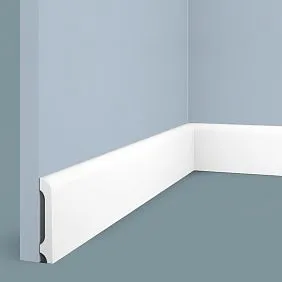
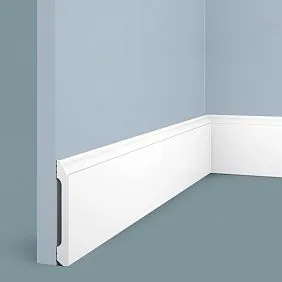
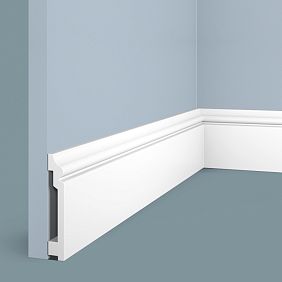
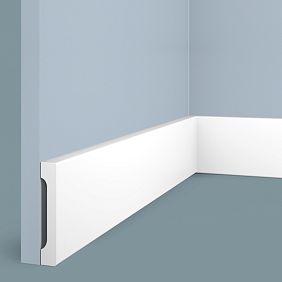

Beech: Elegance and Uniformity
Beech often remains in the shadow of oak, but connoisseurs value this species for its unique qualities. In terms of density, beech does not fall short of oak, and in some cases even surpasses it. But beech’s main advantage lies in the uniformity of its structure. It lacks clearly defined growth rings, and fibers are evenly distributed, creating a calm, even texture.
Beech color — light, rose-beige, warm. This is an ideal base for rooms requiring a light palette without excessive vividness. Beech accepts staining beautifully, allowing you to achieve shades from bleached wood to dark walnut. Meanwhile, the wood’s texture remains visible, not hidden under paint.
Beech baseboard is more elastic than oak, which is important when installing on imperfectly flat walls. It adheres better to the surface, compensating for minor irregularities without risking cracking. This property is especially valuable in older homes, where wall geometry deviates significantly from perfection.
Beech’s antibacterial properties are confirmed by research. The wood contains substances that inhibit microbial growth, creating a healthy atmosphere in the room. For children’s rooms, bedrooms, and spaces where allergy sufferers live, this is a significant factor when choosing finishing materials.
Get Consultation
Profiles and Sizes: Find Your Solution
Baseboard is not just a rectangular strip. It is an architectural element with a thoughtfully designed profile that influences the perception of space. The choice of shape determines whether the interior will be classic or modern, strict or soft, minimalist or decorative.
Smooth curves, gentle transitions between planes, rounded edges — the language of classical architecture. Such a profile emerged in an era when every detail was hand-carved, when sharp angles were rounded not only for beauty but also because they quickly chipped.
Smooth rounded edges, gentle transitions between planes, absence of sharp edges — classic, tested over centuries. This profile emerged in an era when every interior detail was handcrafted, when corners were rounded not for aesthetics, but because sharp edges quickly chipped and damaged the appearance.
The classic profile is universal. It suits parquet and solid wood flooring, laminate and ceramic tiles. It works well in living rooms and bedrooms, offices and dining rooms. It’s the choice of those who value traditional solutions proven by time.with a classic profile creates a sense of solidity, reliability.A classic profile creates a sense of solidity, reliability, and respect for architectural canons.
The height of a classic profile is usually 60-80 millimeters. This is the golden middle, suitable for rooms with standard ceiling heights of 2.7-3 meters. In higher rooms, 100-120 millimeter skirting boards are appropriate, creating a more monumental look.
Modern straight profile
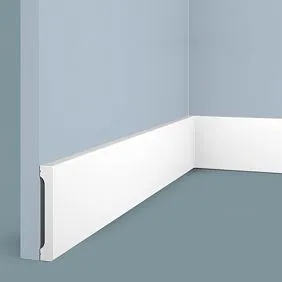
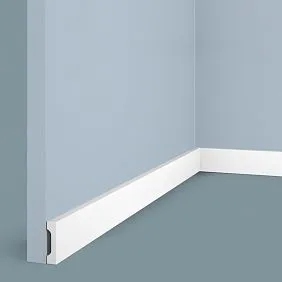
Clear lines, straight angles, minimal decoration — this is the language of modern architecture. A straight skirting board without rounded edges looks graphic, emphasizes the geometry of space, and does not draw attention to itself. This is the choice for minimalism, Scandinavian style, loft, and modern classicism.
A straight profile visually raises the room. The vertical face of the skirting board creates a clear line that draws the eye upward. This effect is especially noticeable when the skirting board is painted in a contrasting color — white against dark walls or dark against light walls.
Such a profile requires perfectly smooth walls. Any irregularities will be visible, creating gaps between the skirting board and the wall. However, with proper installation, the result is flawless — a clean, straight line that highlights the thoughtfulness of the interior design.
Decorative profiles with grooves
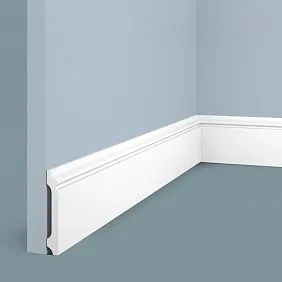
Decorative grooves, protrusions, complex multi-level profiles — for interiors where the skirting board must be not just a functional element, but part of a decorative system. Such profiles are characteristic of classical, baroque, and empire interiors, where every detail carries symbolic meaning.
A decorative skirting board creates a play of light and shadow. Grooves deepen, protrusions cast shadows — and a flat element gains volume, becoming sculptural. Under side lighting, this effect intensifies, and the skirting board literally comes alive, changing depending on the time of day and angle of light.
The height of decorative skirting boards is usually greater — 80-120 millimeters and more. A complex profile requires space to unfold; on a narrow strip, it will look small and indistinct. Such skirting boards pair withwith wooden cornicesunder the ceiling, creating a complete classical composition.
High skirting boards: a new trend
Skirting boards 150-200 millimeters and higher — a relatively new phenomenon, but rapidly gaining popularity. They visually raise ceilings, make spaces more prestigious, and create a sense of luxury. A high skirting board functions as an architectural element, structuring the wall.
Such skirting boards are especially suitable for rooms with high ceilings — from 3.5 meters and above. In standard apartments, they may 'consume' height, visually lowering the ceiling. But in spacious country house living rooms, halls, and grand rooms, a highwooden baseboardcreates the appropriate scale, matching the size of the space.
Installing high skirting boards requires special attention to mounting. The weight of the element is significant, and the number of mounting points must be increased. The distance between screws is reduced to 30-40 centimeters instead of the standard 50-60. This ensures reliability and prevents sagging in the middle of the span.
Installation: where craftsmanship begins
Buying quality skirting boards — half the job. The other half — installing it so the result delights for years. Installing wooden skirting boards requires precision, patience, and understanding of material behavior. Wood is alive; it expands and contracts with humidity changes, and these movements must be considered.
Wall preparation: the foundation of quality
A wooden skirting board demands a proper base. The wall must be flat, clean of dust, without flaking plaster or paint. Irregularities exceeding two millimeters will create gaps that must be filled with putty or sealant. It’s better to spend time leveling walls than to fight with consequences later.
Before installation, walls must be primed. Primer improves adhesive bond, binds residual dust, and strengthens loose surfaces. For concrete and brick walls, use deep-penetration primer. For gypsum board, use a special primer for final finish. Primer must be fully dry before starting installation.
Skirting boards must be acclimated before installation — left in the room for two to three days. This is especially important if the skirting boards were delivered from a cold warehouse in winter or from a humid space. Wood must adapt to the humidity and temperature at which it will be used. Skipping this step may lead to deformations even after installation.
Mounting methods: choosing based on task
There are several methods for mounting wooden skirting boards, each with its own advantages and limitations.
Mounting with adhesive — the cleanest method, leaving no visible mounting hardware. Use a special wood mounting adhesive — polyurethane or MS-polymer based. Apply adhesive in a zigzag pattern to the back of the skirting board, then press the board against the wall and hold for several minutes until it sets. This method suits perfectly flat walls and not overly heavy skirting boards.
Mounting with screws — a classic, reliable method. Drill holes in the wall, insert plastic anchors, and screw the skirting board in place. Screw heads are countersunk into the wood, and holes are filled with wood putty or decorative caps matching the skirting board color. This method ensures maximum reliability and is suitable for heavy, tall skirting boards.
Mounting with hidden system — a modern solution using special clips or hooks attached to the wall. The skirting board clicks into place, fixed without visible mounting hardware. This method is convenient because it allows easy removal of the skirting board for access to utilities or during repairs. However, it requires purchasing special hardware and compatible skirting board profiles.
Combined method — adhesive plus screws — ensures maximum reliability. Adhesive holds the skirting board along its entire length, screws provide additional fixation, especially at joints. This method is used for installation in rooms with unstable humidity or significant temperature fluctuations.
Angles: the art of flawless joints
Angles are the most difficult part of installing baseboards. It is here that the master's skill is revealed. A poorly executed angle will spoil the impression even of the highest quality material. A flawless joint, where two boards meet without the slightest gap, is a sign of professionalism.
To cut angles, a miter gauge is used — a device that allows cutting at precise angles. For simple rectangular profiles, a manual miter gauge is sufficient. For complex shaped profiles, a circular saw with angle adjustment capability is required — only then can you achieve a clean cut without chipping.
Internal angles are cut at 45 degrees — each board is beveled so that the total forms a right angle. It is important that the cut line is strictly perpendicular to the front surface of the baseboard. Any tilt will result in a gap. After cutting, the beveled edges are fitted together, and if necessary, sanded with fine sandpaper.
External angles are more complex than internal ones. Any inaccuracy is immediately noticeable here. Experienced masters make external joints not by mitering (at 45 degrees), but "in the style of a bevel" — with a slight bevel cut, which is then adjusted on-site. This provides a tighter fit and allows for correcting wall irregularities.
Long straight sections are joined at a right angle, end to end. The joint is not made in the middle of the wall, but in the least noticeable spot — behind furniture, in shadow. Before joining, the ends are sanded with fine sandpaper for perfect flatness. The joint is glued and then additionally secured with a screw driven at an angle through one board into the end of another.
Compensatory gaps and their concealment
Wood is mobile. When humidity increases, it swells; when it decreases, it shrinks. These movements, though small (1-2 millimeters per linear meter), must be accounted for. If the baseboard is installed flush against door frames and other immovable elements without gaps, it will jam upon expansion, creating stresses that may lead to deformation.
Therefore, a 2-3 millimeter gap is left between the baseboard end and the immovable element. This is sufficient to compensate for wood movement. The gap is filled with elastic acrylic sealant matched to the baseboard color. The sealant remains elastic after drying, allowing the wood to move without cracking.
In long rooms — corridors, galleries — where the continuous baseboard length exceeds 10 meters, additional compensatory joints are made. The baseboard is cut into 8-10 meter sections, with a 2-3 millimeter gap between them, filled with sealant. This prevents the accumulation of stresses and deformation.
Finishing options: from natural to artistic
A wooden baseboard can be left natural, highlighting the beauty of the wood grain. Or it can be transformed into a decorative element by staining, patinating, or aging. The choice depends on the interior design concept and personal preferences.
Transparent finishes: the beauty of natural wood
Lacquers, oils, and waxes — these finishes protect the wood without hiding its texture. On the contrary, they emphasize the grain pattern, making the color deeper and richer.
Oil is the most natural finish. It penetrates into the wood, fills the pores, and creates a protective layer from within. Oil highlights the texture, gives a pleasant tactile feel, and a velvety surface. Wood treated with oil breathes and retains its ability to regulate humidity. The drawback is that oil requires regular reapplication — every 2-3 years, the surface must be re-oiled.
Wax is often applied over oil. It creates an additional protective layer, adds a slight gloss, and enhances water resistance. Wax finish has a pleasant scent and creates a sense of naturalness and eco-friendliness.
Lacquer is a more durable finish, creating a film on the wood surface. Modern water-based lacquers are safe, odorless, and dry quickly. They can be matte, satin, or glossy. Matte lacquer preserves the natural wood appearance, while glossy enhances the elegance and highlights the texture. Lacquer finish lasts 5-7 years without reapplication, is easy to clean, and resistant to abrasion.
Staining: changing color without losing texture
Stains and tinting oils allow changing the wood color while preserving its visible texture. You can turn light beech into dark walnut, give oak a grayish tone, or create a whitewashed wood effect.
Staining opens up wide possibilities for color solutions. The baseboard can be matched exactly to the floor covering or, conversely, become a contrasting accent. A gray stained baseboard fits perfectly into modern interiors, creating a Nordic atmosphere. Dark brown — in classic styles, emphasizing elegance and sophistication.
The staining process begins with sanding the wood with fine sandpaper. This opens the pores, allowing the pigment to penetrate deeper. Stain is applied with a brush or pad along the grain with smooth strokes. It is important to work quickly, without stopping in the middle of the section — otherwise, stains will form. After the stain dries, the surface is covered with lacquer or oil for protection.
Painting: color without texture
Sometimes the wood grain needs to be hidden — when you want a uniform colored baseboard, when the wood has defects, or when the interior design concept requires smooth painted surfaces. In this case, covering paints — acrylic enamels, alkyd compositions — are used.
White baseboard — classic, never going out of style. It visually expands space, makes interiors brighter, and creates a sense of cleanliness. White is universal — it matches any floor covering and wall color. In Scandinavian interiors, white is a mandatory element, creating a characteristic light, airy atmosphere.wooden baseboards for flooring— required element, creating a characteristic bright, airy atmosphere.
Black baseboard — a bold modern solution. It creates a graphic effect, clearly defines space, and makes interiors more formal and cohesive. A black baseboard looks great against light walls — the contrast emphasizes the room's geometry.
Colored baseboards — for those who are not afraid of experimentation. Dark blue, emerald, terracotta, olive — the baseboard can become an accent element supporting the interior color scheme. It is important that this color is repeated in other details — textiles, accessories, furniture. Then the baseboard will not look like a random spot, but become part of a thoughtfully designed composition.
Patina and artificial aging
In Provence, shabby chic, and vintage interiors, baseboards are artificially aged. Patina — darkening in profile grooves, imitating centuries-old dust — creates an antique effect. Scratches on protruding parts seem to say: this element has served generations, it holds memories of time.
Patina technique is simple but requires taste and sense of proportion. The baseboard is first painted with a base color — usually light. After drying, a dark patina — special paint or wax — is rubbed into the profile grooves. Excess is wiped off, leaving only what remained in the grooves. Then the protruding parts are lightly sanded to create an effect of natural wear. Everything is covered with matte lacquer or wax.
Brushing — a technique where soft wood fibers are removed with a metal brush, leaving only the hard ones. The surface becomes textured, with emphasized annual ring patterns. A brushed baseboard looks aged, as if polished over decades of use. This technique is especially suitable for oak, with its pronounced structure.
Combination with floor coverings
Baseboard should harmonize with the floor — this is an axiom. But harmony can vary: in tone, contrast, texture, or style.
Baseboard for parquet
Parquet and wooden baseboard are natural partners. Both are solid wood, both have visible texture, both are warm and alive. The ideal option is when the baseboard and parquet are made of the same wood species and have the same finish. This creates the impression of a single wooden surface elegantly rising up the walls.
If the wood species differ, it's important that the tones match. Light parquet — light baseboard, dark parquet — dark baseboard. You can play with contrast: a dark walnut baseboard with light oak parquet. But such solutions require experience to ensure the contrast doesn't look accidental.
Baseboard height under parquet is usually 60–80 millimeters. These are classic proportions, tested over centuries. Parquet is a premium material, and the baseboard must match its status — solid wood, quality finish, thoughtfully designed profile.
Baseboard for laminate
Laminate imitates wood but remains an artificial material. A wooden baseboard next to laminate creates an interesting effect — it enhances the covering, adding naturalness. It's important to choose the baseboard by color so it doesn't conflict with the laminate's decor.
Modern laminates imitate various wood species — from light beech to dark wenge. Each can be matched with a corresponding wooden baseboard — tinted to the desired shade. Textures don't have to match — this is normal; the baseboard doesn't need to be an exact copy of the laminate. Sufficient harmony in tone and mood is enough.
Baseboard height under laminate can be any, but often medium sizes — 60–70 millimeters — are chosen. This is a universal option, not overloading the interior, yet providing sufficient wall protection.buy wooden skirting boardUnder laminate — means adding nobility to the room without significant cost increase.
Baseboard for solid wood planks
Solid wood plank is a premium covering made of whole wood. The baseboard for it should match — made of the same solid wood, preferably the same species. Matching texture creates a monolithic effect, when the floor and walls merge into a single wooden space.
Solid wood planks are usually wide — 120–200 millimeters. The baseboard must match this scale — 80–100 millimeters high, sometimes even higher. A narrow baseboard next to a wide plank will look disproportionate.
The baseboard finish should match the plank finish. If the plank is oiled — the baseboard should also be oiled. If the plank is varnished — the baseboard should be varnished. Uniform finish is as important as uniform species and tone.
Baseboard for tile
Ceramic tile, ceramic tile, natural stone — these materials are cold, hard, mineral. A wooden baseboard next to them creates a warm contrast, softening the coldness of stone. This is especially relevant in kitchens, bathrooms, hallways, where tile is used for practical reasons, but one wants to add coziness.
For wood-style tile, it's logical to choose a wooden baseboard in the same tone. For single-tone tile — a baseboard matched to wall color or contrasting with it. It's important to protect wood from moisture — treat with moisture-resistant varnish or oil, especially if it's a bathroom or kitchen.
Baseboard height for tile is usually medium — 60–70 millimeters. Too high may visually overload the space, especially in small rooms. Choose a simple profile, without complex curves — next to tile geometry, ornate decoration may look out of place.
Baseboard as part of decorative system
Baseboard doesn't exist on its own. It's part of the overall system of wooden interior elements, and its beauty unfolds in combination with other details.
Baseboard and crown molding: framing space
Classic interior requires symmetry: if there's a wooden baseboard below, there should beBuy wooden crowna cornice above. Two horizontal elements — at floor level and under the ceiling — frame the walls, creating a complete composition. The gaze moves from the baseboard up the wall to the cornice, encompassing the entire space.
Baseboard and cornice should match in profile style, wood species, and finish. They don't have to be identical — the cornice may be wider and more complex, emphasizing its role as a crowning element. But the language of forms should be unified: if the baseboard is classic with rounded edges, the cornice should also be classic. If the baseboard is modern and straight, the cornice should be minimalist.
Baseboard height and cornice width should be proportional. In a room with 2.7-meter ceilings, a 70-millimeter baseboard harmonizes well with an 80–100-millimeter cornice. In a high room of 3.5 meters, 100-millimeter baseboards and 120–150-millimeter cornices are appropriate.
Baseboard and doors: unity of carpentry
Door frames, casings, baseboards — all these elements belong to carpentry and should be executed in a unified style. If doors are made of solid oak, it's logical to choose oak baseboards. If doors are painted white, the baseboards should also be white.
At the junction of the baseboard and door frame, precision is especially important. The end of the baseboard must fit perfectly against the frame without gaps. If the frame protrudes from the wall, the baseboard is cut to match its contour. If the frame is flush with the wall, the baseboard simply abuts it, and the joint is sealed with sealant.
Door casings can be the same width as baseboards — this creates visual continuity. Or casings can be wider — then the door appears more imposing. But the profile style must match: classic, modern, or ornate — a unified language of forms unites all elements.
Baseboard and furniture: wood in interior
Wooden furniture and wooden baseboards create an atmosphere of naturalness, eco-friendliness. It's important that the wood tones harmonize. Exact match isn't necessary — it's enough for them to be in the same color range: warm (yellow-brown) or cool (gray-brown).
Furniture legsClassic furniture profiles correspond with baseboard profiles. CarvedDecorative brackets for shelvessupport the stylistic approach.wooden balustersThe stairs — another element that should harmonize with the baseboards. All of this creates a unified wooden language of the interior.
Wooden elements in modern interiors often contrast with other materials. A wooden baseboard against concrete walls, next to metal furniture, creates an interesting tension between natural and industrial. But there should not be little wood — one baseboard will be lost. Additional wooden accents are needed —wooden planks on the wallcountertops, shelves, to create a system.
Care and longevity
A wooden baseboard lasts for decades if properly maintained. Care is simple, does not require special products or great effort.
Regular cleaning
Dust is the main enemy of wooden surfaces. It settles on baseboards, gets stuck in profile grooves, dulls the finish. Baseboards should be wiped once a week with a dry soft cloth or a special microfiber cloth. For profiled sections with grooves, a soft-bristled brush is used — it sweeps dust out of the grooves.
Wet cleaning is permissible, but with restrictions. The cloth must be well wrung out, almost dry. Excess water is dangerous for wood — it can penetrate under the finish, causing swelling and darkening. After wet cleaning, baseboards are wiped dry.
Cleaning agents are used rarely and only special ones — for wood. No abrasives, solvents, aggressive chemicals. Simply add a little special wood surface care product to water — it will clean and simultaneously create a protective film.
Protection against damage
Wood is strong, but not invulnerable. Hard objects leave dents. Sharp objects scratch. Heavy furniture during rearrangement may damage the baseboard. All of this must be considered during use.
When moving furniture, soft pads — felt, rubber — are placed under the legs. Furniture is not dragged across the floor, but lifted and carried. When vacuuming, the vacuum nozzle should not strike the baseboard — movements are smooth and careful.
If damage has occurred — a chip, deep scratch — it can be restored. Minor scratches on lacquered surfaces are polished with special compounds. Deep dents are filled with wood putty matched to the tone, then the repair area is sanded and lacquered. On oiled surfaces, scratches are often sufficient to re-oil — the oil will penetrate and darken the damaged area, making it less noticeable.
Recoating
After 5-10 years of use, the finish may dull or wear in areas of frequent contact. This does not mean the baseboard needs to be replaced — simply renew the finish.
Lacquered baseboards are lightly sanded with fine sandpaper (grit 220-320), cleaned of dust, and coated with a new layer of lacquer. One or two layers — and the baseboard looks new.
Oil-based finishes can be renewed even more simply. The surface is cleaned, lightly sanded if necessary, and a new layer of oil is applied. The oil penetrates, renews protection, and refreshes the color.
Painted baseboards can be repainted in another color. The old paint is sanded to improve adhesion, the surface is primed, and new paint is applied. This allows changing the interior without replacing elements — today the baseboard is white, in a few years it can be made gray or black, following new design trends.
Common mistakes and how to avoid them
Even a high-quality baseboard can look bad if mistakes are made in selection or installation. Let’s consider typical errors.
Mismatch of baseboard height to room scale
A narrow baseboard in a tall, spacious room gets lost and looks stubby. A wide baseboard in a small room with a low ceiling visually weighs down and eats up height. Proportions are critical.
The rule is simple: the higher the ceiling and the larger the area, the higher the baseboard can be. For a standard apartment with 2.7-meter ceilings, baseboards 60-80 millimeters are optimal. For rooms 3-3.5 meters — 80-100 millimeters. For high grand spaces over 4 meters — 120 millimeters and above.
Incorrect profile selection
A bulky decorative baseboard in a minimalist interior looks out of place. A simple straight baseboard in a classic baroque interior — too modest. The profile must match the overall stylistic approach.
If in doubt — choose a classic European profile with soft rounded edges. This is a universal option that works in most interiors. Too specific profiles — triangular, complex multi-level — require careful application.
Visible gaps in corners
Gaps at corner joints — a sign of unprofessional work. They spoil the entire impression, no matter how expensive the baseboard. The cause — inaccurate cutting or uneven walls.
Avoiding this helps with careful marking, using quality tools, and fitting before final installation. If a gap still forms, it is filled with acrylic sealant matched to the baseboard’s tone. After drying, the sealant is sanded, and if necessary, touched up.
Insufficient fastening
Saving on fasteners leads to baseboards gradually detaching from walls, gaps appearing. This is especially noticeable on uneven walls, where the baseboard was initially pressed on loosely.
The distance between fastening points should not exceed 50-60 centimeters for standard baseboards, 30-40 centimeters for tall heavy ones. Fastening is mandatory at joints — from both sides of the joint, to prevent plank misalignment.
Ignoring wood moisture content
Installation of skirting boards in high humidity (over 12%) will cause them to dry out after mounting. Gaps form at joints, and the skirting board may warp. The wood should be dry — humidity 8-10%, matching the conditions of use in heated rooms.
Before installation, skirting boards are left in the room for 2-3 days to acclimate. This is especially important if they are brought from an unheated warehouse or from a region with a different climate.
Ecological and healthy home
In an era of growing ecological awareness, choosing natural materials is no longer just a trend, but a necessity. Wooden skirting board is part of a healthy home philosophy.
No harmful emissions
Solid wood does not contain formaldehyde, phenols, or volatile organic compounds, which many synthetic materials are rich in. It does not emit toxic substances into the air under normal conditions or when heated. This is critically important for children's rooms, bedrooms, and spaces where people with allergies or chemical sensitivities live.
Finishes for wooden skirting boards can also be eco-friendly. Natural oils based on flaxseed, carnauba wax, and beeswax — such compositions are absolutely safe. Modern water-based varnishes have no odor, do not emit solvents, and meet the strictest ecological standards.
Humidity regulation
Wood is hygroscopic — it absorbs moisture from the air when there is plenty of it, and releases it when the air dries out. This natural process creates a comfortable microclimate. In apartments with wooden elements, humidity is more stable, with no sharp fluctuations characteristic of spaces with synthetic finishes.
The optimal humidity for humans is 40-60%. It is precisely in this range that wood is in equilibrium with the surrounding environment. A large surface area of wooden surfaces — floor, skirting boards, wall panels — helps naturally maintain healthy humidity.
Antibacterial properties
Oak and beech contain tannins — natural antiseptics that suppress the development of bacteria and fungi. This does not mean that wooden skirting boards are sterile, but they are less susceptible to biological contamination than organic materials without protection.
For additional protection in rooms with high humidity — bathrooms, kitchens, basements — wooden skirting boards are treated with special protective compositions containing fungicides. These are safe modern preparations that do not emit harmful substances but effectively prevent mold growth.
Investment in durability
Wooden skirting board is more expensive than plastic or MDF. This is a fact. But the price is not an expense, but an investment, if considered in the long term.
Service life: decades without replacement
A quality skirting board made of solid oak or beech lasts 50-100 years. This is not exaggeration — in old houses, wooden skirting boards from a century ago still stand, and after restoration, they look wonderful. Plastic skirting boards turn yellow after 10-15 years, become brittle, and require replacement. MDF swells from moisture, and the finish peels off.
The economics are simple: a wooden skirting board costs 3-5 times more than plastic, but lasts 5-10 times longer. On an annual basis, it is cheaper. Plus, there is no need to repeat repairs, spend time and effort on dismantling old and installing new ones.
Restoration Possibility
Wood can be restored. A scratched skirting board is sanded and re-coated. A dull one is refreshed with oil or varnish. An annoying color is changed by repainting. Plastic and MDF can only be discarded after damage.
This repairability is especially valuable in homes with active lifestyles — children, pets, frequent rearrangements. A wooden skirting board will withstand all this, remaining functional and beautiful. It can be passed on to the next generation and continue to serve.
Increase in property value
Natural materials in finishing increase the property's value. When selling an apartment or house, buyers appreciate wooden elements, understanding their quality and durability. Parquet, solid boards, wooden skirting boards — all of these are arguments for a higher price.
Investment in wooden skirting boards pays off not only in service life but also upon sale. The price difference of an apartment may exceed the cost of all wooden elements many times over.
Skirting board with cable channel: functionality and aesthetics
Modern homes are filled with technology. Computers, TVs, routers, smart home systems — all of this requires wiring. Hiding them in walls is not always possible, especially in already finished renovations.Wooden wall decorCan hide communications, and a skirting board with a cable channel — one of such solutions.
Construction with hidden cavity
A skirting board with a cable channel has a cavity inside where wires are laid. The back part of the skirting board is mounted to the wall, while the front — removable panel — snaps into place. To lay or change wiring, the panel is removed, wires are laid, and the panel is snapped back into place.
Such a construction does not affect the appearance — the skirting board looks like a regular monolith. The cable channel is hidden, and wires are not visible. At the same time, access to them remains free, and it is not necessary to dismantle the entire skirting board to add a new cable.
The size of the cable channel depends on the height of the skirting board. In 60-70 mm boards, the channel can hold 2-3 medium-section cables. In 80-100 mm skirting boards — up to 5-7 cables. For large-scale wiring, special wide skirting boards with an enlarged channel are used.
Wiring organization
Laying cables in the skirting board requires planning. Power cables (220 V) must be separated from low-voltage cables (internet, phone, antenna) — they must not run in the same channel to avoid electromagnetic interference. For this, skirting boards with two separate channels are used, or two skirting boards are installed at a small distance apart.
Cables are laid neatly, without bends or twists. Excess length is coiled and secured with ties. In corners and turning points, reserves of 20-30 centimeters are left to allow pulling the cable out for repair or replacement if needed.
Cables are routed to outlets, switches, and devices through special holes in the skirting board. Holes are drilled carefully, without chips, slightly larger than the connector. The edges of the hole can be treated with a plastic bushing to protect the cable insulation.
Where to buy quality wooden skirting boards
The market offers many options, but not all are equal. The quality of the skirting board is determined by the material, processing, and precision of dimensions.
What to look for when choosing a supplier
In-house production — guarantee of quality control at every stage. Companies that manufacture skirting boards themselves are responsible for every detail — from wood selection to final finishing. Wholesalers do not always know where the product came from or how it was made.
Choice of species and profiles — indicator of the manufacturer's seriousness. If only one species or a couple of standard profiles are offered, it is a sign of limited capabilities. A professional manufacturer has a wide range, allowing to solve any design task.
Readiness to accept custom orders — an important criterion. Sometimes a non-standard size, special profile, or unique tinting is needed. The ability to manufacture skirting boards according to your requirements — a sign of flexibility and customer orientation.
Presence of showrooms — where you can see the product in person, touch it, and assess the quality of processing. Photos on the internet do not convey the texture of wood, its color, tactile sensations. Visiting an exhibition hall gives a complete picture of the product.
Installation services or recommendations from proven masters — additional convenience. Even if you install it yourself, consultations from specialists will help avoid mistakes.
Price range and what it includes
The price of wooden skirting boards depends on many factors. Species of wood — oak is more expensive than beech, exotic species are more expensive than local ones. Profile complexity — decorative is more expensive than straight. Size — tall and wide skirting boards are more expensive than standard ones. Finishing — painted or patinated is more expensive than unpainted.
Average prices in the Russian market: simple straight skirting board from beech 60 mm — from 300-400 rubles per linear meter. Classic skirting board from oak 70 mm — from 500-700 rubles. Decorative tall skirting board from oak 100+ mm with finish — from 1000-1500 rubles and more.
It is important to understand what is included in the price. Some sellers indicate the price of unpainted skirting boards, painting is charged separately. Others include basic finishing in the cost. Clarify the package — is hardware, plugs, corners included, or are they purchased separately.
Conclusion: a choice for decades
wooden skirting board purchaseThis is a decision made not for one year. It is an element that will serve for decades, defining the character of the interior, creating the atmosphere of the home. Saving on this detail leads to compromises that will remind you of themselves every day.
Natural wood — a material tested over millennia. It has survived all fashion trends, all technological revolutions. Synthetic materials come and go, but wood remains because it meets fundamental human needs — warmth, naturalness, connection with nature.
Quality skirting board from solid oak or beech — is beauty that requires no justification. The texture created by nature over decades of tree growth, the play of light on a natural surface, warmth upon touch — all of this cannot be faked, it can only be obtained by choosing genuine material.
A correctly selected and professionally installed skirting board is invisible in a good sense. It does not shout about itself, does not attract unnecessary attention, but quietly performs its function — finishing the floor, protecting walls, creating a clear line between planes. And it is precisely this unobtrusive work that makes the interior harmonious.
Choosing wooden skirting boards, you choose eco-friendliness without compromises. No emissions, no chemicals, no doubts about material safety. Especially important for families with children, for allergy sufferers, for everyone who values a healthy home atmosphere.
Investment in wooden skirting boards pays off many times over. Service life is measured in decades, the possibility of restoration extends its life even further. In terms of annual use, wooden skirting boards prove to be more cost-effective than cheap alternatives. Plus, increased property value, plus aesthetic pleasure that is priceless.
The modern market offers a huge variety of profiles, sizes, and finishing options. You can find a solution for any interior — from classic palace-style to ultra-modern minimalism. Wooden skirting boards are versatile, they adapt to the concept, support it, and complete it.
You do not need to be a professional to appreciate the difference between solid wood and imitation. Just touch it, look at the light, feel its weight. Real wood reveals itself immediately — warmth, depth of color, natural texture. And this sense of authenticity remains with you for years.
Company STAVROS has specialized in producing solid wood interior items for over twenty years. Wooden skirting boards made from selected oak and beech, manufactured in-house using modern equipment and traditional joinery techniques. Each item undergoes multi-stage quality control — from wood selection to final finishing.
STAVROS offers skirting boards of various profiles and sizes. Classic European profiles with soft curves for traditional interiors. Modern straight profiles for minimalist spaces. Decorative profiles with ornamental elements for luxurious classic interiors. Heights from 45 to 200 mm allow selecting a solution for rooms of any scale.
Wood undergoes kiln drying to a moisture content of 8-10%, which corresponds to conditions of use in heated rooms. This eliminates deformation, cracking, and shrinkage after installation. Precision processing on high-precision equipment guarantees ideal geometry, tight joints, and flawless appearance.
Various finishing options are available. Unfinished skirting boards for DIY finishing. Coated with transparent lacquer or oil, highlighting the natural wood texture. Tinted in a wide range of shades — from bleached wood to dark wenge. Painted with opaque enamels in any RAL scale color. Patinated with an antique effect for classic interiors.
Each finishing option has its advantages. Transparent coatings preserve the natural beauty of wood, allowing you to see the texture and feel the material’s authenticity. Painted skirting boards offer freedom in color choices, allowing you to integrate the element into any interior concept. The ability to choose makes wooden skirting boards versatile for projects of any complexity.
Production is carried out on modern equipment while adhering to all technological standards. Each stage is controlled — from incoming wood inspection to final inspection of the finished product. This guarantees consistent quality, absence of defects, and long service life.
Special terms of cooperation apply for professionals — designers, architects, construction companies. Wholesale deliveries, individual projects, technical consultations. Possibility to order non-standard sizes and profiles for specific tasks. Flexible pricing policy for large orders.
Delivery is organized to all regions of Russia. Ready products are shipped from the warehouse in St. Petersburg promptly — if available, the order is assembled on the day of inquiry. Transport companies deliver the goods to any populated area. Packaging ensures protection during transport — skirting boards are protected from damage, moisture, and contamination.
The company’s showrooms operate in Moscow and St. Petersburg. Here you can see the full product range, assess the quality of processing, and receive specialist consultations. Samples of various wood species, profiles, and finishing options help make an informed decision. Experienced consultants will answer questions, help calculate the required material amount, and recommend optimal solutions for a specific project.
Wooden skirting board is not just a functional finishing element. It is an investment in the beauty and longevity of the interior. It is a choice in favor of natural materials, a healthy microclimate, and an eco-friendly home. It is a detail that completes the space, making it harmonious and filled with the warmth of living wood.
Quality is never accidental. It is born from careful selection of materials, precision in processing, and attention to detail. STAVROS company offers exactly this quality — time-tested, proven by thousands of completed projects, and appreciated by professionals and private clients.
Choosing a wooden skirting board is a decision for decades. Solid oak or beech will last longer than many other interior elements. It will survive wallpaper changes, wall repainting, and furniture replacement — remaining relevant, beautiful, and functional. This is a rare quality in a world of things made for just a few seasons.
A home begins with details — those elements that seem insignificant but without which space lacks completeness. Skirting board is one of such details. It is not eye-catching, but its absence or poor quality is immediately noticeable. A properly chosen wooden skirting board makes the interior cohesive, thoughtfully designed, and high-quality.
Nature created wood over decades. Each annual ring is a year of life, a story of growth, a unique pattern. Using natural wood in the interior brings a piece of this history, this natural energy, into your home. A wooden skirting board is a way to maintain a connection with nature in an urban environment and remind yourself of the natural beauty of materials.
Time arranges everything in its place. Trendy synthetic materials come and go. Wood remains. It was, is, and will be the material of choice for those who value authenticity, quality, and longevity.wooden skirting board purchaseChoosing STAVROS means opting for proven quality, natural materials, and flawless execution. A choice you won’t regret, neither in a year nor in decades.