







































Article Contents:
- What is a wall panel skirting strip: understanding the task from the inside
- Why a finishing profile for a wall panel is needed
- Where an additional panel strip is used
- How a wall panel strip differs from a floor skirting board
- How it differs from molding, corner, and trim
- When a skirting strip is needed: real scenarios
- For abutting a wall panel to a wall
- For finishing the edge of a wall panel
- For panel and floor joint
- For panel and ceiling joint
- For corner finishing
- For TV zone and niches
- For hallway, bedroom and living room
- What materials are available: three groups, three strategies
- MDF — precision, evenness, versatility for painting
- Wood and solid wood — texture, warmth, premium character
- Polyurethane — relief, classic style, easy installation
- How to choose a skirting board strip: seven parameters without error
- By panel type
- By panel thickness
- By installation location
- By profile width and height
- By interior style
- By color and finish
- How to choose a profile for slatted panels
- What solutions combine with wall panels: complete system
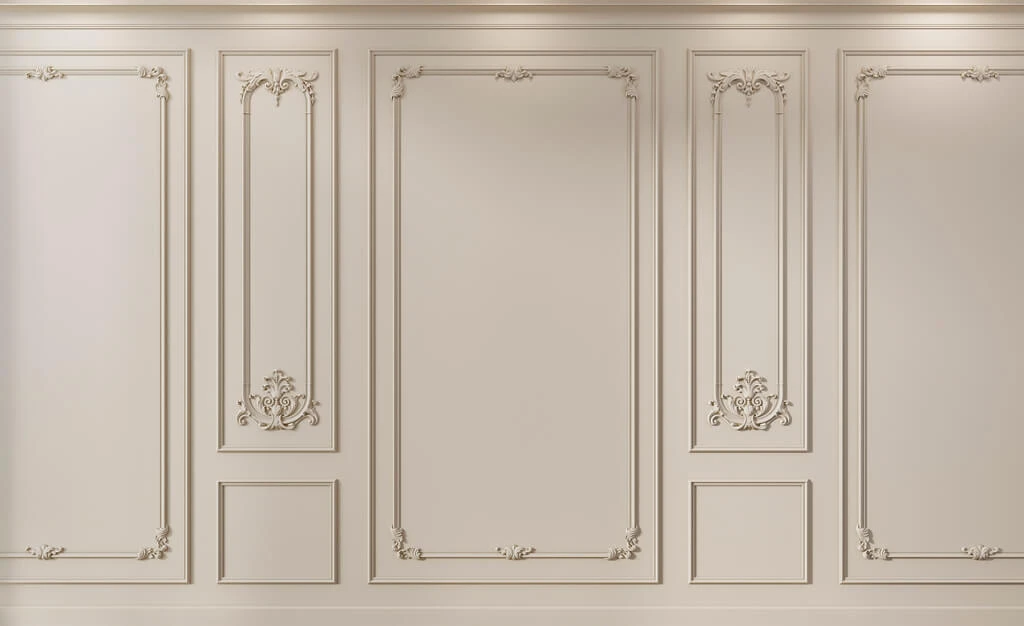
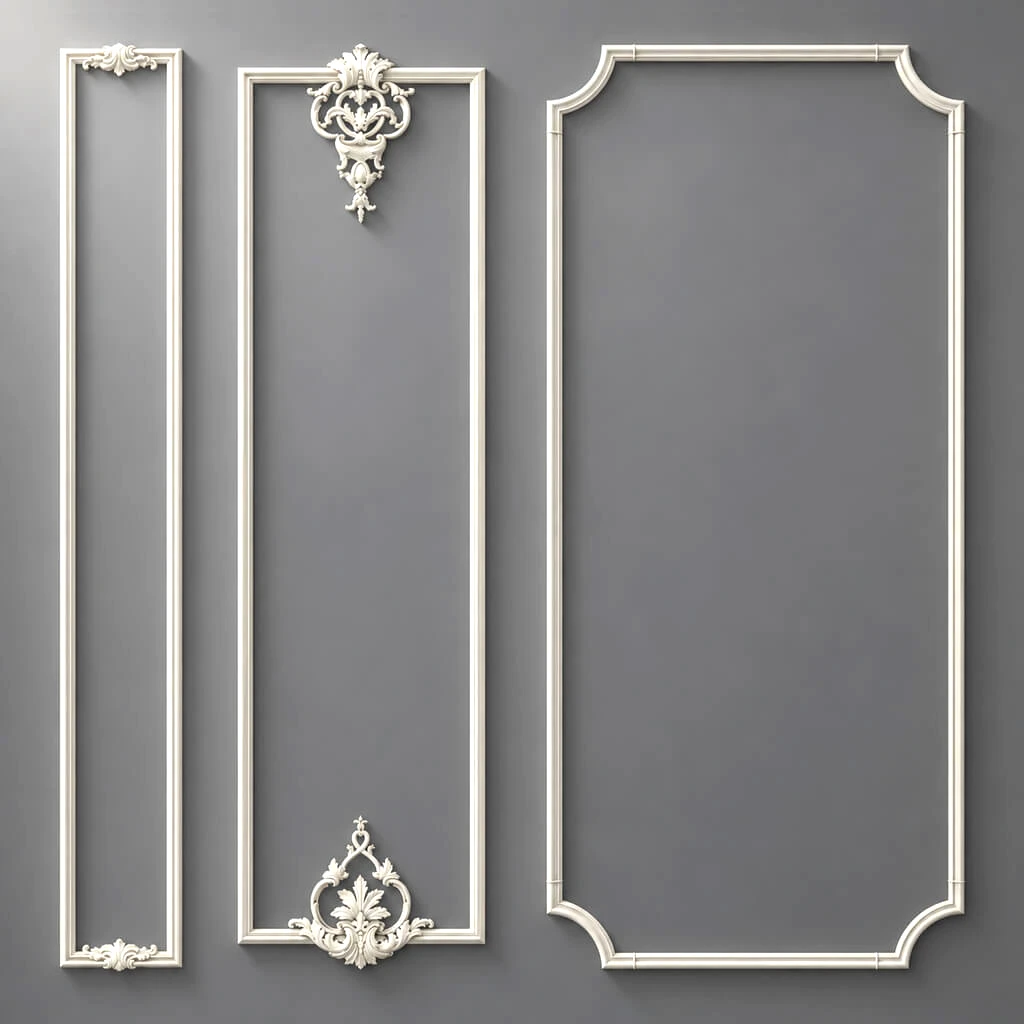
- Moldings as separators and framing
- Decorative rails within the panel zone
- Corner pieces for angular junctions
- Slatted panels as the main framing object
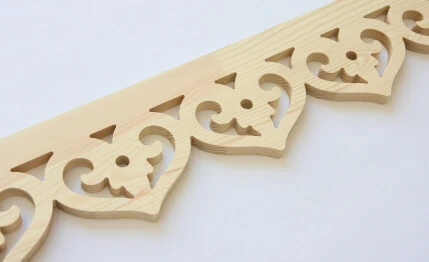
- Decorative overlays for layout corners
- Cornices for top finishing
- Molding for classic inserts
- Profile for a specific task: practical table
- For MDF wall panel
- For wooden panel
- For slatted panel
- For panel for painting
- For classic interiors
- For modern minimalist interiors
- Common mistakes when choosing a strip for a wall panel
- Choose a profile without considering the panel thickness
- Take a floor skirting instead of an additional strip
- Do not consider the joint in the corner
- They don't think through the transition to the door, floor, ceiling
- They don't consider the material and finish
- Step-by-step algorithm for selecting a skirting strip for a wall panel
- Why assembling a system for a wall panel is profitable at STAVROS
- FAQ: answers to questions about the skirting strip for wall panels
Imagine: expensive wooden panels on the wall, beautiful texture, proper tinting — and suddenly at the edge there's a gaping open cut, a gap at the ceiling, an uneven joint with the adjacent wall. The entire impression falls apart. One uncovered detail can devalue months of work and serious investments.
That's precisely why the skirting strip for a wall panel is not a decorative trifle chosen at the last moment. It's a system element that determines whether the finish will look complete or remain 'as if unfinished.' It's the detail that a professional designer includes in the project from the very beginning — long before the first panel reaches the wall.
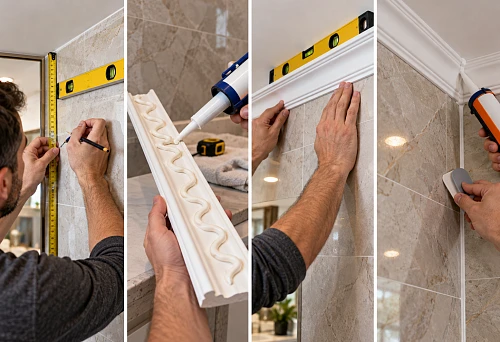
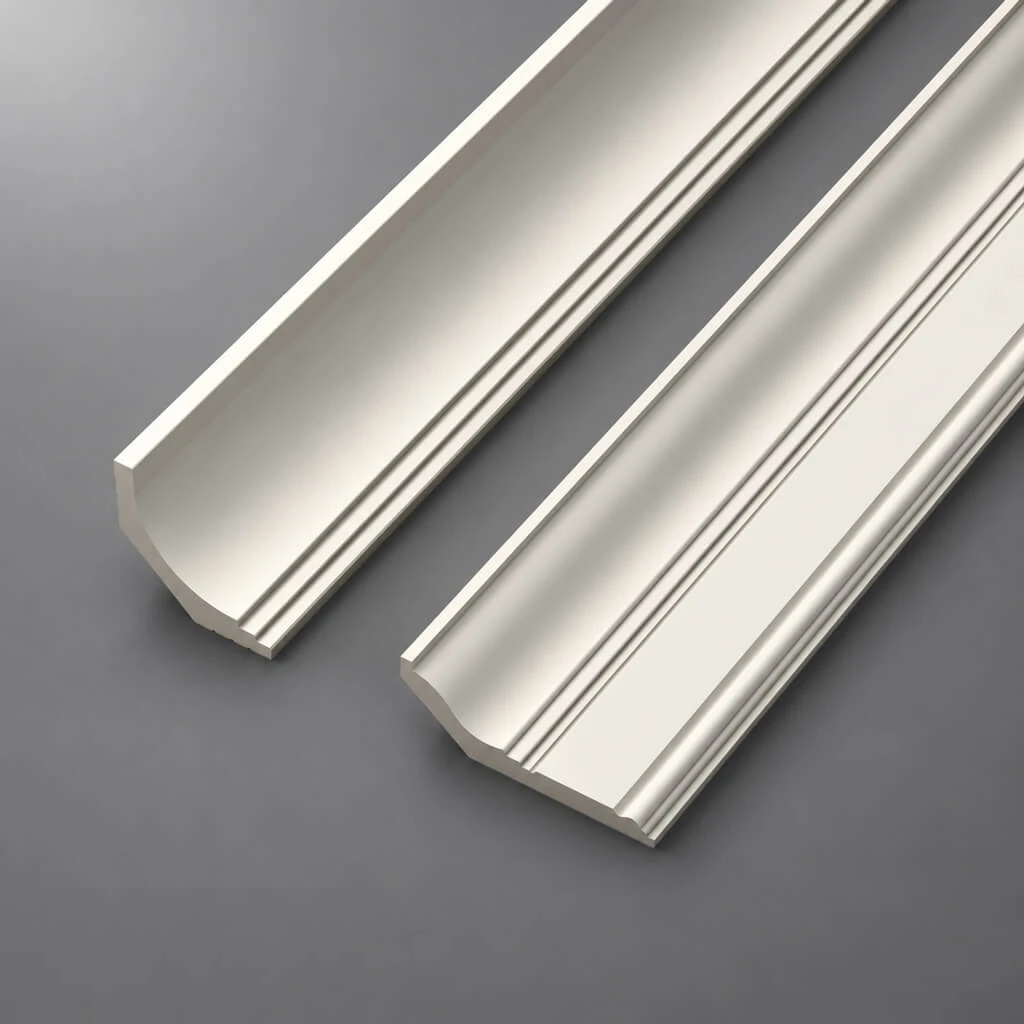
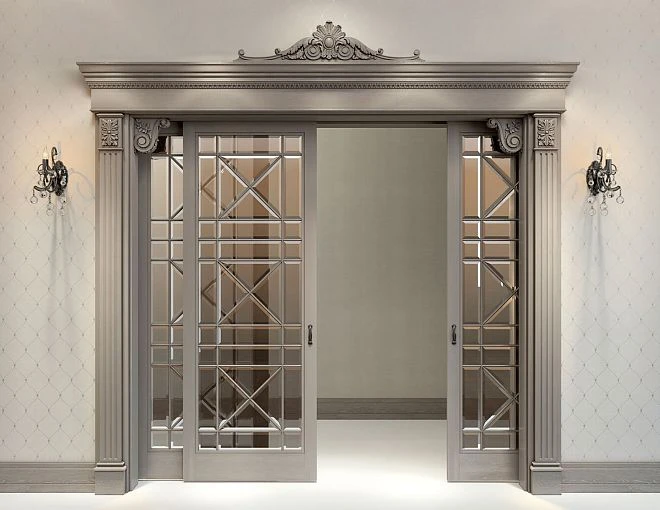
It's important to understand here: we're not talking about a floor skirting board, not about an ordinary molding for wall decoration. The finishingstrip for a wall panelis a specialized profile whose task is precisely to frame, cover, and connect. It lives on edges, joints, corners, and abutments. Its role is to make the panel on the wall look like part of a well-thought-out space, not like a nailed sheet of material.
Go to the STAVROS catalog:
-
Buy wall panel profile— wooden, MDF, and polyurethane profiles
-
Buy slatted panels for walls— panels with framing profiles
-
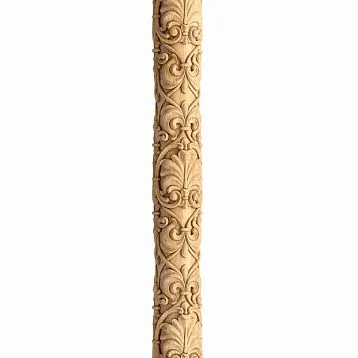
Buy wooden molding— decorative profiles for junctions and seams
-
buy wooden corner piece— profiles for panel corner junctions
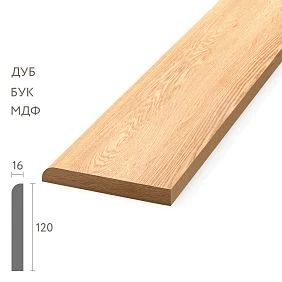
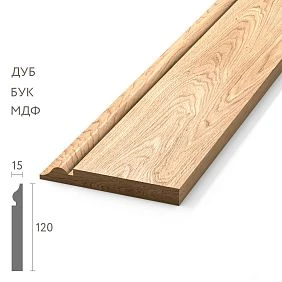
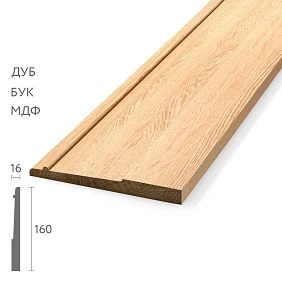
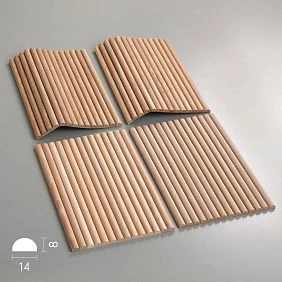
What is a wall panel skirting strip: examining the task from the inside
Before choosing — you need to understand what exactly this element solves and how it fundamentally differs from other profiles.



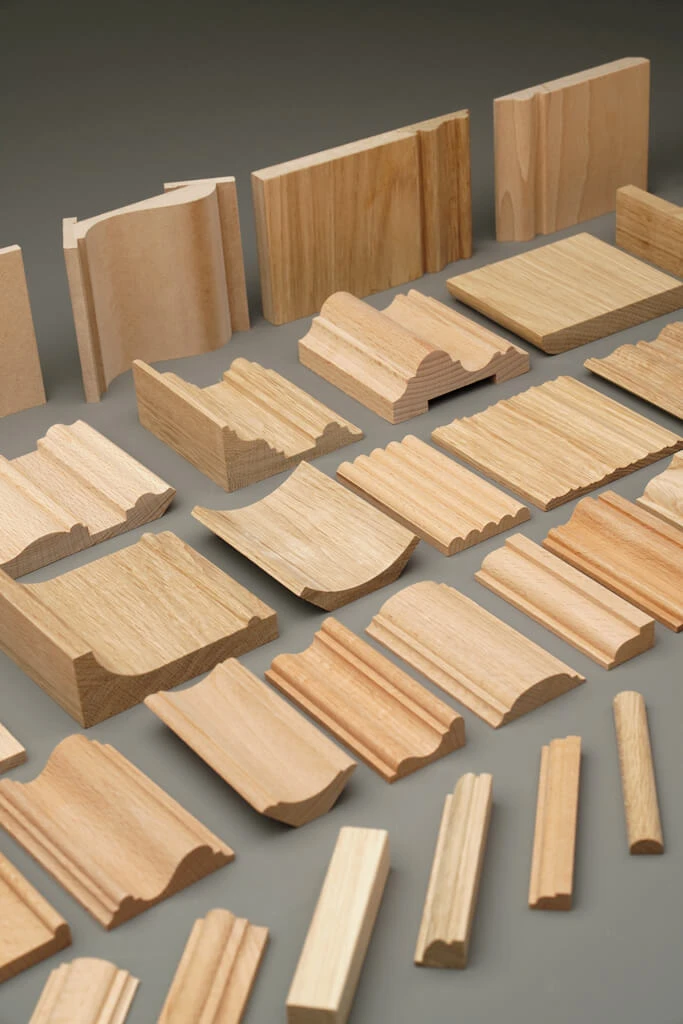
Why a finishing profile for a wall panel is needed
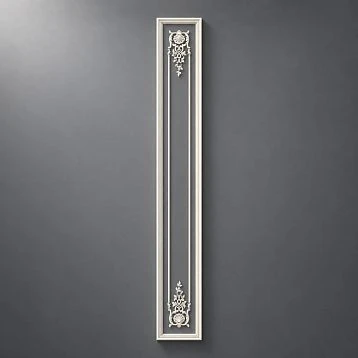
A wall panel is an independent object on the wall surface. It has four sides: bottom, top, right, and left edges. Each side is a potential problem zone. At the bottom, the panel meets the floor or floor skirting. At the top — with the ceiling, cornice, or other finish. On the side — with the wall, adjacent panel, door opening, or niche.
At each of these contact points, a gap, cut, or mismatch arises. A profile-strip for a wall panel is a tool that turns a technical problem into an architectural solution.
Our factory also produces:


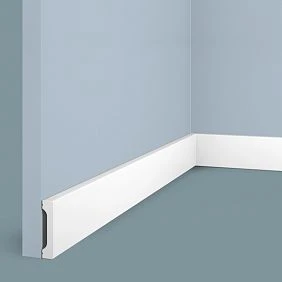
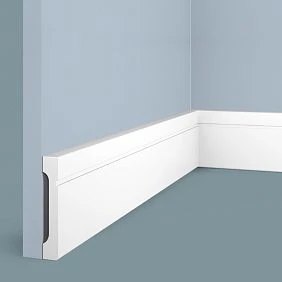
Where is a panel trim strip used?
The range of applications is wide:
-
The bottom edge of an MDF or wood panel at the floor—here a finishing trim/baseboard strip is installed.
-
The top edge—transition to the ceiling or cornice.
-
Side edges—abutment to a wall, door jamb, or adjacent panel made of a different material.
-
Corners—internal and external.
-
Joint of two panels at a break—a decorative separator.
-
Perimeter of a TV area, niches, arches.
Get Consultation
How does a wall panel trim strip differ from a floor baseboard?
A floor baseboard is a horizontal element at the floor that covers the gap between the floor covering and the wall. Its purpose is a technical transition from 'floor to wall'.to buy wooden baseboardFor the floor — a completely different requirement than choosing a finishing trim for a wall panel.
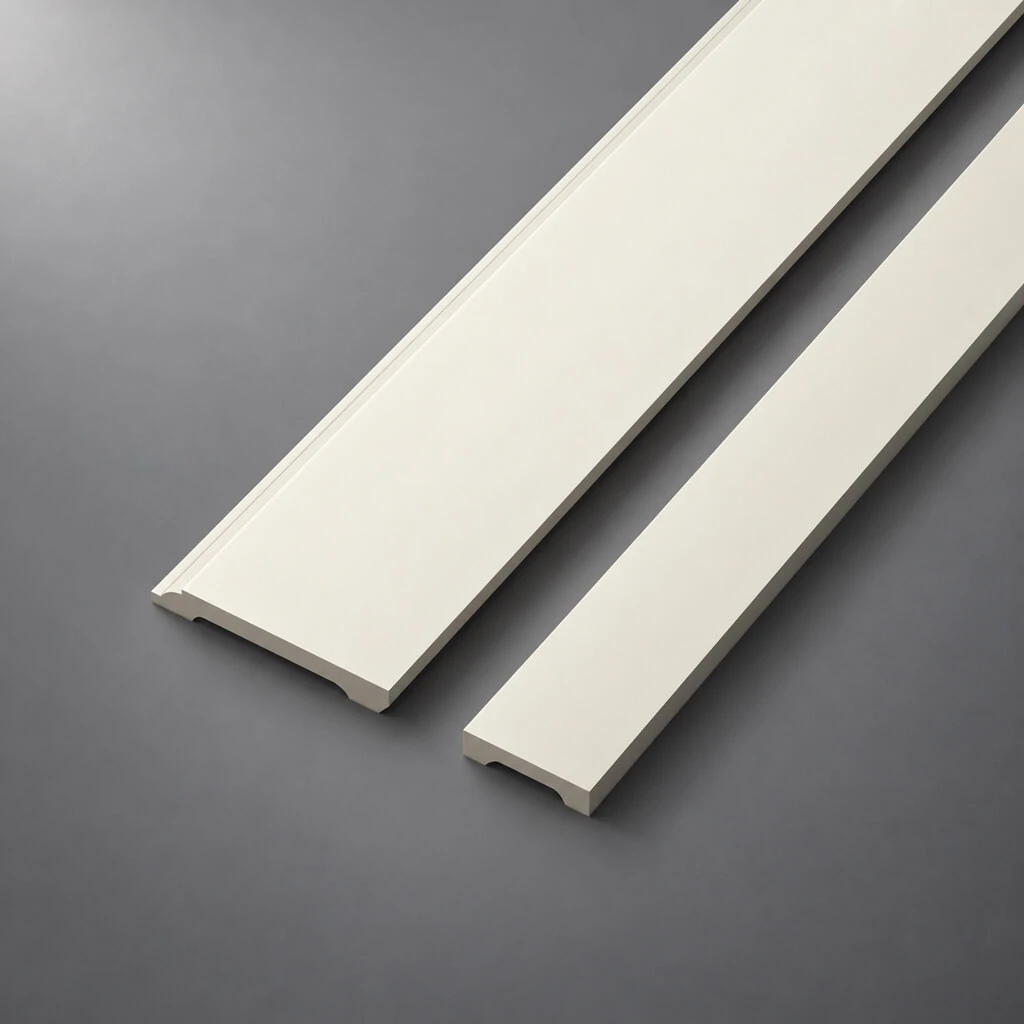
A skirting trim for a panel is a different product with different geometry and a different installation logic. It can be mounted vertically, horizontally, or diagonally — depending on which edge of the panel needs to be covered.
How it differs from molding, corner bead, and trim strips
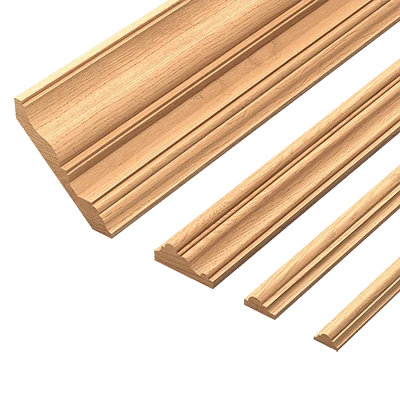
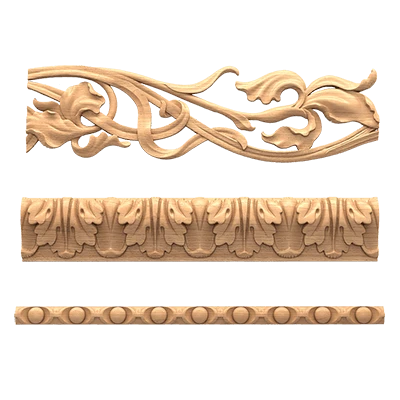
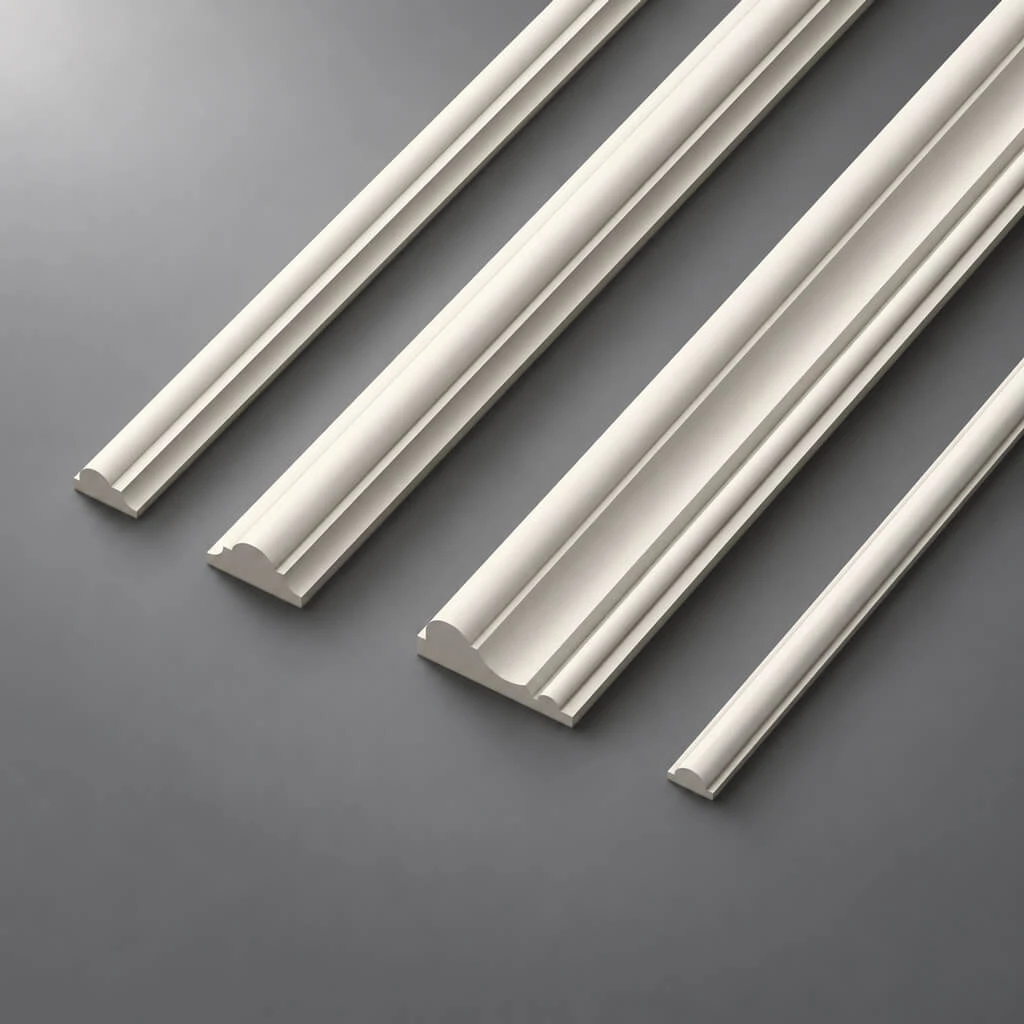
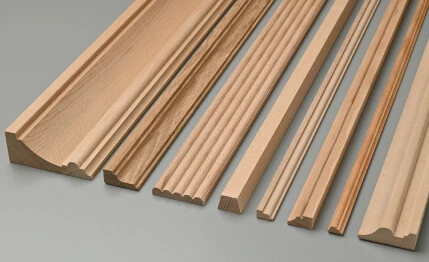
wooden molding— a decorative profile that lives on the wall surface as an independent element. Its task is to decorate, structure, create frames. A trim for the edge of a panel is more functional: to cover, protect, connect.
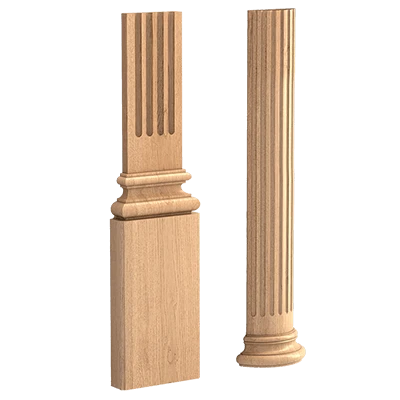
Wooden corner bracket— a profile with an L-shaped cross-section for corners. This is a specific case of a finishing trim for corner joints of a panel.
Trim strips — a system of several profiles that frames a panel like a framed picture. This is no longer a single profile, but a system.
When a skirting trim is needed: real scenarios
For joining a wall panel to a wall
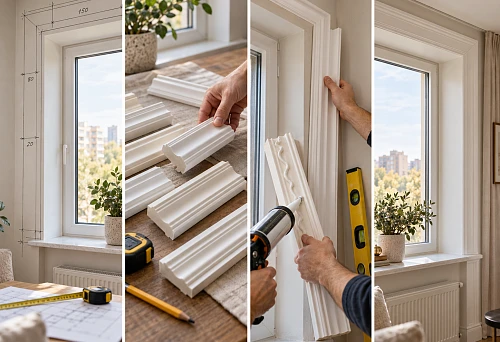
The panel is installed, but its side edge abuts an adjacent wall. A perfect joint never exists — differences in planes, uneven plaster, a gap of 2–8 mm. A vertical finishing trim orWooden anglewill cover this joint and make the panel–wall transition neat.
To finish the edge of a wall panel
An exposed MDF or wood panel cut is the material's end grain: unsightly, fragile, and prone to delamination.profile for wall panelwith a U-shaped or L-shaped cross-section covers this end grain and protects it from mechanical damage.
For the joint between panel and floor
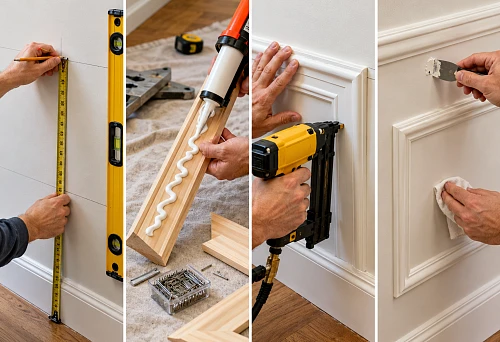
This is the most common scenario. A wall panel starts from the floor or from a certain height. In both cases, the panel's bottom edge requires a solution. If the panel runs from the floor — a horizontal trim strip or a specialsolid wood baseboardacting as a starter strip, which simultaneously secures the bottom edge and conceals the joint.
For the joint between panel and ceiling
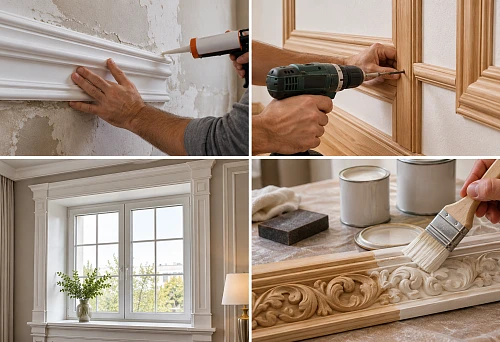
The top edge is an area often left uncovered in the hope that 'it's fine as is'. But the gap between the panel's top edge and the ceiling is particularly visible under side lighting. A horizontal finishing profile or a small cornice trim strip conceals this transition.wooden corniceat the ceiling simultaneously covers the gap and defines the top architectural line.
For finishing corners
An inside corner is where two walls meet. If panels run along both adjacent walls, a special profile is needed for the corner: either a corner insert orWooden anglewhich covers the joint of two panels.
An outside corner is the area of greatest risk. The exposed panel end at an outside corner means constant chipping and damage. An L-shaped profile orWooden angleprotects the corner and gives it a finished look.
For TV zones and niches
A TV zone withplank panelsis the most popular accent wall design today. Each such structure has a bottom baseboard strip, a top cornice or molding, and two side profiles. It is these elements that transform a set of slats into a complete architectural object.
For the hallway, bedroom, and living room
In the hallway, wooden or MDF panels of the lower tier (so-called dado paneling) are mounted at a height of 90–120 cm. Their top horizontal edge is the place for thefinishing strip for the wall panelWithout this element, the wall looks like an unfinished renovation.
In the bedroom, the accent wall behind the headboard requires neat framing around the entire perimeter. In the living room — zoning between the lower tier finish and the upper part of the wall. The finishing profile plays the same role everywhere: the period that the master puts at the end of the work.
What materials are available: three groups, three strategies
MDF — precision, evenness, versatility for painting
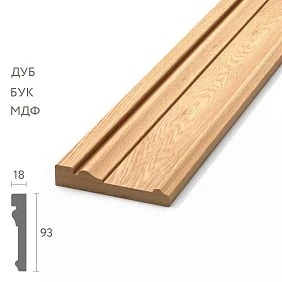
buy MDF skirting boardas a finishing strip — a pragmatic and often optimal solution. MDF profile has stable dimensions, it does not warp from humidity fluctuations (within moderate limits), it is easy to cut, sand, and paint.
The main advantage of MDF for finishing wall panels is perfect evenness for painting. No texture, no pores, no wood grain pattern. The surface accepts paint evenly, the seam is puttied and painted over without a trace.
When to choose MDF:
-
When the panel is for painting and the entire system will be painted
-
When precise geometry without deviations is needed
-
When the budget requires optimization
-
For modern white or light interiors
-
For neoclassical layouts under enamel
MDF strip as a finishing profile — perfect where you want "seams to be invisible", where the profile blends into the finish.
Wood and solid wood — texture, warmth, premium character
to buy wooden baseboardorwooden moldingas a finishing strip for panels — the choice of those who build interiors with natural materials.
A wooden finishing strip next to wooden panels creates a monolithic image. One wood species, one surface treatment, one living texture. Oak with oak, beech with beech—this is not just aesthetics, it's professional logic.
Wooden profile takes well to varnish, oil, or wax — with the possibility of exact color matching to the panel. If necessary — painted in any color. Solid wood profile allows for complete restoration after years: sanding, new varnish — and like new.
When to choose wood:
-
When wall or slat panels are made of natural wood
-
When the interior is built on natural materials
-
When visual unity of material is important
-
For classic, country, loft, and library interiors
-
For those who value durability and the possibility of restoration
Best wood species:
-
Oak — dense, wear-resistant, with a pronounced open grain
-
Beech — smooth, uniform, ideal for white enamel
-
Ash — light, with an expressive pattern, for modern Scandinavian aesthetics
-
Pine — lightweight and affordable, for cottage and budget projects
Polyurethane — relief, classic, easy installation
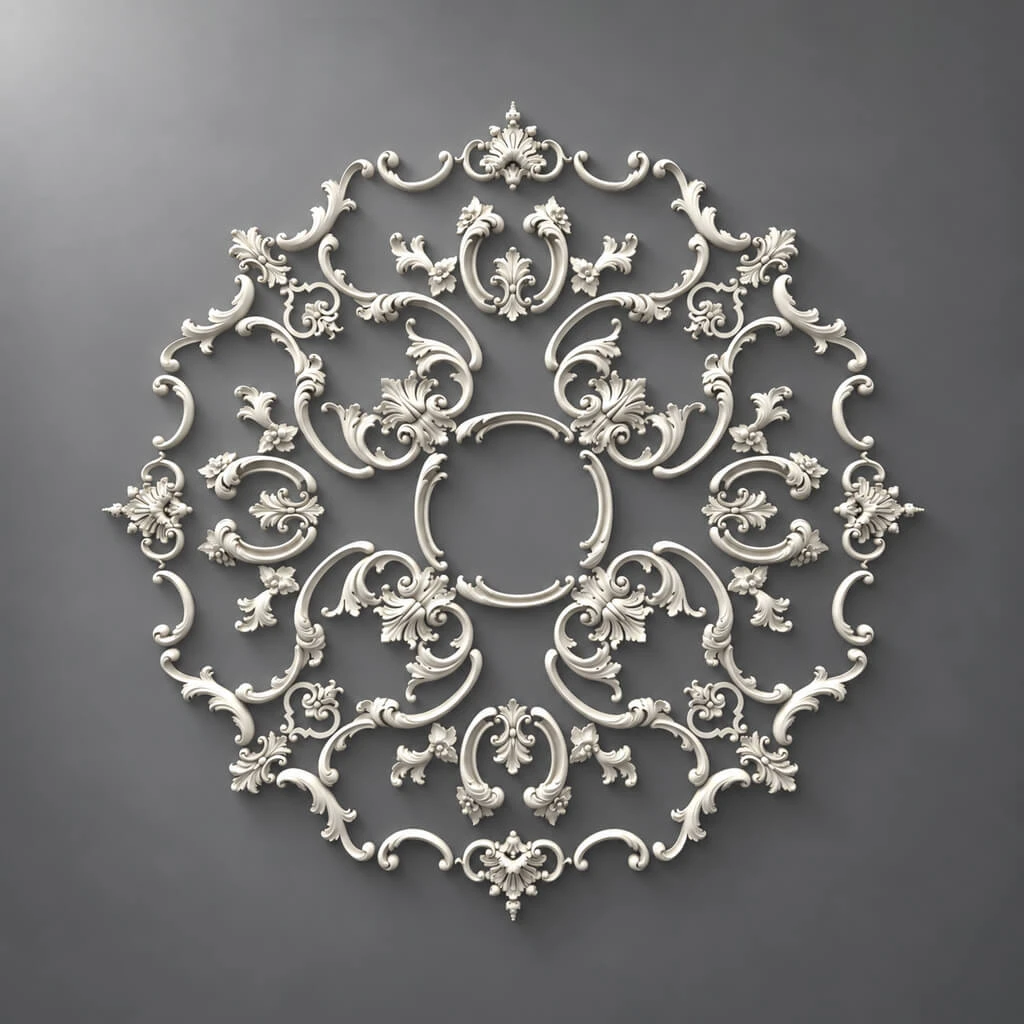
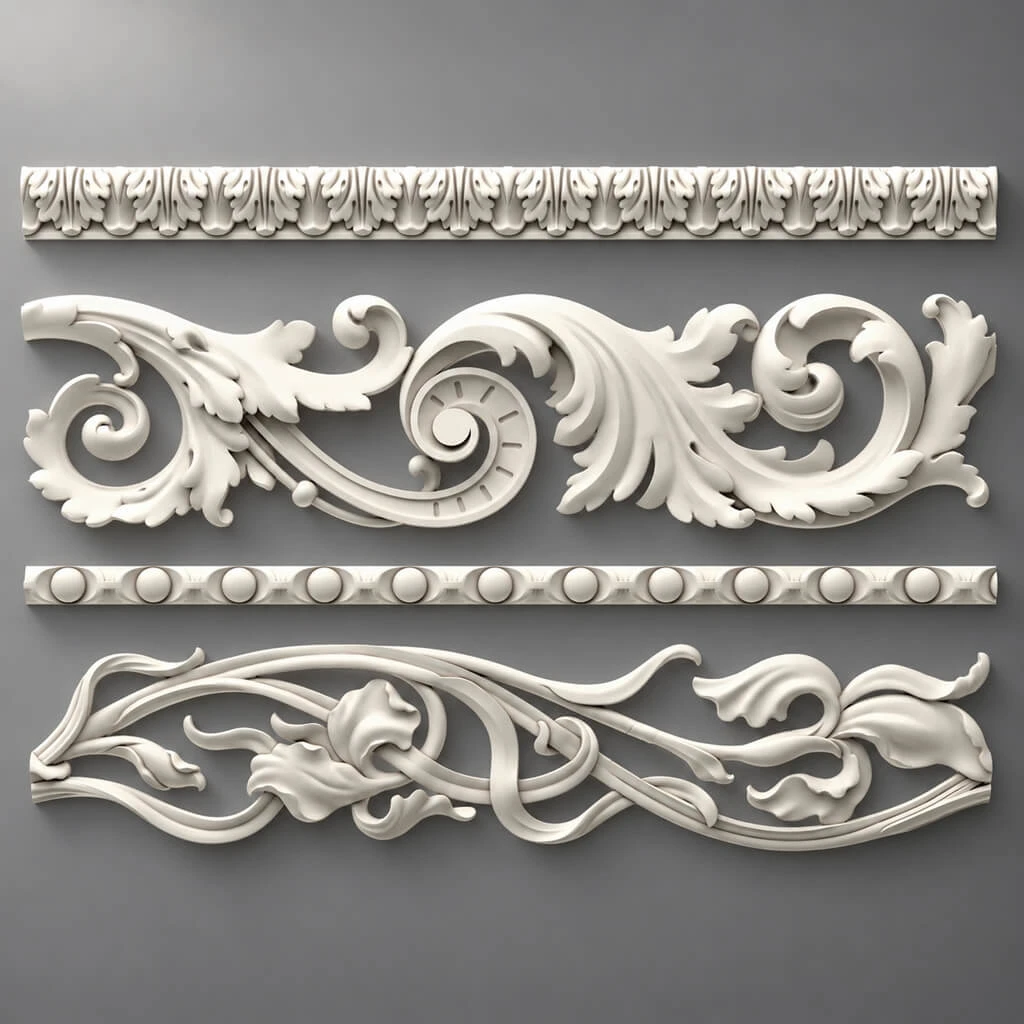
Polyurethane profiles for interiors— specialization for classic and rich decorative schemes. Polyurethane reproduces complex relief profiles without expensive manual milling. It is lightweight, cuts well, and adheres to almost any base.
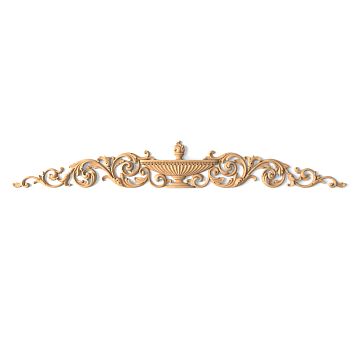
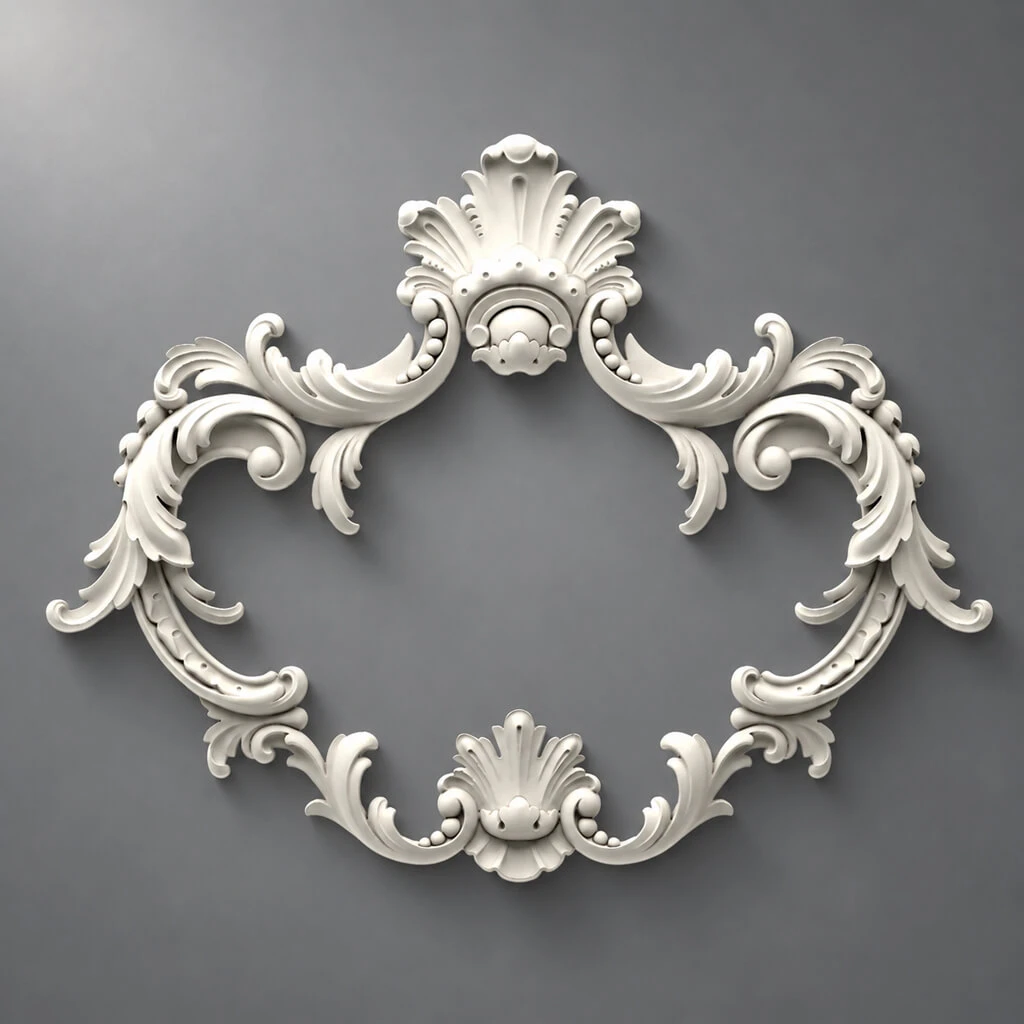
Buy moldings— is a polyurethane decor for classic interiors. It is used both as an independent ornamental element and as corner inserts, overlays, and accents at joints.
When to choose polyurethane:
-
For classic interiors with rich stucco decor
-
When a complex relief profile is needed without expensive solid wood
-
For corner overlays and decorative inserts at profile intersections
-
When everything will be painted white anyway
How to choose a baseboard strip: seven parameters without error
By panel type
The type of wall panel is the first thing that determines the choice of profile.
| Panel type | Recommended profile |
|---|---|
| MDF panel for painting | MDF profile orwooden moldingfor painting |
| Wooden panel, veneer | Wooden profile of the same species |
| Wooden slat panel | Wooden planksand profile of the same grade |
| Natural wood panel, varnish | Wooden profile for the same varnish |
| Decorative PVC panel | MDF for painting or neutral profile |
By panel thickness
This is a critically important parameter that is most often overlooked when ordering. The finishing profile must precisely cover the panel thickness—or be wide enough to conceal the end with an overlap.
Standard MDF panel: 6–18 mm. Wood panel: 16–24 mm. Slat system: total thickness of the slat with the base—15–40 mm. The profile is selected based on the actual installed thickness, including the mounting gap.
By installation location
Bottom edge of the panel → horizontal finishing strip/baseboard. Top edge → horizontal profile or wooden cornice. Side edge → vertical profile or corner piece. Internal corner → Wooden angle or insert. External corner → L-shaped protective profile.
By the width and height of the profile
The finishing strip for a wall panel must overlap the panel end and the adjoining surface without creating a bulky protrusion.
Approximate dimensions:
-
Narrow finishing strip: width 15–25 mm, thickness 8–12 mm
-
Standard finishing strip: width 25–45 mm, thickness 10–15 mm
-
Wide framing profile: width 45–70 mm, thickness 12–18 mm
For thin MDF panels (6–10 mm) — a narrow strip. For wooden panels of greater thickness — a wider profile.
By interior style
Straight smooth profile without relief — Scandinavian, minimalist, modern interior. Profile with a slight bevel — neoclassical and soft modernity. Ornate classic profile — Empire, classic, rich traditional interior.wooden plankwith minimal bevel — loft and industrial aesthetic.
By color and finish
The principle of systematicity works here: the color of the finishing strip must be coordinated with the color of the panel.
Three strategies:
-
Color match — the strip blends with the panel, creating a sense of monolithic material
-
Tone match, but with a slightly darker or lighter shade — adds depth without sharp contrast
-
Intentional contrast — for example, a white strip on dark slats, or a dark profile on a light panel. A design solution requiring systematic application
How to choose a profile for slatted panels
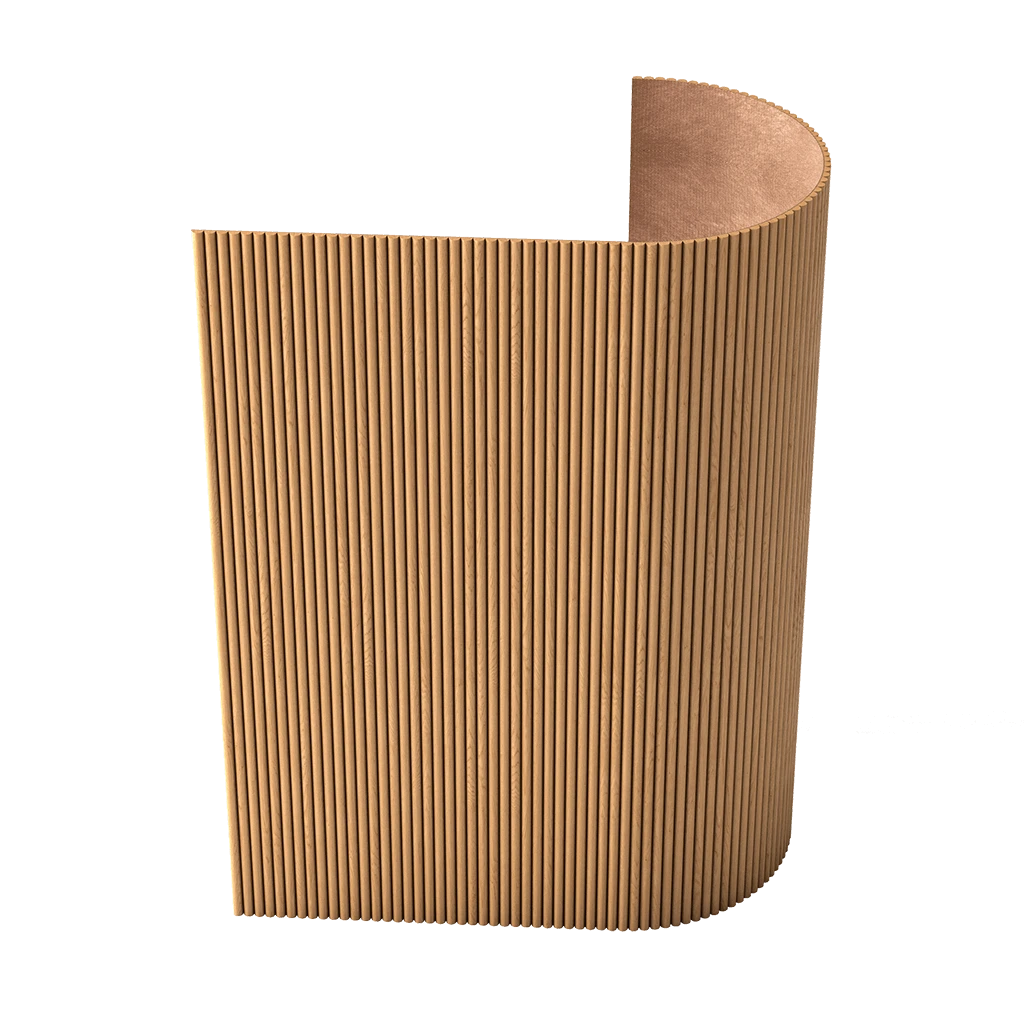
Rafter panels— a separate story. They have specifics: slats create a vertical rhythm, and the finishing profile should either harmonize with this rhythm or intentionally interrupt it.
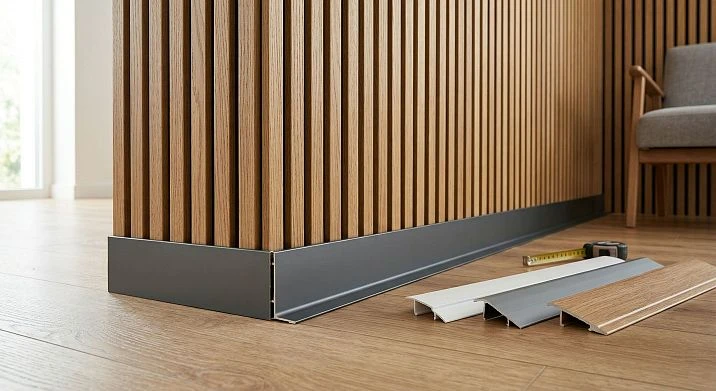
For a slat system, the bottom finishing strip is a horizontal bar that covers the lower ends of the slats. The width of the strip should be comparable to the width of the slat or create a noticeable contrast—'a thin line against the wide field of slats.'
What solutions pair with wall panels: a complete system
The baseboard strip is one element of the system. For a wall panel to look professional, every point of contact must be carefully considered.
Moldings as dividers and framing
Moldings for walls to buy—means obtaining horizontal or vertical profiles that function as framing elements. As the top finish of a panel, a horizontal molding creates a clear dividing line between the panel zone and the upper part of the wall.
Decorative slats within the panel zone
Wooden planks—within the system create a vertical rhythm. Combined with the bottom baseboard strip and the top finishing profile, they form a complete architectural zone.
Corner pieces for angular junctions
Wooden angle—are specialized elements for corners. Where a wall panel meets a room corner, the corner piece covers the junction of two planes without complex miter cutting of the panels.
Slat panels as the primary framing object
Buy slatted panels for wall finishing— means choosing a system that already includes framing profiles. A baseboard at the bottom, a transition molding at the top, and corner pieces on the sides—this is the complete system for a slatted panel.
Decorative overlays for layout corners
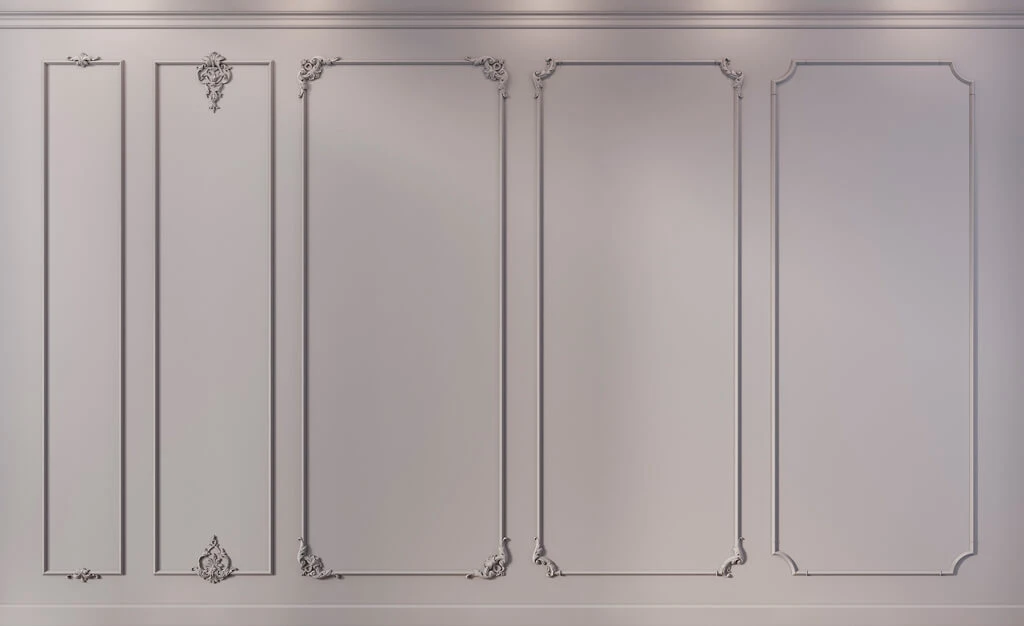
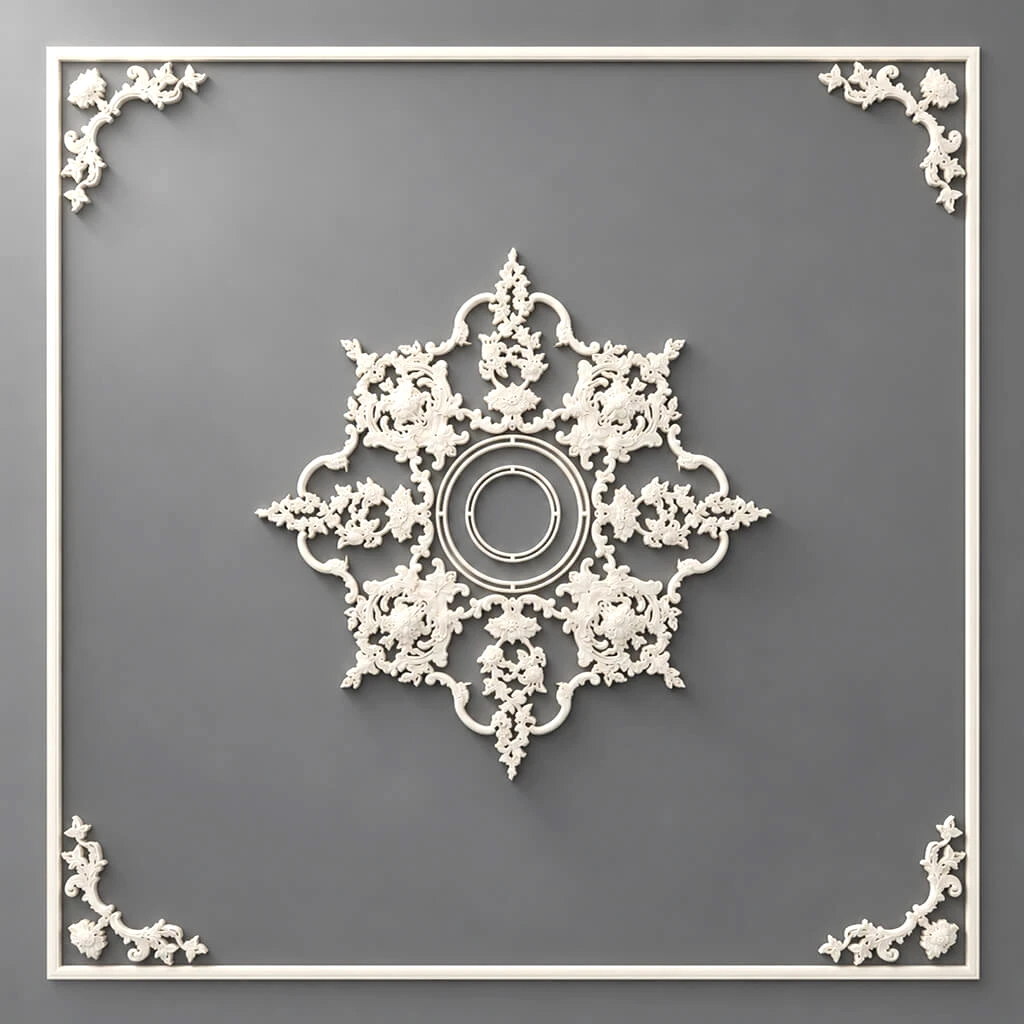
Buy decorative elements— corner overlays for profile intersections. Where a horizontal finishing strip meets a vertical side profile, the corner overlay conceals the cut and adds an architectural accent.
Cornices for top finishing
wooden cornice— the top finishing of a wall panel that simultaneously covers the gap between the top of the panel and the ceiling and creates a horizontal architectural belt. In a classic interior—with a profile that matches the ceiling cornice.
Molding for classic inserts
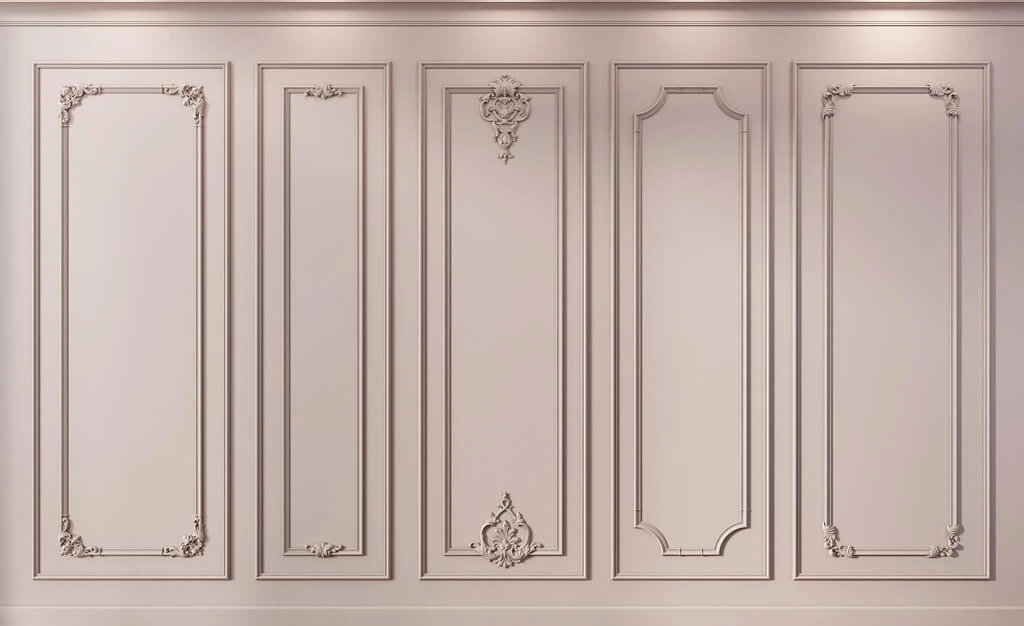
wall molding for sale— polyurethane decorative inserts for corners of frames and profile intersections in a classic panel system.
Profile for a specific task: practical table
For MDF wall panel
MDF Skirting Board— or MDF molding—the perfect match for an MDF panel. Both elements are painted the same color and have the same surface density. The system looks monolithic. Joint filler + painting—and the seams are invisible.
For wooden panel
Finishing wooden plank from the same species. If the panel is oak — the plank is also oak. Toning with one compound at the final installation stage. Result — a wall panel with a frame made of one material.
For slatted panel
Bottom plank horizontal —Wooden baseboardfrom the same species. Top — cornice or molding. Sides — corner or vertical profile. Slats between them create vertical rhythm. The entire block — an independent architectural element.
Buyslatted panels for wallswith a pre-designed framing system — the right step that saves time and delivers a proven result.
For panel for painting
— is a horizontal element that frames the room at the bottom of the walls where the wall meets the floor. Skirting boards perform several functions: they hide the technological gap between the wall and floor covering (necessary for thermal expansion), protect the lower part of the wall from mechanical damage, create visual completion, and may conceal wiring.— the clear choice. Smooth surface without pores, precise profile, simple finishing. Painting the entire system in one color — and the wall becomes architecturally complete.
For a classic interior
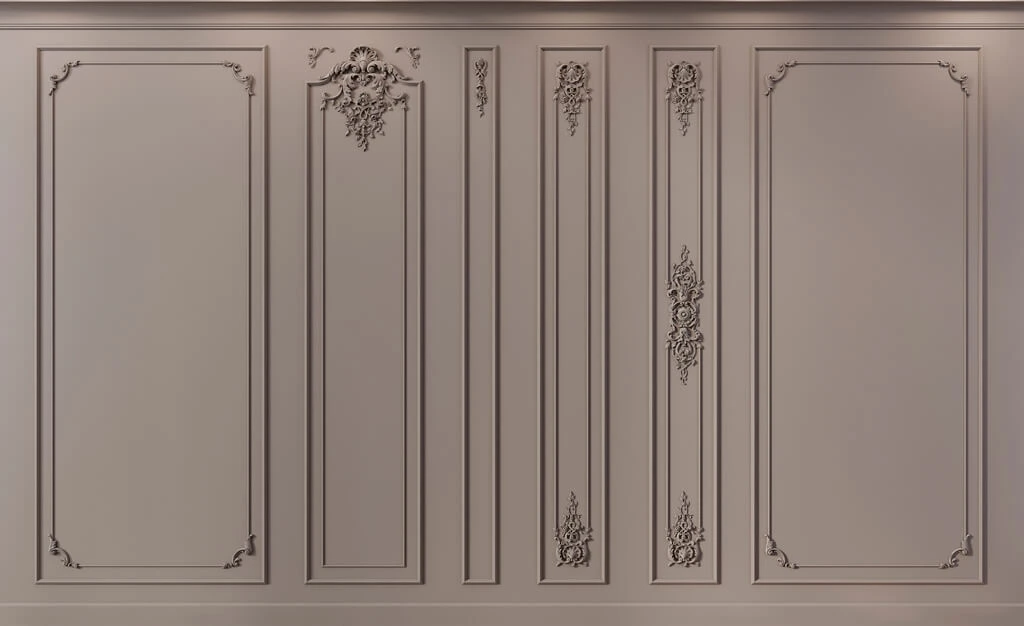
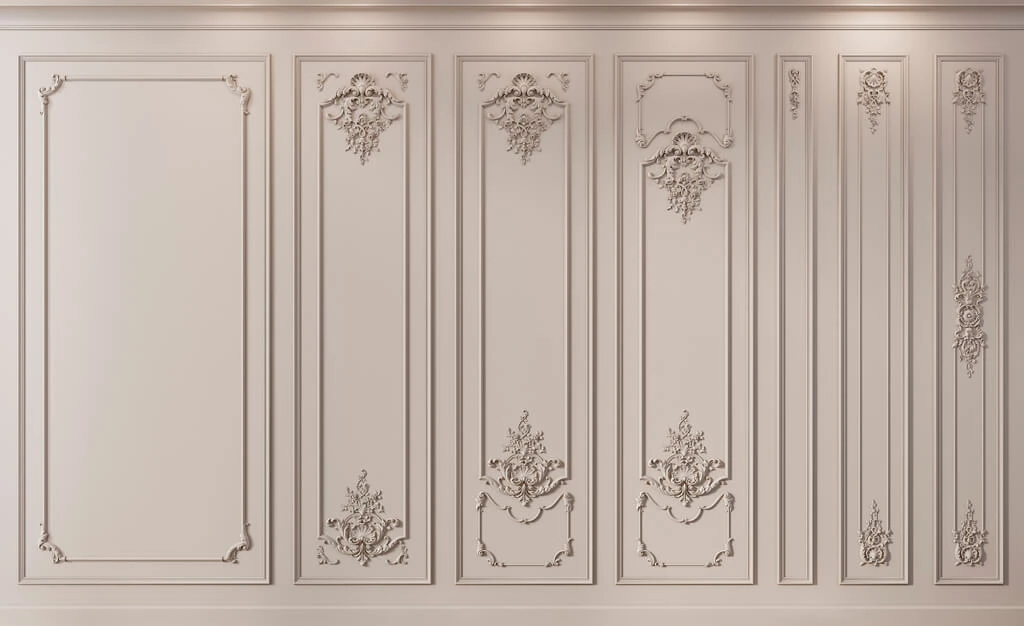
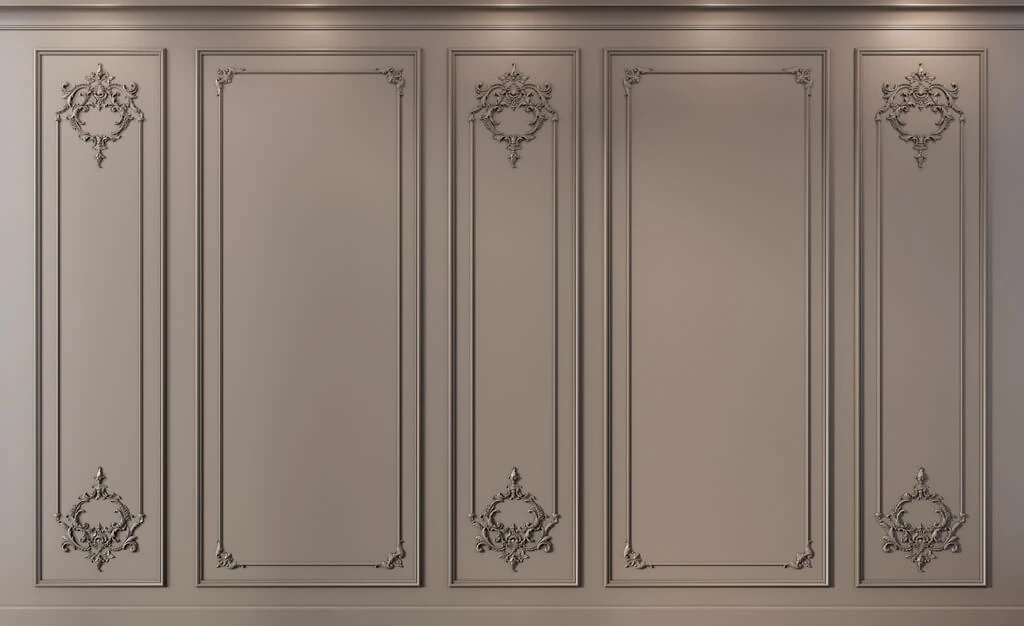
Rich figured profile — eitherSolid wood molding, orpolyurethane profilewith a classic relief.sculpted appliquésat the corners of the frame. Toning or white enamel — depending on the color scheme.
For a modern minimalist interior
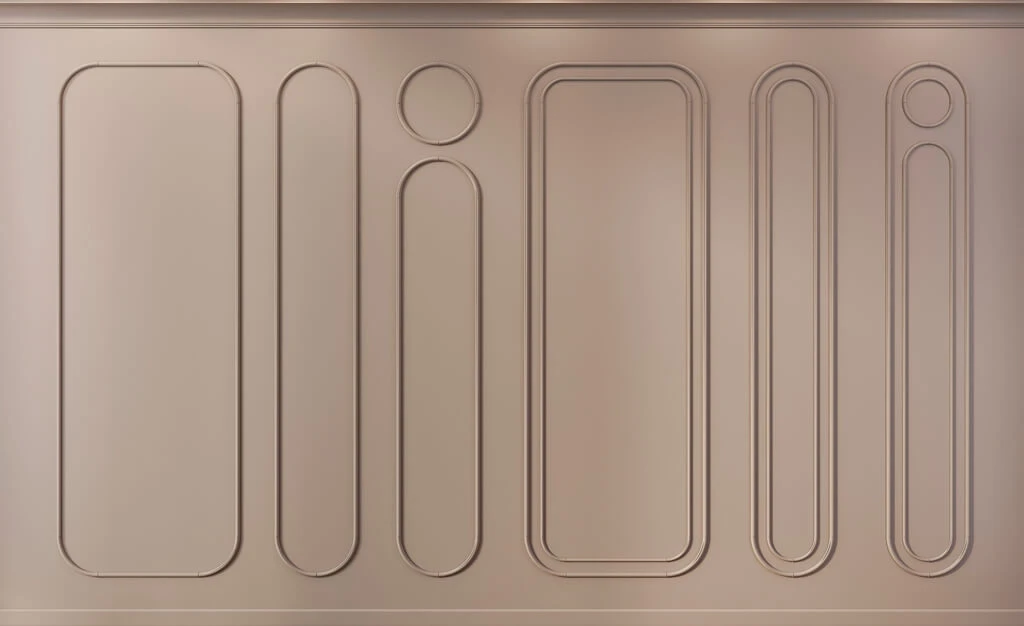
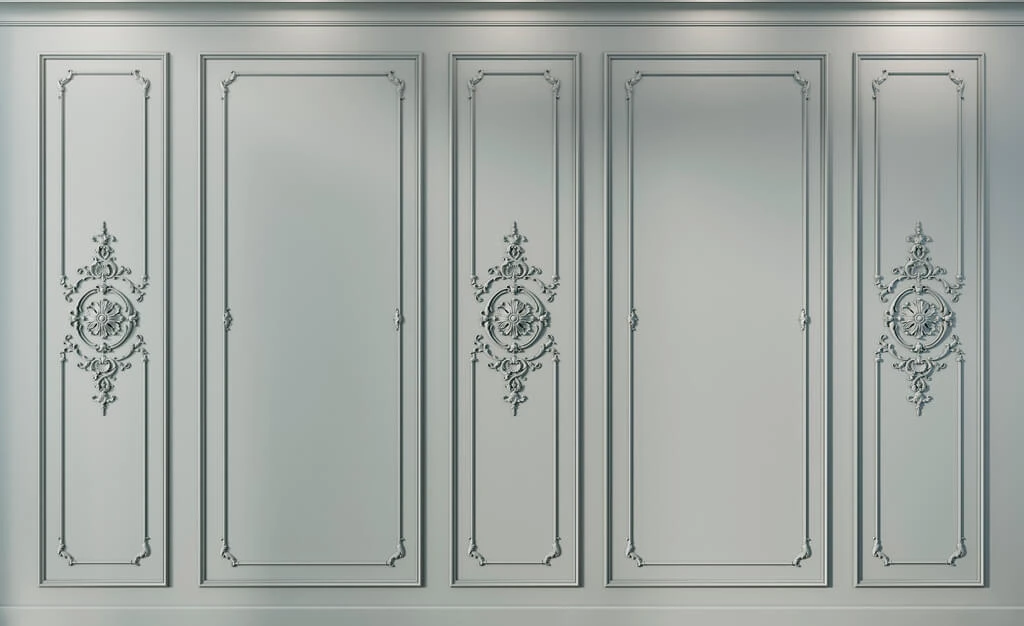
Straight, thin, relief-free strip.MDF profilein the color of the wall or a wooden batten with a thin bevel. No ornaments, no covings — only a clean line that marks the edge and recedes to the side.
Common mistakes when choosing a strip for a wall panel
Choosing a profile without considering the panel thickness
The strip is chosen by eye, without measurement. Result: the profile does not cover the end, sticks out with a gap, or, conversely, is too narrow and does not cover the joint. Before ordering — measure the exact thickness of the panel in the installed state, taking into account the adhesive and fastening layer.
Using a floor skirting instead of an extension strip
The most common mistake. FloorWooden baseboardDesigned for horizontal floor-level installation. It features a profile optimized to cover the expansion gap in the flooring. Using it as a top finishing trim for the panel is technically possible but often results in incorrect visual proportions.
Do not account for corner joints
The trim is selected, purchased—and only during installation is it discovered that for the corner, either a specialAngle, or a 45° cut is needed. Neither a corner insert nor a miter saw is at hand. This issue should be resolved in advance.
Do not plan transitions to doors, floors, ceilings
Wall panel skirting trim is part of a system. It interacts with other profiles and elements. If you don't plan how the finishing trim will join with door casings, floor skirting, or ceiling cornices, you'll end up with a jumble of mismatched details.
Do not consider material and finish
Chose an MDF skirting, while the entire panel is under lacquer with a natural oak texture. The result is a clear material mismatch that is immediately noticeable. Or the opposite: took a wooden profile, but the entire system was supposed to be painted—and now the wood grain shows through the white enamel. The finish is planned in advance.
Step-by-step algorithm for selecting wall panel skirting trim
Here is a practical sequence used by any competent finisher or designer:
-
Identify all contact points of the panel: bottom, top, side edges, corners
-
Measure the thickness of the panel in the installed state
-
Select material — according to the panel material
-
Select finish — for varnish, for oil, for painting
-
Choose profile size — taking into account thickness and desired visual effect
-
Resolve corner points — corner piece, 45° cut or overlay
-
Check consistency with other profiles in the system
-
Buy with a 10–15% reserve for waste during cutting and unforeseen situations
Why assembling a system for wall panels is profitable at STAVROS
When you needbuy strip for wall panel— it's important to get not just a 'suitable size', but precisely the profile that will fit into the system without modifications. This means matching the wood species, tinting, profile character, and surface quality.
STAVROS manufactures and supplies a complete range for professional wall panel finishing:
-
solid wood skirting boards— finishing strips made of oak and beech, kiln-dried, geometric tolerances ±0.1 mm
-
MDF Skirting Board— profiles for painting for systems with painted panels
-
Moldings from solid wood— decorative profiles for top finishes and side framing
-
Wooden angles— profiles for internal and external corner joints
-
Wooden rails— for dividing elements and perimeter systems of slatted panels
-
Rafter panels— complete system with framing profiles in one wood species
-
Decorative Inserts— corner inserts and accent details
-
polyurethane products— moldings and profiles for classic interiors
A systematic approach is the main advantage. All profiles in the required cross-sections, in the required wood species, with uniform tinting. No need to visit multiple suppliers and then struggle with joints of mismatching materials.
STAVROS is when the final piece fits perfectly into place.
FAQ: answers to questions about the skirting board for wall panels
Which skirting board is needed for a wall panel?
It depends on the installation location. The bottom edge — finishing horizontal skirting board or Wooden baseboard. The top — molding or Cornice. The side — vertical profile or Angle.
How to cover the open edge of a wall panel?
A finishing profile with a U- or L-shaped cross-section that covers the panel end. For wooden panels—Wooden profileof the same wood species. For MDF—MDF Skirting Board.
How to finish the joint between a wall panel and the wall?
wooden corner piece— if the joint is corner. With a vertical cover strip orwooden molding— if the joint is on a flat plane.
Is MDF profile suitable for a wooden panel?
For painted systems — yes. For a panel under varnish with a natural texture — not recommended: the difference in material will be noticeable.
Can you paint a wooden profile for a panel?
Yes. Wooden profiles are painted after sanding and priming. Beech — ideal for white enamel. Oak — for tinted varnish or oil.
What to choose for a slatted panel?
Rafter panelsare framed with horizontal profiles at the top and bottom and vertical ones on the sides. All profiles are from the same wood species as the slats.
Is a separate profile needed for a corner?
Yes.Wooden angleor a special corner profile. Cutting at 45° is an alternative, requiring precision and experience.
How to match the color of the trim to the panel?
Perfectly — in the same tint. If an exact match is not available — slightly darker than the main tone of the panel. Sharp contrast — only as a deliberate design move.
Can molding be used instead of a baseboard trim?
Yes, in the upper and side zones —wooden moldingit perfectly serves as a framing profile. In the lower zone near the floor — a baseboard or a special finishing trim is needed.
Where to buy wall panel profile in St. Petersburg?
In the STAVROS catalog:moldings and profiles, Rafter panels, corners, Decorative Inserts— a complete system in one place.
How far in advance should the trim be selected?
At the stage of finishing design — before ordering the panels. Then the entire system is purchased from the same wood species and from one supplier, without coordination problems.
Is professional installation necessary?
For standard straight walls — self-installation is possible. For corner joints, trimming for non-standard angles, complex decorative layouts — it's better to hire a professional.
The finishing trim for a wall panel is the final point in the finishing story. Not the first or most noticeable detail — but the one that decides whether the result will look professional. One correctly chosen profile can elevate the perception of the entire wall to a fundamentally new level.
STAVROS offers a full range ofprofiles for wall panelsmade of natural wood and MDF — finishing trims, framing moldings, corner profiles andRafter panelswith a complete mounting system. All products are made from kiln-dried natural solid wood — precise geometry, proven quality, wide selection of wood species and cross-sections. STAVROS — where every detail falls into place.