Article Contents:
- Architectural Rhythm and Verticality in Interior Design
- Vertical Dominance of the Space
- Horizontal Anchors of Composition
- Mathematics of proportions
- Symmetry and Asymmetry
- Wooden Plank Finishing: Visual Elevation
- Techniques for Visual Height Increase
- Lighting Direction of Verticals
- Transition of Planks to Ceiling
- Scale and Proportions of Planks
- Skirting Board as a Horizontal Line of Composition
- Functions of Skirting Board in Composition
- Baseboard Height and Visual Effects
- Skirting Board Profile and Styling
- Color Strategies for Skirting Board
- Optical Balance and Perception of Volume
- Vertical Dominance
- Horizontal Dominance
- Balance of Forces
- Influence of Lighting on Balance
- STAVROS Designers' Recommendations
- Principles of Composition
- Material Solutions
- Installation Solutions
- Stylistic solutions
- Common Mistakes
- Conclusion
- Frequently Asked Questions

Interior architecture is, above all, the geometry of lines that create the visual rhythm of space.Ceiling baseboard woodenandA ceiling made of wooden planksThey form the upper boundary of the room, while the baseboard defines the lower one. Between these horizontal lines unfolds a vertical symphony of plank structures, controlling the perception of height, volume, and proportions. Understanding the interaction of horizontal and vertical elements is key to creating a harmonious architectural space.


Architectural Rhythm and Verticality in Interior Design
Rhythm in architecture is the regular repetition of elements, creating an ordered structure of space.Wooden Plank 20x20It is installed at regular intervals, forming a metric system that organizes visual perception of the wall. This rhythm can be monotonic - with equal intervals between elements, or gradient - with gradual changes in intervals, creating dynamism and movement.




Vertical dominance of space
Vertical lines have a powerful psychological impact—they reach upward, creating a sense of growth, aspiration, and grandeur.wooden planks on the wallThey visually increase the height of the room, even if the actual dimensions remain unchanged. The eye follows the vertical lines, automatically perceiving the space as higher and more spacious.
Wooden planks in interior designThey create a vertical module that structures the wall plane. The width of the slat and the gap between slats form the basic unit of rhythm.Buy 20x20 wooden slatA width of 20 millimeters with a 30-millimeter gap creates a 50-millimeter module—the basis for all compositional calculations.
Alternating heavy and light vertical elements creates a complex rhythm.Wooden plankA 40-millimeter-wide slat alternates with a 20-millimeter slat, forming a syncopated rhythm, more dynamic than monotonous repetition.Finishing with wooden stripsIt uses this technique to create visual interest.
Our factory also produces:


Horizontal Composition Anchors
Vertical slats require horizontal anchors that ground the composition and create reference points.Wooden baseboardAt the lower part of the wall, it serves as a visual base for vertical elements.Buy wooden ceiling skirtingIt completes the composition at the top, creating a frame for the vertical rhythm of the slats.
Horizontal lines calm the dynamism of verticals, creating a balance of forces.wooden corniceAt the junction of the wall and ceiling, it stops the upward movement of vertical slats, creating compositional closure.wooden baseboardIt forms a strong base from which the vertical rhythm begins.
Intermediate horizontal elements divide the wall height into proportional parts.Decorative wooden moldingsAt a height of 90–120 centimeters, they create a classic panel structure. Slats may be placed only between the skirting board and molding, forming a limited composition, or continue upward, crossing horizontal lines and creating layering.
Get Consultation
Mathematics of proportions
The ratio of room height to the width of the slat module determines the number of vertical elements and the density of the rhythm. For a room 2.7 meters high and 4 meters wide, using a 50-millimeter module (20 mm slat + 30 mm gap), there are 80 vertical elements per wall. This density creates a frequent rhythm, suitable for accent walls.
A sparse rhythm with a 100–150-millimeter module forms a more relaxed structure.Wooden rail 20x40A 40-millimeter-wide slat with a 100-millimeter gap creates a 140-millimeter module—approximately 28–30 slats per 4-meter-wide wall. This structure allows the wall plane to be visible between slats, creating a balance between cladding and base surface.
The golden ratio is applied to the proportions of vertical and horizontal elements.Height of MDF skirting boardIt relates to the height from skirting board to ceiling cornice as 1 to 1.618. With a 100-millimeter skirting board, the distance to the cornice is approximately 162 millimeters to maintain the golden ratio.MDF skirting board 100 mmIt forms the basis for such calculations.
Symmetry and asymmetry
Symmetrical placement of vertical slats relative to the central axis of the wall creates a classic, orderly arrangement.Wooden planks for decorationThey begin from the corners with an equal number of elements on each side. The central axis may be emphasized by a wider slat or gap, creating a compositional accent.
Asymmetrical placement adds dynamism and modernity. Slats occupy only part of the wall width—not the entire width, for example, two-thirds from the left edge.Wall decoration with wooden slatsIt creates visual balance with an empty zone on the right, where furniture or artwork can be placed.
The variable density of the slats from one wall edge to another creates a gradient rhythm. Starting with dense placement (40 mm module) and gradually increasing the gaps to a sparse structure (120 mm module), a visual movement is created.Wooden planks on walls and in interiorsSuch a configuration directs the gaze along the wall.
Wooden slat cladding: visual elongation
Vertical lines have a powerful visual effect of elongating space vertically.Wooden slats from floor to ceilingCreate continuous vertical axes that direct the gaze upward. Even in a room with a standard ceiling height of 2.7 meters, this technique creates a sense of height and airiness.
Techniques for visually increasing height
Continuity of vertical lines is the key factor in the elongation effect.Wooden slats on the wallMust run from the floor to the ceiling without interruption. Any horizontal element crossing the slats breaks the vertical line and reduces the effect.Mounting wooden slatsIs done discreetly to preserve the purity of vertical lines.
The contrast of vertical slats with horizontal surfaces enhances the effect.White wooden slatOn a dark wall creates maximum contrast, emphasizing verticality. The reverse option — dark slats on a light background — works similarly.Black wooden slatCreates a graphic structure on white walls.
The thickness and width of the slats affect the strength of the effect. Thin slats 15–25 millimeters create light, dynamic verticals.Thickness of wooden slat15 millimeters at 20 millimeters wide forms graphic lines. Heavy slats 50–80 millimeters create a more subdued rhythm, where verticals do not dominate as aggressively.
Lighting direction for verticals
Lighting dramatically changes the perception of slat structures.Wooden slats with backlightingCreate a dramatic effect, where light coming from below between the slats enhances verticality. LED strips are hidden at the base of the slat structure, light rises along the verticals, creating an illusion of infinite height.
Backlighting creates silhouettes of the slats against a glowing background. A backlight is installed at a distance from the wall behind the slat structure.Internal cladding with wooden slatsWith a gap from the wall allows placing LED strips that create soft glow between the slats and the base surface.
Lighting directed from top to bottom creates play of light and shadow on the slat relief. Spotlights or track lights are directed along the wall at a sharp angle, light glides along the vertical edges of the slats, creating deep shadows in the gaps.Price of wooden slatsIncludes material cost, but lighting design requires a separate budget.
Transition of slats to the ceiling
The maximum effect of visual lightness is achieved by extending vertical rails to the ceiling.A ceiling made of wooden planksIn the same plane as the wall rails, it creates a continuous surface. The rails smoothly transition from vertical to horizontal at the junction of the wall and ceiling, wrapping around the corner. This technique visually erases the boundary between the wall and ceiling, creating a sense of a unified volume.
Ceiling rails wooden photoDemonstrates various ways of such a transition. Rails can run from one wall across the ceiling to the opposite wall, creating an arched effect. Or transition to the ceiling only in one zone, accenting a functional area—for example, above a sofa or dining table.
Ceiling wooden railCan be the same section as the wall rail, or differ in size. Thinner ceiling rails create a sense of lightness in the upper plane. Thicker rails emphasize structural integrity and create a sense of solidity.
Rail size and proportions
The height of the room dictates the optimal rail size.Wooden rail 10x20Suitable for standard ceilings 2.7 meters high, creating thin verticals that do not overwhelm the space.Wooden rail 20x40 buyOptimal for rooms 3-3.5 meters high, where thin rails will disappear into the volume.
The ratio of rail width to the gap between rails affects visual density. An equal 1:1 ratio creates a balanced rhythm.Wooden Plank 20x20A 20 mm wide rail with a 20 mm gap forms a regular structure. A 1:2 ratio (30 mm rail, 60 mm gap) creates lightness. A 2:1 ratio (60 mm rail, 30 mm gap) creates density and mass.
Width of wooden railDetermines the character of the composition. Narrow rails 15-30 mm create a graphic, almost linear structure. Medium rails 40-60 mm create a balanced, architectural look. Wide rails 80-120 mm create a monumental effect, conveying a sense of power.
Baseboard as a horizontal compositional line
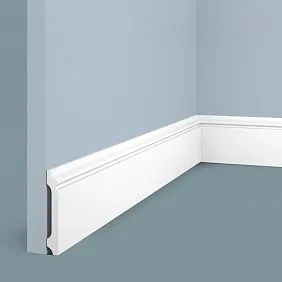
Horizontal elements in the architecture of space create a sense of stability, calm, and grounding.Baseboard MDFForms a critically important horizontal line at the bottom of the wall. This line visually separates the floor plane from the wall’s verticality, creating architectural logic and completeness.
Functions of baseboard in composition
Visual base for vertical elements — the primary function of the baseboard.Floor wooden skirtingServes as a platform from which vertical rails begin. Rails may descend to the floor, overlapping the baseboard, or terminate at the top edge of the baseboard, emphasizing its role as a foundation.wooden skirting board purchaseShould be considered in light of this interaction.
The horizontal frame of the space is created by the combination of baseboard and ceiling trim.and paint it to the desired shade — standard practice in modern design. It is important to use special wood finishes that allow the material to breathe.at the bottom andCeiling baseboard woodenat the top create a frame within which the vertical rhythm of rails develops. These horizontals limit the dynamics of the verticals, creating a complete composition.
Zonal color separation is achieved through the contrast of baseboard and wall.White MDF Skirting BoardOn a dark wall, it creates a clear horizontal line separating the lower zone.Black MDF baseboardOn a light wall - reverse effect.Painted MDF skirting boardAllows precisely selecting the shade for any compositional task.
Baseboard height and visual effects
Standard skirting board height of 80-100 millimeters creates a delicate horizontal line that does not dominate the composition.MDF skirting board 80Optimal for most residential interiors with standard ceilings. This height ensures functional protection of the wall-floor junction without drawing excessive attention.
High skirting board 120-200 millimeters creates a pronounced horizontal line, visually reducing the height of the wall.Wide wooden floor skirting boardUsed in rooms with very high ceilings to create a more intimate scale. High skirting board forms a visual plinth, giving the interior a sense of solidity and prestige.
Low skirting board 40-60 millimeters creates a minimalist solution.MDF skirting board 60Slightly noticeable, does not interrupt the wall's plane. This solution suits modern minimalist interiors where line purity without excessive ornamentation is important.Straight MDF skirting boardWithout profiling enhances minimalism.
Skirting board profile and style
Classic profiled skirting board with moldings and ovals creates traditional architectural expressiveness.Buy wooden ceiling skirtingWith a decorative profile emphasizes classic style. Such a skirting board creates a play of light and shadow on its surface, adding plasticity to the horizontal line.
Modern skirting board with minimalist profile - rectangular or trapezoidal cross-section without decorative elements.MDF Skirting BoardSimple shape creates a clear geometric line.Hidden MDF skirting boardWith shadow gap - ultra-modern solution where the skirting board is almost invisible, creating an effect of the wall floating above the floor.
Skirting board with cable channel combines functionality and aesthetics.MDF skirting board with cable channelAllows hiding wires while preserving the purity of the horizontal line. Removable front panel provides access to utilities without dismantling the entire skirting board.
Color strategies for skirting boards
Skirting board in wall color creates continuity of the vertical plane.— is a horizontal element that frames the room at the bottom of the walls where the wall meets the floor. Skirting boards perform several functions: they hide the technological gap between the wall and floor covering (necessary for thermal expansion), protect the lower part of the wall from mechanical damage, create visual completion, and may conceal wiring.Painted to match wall color, practically disappears from view. The horizontal line remains but does not dominate. This solution suits interiors where vertical surface purity is important.
Skirting board in floor color creates a visual continuation of the horizontal plane.MDF skirting board oakMatching oak floor color visually expands the floor area, making the room appear more spacious.MDF skirting board colorWood color creates warmth of natural material.
The contrasting skirting board creates a pronounced horizontal line.MDF floor skirting board, whiteOn a dark floor and dark wall, it forms a light stripe dividing the horizontal and vertical.Buy white MDF skirting board— a popular solution for classic and Scandinavian interiors.
Optical balance and perception of volume
The interaction of vertical and horizontal lines creates a visual geometry of space.Wooden planks in interior designThey form a vertical rhythm, skirting boards are horizontal boundaries. The balance of these forces determines whether the room will be perceived as tall and narrow or low and wide.
Vertical dominance
When vertical rails dominate, the room appears higher.wooden planks on the wallFrom floor to ceiling without horizontal interruptions, they create maximum height effect.wooden baseboardA minimum height of 50-60 millimeters does not hinder the vertical movement of the gaze.
Thin vertical rails enhance the effect of upward movement.Buy wooden rail 10x20It creates light graphic verticals. A frequent rhythm with 20-30 millimeter gaps forms a dense structure where vertical lines visually merge, creating an overall upward movement.
The contrast of rail and wall colors enhances verticality.White Wooden PlankOn a dark wall, it creates maximum contrast. Each vertical is clearly readable, and the cumulative effect of upward movement is significant.Black wooden slatOn a light background, it works similarly.
Horizontal dominance
When horizontals dominate, the room appears wider and lower.Wide wooden floor skirting boardAt a height of 150-200 millimeters, it creates a powerful horizontal line.Ceiling baseboard woodenAt the same height at the top, it forms a horizontal frame that reduces visual height.
Intermediate horizontal elements interrupt verticals.Polyurethane moldings in interior designAt a height of 90-120 centimeters, they divide the wall into sections. Rails stopping at the molding do not create a continuous vertical, and the effect of upward movement is reduced.
Horizontal placement of rails creates the opposite effect of verticals.Wooden railsHorizontally on the wall, they visually expand the space. This solution is suitable for narrow rooms — corridors, bathrooms — where it is important to create a sense of width.
Balance of forces
Ideal balance is achieved by equalizing vertical and horizontal elements.MDF skirting board 100 mmat the bottom andwooden corniceAt the same height at the top, they create a symmetrical frame.Wooden planks for decorationBetween them, they occupy about 80 percent of the wall height, creating a balance.
The proportion of verticals and horizontals affects perception. When verticals dominate (70-80 percent of area), the space appears to stretch upward. When horizontals dominate (strong baseboards and cornices, short planks), the space appears to expand. A 50:50 ratio creates a harmonious neutral balance.
Dynamic balance uses variable element density. In one part of the room, verticals dominate (dense planks, thin baseboard), while in another, horizontals dominate (wide baseboard, sparse planks). This creates visual movement, making the space feel more complex and interesting.
Influence of Lighting on Balance
Light from top to bottom enhances verticality — it emphasizes shadows between planks, creating vertical bands of light and shadow.Wooden slats with backlightingLight from bottom to top maximally enhances the vertical effect.
Side lighting creates horizontal shadows from the baseboard and cornice.MDF Baseboard with LightingWith LED strip, it creates a glowing horizontal line. Such lighting emphasizes horizontality, visually expanding the space.
Adjustable lighting allows controlling the balance depending on time of day and mood. During the day — top lighting, emphasizing verticals and height. In the evening — bottom baseboard lighting, creating an intimate atmosphere with emphasis on horizontals.
STAVROS Designers' Recommendations
Professional experience in creating interiors using wooden planks and baseboards allows formulating key recommendations.Wooden baseboardandWooden railsMaterials requiring understanding of their interaction and influence on spatial perception.
Principles of composition
Start the design by defining the dominant element — verticals or horizontals. For low rooms, choose vertical dominance withwooden planks on the wallfrom floor to ceiling and minimalistMDF baseboard60-80 millimeters. For tall, narrow rooms — horizontal dominance with strong baseboards and short plank inserts.
Observe the proportions of elements.Height of MDF skirting boardshould be 1/30 - 1/35 of ceiling height.Width of wooden railis chosen proportionally to wall width — for a 4-meter wall, planks 30-50 millimeters are optimal, for a narrow 2-meter wall — 20-30 millimeters.
Create visual frames.wooden baseboardat the bottom andCeiling baseboard woodenat the top form a horizontal frame. Vertical moldings in corners orPolyurethane corner moldingscomplete the frame, creating compositional unity.
Material Solutions
Combine MDF and solid wood rationally.Painted MDF skirting boardin the lower zone ensures practicality and cost-effectiveness.Wooden planks for wall decorationin solid wood create natural warmth at height, where contact is minimal.Buy wooden ceiling skirtingin solid wood completes the composition with a premium accent.
Use a single wood species for all elements or an intentional contrast.White Wooden BaseboardandWhite wooden slatfrom one species under a single enamel create monochromaticity.MDF skirting board oakwith dark oak rails - an intentional contrast of tones.
Consider the usage characteristics.Baseboard MDFmore resistant to wet cleaning than solid wood.Wooden railsrequire protective coating - varnish or oil.Painting wooden railsnecessary for longevity.
Installation solutions
Ensure geometric accuracy during installation.Mounting wooden slatsrequires perfectly vertical lines. Even a 2-millimeter deviation is noticeable and spoils the impression.How to mount wooden rails to the wallusing mounting strips with a laser level.
Use concealed fastening for a clean composition. Visible screws are appropriate only in loft interiors as a design element.Installation of MDF Skirting Boardusing clips or adhesive ensures a clean horizontal line.Installing MDF skirting boardrequires flat walls.
Pay attention to joints and corners.Cutting MDF skirting boardcut at 45 degrees must be perfectly precise. Gaps in corners spoil the impression of even the highest-quality material.How to cut MDF skirting boardusing a miter saw with precise angle adjustment.
Stylistic solutions
Scandinavian style uses light tones and minimalism.White MDF Skirting Boardheight of 80 millimeters andWhite wooden slatcreate a light, airy composition.Finishing with wooden stripsfragmented, not total.
Loft is built on contrasts and rough textures.Black MDF baseboardheight of 100-120 millimeters creates a powerful base.Wooden rails loftmade from aged wood with visible fastening form an industrial aesthetic.
Classic requires symmetry and proportions.Wide wooden floor skirting boardwith a classic profile height of 120-150 millimeters forms a base.Moldings made of polyurethanecreate a panel structure.Wooden planks for wall decorationare used within panels.
Common Mistakes
Element mismatch is a common mistake.MDF skirting board 60looks disproportionate in a room with 3.5-meter ceilings.Wooden plank80 millimeters wide in a small room overwhelms the space. Maintain proportions.
Excessive decoration creates visual chaos. Recessed panels on all walls plus complex moldings plus rich ceiling decoration — overkill. Choose an accent wall withwall decoration with wooden planks, leave other surfaces plain.
Color dissonance destroys harmony.MDF Skirting Boardwarm tones with cold gray planks create discomfort. Coordinate color temperatures — warm with warm, cold with cold.
Installation inaccuracies spoil the impression.MDF skirting board mountingwith gaps in corners, curved verticals of planks — signs of unprofessional work. Demand quality at every stage.
Conclusion
Architectural rhythm of space is created by interaction of vertical and horizontal elements.Ceiling baseboard woodenand floor form horizontal boundaries,Wooden railscreate vertical rhythm between them.A ceiling made of wooden plankscontinues verticals into horizontal plane, erasing boundaries and creating a unified volumetric space.
Wooden Plank 20x20— optimal size for most residential interiors, creating balanced vertical rhythm.Painted MDF skirting boardensures practicality and allows precise color coordination with overall composition.
Understanding principles of visual perception allows controlling the perception of height, width, and volume of a room. Vertical dominance creates height, horizontal — width, balance — harmonious space with comfortable proportions. Lighting enhances the chosen strategy, emphasizing necessary elements.
Professional design considers all aspects — from proportions of elements to installation technology. Every detail affects the overall impression. Precision of execution is critical — even the highest quality materials cannot save a composition with poor installation.
STAVROS company offers a full spectrum of solutions for creating harmonious architectural spaces — fromwooden baseboardsandMDF skirting boardsvarious profiles towooden stripsall cross-sections. Wide range ofpolyurethane moldingcomplements the possibilities of creating complex compositions. Professional consultation helps select the optimal combination of elements for a specific project, taking into account architectural features of the room, stylistic preferences, and budget constraints. High product quality and precise dimensions ensure flawless results with professional installation.
Frequently asked questions
How to visually increase room height using planks?
Maximum effect is achieved by using vertical planks from floor to ceiling without horizontal interruptions.Wooden Plank 20x20creates thin verticals striving upward. MinimalMDF Skirting Boardheight of 60 millimeters does not hinder vertical visual movement.
What height of skirting board is optimal for a standard apartment?
For standard ceilings of 2.7 meters, the optimal height is 80-100 millimeters.MDF skirting board 80creates a balanced proportion of 1:30 to the height of the room.Ceiling baseboard woodenof the same height completes the composition symmetrically.
Can the planks be continued from the wall to the ceiling?
Transitioning the planks to the ceiling creates the maximum effect of space elevation.A ceiling made of wooden plankscontinues the wall's verticals, blurring the boundary between planes. The planks smoothly follow the corner, creating a unified volumetric surface.
How to combine MDF skirting with wooden planks?
Color coordination is the key point.Painted MDF skirting boardis painted to match the wooden planks or a contrasting color depending on the concept.— is a horizontal element that frames the room at the bottom of the walls where the wall meets the floor. Skirting boards perform several functions: they hide the technological gap between the wall and floor covering (necessary for thermal expansion), protect the lower part of the wall from mechanical damage, create visual completion, and may conceal wiring.allows for precise shade selection.
What is the optimal spacing between planks?
The optimal distance equals the plank width or 1.5-2 times greater.Buy 20x20 wooden slatA 20-millimeter wide plank combines with gaps of 20-40 millimeters. A denser rhythm creates fullness, while a sparser one creates lightness.
How does lighting affect the perception of plank structures?
Lighting fundamentally changes perception.Wooden slats with backlightingLighting from bottom to top enhances the vertical effect. Backlighting creates plank silhouettes. Top-down directional light creates play of light and shadow on the relief.
Is there a need for a gap between planks and skirting board?
A gap is not mandatory.wooden planks on the wallcan descend to the floor, overlapping theWooden baseboard. Or end at the top edge of the skirting board with a 2-3 millimeter gap, emphasizing the constructive logic.
What mistakes are most commonly made when working with planks?
Inaccuracy of verticals is the main mistake. Even a 2-millimeter deviation is noticeable.Mounting wooden slatsrequires a laser level. Mismatched elements and excessive decoration are also common issues.