Article Contents:
- Revolution in understanding furniture architecture
- Psychology of perception: when the base becomes art
- Engineering precision in every detail
- Wood science: the science of durability
- Oak: symbol of eternity
- Ash: northern strength
- Beech: ideal balance
- Constructive Solutions: Variety of Forms and Functions
- Straight bases: classic of the genre
- Conical bases: elegance of proportions
- Decorative bases: art in every detail
- Technological innovations in production
- CNC processing: precision of the new generation
- Kiln drying: the basis of durability
- Multi-layered finish: protection and beauty
- Ergonomic design principles
- Anthropometric standards
- Stability and safety
- Stylistic directions in base design
- Classic Style: Traditions and Elegance
- Scandinavian Minimalism: Simplicity and Functionality
- Loft Aesthetics: Industrial Romanticism
- Modern modern: innovations and traditions
- Engineering calculations and standards
- Determining Load Capacity
- Calculation for stability
- Technical specifications by wood species
- Manufacturing process: from raw material to finished product
- Raw material selection
- Primary processing
- Precision processing
- Finishing
- Quality Control and Standards
- Raw Material Incoming Inspection
- Operational Control
- Acceptance control
- Assembly and mounting: professional approach
- Types of Mountings
- Preparation for Installation
- Assembly technology
- Care and Maintenance: Secrets of Longevity
- Daily care
- Periodic maintenance
- Restoration and repair
- Economic aspects of selection
- Cost of Ownership Analysis
- Impact on the product's cost
- Industry Development Trends
- Ecological requirements
- Technological Innovations
- Product customization

What lies behind the stability of each ideal table? What invisible element transforms a simple tabletop into a piece of furniture art? Base for the tabletop — is the very architectural foundation that defines not only functionality but also the character of the entire product. In the world of modern interior design, a properly chosen base becomes a key element capable of radically changing the perception of space and highlighting the owner's status.
Forget the primitive understanding of furniture bases as simple functional parts! A modern base for the tabletop is a high-tech product where every millimeter is thought out with regard to ergonomics, aesthetics, and durability. The quality of this element determines not only the stability of the structure but also the overall impression of the furniture.


Revolution in understanding furniture architecture




Psychology of Perception: When Support Becomes Art
The human eye captures the beauty of proportions in fractions of a second. That is why professional designers pay such attention to leg construction. Every line, every curve of a furniture leg affects the subconscious perception of the entire piece.
Studies show an amazing pattern: tables with elegant legs are perceived as more expensive and high-quality, even when using identical tops. This is explained by features of human psychology — we instinctively associate the stability of the base with the reliability of the entire structure.
Our factory also produces:


Engineering precision in every detail
Modern production of furniture legs requires jewel-like precision. Each wooden leg base undergoes a multi-stage processing, where deviations are measured in fractions of a millimeter.
The technological process includes:
- Wood selection by density and texture
- Kiln drying to 6-8% moisture content
- Precision mechanical processing
- Multi-layer protective finish
- Quality control at every stage
Get Consultation
Wood science: the science of longevity
Oak: symbol of eternity
Oak legs are rightfully considered the benchmark of quality in the furniture industry. The density of oak wood reaches 850 kg/m³, providing exceptional mechanical strength. A single oak leg can withstand a vertical load of up to 400 kilograms without any signs of deformation.
The uniqueness of oak is not only in its strength characteristics. High tannin content provides natural protection against pests and fungal damage. This means that an oak leg will serve for decades, retaining its original properties.
Ash: northern strength
The light-colored ash wood with contrasting annual rings creates a unique decorative effect. With a density of 720 kg/m³, ash demonstrates an amazing combination of strength and elasticity.
A feature of ash is minimal shrinkage and swelling. The coefficient of volumetric change is only 12-13%, ensuring the stability of the leg's geometry when the surrounding environment's humidity changes.
Beech: ideal balance
Beech wood occupies a special place among materials for furniture legs. Density of 670-720 kg/m³ ensures sufficient strength, and uniform structure allows creating items of complex geometric shapes.
Beech is well-suited to all types of mechanical processing — from simple turning to complex milling. This makes it an indispensable material for creating decorative elements.
Constructive solutions: variety of forms and functions
Straight legs: genre classic
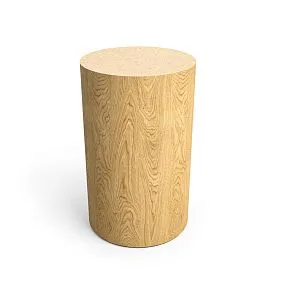
Cylindrical straight legs are the basis for most modern tables. Their diameter varies from 40 to 100 mm depending on expected loads and aesthetic requirements.
Advantages of straight legs:
- Maximum load-bearing capacity
- Ease of manufacturing and repair
- Universality of application
- Affordable cost
Conical legs: elegance of proportions
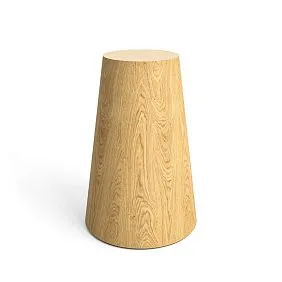
Conical shape creates a visual effect of lightness and elegance. The upper diameter is usually 60-80 mm, the lower — 40-60 mm. Such geometry ensures optimal load distribution while maintaining aesthetic appeal.
Decorative legs: art in every detail
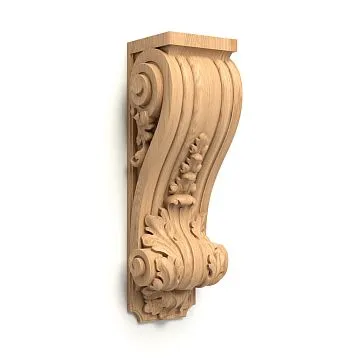
Carved and turned legs are true masterpieces of decorative-applied art. Every detail is crafted by hand by skilled artisans, making the item unique.
Popular decorative motifs:
- Plant ornaments
- Geometric patterns
- Classic architectural elements
- Designer's original solutions
Technological innovations in production
CNC processing: precision of the new generation
Modern CNC machines allow manufacturing supports with accuracy down to 0.01 mm. Such precision is critically important for creating high-quality joints and ensuring the ideal geometry of the product.
Advantages of CNC technology:
- Absolute dimensional repeatability
- Ability to create complex shapes
- Minimization of production waste
- High productivity
Kammer Drying: The Basis of Longevity
Proper wood preparation begins with controlled drying. In special chambers at a temperature of 55-70°C and regulated humidity, wood is gradually brought to an operational moisture level of 6-8%.
The process takes from two weeks to a month depending on the species and size of the blanks. Rushing here is unacceptable — poor drying inevitably leads to warping and cracking of the finished product.
Multi-layer finish: protection and beauty
Modern finishing systems include several stages:
- Priming — creation of an adhesive layer
- Base coating — primary wood protection
- Intermediate sanding — removal of defects
- Final layer — decorative and protective coating
- Polishing — achieving final gloss
Ergonomic design principles
Anthropometric standards
Table height directly affects user comfort. The standard height for dining tables is 74-76 cm, for work tables — 72-75 cm, for bar tables — 105-110 cm. These parameters are derived from average anthropometric data and ensure a comfortable position for most users.
Stability and safety
Legs for table base must ensure structural stability under any usage scenario. The minimum tipping angle is 25 degrees from vertical — this guarantees safety even under uneven load.
Stability calculation takes into account:
- Mass of the tabletop
- Expected useful load
- Dynamic Impacts
- Geometric parameters of legs
- Safety factor
Design styles of legs
Classic style: traditions and elegance
Classic legs are characterized by strict proportions, symmetry, and use of traditional decorative elements. Grooves, capitals, bases — all these architectural details find their embodiment in furniture design.
Materials: solid oak, ash, walnut
Finish: natural oils, waxes, polyurethane varnishes
Colors: natural wood tones, patina
Scandinavian minimalism: simplicity and functionality
Northern design philosophy preaches the principle of maximum functionality with minimal decorative elements. Scandinavian legs are distinguished by clean lines and flawless surface finishing.
Characteristic features:
- Light wood species
- Simple geometric forms
- Natural material texture
- Ecological finishes
Loft aesthetics: industrial romance
Loft style implies combining various materials — wood and metal, rough and refined textures. Wooden elements are often intentionally rough, emphasizing the industrial character of the interior.
Modern modernism: innovations and traditions
Modern designers boldly experiment with forms, creating supports with unusual silhouettes. Asymmetry, smooth transitions, unexpected color solutions — all of this characterizes the modernist approach to furniture design.
Engineering calculations and norms
Determination of load-bearing capacity
The load-bearing capacity of a wooden support is calculated using the formula:
N = σ × A × k
Where:
- N — load-bearing capacity (kg)
- σ — compressive strength of wood (MPa)
- A — cross-sectional area (cm²)
- k — safety factor (2.5–3.0)
For oak with a support diameter of 60 mm, the calculated load is approximately 300 kg per leg.
Stability calculation
Long, slender supports may lose stability under compression (buckling). The critical load is determined by Euler's formula:
Nкр = π² × E × I / l²
Where:
- E — modulus of elasticity of wood
- I — moment of inertia of the section
- l — length of the support
Technical characteristics by wood species
|
Species |
Density (kg/m³) |
Compressive strength (MPa) |
Moisture (%) |
Shrinkage (%) |
|
Oak |
680-850 |
64 |
6-8 |
11-12 |
|
Ash |
650-750 |
62 |
6-8 |
12-13 |
|
Beech |
670-720 |
60 |
6-8 |
15-16 |
|
Birch |
620-680 |
55 |
6-8 |
13-14 |
Manufacturing process: from raw material to finished product
Raw material selection
A quality support begins with the proper selection of wood. Each log undergoes visual inspection to identify defects:
- Knots larger than 15 mm in diameter
- Cracks of any size
- Areas with rot or insect damage
- Bends exceeding 2 mm per meter of length
Primary processing
Selected logs proceed to primary processing:
- Trimming to size
- Sawing to rough size
- Drying in special chambers
- Humidity control
Precision Processing
After drying, blanks proceed to final processing:
- Turning or milling the profile
- Abrasive grinding with various grits
- Size and Geometry Control
- Preparation for finishing
Final finishing
The final stage includes applying a protective-decorative coating:
- Priming with special compounds
- Applying the base layer
- Intermediate fine grinding with fine abrasives
- Final coating with varnish or oil
- Polishing to the required gloss
Quality Control and Standards
Incoming Raw Material Control
Each batch of wood undergoes mandatory inspection:
- Moisture — no more than 25% for raw material
- Absence of biological damage
- Conformance to dimensional parameters
- Quality of sawing
Operational Control
At each stage of production, control is maintained:
- Adherence to technological regimes
- Dimensional parameters of the products
- Surface treatment quality
- Absence of defects
Acceptance control
Finished products undergo final inspection:
- Geometric dimensions (±0.5 mm)
- Finish quality (uniformity, absence of defects)
- Mechanical properties (strength of joints)
- Appearance (conformance to sample)
Installation and fastening: professional approach
Types of fasteners
There are several ways to mount supports to the countertop:
Threaded connection
- Metal threaded rod
- High-strength connection
- Possibility of disassembly
- Height Adjustment
Adhesive Joint
- Polyurethane Adhesives
- Non-removable Joint
- Maximum Strength
- Ease of installation
Combined fastening
- Combination of Adhesive and Mechanical Fastening
- Maximum Reliability
- Resistance to Dynamic Loads
Preparation for Installation
Quality installation requires careful preparation:
- Checking Dimensions and Geometry
- Marking Mounting Locations
- Tool preparation
- Controlling Room Humidity
Assembly Technology
Assembly process includes several stages:
- Preliminary Installation Without Fastening
- Structural geometry check
- Final Fastening
- Assembly Quality Control
Care and Maintenance: Secrets of Longevity
Daily Care
Proper maintenance ensures a long service life of wooden supports:
- Regular cleaning from dust with dry cloth
- Avoiding moisture contact with wooden surfaces
- Use of mild cleaning agents when necessary
- Immediate removal of stains and dirt
Periodic maintenance
It is recommended to perform preventive measures every six months:
- Checking Fastener Strength
- Updating Protective Coating When Necessary
- Repairing minor defects
- Surface polishing
Restoration and repair
In case of serious damage, it is recommended to consult specialists:
- Restoration of damaged areas
- Replacing Worn Elements
- Updating protective coating
- Geometry Correction
Economic aspects of selection
Analysis of ownership cost
When selecting supports, consider not only the initial cost but also the costs over the entire service life:
Premium Solid Wood Supports
- High Initial Cost
- Minimal Maintenance Costs
- Service Life of 50-100 Years
- Restoration possibility
Budget Options
- Low initial cost
- Regular replacement costs
- Service life 5-10 years
- Inability to repair qualitatively
Impact on product cost
Quality legs significantly increase the overall value of furniture:
- Increase in product lifespan
- Enhanced aesthetic appeal
- Increase in residual value
- Possibility of inheritance
Industry Development Trends
Ecological Requirements
Modern consumers are increasingly paying attention to ecological aspects:
- Certified wood from sustainable sources
- Non-toxic finishing materials
- Minimization of production waste
- Possibility of product recycling
Technological Innovations
Technological advancements open up new possibilities:
- Laser surface processing
- Nanotechnologies in Finishing Materials
- Robotized production
- AI-based quality control systems
Product customization
Demand for personalized solutions is growing:
- Custom-made sizes
- Unique design solutions
- Author-designed decorative elements
- Exclusive Wood Species
Correctly chosen table leg support A properly chosen table leg support can radically change the perception of any interior. It is an investment in beauty, comfort, and durability, which pays off through years of flawless service. In a world where quality is becoming a rarer commodity, choosing premium furniture legs is a choice in favor of craftsmanship traditions and true value.
The modern market offers many options, but only products made from solid natural wood provide the ideal combination of strength, beauty, and eco-friendliness. Furniture legs made of wood — is a choice for those who value quality and understand that true beauty is timeless.
Every detail matters when creating the ideal interior. A table leg support is that element which works unnoticed, but its impact on the overall impression is hard to overestimate. Investing in quality today creates a foundation for comfort and aesthetic enjoyment for many years to come.
STAVROS Company embodies decades of experience in creating premium-grade furniture hardware. For decades, STAVROS masters have refined wood processing technologies, creating legs that become works of applied art. Using only select wood and time-tested production methods, STAVROS guarantees exceptional quality of every product. Choosing STAVROS products means investing in craftsmanship traditions, reliability, and beauty that will delight not just one generation. STAVROS is a guarantee that every detail of your interior will be executed at the highest level, transforming your home into a space of genuine comfort and elegance.