












































































Article Contents:
- Philosophy of the open portal in modern design
- Psychology of space perception
- Cultural-historical roots
- Modern approaches to designing open portals
- Minimalist aesthetics
- Neoclassical interpretation
- Eclectic solutions
- Materials and technologies of realization
- Natural wood: warmth and authenticity
- Composite materials of new generation
- Metal accents and inserts
- Stylistic Directions and Their Features
- Scandinavian minimalism
- Loft: industrial aesthetics
- Provence: romance of French countryside
- Technical aspects of design and manufacturing
- Load calculation and structural solutions
- Mounting systems to walls
- Final Finishing and Protective Coatings
- Integration into various architectural styles
- Modern Architecture
- Historical construction
- Lighting design and visual effects
- Integrated lighting
- Optical effects and illusions
- Functional capabilities of modern portals
- Hidden storage systems
- Technological Integration
- Ecological aspects and sustainable development
- Ecologically clean materials
- Energy efficiency of production
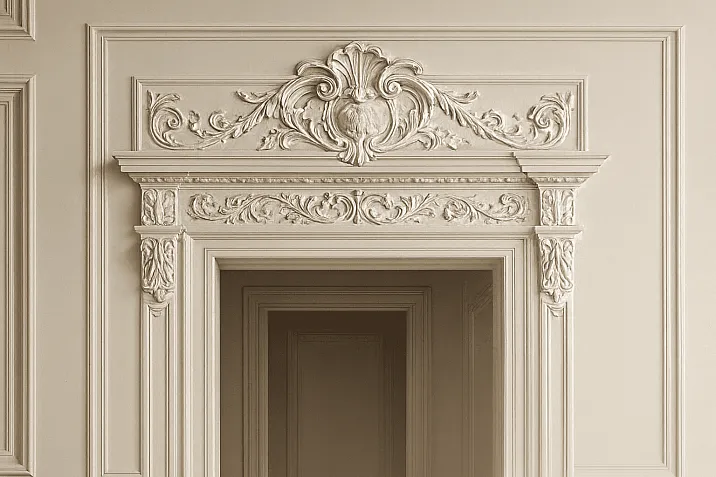
When boundaries blur and space breathes freedom, precisely frame of a doorway without a door becomes that magical element which transforms a simple transition between rooms into a work of architectural art. In the era of open layouts and free spaces, this element acquires new meaning — it does not divide, but unites, does not close, but invites dialogue between functional zones.
Interior architecture is undergoing a true revolution. Solid walls give way to airy transitions, heavy doors to elegant portals, enclosed rooms to flowing spaces. At the heart of this transformation lies the art of creating frames for openings that remain open, emphasizing the beauty of the architectural solution.
Philosophy of the open portal in modern design




Psychology of space perception
Human consciousness is structured such that we instinctively perceive framed openings as significant architectural elements. Even without a physical door, a beautifully designed opening psychologically marks the transition between zones, creating a sense of spatial structure while preserving openness.
Neuroarchitecture — a relatively new science studying the impact of architectural forms on the human brain — asserts that framed openings activate specific areas of the cerebral cortex responsible for spatial orientation. This creates a comfortable psychological state, reduces stress, and improves overall quality of life in the space.
decorative doorway framing serves as a visual anchor that helps the eye orient in space, creating a hierarchy of interior elements. This is especially important in large open spaces, where the absence of landmarks may cause discomfort.
Our factory also produces:
Cultural-historical roots
The tradition of decorating doorways dates back to deep antiquity. In ancient architecture, porticos and arches served not only as functional elements but also as symbolic transitions between different spaces — sacred and profane, public and private, external and internal.
Byzantine architecture developed this tradition, creating complex iconographic programs for church portals. Each element of the frame carried deep symbolic meaning, transforming the transition into a sacred act. Gothic masters perfected this art, creating portal-books that could be 'read' by examining sculptural compositions.
Russian architectural tradition developed its own approach to doorway decoration, where functionality combined with rich ornamentation. Carved casings, portal arches of tsars' palaces, church entrances — all this testifies to a deep understanding of the role of framing in creating an architectural image.
Get Consultation
Modern approaches to designing open portals
Minimalist aesthetics
Modern minimalism offers a radically new approach to framing a doorway without a doorHere, every line has meaning, every surface is carefully considered. The absence of decorative excesses is compensated by perfect proportions and quality materials.
Minimalist portals are often made from modern materials — metal, glass, composite panels. They can be practically invisible, integrated into the wall plane, or, conversely, boldly contrasting, creating a graphic accent in a neutral interior.
The color palette is limited to 2-3 shades, usually neutral. White, gray, black — the classic triad of minimalism, which allows focusing attention on the purity of forms and quality of execution. Paintable Molding In a minimalist interior, it must have an extremely simple profile and perfectly smooth surface.
Neoclassical interpretation
Neoclassicism brings the best traditions of classical architecture back into modern interiors, adapting them to contemporary needs and technologies. Neoclassical portals combine the strictness of ancient proportions with the comfort of modern life.
Characteristic elements of a neoclassical portal include pilasters, entablatures, friezes with classical ornaments. door frame trim In this style, a deep understanding of classical proportional systems and the ability to adapt them to modern spatial solutions is required.
Materials for neoclassical portals are traditionally noble — natural hardwoods, natural stone, high-quality composite materials imitating classical textures. The color palette leans toward light, noble tones — white, cream, light gray, sometimes with gold accents.
Eclectic solutions
Eclecticism provides boundless opportunities for creativity, allowing the combination of elements from different styles and eras into a single composition. Eclectic portals can combine classical moldings with modern materials, ethnic motifs with industrial elements, vintage details with futuristic forms.
The designer's main task in an eclectic interior is to find a unifying idea that will link disparate elements into a harmonious whole. This may be color, texture, a proportional system, or the overall mood of the interior.
and frames create a home atmosphere, making it truly cozy and individual. This is an investment in beauty, which pays off every day through aesthetic pleasure from admiring the beautiful. In eclectic portals, they play a special role — they become connecting elements between different stylistic layers, creating visual unity in diverse decor.
Materials and technologies of realization
Natural wood: warmth and naturalness
Wood remains one of the most popular materials for creating portals due to its natural beauty, tactile qualities, and the possibility of delicate artistic processing. Each species has unique characteristics determining its application in various stylistic solutions.
Oak is the king among species used in architectural decoration. Its high density allows creating the finest carved details that retain sharp contours for decades. The noble texture of oak, its ability to take various stains makes it a universal material for portals of any style — from strictly classical to modern eco-design.
Walnut is renowned for its decorative qualities — rich wood grain patterns, warm chocolate tones, excellent workability. Walnut portals often become compositional centers of the interior, attracting attention and creating an atmosphere of luxury and comfort.
Ash has an expressive texture and high strength, making it ideal for modern interiors where the combination of functionality and aesthetics is valued. Light ash tones harmonize beautifully with modern finishing materials.
New-generation composite materials
Modern composite materials open new possibilities for creating portals, combining the best qualities of natural materials with the advantages of modern technologies. High-density MDF allows creating items with complex profiles and flawless surfaces.
Doorway Molding and Framing MDF panels have stable dimensions, are not prone to warping or cracking, typical for solid wood. The MDF surface is ideal for any type of finishing — from natural oils to high-tech polymer coatings.
Polyurethane compositions have revolutionized architectural decoration production. The injection molding technology allows reproducing the finest details of historical samples, creating original compositions of any complexity. Polyurethane elements do not fall short of hand-carved wooden details in detail, while possessing superior operational characteristics.
Metal accents and inserts
Metal in portal decoration can serve as the main material or as decorative accents. Modern metal processing technologies allow creating elements of any complexity — from strict geometric forms to elegant floral ornaments.
Stainless steel is ideally suited for minimalist interiors, where the purity of lines and durability of materials are valued. Matte or polished steel surfaces create various visual effects, from strict industrial aesthetics to refined modern elegance.
Brass and bronze bring a note of classic luxury to the interior. These materials combine beautifully with natural wood, creating rich tactile and visual contrasts. Patinated surfaces add depth and historical authenticity to the interior.
Design styles and their characteristics
Scandinavian minimalism
Scandinavian approach to framing a doorway without a door It is based on the principles of functionality, naturalness, and coziness. There is no room for excesses — every element must be not only beautiful but also practical.
Typical Scandinavian portals are made from light-colored woods — birch, pine, spruce. Simple yet elegant profiles, natural colors, and high-quality surface finishing create a sense of calm and harmony. Often, contrasting combinations are used — light wood with white or gray walls.
Functionality is a key principle of Scandinavian design. Portals may include hidden niches for storage, built-in lighting systems, integrated shelves or hooks. All of this is executed so elegantly that functional elements become part of the decorative composition.
Loft: Industrial Aesthetic
The loft style fundamentally changes the approach to portal design, proposing rough, industrial materials and forms. Here, the authenticity of materials is valued — visible weld seams, unprocessed surfaces, traces of manufacturing processes.
Metal portals in the loft style are often made from black steel with minimal surface treatment. Simple geometric shapes, strong profiles, and contrasting combinations with brick or concrete walls create the characteristic atmosphere of reinterpreted industrial space.
Wooden elements in loft portals are typically presented as roughly processed beams, boards with preserved natural texture. Often, reclaimed wood with traces of previous use is used — old barn boards, ship timber, railway sleepers.
Provence: romance of French countryside
The Provence style brings the romance of French countryside into modern interiors, where time flows more slowly, and beauty lies in simple, natural things. Framing Doorway Openings In the Provence style, it is characterized by soft forms, pastel colors, and vintage details.
Typical materials for Provence portals — natural wood with an aged effect, whitewashed surfaces, wrought metal elements. The color palette includes all shades of white, lavender, olive, terracotta, and soft blue.
Decorative elements of Provence portals often include botanical motifs — grapevines, olive branches, lavender. Carvings are intentionally simple, "folk-style," without excessive detail, creating a sense of handcrafted charm and homey coziness.
Technical aspects of design and manufacturing
Load calculation and structural solutions
Designing a portal without a door requires special attention to load distribution. The absence of a door panel means that all loads from the upper part of the portal must be transferred to the side elements and then to the building's load-bearing structures.
Calculation begins with determining the self-weight of all portal elements. Wooden elements typically weigh between 15 to 25 kg per linear meter, depending on cross-section and wood species. Metal parts are significantly heavier — up to 50-80 kg per linear meter for heavy steel profiles.
Special attention is paid to connection joints of elements. Corner decorative elements They must ensure not only aesthetic unity of the composition but also structural integrity of the entire portal. Modern connection systems include hidden metal frames, composite inserts, high-strength adhesive compounds.
Wall mounting systems
Reliable mounting of the portal to the wall is the foundation of its longevity and safe operation. The type of mounting depends on the wall material, portal weight, and operating conditions. For stone and concrete walls, stainless steel anchor bolts are used; for wooden structures — special screws and bolts.
Hidden mounting systems ensure the aesthetic purity of the portal while providing maximum reliability. Mounting elements are integrated into the portal structure during manufacturing, allowing even load distribution and eliminating visible fasteners.
Adjustable mounting systems allow compensation for wall irregularities, precise positioning of the portal in the opening, and, if necessary, adjustment of its position after installation. This is especially important when working in old buildings, where the geometry of openings may significantly differ from the design.
Final finishing and protective coatings
The quality of final finishing determines not only the appearance of the portal but also its durability. Modern protective coatings significantly surpass traditional varnishes and paints in all operational characteristics.
Surface preparation includes careful sanding, dust removal, and degreasing. For wood, special compounds are used to equalize the absorption capacity of different areas. Primer compounds ensure strong adhesion of the final coating to the substrate.
Modern architectural decorative coatings include several layers with different purposes. The base coating creates the main color and texture and may contain special additives — UV filters, antiseptics, pigments with high lightfastness. The finish layer provides protection against mechanical damage, moisture, and contamination.
Integration into various architectural styles
Modern Architecture
Modern architecture is characterized by freedom in planning solutions, use of new materials and technologies, and the search for new expressive means. frame of a doorway without a door In modern architecture, it often becomes an experimental field for designers and architects.
Innovative materials — smart glass, composites with programmable properties, nanomaterials — open up new possibilities for creating portals. Such portals may change their properties depending on operating conditions, time of day, and user needs.
Interactive elements — built-in displays, touch surfaces, smart lighting systems — transform the portal from a static architectural element into a dynamic interface between people and space.
Historical buildings
Working in historical interiors requires a special approach, taking into account the architectural features of the building, its cultural value, and conservation legislation requirements. The portal must harmoniously fit into the historical context without compromising the authenticity of the interior.
Restoration technologies allow creating portals indistinguishable from historical examples. Studying archival materials, measuring preserved elements, analyzing artistic features of the era — all of this is necessary for creating an authentic reconstruction.
Modern materials imitating historical ones allow creating portals that look antique but possess modern performance characteristics. to buy door frame trim For a historical interior, this means finding a compromise between authenticity and practicality.
Lighting design and visual effects
Integrated lighting
Modern portals often include integrated lighting systems that not only serve a utilitarian function but also become an important element of decorative composition. Hidden LED strips, built-in fixtures, and backlighting of decorative elements create an effective interplay of light and shadow.
Architectural lighting of the portal should consider the overall lighting concept of the interior. Warm light creates a cozy, home-like atmosphere, while cool light emphasizes modernity and technological sophistication. Colored lighting can be used to create special effects, highlighting the festive character of the interior.
Dynamic lighting, changing depending on time of day, mood, and functional needs, transforms the portal into a living, responsive element of the interior. Smart home systems allow programming lighting scenes, creating optimal conditions for various activities.
Optical effects and illusions
A properly designed portal can dramatically change the perception of space, creating optical illusions of increased ceiling height, expanded room size, or altered proportions. These effects are especially important in small apartments, where every square meter counts.
Vertical lines of the portal visually increase the height of the room, while horizontal lines expand the space. A contrasting color scheme can highlight the portal, making it a compositional center of the interior, or, conversely, blend it into the overall color scheme of the room.
Mirror elements integrated into the portal significantly enhance the effect of space expansion. However, their use requires a professional approach — improperly placed mirrors may create unpleasant visual effects and discomfort for residents.
Functional capabilities of modern portals
Hidden storage systems
Modern portals often include hidden storage systems that efficiently utilize the opening space. Built-in cabinets, shelves, and niches can be practically invisible, integrated into the decorative composition of the portal.
Pull-out elements — drawers, shelves, hooks — appear only when needed, without compromising the aesthetic integrity of the portal. Modern guide systems ensure silent operation, durability, and ease of maintenance.
Modular storage systems allow changing the internal configuration of the portal according to needs. Detachable shelves, adjustable partitions, transformable elements create maximum flexibility of use.
Technological integration
Modern portals may include various technological systems — air conditioning, ventilation, audio systems, communication devices. Concealed cabling is provided during the design phase, allowing integration of any technologies without compromising aesthetics.
Wireless technologies minimize the number of cables, simplify installation and subsequent maintenance of systems. Wi-Fi routers, Bluetooth transmitters, infrared sensors can be completely hidden within the portal's structure.
Smart home systems transform the portal into an intelligent interior element capable of responding to human presence, changes in lighting conditions, and voice commands. This creates a new level of comfort and functionality in living space.
Ecological aspects and sustainable development
Ecologically clean materials
Modern architectural decor production increasingly pays attention to ecological aspects. Use of renewable materials, minimization of production waste, application of health-safe coatings have become important selection criteria.
Certified wood from sustainably managed forests guarantees that its harvesting does not harm nature. FSC and PEFC — international certification systems that control the entire production chain from forest to finished product.
Biodegradable composite materials based on natural fibers — flax, hemp, wood — combine ecological properties with high performance characteristics. Such materials can be recycled or safely disposed of after the end of their service life.
Energy efficiency in production
Modern architectural decor manufacturers actively implement energy-saving technologies that reduce the carbon footprint of their products. Use of renewable energy sources, optimization of production processes, recycling of waste — all of this contributes to creating more eco-friendly products.
Local production reduces transportation costs and associated CO2 emissions. Regional manufacturers are better acquainted with local architectural traditions, climatic conditions, and consumer preferences.
Circular economy principles imply the reuse of materials, their recycling, and repurposing. Portals designed according to these principles can be disassembled, modernized, and adapted to new usage conditions.
Modern frame of a doorway without a door It is a complex architectural element that combines aesthetic, functional, and technological aspects. It is not merely a decorative detail, but a fully-fledged component of modern interior design capable of radically altering the perception of space.
Choosing the right solution for a portal requires a comprehensive approach, taking into account the architectural features of the room, stylistic preferences, functional requirements, and budgetary constraints. Only such an approach allows creating a truly harmonious and functional solution.
Investments in a quality portal pay off not only through enhanced aesthetic appeal of the interior, but also through real improvement of space functionality. A well-designed portal can solve numerous practical tasks — from organizing additional storage space to creating optimal lighting conditions.
STAVROS Company offers a full spectrum of services for creating portals of any complexity — from classic wooden structures to ultra-modern technological solutions. Our team of professionals combines deep understanding of architectural traditions with mastery of the most advanced technologies, enabling us to realize the boldest design concepts. We understand that each project is unique, and we are ready to propose individual solutions fully aligned with your needs and expectations.


