Article Contents:
- Typology of door casings: from strip to portal
- Flat casings: minimalist functionality
- Profiled casings: classic elegance
- Carved casings: ornamental luxury
- Door portals: architecture in miniature
- Structure of Portal
- Stylistic variations of portals
- Portal placement
- Over-door elements: pediments and tympanums
- Types of Sill Plates
- Installing pediments
- Replacing wooden casings: upgrade without door removal
- Removing old casings
- Selecting new casings
- Installing Polyurethane Architraves
- Decorating the entrance door: exterior framing
- Specifics of outdoor application
- Options for facade portals
- Frequently Asked Questions
- Conclusion: the opening as an architectural statement

A door is not just an opening in a wall, a functional passage from one space to another. A door is a boundary, a frontier, a place of transition. Architecture has always emphasized this importance, turning doorways into compositional focal points. Ancient temples framed entrances with columns and pediments. Baroque palaces adorned portals with carved volutes and cartouches. Classicism mansions decorated doors with strict pilasters and pediments.Polyurethane trimreturn this tradition to modern interiors, allowing any opening—from an interior door in a standard apartment to an entrance door in a private house—to gain architectural expressiveness.
A bare door opening is emptiness, truncated plaster, the edge of wallpaper. A door leaf without framing hangs in the opening like a randomly inserted plug.Polyurethane door casingscreate a transition between the wall plane and the opening, frame the boundary, and capture attention. A simple casing performs a basic function—it masks the joint between the door frame and the wall, creating visual completeness. A complex portal with pilasters, cornices, and pediments transforms the opening into an architectural work, a dominant feature of the interior. Between these extremes are dozens of optionsfor framing doors with polyurethane, meeting various styles, budgets, and aesthetic tasks.



Typology of door casings: from strip to portal
A casing is a vertical strip framing a door opening on two or three sides (two side posts, one horizontal crossbar above the door). The classification of casings is based on width, profile, and decorative richness.




Flat casings: minimalist functionality
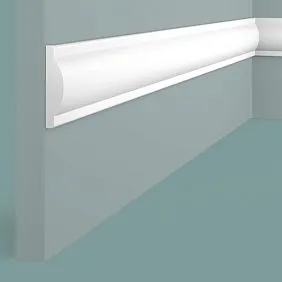
A flat casing is a rectangular strip without relief or with minimal beveled edges. Width five to eight centimeters, thickness one to one and a half centimeters. Such casings perform a purely utilitarian function—they cover the gap between the frame and the wall, without claiming decorative appeal.
Application: modern minimalist interiors, Scandinavian style, high-tech, loft. Painted white on white walls, black on dark walls, or wall-colored for maximum blending with the plane. The goal is to make the framing inconspicuous, not attention-grabbing, a background element.
Advantages: low price (from one hundred fifty to three hundred rubles per linear meter), ease of installation (straight strips are cut at a right or forty-five-degree angle, glued with any polyurethane adhesive), versatility (suitable for doors of any design—from cheap laminated to expensive veneered).
Disadvantages: lack of expressiveness. A flat casing adds nothing to the interior except technical completion.
Our factory also produces:


Profiled casings: classic elegance
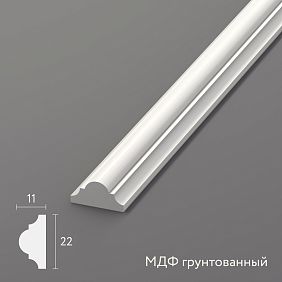
A profiled casing has a volumetric cross-section — coves, beads, steps that create a play of light and shadow. Width eight to fourteen centimeters, thickness two to four centimeters, relief depth from three to ten millimeters.
Profiles can be classic (a combination of coves and beads, reminiscent of cornices), geometric (stepped forms, right angles), ornamented (floral motifs, scrolls, geometric patterns along the edges of the strip).
Application: classic, neoclassical, eclectic interiors, Provence, contemporary. Painted white (classic), in the color of the walls (integration), contrasting (accentuation — dark casings on light walls or vice versa), with patination or gilding (historical stylization).
Advantages: visual expressiveness without excess. A profiled casing creates architectural definition, adds detailing without overloading the space. Price is moderate (four hundred to eight hundred rubles per meter).
Disadvantages: requires precision in corner joining — the profile must align perfectly, otherwise the pattern is interrupted, creating visual dissonance.
Get Consultation
Carved casings: ornamental luxury
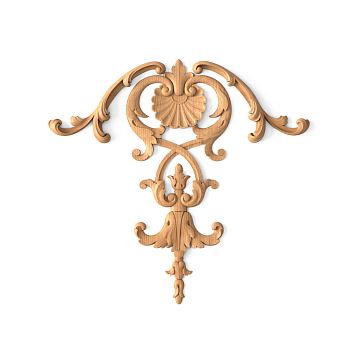
A carved casing is a strip decorated with deep relief ornamentation across its entire surface. Acanthus leaves, rosettes, scrolls, grapevines, floral garlands. Width twelve to twenty centimeters, thickness four to seven centimeters, relief depth one to three centimeters.
Application: Baroque, Rococo, Empire, historical stylizations. Painted white with gilding of protruding elements, entirely gold or silver, patinated for an antique effect.
Advantages: maximum decorativeness. A carved casing turns a door into a work of art, attracts the eye, demonstrates status.
Disadvantages: high price (one thousand to three thousand rubles per meter), demanding context (a carved casing in a minimalist interior is stylistic chaos), requires corresponding furniture and overall setting (an ornate casing demands an ornate interior).
Door portals: architecture in miniature
Polyurethane door portal— an expanded framing of the opening, including vertical elements (pilasters, half-columns, consoles) and a horizontal crown (cornice, pediment, entablature). The portal creates an architectural structure around the door, imitating classical order systems.
Portal structure
Vertical portal posts — pilasters (flat projections imitating columns but not separated from the wall) or half-columns (volumetric cylindrical elements). Pilasters consist of a base (lower expanded part), a shaft (vertical section, smooth or with fluting — vertical grooves), a capital (upper part with carved decoration — Doric, Ionic, Corinthian, Composite).
Pilaster width ten to twenty-five centimeters, height equals opening height plus base and capital height (usually two and a half to three meters for a standard two-meter-high door). Half-columns have a diameter of fifteen to thirty-five centimeters, create greater volume, suitable for spacious rooms.
Horizontal portal crown — entablature, consisting of an architrave (lower smooth part), a frieze (middle part with ornament or smooth), a cornice (upper projecting part with a profile). Total entablature height twenty to sixty centimeters depending on portal scale and ceiling height.
Above the entablature, a pediment — a triangular or semicircular structure crowning the portal — can be installed. Pediment height thirty to eighty centimeters, width equal to portal width. Inside the pediment — a smooth field (tympanum), which can be decorated with applied decor — a coat of arms, cartouche, floral composition.
Stylistic variations of portals
Classicist portal is strict, symmetrical, proportional. Pilasters of Doric or Ionic order with clear fluting. Entablature with a simple frieze (meander, dentils, garlands). Triangular pediment with smooth tympanum. Painted white or ivory, light gilding of capitals possible.
Baroque portal is lush, dynamic, saturated with decor. Pilasters of Corinthian or Composite orders with rich capitals. Frieze decorated with acanthus leaves, putti (winged infants), garlands. Cornice multi-level with consoles. Pediment broken (with a gap at the apex), a vase or coat of arms inserted in the gap. Painted white with abundant gilding or entirely gold.
Empire portal is monumental, symmetrical, militarized. Pilasters smooth without fluting or with minimal fluting. Frieze with military trophies (swords, shields, wreaths). Pediment strictly triangular, inside — an eagle, laurel wreath, imperial crown. Painted white with gold or in saturated colors (emerald, burgundy) with gilded elements.
Neoclassical portal is lightweight, simplified, adapted to modern proportions. Pilasters narrow (ten to fourteen centimeters) with simplified capitals. Entablature low (twenty to thirty centimeters) simple profile. Pediment often absent or replaced by a cornice. Painted monochrome — white on white walls, gray on gray, only the relief stands out.
Portal placement
Portal requires space. Minimum ceiling height for installing a portal with a pediment — two meters seventy (door two meters, entablature twenty to thirty centimeters, pediment thirty to forty centimeters, gap to ceiling ten centimeters). Optimal — three meters and above.
Wall width on the sides of the opening must accommodate pilasters — minimum fifteen to twenty centimeters from the edge of the opening to the wall corner or to an adjacent opening/window. A portal one and a half meters wide (opening ninety centimeters plus two pilasters of thirty centimeters each) requires a wall total width of at least one meter eighty (accounting for edge margins).
Portal is installed on significant openings — apartment entrance door, entrance to the living room from the hall, entrance to the dining room, study. Not all interior doors in an apartment are framed with portals (excess, visual overload) — one to three portals for the entire interior, remaining openings with simple casings.
Over-door elements: entablatures and pediments
Polyurethane entablatures— horizontal cornices installed above the door as a finishing element of the framing. Historically, the pediment served a protective function—diverting rainwater away from the door. In interiors, its function is decorative—creating an architectural crown for the opening.
Straight cornice — the simplest and most universal type, representing a horizontal cornice above an opening. It can be smooth or profiled, with dentils or modillions. Suitable for most architectural styles, easily integrates into any composition.
Straight horizontal pediment—a strip of cornice profile running horizontally above the door across the full width of the architraves or wider. Length: one meter to one meter forty (depending on the width of the opening and architraves), projection height: five to twenty centimeters. Profile ranges from simple (one or two curves) to complex (dentils, modillions, carved frieze). Suitable for classical, neoclassical interiors. Creates a horizontal accent, visually widens the opening.
Triangular pediment—a classical antique element. Two sloping cornices form a triangle with a horizontal base. Pediment height: thirty to eighty centimeters, base width: one to two meters (depends on the scale of the portal). Inside the triangle—a smooth field (tympanum), which remains empty or is decorated with an appliqué (rosette, coat of arms, floral composition). The pediment creates monumentality, solemnity, and formality. Requires high ceilings (minimum three meters).
Segmental (semicircular) pediment—an arc of a circle above the door. Arc radius: fifty to one hundred twenty centimeters. A softer, less strict form compared to the triangular pediment. Characteristic of Baroque, Empire styles. Inside the arc—floral ornament, cartouche, scrolls.
Broken pediment—triangular or semicircular, but with a gap at the apex. The left and right parts of the pediment diverge, not meeting at the top. A decorative element is inserted into the gap—a vase, coat of arms, bust, cartouche. Creates dynamism, Baroque expressiveness. A broken pediment is a sign of high status in the architectural hierarchy (historically used on main entrances of palaces, temples).
Installation of pediments
The pediment is mounted above the horizontal door architrave or instead of it (if the door is framed only by side posts). Fastening—polyurethane adhesive plus dowels through the pediment into the wall (for heavy elements). The pediment should extend beyond the edges of the side architraves by five to fifteen centimeters on each side—creating a visual finish, so the portal does not appear truncated at the top.
The pediment is installed on consoles (brackets) or directly on the portal entablature. A triangular pediment is assembled from three elements—two sloping cornices (left and right) and a horizontal base. The elements are joined at angles, joints are filled with putty, and after painting should be invisible. A semicircular pediment—a single flexible element that bends along the arc, attached to the wall with adhesive and dowels.
Replacing wooden architraves: upgrade without door removal
Old wooden architraves are a common problem. Wood cracks, dries out, paint peels, chips from impacts cannot be restored. Replacing doors is expensive (a full set of interior door with frame and hardware from fifteen to sixty thousand rubles). Replacing only the architraves with polyurethane ones is a budget-friendly update that gives the effect of a new door.
Removal of old architraves
Wooden architraves are fastened with nails (finishing or regular with heads bitten off). Removal—carefully pry the strip with a pry bar or wide chisel. Start from the top corner, pry, move downward, gradually detaching the architrave from the frame. Nails remain either in the architrave (pulled out with pliers) or in the frame (bitten off with nippers, driven in with a nail set).
After removal, inspect the door frame. Gaps between the frame and the wall should be filled with mounting foam. If foam has protruded outward (a common situation), trim the excess with a knife flush with the wall surface. Level uneven plaster around the opening with putty, sand—polyurethane architraves are thin and follow the base's irregularities; any bulge will create a gap.
Selecting new architraves
The width of the architrave should cover the gap between the frame and the wall plus two to three centimeters of overlap onto the frame itself and the wall. Standard gap: three to five centimeters—suitable architrave width: seven to ten centimeters. Wide gap (frame installed with a large gap, wall uneven)—architrave twelve to fifteen centimeters.
The style of the architrave should match the door and interior. Smooth laminated door—simple profiled architrave or flat. Paneled door with milling—architrave with corresponding relief. Wood-look door—architrave painted to match the wood tone or contrasting white.
Color: three options—architrave matching the door color (visual unity), architrave matching baseboards and cornices (architectural unity of the interior), contrasting architrave (highlighting the opening). The first and second options are classic, the third is a modern designer technique.
Installation of polyurethane casings
Marking: place the side architrave posts against the opening, mark the height (from floor to top edge of horizontal architrave) with a pencil. Measure the width of the opening at the top of the frame, add the width of the two side architraves—this gives the length of the horizontal element.
Cutting angles: posts and horizontal piece join at a forty-five-degree angle. Use a miter box—side posts are cut with top angles of forty-five degrees (left post—angle to the left, right—to the right), horizontal piece is cut with both ends at forty-five degrees. Trial fitting—place elements against the door, check angle alignment.
Gluing: apply adhesive in a zigzag pattern on the back of the architrave (side facing the wall and frame). Press the element into place, hold for a minute. Secure with painter's tape or finishing nails (if the frame is wooden). Similarly install the remaining elements.
Sealing joints: after adhesive sets (twelve to twenty-four hours), fill corner joints with white acrylic sealant. Squeeze sealant into the gap, smooth with a wet finger. Wipe excess with a damp cloth. After sealant dries (four to six hours), joints are ready for painting.
Painting: if architraves are white and interior is white—painting is optional. If color is needed—paint with acrylic paint in two coats with intermediate drying of six to eight hours.
Decorating the entrance door: exterior framing
The entrance door of a country house or townhouse is a facade element, the first impression of the dwelling. Polyurethane framing creates formality, individuality, and architectural expressiveness.
Specifics of exterior application
Polyurethane for exterior must be dense (from three hundred kilograms per cubic meter), with UV stabilizers (protection from sunlight degradation), painted with facade paints (acrylic, silicone, silicate—resistant to moisture, frost, temperature fluctuations).
Framing elements are mounted on the facade with exterior adhesive plus mechanical fasteners (dowels, anchors through the element into the wall). All joints are sealed with facade acrylic or polyurethane sealant (not silicone—silicone cannot be painted).
Options for facade portals
Minimalist portal—two smooth architraves on the sides of the door, horizontal pediment on top. Architrave width: twelve to twenty centimeters, pediment straight or with a light profile. Painting contrasting with the facade—white framing on a dark wall, dark on a light one. Style—modern, Scandinavian, minimalism.
Classical portal—two pilasters of Doric or Ionic order, entablature with frieze and cornice. Pilaster width: twenty to thirty centimeters with bases and capitals. Entablature height: forty to sixty centimeters. Painting white, cream, light gray. Style—classicism, neoclassicism.
Baroque portal—pilasters of Corinthian order with lush capitals, carved frieze with acanthus, broken pediment with a vase in the gap. Pilaster width: thirty to forty-five centimeters, pediment height: seventy to one hundred centimeters. Painting white with gilding or entirely in the facade color with contrasting gilded decor. Style—Baroque, luxury, status.
Rusticated portal — imitation of stone masonry. The architraves are made in the form of rustications (rectangular blocks with relief seams between them). It creates the impression that the door is framed by natural stone. The width of the rusticated architraves is twenty to thirty-five centimeters, the height of each rustication is thirty to fifty centimeters. Coloration resembles sandstone, limestone, marble. Style — castle-like, medieval, solid.
Frequently asked questions
What are the advantages of polyurethane architraves over wooden ones?
Polyurethane does not crack, does not dry out, does not warp from moisture and temperature fluctuations. Wooden architraves in the bathroom, kitchen, hallway (areas with high humidity or temperature fluctuations) require replacement after two to three years — wood absorbs moisture, swells, paint cracks. Polyurethane ones last for decades unchanged. Weight: a polyurethane set for a door weighs five to seven kilograms, a wooden one — fifteen to twenty-five. Installation of polyurethane is simpler — it is glued to the wall, does not require massive fasteners. Detail of relief: polyurethane is cast in molds, each detail of the ornament is reproduced with an accuracy of fractions of a millimeter. Wood carving, even high-quality, is less precise. Price: a polyurethane set costs one to four thousand rubles, a carved wooden one — five to fifteen thousand.
Can a portal be installed on a narrow opening?
A portal requires a minimum opening width of seventy-five to eighty centimeters (standard interior door). For narrow openings (sixty to seventy centimeters — bathrooms, pantries) a portal is disproportionate — the pilasters will occupy a significant part of the width, visually narrowing the opening even more. Narrow openings are decorated with simple architraves without portal elements.
How much does it cost to frame one door with polyurethane?
Simple flat architraves: a set for one door (two posts of two and a half meters each, one horizontal piece of one meter twenty) — six hundred to one thousand two hundred rubles for materials. Profiled architraves: one thousand two hundred to two thousand four hundred. Carved architraves: three to seven thousand. Portal with pilasters and pediment: seven to twenty thousand (depends on size, complexity of elements). Self-installation is free, a craftsman's services add one and a half to three thousand per door.
How to care for polyurethane architraves?
Painted polyurethane does not require special care. Wipe with a damp cloth once a month (dust removal). Dirt is removed with soapy water. Deep relief of carved architraves should be cleaned with a soft brush or vacuum cleaner brush. Avoid abrasive agents — they scratch the paint. The painted surface withstands wet cleaning without damage.
Can architraves be painted to look like wood?
Yes, polyurethane can be painted with any paints, including wood imitation. Techniques: tinting with water-based stains (creates a translucent wood tone), painting with acrylic paints in wood colors followed by glazing (applying semi-transparent dark glaze into the recesses of the relief — imitation of texture), painting with special paints with a wood effect (contain pigments that create a textured pattern). For maximum realism, use professional techniques of patination and glazing.
Is it necessary to prime architraves before painting?
Architraves are supplied with factory primer (white or light gray coating). This primer is sufficient for painting with light colors (white, cream, pastels). For dark saturated colors (black, blue, burgundy), additional priming with a tinted primer matching the paint color is recommended — reduces paint consumption, ensures uniform color in two coats.
Can polyurethane architraves be used in wet rooms?
Polyurethane is absolutely moisture-resistant — does not absorb water, does not swell, does not deform. Architraves are installed in bathrooms, showers, saunas, swimming pools without restrictions. The only condition is high-quality painting with moisture-resistant paint (latex, acrylic for wet rooms). Unpainted or poorly painted polyurethane in a humid environment can become moldy (spores settle in the recesses of the relief) — prevented by high-quality painting and ventilation.
Conclusion: The opening as an architectural statement
Polyurethane trimtransform functional door openings into architectural elements that shape the character of the interior. From minimalist strips creating a barely noticeable frame to monumental portals with pilasters and pediments, turning the entrance into a ceremonial composition — the range of solutions corresponds to any stylistic tasks, budgets, and spatial scales. Replacing old wooden architraves with polyurethane ones updates the interior without major costs, creating the effect of a complete renovation for moderate funds and short timeframes.
Framing doors with polyurethane— is not a cosmetic measure, but an architectural solution that affects the perception of the entire space. A door without framing is a technical element. A door in a portal is a compositional center, an accent, a focal point. Pediments and frontons add vertical dimension, create hierarchy, emphasize the significance of the opening. The correct choice of elements, proportions, and stylistics turns each passage from room to room into an architectural event.
Over-door elements —Polyurethane entablatures, pediments, cartouches — crown the composition, create completeness, prevent the visual truncation of the framing from above. These elements, borrowed from monumental architecture, scaled to interior proportions, retain the power of architectural statement, making the interior not just a comfortable space, but also a cultural text, readable by those who understand the language of classical forms.
The company STAVROS develops and manufactures a full range of door decor from high-density polyurethane. The catalog includes over a hundred models of architraves — from flat minimalist ones five centimeters wide to carved Baroque ones twenty-five centimeters wide. Profiles from the simplest rectangular to complex multi-level ones with ornaments, from classical with dentils to modern geometric ones.
Portal elements are represented by eighty models of pilasters of all orders — Doric, Ionic, Corinthian, Composite, Tuscan. Height of pilasters from two to three and a half meters (for various opening heights). Width from ten to forty-five centimeters. Pilasters with flutes and without, with rich capitals and simplified ones, smooth and ornamented.
Entablatures — horizontal portal elements — are offered in fifty variants. Height from fifteen to eighty centimeters, length from one meter to three meters (cut to the required opening width). Profiles from simple cornices to complex three-part constructions of architrave-frieze-cornice with carved ornaments.
Pediments and frontons — thirty-five models of triangular, semicircular, broken, segmental forms. Sizes from compact (thirty centimeters height, one meter width — for small openings in apartments) to monumental (one hundred twenty centimeters height, two and a half meters width — for grand entrances of mansions).
All STAVROS products are made from polyurethane with a density of 300-350 kg/m³ using the free-pour method into silicone molds. The technology ensures precision in detail reproduction — each petal of an acanthus leaf, each groove of a flute, each volute curl is reproduced with the accuracy of the original. The surface is primed with white acrylic primer — ready for final painting without additional preparation.
For exterior applications, STAVROS produces a special series of facade decor from polyurethane with UV stabilizers and increased density (330-360 kg/m³). All elements withstand temperature fluctuations from minus forty to plus sixty degrees, do not deteriorate from direct sunlight, moisture, frost. Warranty for facade decor — fifteen years.
Ready-made door decor kits simplify selection and installation. The kit includes all necessary elements for framing one door — two side posts, a horizontal architrave, corner elements (if provided), fasteners, instructions. Thirty kit options for various styles — from minimalism to Baroque, from budget (one thousand two hundred rubles) to premium segment (twenty-five thousand).
Individual portal design — a service of the STAVROS design studio. You provide photos of openings, dimensions, description of the desired style. Designers create a 3D visualization of the portal, select elements from the catalog or develop unique ones (for exclusive projects, tooling for individual elements is produced). The estimate includes all materials, fasteners, paint, installation services (optional).
Professional installation of door decor is available in Moscow, St. Petersburg, and major cities of Russia. STAVROS crews specialize in installing architraves, portals, pediments — master the technique of precise corner joining, symmetrical placement of elements, high-quality seam sealing. Warranty for installation is two years and covers detachment of elements, cracking of joints, installation defects.
Educational materials for self-installation are published on the STAVROS website and YouTube channel. Detailed video tutorials show all stages — removal of old trims, surface preparation, marking, miter cutting, gluing, joint sealing, painting. Text-based step-by-step guides with photos detail each step. Technical support via phone and chat answers questions during the work process.
By choosing STAVROS, you get European-quality materials manufactured in Russia at affordable prices, professional expertise, and support from element selection to final painting. Every doorway ceases to be a utilitarian hole in the wall, becoming an architectural work where classical forms, precise proportions, and quality craftsmanship create spaces that are pleasant to live in, that you want to show off, and that inspire. From modest trims to grand portals—STAVROS transforms boundaries into art.