Article Contents:
- Functions and typology of legs: foundation of construction
- Main functions of legs
- Types of legs by construction
- Proportion calculation: mathematics of a chair
- Height and diameter of legs
- Stability calculation: center of gravity and base of support
- Selecting legs for the seat: size compatibility
- Seat parameters determining leg selection
- Distance of legs from the edge of the seat
- Apron system: structural rigidity
- Function and placement of aprons
- Angles of connection between legs and aprons
- Leg attachment to seat: assembly technology
- Fastening methods
- Leg mounting system in the seat
- Selecting legs to match interior style
- Classic legs: balance of form and function
- Modern legs: minimalism and simplicity
- Transitional styles: adapting classic design to modernity
- Common mistakes when selecting legs
- Size disproportion
- Violation of stability
- Incorrect apron selection
- Maintenance and longevity of legs
- Adjustment and leveling
- Protection against wear and damage
- STAVROS: partner in creating the ideal chair

A chair is one of the oldest pieces of furniture, its construction has not changed fundamentally for millennia. Four legs, a seat, a backrest — the minimal system forming a functional chair. But this apparent simplicity hides deep engineering calculations, ergonomics, aesthetics. And within this system,chair legslegs play not just a supporting role, but an architectural element determining the style, proportions, and stability of the entire piece. The correct selection and calculation of legs determine whether the chair will be comfortable, stable, and long-lasting, or will wobble, creak, and risk falling when the user makes an awkward movement.
In this article, we will systematically examine all aspectslegs for chairsFrom proportions and stability calculations to rules for selecting legs for specific seats and apron systems. You will learn how chair mechanics work, why some constructions are stable while others are not, and how to avoid classic mistakes when designing or restoring chairs. This guide is for furniture makers, designers, DIY enthusiasts, those restoring family heirlooms, or creating custom furniture.


Leg Functions and Typology: The Foundation of Construction




Basic Functions of Legs
Support Function — primary and obvious. Four points of contact with the floor support the weight of the person sitting on the chair, plus the weight of the seat, backrest, and the rest of the frame. The load is distributed evenly among all four legs when weight is evenly distributed, but when the center of gravity shifts (for example, when a person leans forward or sideways), the load redistributes, with maximum load on two or three legs. The leg must be strong enough to withstand this load without deformation, breaking, or bending.
Architectural and aesthetic function is often underestimated.Chair legsThey define the visual style, proportions of furniture, and its overall perception. Massive turned legs in the Empire style, elegant curved legs in the Rococo (cabriole) style, simple straight legs in modern design — these differences radically change the character of the object. One seat with different legs can look like a royal throne, a light chair, or an office desk.
Connecting function is often forgotten. Legs are not just vertical elements; they carry horizontal connections (aprons, stretchers) that connect the four legs into a single rigid structure. Without these connections, four separate legs may rotate, forming an unstable structure. Aprons are structural ribs; without them, the construction wobbles like a folding chair.
Our factory also produces:


Leg Types by Construction
Straight legs — the simplest type, cylindrical or prismatic (square cross-section) posts, vertically oriented. Easiest to manufacture, inexpensive, universal, suitable for all styles. Straightfurniture legsmade from oak, beech, or pine, serve for decades, suitable for both classic and modern styles. The cross-section can be round (turned) or square (sawn), rough-sawn or planed — there are many variations.
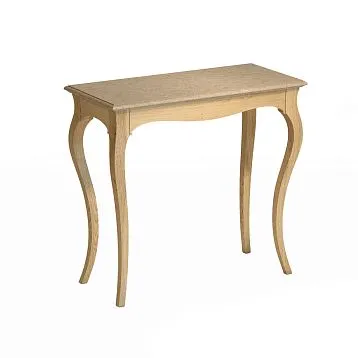
Curved legs (cabriole, saber, half-moon) are characteristic of historical styles — Baroque, Rococo, Royal style. The leg tapers toward the floor, often ending in a decorative "hoof" or "paw". The curve gives the leg an effect of lightness, despite its actual massiveness. Suchchair legsare produced on bending presses or hand-formed, require greater craftsmanship, and cost more.
Swivel legs (pilasters, square cross-section with decorative elements on the corners) are common in classical furniture. The edges of the leg are adorned with carving, reeding, creating visual interest and play of light.Chair legsLegs of this shape combine the functionality of a straight leg with the decorative quality of carving.
Combined legs combine different elements — the upper part is straight, the lower part is curved, with tapering or widening in the middle. Such legs allow achieving the desired silhouette, balancing aesthetics and structural integrity.
Get Consultation
Proportion Calculation: The Mathematics of the Chair
Leg Height and Diameter
Standard chair height from floor to top of seat is 45–50 cm. Of this, 42–45 cm is leg height, the rest is seat thickness and apron height above the legs. It depends on the chair’s purpose: kitchen chairs, bar stools are higher (75–80 cm to seat), children’s chairs are lower (30–35 cm).
Leg diameter (or cross-section) depends on height and expected load. For a straight wooden leg, round cross-section diameter is usually 30–50 mm for seating chairs, 40–60 mm for stools and chairs with high backs. Square cross-section 25–40 mm wide corresponds to round diameter. Too thin a leg visually appears fragile and risks breaking. Too thick a leg appears clumsy and creates a sense of heaviness.
Proportion Rule: leg diameter in centimeters should be approximately 1/10 of leg height in centimeters. If leg is 45 cm, diameter is 4.5 cm. If leg is 50 cm, diameter is 5 cm. This proportion traces back to classical architectural canons, ensuring visual harmony.
Stability Calculation: Center of Gravity and Base Area
Chair stability depends on the location of the center of gravity and the base area formed by the four legs. The center of gravity of a chair with a seated person is usually 10–15 cm above the seat (approximately at the level of an average person’s torso). If this center lies within the rectangle formed by the legs, the chair is stable. If the center lies outside this rectangle, the chair will tip over.
Distance between legs (between axes) — critical parameter. Chairs with closely spaced legs are less stable when leaning forward, more stable when moving sideways. Chairs with widely spaced legs are more stable in the longitudinal direction, but may be less stable when leaning sideways. Optimum — equal distance between all four legs, approximately 35–45 cm depending on seat size.
Backrest angle affects stability. A vertical backrest requires a wider leg base, while a reclined backrest shifts the center of gravity backward, allowing a narrower base. Classic chairs often have backrests angled 5–15°, which is more comfortable and allows for more elegant legs.
Stability Calculation When Tipping Over: When a seated person leans forward, front legs take increased load, while rear legs are unloaded. The angle at which front legs begin to slide or lift — the critical tipping angle. For safety, this angle must be at least 30–40°. With 40 cm between front and rear legs and 20 cm center of gravity height, the critical angle is approximately 27° — a person leaning at this angle will begin to tip the chair over. A good chair is designed so that before tipping, a leg begins to slide or the backrest becomes stressed.
Leg Selection for Seat: Size Compatibility
Seat Parameters Determining Leg Selection
Seat Shape: rectangular, square, round, oval — determines leg placement. A rectangular seat (e.g., 40×50 cm) requires four legs at the corners, with 30–35 cm between axes on the narrow side, 40–45 cm on the long side. A square seat (40×40 cm) allows more symmetrical leg placement. A round seat requires legs placed along a circle, usually equidistant from the center.
Seat thickness affects the visible proportion of legs. A thin seat (2–3 cm) requires thinner legs to avoid appearing disproportionate. A thick seat (5–7 cm) can "support" heavier legs. Generally, seat thickness plus apron thickness passing through the upper part of the legs should not exceed 1/3 of leg height, otherwise the upper part appears overly bulky.
Overall seat size. Small chairs (seat 30×30 cm) require proportionally smaller legs (25–30 mm diameter, 35–40 cm height). Large chairs (seat 50×50 cm) require heavier legs (40–50 mm diameter, 45–50 cm height). Visual harmony is achieved through proportionality.
Leg clearance from the seat edge
Leg clearance from the seat edge is typically 40-80 mm for chairs with medium seats. Too close to the edge — the leg appears protruding, may be stepped on by the seated person, wobbles under lateral loads. Too far from the edge — the space under the seat looks empty, loses support. Optimal — the leg is positioned so that it is visible in profile when the seated person extends their legs forward.
Asymmetric leg placement is possible for special constructions. For example, a rocking chair has legs shifted backward for better balance during rocking. Office chairs often have legs and armrests placed non-standardly for compactness.
Stiffness of the frame: bracing system
Function and placement of braces
Braces (or rungs) — horizontal connections between legs, transforming four separate verticals into a single rigid structure. Without braces, four legs connected only to the seat form an unstable system capable of rotating into a parallelogram. Braces prevent this by connecting legs at the corners and often at intermediate points.
Lower braces are located close to the floor (5-20 cm from the floor), serving as support for the seated person's feet and providing maximum rigidity to the structure. Middle braces are located at 1/2 or 1/3 the height of the legs, serving as additional stiffening ribs. Upper braces, connecting legs at the seat attachment point, transmit load from the seat to the legs.
Brace shape affects the chair's appearance. Straight braces with rectangular cross-section — a strict, modern look. Curved braces with wavy profile — classic style. Decorative braces with carvings and patterns — palace furniture. Brace thickness is approximately 20-30% less than leg diameter, so legs appear as the primary structural element, braces as auxiliary.
Angles of leg and brace connections
Connection angle affects stiffness and load-bearing capacity. 90° angle (perpendicular connection) is standard for straight-line constructions. 5-15° angle (slightly splayed legs) creates a sense of lightness, especially at the ends, where legs are slightly splayed outward for greater support.
In classic curved constructions, the angle may be 100-110°, as a cabriole leg is typically splayed outward at the base of the seat, then curves inward toward the floor.
Brace direction. On a rectangular chair, four braces connect front legs to the front leg, rear legs to the rear leg, plus two side braces. On a square chair, braces form a rhombus or square within the four legs. On chairs with curved legs, braces often intersect at the center, forming a cross that enhances rigidity.
Leg attachment to seat: assembly technology
Mounting methods
Dowel joint — classic method, where the leg or brace has a dowel (projection) inserted into a slot (recess) in the seat. Bonded with animal-based glue or synthetic polyurethane adhesives. Joint strength depends on dowel and slot accuracy, glue quality, and compression pressure. Advantage — elegant connection without visible fasteners, used in classic and custom furniture.
Bolted connection — modern method, wherechair legsare fastened with bolts through drilled holes or sockets in the wood. Simple detachable connection, allows disassembling the chair for transport or modifications. Used in modern furniture and production.
Conformers (Euro bolts) — special fasteners combining advantages of bolts and dowel joints. Thick bolt with large head is screwed into a pre-drilled hole, tightly holdingChair legs. Sufficiently reliable, inconspicuous when properly installed, allows disassembly and reassembly.
Combined connections use multiple methods simultaneously for maximum reliability. For example, dowel joint plus central bolt for additional reinforcement in critical areas.
Leg mounting system in the seat
The upper part of the leg inserted into the seat is usually square in cross-section for ease of attachment. The size of this part (e.g., 25×25 mm) is smaller than the visible part of the leg, if the leg is round, it tapers (usually on a cone) from a round cross-section at the top to a square at the bottom. This creates a visual impression that the leg emerges from the seat without a visible transition piece.
Depth of leg insertion into the seat — typically 60-100 mm for secure support, sufficient for glue/fastener retention, but not so deep as to create a transverse hole through the seat.
Seat material thickness at the mounting point must be sufficient. For dowel joints, at least 40 mm for the slot plus 20 mm of material below the slot is required. For bolted connections, a nut or thread is needed below, requiring additional thickness. Thin seats (3-4 cm) require special underlays (wooden or metal) below to distribute load.
Leg selection to match interior style
Classic legs: balance of form and function
Classic styles (Neoclassical, Baroque, Rococo, Royal) prefer cabriole legs, often with carving, gilding, decorative elements.chair legsIn this style — the focal point, showcasing the craftsman's skill and material richness. Material — oak, walnut, mahogany. Finish — lacquer, gilding, patina.
English-style furniture often has straight legs with square cross-section, often with coves (vertical grooves), creating a rhythm of light and shadow.Chair legsSquare cross-section with rounded or profiled edges — conservative, elegant appearance.
Modern legs: minimalism and simplicity
Modern design prefers straight, simple legs, often made of metal (chrome, stainless steel, aluminum) or wooden cylindrical legs without ornamentation.chair legsIn minimalism — not decoration, but a constructive element, honest demonstration of material and form.
International style (Bauhaus, German modernism) uses non-standard forms — tubular legs with welded joints, conical legs, systems with a single central support (like an office chair). Visually minimalist, but technically complex.
Transitional styles: adapting classic elements into modernity
Neoclassicism, vintage, fusion combine elements of classicism and modernity.Legs for chairsMay be of classic shape (cabriole), but without excessive decoration, in a minimalist interpretation. Material may be wood, but painted in modern colors (black, white) or, conversely, natural wood with a modern profile.
Common mistakes when selecting legs
Disproportion in dimensions
Too thin legs for a heavy seat look fragile and visually unstable, risking breakage. Too thick legs for a light, elegant seat look clumsy, creating an impression that the structure is incorrect. This error often occurs during chair restoration — finding legs of one size, fitting them to the seat without checking proportions.
Too high legs — the chair becomes uncomfortable, forcing the sitter to stretch their legs, pressing on the chair’s backrest. Too low legs — knees protrude above the seat, making sitting awkward. The standard 45–50 cm from floor to seat is optimal for an average person 170–180 cm tall.
Loss of stability
Legs set too close together (axis distance less than 30 cm) make the chair unstable when tilted. Users must constantly balance, risking tipping over. Legs spread too wide (more than 50 cm) create a bulky, unrefined appearance, though they are more stable.
Asymmetric leg placement (one leg shorter than others) causes rocking, discomfort, and deformation — if not corrected promptly.
Incorrect choice of stretchers
Absence or insufficient number of stretchers — legs are not rigidly connected, causing the chair to rock and creak. Adding even one lower stretcher often solves the problem. Worn or cracked stretchers lose rigidity and require replacement.chair legsWithout reliable stretchers — it’s not a chair, but a hazard.
Stretchers made of material with different density than legs — creates inconsistency. Soft pine stretchers in oak legs wear out faster, losing fit. Use material of the same hardness for both legs and stretchers.
Maintenance and longevity of legs
Adjustment and leveling
Over time, wooden legs may slightly deform, shrink, causing the chair to rock. A simple solution — place a thin pad (cardboard, leather, felt) under one or two legs to level them. A more complex solution — partial replacement of legs if they are damaged or significantly shortened by wear.
Checking bolts and fasteners every six months prevents bolt loosening and joint misalignment. Especially important for chairs in heavy use (office, dining room).
Protection against wear and damage
Felt or plastic caps on the ends of legs protect floors from scratches, prevent slipping, and dampen noise when moving the chair. Replace caps every 1–2 years to maintain functionality.
Polishing or restoring varnish prevents wood from drying out, cracking, and wearing. Annual varnish renewal extends the chair’s lifespan.legs for chairsfor decades.
Protection against pests and mold — in humid areas (kitchen, bathroom), wood must be treated with antiseptic and protected against wood-boring insects, especially when stored in a damp garage or basement.
STAVROS: partner in creating the perfect chair
Company STAVROS offers a wide rangelegs for chairsfor any project — from simple pine legs in the budget segment to exclusive carved legs in red wood.
Types of legs in the STAVROS catalog:
-
Chair legsStraight turned legs, 25–50 mm in diameter, 35–50 cm high
-
Legs for chairsSquare-section legs with profiled edges
-
Carved and gilded cabriole legs for classic interiors
-
stool legsCompact for small furniture
-
kitchen table legsReinforced for increased loads
Materials:
-
Pine — affordable, easy to process material
-
Beech — hard, uniform, beautiful texture
-
Oak — premium material, maximum durability
-
Ash, pear, maple — exclusive options
Finishing:
-
Natural wood, uncolored
-
Colored in popular shades (white, black, walnut, wenge)
-
With gold leaf for classic interiors
-
With patina for vintage effect
Advantages of STAVROS:
-
European manufacturing quality, precise geometry
-
Wide selection of sizes and profiles
-
Competitive prices without loss of quality
-
Delivery across Russia with guarantee of safety
-
Technical support when selecting legs for your project
-
Option to manufacture legs to custom order
STAVROS specialists will help you properly selectchair legsfor your seat, calculate proportions, select materials and finishes matching the interior style. Consultation is free, and the result will exceed expectations.
Interesting facts about furniture legs:
-
The oldest legs — wooden chairs with four legs found in Egyptian tombs dating back to 3000 BCE. The construction has remained almost unchanged for 5000 years.
-
The proportion rule dates back to ancient Greeks, who preferred legs with a diameter of 1/10 of the height. This ratio is considered universally harmonious and is still used by architects and designers today.
-
Curved cabriole legs appeared during the Renaissance as an imitation of animal legs, especially goats and Chinese furniture's mythical creatures. It was believed that such a shape made furniture more 'alive' and organic.
-
Chair stability depends on the center of gravity, which in an average person is located at 55% of their body height. For a person 170 cm tall, the center of gravity is about 95 cm from the ground; sitting on a 50 cm high chair, the center of gravity is about 70 cm from the ground, requiring a leg base of at least 35 cm for safety.
-
Leg manufacturing is a complex process. Turned legs are processed on special lathes with 8–12 cutting tools simultaneously, ensuring precise geometry. Carved cabriole legs can be handcrafted, requiring the skill of a carver.
-
Leg durability depends on material and finish. Well-dried oak with lacquer finish lasts 50–100 years, while pine without protection may crack within 5–10 years. History knows chairs from the 17th century, still functional thanks to the quality of material and finish.
-
The world standard for seat height — 45–50 cm — was established by furniture manufacturers in the 20th century based on anthropometric data. This allows furniture to be easily moved and enables mixing furniture from different manufacturers.
Start with choosing the rightlegs for chairs— this is the foundation of a comfortable, beautiful, long-lasting chair that will serve generations of your family.