Article Contents:
- Strength: The Invisible Foundation of Reliability
- Cross-Section Geometry
- Aesthetics: The Visible Soul of the Chair
- Color and Texture
- Ergonomics: Unnoticed Comfort
- Distance Between Legs
- Structural Solutions
- Mounting methods
- Wood Species for Legs
- Coniferous and Exotic Species
- Stylistic Classification
- Modern Shapes
- Maintenance and Durability
- Protection against damage
- Selection and Purchase
- Where to Buy Quality Legs
- Conclusion: The Foundation of Stability and Beauty

It seems there could be nothing simpler than a chair? Four legs, a seat, sometimes a backrest. Elementary geometry, familiar from kindergarten. But precisely this apparent simplicity is deceptive. A chair is an engineering system where every detail operates at the limit of its capabilities.chair legsThey support the weight of a person, resist dynamic loads, ensure stability, determine comfort and safety. Incorrectly calculated, too thin, improperly installed — they turn seating into balancing on the edge of falling. Correctly chosen — they create that unnoticed comfort when you forget about furniture, immersing yourself in conversation, work, or contemplation.
Over millennia of existence as furniture, humanity has developed numerous structural solutions. From massive pharaonic thrones to the lightest Vienna chairs by Thonet, from brutalist country stools to elegant modern design objects — all of them rest on fundamental principles of mechanics and ergonomics.Furniture legsThey have evolved alongside material processing technologies, understanding of human biomechanics, and aesthetic preferences of eras. But the laws of physics remain unchanged: center of gravity, load distribution, material strength — all of this works identically, whether in ancient Egypt or in a modern loft.


Strength: The Invisible Foundation of Reliability
When you sit on a chair, a momentary load transfer occurs. The body's weight, through the seat, is distributed across four contact points with the floor. Ideally, evenly — 20-25 kilograms on eachleg support for the chairat a person's weight of 80 kg. But this is a theoretical model; in reality, the distribution constantly changes. A person shifts weight forward — front legs bear up to 70% of the load. Leaning back — rear legs carry the main weight. Tilting sideways — two legs work under stress, while the others are nearly unloaded.
Dynamic loads are even more deceptive than static ones. A person does not sit down smoothly, evenly distributing weight. They fall onto the seat with the acceleration of free fall. At the moment of contact, an impact load arises, exceeding static weight by two to three times. A 90 kg person creates an instantaneous load of up to 180-270 kg. If their movement is asymmetrical, all this force concentrates on two, or even onechair leg. That is why safety margin is critical.
Material determines load-bearing capacity. Oak — the golden standard forsolid wood chairs. Density 700-800 kg/m³, hardness around 3.8 on the Brinell scale, compressive strength up to 60 MPa.Chair LegA 40 mm diameter oak leg theoretically withstands several tons of load. In practice — accounting for wood heterogeneity, knots, and grain direction — actual strength is 300-400 kg per leg. This provides a solid safety margin covering any operational loads.




Section Geometry
Diameter or Sectionfurniture legs— a compromise between strength and aesthetics. Thick legs are reliable but visually heavy, stealing the chair’s elegance. Thin legs are elegant but risk breaking under non-standard loads. For a dining chair designed for an average adult, the minimum safe diameter for a round leg made of hardwood is 35 mm. Optimal — 38–42 mm. For square section, equivalent values are 32 and 36–40 mm respectively.
Section shape affects strength no less than size. A round section is equally strong in all directions, which is good for unpredictable loads. A square section has greater stiffness along the diagonals but is weaker along the sides. A rectangular section is directional: stiff along the long side, more flexible along the short side.Turned LegsClassical legs are usually round in cross-section, with local thickening and thinning creating a decorative profile.
Leg length determines the risk of buckling. A short, thick leg fails under compression — material compressive strength. A long, thin leg loses stability earlier — it bends sideways under load, called buckling or longitudinal bending. ForChair legsa height of 40–45 cm and diameter of 38–40 mm, the critical buckling load is several tons, far exceeding operational loads. Safety margin ensures safety even with wood defects.
Struts — horizontal connections between legs — dramatically increase structural stiffness. Without strutsfurniture legsthey form a hinge system capable of deforming into a parallelogram. Struts transform four separate verticals into a single spatial frame, whose stiffness is orders of magnitude higher. With struts, thinner legs can be used without loss of strength — stiffness is provided by the frame structure, not individual element thickness.
Our factory also produces:


Aesthetics: the visible soul of the chair
Shapelegs for chairs— determines the stylistic affiliation of the object. Straight cylindrical legs of constant section — the language of functionalism, Scandinavian minimalism, modern design. No excesses, only construction. Clean geometry highlighting the engineering essence of the chair. Such legs do not draw attention to themselves, allowing focus on other elements or overall interior composition.
Turned LegsTurned legs with alternating thickening and tapering — classic craftsmanship. Baluster forms borrowed from architecture, scaled down to chair legs. Profile created on a lathe demonstrates the turner’s skill, material beauty, respect for tradition. From strict classical forms to lavish baroque variations — turned legs are a manifesto of craftsmanship, contrasting mass-produced manufacturing.
Conical legs — tapering downward — create visual lightness. Even a heavy chair on conical legs appears elegant, as if balancing on thin tips. This effect was widely used in mid-20th century furniture, Danish design, Scandinavian style.Furniture Design— with conical legs visually lifts the object, creating a sense of space under the seat, lightness of the structure.
Get Consultation
Color and Texture
Natural wood color — self-sufficient beauty. Light beech with warm honey tones, medium oak with golden-brown hues, dark walnut with chocolate nuances.— with growth rings, pores, natural color variations, creates a living, never boring surface. Even a simple cylindricalWith annual rings, pores, and natural color variations, it creates a lively, never-boring surface. Even a simple cylindricalleg made of solid wood— is beautiful if the material is quality and the finish is worthy.
Staining changes tone while preserving visible texture. Light beech can be darkened to walnut color. Oak — enhance, emphasizing contrast between early and late wood. Ash — add warm or cool tones, adapting to interior color palette.Furniture legs— stained in a unified tone with other furniture, creating a cohesive setting.
Painting completely hides wood, transformingchair legsinto a color element of composition. White legs — classic of Scandinavian and Provencal styles. Black — graphic of modern interiors, contrast with light walls and floors. Colored — bright accents for eclectic spaces, children’s rooms, creative studios. Paint opens boundless possibilities, but at the cost of losing wood’s main virtue — its natural beauty.
Patina and artificial aging create a sense of time.Wooden legs— with patina look as if they have served not the first decade, holding stories and memories. Dark pigment in carved recesses, wear on protruding areas, overall noble patina — all these techniques transform a new item into vintage. For interiors in shabby chic, Provencal, vintage styles, this is an essential aesthetic element.
Ergonomics: Unnoticeable comfort
Seat height from the floor — a critical comfort parameter. The standard for a dining chair is 45–48 cm. At this height, a person of average height (165–180 cm) sits with legs bent at a right angle, feet fully on the floor, hips parallel to the floor. This is the optimal biomechanical position, placing no strain on the spine and joints. A seat that is too high causes the person to hang at the edge, with legs dangling, and the load concentrates on the back of the thighs. A seat that is too low causes knees to rise above the hips, the spine to round, and discomfort to arise.
chair legsThe height is determined by the seat thickness and the height of the legs. For a 30 mm thick seat mounted on 60 mm high stretchers, the leg length from floor to top of the stretcher will be approximately 390 mm to achieve a final seat height of 450 mm. Accuracy is crucial — even a centimeter difference can make the chair noticeably higher or lower than the comfortable standard. For tall bar stools with a seat height of 60–80 cm, the legs are longer, but proportions are maintained.
The angle of the legs affects stability. Strictly vertical legsfurniture legscreate the minimal support area — four points at the corners of the rectangular seat. A slight outward splay of the legs (2–4 degrees from vertical) increases the support contour, enhancing stability, especially under lateral loads. Greater splay makes the chair unstable, potentially causing legs to catch on passing pedestrians' feet. Rear legs are often splayed more than front legs, especially if they continue upward to form the backrest.
Distance between legs
Seat width spacingchair legsis determined by the seat size and stability requirements. For a standard dining chair with a 40x40 cm seat, legs are typically installed 2–3 cm from the edge. This creates a support contour of approximately 34x34 cm. A smaller setback brings legs closer to the edge, increasing the support base but risking visually overloading the structure. A larger setback reduces the support base, potentially decreasing stability.
The center of gravity of a seated person must be projected within the support contour. When sitting upright, the center of gravity is approximately directly above the center of the seat — far from any edge of the support contour, providing maximum stability. When leaning forward or sideways, the center of gravity shifts. If it moves beyond the support contour, the chair tips over. A wider leg spacingfurniture legsincreases the tipping margin, making the chair safer.
For chairs with armrests, leg spacing considers additional factors. Armrests may rest on extensions of the front legs, creating a tall vertical structure. Or they may be mounted independently to the seat/backrest. In the first case, frontchair legslegs must be strong enough to support not only the seat weight but also the load from armrest contact.
Constructive Solutions
Four separate legs — the most common configuration. One support at each corner of the seat, connected by stretchers around the perimeter. Simple construction, easy to manufacture, repairable.Furniture hardwareThis type is universal and suitable for most styles. The chair easily disassembles into components, convenient for transport, storage, and repair.
Rear legs extended upward to form the backrest — a classic wooden chair solution. Two long posts serve a dual function: supporting the seat load and forming the backrest frame. This saves material, simplifies construction, and creates visual unity.Solid wood chairwith this construction is strong, reliable, and proven over centuries of use.
Central support instead of four legs — an alternative scheme typical for swivel office and bar chairs. One strong central post with radial supports at the bottom (usually a cross-brace with four to five arms). At the top — a seat mounting mechanism, often with swivel and height adjustment capabilities. This scheme is not used for stationary dining chairs but dominates in work and bar chairs.
Methods of mounting
Dowel joint — traditional joinery technique.Chair Leghas a dowel (projection) on the upper end, which is inserted into a slot (socket) in the stretcher or directly into the seat. The joint is glued, forming a strong, non-detachable joint. A properly executed dowel joint withstands enormous loads and lasts for decades. This is the choice for high-quality handmade furniture.
angular metal brackets — a modern alternative to dowels. SpecialFurniture hardwareinstalled at the corners of the frame, securing legs and stretchers. Advantage — possibility of disassembly and reassembly, important for transport. Disadvantage — less aesthetic appeal, visibility of metal parts. Used in mass-produced furniture where functionality and logistics are important.
threaded metal inserts allow screwingWooden legsto the seat or frame with bolts. The insert is glued into the leg body, and the protruding threaded portion accepts the bolt. This is a detachable joint, allowing legs to be replaced as needed. Used for chairs where legs are considered interchangeable components, selected to match style or replaced upon damage.
Mounting plates — metal plates attached to the top of legs, through which they are screwed to the seat. Simple and quick assembly, accessible to a home handyman without special skills.Furniture legswith mounting plates are easy to install and replace. Disadvantage — plates are visible from below, which may be aesthetically unacceptable for quality furniture.
Wood species for legs
Oak remains the standard. Hardness, strength, beautiful distinct grain, noble color.Oak solid wood legsserve for decades without losing strength or appearance. The wood is resistant to abrasion, dents, and mechanical damage. Oak is easy to work with, holds screws well, and accepts any finish. This is the choice for furniture meant to last for generations.
Beech is a worthy alternative for a more modest budget. Almost the same hardness and strength, more uniform grain, light pleasant color. Beech is ideal for— material that is easy to turn on a lathe, allowing the creation of fine profile details. Easily stained to imitate more expensive woods.— optimal combination of quality and price.Chair made of solid beech— optimal combination of quality and price.
Beech is similar to oak in properties but lighter. Clear texture with distinct growth rings creates an attractive pattern. The wood is strong, elastic, and easily bent, making it suitable for bent furniture production.chair legs— combines strength with visual lightness due to its light color.
Coniferous and exotic woods
Spruce and other conifers — budget option for low-demand furniture. The softness of the wood limits its application — conifersFurniture legs— easily damaged, leaving dents from impacts. However, for lightweight chairs, children's furniture, or garden furniture, spruce is quite acceptable. Light-colored wood with amber tones, resinous aroma, and affordable price — attractive features.
Walnut — elite wood for high-end furniture. Dark chocolate color with varying shades, complex beautiful texture, excellent workability.Wooden legs— sign of status furniture. The wood is sufficiently hard, polishes well, and develops a noble patina over time.
Exotic woods — wenge, teak, mahogany — for exclusive projects. Unusual colors ranging from nearly black wenge to red-brown mahogany. High density, natural water resistance, unique texture.chair legs— made from exotic woods, become collectible, unique, special items. The price is appropriate, but the result justifies the investment.
Stylistic Classification
ClassicTurned Legs— with baluster profiles — heritage of joinery traditions. Alternating spheres, cylinders, discs, and cones create the recognizable silhouette of a classic chair. From the strict forms of the Empire style to the lavish Baroque variations — turning as an art, transforming a functional element into a decorative one. Such legs require the skill of a turner, quality wood, and love for tradition.
— conical legs are a hallmark of mid-20th century design. Danish modernism, Scandinavian functionalism, American organic style — all these directions actively used tapering legs downward.Furniture Design— with conical legs, it is minimalist, elegant, timeless. Chairs of this type fit perfectly into modern interiors, remaining relevant for decades.
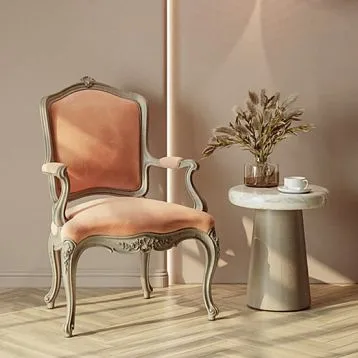
— cabriole legs, S-shaped curved legs characteristic of Baroque and Rococo. The upper part curves outward, the lower part inward, often ending in a foot (animal, lion, eagle). This is a complex sculptural form requiring hand carving or precise CNC processing.carved legs— cabriole legs transform the chair into a piece of decorative art.
Modern shapes
— straight cylindricalfurniture legs— constant cross-section — language of minimalism. No decorative elements, only pure geometry. Function expressed through form. Such legs do not draw attention, blending into the overall composition, allowing other elements to stand out. This is a choice for interiors where restraint and clean lines are important.
— square legs with beveled edges — compromise between the strength of a square cross-section and the visual softness of rounded edges. The bevel softens the sharpness of the edges, makingchair legs— more pleasant to the touch, more visually interesting. When viewed at an angle, a square leg with beveled edges appears octagonal — the play of light on the facets adds additional expressiveness.
— flat paddle legs — a designer solution for avant-garde furniture. Instead of bulky cylinders or blocks — thin, wide plates mounted edge-on. Paradoxical combination of visual fragility and real strength (a plate mounted edge-on is very rigid).Solid wood chair— with such legs, it looks sculptural, becomes an art object.
Care and longevity
Woodenchair legs— with proper care, they serve for decades. Regular dry cleaning with soft cloth removes dust. Avoid excess moisture — wood does not like water. If liquid spills, immediately wipe dry. Periodically (every half-year to a year) renew protective coating — oil, wax, or wood polish. This nourishes the wood, preserves its elasticity, and protects against drying.
— mechanical damage — scratches, dents — inevitable with intensive use. Minor scratches on lacquered surfaces are filled with matching repair lacquer or wax. Deep dents onfurniture legs— sometimes can be lifted with steam — apply a damp cloth, iron with heat, compressed fibers swell, and the dent reduces. For serious damage, local sanding and reapplication of coating will be required.
— loosening of joints — typical problem with old chairs. Glued joints weaken over time, dowel joints develop play. Repair requires disassembling the chair, cleaning old glue, and re-gluing. Sometimes dowels need to be tightened by wrapping with thin fabric, or replaced entirely.Furniture hardwareWith metal clamps, simply tighten with a key.
Protection against damage
Felt or rubber caps on the lower endschair legsProtect both the floor and the legs from wear. When moving the chair, the caps reduce noise and prevent scratches on parquet or laminate. Caps wear out over time and require replacement — this is a simple, inexpensive procedure that extends the life of both the chair and the floor covering.
Avoid placing wooden chairs near heat sources — radiators, fireplaces, heaters. Excessive heat dries out the wood, making it brittle and causing cracks. Direct sunlight is also harmful — UV radiation fades the finish and changes the wood's color.Wooden legsThey are better preserved under stable conditions with moderate temperature and humidity.
Overloading the chair beyond its calculated capacity — a direct path to failure. If a chair is designed for 100–120 kg, do not use it as a step stool by standing on the seat with your feet. The load concentrates on two legs, often dynamically (with jumping during ascent), repeatedly exceeding the calculated load.Furniture supportMay not withstand the load, resulting in a crack or break.
Selection and Purchase
Consider ceiling height, room size, interior style, and functionality.legs for chairsThe first criterion — load capacity. Assess who will use the chair. For children’s furniture, thinner legs suffice. For adults of average weight — standard 38–42 mm. For heavy individuals or intensive use — robust 45–50 mm. Safety margin never hurts; better to overestimate than face a break.
Stylistic compatibility determines visual harmony.Turned LegsClassic shapes for traditional interiors. Conical — for Scandinavian and modernist styles. Straight cylindrical — for minimalism and loft. Carved cabriole — for Baroque and Rococo. Mismatched leg styles with the overall interior concept create dissonance and break the visual unity.
The wood species should match other furniture. If the room has a oak table, oakchair legswill create harmony. You can combine similar species — oak and ash, beech and birch — provided they have a unified color treatment. Contrasting combinations (light beech and dark walnut) require design sense; otherwise, they appear random.
Where to buy quality legs
Specialized manufacturersfurniture hardwareThey offer a wide variety of ready-made legs in different styles, sizes, and species. Advantages — material quality, precision of processing, choice. You can select a ready-made solution for most projects. Catalogs are usually available online, with detailed dimensions, photos, and technical specifications.
Custom-made to order — an option for unique projects. A turner or carpenter createschair legsaccording to your sketches, drawings, or samples. This is more expensive and takes longer than ready-made solutions, but the result perfectly matches the concept. For restoring antique furniture, original designer projects, or mass production of custom furniture, this is the only way.
Buying in sets is more cost-effective than individually. To make or repair chairs, you need four legs (or two, if only front or rear). Manufacturers often offer set pricing.Furniture legsIn sets, they are guaranteed to be identical in size, color, and profile. Buying individually risks receiving mismatched tones or minor differences between batches.
Conclusion: the foundation of stability and beauty
The chair lives on the edge of balance — between strength and elegance, function and aesthetics, tradition and innovation.chair legs— literally and figuratively, the foundation upon which the entire piece is built. Incorrect legs doom the chair to discomfort, instability, and a short lifespan. Correct legs create reliability, comfort, and longevity, allowing furniture to serve for decades, passing from generation to generation.
Choosingfurniture legsIt requires understanding of mechanics, ergonomics, and aesthetics. It is not simply four sticks supporting the seat. It is an engineered system designed for complex loads. It is a visual element defining the style. It is a handmade object bearing the mark of craftsmanship. The balance of all these aspects creates the idealleg support for the chair— strong, beautiful, and appropriate.
Company STAVROS has specialized in the production ofwooden legs for furnitureMore than 130 models — from classicturned shapesto modern minimalist solutions. Each item is made from carefully selected noble wood species — oak, beech, ash. Kiln-dried wood ensures material stability, eliminating deformation after installation.
STAVROS production combines traditional craftsmanship with modern technologies. CNC lathes reproduce complex profiles with precision down to tenths of a millimeter. But where manual craftsmanship is required, master turners create unique pieces.chair legsSTAVROS products — a guarantee of quality, proven over time and by thousands of satisfied customers.
The range covers all stylistic directions. Classic baluster shapes for traditional interiors. Conical and cylindrical for Scandinavian design. Carved cabriole for historical styles. Minimalist geometric for modernism.Furniture DesignFurniture with STAVROS legs receives a reliable base and distinctive character.
Custom production — a strong point of STAVROS. If the catalog does not have a suitable model, specialists will develop one for your project. 3D modeling allows visualizing the result before production begins. Sample production for approval. Mass production in the required volume — from several sets for private interiors to thousands of units for furniture factories.furniture legsof any complexity, professionally implemented and on time.
Finishing services expand possibilities. Tinting in any shades to match other furniture. Lacquering with matte or glossy finishes for the desired sheen and protection. Patination and artificial aging for vintage interiors. Enamel painting in RAL colors for bold design solutions.Wooden legsSTAVROS can be ordered with any finish, perfectly matching the project.
STAVROS product quality is confirmed by certificates, tests, and above all — customer reviews. Furniture factories, private craftsmen, interior designers, and home hobbyists — all find suitable solutions here. Stable geometry, absence of defects, compliance with stated dimensions — basic things that STAVROS guarantees.Furniture hardwareof this company — choice of professionals.
STAVROS logistics covers the entire Russia. Warehouse program ensures availability of popular items for immediate shipment. Custom production is performed within agreed timelines. Reliable packaging protects items during transport. Delivery to the client’s door or to the site.Solid wood chairLegs for STAVROS — an investment in quality, reliability, and longevity.
STAVROS specialist consultations help make the right choice. Considering the chair’s purpose, expected loads, interior style, and project budget, experts recommend optimal models. Calculating the required quantity, selecting complementaryfurniture hardwareinstallation recommendations — full service for successful implementation of your idea.
Create furniture that serves generations. Choose a base that won’t let you down. Trust companies that understand their craft. STAVROS — your reliable partner in the worldwooden legs for furnitureHere, traditional carpentry craftsmanship meets modern technologies, quality is proven by workmanship, and every item carries a guarantee of reliability.chair legsfrom STAVROS — the choice of those who do not compromise, who understand: good furniture begins with the right base!