Article Contents:
- Somatosensory Cortex: Your Body's Map in the Brain
- Why Texture Complexity is Critical
- Children and Tactile-Rich Environments: Brain Formation from Birth
- The Connection Between Tactility and Spatial Thinking
- Sensory Deprivation and Its Consequences
- Mindful Touch: Meditative Practice of Connecting with Material
- Neurophysiology of Meditative Touch
- Integrating Practice into Daily Life
- Therapeutic Potential of Wooden Utensils
- Therapy Through Daily Rituals
- Social Aspect of Wooden Utensils
- Tactility and Cognitive Aging
- Tactile Stimulation as Dementia Prevention
- Biochemistry of Touching Wood
- Material Energetics and Psychophysiological Comfort
- Neuroaesthetics: Why the Brain Loves Carving
- Tactile Beauty: Synergy of Visual and Haptic
- Practical Recommendations: How to Create a Neuroplastic Environment
- Selection Features for Children
- Adaptation for Elderly People
- Frequently Asked Questions
- Conclusion

Touch the surface of carved wood. Feel those intricate interweavings of grooves, protrusions, and ornamental swirls? Your fingers glide over the relief, reading information that the brain processes at a rate of thousands of impulses per second. And here's the paradox: while you're studying the wood's texture, the wood is studying you—or rather, changing the structure of your brain at the cellular level. Daily contactcarved appliquéswith relief furniture legs, complex ornaments activates the somatosensory cortex—the area responsible for processing tactile signals. This isn't just a pleasant sensation. It's a biological process of forming new neural connections, known as neurogenesis. Touch becomes a tool for brain rewiring.






Somatosensory Cortex: Your Body's Map in the Brain
In the parietal lobe of the brain exists an amazing structure—the somatosensory cortex, where every body part has its representation. Moreover, the size of this representation doesn't correspond to the actual size of the body part. A huge area is occupied by hands, especially fingers and palms. Why? Because it's through our hands that we receive the lion's share of tactile information about the world.
When you touch a smooth plastic surface, a small area of the somatosensory cortex activates—the information is monotonous, there's nothing for the brain to process. But when fingers explore the complex textureof carved solid wood furniturea whole orchestra of neurons engages. Some respond to pressure, others to vibration, others to temperature, others to direction of movement. The brain receives a rich, multi-layered signal.
Research shows that regular stimulation of the somatosensory cortex with complex textures leads to its physical enlargement. Literally: the hand representation zone in the brain becomes larger. New dendrites form—neuron extensions, the number of synapses increases—connections between cells. This is neuroplasticity—the brain's ability to change its structure in response to experience.




Why Texture Complexity is Critical
Not every touch triggers neurogenesis. Monotonous, predictable stimuli are quickly ignored by the brain—the habituation mechanism kicks in. But complex, diverse textures constantly maintain neural activity at a high level.
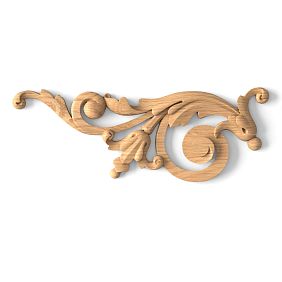
Imagine an acanthus leaf on adecorative overlay—each curl has its own depth, each vein its own texture, transitions between elements are smooth but nonlinear. When fingers explore such a surface, the brain is forced to constantly adapt, process new signals, and build a three-dimensional mental map of the object. This is intense neural work.
Moreover, natural wood itself has a heterogeneous structure. Wood fibers create a microtexture that plastic or MDF cannot replicate. Even on a smoothly sanded oak or beech surface, there remains a barely perceptible relief that tactile receptors detect and transmit to the brain. And when carving is added to this base texture—the effect is multiplied.
Our factory also produces:







Children and Tactile-Rich Environments: Brain Formation from Birth
A child's brain is a construction site where millions of new neural structures are built every day. In the first years of life, up to 90 percent of all synaptic connections a person will use throughout their life are formed. And tactile experience plays a colossal role in this process.
Children growing up surrounded bysolid wood productswith diverse textures receive richer sensory stimulation. They touch carved table legs, run their fingers over relief overlays on cabinets, feelwooden tablewareduring meals. Every touch is a signal to the brain: create new connections, strengthen existing ones, develop.
The results are impressive. Children from tactile-rich environments show better development of fine motor skills—their fingers are more dexterous, movements more coordinated. They master complex manipulations earlier: tying shoelaces, fastening small buttons, drawing, writing. But the effect is not limited to motor skills.
Get Consultation
The Connection Between Tactility and Spatial Thinking
Spatial thinking—the ability to imagine and manipulate three-dimensional objects in the mind—is directly linked to tactile experience. When a child feels an object, their brain builds its mental model. The more complex and diverse the objects, the richer this model.
Research has shown that children who regularly interact with complex tactile objects perform better on spatial thinking tasks: assembling complex construction sets, solving geometric puzzles, understanding maps and diagrams. These are critically important skills—they form the basis of mathematical abilities, engineering thinking, and architectural vision.
When a child grows up in aninterior with wooden furniture, saturated with carved elements, their brain trains daily. They see complex shapes, touch them, correlate visual and tactile information. Gradually, a powerful neural network responsible for spatial perception is formed. This is not an abstract benefit—it is a concrete advantage that will manifest in school, in creativity, in their profession.
Sensory Deprivation and Its Consequences
The flip side is sensory deprivation. Modern children grow up surrounded by smooth, uniform surfaces. Plastic toys, laminated furniture, synthetic fabrics—all provide minimal tactile stimulation. The brain does not receive the signals necessary for development.
The consequences of such deprivation do not appear immediately, but they are serious. Children demonstrate slower development of fine motor skills, coordination problems, difficulties in learning to write. They may have reduced finger sensitivity—they are worse at distinguishing textures, less precise in manipulations. This is not a pathology, but it is a lag in the development of those neural systems that should have formed in early childhood.
The solution is simple: enrich the environment. Add items with diverse textures to the home.carved furniture elements, wooden toys, solid wood tableware, textiles made from natural fabrics. Each such item is a tool for developing the child's brain.
Conscious Touch: A Meditative Practice of Connecting with Material
The adult brain is also plastic, though to a lesser degree. But it is precisely a conscious approach that allows one to maximize this potential. The practice of conscious touch is a technique combining elements of meditation and sensory stimulation.
The essence is simple: you choose an object with a complex texture—for example, acarved overlay on furniture—and for several minutes, you fully concentrate on the tactile sensations. Close your eyes to exclude visual information. Slowly run your fingers over the surface. Feel every bump, every hollow, the transitions between elements of the ornament.
Do not analyze, do not evaluate—simply observe the sensations. Warmth or coolness of the wood? Smoothness or roughness? Hardness or elasticity? Vibration arising from moving a finger over the relief? All these nuances contain information that the brain eagerly absorbs.
The Neurophysiology of Meditative Touch
What happens in the brain during mindful touch practice? Not only the somatosensory cortex is activated, but also the prefrontal cortex—the area responsible for attention and awareness. The simultaneous activation of these zones creates a special state—you are simultaneously focused and relaxed, alert and calm.
Research on meditative practices shows that conscious concentration on sensory sensations enhances neuroplasticity. The brain perceives signals in more detail, processes them more deeply, and forms stronger memory traces. Ten minutes of mindful touch have a greater effect on brain development than an hour of unconscious interaction with objects.
Moreover, such practice reduces stress levels. Tactile stimulation activates the parasympathetic nervous system—the one responsible for relaxation and recovery. Touching warm wood, slowly exploring its texture, calms the mind, reduces cortisol levels—the stress hormone, and normalizes heart rate and breathing.
Integrating the practice into daily life
You don't need to set aside special time for mindful touch practice. Integrate it into your daily activities. In the morning, while pouring coffee, rest your hand on thewooden handle of the cabinet—feel its texture. In the evening, sitting at the table, slowly run your fingers along the carved leg—explore its relief. While eating, pay attention to the tactile sensations fromwooden tableware.
These micro-practices, repeated daily, have a cumulative effect. The brain gradually restructures itself, becoming more sensitive to tactile information and better at distinguishing subtle nuances of textures. Hand coordination improves, movement precision increases, and the ability to concentrate is enhanced.
This practice is especially effective for people whose work involves high cognitive loads. Programmers, writers, analysts—all those who spend hours in a state of mental tension need ways to switch off and recover. A few minutes of mindful touch of wood create a mental pause, allowing the brain to rest from abstract tasks and switch to concrete, sensory ones.
The therapeutic potential of wooden tableware
Eating is not just about nourishing the body. It is a multisensory experience in which tactile sensations play an important role. When you hold asolid wood plate, your hands receive unique stimulation.
First, wood is warm. Unlike ceramics or metal, which quickly adopt the ambient temperature, wood retains comfortable warmth. This activates the skin's thermoreceptors, creating a pleasant feeling of coziness. The brain interprets this warmth as a safety signal, which promotes relaxation and better digestion.
Second, texture. Even a smoothly sanded wooden surface has a micro-relief created by wood fibers. The fingers detect this relief, transmitting rich tactile information to the brain. If the tableware has carved elements or textured finishes—the effect is multiplied many times over.
Therapy through daily rituals
Using wooden tableware transforms an ordinary meal into a therapeutic ritual. You pick up a plate—and already in this gesture, there is tactile stimulation. You feel the weight of the wood, its texture, its warmth. This slows you down, brings you back to the present moment, and creates a state of mindfulness.
Mindful eating—a practice where you fully concentrate on the process of eating—becomes natural when you use wooden tableware. Tactile sensations anchor attention, preventing thoughts from wandering. You don't swallow food mechanically while staring at your phone—you truly eat, being present in the process.
This has direct neurobiological consequences. Mindful eating activates brain areas responsible for taste perception and satiety. You derive more pleasure from less food, better sense the moment of fullness, and avoid overeating. Additionally, stress levels decrease—eating ceases to be a mechanical act and becomes a form of self-help, self-care.
The social aspect of wooden tableware
When the whole family uses wooden tableware, a shared tactile experience is created. Everyone holds objects made from the same material, with a similar texture. This forms a subtle but important connection—a shared sensory environment that unites people on a subconscious level.
Children growing up withwooden tableware on the table, receive daily tactile training. They learn to hold objects carefully, feel their weight and balance, and coordinate movements. This develops not only motor skills but also the neural systems responsible for spatial perception and bodily awareness.
Interestingly, many families note: after switching to wooden tableware, lunches and dinners have become more leisurely, the atmosphere—more calm. People are less distracted, talk more with each other, and enjoy the food. This is not accidental—tactile comfort creates a general state of relaxation and presence, which fosters deep communication.
Tactility and cognitive aging
With age, the brain gradually loses plasticity. The number of neural connections decreases, information processing speed slows, and memory deteriorates. This is a natural process, but it can be slowed down. And one of the most effective strategies is maintaining a rich sensory environment, especially a tactile one.
Elderly people living surrounded by diverse textures demonstrate better cognitive indicators. Their brains remain more active, neural connections are preserved longer. Regular tactile stimulation is a kind of 'brain exercise' that keeps it in working condition.
Complex, three-dimensional textures are especially important. Smooth surfaces do not provide sufficient stimulation. Butcarved furniture with rich ornamentationTextile products with pronounced relief, items made from natural materials with heterogeneous structure — all of this creates the load on the somatosensory cortex necessary to preserve its functionality.
Tactile stimulation as dementia prevention
Dementia — the decline of cognitive functions — is one of the main health threats in old age. But the brain can be trained, and tactile stimulation is one of the tools of this training.
Research shows that people who regularly engage in handicrafts, play musical instruments, work with wood or other materials are less likely to suffer from dementia. The common denominator of all these activities is intensive tactile load on the fingers and hands.
But it's not necessary to master new skills. It's enough to fill everyday life with tactilely rich objects.Decorative elements made of carved woodthat you want to touch, solid wood tableware, furniture with textured handles and overlays — all of this creates an environment that stimulates the brain daily, imperceptibly, but effectively.
The biochemistry of touching wood
Contact with wood triggers not only neural but also biochemical processes. Research in forest medicine has shown that touching natural wood reduces cortisol levels — the stress hormone — and increases the activity of the parasympathetic nervous system.
The mechanism is partially related to smell: wood releases volatile organic compounds — terpenes and phytoncides, which the brain recognizes as signals of the natural environment. This activates ancient evolutionary mechanisms of relaxation and recovery. But there is also a purely tactile component.
The texture of wood, its temperature, and elasticity create a specific pattern of signals that the brain interprets as 'safe' and 'natural'. Evolutionarily, we are accustomed to contact with natural materials — wood, stone, leather, fabric. Synthetic materials with their uniform, 'dead' texture are recognized by the brain as foreign, creating subliminal tension.
The energetics of materials and psychophysiological comfort
Although the concept of 'energetics' of materials is not scientifically defined, people's subjective sensations from contact with different materials differ radically. Many describe touching wood as 'warm', 'alive', 'calming', while plastic feels 'cold', 'dead', 'unpleasant'.
These sensations have a physiological basis. Wood has low thermal conductivity — it does not draw heat away from the skin quickly, so it is perceived as warm. Plastic and metal draw heat away faster, creating a sensation of cold. The brain uses temperature as one of the criteria for assessing an object's safety.
Moreover, wood is slightly elastic — when pressed, it deforms minimally, creating a sense of 'response'. Plastic is either absolutely rigid or too soft — in both cases, the golden mean that is perceived as natural is absent.
Neuroaesthetics: why the brain loves carving
Neuroaesthetics — a field of neuroscience that studies how the brain perceives beauty — provides interesting answers to the question of why carved elements are so attractive. It turns out that the brain has built-in preferences for certain types of shapes and patterns.
Fractal structures — repeating patterns at different scales — activate pleasure zones in the brain. Natural carving, imitating plant motifs — leaves, flowers, branches — often has a fractal structure. The brain recognizes these patterns as familiar, natural, safe.
Curvilinear forms are preferable to angular ones. Smooth curvescarved ornamentsactivate brain areas associated with positive emotions, while sharp angles are associated with potential danger.
Tactile beauty: synergy of visual and tactile
When an object is not only visually beautiful but also pleasant to the touch — a synergistic effect arises. The brain receives coordinated information from two sensory systems, which enhances positive perception.
Solid wood furniture with carved elementspossesses precisely such synergy. The eye enjoys the complexity of the ornament, the play of light and shadow on the relief surface. And the hand receives confirmation of the visual impression — the fingers feel the same complexity that the eye sees. This creates a sense of integrity, authenticity, quality.
Interestingly, the brain is capable of predicting tactile sensations from visual information. When you look at a carved overlay, your somatosensory cortex is already activated — the brain models what it will be like to touch this object. And when the prediction matches the actual sensations — satisfaction arises. When it doesn't match — dissonance and disappointment.
Practical recommendations: how to create a neuroplastic environment
If you want to use tactility for the development and support of the brain — your own and your family members' — start by assessing the existing environment. Which surfaces do you touch most often? What is their texture? Do they provide rich sensory information or are they monotonous?
Gradually enrich the environment. Replace plastic cabinet handles with wooden or metal ones with interesting texture. Addcarved elements to furniture— overlays, moldings, decorative panels. Use tableware made from natural materials — wood, ceramics with unglazed areas, glass with relief.
Create 'tactile stations' — places where objects with interesting textures are intentionally placed. This could be a shelf with carved figurines, a table with a relief tabletop, a wall with three-dimensional panels. These places will naturally attract attention and invite touch.
Selection features for children
For a child's room, choose safe but texturally rich items.Solid wood furniture with rounded shapes, wooden toys with varying degrees of sanding, textile items made from natural fabrics with a pronounced texture.
Variety is important. Don't limit yourself to one texture — provide the child with the experience of interacting with smooth and rough, hard and soft, warm and cool. Each new texture is a stimulus for brain development.
Avoid sharp corners and very small parts that can be swallowed, but don't sacrifice textural diversity for excessive sterility. Moderate complexity is safe and beneficial.
Adaptation for elderly people
For elderly people, tactile stimulation is especially important. Choose items that are comfortable to hold and pleasant to touch.Furniture handles made of carved wood, cutlery with textured handles, decorative objects that can be picked up.
Encourage daily tactile practices. Let the morning begin with a moment of conscious touching of a favorite object — a carved box, a wooden bowl, textured fabric. This is a simple ritual that activates the brain and creates a positive mood for the day.
Frequently asked questions
Can touching wood really change the structure of the brain?
Yes, this is a scientifically confirmed fact. Regular tactile stimulation with complex textures causes physical changes in the somatosensory cortex — the number of synapses increases, new dendrites form, and the hand's representation area in the brain expands. This phenomenon is called neuroplasticity and works at any age, although it is most pronounced in children.
How much time should be devoted to conscious touching to see an effect?
Visible behavioral changes — improved coordination, increased finger sensitivity — may appear after 2-4 weeks of daily practice for 5-10 minutes. Structural changes in the brain begin earlier but become stable after several months of regular stimulation.
Can carved wood be replaced with other textures?
Any complex texture has an effect, but natural wood possesses a unique combination of properties: it is warm, has a natural micro-relief, and releases pleasant volatile compounds. The combination of visual, tactile, and olfactory impact creates a more powerful neuroplastic effect than isolated textural stimulation.
Does tactile stimulation help with stress and anxiety?
Yes, touching pleasant textures activates the parasympathetic nervous system, reduces cortisol levels, and normalizes heart rate and breathing. The practice of conscious wood touching can be used as a technique for quick stress relief — a few minutes of concentration on tactile sensations switch the brain from anxiety mode to relaxation mode.
Is there a difference between touching lacquered and unlacquered wood?
Yes. A thick layer of lacquer creates a smooth, uniform surface that blocks the wood's micro-texture and makes it feel colder. A thin oil or wax coating preserves the tactile qualities of the wood while protecting it from damage. The optimal option is a matte finish that allows you to feel the fiber structure.
Can an adult develop tactile sensitivity?
Absolutely. Although the child's brain is more plastic, adults are also capable of neurogenesis. Regular practice of conscious touching increases the sensitivity of tactile receptors and improves the ability to distinguish subtle nuances of textures. People who started practicing in adulthood note that the world becomes richer — they begin to notice tactile details they previously ignored.
Which wood species are best for tactile stimulation?
Hard deciduous species — oak, beech, ash, walnut — have a pronounced fiber texture and are pleasant to the touch. Oak has a particularly interesting tactile structure due to its large pores. Beech is smoother but warm. Coniferous species are softer, easier to damage, but release more aromatic compounds. Ideally, have a variety of species for maximum sensory experience.
Is it necessary to specifically teach children to touch carved furniture?
Children naturally gravitate towards interesting textures. It's enough to create a safe environment with accessible, tactilely rich objects. The only thing — you can show an example of conscious touching, slowly exploring the surface with your fingers. Children quickly adopt this behavior and begin to practice independently.
How often should the tactile environment be updated?
The brain gets used to familiar stimuli, so periodic updates are beneficial. But this doesn't mean you need to constantly change furniture. It's enough to add new small objects — decorative overlays, dishes, textile items — every few months. Or periodically change the arrangement of existing items to create novelty.
Does the effect work if a person is not aware of it?
Yes. Tactile stimulation works on a subconscious level as well — the brain processes sensory information even when you are not paying attention to it. However, conscious practice significantly amplifies the effect because it adds the component of focused attention, which in itself stimulates neuroplasticity.
Conclusion
Your home is not just a space where you live. It is an environment that daily shapes your brain, influencing its structure, functions, and capabilities. The tactile poverty of modern interiors, filled with smooth synthetic surfaces, is a hidden threat to children's development and adults' cognitive health.
But a solution is available. By enriching the environment with objects featuring diverse, complex textures — especially items made from natural carved wood — you create conditions for constant, unobtrusive, yet powerful brain stimulation. Every touch of a carved overlay, every contact with wooden tableware, every conscious exploration of texture initiates neurogenesis, strengthens existing connections, and forms new ones.
This is not esotericism or pseudoscience. This is neuroscience, confirmed by decades of research. The brain is plastic; it changes in response to experience. And tactile experience is one of the most powerful tools for this change.
For over twenty years, the company STAVROS has been creating solid wood products that serve not only as interior decoration but also as tools for brain development. Our catalog includes over 400 modelscarved appliqués with ornaments of varying complexity — from simple geometric patterns to luxurious Baroque compositions. We producefurniture legs and balusters with diverse textures,wooden tableware made from oak, beech, ash, walnut, thousands of product names for creating a tactilely rich environment.
Every STAVROS item is made from properly dried wood, undergoes manual finishing, is sanded, and coated with compounds that preserve the tactile qualities of the wood. We understand: what you hold in your hands, what you touch daily — these are not just objects. They are tools for shaping your children's brains, maintaining your family's cognitive health, and creating an environment that makes you smarter, more sensitive, more harmonious.
By choosing STAVROS, you are investing not in decor, but in neuroplasticity. In the brain's ability to develop, adapt, and retain youth. In tactile experience that enriches life at the most fundamental, neuroscientific level. Create a home that develops — touch by touch, day by day, year by year.