
































































Article Contents:
- The Philosophy of Renewed Neoclassicism: When Less Becomes More
- Ceiling Cornice: From Decorative Excess to Architectural Necessity
- Wall Molding: Geometry Instead of Ornament
- Panel Systems: Spatial Depth Through Layers
- Neoclassical Materials: The Nobility of Natural Wood
- Color Palette of Restrained Elegance
- Proportions and the Mathematics of Harmony: Rules of Classical Composition
- Practical Implementation: Neoclassicism in Different Rooms
- Common Mistakes: When Neoclassicism Turns into a Parody
- Neoclassicism and Modern Technology: Harmony of Traditions and Innovations
- Frequently Asked Questions about Neoclassicism
- STAVROS: The Architecture of Neoclassicism Embodied in Wood

Neoclassicism is experiencing a true renaissance in modern interior design, but its interpretation in 2026 radically differs from the pompous interiors of the early 2000s. Today, this style has found new life through the philosophy of minimalist elegance, where classical architectural grammar—cornices, moldings, panels—is used as a tool to create spatial depth, not as a display of decorative abundance. Modern neoclassicism rejects gilded stucco, an abundance of ornaments, heavy drapery, and baroque excess. Instead, it operates with clean lines, restrained proportions, noble materials, and precise geometry of architectural elements. The cornice becomes not an ornament, but the completion of the wall's architectural composition. Moldings form not a fragmented ornamental grid, but a concise structure of verticals and horizontals. Panels create not a museum-like solemnity, but modern comfort with a nod to classical tradition. These are interiors for living, not for formal receptions—spaces where classical harmony of proportions combines with the functionality of modern housing, where respect for architectural heritage does not turn into blind copying, but is reinterpreted through the lens of current needs and aesthetic preferences.


The Philosophy of Renewed Neoclassicism: When Less Becomes More
Classical interiors of the seventeenth to nineteenth centuries were created for palaces with ceilings five to six meters high and rooms one hundred square meters in area. The abundance of decor was justified by the scale of the space—huge volumes required visual filling, otherwise the room seemed empty and uninhabitable. Modern living space operates with completely different parameters: ceilings two seventy to three meters, rooms twenty to forty square meters. Attempting to transfer palace decorativeness into a standard three-room apartment creates visual crowding, a museum-like feel, and discomfort from excessive detail. Modern neoclassicism solves this problem through selectivity—it takes from the classical arsenal only basic architectural elements, abandoning decorative excesses.
The principle 'architecture is more important than ornament' becomes the foundation of the style. Instead of carved cornices with dentils, ovolos, and acanthus, concise profiles with two to three smooth lines are used, creating a play of light and shadow without fine detailing. Instead of complex panel systems with inner panels, rosettes, and carved inserts—simple rectangular frames made ofof wooden moldings, forming a clear geometric structure. Instead of multi-layered ceiling compositions with coffers and stucco—one high-qualityCeiling Molding, which completes the wall with an elegant horizontal line.
Material quality replaces the quantity of decor. In classical interiors, an abundance of ornaments often masked mediocre materials—plaster stucco was painted to look like marble, wood was stained to resemble precious species. Modern neoclassicism bets on authenticity: solid oak remains oak with its noble texture, white marble is not painted gold, bronze hardware does not imitate gilding. One square meter of genuine material is more valuable than ten square meters of imitation. Therefore, instead of an abundance of decor made from artificial materials, several key elements made from solid natural wood are chosen, which become architectural accents.
Spatial purity prevails over decorative saturation. Modern people live in an informationally overloaded environment—screens, notifications, visual street noise. The home becomes a place of visual rest, where the eye does not need to process excessive information. Neoclassicism of 2026 creates calm, structured interiors with a clear hierarchy of elements: the wall as a neutral background, several architectural accents from moldings, a minimum of high-quality furniture. The eye rests on clean surfaces, finds support in the clear geometry of lines, and does not get lost in ornamental labyrinths.




Ceiling Cornice: From Decorative Excess to Architectural Necessity
Why is a ceiling cornice even needed in a modern interior? Technically, the joint between the wall and ceiling can simply be painted—it's cheaper, simpler, faster. However, the visual result is radically different. A wall without a cornice abruptly meets the ceiling without a transition, creating a sense of unfinished composition. A cornice creates an architectural completion, a smooth transition from the vertical of the wall to the horizontal of the ceiling, a visual frame that organizes the space. In neoclassicism, the cornice is not an ornament, but a structural element that defines the scale and proportions of the room.
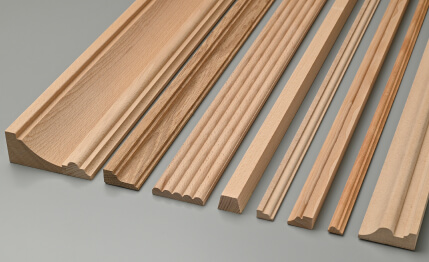
The size of the cornice in neoclassicism follows the rule of restraint. Massive cornices twenty to thirty centimeters high remain in palace interiors and high-style classicism. Modern neoclassicism uses medium cornices eight to fifteen centimeters high, which create a visually noticeable but not dominant element. For rooms with ceilings two seventy to two ninety, an optimalWooden corniceheight of nine to twelve centimeters is suitable. For high ceilings three to three twenty, cornices thirteen to fifteen centimeters are appropriate. Exceeding these sizes creates a visual heaviness inconsistent with the lightness of the modern style.
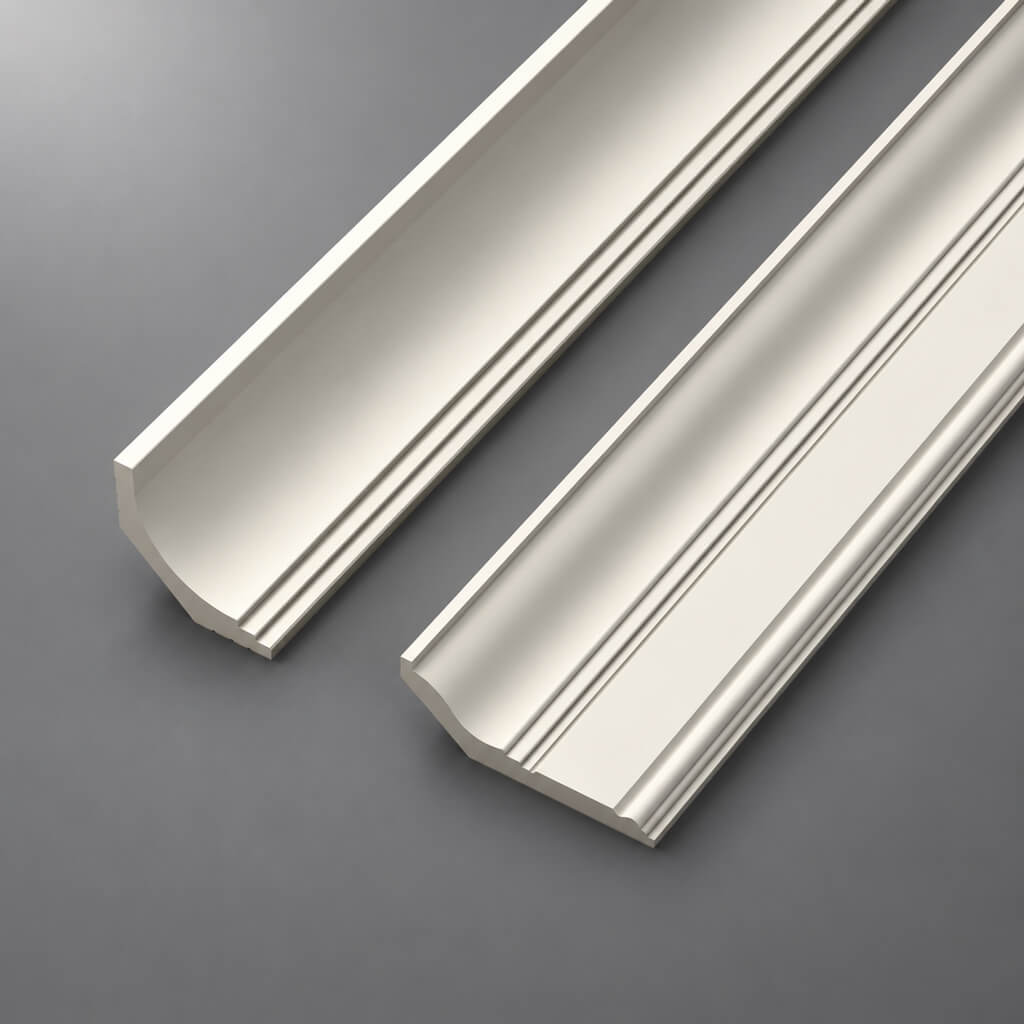
The cornice profile is distinguished by concise lines. A classical cornice includes many elements—cavetto, fillet, dentils, ovolos, cyma reversa, cyma recta. Each element has a functional origin from ancient architecture, but in interiors, it becomes pure decorativeness. The neoclassical cornice simplifies the profile to two to three main lines: upper fillet, middle cavetto, lower cyma reversa. These elements create a play of light and shadow, visual depth of the profile without fine detailing. The surface is smooth, without carving or ornaments. Beauty lies in the purity of lines and quality of execution, not in the abundance of decor.
The material of the cornice determines its durability and visual perception. MDF for painting is a budget option that, with quality processing, is visually indistinguishable from solid wood. However, for neoclassicism, where every element must be authentic, solid wood of noble species is preferable. Oak creates a sense of monumentality and reliability thanks to its expressive texture. Beech, with its homogeneous structure, is ideal for painting in light tones. Ash brings modern lightness through its silvery hue. The choice of species depends on the overall concept: warm neoclassicism leans towards oak, cold modern—towards ash, intermediate options use beech.
The color of the cornice in modern neoclassicism tends towards monochrome. A white cornice on a white ceiling and light walls creates visual unity, where the cornice is read through the relief of the profile, not through color contrast. This makes the space visually taller and brighter. An alternative option is a cornice matching the wall color with a white ceiling, creating a delicate border without sharp contrast. Dark cornices on light walls are a technique for high rooms where the ceiling needs to be visually lowered and graphic quality added. Gilding, patination, artificial aging—attributes of classicism that neoclassicism rejects in favor of color purity.
Hidden lighting behind the cornice adds modernity to the classical element. The cornice is set five to seven centimeters from the ceiling, forming a niche where an LED strip is placed. The light is directed upward, creating a soft glow on the ceiling, a visual effect of a floating surface. This technique, originating from modern architecture, fits perfectly into neoclassicism, adding technological sophistication without violating stylistic purity. It is important that the light fixtures are completely hidden—only the light is visible, not its source.
Our factory also produces:


Wall Molding: Geometry Instead of Ornament
In classical interiors, moldings served a framing function—they created borders for painted panels, mirrors, and fabric inserts. Neoclassicism retains the framing function, but the object of framing becomes not a decorative panel, but the wall itself as an architectural element.Wall moldingsform a geometric grid that structures the wall plane, creates rhythm, scale, and visual depth through the play of shadows in the recesses between the moldings and the wall.
Vertical moldings create visual height and elegance. Vertical slats five to eight centimeters wide are installed from the top of the panel zone (or from the baseboard if there are no panels) to the cornice with a uniform spacing of eighty to one hundred twenty centimeters. They divide the wall into vertical segments, programming an upward movement of the gaze, which visually increases the height of the room. Proportion is important: spacing that is too frequent creates fragmentation and visual tightness, while spacing that is too sparse results in a loss of structure. The optimal ratio: the width of the segment between vertical moldings is ten to fifteen times the width of the molding itself.
Horizontal moldings organize the height of the wall and create a classic tripartite division. The lower horizontal at a height of ninety to one hundred twenty centimeters separates the panel zone from the main part of the wall. The middle horizontal at a height of two hundred to two hundred twenty centimeters (with ceilings of two eighty to three meters) creates an intermediate division, characteristic of high classical interiors. The upper horizontal is the cornice. However, unlike classicism, where each horizontal was decorated with ornament, neoclassicism uses simple, undecorated slats, creating structure through pure geometry.
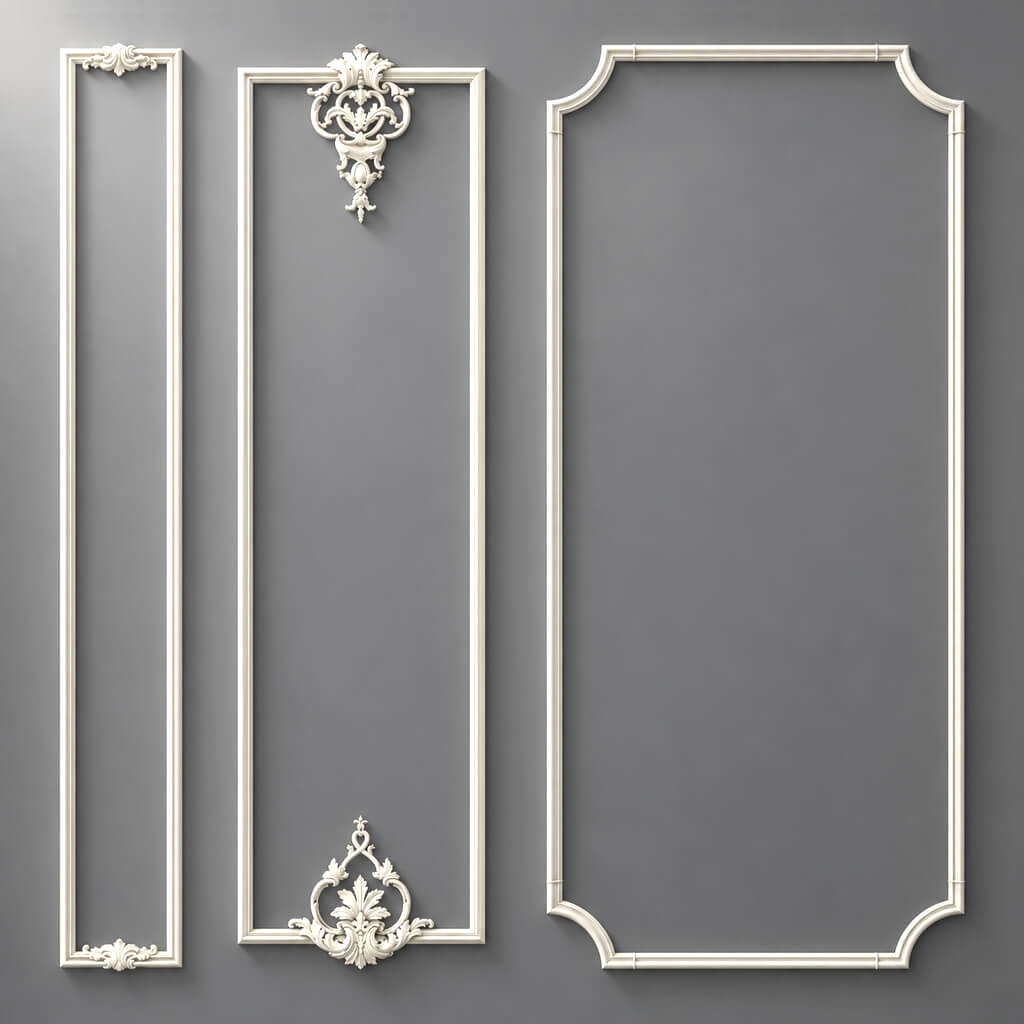
Rectangular frames are a basic technique of neoclassical wall organization. Moldings form rectangles with a proportion of three to four or two to three, which are arranged symmetrically on the wall plane. Inside the frames is a painted wall of the same tone or a slightly different one. Frames create visual depth: a molding one to two centimeters thick protrudes from the wall, forming a small shadow around the perimeter, which creates the illusion of a recessed panel. This is a classic boiserie technique, simplified to its minimal form. The number of frames depends on the size of the wall: for a wall three by two and a half meters, two to three frames are optimal; for a large wall, four to six.
Symmetry and rhythm are mandatory attributes of neoclassical composition. Molding frames are arranged symmetrically relative to the central vertical axis of the wall. The central frame can be larger than the side ones, creating a hierarchy, or all frames can be the same, forming a regular rhythm. It is important that the axes of the frames coincide with architectural axes—the center of a window, door, or fireplace. Random placement of frames destroys classical harmony. The distances between frames and from frames to room corners should be equal or follow a clear proportional logic.
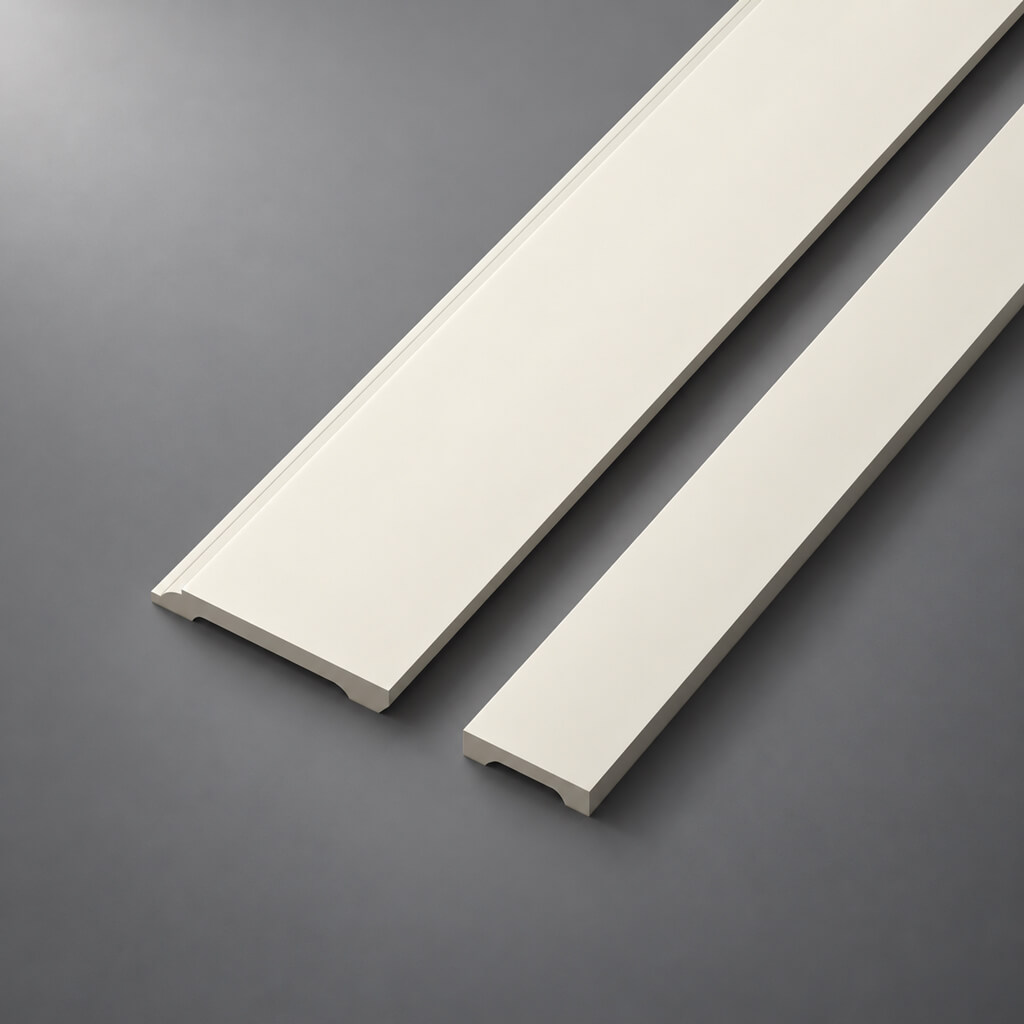
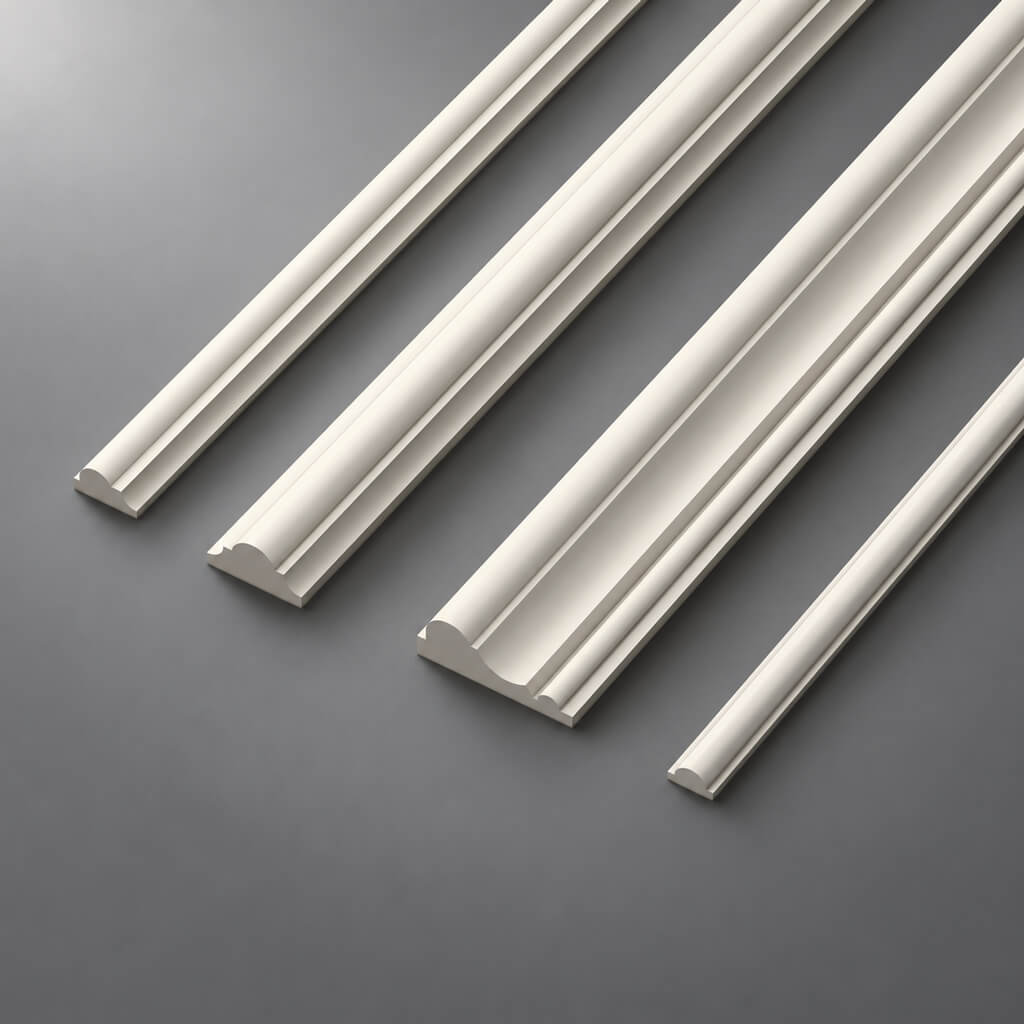
The profile of molding in neoclassicism is extremely simple. It can be a simple rectangular slat with a beveled or rounded edge, creating minimal relief. Or a profile with a single cove, forming a delicate shadow. The width of molding for wall frames is five to eight centimeters, creating a visually noticeable but not massive element. Wider moldings of twelve to fifteen centimeters are used for framing fireplaces, doorways, large mirrors—places where a more powerful architectural accent is required.
The color solution for moldings follows the principle of tonality. Moldings in the same tone as the wall create a delicate structure that is read through relief and shadow, not through color contrast. This is a solution for calm, refined interiors. White moldings on a colored wall create a more pronounced graphic effect, characteristic of Parisian apartments and French neoclassicism. Contrasting dark moldings on a light wall is a technique for modern interpretations, adding graphic quality and sharpness. It is important to avoid gilding, silvering, patina—these techniques belong to historical classicism, not neoclassicism.
Get Consultation
Panel Systems: Spatial Depth Through Layers
Panels in classical interiors protected the lower part of the wall from mechanical damage and created a visual base for the composition. Neoclassicism retains both functions but changes the aesthetics: instead of complex constructions with panels, carvings, and inlays, simple geometric solutions are used, where beauty lies in proportions, material, and quality of execution.
The height of the panel zone determines the character of the interior. The classic height of ninety to one hundred centimeters (one-third of a standard ceiling of two seventy to three meters) creates a balanced composition where the panel zone is visually weighty but not dominant. Low panels of sixty to seventy centimeters emphasize the verticality of the wall, suitable for visually increasing the height of a room. High panels of one hundred twenty to one hundred fifty centimeters create monumentality, appropriate in rooms with ceilings of three twenty and above. The choice of height is a choice between lightness and solidity, modernity and tradition.
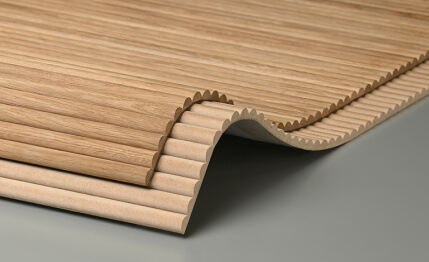
The construction of panels in neoclassicism tends towards simplicity. Instead of complex framed constructions with panels and inserts, continuous cladding is useditems from the solid wood—vertical or horizontal boards forming a smooth surface. Vertical cladding with boards twelve to twenty centimeters wide creates a graphic structure of parallel lines, visually elongating the space. Horizontal cladding forms a ribbon-like structure, visually widening the room. Boards can be joined tightly with a minimal seam or with a pronounced shadow gap of three to five millimeters, which emphasizes the structure.
An alternative option is framed panels of simplified construction. A frame made of moldings eight to ten centimeters wide forms a rectangle, inside which is a smooth surface of MDF or solid wood. Several such frames are arranged horizontally along the wall, creating a regular rhythm. An important difference from classicism: the inner surface is smooth, without profiling, carving, or recesses. All visual activity is concentrated in the pure geometry of the frames.
The molding crowning the panel zone serves as an architectural finishing element. This is a horizontal slat seven to ten centimeters wide with a simple profile—rectangular with a bevel or with a single cove. The molding is installed along the top edge of the panels around the entire perimeter of the room, creating a clear boundary between the lower protective zone and the upper decorative zone. The color of the molding can match the color of the panels, creating a unified composition, or be contrasting, emphasizing the boundary.
The material of the panels determines the status of the interior. Solid oak is the choice for high-level interiors, where the natural beauty of wood with expressive texture becomes a value in itself. Oak panels can be coated with matte oil, preserving the tactility of the wood, or with clear varnish, emphasizing the depth of the texture. Solid ash with a silvery hue creates a lighter, more contemporary sound. High-density MDF for painting is a practical solution for monochrome interiors, where panels are painted the same color as the wall above, differing only in texture.
The color strategy for panels in neoclassicism varies from monochrome to contrast. A monochrome solution—panels and wall of the same color, differing only in material and texture—creates visual unity, expands space, and is suitable for small rooms. A tonal solution—panels two to three tones darker or lighter than the wall—creates delicate differentiation while maintaining harmony. A contrast solution—dark panels on a light wall or vice versa—creates graphic quality, characteristic of modern interpretations of neoclassicism.
Neoclassical Materials: The Nobility of Natural Wood
The choice of material for cornices, moldings, and panels is not only a matter of budget but also a matter of philosophy. Neoclassicism as a style, leaning towards authenticity and durability, prefers natural materials to artificial imitations. Wood becomes the number one material due to its visual warmth, tactile pleasantness, eco-friendliness, and ability to be restored.
Oak is the classic choice for high-status neoclassical interiors. A density of seven hundred kilograms per cubic meter, hardness, and durability of fifty years or more make oak an ideal material for elements that should last for decades. The texture of oak with pronounced annual rings and medullary rays creates visual depth, natural beauty that needs no additional decoration. The color range of oak from light honey to dark brown allows for selecting a shade to fit any concept.Wooden baseboardmade of oak adds completeness to a neoclassical interior.
Ash with its silvery-gray hue and contrasting texture is ideal for cold neoclassicism with a modern slant. Ash is lighter than oak, its texture is more graphic, which creates visual lightness. When stained, ash takes gray shades perfectly, so relevant in modern interiors. The physical properties of ash are close to oak—density six hundred fifty to seven hundred kilograms per cubic meter, high strength, durability.
Beech is distinguished by a uniform fine-pored structure of a pinkish hue, making it an ideal material for painting. Where oak and ash are used with a transparent coating emphasizing the texture, beech is painted with enamel, creating a perfectly smooth surface. BeechTrimming Itemsunder white or gray enamel is visually indistinguishable from plaster but surpasses it in strength and durability.
High-density MDF of European production is a modern alternative to solid wood for elements to be painted. Density of seven hundred fifty to eight hundred fifty kilograms per cubic meter, geometric stability, and absence of internal stresses make MDF ideal for cornices and moldings of complex profiles. After quality priming and painting, MDF creates a surface of ceramic smoothness. Environmental concerns regarding formaldehyde in MDF are alleviated by using materials of emission class E1 with minimal volatile organic compound content.
Surface treatment determines the final visual impression. Matte oil preserves the natural texture of the wood, allows it to be felt to the touch, and creates a warm organic atmosphere. This is the choice for interiors where tactility and naturalness are important. Matte or semi-matte varnish creates a more protected surface that is easier to clean and retains its original appearance longer. Glossy varnish is rarely used in neoclassicism—it is associated with palace pomp, which the modern style rejects. Enamel on wood or MDF creates a perfectly smooth monochrome surface, where form is more important than material.
Color Palette of Restrained Elegance
Neoclassicism of 2026 rejects bright, saturated colors in favor of complex muted shades that create a sense of calm and sophistication. The color palette is built on nuances, not contrasts, on tonal transitions, not bright combinations.
White in all its variety of shades remains the base of the neoclassical palette. But this is not the dazzling white of hospital walls, but complex shades with a weak undertone. Warm whites with a hint of ochre or sepia create a cozy, intimate atmosphere. Cool whites with a bluish or gray undertone form a fresh, contemporary environment. Cream and ivory bring classic elegance. Moldings and cornices painted in these shades of white create visual purity of space, where architecture is read through relief and light, not through color contrast.
The gray palette, ranging from light gray to graphite, becomes the second foundation of modern neoclassicism. Light grays with warm undertones (greige) create a neutral background that pairs with any accents. Medium grays form a denser atmosphere, suitable for bedrooms and studies. Dark graphite shades are used as accents—for a single wall, for a paneled area in contrast with a light upper section, or for a cornice in a high-ceilinged room. Gray wood panels made of stained ash or painted MDF create a contemporary interpretation of classical architecture.
Pastel shades from the classical palette receive a muted interpretation. Instead of bright blue—dusty blue with a gray undertone. Instead of pink—dusty pink, almost gray. Instead of green—gray-green, olive, sage. These complex shades create visual depth without shouting their presence. Walls in such tones form a calm background for white or tone-on-tone moldings.
Natural wood tones—from light ash to dark walnut—are used to create visual warmth. Wooden panels and moldings with a clear finish bring organic quality, a connection to nature, and tactile richness. It's important to maintain balance: if panels are made of natural wood, then moldings and cornices are usually painted to avoid visual overload from wood texture. Or vice versa—painted panels with wooden moldings.
Monochromatic schemes, where all architectural elements and walls are painted in shades of a single color, create visual unity and expand the space. The distinction between panels, walls, moldings, and cornices is achieved not through color but through texture and relief. A monochromatic white interior with white wooden elements embodies restrained elegance. Monochromatic gray—contemporary sophistication.
Proportions and the mathematics of harmony: rules of classical composition
Neoclassicism inherits from classical architecture not only formal elements—cornices and moldings—but also principles of proportioning based on mathematical ratios. The harmony of a neoclassical interior is achieved not by arbitrary placement of elements but by following precise proportional systems.
The golden ratio—approximately 1:1.618—underlies many classical proportions. The height of the paneled area relative to the wall height above the panels can relate as 1:1.618. The width of a molding relative to the distance between moldings in a framed composition—the same ratio. The height of a cornice relative to the wall height from floor to the bottom of the cornice. These ratios create visual harmony that the eye perceives as correct, even without recognizing the mathematical basis.
The rule of thirds—dividing a plane into three equal parts—determines many compositional decisions. The paneled area occupies the lower third of the wall. A central molding frame on an accent wall is positioned in the middle third. A frieze or intermediate molding is placed at the boundary of the upper third. This division creates visual stability and balance.
Symmetry is a fundamental principle of classical and neoclassical composition. Molding frames are placed symmetrically relative to the central axis of the wall. Distances from frames to room corners are equal. Vertical moldings are positioned with uniform spacing. Breaking symmetry is permissible only intentionally, to create dynamism in contemporary interpretations, but even then, visual balance must exist.
The scale of elements correlates with the room size. In a room of fifteen square meters, massive moldings twelve centimeters wide will create visual crowding. Moldings five to seven centimeters are optimal. In a spacious living room of forty square meters, the same thin moldings will get lost. Here, moldings eight to ten centimeters and a cornice twelve to fifteen centimeters are appropriate. The rule: the width of a molding is approximately one-hundredth of the room's perimeter.
Rhythm—the repetition of elements at a certain interval—organizes the visual perception of space. Regular rhythm—molding frames of the same size, placed at equal intervals—creates calm and order. Progressive rhythm—gradual increase in element size from edges to center—creates dynamism and focus. Contrast rhythm—alternating large and small elements—adds visual activity.
Practical implementation: neoclassicism in different rooms
The living room, as the formal space of the house, fully reveals the potential of neoclassical architecture. The accent wall behind the sofa or opposite the entrance receives full treatment: a paneled area one hundred to one hundred ten centimeters high made of light wood or painted MDF, above—three to four molding frames forming a symmetrical composition, under the ceiling—a concise cornice twelve to fourteen centimeters with hidden lighting. Other walls can be simpler—only a cornice and possibly panels, without molding frames. Color scheme: walls light gray, panels two tones darker, moldings and cornice white. Result—a space with classical structure but contemporary lightness.
The bedroom requires a more intimate, calm interpretation of neoclassicism. The wall behind the bed headboard is treated delicately: panels seventy to ninety centimeters high, one large molding frame at the level of the upper third of the bed, a thin cornice eight to ten centimeters. Colors are muted—dusty blue, gray-green, warm gray. Moldings tone-on-tone with the wall, differing only in relief. Such treatment creates a visual headboard integrated into the architecture, without being intrusive.
The study, as a space for concentration and work, allows for a richer neoclassical treatment. Panels one hundred twenty centimeters high made of dark oak or stained ash create visual solidity. Walls above the panels are painted deep gray or dark green. Molding frames on all walls form a regular structure. A cornice thirteen to fifteen centimeters of dark wood completes the composition. Built-in bookshelves are designed considering the rhythm of the moldings, creating architectural unity.
The dining room combines formality with functionality. Panels ninety to one hundred centimeters high protect walls from contact with chair backs. Molding frames on long walls create a symmetrical composition. Short walls may have a single central frame, inside which a mirror or painting is placed. The color scheme can be warmer—cream walls, white moldings, wooden panels in a natural tone. A cornice with a classical profile eleven to thirteen centimeters.
The hallway often has a small area and needs visual expansion. Here, neoclassicism is applied restrainedly: a highsolid wood baseboardten to twelve centimeters, possibly low panels sixty centimeters high to protect from shoes and bags, a thin cornice seven to eight centimeters. Molding frames may be absent to avoid fragmenting the small space. Colors are light, expanding—white, light gray, cream.
Typical mistakes: when neoclassicism turns into a parody
Excessive decor is the main mistake when creating a neoclassical interior. The desire to make it 'like in classicism' leads to using cornices with an abundance of small details, moldings with complex profiles, carved elements, gilding. Result—visual overload that contradicts the philosophy of modern neoclassicism. Rule: when in doubt—simplify. A simple profile of high quality is better than a complex carved one of low quality.
Disregarding proportions creates visual dissonance. A massive cornice twenty centimeters in a room with a two-sixty ceiling presses on the space. Thin moldings four centimeters in a huge living room get lost. Panels one hundred fifty centimeters with a two-seventy ceiling occupy more than half the wall, disrupting balance. Before installation, create a scaled sketch, visualize the result, check proportions.
Incorrect color choice destroys harmony. A golden cornice on white walls—that's classicism, not neoclassicism. Bright contrasting moldings—red on white, black on yellow—create a visual shout incompatible with the style's restraint. Neoclassicism works with nuances, not contrasts. If color is desired—use complex muted shades with gray undertones.
Mixing styles in one space creates eclectic chaos instead of stylistic purity. Neoclassical moldings on walls combined with loft or high-tech furniture require a very subtle sense of balance. It's safer to maintain stylistic unity: if neoclassicism in architecture, then furniture, lighting, and textiles should support this line.
Poor-quality materials and execution kill any concept. Plastic moldings imitating wood or plaster look cheap and fake. Crooked installation with gaps and misalignments ruins the impression of the most expensive materials. Neoclassicism requires impeccable execution quality—even walls, precise miter cuts, perfect element fit. Better to do less but with quality than much and carelessly.
Ignoring lighting is a mistake that devalues architectural work. The relief of moldings and cornices is read through the play of light and shadow. Without proper lighting, the plane remains flat. Multi-level lighting must be planned: overhead light, hidden lighting behind the cornice, accent lighting on walls with molding frames, local lighting for functional zones. Light brings architecture to life.
Neoclassicism and modern technologies: harmony of traditions and innovations
Can classical architectural form coexist with modern technologies? Neoclassicism of 2026 proves it can and should. Hidden lighting behind cornices, integrated audio systems, climate control, 'smart home'—all this fits organically into a neoclassical interior provided the technologies remain invisible.
LED lighting behind a cornice creates a floating ceiling effect, adding modernity to a classical element. It's important to use quality LEDs with a high color rendering index CRI above ninety and adjustable color temperature. Warm light two thousand seven hundred to three thousand kelvins creates a cozy evening atmosphere, cold light four to five thousand kelvins suits daytime activity. Dimming allows adjusting intensity, creating different lighting scenarios.
Built-in audio systems can hide behind molding frames or panels. Acoustically transparent fabric is stretched inside a molding frame, behind which a speaker is placed. Visually, this looks like a regular molding composition, but the space is filled with quality sound without visible speakers.
Climate systems—air conditioning, supply ventilation—are concealed behind architectural elements. Ventilation grilles are integrated into cornices or molding frames, painted to match the wall color, becoming invisible. Heating radiators are covered with decorative screens designed in a unified style with panels and moldings.
Smart home systems are controlled via hidden touch panels or voice commands, without visible remotes or wires. Lighting, temperature, sound, and curtains are managed centrally, creating various usage scenarios for the space. Technologies serve comfort but remain invisible, preserving the visual purity of the neoclassical interior.
Frequently Asked Questions about Neoclassicism
How does Neoclassicism differ from Classicism?
Classicism reproduces historical interiors with their ornamental richness, abundance of decor, gilding, and carving. Neoclassicism takes structural elements of classical architecture—cornices, moldings, panels—but simplifies their forms, rejects excessive decor, and uses modern color palettes and materials. Neoclassicism is classical harmony of proportions in a contemporary aesthetic.
Is Neoclassicism suitable for a small apartment?
Yes, with the right approach. Use simple molding profiles, limit the number of elements, choose a light color scheme. A thin cornice, a few molding frames on an accent wall, low panels—this is enough to create a neoclassical atmosphere without visual clutter.
What budget is needed for a neoclassical interior?
The range is wide. Minimum budget—MDF for painting, DIY or simple installation—from one hundred fifty to three hundred thousand rubles for an apartment of fifty to seventy square meters. Medium—solid oak or ash, professional installation—three hundred to six hundred thousand. Premium—rare wood species, custom manufacturing, complex solutions—from one million.
Can Neoclassicism be combined with modern furniture?
Yes, this is one of Neoclassicism's strengths. The classical architecture of walls creates an elegant backdrop for modern minimalist furniture. It's important to maintain color harmony and avoid overly brutal industrial forms. Modern furniture with restrained lines pairs beautifully with neoclassical architecture.
How to care for wooden moldings and panels?
Regular dry cleaning with a soft cloth or vacuum with a soft brush attachment once a week. Damp wiping with a well-wrung cloth once a month. For oil-finished surfaces—re-oiling once every one to one and a half years. Varnished surfaces only require regular wiping. Avoid aggressive cleaning agents and abrasives.
How long does it take to create a neoclassical interior?
Design—two to four weeks. Custom element manufacturing—three to six weeks depending on complexity. Wall preparation and installation—two to four weeks depending on area and complexity. Total from project to implementation—two to four months.
Will Neoclassicism go out of style?
Neoclassicism is based on fundamental principles of harmony and proportion, which are timeless. Classical architecture has existed for millennia and will continue as long as people value beauty and order. Neoclassicism as a modern interpretation of these principles remains relevant regardless of fashion trends.
STAVROS: Neoclassical architecture embodied in wood
Creating an authentic neoclassical interior requires materials of impeccable quality, precise geometry, and professional execution. STAVROS, with twenty-three years of manufacturing experience, offers a complete line of solutions for neoclassical interiors of any level. Cornices made of solid oak, ash, and beech—from simple, laconic profiles to classic medium-complexity forms. Moldings of all sizes—from thin framing to wide architectural ones. Panel systems made of natural wood and high-density MDF. Baseboards, casings, decorative elements—everything needed to create a complete architectural composition.
STAVROS production is based on European wood processing technologies with quality control at every stage. Drying wood to eight to twelve percent moisture eliminates deformation. Four-sided planing machines ensure geometric precision with a tolerance of plus-minus zero one millimeter. Multi-stage sanding and professional finishes—oils, varnishes, enamels—create surfaces that last for decades.
The possibility of custom manufacturing for a project allows the realization of any designer concept. Non-standard sizes, unique profiles, special tinting—the STAVROS team works with architects and designers, turning sketches into reality. A stock program of standard products ensures quick shipment of typical elements. Delivery across all of Russia makes quality materials accessible regardless of project geography.
Choosing STAVROS for a neoclassical interior means investing not in decor, but in architecture—in elements that will become part of the space for thirty to fifty years, creating that very restrained elegance that distinguishes true Neoclassicism from its superficial imitations.