












































































Article Contents:
- Neoclassicism: where classicism ends and modernity begins
- What neoclassicism preserves from classicism
- What neoclassicism rejects
- Neoclassical bedroom: function plus beauty
- 100 mm wide baseboard: the architectural foundation of the bedroom
- Why exactly 100 mm: proportions and visual weight
- Wide baseboard profile: classic or simplified
- Wide baseboard material: solid wood or MDF
- Wide baseboard color: white, cream, or wood-like
- Oval mirror above the dressing table: a classic of femininity
- Why oval: the psychology of shape
- Oval mirror size: proportion to the table
- Oval mirror frame: delicate or carved
- Oval mirror placement: height and symmetry
- Oval mirror lighting: sconces or backlighting
- Bed headboard with moldings: the centerpiece of the bedroom composition
- Types of headboards with moldings: soft and rigid
- Geometry of moldings on the headboard: panels and frames
- Size and profile of moldings for the headboard
- Headboard and bedroom symmetry: the visual center
- Symmetry and proportions: the mathematics of beauty
- Golden ratio in the neoclassical bedroom
- Symmetry as visual tranquility
- Proportion of element heights
- Light wood tones: beech, ash, whitewashed oak
- Beech: warm lightness
- Ash: cold elegance
- Whitewashed oak: the classic of modernity
- Painted wood: white and cream
- Golden accents: hardware, lighting fixtures, frames
- Golden hardware: handles, hinges, decorative elements
- Golden lighting fixtures: chandelier, sconces, table lamps
- Golden mirror frame: accent or overkill
- Questions and answers: a neoclassical bedroom without mistakes
- Can dark wood be used in a neoclassical bedroom?
- Is an oval mirror mandatory or can it be rectangular?
- What height should the baseboard be in a small bedroom?
- Are moldings needed on walls other than the headboard wall?
- Can different wood species be mixed?
- How many golden accents are acceptable?
- How to light a neoclassical bedroom?
- How much does it cost to create a neoclassical bedroom?
- Conclusion: a bedroom as a sanctuary of elegance

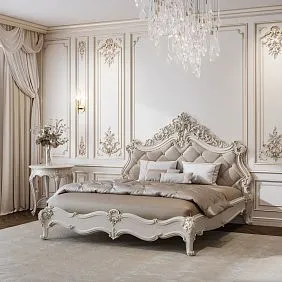
The bedroom is not a place for experiments. It is a sanctuary where you begin and end your day, where the body recovers, the soul rests, and thoughts come into order. The bedroom requires harmony, visual peace, an atmosphere that does not agitate but soothes. And neoclassicism creates precisely such an atmosphere. It is not the heavy opulence of Baroque with its golden cupids. It is not cold minimalism where there is no room for beauty. It is balance — classical proportions in a modern interpretation, elegance without excess, order without boredom.Wide Wooden Skirting Boardwith a height of 100 mm creates an architectural foundation, monumentality, a sense of stability.Oval mirror in a frameabove the vanity table brings femininity, softness, classical elegance. A headboard decorated with moldings becomes the center of the composition, a visual anchor around which the entire bedroom interior is built. Let's figure out how to create a neoclassical bedroom where every detail works towards an atmosphere of harmony, peace, and refined beauty.




Neoclassicism: where classicism ends and modernity begins
Neoclassicism is a transitional style, balancing between tradition and modernity. It takes from classicism symmetry, proportions, architectural details — moldings, baseboards, cornices. But it simplifies them, lightens them, adapts them to modern spaces and lifestyles.




What neoclassicism retains from classicism
Symmetry — the foundation of composition. The bed is placed in the center of the wall, with symmetrical nightstands and symmetrical lighting fixtures on either side. If a mirror hangs on one wall, there is a symmetrical element (painting, panel, console) on the opposite wall.
Proportions — classical ratios of height, width, depth. A high baseboard (100-120 mm) is proportional to the ceiling height (280-300 cm). The width of the mirror frame is proportional to the size of the mirror. A headboard height of 120-140 cm is proportional to a bed width of 180-200 cm.
Architectural details — moldings, cornices, baseboards, rosettes create architectural structure.Moldings in neoclassicismare mandatory, but simplified — without carving, without gilding, without Baroque excess.
Quality materials — natural wood, stone, textiles, metal. Neoclassicism does not tolerate cheap imitations.solid wood baseboardis preferable to plastic, even if they are visually similar. Material authenticity is part of the style's philosophy.
Our factory also produces:


What neoclassicism rejects
Excessive decor — no lavish carving, dense gilding, or abundance of ornaments. While in Baroque every square centimeter of surface is adorned, in Neoclassicism decor is measured, selective, and accentuated.
Dark saturated colors — no burgundy walls, emerald drapes, or purple upholstery. Neoclassicism prefers light tones — white, cream, gray, soft blue, lavender. Dark accents are acceptable, but only locally.
Heaviness — classical furniture is massive, monumental. Neoclassical furniture is lighter, more elegant. Legs are thinner, profiles are more delicate, proportions are slimmer. Visual lightness while maintaining quality.
Chaos and asymmetry — classicism demands order. Neoclassicism does too. All elements are precise, arranged according to rules, subject to symmetry and balance.
Get Consultation
Neoclassical bedroom: function plus beauty
A bedroom in the Neoclassical style is functional, but not utilitarian. There is room for beauty here, which is not decorative for the sake of decoration, but creates an atmosphere.Neoclassical furniturecombines the convenience of modern constructions (orthopedic bed bases, spacious storage systems) with classical aesthetics (symmetrical forms, delicate moldings, quality materials).
The color palette is calm — light walls (white, light gray, cream), light furniture (whitewashed oak, light beech) with dark or gold accents (dark gray headboards, gilded hardware, brass light fixtures). Textiles are natural — linen, cotton, silk — in restrained tones.
Lighting is multi-level — a central chandelier (crystal or with fabric shades), bedside lamps, mirror lighting, built-in lighting in niches or behind cornices. The light is soft, warm (color temperature 2700-3000K), creating coziness without harsh shadows.
Wide 100 mm baseboard: the architectural foundation of the bedroom
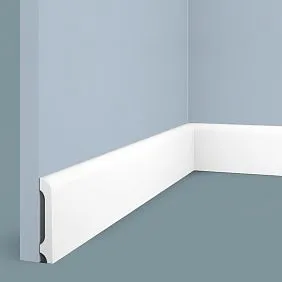
A baseboard in a Neoclassical bedroom is not just a strip covering the joint between the floor and wall. It is an architectural element that creates a visual foundation, monumentality, classical completeness.A wide wooden baseboard with a height of 100 mm— is the optimal choice for a bedroom with ceilings of 280-300 cm, where a standard 70-80 mm baseboard would get lost and fail to create the necessary proportions.
Why exactly 100 mm: proportions and visual weight
The height of the baseboard is determined by its proportion to the ceiling height. For ceilings of 280-300 cm, a baseboard with a height of 100 mm creates a ratio of approximately 1:28 (100 mm to 2800 mm) or 1:30. This is a classical proportion that has been used in architecture for centuries.
A 100 mm baseboard is tall enough to create a visual presence, but not overwhelming. It is monumental, but not heavy. In a bedroom, where visual lightness and relaxation are important, a 100 mm baseboard creates an architectural foundation without overloading the space.
A baseboard of lesser height (70-80 mm) in a Neoclassical bedroom with ceilings of 280+ cm will look disproportionately small, visually lost. A baseboard of greater height (120-140 mm) is suitable for ceilings of 320+ cm; in a standard bedroom, it would create visual heaviness and lower the ceiling.
Profile of a wide baseboard: classical or simplified
Neoclassicism allows for two types of baseboard profiles — simplified classical (with delicate coves and beads) or modern minimalist (rectangular with a chamfer).
A simplified classical profile includes a lower shelf (20-30 mm high), a smooth cove (concave curve), a central bead (convex element), and an upper shelf (10-15 mm). This profile creates a play of light and shadow, visual complexity, classical elegance. But there is no carving — all elements are smooth, milled, without ornaments.
A modern profile with a chamfer — a rectangular cross-section with a delicate bevel on the upper edge. This is more minimalist than a classical profile, but retains visual definition. The chamfer creates a subtle play of light, softening the rigidity of the right angle. Such a profile is suitable for bedrooms where Neoclassicism coexists with modern elements (minimalist furniture, simple textiles).
A tall straight profile — an absolutely rectangular cross-section without a chamfer, coves, or beads. This is the most modern solution, bordering on minimalism. But in a Neoclassical bedroom, such a baseboard may be too laconic and fail to create sufficient architectural expressiveness. It is better left for contemporary interiors.
Material of a wide baseboard: solid wood or MDF
to buy wooden baseboardmade of solid oak or beech — a classic choice. Solid wood is strong, durable, has a natural texture, and tactile warmth. An oak baseboard with a height of 100 mm is solid, monumental, creating a sense of material richness.
But solid wood is heavy, expensive, and requires professional installation. An alternative is high-density MDF, milled to a classical profile. After multi-layer painting, an MDF baseboard is visually indistinguishable from solid wood, costs less, and is easier to install.
In a Neoclassical bedroom, both options are acceptable. If the floor is wooden (parquet, solid board), a wooden baseboard is desirable — material unity creates visual harmony. If the floor is laminate or engineered wood, an MDF baseboard is quite appropriate.
Color of a wide baseboard: white, cream, or wood-toned
The color of the baseboard determines its visual interaction with the floor and walls.
White baseboard — a classic of Neoclassicism. A white baseboard on white or light gray walls creates a visual extension of the wall downward, increasing the height of the room. On a dark floor (dark gray, brown), a white baseboard creates a clear boundary, graphic contrast, and visual definition.
Cream baseboard — warmer than white, creates softness and coziness. Cream (ivory, melted milk shade) pairs well with warm wall tones (beige, peach, soft yellow). A cream baseboard is less contrasting than white, creating delicate elegance.
Baseboard matching the floor color — creates a visual extension of the floor onto the wall. If the floor is light oak, the baseboard is light oak. If the floor is dark walnut, the baseboard is dark walnut. This visually expands the floor area, creating a sense of spaciousness. However, the boundary between the floor and wall is only discernible through the profile's relief.
Gray baseboard — a modern solution. A light gray baseboard on light gray walls creates monochromatic elegance and cool modernity. A dark gray baseboard on white walls — graphic contrast, visual definition.
In a neoclassical bedroom, white or cream baseboards are most commonly used — this creates a light, formal atmosphere, classic elegance.
Oval mirror above the dressing table: a classic of femininity
Dressing table — an essential element of a neoclassical bedroom, especially a feminine or family one. This is the place for morning routines, evening beauty rituals, private moments. Andan oval mirror in a wooden frameabove the table — a classic pair, embodying femininity, grace, and boudoir elegance.
Why oval: the psychology of shape
Oval — a soft, feminine, classic shape. Unlike a circle (static, closed), an oval has directionality — vertical or horizontal. Unlike a rectangle (rigid, angular), an oval has no sharp corners, creating smoothness and visual softness.
An oval mirrortraditionally associated with feminine spaces — boudoirs, bedrooms, bathrooms. The oval adorned the dressing tables of aristocrats in the 18th-19th centuries, symbolizing refinement, feminine charm, and private life.
Psychologically, an oval creates a sense of calm, smoothness, and absence of visual aggression. The eye glides slowly along the oval contour, enjoying the smoothness of the lines. This is a shape for spaces where one does not rush, where the beauty of the process is valued.
Size of the oval mirror: proportion to the table
The oval mirror above the dressing table should be proportional to the size of the table. The standard dressing table width is 80-100 cm, tabletop height is 75-80 cm.
Small oval mirror (40x60 cm) is suitable for narrow tables (70-80 cm wide). It shows the face and shoulders, functional for makeup, does not overload the composition. A small mirror is appropriate in compact bedrooms where every centimeter counts.
Medium oval mirror (50x80 cm) — the optimal size for standard dressing tables (80-90 cm wide). The mirror shows the figure down to the waist, functional and decorative. Vertical orientation visually elongates the space, makes the ceiling appear higher.
Large oval mirror (60x100 cm and larger) is suitable for spacious bedrooms with wide dressing tables (100-120 cm). A large mirror becomes the visual dominant, the center of the composition. It shows the figure almost full-length, functional for trying on clothes.
The mirror's width should not exceed the table's width. If the table is 80 cm, the mirror maximum is 70 cm (including the frame). A mirror wider than the table visually unbalances the composition — the top is heavier than the bottom.
Frame of the oval mirror: delicate or carved
The frame of an oval mirror in neoclassicism can be simplified (smooth, with a simple profile) or decorative (carved, with classical ornaments).
Simplified frame — width 5-8 cm, simple profile (one or two beads), smooth surface without carving. Painted white, cream, light gray. Such a frame creates delicacy, modern elegance, does not overload the composition. Suitable for neoclassicism leaning towards minimalism.
Carved frame with delicate ornament — width 8-12 cm, profile with beads and coves, stylized carving (simple palmettes, stylized acanthus leaves, beads). Carving is shallow, delicate, without baroque opulence. Painted white or cream, sometimes with selective gilding (gold only on the raised elements of the carving).
Gilded frame — classic luxury. The frame can be carved or smooth, but covered in gold (gold leaf or imitation). A gilded frame creates boudoir luxury, formality, classic elegance. But there should not be too much gold — only one mirror with a gilded frame in the bedroom, other elements (baseboard, moldings, picture frames) white or cream. Excess gold turns neoclassicism into baroque.
Wooden frame in a natural tone — light oak, bleached ash, light beech without paint, with preserved wood grain. Such a frame creates natural warmth, material authenticity. A wooden frame pairs well with the wooden furniture of the dressing table, creating material unity.
Placement of the oval mirror: height and symmetry
The oval mirror is placed above the dressing table so that the center of the mirror is at eye level of a seated person (approximately 120-130 cm from the floor). This ensures comfortable use — the face is in the center of the reflection, no need to lean or stretch.
The distance from the top edge of the table to the bottom edge of the mirror is usually 10-20 cm. This allows placing decorative items on the table (small bottles, boxes, vases) that are not obscured by the mirror but are reflected in it, creating visual abundance.
The mirror must hang exactly centered over the table. If the table is 90 cm wide, the distance from the left edge of the table to the left edge of the mirror equals the distance from the right edge of the table to the right edge of the mirror. Symmetry is mandatory — this is the foundation of neoclassical composition.
Lighting for the oval mirror: sconces or backlighting
The dressing table mirror requires good lighting for makeup, hairstyling, and skincare. The optimal solution is two sconces on the sides of the mirror or built-in backlighting.
Sconces on the sides — a classic solution. Two symmetrical sconces placed at a distance equal to the width of the mirror (if the mirror is 50 cm, sconces are 50 cm apart). The height of the sconces — at the level of the mirror's center (120-130 cm from the floor). Light is directed at the face, evenly illuminating from both sides without creating harsh shadows.
Built-in lighting — a modern solution. An LED strip is integrated into the mirror frame or behind the mirror, creating uniform illumination along the contour. Such lighting is functional (illuminates the face without shadows), decorative (creates a floating mirror effect), and contemporary. Color temperature 3000-4000K (neutral white) for accurate color rendering during makeup application.
Table lamp — additional lighting. A classic table lamp with a fabric shade is placed on the vanity, providing local light for detailed procedures (manicure, eyeshadow application). The table lamp is also decorative — it creates coziness and a homely atmosphere.
Bed headboard with moldings: the centerpiece of the bedroom composition
The bed is the main piece in the bedroom. And the bed headboard is the visual center around which the entire composition is built. In a neoclassical bedroom, the headboard is often decorated with moldings, creating architectural structure, classical elegance, and visual completeness.
Types of headboards with moldings: soft and rigid
Soft headboard with a molding frame — the headboard is upholstered in fabric (velvet, linen, velvet), framed around the perimeter with wooden molding. The molding creates a clear boundary and architectural definition. The fabric can be solid-colored (white, cream, gray, light blue) or have a delicate pattern (geometry, floral ornament). A soft headboard provides comfort (you can lean against it while reading in bed), visual warmth, and coziness.
Rigid headboard decorated with moldings — a headboard made of MDF or solid wood, painted (white, cream, gray). Moldings are applied to the headboard surface, creating geometric panels — rectangles, squares, arches.Moldings for decorating a headboardcan be simple (rectangular cross-section) or profiled (with fillets and beads). After painting, the headboard and moldings merge into a single surface where the relief is perceived through light and shadow.
Combined headboard — the central part is soft (upholstered in fabric), with a rigid frame around the perimeter, decorated with moldings. This combines the comfort of a soft headboard with the architectural clarity of moldings. A combined headboard is visually more complex, requires skilled craftsmanship, but achieves maximum decorativeness.
Geometry of moldings on a headboard: panels and frames
Moldings on a headboard create a geometric structure — panels that organize the plane, create rhythm, and visual complexity.
One central panel — a rectangular frame of moldings outlines the central part of the headboard. Inside the frame — soft upholstery or a painted surface. This is a minimalist solution, creating a visual center, an accent, without being overwhelming. Suitable for small bedrooms where visual lightness is important.
Three vertical panels — the headboard is divided by moldings into three parts. The central panel is wider than the side ones (proportion approximately 2:1:2), creating a visual center. Three panels create rhythm, symmetry, and classical order. This is a more decorative solution, suitable for spacious bedrooms.
Symmetrical squares or rectangles — moldings form a grid of identical squares or rectangles. This is a geometrically strict solution, creating visual rhythm, order, and almost graphic elegance. Suitable for neoclassicism leaning towards modernity.
Arched panels — moldings create arched tops for the panels (semicircular or pointed arches). The arch is a classic architectural motif, creating elegance and visual complexity. Arched panels are more decorative than rectangular ones, suitable for bedrooms where a greater degree of classicism is acceptable.
Size and profile of moldings for a headboard
Moldings for decorating a headboard should be proportional to the size of the headboard. A headboard 120 cm high and 180 cm wide (for a 160 cm bed) requires moldings 5-7 cm wide. Narrower moldings (3-4 cm) will get lost and not create a visual presence. Wider ones (8-10 cm) will overwhelm and make the headboard look massive.
The molding profile can be simple (rectangular cross-section) or classical (with one bead or fillet). Complex multi-tiered profiles on a headboard are excessive — it's a small area, a complex profile won't be perceived and creates visual overload.
Moldings are painted the same color as the headboard (creating a unified surface where the relief is perceived through shadow), or in a contrasting color (white moldings on a gray headboard, gray moldings on a white headboard — creating graphic quality and visual definition).
Headboard and bedroom symmetry: the visual center
The bed headboard is the visual center of the bedroom. All other elements are arranged symmetrically relative to this center.
On either side of the bed — two identical nightstands (or small tables). On the nightstands — two identical lamps (table lamps or floor lamps of the same height and design). Above the nightstands or on either side of the headboard — two symmetrical wall lights (sconces).
If there is enough space on the wall behind the bed, two symmetrical elements can be placed on either side of the headboard — paintings, panels, mirrors in identical frames. This enhances symmetry and creates classical order.
Opposite the bed (on the opposite wall), a symmetrical element is usually placed — a dresser with a mirror above it, a vanity with an oval mirror, a built-in wardrobe with symmetrical doors. This creates visual balance — the center of the composition on one wall (the bed headboard) is balanced by a center on the opposite wall.
Symmetry and proportions: the mathematics of beauty
Neoclassicism is built on symmetry and proportions. This is not intuitive, but mathematical beauty, where every element is precise, every distance is proportional.
The Golden Ratio in a neoclassical bedroom
The Golden Ratio (proportion 1:1.618) — the mathematical foundation of classical beauty. In a neoclassical bedroom, this proportion manifests in the ratios of height and width of elements.
Bed headboard: if width is 180 cm, height is 110-112 cm (180 / 1.618 ≈ 111 cm). Oval mirror: if height is 80 cm, width is 49-50 cm (80 / 1.618 ≈ 49 cm). Molding panel on headboard: if height is 60 cm, width is 37 cm (60 / 1.618 ≈ 37 cm).
These proportions create visual harmony that the eye perceives as beauty, without even realizing the mathematics. The golden ratio is the language of nature, the human body, classical architecture. Neoclassicism consciously uses this language.
Symmetry as visual calm
Symmetry creates visual calm, a sense of order, control, predictability. In the bedroom, where a relaxing atmosphere is important, symmetry is critical.
Bed centered on the wall. Nightstands on the left and right at equal distances. Lamps of the same height. Paintings on the walls placed symmetrically relative to the central axis (the bed headboard). Window (or windows) placed symmetrically relative to the bed.
Breaking symmetry creates visual tension. If there is one nightstand but not the other — imbalance. If lamps are of different heights — chaos. The eye constantly seeks balance, doesn't find it, becomes strained. This is unacceptable in a bedroom.
Proportion of element heights
The height of elements in a neoclassical bedroom should be proportional to each other.
Baseboard 100 mm, ceiling cornice 70-80 mm (ratio approximately 5:4). Bed headboard 120 cm, bedside tables 50-60 cm (headboard is twice as high as the tables). Oval mirror above the dressing table 80 cm high, table 75 cm high (mirror slightly taller than the table, creating a vertical dominance).
These proportions are not accidental. They create visual rhythm, harmony, a sense of thoughtfulness. When all elements are proportional, the interior is perceived as complete, holistic, harmonious.
Light wood tones: beech, ash, whitewashed oak
Neoclassicism prefers light wood tones. Dark wood (wenge, walnut, dark oak) creates heaviness, visual massiveness, which contradicts the philosophy of neoclassicism — lightness within classical forms.
Beech: warm lightness
Beech is wood with a pinkish or yellowish tint, warm, light, fine-grained. Beech furniture (dressing table, bedside tables, bed frame) creates warmth, natural softness. Beech takes stain well, accepts any shade — white, cream, gray. But natural beech with a protective varnish coating (unstained) creates natural beauty, tactile warmth.
A beech baseboard 100 mm high, painted cream or left natural, creates material unity with beech furniture. The frame of an oval mirror made of beech repeats this material logic.
Ash: cold elegance
Ash is light gray or yellowish-white wood, with a pronounced grain. Ash is cooler than beech, creates modern elegance, visual freshness. Ash furniture is visually lighter, more slender, suitable for neoclassicism striving for minimalism.
An ash baseboard, painted white or light gray, creates cold elegance. A mirror frame made of ash in a natural tone or whitewashed creates visual freshness, Scandinavian simplicity within neoclassical forms.
Whitewashed oak: classic modernity
Oak, treated with whitewashing (a special technique that preserves the grain but makes the color light, almost white), is a classic of modern neoclassicism. Whitewashed oak combines the strength and durability of oak with the visual lightness of light tones.
Furniture made of whitewashed oak (bed, dressing table, nightstands) creates classical elegance without heaviness. A baseboard made of whitewashed oak or painted to resemble whitewashed oak repeats this logic. A mirror frame made of whitewashed oak creates material unity of the entire composition.
Painted wood: white and cream
Wood can be painted, hiding the grain or leaving it visible under semi-transparent paint (patination). White paint creates classical formality, visual purity. Cream — warmth, softness, coziness.
In a neoclassical bedroom, a combination is often used: furniture made of natural light wood (beech, ash, whitewashed oak), baseboard and moldings painted white. This creates visual balance — the natural warmth of wood and the classical formality of white.
Golden accents: hardware, lighting, frames
Gold in neoclassicism is used sparingly, as an accent. Not solid gilding (as in Baroque), but pinpoint golden elements that create luxury without excess.
Golden hardware: handles, hinges, decorative elements
Handles of nightstands, dresser, dressing table — brass or gilded. These are small elements, but they create a visual accent, luxury, classical elegance. Golden handles on white furniture — a classic combination, graphic, elegant.
Decorative elements of furniture — overlays, rosettes, corner pieces — can also be gilded. But sparingly — not all furniture is covered in gold, only key points (corners of the dresser, center of the bed headboard).
Golden lighting: chandelier, sconces, table lamps
A central chandelier with gold elements (gilded frame, crystal pendants on gold mounts) creates a sense of ceremony and classic luxury. However, not the entire chandelier is gold—the base can be white or cream, with gold only on the details.
Sconces on the sides of the mirror or above bedside tables—with gilded frames, white or cream shades. The gold frame creates a visual connection with the gold furniture hardware.
A table lamp on the dressing table—with a gilded base, fabric shade (white, cream, soft gray). The gold creates an accent of luxury, but the fabric softens it, making the element cozy and homely.
Gold mirror frame: accent or overkill
The frame of an oval mirror can be gilded—this is a classic solution that creates boudoir luxury. But if the mirror frame is gilded, the other elements (baseboard, headboard moldings, other frames) should be white or cream. Multiple gilded frames in one bedroom is overkill, turning neoclassicism into baroque.
Alternative—a white or cream mirror frame, but with gold accents (gilding only on the protruding elements of the carving, gold filigree on a white background). This creates delicate luxury without visual overload.
Questions and answers: a neoclassical bedroom without mistakes
Can dark wood be used in a neoclassical bedroom?
Yes, but in moderation. Dark wood (walnut, wenge) is used as an accent—dark bed legs, dark mirror frame, dark bedside tables. But the base (walls, baseboard, ceiling) should be light, otherwise the bedroom will become heavy and gloomy.
Is an oval mirror mandatory or can it be rectangular?
A rectangular one is possible, but with classic proportions (vertical orientation, 2:3 ratio). An oval is more feminine, more classic, but a rectangle is also appropriate in neoclassicism, especially in masculine or minimalist bedrooms.
How high should the baseboard be in a small bedroom?
In a small bedroom with ceilings of 250-270 cm, a 100 mm baseboard can visually lower the ceiling. It's better to use 80-90 mm. Proportion is more important than absolute size.
Are moldings needed on walls other than the headboard?
Not necessarily. Moldings on the headboard create a sufficient decorative accent. Moldings on other walls are acceptable, but the bedroom can become overloaded. It's better to limit to baseboard, ceiling cornice, and a decorated headboard.
Can different wood species be mixed?
Yes, but carefully. Beech (warm) and ash (cool) visually conflict. It's better to choose one species or species of a similar tone (beech and whitewashed oak are both warm light woods).
How many gold accents are acceptable?
No more than three types of elements. For example: gold furniture hardware, gold light fixtures, gold mirror frame. More is overkill, turning into baroque.
How to illuminate a neoclassical bedroom?
Multi-level: central chandelier (main light), bedside lamps or sconces (for reading), mirror lighting (for makeup), recessed lighting (for atmosphere). All light is warm (2700-3000K), dimmable.
How much does it cost to create a neoclassical bedroom?
Depends on size and materials. A basic set (100 mm baseboard, oval mirror in a frame, moldings for the headboard) for a 15-20 sq.m bedroom—from 80,000 to 200,000 rubles. With custom furniture—from 300,000 rubles.
Conclusion: the bedroom as a sanctuary of elegance
A bedroom is not just a place to sleep. It is a personal space, a sanctuary from the world, a place where you can be yourself. And neoclassicism creates an atmosphere that calms, harmonizes, and provides visual and emotional peace.
A wide wooden baseboard with a height of 100 mmThe baseboard is not just a strip at the floor. It is an architectural foundation, monumentality, visual stability. The baseboard creates a feeling that the walls stand on a solid foundation, that the space is built according to the laws of classical architecture.
an oval mirror in a wooden frameThe oval mirror above the dressing table is not just a functional item. It is a symbol of femininity, refinement, classic elegance. The oval, repeating the smooth lines of nature, creates a visual softness that calms and relaxes.
The bed headboard, decorated with moldings, is the visual center of the bedroom, around which the entire composition is built. The moldings create architectural structure, classical order, a sense of thoughtfulness, where every detail is in its place.
STAVROS company creates comprehensive solutions for neoclassical interiors.Wooden Skirting BoardsSolid oak, beech, ash baseboards with a height of 100-120 mm and classic profiles.Moldings for wall and furniture decorationmade of wood and polyurethane, from simple to carved.Classic mirrors in frames— oval, round, rectangular — with wooden carved frames.
STAVROS understands the philosophy of neoclassicism: balance between tradition and modernity, between beauty and functionality, between decorativeness and visual lightness. Each product is created with attention to proportions, profiles, and materials. Skirting boards are milled on high-precision equipment. Frame carving is done by master carvers by hand. Multi-layer painting with intermediate sanding for a perfectly smooth surface.
By choosing STAVROS products for your neoclassical bedroom, you don't just get quality items. You get the opportunity to create a space where classical elegance meets modern comfort. WhereA wide baseboardcreates an architectural foundation. Where an oval mirror brings femininity and grace. Where a headboard with moldings becomes the centerpiece.
A neoclassical bedroom is not about copying the past. It's about applying timeless architectural principles — symmetry, proportions, quality materials — in a modern space. It's a bedroom that's pleasant to fall asleep and wake up in, where visual harmony creates emotional peace, where every detail contributes to an atmosphere of elegance and coziness.
Create your neoclassical bedroom with STAVROS. Start by choosing a wide skirting board, add an oval mirror in a classic frame, decorate the headboard with moldings — and feel how the space gains architectural integrity, classical elegance, and visual harmony that turns the bedroom into a sanctuary of beauty and tranquility.


