








































































Article Contents:
- What Are Window Casings and Why Are They Needed
- What Are Window Casings For
- Why Casings Are Important Not Only Practically But Also Decoratively
- Where Window Casings Are Used
- What Types of Window Casings Exist
- By material
- By style
- By Application
- Wooden Window Casings: Advantages and Features
- Why Wood Remains One of the Best Materials
- For which objects are wooden architraves especially suitable
- When to choose a smooth profile and when a carved one
- How to choose architraves for windows
- By material
- By the style of the window and house
- By size and proportions
- By finish
- Window architraves in interior design: how to combine with cornices, moldings, and trim
- Skirting boards and moldings
- Architraves and cornices
- Architraves and trim in a unified style
- How to assemble a cohesive window and wall design
- Window casings for a wooden house
- Why window casings are especially important in a wooden house
- Carved and decorative solutions for the facade
- How to choose a style: traditional, Russian, classic, calm modern
- Carved window casings: when they are appropriate
- Carved casings as part of house carving
- What patterns and ornaments are used
- How not to overload the facade or interior with decor
- What is better: wooden casings, MDF, or polyurethane
- Where to buy window casings and what to look for when ordering
- What to check before buying
- Why it's beneficial to choose architraves together with moldings and cornices
- When to order window decorative finishing as a package
- STAVROS window architraves: how to choose a solution for your project
- Frequently Asked Questions
- Which window architraves are best to choose?
- What's better for windows: wood or MDF?
- Are wooden architraves suitable for apartments?
- Which architraves to choose for a wooden house?
- Can wooden architraves be painted?
- How to choose the width of an architrave for a window?
- How do decorative door trims differ from regular ones?
- What to combine architraves with in interior design?
- Can wooden architraves be used on facades?
- Are architraves needed if there are already reveals?
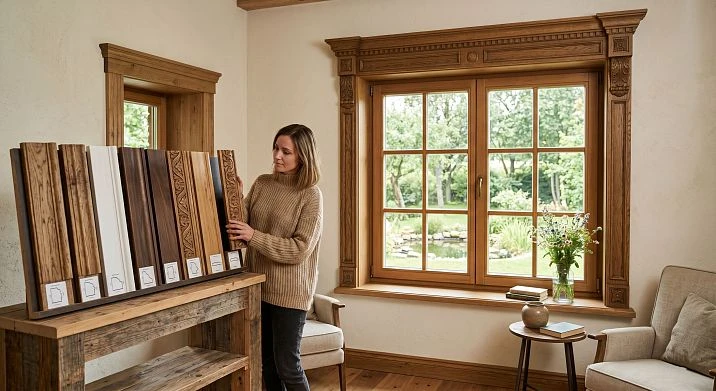
A window is not just an opening in a wall. It is the boundary between the inner world of the house and the outer space, a focal point for the gaze, light and life in any room. But a bare window opening without framing looks unfinished — whether it's the facade of a country house or a city apartment with high ceilings. It is preciselytrims for windowsthat solve this task: they technically cover the installation joint, give the opening architectural completeness, and turn an ordinary window into a stylish accent for the interior or facade.
This article is not an encyclopedic reference on what an architrave is. It is a commercial guide: how to choose correctly, which material to take, what to combine it with, where to buy, and why wooden solutions remain the standard in projects where quality, durability, and genuine taste are important.
Selectwood trim itemsfor framing window and door openings, as well as all accompanying decor can be found in the STAVROS catalog — a wide selection, Contact us to confirm shipping to your destination., custom work.
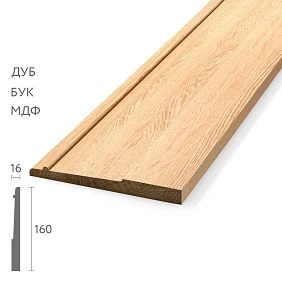
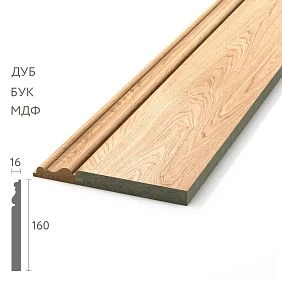
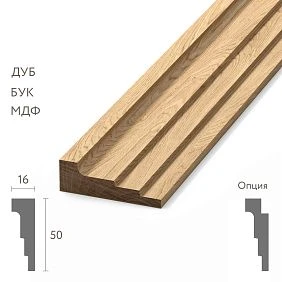
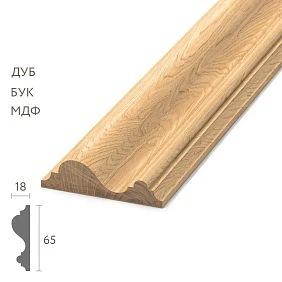
What are window architraves and why are they needed
It seems like a small thing — a strip around the window. But it is precisely such details that shape the holistic perception of space. A well-chosen window architrave is the difference between 'done' and 'finished'.




What are window architraves for
The first and most practical task is to cover the gap between the window frame and the wall. When installing any window, this gap is inevitable: it is filled with mounting foam or sealant, and it needs to be protected from moisture, dust, and mechanical impact. The architrave fits tightly around the perimeter of the opening, creating a neat, even framing line.
But the function of the architrave is not limited to technically covering the joint:
-
Frames the window opening, making it complete and neat
-
Visually enlarges or elongates the window depending on the chosen profile
-
Protects the abutment area from deformations, especially in houses with settling
-
Sets the style — from strict modernity to lavish classicism
-
Creates a transition between the window frame and the wall or facade surface
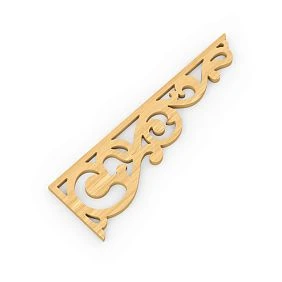
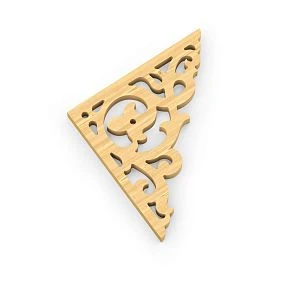
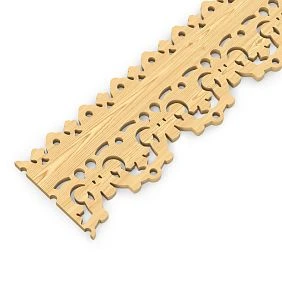
Our factory also produces:
Why casings are important not only practically but also decoratively
Any designer will say: a window without a casing is an unfinished sentence. It exists on its own, torn from the context of the room. Properly chosen , decorative overlays and carved cornices. Installing the gable not only improves the building's appearance but also makes it more harmonious and complete. instantly connect the window with the rest of the finish: with wall moldings, with the ceiling cornice, with the floor baseboard.
This is architectural logic that is centuries old. Classical interiors were built precisely on such a system: every opening — windows, doors, arches — was framed like a painting. In this system, the casing plays the role of a frame that sets the scale and character of the entire space.
Moreover, decorative Casing for a windowVisually alters the proportions of a room. A wide shaped profile adds monumentality. A narrow smooth one adds lightness. A carved ornamental one adds historicism and warmth.
Get Consultation
Where are window casings used?
The scope of application is wider than it seems at first glance:
-
City apartments — for decorating interior slopes, creating a unified decorative ensemble in classic and modern interiors
-
Country cottages — where the window is an important element of both the facade and the interior
-
Wooden houses — traditional use, rooted in folk architecture; here the casing is both a symbol and a function
-
Classic and neoclassical interiors — where decorative window framing is part of the mandatory set of elements
-
Projects with architectural decor — where the window becomes part of a full-fledged interior statement
What types of window casings are there?
Before going to the catalog — you need to understand the classification logic. The variety is great, but navigating it is not difficult.
By material
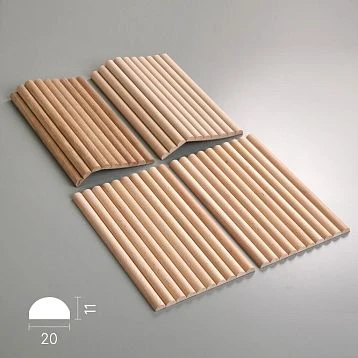
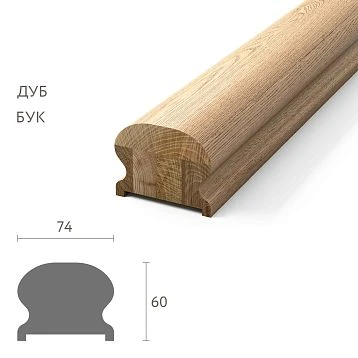
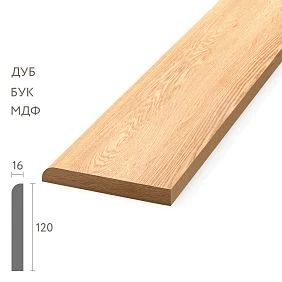
Wooden architraves are the best choice in terms of aesthetics, durability, and repairability. Natural texture, living surface, the possibility of painting in any color — this is something no other material reproduces. Woodenwindow casingsmade of oak or beech — a choice for those who think decades ahead.
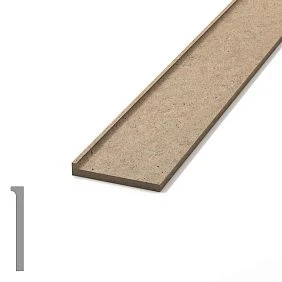
MDF is a budget option with a smooth surface for painting. It holds its profile well, is cheaper than solid wood, but inferior in strength and repairability. If MDF is damaged, the entire fragment must be replaced. Options made from this material can be viewed in the sectionmolding and trim profiles made of MDF.
Polyurethane architraves are lightweight, moisture-resistant, and affordable. They are used in rooms with high humidity or on facades with non-standard conditions. They are inferior to wood in terms of status and tactile quality, but they imitate stucco decor well in budget projects. Polyurethanedecorative elementsare appropriate as an addition to wooden finishes.
Combined solutions — a wooden base with polyurethane decorative overlays, or an MDF profile veneered with valuable wood. This is a compromise between price and appearance.
By style
The style of an architrave is determined primarily by its profile — the cross-section visible on the end of the strip. Based on this feature, several main types are distinguished:
-
Smooth straight — minimalist, without relief. Suitable for modern, loft, Scandinavian interiors. Emphasis on geometry, not ornament.
-
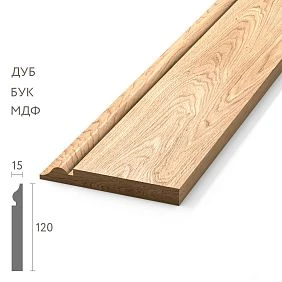
Classical figured — with S-shaped transitions, stepped elements, pronounced relief. Architectural classic, recognizable and proven.
-
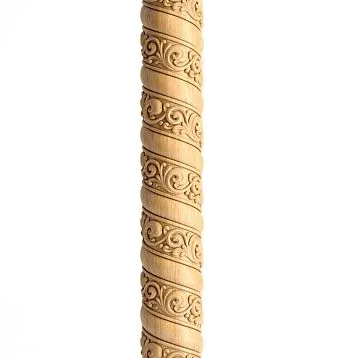
Carved — with an ornament applied to the surface. Folk, historical, alive. Especially appropriate in wooden houses and projects with ethnic or classical character.
-
Decorative wide — creates the effect of a window portal. Often complemented with corner rosettes or overlay elements.
By application
Division by scope of application helps narrow the search immediately:
-
For interior window slopes — installed from inside the room, around the perimeter of the window opening. Require precise alignment with the interior style.
-
For facade window decoration — installed externally. Here, moisture resistance of the coating, tolerance to temperature fluctuations, and compatibility with the overall facade character are important.
-
For wooden houses — a historically established niche with enduring traditions and strong decorative potential.
-
For classic interiors — wide, profiled, with the possibility of adding carved and architectural elements.
Wooden window casings: advantages and features
One can discuss the advantages of different materials at length, but practice speaks for itself: in projects designed for decades,Wooden window trimsthey occupy first place in frequency of choice among architects and designers. And there are good reasons for that.
Why wood remains one of the best materials
The natural texture of wood is a living surface that changes depending on lighting, viewing angle, and time of day. MDF and polyurethane do not provide such an effect: their surface remains the same under any light. A wooden window casing creates a warm, "living" outline that harmonizes with any natural finish — wood flooring, textiles, stone.
Key advantages of wooden casings:
-
Durability — properly dried and treated solid oak or beech lasts 30–50 years without losing decorative qualities
-
Repairability — a scratch or scuff is fixed by sanding and a new coating; MDF does not allow this
-
Unlimited repainting — wood can be painted, tinted, coated with enamel, varnish, or wax as many times as required by a change in interior concept
-
Eco-friendliness — a natural material without chemical additives or emissions
-
Prestige — wooden window framing is associated with quality, thoughtfulness, and a long-term approach to finishing
Exactly thereforeWooden trim— cornices, moldings, baseboards, and casings made of solid wood — remain the basic choice in classic, country, and premium projects.
For which objects are wooden casings especially suitable
A country cottage or wooden house — here, wooden window trims are absolutely organic. They continue the material of the walls, echo the timber or logs, and create a unified facade. In traditional wooden architecture, trims are not just finishing touches but an element of the house's identity.
An apartment with a classic interior — figured wooden trims made of oak under white enamel turn an ordinary window into an architectural accent. This is especially noticeable when combined with a cornice, moldings, and baseboard in a unified profile.
Interiors in neoclassical and Empire styles — here, wooden window framing is a mandatory element. It sets the scale and creates a connection between the window opening and the rest of the room's decorative system.
Interiors in rustic, Provençal, or country style — smooth or slightly textured trim made of light oak or pine, with a light aged look. Warmth, coziness, naturalness.
When to choose a smooth profile and when to choose a carved one
This is one of the key questions when choosing, and the answer depends on two things: the style of the interior and personal preferences.
A smooth profile is chosen when the interior is built on simplicity. There are no extra details, no ornaments — only form and color. A smooth wooden trim in such a concept is elegant and unobtrusive. It fulfills its role without claiming to be the main accent.
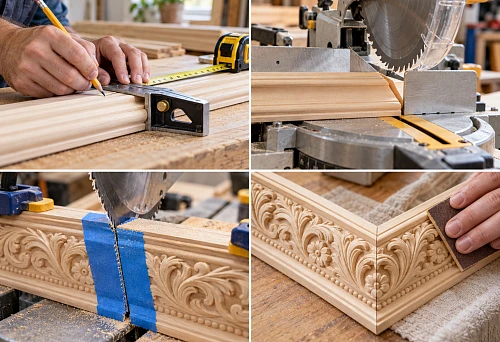
A figured and carved profile — this is already an artistic statement. It is appropriate where the interior is rich in details, where there is room for ornament, decorative plasticity, and historical motifs. CarvedWooden casings create a frame around the opening, visually highlighting it from the wall plane. A classic casing has a profiled section that corresponds to the profiles of baseboards and moldings. with patterns — this is an element that catches the eye and tells the story of the house. For more details on such solutions, see the section onwooden patterns on trims.
How to Choose Window Casings
The right choice is not intuition, but a system. Let's consider the parameters sequentially.
By material
If the budget allows and the project is designed for the long term — solid wood, no compromises. Oak — for dark and rich interiors with pronounced texture. Beech — for light interiors under enamel. Pine — for country, cottage, and budget projects with more democratic requirements.
MDF is justified only in one case: a limited budget with high requirements for surface smoothness for painting. Polyurethane — for wet rooms or facade solutions with non-standard conditions.
By the style of windows and house
Modern minimalist interior — smooth casing with a straight profile, possibly without a visible bevel. Width 50–60 mm, laconic geometry.
Classic interior — figured profile with a width of 80–120 mm, possibly with applied corner elements. Combination withwith wooden cornicesand moldings in a single profile.
Wooden house — traditional or author's carved casing. Here, maximum decorative potential is possible: patterns, ornaments, through-cut carving.
Facade with decorative elements — the casing should fit into the overall system of facade decor. If the facade has cornices, pilasters, and belts — the casing profile is selected within a unified system.
By size and proportions
The width of the casing is the most noticeable parameter. The rule is simple: the larger the window, the wider the casing can be. For a standard window 1200–1400 mm wide, a casing of 60–80 mm is optimal. For panoramic and large windows — up to 100–120 mm.
Tall windows are a reason to choose a wider profile: the vertical lines of the casing enhance the sense of the opening's height. Narrow and small windows require more modest framing to avoid a cluttered feel.
Visual balance is also important: the casing should not 'overwhelm' the window or, conversely, get lost against the frame. Ideally, it should occupy 8 to 12% of the total width of the window sash.
By finish
-
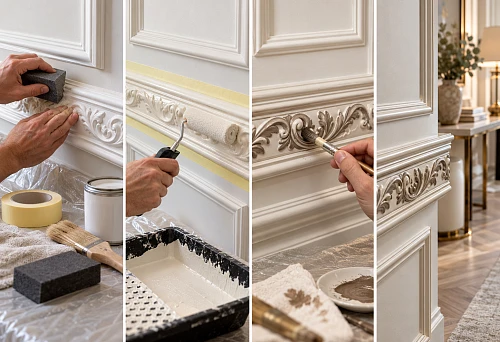
For painting — a smooth, sanded surface is needed. Solid wood or MDF, priming is mandatory. Perfect for white window casings under enamel.
-
For tinting — solid wood with a pronounced texture, varnish with a tinting compound. Emphasizes the natural wood grain.
-
Natural color — varnish without pigment, matte or glossy. Showcases the texture of the wood species.
-
White wooden window casings are one of the most popular options in modern and classic interiors. White refreshes, expands space, and pairs well with most color schemes.
-
Tinted in wood colors — oak, walnut, wenge, beech. For interiors with exposed wood: parquet, furniture, decor.
Window casings in the interior: how to combine with cornices, moldings, and trim
This is where true finishing craftsmanship begins. A casing taken alone is just a strip. But in a system with a cornice, molding, and baseboard, it becomes part of an architectural statement that is felt immediately — even without a specialized design education.
Baseboards and moldings
Wooden moldingcreates a horizontal rhythm on the walls: panel division, frame molding, frieze. The window casing fits into this rhythm as a vertical element.
The coordination principle is simple: the molding profile and the casing profile should be from the same style group. If the moldings are shaped — the casings should also be shaped. If the moldings are smooth rectangular — the casings are minimalist. Violating this rule is immediately perceived as disharmony, even if a person cannot name the reason for their discomfort.
The height of moldings on the wall should also be considered: horizontal lines should not intersect the window casing at awkward points. It is better if the upper molding aligns with the height of the window head or cornice, and the lower one — with the windowsill level.
Casings and cornices
wooden cornice— a horizontal finishing element at the junction of the wall and ceiling. Casing — a vertical element around the perimeter of the opening. Together they form the 'frame' of the room: the cornice sets the top line, the casing — the vertical rhythm of the openings.
In classical interiors, the cornice often echoes the window head element (pediment), forming a full-fledged window portal. This is a historical technique that works excellently in modern classical and neoclassical spaces. Details on selecting trim in a unified style — in the article aboutwooden cornice and moldings.
Casings and trim in a unified style
Trimming Items— is a system. Cornice, molding, baseboard, casing — all these elements should form a unified interior text. That is why it is better to choose them from one catalog, one collection, or one family of profiles.
When window casings are purchased from the same place as the baseboard and cornice — you get consistency in color (one batch of wood provides a more uniform tone), in profile (proportions are coordinated by the manufacturer), and in style (all elements 'speak' the same language). Heterogeneous purchases almost always result in noticeable discrepancies.
How to assemble a cohesive window and wall design
The assembly logic is from general to specific. First, the room style and overall finishing concept are determined. Then the profile family is chosen—cornice, molding, baseboard, casing. Next—the wood species and finish. And only after that—the dimensions.
This approach guarantees a result that looks like a designed whole, not like a mechanical set of parts.
Window casings for a wooden house
A wooden house is a special conversation. Here, casings are not an option or optional decor. They are an integral part of the architecture, an element with centuries of history and functional meaning. It was from wooden houses that the culture of window casings began in Russia—and it lives on to this day.
Why casings are especially important in a wooden house
Wooden walls are a living material. They breathe, move with changes in humidity and temperature, and settle. This means that the mounting seam around the window frame in a wooden house works differently than in a brick or concrete building: it must allow for slight movements without destruction.
A wooden window casing in such a house is not just a finish, but a buffer. It covers the compensation gap, hides irregularities, works with the house, not against it.
Moreover, in a wooden house, the casing is an identifying mark. It signals the character of the house: strict or festive, traditional or modern, simple or complex.
Carved and decorative solutions for the facade
A carved window surround on a wooden house is one of the most expressive elements of facade decor. The traditions of wood carving in Russia go back centuries: different regions had their own recognizable patterns, motifs, and technical techniques. Today, this cultural heritage is being reproduced and reinterpreted in modern projects.
Carved window casingswith traditional ornamentation is not just beautiful. It is an appeal to history, creating the image of a house with character and roots. Read about folk patterns and their application in modern architecture in the article aboutpatterns on the window surrounds of wooden houses.
For a facade in the Russian style, choose window surrounds with fretwork or applied carving, with floral ornamentation, with elements of solar symbolism. For a more modern facade — geometric patterns, restrained relief, minimalist carving. The full catalog of such products is in the sectionhouse carving.
How to choose a style: traditional, Russian, classical, calm modern
-
Traditional Russian — fretwork, plant motifs, ornaments with birds, horses, flowers. Recognizable, distinctive, lively. More details — in the article aboutRussian wooden ornament.
-
Classical — figured profile with symmetrical elements, without national specificity. Suitable for houses in European style.
-
Scandinavian/Northern — clean lines, slight relief, light wood. Laconic and neat.
-
Modern — smooth profile of wide cross-section, even surface for painting. Minimum decoration, maximum precision.
Carved window frames: when are they appropriate
Carving is always a statement. A carved window frame says that the homeowner knows the value of details, appreciates manual labor, and respects tradition. But the appropriateness of carved solutions depends on several factors.
Carved window frames as part of house carving
In wooden architecture, window frames are part of a unified decorative system of the house. They are connected to the cornice, pediment, trim boards, and veranda. The unity of pattern and profile across the entire facade is a sign of a well-designed project. If you chooseWooden patterns on mouldings— it is important to think in advance how they will relate to the rest of the facade decor.
DecorativeWooden patterns on housescan be either traditional (folk ornament, geometric patterns, plant motifs) or custom—developed for a specific project. Carvedwooden door casings with patternscomplement the windows, creating a cohesive decorative image.
What patterns and ornaments are used
Historically, several types of ornaments are characteristic of Russian wooden houses:
-
Plant-based—leaves, flowers, grapevines. Symbolize life, growth, fertility.
-
Geometric — rhombuses, crosses, grids, zigzags. Simple and clear, they create rhythm.
-
Solar — depictions of the sun, wheels, rays. One of the oldest and most widespread motifs.
-
Zoomorphic — birds, horses, fish. Less common, characteristic of certain regions.
-
Baroque and classical — acanthus leaves, cartouches, ribbons, garlands. European tradition in Russian carving.
How to avoid overloading a facade or interior with decor
Carving is a powerful tool, and like any strong tool, it requires moderation. A few rules to help avoid overdoing it:
-
Carved decor should be concentrated on key points: window and door openings, cornice, pediment. There's no need to cover the entire surface with carving.
-
Unity of ornament. One style, one level of detail. Mixing folk ornament with Baroque swirls looks chaotic.
-
Scale matters. Too fine carving gets lost from a distance. Too large — overloads. The optimal scale of the pattern is legible from a distance of 3–5 meters.
-
Color. Carved window surrounds look more expressive in contrast with the main wall color. A white surround on a dark wall is a classic technique.
What's better: wooden architraves, MDF, or polyurethane
Honest comparative analysis without marketing exaggerations. Three materials, three different paths — and three different results.
| Criterion | Solid wood | MDF | Polyurethane |
|---|---|---|---|
| Appearance | Living texture, natural, prestigious | Even, neutral | Imitates stucco, smooth |
| Durability | 30–50 years with proper finishing | 10–15 years | 15–20 years |
| Repairability | High: sanding and repainting | Low: fragment replacement | Low |
| Moisture resistance | Medium (requires coating) | Low (swells) | High |
| Repainting | Unlimited | 1–2 times | Limited |
| Status and Prestige | Maximum | budget | Medium |
| Price | Higher | Below | Medium |
| Ecological | Natural | Synthetic Binders | Chemical Material |
Polyurethane is suitable where moisture resistance or complex shapes are needed on a limited budget. MDF is for temporary or budget solutions. But when it comes to durable, beautiful, and prestigious finishing — wooden architraves win in terms of overall parameters.
This is especially important to understand during a comprehensive purchase: if you buy Solid Wood Items — cornices, moldings, baseboards, architraves in one system — the result will be incomparably more cohesive and durable than mixing different materials.
Where to Buy Window Architraves and What to Look for When Ordering
Choosing is half the battle. The second half is ordering correctly. Here's what to pay attention to.
What to check before purchase
Material and Wood Species. 'Wood' is not a specific enough answer. You need to know the species (oak, beech, pine), drying technology (kiln drying is mandatory), moisture level (12–14% is optimal). Wet wood will warp, crack, or deform after installation.
Dimensions. Width, thickness, length. The standard length of molding is 2–3 meters. Make sure the allowance for trimming is accounted for in the calculation. For non-standard openings, check the possibility of custom sizes.
Profile. Look at the drawing or working sample — not just at the photo. The profile of the casing behaves differently under different lighting, and what looks expressive in a studio photo may turn out to be unexpectedly flat in real conditions.
Quality of processing. The surface should be evenly sanded, without tears, burrs, or unevenness. The ends should be even, without splintering.
Compatibility with style. Does the supplier's catalog have moldings, cornices, and baseboards in the same profile and style? If not — you risk getting an inconsistent result.
Why it's beneficial to choose casings together with moldings and cornices
Purchasing from one place is primarily a guarantee of stylistic consistency. When a manufacturer offers a system of profiles developed together — cornice, molding, baseboard, casing — the proportions and character of each element are already coordinated. All you have to do is choose the wood species and finish.
Moreover, one batch of wood provides a more uniform color. Different batches, even of the same species — always produce shades that will be noticeable during installation. This is a small detail that everyone notices, but not everyone can explain.
Wooden moldings, Buy wooden crownand window casings in one order — is not only logistically convenient but also a guarantee of a unified result.
When it's worth ordering window decorative finishing as a package
The answer is one: always, if you have the opportunity. A comprehensive order — casings, cornices, moldings, baseboards — eliminates the need to search for compatible items from different suppliers. You get the entire set from one source, with a guarantee of conformity.
This is especially important for projects with a decorative window portal: pilasters, capitals, supra-window elements — all of this should be in a unified system with the casings. Otherwise — there will be a mismatch in proportions and a discord of characters.
Window casings from STAVROS: how to choose the right solution for your project
STAVROS is a Russian manufacturer and supplier of wooden moldings, architectural decor, and solid wood products. Here you can find a complete decorative solution for window openings—from smooth classic casings to carved decorative ensembles.
What's available in the STAVROS catalog:
-
window casingsSolid oak and beech casings—smooth and shaped, wide and standard, for painting and natural tones
-
Carved casings—with traditional and custom patterns, for exterior and interior use
-
Wooden moldings—for horizontal wall division, creating panel decor, and decorating window areas
-
wooden cornices—for finishing wall surfaces and creating architectural cornices above windows
-
Trimming Items—baseboards, friezes, battens, glazing beads—all elements for comprehensive finishing
-
House Carving—for exterior decor in traditional or custom styles
All STAVROS products are made from properly dried solid wood with humidity control. Each item undergoes hand sanding—visible in the finished surface. Contact us to confirm shipping to your destination., both retail and wholesale. Special cooperation terms for architects and designers.
SelectWooden casings create a frame around the opening, visually highlighting it from the wall plane. A classic casing has a profiled section that corresponds to the profiles of baseboards and moldings.for windows and the entire decor set — in the catalogsolid wood STAVROS products.
Frequently asked questions
Which window casings are best to choose?
For most interiors and facades, the best choice will be solid wood window casings. They are durable, repairable, paint well, and create a natural, warm look. MDF is suitable for a limited budget, polyurethane — in rooms with high humidity.
What is better for windows: wood or MDF?
In terms of aesthetics, durability, and finishing options — wood wins unequivocally. MDF is cheaper, but if mechanically damaged, it requires complete replacement, not repair. If the project is designed for 10+ years — solid wood fully justifies itself.
Are wooden window casings suitable for an apartment?
Yes, and they are very popular in apartments with classic, Scandinavian, or eclectic interiors. White wooden casings under enamel are one of the most popular options for city apartments. The only requirement is proper finishing that protects the wood from moisture.
Which casings to choose for a wooden house?
For a wooden house, products made from the same or similar material — oak, beech, pine — are optimal. For a facade with decor — carved casings with ornamentation in a traditional or author's style. For the interior — shaped or smooth profile depending on the style.
Can wooden architraves be painted?
Yes, this is one of the main advantages of wood. A wooden casing can be painted any color with enamel, tinted, varnished, or waxed. If necessary, it can be sanded and repainted. The number of repaints is unlimited.
How to choose the width of a window casing?
The width of the casing depends on the window size. For a window up to 1200 mm wide — 50–70 mm. For a window 1200–1800 mm — 70–100 mm. For wide or panoramic windows — 100–120 mm. It's important to maintain proportion: the casing should not visually 'overpower' the frame.
How do decorative architraves differ from regular ones?
Standard architraves are smooth or have a minimal profile, without ornamentation. Decorative ones have a pronounced relief, carving, complex profile, possibly with corner overlay elements. Decorative architraves turn a window opening into an architectural accent and require an appropriate level of overall finishing.
What to pair casings with in the interior?
First of all — with moldings and cornices in a matching profile and finish. Next — with a baseboard of the same wood species. For classic interiors, corner rosettes and overlay decorative elements are appropriate. It's best to select all elements from the same catalog.
Can wooden casings be used on the exterior?
Yes, provided they are properly finished. A wooden casing for exterior use must be coated with weather-resistant compounds: exterior paint, outdoor varnish, or impregnation. This protects it from moisture, UV radiation, and temperature fluctuations.
Are casings needed if there are already reveals?
Yes. Reveals are the finishing of the inner surface of the window opening. The casing is the perimeter framing that covers the joint between the reveal (or frame) and the wall. Reveals and casings do not replace but complement each other.
Selectwindow casingsMoldings, cornices, and all decorative trim for finishing openings — in the STAVROS catalog:Solid Wood ItemsDelivery across all of Russia. We work with private customers, architects, and designers.