








































































Article Contents:
- What are door architraves and why are they needed
- Functional role of architraves
- Decorative role of architraves in interior design
- Why wooden architraves are particularly in demand
- Types of door architraves
- By material
- By Profile Shape
- By application method
- Wooden door architraves: what are their advantages
- Which interiors wooden architraves suit
- When to choose a smooth profile and when a carved one
- How wood complements doors, skirting boards, and cornices
- How to choose door trims
- By door style
- By material and finish
- By dimensions
- By combination with other finishes
- Door trims for interior doors: what to consider before buying
- When standard trims are needed
- When it's better to choose decorative trims
- When to complement trims with a cornice, pilaster, or capital
- Decorative door trims for a classic interior
- Door portal design
- Door casings in classic, neoclassical, and palace styles
- How to assemble a unified door ensemble
- What's better: wooden door casings, MDF, or decorative polyurethane
- How to match door casings with baseboards, cornices, and moldings
- Door casing + baseboard
- Door casing + cornice
- Door casing + molding
- Door casing + decorative door elements
- Where to buy door casings and what to look for when ordering
- What's important to clarify before purchase
- When is the best time to order architraves together with door frames and door decor
- Why it's convenient to buy architraves and related elements in one catalog
- Door architraves from STAVROS: how to choose a solution to match your interior
- Frequently Asked Questions
- Which architraves are best for interior doors?
- What's better: wooden architraves or MDF?
- Can wooden architraves be painted?
- Which architraves are suitable for classic doors?
- How to choose the width of an architrave?
- What goes well with door architraves in interior design?
- Are architraves needed if there are door extensions?
- How do decorative door trims differ from regular ones?
- Which wood species is better for door trims — oak or beech?
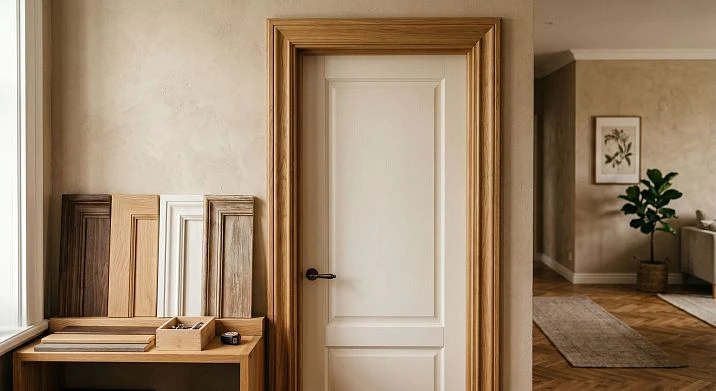
A door opening is not just a technical element of an apartment or house. It's a frame that holds the image of the entire room. When the installation seam is neatly closed, when the door framing is chosen in a unified logic with the baseboard, cornice, and other decor — the space gains an integrity that is impossible not to notice. It is door trims that solve this task: practically, aesthetically, with the possibility to create a real architectural accent.
This article is not a general discussion about what a door trim is. This is a commercial guide: how to choose, what to combine with, what material to take, how to fit door framing into a classic, modern, or country interior. And also — how to buy everything in one place and not make a mistake with the profile, size, or style.
Selectwood trim itemsand solutions forDoor Decorright in the STAVROS catalog — a wide selection, shipping from one piece, delivery across all of Russia.
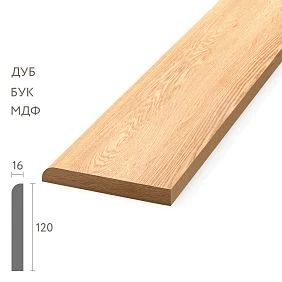
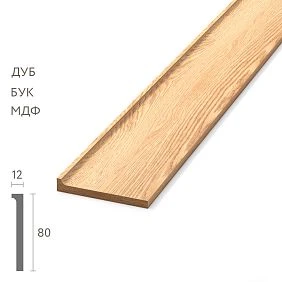
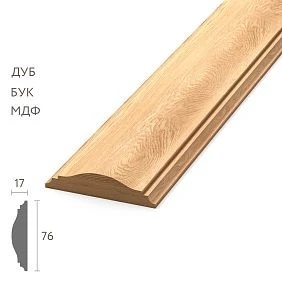
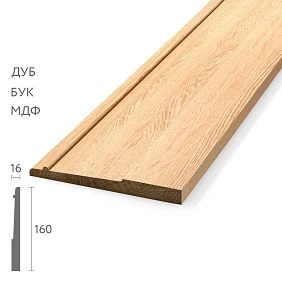
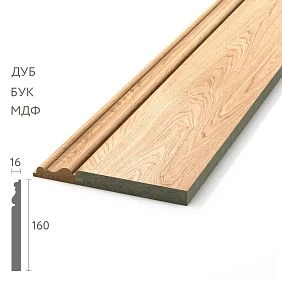
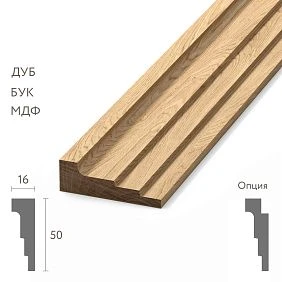
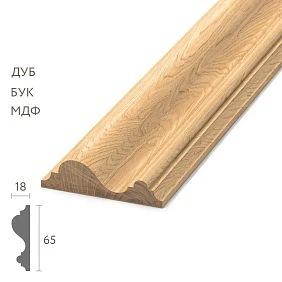
What are door trims and why are they needed
A door trim is an overlay strip that is mounted over the gap between the door frame and the wall. The task is simple: to close the installation seam that inevitably remains when installing any door. But the functionality is not limited to this.
A properly chosen door trim protects the abutment area from mechanical damage, dust, and humidity fluctuations. It creates a visually finished contour of the door opening — and it is this that transforms it from a purely technical product into a decorative interior element.
A wide, shaped, or carved door casing can visually elongate the opening upward, giving it a sense of strictness or, conversely, softness. Depending on the chosen profile, you can radically change the perception of the entire room—without altering the finish or furniture.




Functional role of casings
The primary function of a casing is technical. After installing the door frame, a gap of several centimeters remains between it and the wall, filled with mounting foam or another sealant. This joint must be covered: it is unaesthetic and vulnerable to moisture and mechanical impacts.
The casing fits tightly against the frame on one side and the wall on the other. This creates reliable insulation for the mounting seam and protects it from damage. This is especially relevant for wooden houses, where walls 'live' and breathe: a properly selected solid wood casing compensates for minor deformations and does not crack during shrinkage.
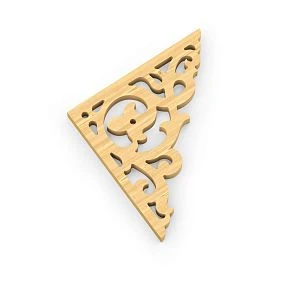
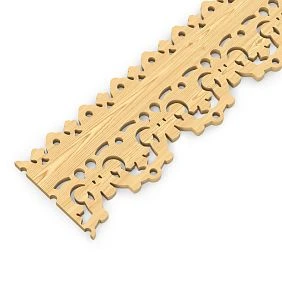
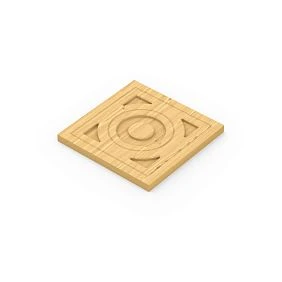
Our factory also produces:
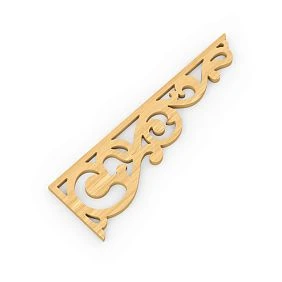
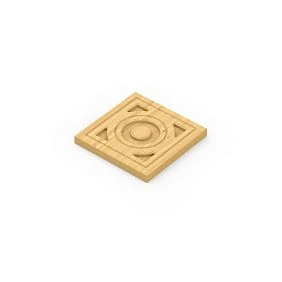
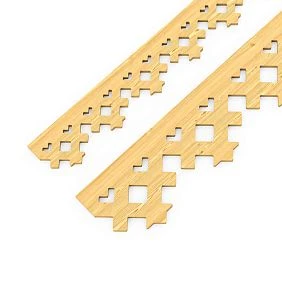
Decorative role of casings in interior design
From a design perspective, a casing is a frame for a door. Like a picture frame: it either enhances the impression or subtly tones it down. A shaped profile with fine carving can turn an ordinary interior door into an element of a classic interior. A smooth, minimalist casing will emphasize a modern, minimalist solution.
The decorative role of a casing becomes even more significant if its profile repeats or echoes other finishing elements:a wooden moldingbaseboard, cornice. In this case, a unified interior rhythm is formed—and it is precisely this that distinguishes thoughtful design from a random assortment of materials.
Get Consultation
Why wooden casings are particularly in demand
Among all materials, wood holds a special place. Natural texture, tactile warmth of the surface, the possibility of painting and tinting—all this makes wooden door casings the first choice for classic, neoclassical, Scandinavian, and country interiors.
Wood is easy to work with, can be sanded, painted any color under enamel, and coated with varnish or wax. With proper finishing, a wooden casing lasts for decades. And most importantly — it never looks cheap. This is why solid wood casings remain the standard in projects where status, aesthetics, and durability matter.
What types of door casings are there?
The market offers a wide variety of door casings — in terms of material, profile shape, and application. Understanding this variety is easy if you grasp the logic of selection.
By material
Solid wood is the most valuable and durable option. Casings made of oak or beech feature a dense structure, high resistance to deformation, and the ability to be repainted and sanded multiple times. This is a product for decades that retains its marketable appearance with proper care.
MDF is a budget-friendly and technologically advanced material. It holds its shape well and is easy to paint, but falls short of solid wood in terms of strength and repairability. If mechanically damaged, MDF is difficult to restore — the damaged section usually needs to be replaced. Nevertheless, for some tasks, it is a rational choice: smooth surface, precise profile, affordable price. For more details on skirting boards and casings made of this material, see the section.MDF Skirting Board and Architrave.
Veneered casings — a base of MDF or inexpensive wood, faced with a thin layer of valuable wood. A compromise option: appearance is close to solid wood, price is lower. However, if damaged, the veneer can peel, and restoring the product is difficult.
Polyurethane and polymer casings — lightweight, moisture-resistant, and affordable. They are used primarily as decorative moldings in spaces with non-standard conditions or as an element of architectural trim in combination with main wooden products. This is a separate niche, not directly competing with wood in high-end interiors.
By profile shape
The casing profile is its cross-section, visible when looking at the end. It is the profile that determines the plasticity of the product, its character, and appropriateness in a particular style.
-
Smooth straight — concise, strict, universal. Suitable for modern, minimalist, and Scandinavian interiors.
-
Figural — with S-shaped, wavy, or stepped transitions. A classic solution for openings with a pronounced decorative character.
-
Carved — an ornament or relief applied directly to the surface or edge of the casing. Suitable for classic, baroque, neoclassical, and Russian styles. Patterns on wooden house casings are a separate topic that we cover inthe article about facade carving.
-
Classical profile — widens toward the center, creating the impression of an architectural portal. Often features several steps and transitions.
-
Modern straight — minimal relief or its complete absence, emphasis on geometry and product thickness.
By application method
Casings for interior doors — the most common category. Used in apartments and houses to frame standard doorways 2–2.1 meters high. Key requirements: compatibility with the frame, appropriate width, unified style with the rest of the finish.
Casings for wooden doors — often refers to products made from the same solid wood as the door leaf itself. This ensures texture unity, identical response to humidity, and the possibility of painting in the same tone.
Casings for classic interiors — shaped, wide, with ornamentation or a pronounced profile. Suitable for bedrooms, living rooms, studies in Empire, classic, neoclassical styles.
Casings for door portals and decorative openings — wider and more complex products, often complemented bypilastersandcapitals. This is no longer just a casing — it's an architectural accent that organizes the space around it.
Wooden Door Casings: What Are Their Advantages
If you're choosing between wood and any other material—and you want a result that will perform just as well in twenty years as on the day of installation—the choice is obvious. A wooden door casing is not just a strip. It's a statement of taste, quality, and long-term thinking.
The natural texture of wood possesses a living plasticity that no synthetic material can replicate. This is noticeable in photographs and even more so in person. A guest, stepping over the threshold of a room, intuitively feels the difference: wooden products create warmth, coziness, and a sense of status.
What's important from a practical standpoint: wood is easy to repaint. If you decide to change the interior color scheme—wooden door casings can be sanded and repainted to the desired shade. This is especially valuable during renovation, restoration, and style changes. MDF does not offer such flexibility.
For Which Interiors Are Wooden Casings Suitable
Wooden casings are organic in a wide range of styles:
-
Classic and Neoclassical—a wide, shaped casing with a multi-step profile fits perfectly into an interior with moldings, cornices, and decorative columns.
-
Scandinavian and Eco-style—a smooth casing made of light oak or beech, painted white or in a natural color, creates a clean and fresh look.
-
Rustic and Country—a textured solid wood with visible wood grain, possibly with a lightly aged surface.
-
Country Wooden House—carved casings, ornamentation, historical styling. This is a separate culture, which you can read about in the article about house carving in wood.
-
Palace style and Baroque — a wide, complex, multi-layered profile, often with gilding or decorative inserts.
When is it better to choose a smooth profile, and when a carved one
A smooth profile is chosen when the interior is built on minimalism, clean lines, and neutral colors. It does not compete with furniture and textiles — it merely outlines the boundaries of the opening without overloading the space with details.
A carved profile is for interiors with character. When the style requires richness of details, ornaments, and historicism. A carved wooden door casing with a pattern is practically a sculptural element that needs to be seen in the context of the entire room. The selection of such products is available in the section Wooden door casing with a pattern.
How wood combines with doors, baseboards, and cornices
One simple rule applies here: a single wood species and a single finish. If the casings are made of oak with white enamel — the baseboard, cornice, and moldings should follow the same logic. This does not mean everything should look identical — but there should be a traceable connection: profile, color, texture.
Wooden trim — a comprehensive topic that includes both casings and cornices, baseboards, friezes, and moldings. It is better to purchase them from the same catalog: this makes it easier to select compatible profiles and avoid inconsistencies during installation.
How to choose door casings
Choosing a door casing is not a random process. Proper selection involves several steps and takes into account several key parameters.
By door style
A classic door — paneled, with pronounced relief or decorative elements — requires a matching casing: wide, with a profile. A smooth plank will look dissonant here.
A modern door with a smooth panel, on the contrary, requires a laconic frame. A minimalist casing with a straight profile is appropriate and harmonious here.
A door with decorative elements — overlays, carvings, glass inserts — requires framing in the same style. Patterns should continue or echo, but not compete.
High opening — here it's important not to 'eat up' the height with a wide horizontal element. Vertical lines of the casing, on the contrary, emphasize the height and add slenderness.
Wide opening — for arched and wide openings, choose a wider profile or composite frames with pilasters.
By material and finish
-
For painting — solid wood with a smooth surface or MDF is suitable. Wood is preferable: it holds the paint layer better and allows sanding during repair.
-
For enamel — wooden casings made of beech or oak under white enamel are one of the most popular options in classic and Scandinavian interiors.
-
Natural shade — lacquered oak or tinted beech, without painting. Demonstrates the natural structure of the wood.
-
Oak and beech are different species with different textures. Oak is denser, darker, with a pronounced grain. Beech is lighter, more uniform, and easier to paint evenly.
By dimensions
The width of the architrave is selected based on the wall thickness, door frame design, and door leaf proportions. Standard width is from 50 to 100 mm; decorative solutions can be wider. Rule: the more massive and taller the door, the wider the architrave can be.
The thickness of the product affects how it will hold and look in profile. An architrave that is too thin looks flimsy; one that is too thick looks bulky. Optimal: 10–15 mm for standard solutions.
Proportions are important relative to the frame: the architrave should not cover its decorative elements or extend beyond the wall in plan.
Regarding combination with other finishes
A door architrave is not an isolated element. It works as part of an ensemble:
-
The situation is similar withwooden baseboard— profiles should be from the same family: if the architrave is shaped, the baseboard should ideally also be profiled.
-
The situation is similar withwith wooden cornices— the cornice finishes the top of the wall vertically, the architrave frames the doors. A unified profile and color create a finished look.
-
The situation is similar withwooden molding— moldings set the rhythm on the walls, and the architrave should fit into this rhythm, not contradict it.
-
The situation is similar withwooden pilasterandcapital— for a classic-style door portal.
Door Casings for Interior Doors: What to Consider Before Buying
Choosing door casings for interior doors is perhaps the most common task during renovation. It seems simple: choose, buy, install. But this is exactly where mistakes most often occur.
The first thing to measure is the width of the mounting gap and the wall thickness. This determines whether extensions are needed: if the wall is thicker than the standard door frame — an additional element appears between the frame and the wall, and the casing must match it.
Second — the style of the room. Door casings for interior doors should be part of the overall design concept. Not a separate solution, but an element of the ensemble: together with the baseboard, cornice, and possibly wall moldings.
Third — the height of the room. For low ceilings, it's worth choosing narrower casings without overloaded ornamentation. For high ceilings — you can afford a wide figured profile.
When Standard Casings Are Needed
Standard casings are suitable for typical apartments with door openings 2–2.1 meters high and a standard width of 60–90 cm. If the interior is neutral or modern, if the budget is reasonable, if the task is simply to neatly frame the opening — this is the optimal choice. Smooth or moderately figured profile, width 60–70 mm, painted to match the door color.
When It's Better to Choose Decorative Casings
Decorative door casings are needed when the interior is conceived as a cohesive artistic image. A classic living room, a bedroom in a neoclassical style, a study with a library, a country house hall — anywhere the door becomes part of the room's architecture, a decorative casing is essential.
Here it makes sense to consider architraves with a shaped profile, carving, and increased width—everything that creates the feeling of a portal, not just a passageway.
When architraves should be complemented with a cornice, pilaster, or capital
If the opening is tall and wide, if the interior implies a palatial or estate style—architraves alone are not enough. Here, the architrave becomes only part of the composition:
-
Pilasteron the sides of the opening creates the feeling of columns.
-
buy a capital—means to crown the pilaster with an architectural finial.
-
A cornice above the opening adds a horizontal line and completes the portal composition.
Such a solution is appropriate in formal rooms, halls, and living rooms, where doors are not just passageways but architectural statements.
Decorative architraves for doors in a classic interior
A classic interior is a system. There are no random details in it: each element is responsible for its place in the overall hierarchy of forms. Door framing in such a system is one of the key architectural elements. Not a detail, but a node.
That is why decorative architraves for doors in a classic style are more than just a strip by the opening. They are a participant in the ensemble. They interact with the stucco cornice on the ceiling, with the pilasters on the walls, with medallions and rosettes. Together, they form the interior narrative.
Classic door frame trim is built on the portal principle: vertical pilasters, a horizontal entablature or cornice at the top, and the trim itself as framing. This is a recognizable architectural motif, rooted in the European tradition of the 18th–19th centuries and absolutely relevant today.
Door portal trim
A door portal is an architectural frame around a door opening that transforms a simple entrance into a spatial accent. A classic portal consists of:
-
Side trims or pilasters
-
Over-door element (cornice, frieze, or pediment)
-
Capitals at the transition point from vertical to horizontal
-
Optionally — decorative overlays and rosettes
Each of these elements is available in the catalogof solid wood STAVROS catalog. Selection from a unified style collection ensures that all parts of the ensemble will be compatible in profile and proportions.
Trim in classic, neoclassical, and palace styles
In a classic interior, architraves are typically wide — from 80 to 120 mm — with a pronounced figured profile. They are often complementedcarved wooden decor— with rosettes, rocaille, and acanthus leaves in the corner areas.
Neoclassicism allows for a stricter interpretation: the same profile, but without excessive ornamentation. Emphasis on geometry, clarity of lines, and correct proportions.
The Palace style — maximum saturation of details: carving, gilding, multi-layered cornices. Here, the architrave is just one element in a dense decorative canvas.
How to assemble a unified door ensemble
The logic of assembling the ensemble is simple: start with the architrave and work outward. The architrave sets the width and character of the framing. Its profile is matched to thewooden corniceabove andWooden baseboardbelow. Wall moldings create a horizontal rhythm into which the vertical of the door framing fits. If necessary — pilasters and capitals complete the portal theme.
All this works as a unified decorative text, in which each line is coordinated with the previous one.
What is better: wooden architraves, MDF, or decorative polyurethane
This question is often asked, and it deserves an honest answer—without marketing declarations, but with a clear position.
| Criterion | Solid wood | MDF | Polyurethane |
|---|---|---|---|
| Appearance | Live texture, status | Even, neutral | Close to plaster, easily imitates details |
| Durability | High | Medium | Medium, depends on conditions |
| Repairability | High (sanding, repainting) | Low | Low |
| Moisture resistance | With proper finishing—high | Poorly tolerates moisture | Good |
| Repaintability | Yes, unlimited | One or two times | Yes, but the surface is less forgiving |
| Prestige | High | Below average | Medium |
| Price | Higher | Below | Medium |
| Appropriateness in classic style | Ideally | Compromise | Possible |
The conclusion here is clear: if you need a natural, durable, repairable, and beautiful option — wooden architraves are unrivaled. MDF is suitable for standard solutions with a limited budget. Polyurethane — where moisture resistance or complex shapes are needed at a minimal price.
For classic interiors, country houses, projects with a long-term horizon — only wood. And preferably — as part of wooden molding in a unified stylistic logic.
How to combine door architraves with skirting boards, cornices, and moldings
Unity of details — that's what distinguishes a well-thought-out interior from a mechanically assembled one. When door architraves, skirting boards, cornices, and moldings work as a system — the space gains an internal logic that you feel immediately but can't always put into words. It's that very 'completeness' everyone seeks.
Architrave + skirting board
This is the basic pair. If the architrave is ornate and wide — with a classic profile creates a sense of solidity, reliability.must be from the same style group: proportional width, similar profile. For a modern smooth casing — a straight, laconic baseboard.
Crucially important: color and finish. If the casings are for white enamel — the baseboard must also be enameled in the same tone. A mismatch in white shades catches the eye and destroys unity.
Casing + cornice
wooden cornice— this is the horizontal line at the junction of the wall and ceiling. The casing is the vertical line around the opening. Together they create a rectangular "frame" for the room. If the cornice profile echoes the casing profile — the frame becomes unified, the room — complete.
For classic interiors, the cornice often performs the same decorative function as the supraportal element of the door framing: they are literally parts of a single architectural system. More details on this — in the article aboutwooden cornice and molding in the interior.
Casing + molding
Wooden moldingson the walls create a horizontal rhythm — paneling, friezes, frame-like surrounds. The door casing fits into this rhythm as a vertical element.
Here it is important to maintain proportions. The moldings on the wall should not be wider than the casing — otherwise the door framing will "drown" in the wall decor. Conversely, the casing should be slightly more accentuated: this is logical, as it is precisely what organizes the entrance to the room.
Casing + decorative door elements
Door Decorating— a broad topic. Surface-mounted sockets, corner elements, carved panels—all should echo the profile of the casing. If the door leaf features an ornament, elements in the corner zones of the casing can repeat or continue it. This creates an additional level of stylistic cohesion.
Decorative Wooden Patternsandto buy, which will allow you to transform your furniture using carved wooden elements. You can use the C-003-3 decor set to decorate furniture, walls, doors, or any other surface. The C-003-3 decor set is made of oak or beech, known for their strength, durability, and beauty. You can buy the C-003-3 decor set at the Stavros decor store, which specializes in producing and selling decorative elements and hardware for furniture and interiors. At the Stavros decor store, you will find a wide selection of decor sets of various shapes, sizes, and styles. You can chooseorganically complement the door ensemble if chosen with a unified stylistic logic matching the casing.
Where to buy door casings and what to look for when ordering
The question 'where to buy door casings' isn't critical today: there are plenty of offers. The trickier question is how to buy correctly—without overpaying or being disappointed with the result.
Here's what to check before purchasing:
-
Material: only solid wood guarantees durability and repairability. If the seller vaguely answers 'wood'—clarify the species and drying technology.
-
Dimensions: width, thickness, length. Non-standard openings require trimming—ensure the length allowance is accounted for.
-
Profile: view in person or via precise drawings. Photos from different angles are essential—the casing profile looks completely different depending on the lighting angle.
-
Processing quality: the surface should be sanded, without tears or unevenness. Request a sample.
-
Paintability: clarify what is recommended for coating the specific wood species. Beech and oak behave differently under different paints.
-
Interior compatibility: does the catalog include moldings, cornices, and baseboards in the same profile and style? This is the most important question when purchasing.
What is important to clarify before purchasing
Minimum checklist before ordering door architraves:
-
Doorway height — how many linear meters are needed for one door on both sides?
-
Are there extenders, and how much do they protrude beyond the wall plane?
-
What color/tone is planned — for painting or natural?
-
Are corner elements needed — rosettes, capitals, overlays at joints?
-
Are cornices, baseboards, and moldings in the same style purchased along the way?
When is it better to order architraves together with linear products and door decor
The answer is simple: always. Purchasing architraves together with baseboards, cornices, and moldings in one batch guarantees compatibility in color (wood from one batch provides a more uniform tone), profile, and style. Different purchases at different times almost guarantee slight but noticeable discrepancies.
This is especially important if you plan toDoor Decoration— carved overlays, applied elements, architectural trims. All of this should be part of a single order.
Why it's convenient to buy architraves and related elements in one catalog
Buying in one place is logistics, style, and common sense. When architraves,Wooden baseboard, Wooden molding, buy wooden cornicecan be found in one catalog—unnecessary compatibility questions disappear. The manufacturer guarantees a single standard for wood species, moisture content, and profile. This is especially valuable for large-scale renovations or commercial projects.
Door architraves from STAVROS: how to choose a solution for your interior
STAVROS is a manufacturer and seller of solid wood products with a wide range of decorative trim, door decor, and architectural elements for interiors.
The STAVROS catalog includes:
-
Carved architraves made of solid beech and oak—smooth and figured, for painting, for enamel, and for natural tones. A wide selection of profiles for standard and decorative openings.
-
wood trim items— baseboards, cornices, moldings, friezes, glazing beads. All within a unified profile system, allowing you to assemble complete interior ensembles.
-
Moldingsandwooden cornices— for horizontal wall division, ceiling zone design, creating panel solutions.
-
pilasters and columns— for door portals, architectural accents in classic interiors.
-
Capitals— finishing pilasters, architectural accent in classic and neoclassic styles.
-
Decorative Inserts— for doors, furniture, panel decor, opening design.
-
Carved Rosettes— corner and central decorative elements for door frames.
STAVROS works both retail and wholesale. Contact us to confirm shipping to your destination., shipping from one piece. For designers and studios — a loyalty program. Custom manufacturing of non-standard sections and profiles is possible subject to a production run.
All products are made from properly dried solid wood with humidity control in production: this guarantees stability of the items during installation and in use. The surface undergoes manual sanding — and this is noticeable to the touch and in the finished product.
View the assortment and select architraves in the catalog: Solid wood products STAVROS
Solutions for decorative door design — STAVROS door decor
Frequently asked questions
What are the best architraves for interior doors?
For most interiors — solid wood architraves made of beech or oak. They are more durable, easy to paint, hold their profile well, and are repairable. For budget solutions with a neutral design, MDF is suitable, but with an understanding of its durability limitations.
What is better: wooden architraves or MDF?
In all key parameters — durability, repairability, aesthetics, repaintability — solid wood wins. MDF is cheaper but requires replacement if damaged and has a limited service life. Choose based on budget and usage horizon.
Can wooden architraves be painted?
Yes, this is one of the key advantages of wood. Solid wood architraves can be painted an unlimited number of times: apply enamel, tint, varnish, wax, or age the surface. Each time — sanding, priming, new coating. The result — like new.
What architraves are suitable for classic doors?
Ornate, wide (from 80 mm), with a multi-step profile, preferably made of solid oak. They look good combined with pilasters and cornices — as part of a door portal. For maximum effect — add carved overlays and corner rosettes.
How to choose the width of an architrave?
Focus on proportions: the architrave should not overlap the frame and should not be narrower than 50 mm (otherwise it looks flimsy). For standard doors — 60–70 mm. For tall openings and classic interiors — 80–120 mm. Also consider the width of the baseboard: they should be proportional to each other.
What goes well with door architraves in interior design?
First and foremost — wooden skirting boards, cornices, and moldings in a unified style. For classic interiors — pilasters and capitals. For doors with decoration — applied rosettes, carved inserts, corner elements. All of this forms an interior ensemble where each detail enhances the others.
Are architraves needed if there are door jamb extensions?
Yes. Door jamb extensions widen the frame to match the wall thickness, but they do not conceal the installation gap between the frame (or extension) and the wall. This is precisely what the architrave covers. Therefore, jamb extensions and architraves are not mutually exclusive elements but parts of a single system.
How do decorative architraves differ from regular ones?
Regular ones are smooth or minimally profiled, without ornamentation. Decorative ones have pronounced relief, carving, complex profiles, and may include additional corner elements. Decorative architraves turn a door opening into an architectural accent and require a corresponding level of finishing in the rest of the interior.
Which wood species is better for architraves — oak or beech?
Both species are of excellent quality. Oak is denser, has a pronounced grain, is darker in tone, and works well with varnish and tinting. Beech is more uniform, lighter, and excellent for enamel finishes. If you plan to have white architraves — beech is preferable. If you want a natural dark tone — oak.
The full range of architraves, trim, moldings, cornices, pilasters, and capitals is in the STAVROS catalog: Solid Wood Items. Order a solution for your interior — with delivery across all of Russia.