










































































Article Contents:
- What Are Door Casings for Interior Doors and Why Are They Needed
- What Types of Casings Exist for Interior Doors
- By material
- By Profile Shape
- By style
- Why You Should Choose Wooden Casings for Interior Doors
- How to choose door trims for interior doors
- By door style
- By width and profile
- By Color and Finish
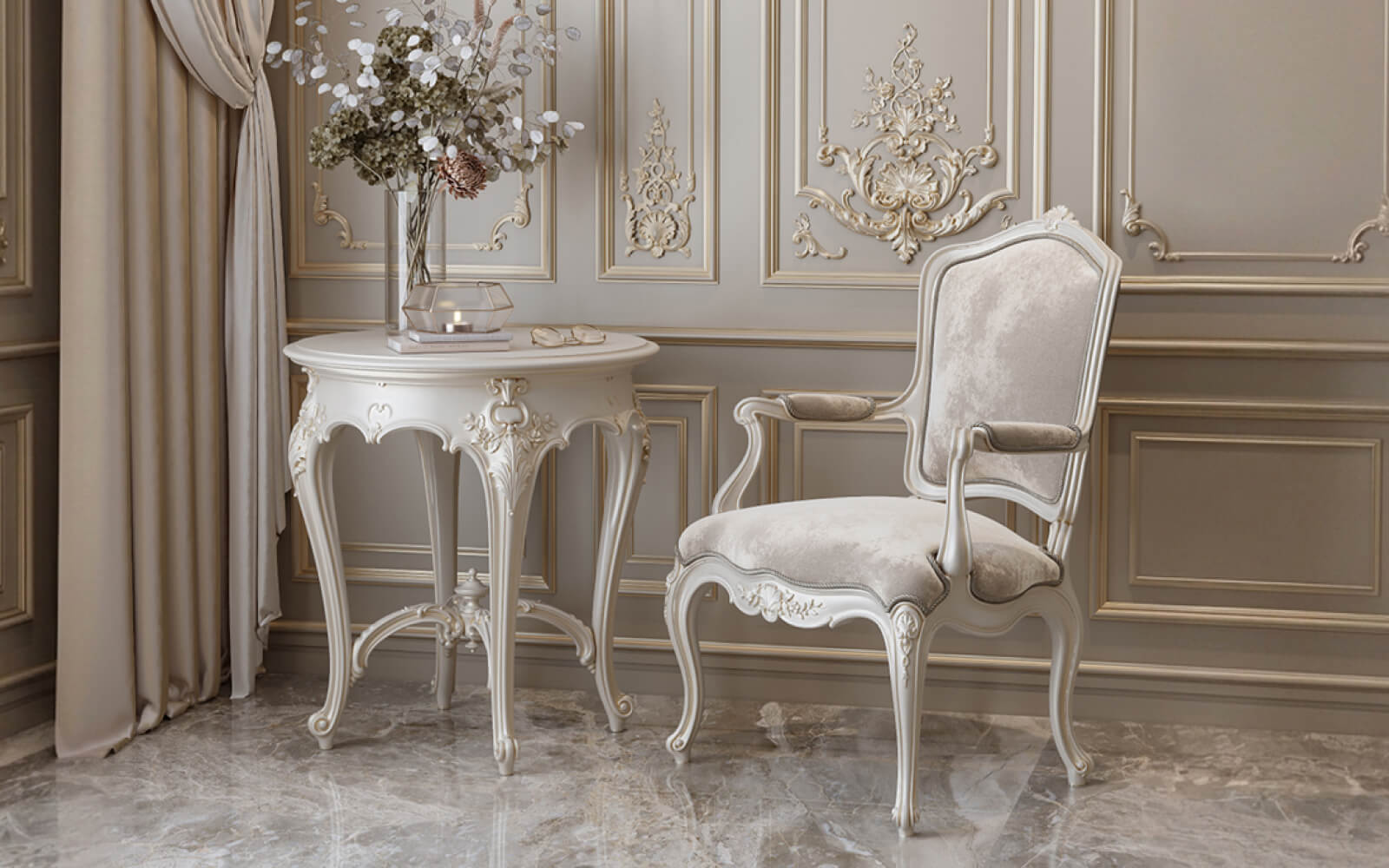
- Which Casings Are Best for Classic and Neoclassical Interiors
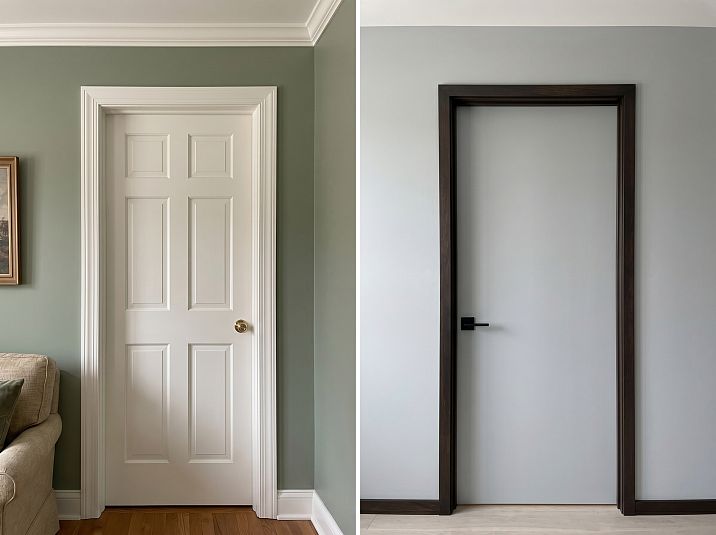
There are details you don't notice until they are chosen correctly. Door casings for interior doors are one of them. When they are in place, the interior looks complete, the door fits organically into the wall, and the entire doorway is perceived as a single architectural whole. When they are missing or poorly chosen, there is a feeling of incompleteness that is hard to articulate but impossible not to feel.
Door casings for interior doors solve two tasks at once: a technical one — to cover the mounting gap between the frame and the wall, and an artistic one — to design the doorway so that it becomes part of the interior composition. That is why the choice of interior door casings should be approached as seriously as the choice of the door itself. Especially when it comes to classic, neoclassical, or modern classic interiors — there this element works to its full potential.
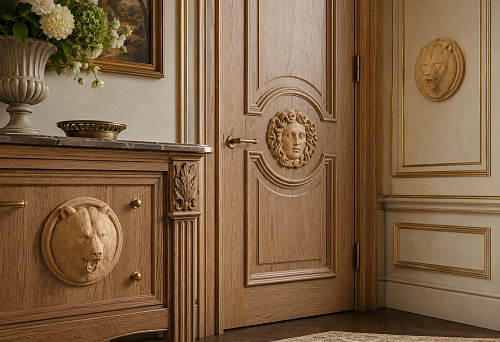
Wooden casings for interior doors are a solution that professional designers choose for projects above the middle class. They connect the door withwooden moldings, wooden baseboard, decorative elements and structure the space into a unified, restrained, yet expressive system. In this article — a complete guide to choosing: from material to the installation checklist.


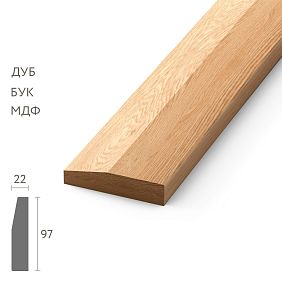
What are casings for interior doors and why are they needed
It would seem an obvious question. But this is precisely where the first mistake most often occurs: the casing is perceived as a technical detail, not as a design tool. Let's examine both sides.
Technical role. When installing an interior door, there is always a mounting gap between the door frame and the wall—it is needed to compensate for building shrinkage and thermal deformations. This gap is usually filled with mounting foam. The interior door casing covers it, hiding the foam, rough finishing, and uneven joints. Without casing, the opening looks like a construction site, not a finished interior.
Decorative role. But what happens next is much more interesting. A properly selected casing:
-
Makes the door opening visually complete, giving it a framed structure.
-
Unites the door leaf, frame, and wall into a single composition.
-
Connects the door with other profile elements of the room—baseboards, moldingsNeoclassicism — a simplified version of classic style, more concise, adapted to modern life. Baseboards 80–100 mm with moderately complex profile. Panelled or assembled panels with minimal decoration. Panel height one-third of wall height. Light-toned wood — whitewashed oak, light beech. Finish with matte varnish or oil. Upper wall section painted in neutral light tones (grey-beige, light grey, cream). Overall impression — elegance without overloading.
-
Enhances the interior style: in classic, it creates solemnity; in modern classic, sophistication; in neoclassical, architectural rigor.
Casing is the point where the door 'negotiates' with the wall. This detail largely determines whether the interior will look expensive and well-thought-out—or remain a collection of furniture and finishes.




What types of casings are there for interior doors
The market offers a wide choice, and navigating it is not easy. Let's systematize by key parameters—material, shape, and style.
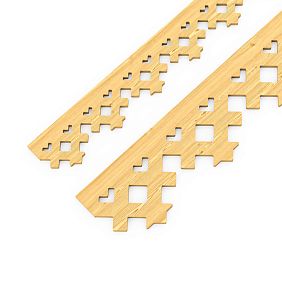
Our factory also produces:


By material
Material determines three things simultaneously: appearance, durability, and price range. Let's honestly examine each option.
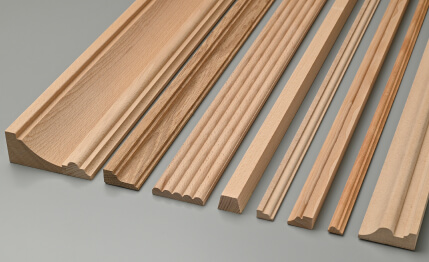
Wooden casings—this is the category where a serious conversation about interior begins. Solid oak, beech, pine. Natural texture, living surface, unique grain pattern.Wooden trimaccept any finish — from clear varnish that preserves the texture to solid enamel. They pair best with classic doors, wooden trim, anditems from the solid woodoverall.
Why are oak and beech most often chosen for architraves? Oak is dense, hard, with a pronounced texture and high biological resistance. Ideal where durability and status are needed. Beech is more uniform, without a pronounced pattern, and takes white or colored enamel beautifully. Pine is more affordable, easy to work with, and takes staining excellently.
MDF architraves — dense, milled medium-density fiberboard. Accurately reproduces complex profiles, does not crack with humidity fluctuations, accepts painting. A popular choice for budget and mid-range projects where neatness and uniformity are needed. Downside — no natural texture, the material feels less substantial than solid wood.
Architraves for painting — most often MDF or pine with a sanded surface and no finish. The customer paints them to the desired color. A flexible and popular format for projects where color changes or is selected individually.
Architraves for enamel — can be made of MDF or solid wood (especially beech). White or colored enamel provides a smooth, glossy or matte surface without a pattern. The most in-demand option for classic interiors with white door decor.
Architraves for staining — solid wood with a pigmented coating that preserves the wood grain. Colors: walnut, wenge, dark oak, light ash. For interiors where natural wood texture is a key element.
Get Consultation
By profile shape
Profile — this is what makes an architrave either a subtle accent or a striking architectural element. The cross-sectional shape determines how the shadow falls, how the relief is perceived, and how 'substantial' the framing appears.
Smooth (flat) architraves — rectangular cross-section without relief. A minimalist choice for modern interiors: loft, Scandinavian style, minimalism, contemporary. Simple, clean, no decoration.
Shaped architraves — profile with bevels, steps, coves, roundings. This type is the most versatile: suitable for modern classic, neoclassical, traditional classic interiors. A shaped profile adds volume and architectural completeness to the opening.
Wide door casings for interior doors — from 80 mm and above. A wide casing creates a full 'frame' around the door, emphasizing its significance. Especially effective for tall doors and openings in spacious rooms.
Narrow casings — up to 60 mm. A neutral, unobtrusive option. Good where you need to neatly close the seam without creating additional emphasis.
Figurative casings with ornament — embossed or stamped pattern on the profile surface. An intermediate solution between smooth and carved. Adds decorativeness without overloading the opening.
Carved casings for interior doors — hand-carved or milled carving. Floral ornaments, geometric patterns, classical motifs. This is the top level of decoration: used in formal interiors, studies, living rooms with rich architectural design.
By style
Modern — smooth or slightly figurative profiles, neutral colors, minimal decor. For interiors without historical references.
Classical — wide figurative profiles with several steps, often with white enamel. Symmetry, strictness, architectural logic.
Neoclassical — a synthesis of modernity and classicism. Figurative profile with clean lines, without overload. Works well paired withwooden moldingsIn interiors, they function as connecting elements between
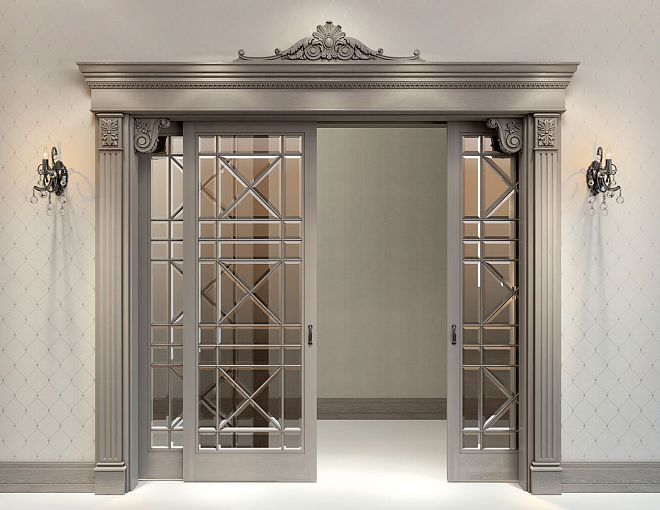
Decorative portals — casing as part of a more complex structure. To it are addedpilasters, frieze, cornice,decorative elements. The doorway becomes a full-fledged architectural object.
Why choose wooden architraves for interior doors
This question arises where alternatives exist. And alternatives indeed exist. But let's honestly examine why wood wins in most situations.
Natural texture — a unique visual effect. Neither MDF nor polyurethane provide that feeling of a living material that solid wood has. Wood grain works as a natural pattern: each piece is slightly different, and that's what creates a sense of authenticity, not mass production.
Visually more expensive appearance. A wooden interior architrave instantly elevates the perceived class of a room. This is well known to designers working in the business-class segment: even in an apartment with a moderate budget, a wooden architrave creates a feeling of expensive renovation.
Good compatibility with classic doors. If the door leaf is veneered or solid wood — a wooden architrave is an organic continuation. Same material and logic. No stylistic conflict.
Ability to assemble an interior set. This is the main advantage of wooden architraves within the STAVROS system. The entire lineof solid woodis made in a unified profile system: architraves,Moldings, Baseboardscornices,pilasters, decorative elements. By ordering everything from one catalog, you guarantee yourself unity of style, material, and profile — what in design is called an integrated concept.
Durability. A properly treated wooden architrave lasts for decades. It can be repainted, sanded, refreshed. Neither MDF nor polyurethane offer this possibility.
How to choose casings for interior doors
Choosing an architrave is not guesswork or a matter of taste in a vacuum. It's a professional process involving several parameters. Let's examine each one.
By door style
The door is the starting point. The architrave should not compete with it but enhance it.
A modern smooth door. A flat panel without decoration, strict geometry. Such a door needs a restrained architrave: smooth or with a minimal shaped profile, narrow format (50–70 mm), monochrome finish matching the wall or door.
A classic door—with frame or panel decor. Here, an architrave with a shaped profile is appropriate, possibly with several steps. Width—from 70 mm. White enamel or tinting to resemble natural wood. It is precisely for such doorsDoor DecorationSTAVROS offers an especially rich selection.
A door with a decorative frame. When the door panel already has applied moldings or decorative inserts—the architrave should continue their logic. The same profile, the same character. Look atDoor designin the catalog: there are solutions specifically for such a combination.
A door as part of a portal. When an interior door is part of an architectural door portal with pilasters and a cornice block—the architrave no longer works on its own but as an element of the system. Its profile should echo the profile of thewooden pilasterand cornice block.
By width and profile
When a narrow architrave is needed (40–60 mm). A small room, modern style, neutral solution. A narrow architrave does not create an accent—it simply finishes the opening without unnecessary noise.
When a wide architrave (from 80 mm) is appropriate. Spacious room, high ceilings, classic or neoclassical style. A wide architrave forms a 'frame' around the door and turns the opening into the visual center of the wall. Wide architraves are especially effective for interior doors in living rooms, studies, and formal hallways.
How the profile shape influences perception. This is a subtle but important topic. Flat profile — neutrality and modernity. Single bevel — lightness and neatness. Multiple steps — academic and classic. Complex multi-level profile — monumentality and formality. Rule: the richer the architectural context of the room, the more complex the architrave profile can be.
By color and finish
This is a decision many make last — and rightly so. The color should be chosen in the context of the finished space.
Matching the door. The architrave blends with the door leaf, the entire unit (door + frame + architrave) is perceived as a single element. A classic and safe solution.
Matching the baseboard and moldings. A professional approach: all profile elements of the room in a single color. Creates a sense of architectural thoughtfulness. WoodenWooden baseboardand architrave in the same color — this is the linguistic unity of the interior.
Contrasting option. Dark architrave on a light door or vice versa. Creates an accent, highlights the opening. Requires confidence and understanding of the overall color concept.
Natural wood finish. Varnish or oil-wax with minimal pigment preserves the texture. Ideal for interiors where wood is the main material.
White or colored enamel finish. The most popular option for classic styles. A white architrave paired with white moldings and a white cornice creates an architecturally complete room with a proper hierarchy of details.
a:2:{s:4:"TEXT";s:28891:"Which architraves are best for classical and neoclassical interiors
This block is one of the most commercially important. It is in classical and neoclassical spaces that architraves work to their full potential, and it is here that costly mistakes are most often made.
Architraves with a shaped profile are the primary tool. There is no place for smooth planks around the door in a classical interior. The profile should have at least 2–3 steps, a bead, and a chamfer. It is precisely this relief that creates the play of light and shadow, which makes the opening voluminous and solemn.
Combination with moldings is a professional standard. If the walls are decorated with wall moldings, the architrave must be coordinated with them. The same profile, the same width, the same finish. This is howwooden moldingworks in conjunction with the door architrave: they create a unified architectural 'notation' for the room.
Using pilasters — for formal openings. When you need to turn a door opening into a true portal — verticaldecorative columnsare added on the sides. In this case, the architrave acts as a horizontal connecting element above the pilasters. The result is a door opening as an architectural object, not just a hole in the wall.
How to assemble a beautiful door portal. The logic is as follows: first, the height and profile of the pilasters are determined, then an architrave with a coordinated profile is selected, followed by a cornice block or frieze on top, and finally —decorative elementsfor corner joints and central accents. The entire ensemble from one catalog is a guarantee of stylistic unity.
Carved architraves for interior doors are the highest level. For formal living rooms, studies, libraries — a carved architrave is organic and appropriate. The principle here is: if the room already has carved elements (decorative elements for doorscarved corbels, ornamental overlays) — the architrave should complement them.