Article Contents:
- What Are Door Frame Casings and Why Are They Needed
- Practical Function
- Decorative function
- Types of Door Frame Casings
- Flat architraves
- Profiled architraves
- Shaped and Decorative Casings
- Solid Wood Casings
- Casings for Classic Interior
- Why Wooden Door Frame Casings Are One of the Best Solutions
- How to Choose Door Frame Casings
- By width
- By door style
- By color and finish
- By material
- By Combination with Extension, Baseboard, and Decor
- Door casings for interior door frames
- What to add to door casings for door frames
- Mistakes when choosing door casings for door frames
- Where to buy door casings for door frames
- What to look for when choosing a supplier
- About price: what costs how much
- Ready-made or custom-made
- Why STAVROS is a good solution for door frame finishing
- Conclusion
- Frequently Asked Questions (FAQ)
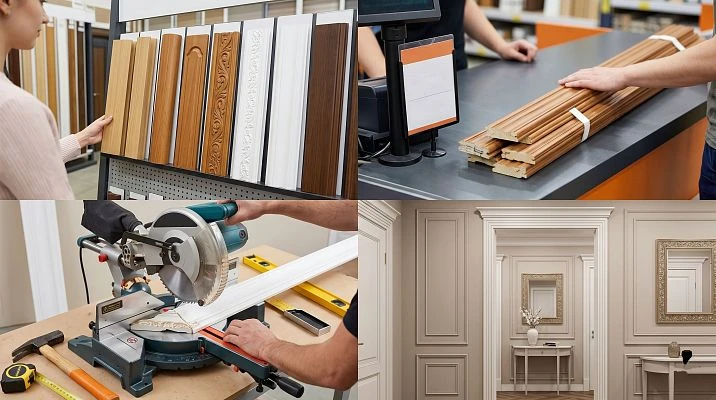
Imagine a door frame without casings. The reveal is exposed, there's an unsightly gap between the frame and the wall, everything around the door looks unfinished, as if the workers left and never came back. That's exactly the feeling you get where door casings for the door frame weren't chosen or installed on time. It seems like a detail. But it's the details that create the impression.
Properly chosen door casings for the door frame are not just about covering the installation joint. It's the finishing touch that turns a door from a functional object into an architectural element of the interior. And this is where most people get lost: what width to choose? What material? Smooth or with a profile? Wood or MDF? How to fit it into the room's style?
In this article — everything to the point. If you want to buy door casings for the door frame and get a result that will please you for years, not shame you every time you look at the door — read to the end.
What are door frame architraves and why are they needed
Let's start with a definition, because without it, the conversation about choice loses its footing.
Door frame architraves are profiled or flat overlay strips that are mounted around the perimeter of the door opening on both sides of the wall. They cover the area where the frame meets the wall, conceal the mounting seam, foam, possible unevenness of the slope, and give the opening a clear visual frame.
Architraves have two functions, and they are equally important.




Practical function
Architraves for finishing a door frame cover technical joints: between the frame and the wall, between the extension and the slope, between the mounting foam and the finish. Without this, gaps are visible, cracks are drafty, foam yellows and crumbles. An architrave is the solution that completes the door installation.
In addition, the architrave indirectly protects the mounting assembly from accidental damage: the edges of the frame and extension strip are covered, vulnerable joints do not protrude into the room space.
Our factory also produces:
Decorative function
It is here that finishing a door frame with architraves becomes a design tool. A door opening is a frame. A frame creates an image. In an interior with wooden doors, moldings, cornices, and baseboards, a quality solid wood architrave works like the final note in a musical piece: without it, all the previous work seems unfinished.
Through the shape, width, and material of the architrave, the stylistic tone is set: a smooth strip - minimalism and conciseness, a profiled multi-step profile - classic and solidity, a carved ornament - luxury and individuality.
Get Consultation
What types of architraves are there for a door frame
The market for architraves is vast—but there's less chaos than it seems. Let's break it down by type.
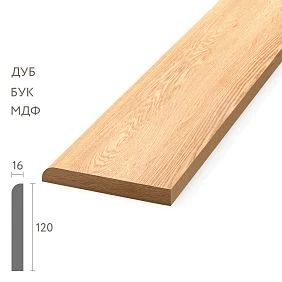
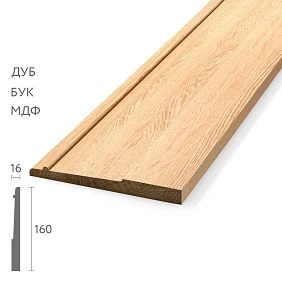
Flat casings
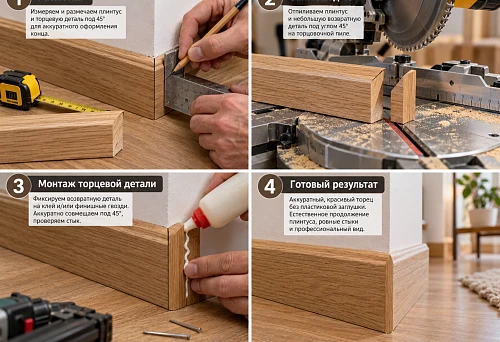
The simplest solution is a rectangular board with a minimal profile or none at all. Flat architraves for door frames work well in minimalist, Scandinavian, or modern interiors where there's no room for extra detail. Installation is easier, the price is lower, and corner joining is at a 45° angle or butt-jointed via a corner rosette.
A flat architrave for painting is a universal choice: it can be painted to match the wall color, the door color, or a contrasting shade. Even a simple pine strip, evenly painted white, looks elegant in the right interior.
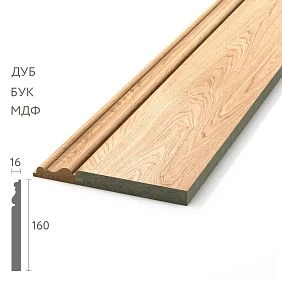
Profiled casings
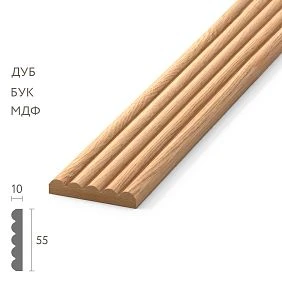
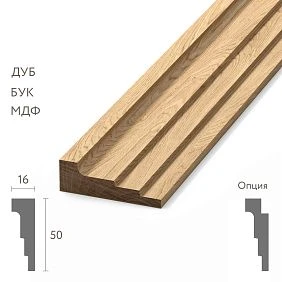
Shaped cross-sections with beads, rolls, and stepped ledges—this is the classic of door framing. Profiled architraves for door frames create a play of light and shadow on the side surface: even without a single ornament, such a profile looks visually 'richer' than a flat one. This is the golden mean between simplicity and decorativeness.
The width of profiled architraves for door openings is typically 60–80 mm; for wide frames and classic interiors—up to 100–120 mm. The more complex the profile, the more expressive the result.
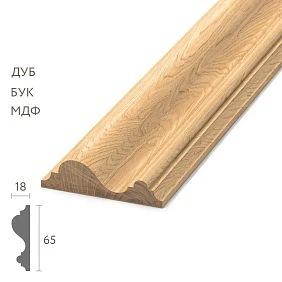
Shaped and decorative architraves
This is where serious work with the image begins. Decorative architraves for door frames are profiles with non-standard cross-sections: a convex central rib, side fillets, a shaped edge, curvilinear elements. They are suitable for classic, neoclassical, and Baroque interiors, where details are expected to be expressive and characterful.
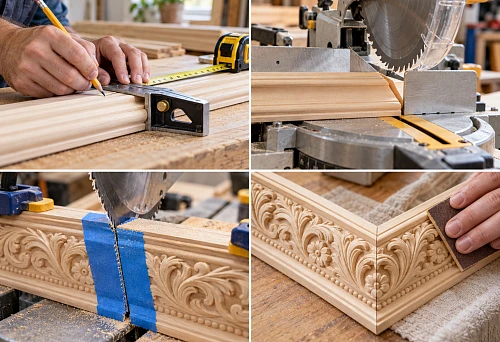
This category also includes architraves with carved ornamentation—milled or hand-cut patterns on the board's surface. Such solutions are Door Decoration, elevated to the level of an architectural statement.
Solid wood architraves
The material is a story in itself. Solid wood or laminated wood casings for door frames are unmatched by MDF, PVC, or polystyrene. The living wood grain, tactile surface, resistance to deformation, and the possibility of restoration—all of this is only available with solid wood.
Wooden itemsFor door trim, they are made from different types of wood: oak casings offer maximum hardness and a prestigious grain; beech casings provide perfect geometry and stability; pine casings are affordable, easy to work with, and a good base for painting. The choice of wood depends on budget, interior style, and durability requirements.
Casings for a classic interior
Classic casings for door frames deserve special attention—wide, with a pronounced multi-step profile, made of oak or beech, finished with varnish or tinting. This is a solution that instantly elevates the perceived quality of the door. In an interior withwooden moldings, with wooden cornicesandwooden baseboardsuch a casing forms an ensemble, not just a set of parts.
Why wooden casings for door frames are one of the best solutions
The market offers MDF, PVC, polystyrene, and polyurethane. Each material has its place. But wooden casings for door frames have arguments that are hard to dispute.
Naturalness and honesty of the material. In an interior with wooden doors, parquet, or wooden furniture, a synthetic casing next to them will stand out. Not because it's bad, but because it's not real. Wood next to wood creates visual and tactile harmony, and this is immediately noticeable.
A solid appearance. Solid wood provides volume and weight that cannot be replicated with MDF or PVC. Even a smooth oak profile looks more expensive than a similar synthetic one. This is not a prejudice—it's a feature of how natural materials are perceived.
Flexibility in finishing. Wooden casings for door frames accept any coating: enamel, stain, glaze, oil, wax, patina. You can create an exact color match with the door leaf or an intentional contrast. MDF can also be painted, but it will never compare to wood in terms of color depth and texture.
Repairability. A scratch, dent, or chipped corner – all of this can be fixed on a wooden casing. Sanding, local repainting, reinforcement with glue – wood is restoration-friendly. Plastic or polystyrene are practically impossible to restore.
Compatibility with the decorative system. Buy wooden casings for a door frame where there is simultaneouslyTrimming Items, Wooden moldinganddecorative elements– means assembling a unified design ensemble. A casing made from the same wood species as the baseboard and molding – that's an interior, not a random set of parts.
That is precisely why buying wooden casings for a door frame is an investment in quality that is visible every day.
How to choose casings for a door frame
This question is multi-layered, and each layer requires a separate discussion. Let's break it down without rushing.
By width
Width is the first and main parameter. How to choose casings by width for a door frame:
-
The minimum casing width must completely cover the joint between the frame and the wall plus a 10–15 mm margin on each side;
-
For standard interior doors: casing width 60–80 mm;
-
For wide doorways and classic interiors: 80–120 mm;
-
For narrow, 'modest' doors in small spaces: 50–60 mm — to avoid overloading the opening;
-
Entry doors in thick walls often require a casing of 80 mm or more.
Proportion rule: the wider and more massive the door structure, the wider and more expressive the casing should be.
By door style
This is key — and where mistakes are most often made. How to choose casings by style:
| Door and interior style | Recommended casing type |
|---|---|
| Minimalism, Modern | Smooth rectangular profile, narrow or medium |
| Scandinavian, country | Smooth or with a slight bevel, for painting |
| Classic, neoclassic | Profiled with several steps, made of oak or beech |
| Empire, Baroque | Wide profiled with carved decor, with an over-door element |
| Loft | Smooth, dark solid wood with open texture |
| Provence, rustic | Light profile with rounded shapes, for light paint |
By color and finish
Three strategies:
Match. The casing exactly matches the color of the door leaf or frame — the door looks like a single item.
Toning to neutral. White or cream casings with white or light walls — a classic solution for most apartments. Neutral, clean, works everywhere.
Contrast. A dark casing on a light door or a light one on a dark door — an author's technique requiring confidence in the result. When executed successfully — very expressive.
By material
For interior doors and normal rooms: pine for painting, beech or oak for toning or varnish. For rooms with high humidity (bathroom, kitchen) — wood with moisture-resistant impregnation or special MDF for painting with waterproof enamel.
By combination with extension, baseboard, and decor
This is the final and most subtle part of the selection. How to choose casings for the door frame:
-
The casing and extension strip (expander strip on the frame) should be made of the same material and preferably from the same collection;
-
Wooden baseboardon the floor — from the same wood species or with the same finish as the casing;
-
If the room haswooden wall moldings— the casing should echo their profile;
-
Casings on all doors in one space — from the same collection, otherwise the mismatch will be obvious.
Casings for interior door frame
The most common request is precisely about interior doors. Let's examine separately.
Casings for interior door frame are installed on both sides of the opening. A standard set for one door is 5 strips (2 side and 1 top for each side). Length of side strips: 190–210 cm, top — according to the opening width plus overhang (depends on the joining method).
Key nuances for interior doors:
For light doors. White, cream, or light gray casings — a universal solution that works with light doors in any interior. Made of wood for painting with white enamel — one of the most popular options.
For dark doors. Dark trims matching the door color create a monolithic, weighty look — ideal for classic or dark loft interiors. Slightly lighter than the door tone — a soft contrast with depth. White trim on a dark door — a bold contrast requiring white walls.
For glass doors. A thin, elegant profile — no wider than 50–60 mm. A massive wide trim next to a glass panel looks heavy.
For classic solid wood doors. This is precisely wherewooden door decorunfolds to its full potential. A profiled oak or beech trim + an over-door element with a cornice +Carved wooden items occupy a special place in this regard. Wood carving not only emphasizes the aesthetics of a room but also gives it warmth, lively energy, and uniqueness. In modern interiors, carved elements are widely used due to their unique properties and adaptability to any style—from classic to minimalism.in the form of corner overlays — this is a level that leaves an impression.
If you want to buy interior door trims and do it correctly — think immediately about both sets (on both sides) and about matching with the rest of the space's millwork.
What to add to door frame trims
One trim is good. A trim within a system — that's a completely different result. Here's what is added to door trims to make the doorway design look truly expensive.
Molding.Decorative wooden moldingsabove the doorway, along the walls in the door area, or as panel framing — one of the main tools of classic design.Wooden moldingabove the door creates a sense of 'superstructure', visually raises the opening and gives it architectural significance.Wall wood molding — horizontal arrangement that can run at the level of a chair back, window sill, or mid-wall. Molding divides walls into horizontal zones, creates rhythm, and structures space.in the same style as the casing — a classic technique for decorating corridors and living rooms.
Cornices.wooden corniceabove the door opening — an element found in classical and neoclassical interiors. It is a horizontal profile above the top lintel of the casing: it creates an 'entablature' for the opening, giving it monumentality.Wooden corniceabove the door is especially advantageous in high-ceilinged rooms — where the vertical of the opening needs a horizontal finish.Wooden furniture corniceis also used to decorate built-in wardrobes and niches next to the door — to create a cohesive wall composition.
Molding.Wooden trim— glazing beads, battens, corner beads — covers all joints that the casing does not overlap: the transition from the extension piece to the reveal, corner areas, transitions between planes. Buying molding for the door frame from the same manufacturer as the casings means achieving unity of material and profile.wood trim itemsas part of a unified set with casings — this is a systemic solution that is visible in the final result.
Decorative overlays and elements.Decorative elements for furniture and interiors— corner rosettes, frieze overlays, ornamental inserts — these are what turn standard design into custom. Corner rosettes at the junctions of side and top casings are a traditional technique that solves a technical issue while simultaneously enriching the decor.
Baseboard.Wooden baseboardfrom the same wood species as the casings — the lower horizontal line that picks up the vertical of the door framing and guides the eye around the perimeter of the room. This unity of the lower and side planes makes the space cohesive. There also existsMDF Skirting Board— for those who choose a more affordable option.
Mistakes when choosing casings for a door frame
These mistakes are not uncommon. They are made both during a first renovation and in expensive projects. Knowing about them is your insurance.
Too narrow casing. A casing 30–40 mm wide on a standard door looks like a decorative strip, not an architectural element. It does not fully cover the joint and visually does not 'hold' the opening. How to properly cover a door frame with casings: the width should be at least 60 mm for standard frames, 70–80 mm — for a classic interior.
Mismatch with the door style. A carved casing with an ornament next to a smooth white door in a minimalist style is a visual disaster. The opposite: a smooth strip next to a classic solid wood door with milling looks poor and random. How to properly frame a door frame with casings: first determine the style of the door and interior, then choose.
Poor combination with the frame and extension. Casing from one collection, extension from another, unfinished reveal — the opening looks like it's assembled from leftovers. There is one solution: take the casing, extension, and trim from the same catalog of one manufacturer.
Cheap visual effect due to the wrong profile. A thin polystyrene casing imitating 'wood' will yellow in a year, and start cracking in two. Even if bought cheaply — redoing it will cost more. How to finish a door frame for years to come: only solid wood or high-quality MDF for painting.
Lack of composition with baseboards and decor. A door casing without a matching baseboard and molding is an element without context. The full effect is achieved only by a system. If one room has oak door casings and a white PVC baseboard, this is a dissonance that immediately catches the eye.
Different casings on different doors. In one space (hallway, living room), all doors should have identical casings. Different profiles are different 'stories' that conflict with each other.
Where to buy door frame casings
Practical section — because the right choice alone is useless without the right purchase.
What to look for when choosing a supplier
Material with a certificate. The supplier must clearly indicate: wood species, moisture content, type of blank (solid wood or glued panel). For interior door casings, a moisture content of 8–12% is acceptable. If this information is hidden — it's a reason to be cautious.
Assortment in a unified style. The best scenario — door frame casings from a manufacturer that simultaneously offers moldings,Trimming Itemscornices, and decorative overlays. This allows assembling all elements from one 'family' without compromises.
Quality of processing. Surface sanding — without cutter marks. Ends — clean, without burrs. Profile — sharp along the entire length. If the manufacturer offers the option to order a sample — use it.
Complete set per opening. It's good when the offer includes: side planks, top crosspiece, corner rosettes, or ready-made 45° cuts. This is convenient and saves time on fitting.
About price: what costs how much
The price of door frame trims depends on several factors. Approximate ranges:
-
Smooth pine for painting: 350–600 rub./linear m;
-
Profiled pine: 500–900 rub./linear m;
-
Profiled beech: 800–1,600 rub./linear m;
-
Profiled oak: 1,200–3,500 rub./linear m;
-
Decorative carved solid wood trim: from 2,500 rub./element.
How much do door frame trims cost for one opening (on both sides): on average, a pine set will cost 2,000–4,000 rubles, an oak set — 6,000–15,000 rubles depending on the profile and configuration.
Ready-made or custom order
Ready-made door frame trims — quick and convenient for standard openings (60/70/80/90 cm width, standard height). Custom order — for non-standard sizes, custom profiles, or special wood species. Production time is usually 2–4 weeks.
Ordering door frame trims directly from the manufacturer is always more profitable than through retail. Direct prices, ability to choose the profile, flexibility in length and finish.
Why STAVROS is a good solution for door frame finishing
STAVROS is a manufacturerwooden productswith its own production and a wide catalog, where architraves exist not on their own, but as part of a complete system for door and interior finishing.
Unified decor catalog. Here you can chooseWooden casingand immediately match it withWooden moldings, wooden corniceabove the opening,Wooden baseboardunder the door anddecorative elementsfor corner overlays. Everything — from a single source, from the same wood species, with unified quality control.
Profiled and carved assortment. The STAVROS catalog includes both classic smooth profiles and shaped solutions for classic interiors.Door Decoratingwith wooden elements — a separate strong theme: over-door cornices, overlays, rosettes, decorative moldings above the opening.
Molding for system design.Wooden trimSTAVROS offers dozens of profiles in its assortment: from thin glazing beads to wide frieze profiles.wood trim itemsallow you to cover all joints around the door and create a complete finishing system.
Solutions for classic interiors. If your interior requires profiled architraves with expressive cross-sections, over-door cornices, decorative corner rosettes — all of this is achievable through the STAVROS catalog without the need to search for different suppliers.
Conclusion
Architraves for the door frame are not just a technical accessory 'for closing the gap'. They are a visible, tangible, everyday element of the interior that either contributes to the space's image or subtly diminishes it.
Properly selected solid wood door architraves for the frame, in a style coordinated with the door, skirting boards, moldings, and other trim — this is a solution that never goes out of style and doesn't disappoint. Expensive? Relatively. But only compared to cheap alternatives that will need replacing in a few years.
Think of architraves not as a separate detail, but as part of a system: frame + jamb extension + architrave + molding + cornice + skirting board. It is this approach that delivers the result for which the renovation is undertaken — an interior where you want to be.
STAVROS is ready to help assemble this system: frominterior decorand door architraves towooden decorative moldings, wooden cornicesandmolding products— all solid wood, all in the catalog, all with the possibility of system selection for your opening and style.
Frequently Asked Questions (FAQ)
What is the difference between door casings and door jamb extensions?
Door casings are decorative strips that cover the joint between the door frame and the wall from the front side. Door jamb extensions are expansion strips installed inside the opening for thick walls to fill the gap between the door frame and the reveal. Together, they form a complete door opening trim.
How many door casings are needed for one door?
For one door on both sides, 5 strips are typically needed: 2 side strips and 1 top strip for each side. The side strips are taken with a length of 210–230 cm, the top one — according to the width of the opening plus an overhang depending on the joining method (at 45° or via a corner overlay).
How to properly join door casings at corners?
Two methods: miter cut at 45° (requires precise tools and experience) or a corner overlay-rosette (the casings are cut straight, the corner is covered with a decorative element). The second method is simpler, more aesthetic, and hides possible installation errors.
Is it possible to install door casings on a frame without an extension?
Yes, if the wall thickness matches the width of the door frame. In this case, the casing is attached directly to the frame, covering the joint with the reveal. If the wall is wider than the frame — an extension is needed.
Is it necessary to remove old door casings when replacing a door?
Yes, when completely replacing the door unit, the old casings are removed. When replacing only the door leaf (without the frame), the casings, as a rule, remain in place.
Can wooden door casings be painted after installation?
Yes, and that's one of the advantages of wood. First sanding, then priming, then the final coating — enamel, stain, or varnish. If the casings are already coated — the old coating is sanded, and a new one is applied.
How to calculate the required amount of casings?
Measure the height (h) and width (w) of the opening. Standard calculation: 2 side planks according to the height of the door block + 1 top plank according to the width of the opening — on each side. For two sides, multiply by 2. Add 10–15% extra for cutting.
How to attach wooden door casings?
With liquid nails (glue + light pressure) or finishing nails with countersinking the heads and filling the holes. Screws are rarely used — they require filling. For a finished result, liquid nails + a few finishing nails for fixation during drying are optimal.