Article Contents:
- Terminology: what are the elements above the door called
- Pediment or door cornice
- Pediment
- Console above the door
- Pilaster capital
- Materials for over-door decoration
- Natural Wood
- Polyurethane
- Gypsum
- MDF and Composite Materials
- Stylistic approach to over-door decoration
- Classic style
- Baroque
- Neoclassicism
- Modern
- Modern minimalist styles
- Functional tasks of over-door decoration
- Visual Proportion Correction
- Space zoning
- Defect Concealment
- Protection from External Influences
- Compositional schemes for door opening design
- Minimal scheme: architrave
- Classic scheme: architrave with cornice
- Developed scheme: architrave, consoles, cornice
- Ceremonial scheme: pilasters, capitals, pediment
- Technology for installing over-door decoration
- Preparation stage
- Choosing Fasteners
- Element joints
- Finishing
- Combining over-door decoration with other interior elements
- Harmony with ceiling decoration
- Correspondence to window architraves
- Connection with furniture
- Regional features and historical styles
- Russian style
- Mediterranean Style
- French style
- Mistakes in door opening design
- Scale mismatch
- Stylistic conflict
- Over-decorating
- Poor Installation
- Frequently Asked Questions
- What is the Decorative Panel Above the Door Called?
- What material is best for over-door decoration?
- Can over-door decoration be installed independently?
- How much does door opening design cost?
- How to choose decoration to match the existing interior?
- Should all doors in a room be decorated the same way?
- Can different materials be combined in decoration?
- How to care for over-door decor?
- Does a pediment protect the door from moisture?
- Where to buy quality over-door decor?
- Conclusion: create a ceremonial portal with over-door decor

Architectural design of a doorway is the art of creating a harmonious transition between rooms, a way to give the entrance area solemnity or intimacy, grandeur or coziness. The decorative panel above the door is an element that many notice, but not everyone can correctly name. Pediment, cornice, gable, console — terms used to denote various types of over-door decor. Let's understand this variety, study the functions of each element, and learn how to create expressive door framing in different styles.


Terminology: what are the elements above the door called
Proper understanding of architectural terminology helps not only when communicating with specialists but also when independently selecting decor. Each term denotes a specific element with a defined shape, function, and style.




Pediment or door cornice
A pediment is a horizontal element protruding above a door or window opening, resembling a miniature roof. In classical architecture, a pediment imitates the structure of an entablature — the upper part of an order system. It can be straight, triangular, or curved, simple or richly decorated with carvings.
A door cornice performs several functions simultaneously. The decorative task is to complete the composition of the opening, creating a visual accent. The practical role is to protect the upper part of the door from water ingress in external applications. The optical illusion is the visual increase in the height of the opening, which is especially valuable in rooms with low ceilings.
In modern interior design, pediments are used to create classical, neoclassical, and art deco interiors.door framingUsing a pediment transforms an ordinary opening into an architectural portal, emphasizes the status of the room, and creates a sense of thoughtful space.
Our factory also produces:


Gable
A gable is a triangular or semicircular completion of a building facade, bounded by two roof slopes and a cornice. In interior decor, a gable is used above doors and windows as a decorative element, reproducing this architectural form in miniature.
A gable can be full — with a closed triangle, or broken — with a break in the center where a decorative element, coat of arms, or monogram is placed. The tympanum — the inner field of the gable — is often decorated with carved ornaments, rosettes, or painted panels.
The use of gables is characteristic of formal interiors in Renaissance, Baroque, and Classicism styles. This element creates a solemn atmosphere, emphasizing the importance of the room. An entrance door framed by a gable is perceived as a formal entrance, an invitation to a special space.
Get Consultation
Console above the door
Console— a decorative-constructive element protruding from the wall and supporting a cornice, beam, or shelf. Above the door, consoles are placed in pairs — on both sides of the opening at the top, visually supporting the horizontal element — the cornice or gable.
Carved wooden consoles or polyurethane imitations create the illusion of constructive logic — as if the cornice actually rests on these elements. The ornament of consoles varies from simple volutes to complex compositions with acanthus leaves, atlas figures, and mythological characters.
Decorative elements on the doorin the form of consoles add volume to the composition, create vertical accents, and enrich the silhouette of the opening. Consoles are especially effective in high-ceilinged rooms where their scale is well perceived.
Pilaster capital
If a door opening is framed by pilasters — flat vertical projections imitating columns — then the upper part of the pilaster is crowned with a capital.Capital— this is a carved or relief element that completes the vertical and creates a transition to the horizontal element — the architrave or cornice.
Capitals differ by order affiliation. Doric — strict, with simple geometry. Ionic — with characteristic volute scrolls. Corinthian — lush, decorated with acanthus leaves. Composite — combining elements of different orders.
Door decor using pilasters and capitals creates a classical architectural composition, turning the opening into a ceremonial portal. Such design is characteristic of representative interiors — halls, formal living rooms, libraries.
Materials for over-door decor
The choice of material determines not only the appearance but also the durability, cost, and complexity of installing decorative elements.
Natural wood
Carved elements from solid oak and beech— a classic of the genre, embodying natural beauty and the skill of the carver. Oak wood has high density, a pronounced texture, and a noble hue. Beech is softer, easier to carve, and allows for the creation of complex multi-level ornaments.
The advantages of wooden decor are obvious. The naturalness of the material creates a warm atmosphere and regulates humidity in the room. Durability is measured in decades—with proper care, wooden elements retain their beauty for generations. The possibility of restoration—scratches are sanded, the finish is renewed, and carvings are restored.
Disadvantages are related to the natural properties of wood. Sensitivity to humidity requires a stable microclimate. The high cost of hand carving makes complex elements inaccessible to everyone. The need for professional installation of large, heavy parts increases overall expenses.
Polyurethane
Polyurethane molding is a modern alternative to plaster and wood, combining affordability, practicality, and aesthetics. The material is lightweight, moisture-resistant, and does not deform from temperature fluctuations. Polyurethane accurately reproduces the most complex forms, conveying every detail of the ornament with filigree precision.
The main advantage is the combination of affordable price and high quality. Installation is simple due to the low weight of the elements—no special fastening is required, just high-quality adhesive. The material does not rot, is not affected by fungus, and is easy to clean. Polyurethane can be painted with any paints, opening up endless possibilities for color experiments.
Polyurethane bracketsare ideal for wet rooms, unheated spaces, and budget projects. Visually, high-quality polyurethane is indistinguishable from plaster or wood but surpasses them in performance characteristics.
Plaster
Plaster molding is a traditional material for classic interiors. Plaster allows for creating clear relief, fine details, and complex multi-level compositions. The material is eco-friendly, has sound-absorbing properties, and regulates humidity.
Disadvantages of plaster include fragility, significant weight requiring reinforced fastening, and the impossibility of use in wet rooms. Installation of plaster molding requires professional skills. Restoration is complex—damaged areas are difficult to restore inconspicuously.
Modern use of plaster is limited to restoration projects or exclusive interiors where the authenticity of the material is important. For most projects, polyurethane and MDF are more practical alternatives.
MDF and composite materials
MDF with carved decor, covered with veneer or PVC film, is a budget solution for modern interiors. The material holds its shape well, does not dry out, and is affordable. Veneered coating creates the feel of natural wood.
Composite materials—combinations of polymers, wood fibers, mineral fillers—offer an optimal combination of characteristics. They are lighter than wood, stronger than plaster, cheaper than solid wood, and more diverse in textures and finishes.
Stylistics of Over-Door Decor
The choice of decor above the door is determined by the overall style of the interior. Let's consider characteristic solutions for the main directions.
Classic style
Classicism requires strict adherence to the canons of the order system. Door framing is built on the principle of an architectural portal: vertical elements—pilasters or half-columns; horizontal completion—an entablature, including an architrave, frieze, and cornice.
Above the door, a straight or slightly protruding cornice with a classic profile—gooseneck, cavetto, ovolo—is placed. The frieze can be smooth or decorated with an ornament—meander, egg-and-dart, bead-and-reel.Carved bracketsin the form of volutes support the cornice on the sides.
Color palette—shades of white, cream, ivory. Gilding on protruding parts adds luxury. Patination creates an effect of noble antiquity, emphasizing the depth of carving.
Baroque
Baroque is maximalism, theatricality, and an abundance of decor. Above the door, a lush pediment—broken, with volutes, decorated with a cartouche in the center—is placed. Consoles turn into complex sculptural compositions with putti, garlands, and shells.
The tympanum of the pediment is filled with carved ornamentation, painted panels, or a coat of arms. The relief is high, multi-layered, creating deep shadows. Gilding is abundant, often combined with polychrome painting.
Baroque decoration of a doorway turns it into a ceremonial portal, requiring a corresponding scale of the room. In compact spaces, an excess of Baroque decor creates a feeling of overload.
Empire
Empire—a strict, monumental version of classicism with military symbolism. Above the door, a massive straight cornice with a clear profile is placed. Consoles take the form of lictor's fasces, Roman shields, or eagles. Ornament includes laurel wreaths, swords, and torches.
Empire colors—white, gold, deep blue, green, burgundy. Contrasting combinations emphasize the graphic nature of the forms. Patination is moderate, gilding is clear, without an antique patina.
Modern
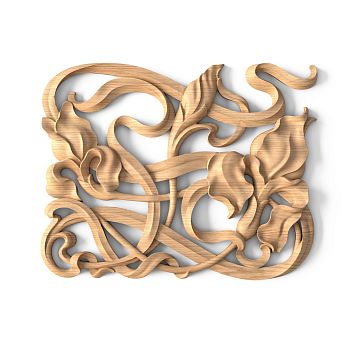
Modernrejects the order system, creating free compositions based on natural forms. Above the door, an asymmetrical cornice with smooth lines and stylized plant overlays—irises, poppies, bindweeds—is placed.
Art Nouveau consoles have organic forms reminiscent of plant curves. The ornament is graphic, with low relief. Colors are muted—gray-green, lavender, ochre. A matte surface is preferable to a glossy one.
Modern minimalist styles
Scandinavian style, contemporary, and minimalism use laconic decor without excessive details. Above the door—a simple straight cornice without ornament or a thin molding visually separating the opening from the wall.
Color solution is monochromatic—white on white, gray on gray. The effect is achieved through the play of textures, thin relief lines, and precision of proportions. Decorativeness is minimal, but the composition is thought out to the smallest detail.
Functional Tasks of Over-Door Decor
A decorative panel above the door solves not only aesthetic but also practical tasks.
Visual proportion correction
A cornice above the door visually increases the height of the opening. This is especially valuable in rooms with low ceilings—a properly selected over-door element creates an illusion of height, making the space more airy.
A wide protruding cornice visually expands the opening, making it more monumental. A narrow profiled molding, on the contrary, makes the opening more elegant and lighter. Vertical consoles on the sides enhance the verticality of the composition.
Space Zoning
The design of a doorway highlights it as an independent architectural element, creating an accent zone. In large open spaces, over-door decor helps structure the environment and delineates the boundaries of functional zones.
A ceremonial opening with rich decoration emphasizes the status of the room it leads to. Modest decoration of secondary doors creates a spatial hierarchy, directing attention to the main areas.
Defect Concealment
A decorative cornice conceals wall irregularities in the upper part of the opening, misalignments of the door frame, and gaps between the frame and the wall. A wide casing covers poorly executed slopes.
The practical function is especially important during the renovation of old buildings, where achieving perfect geometry is difficult. The decor compensates for construction flaws, turning them into an artistic necessity.
Protection from external influences
On building facades, a pediment (sandrík) above the door serves an important protective function—it diverts rainwater away from the door, preventing the upper part of the leaf and frame from getting wet. A protruding cornice creates a canopy that protects against direct precipitation.
In interiors, the protective function is less relevant but remains in rooms with high humidity—bathrooms, kitchens—where the cornice prevents condensation from forming at the junction of the wall and door.
Compositional schemes for doorway design
There are time-tested schemes that guarantee a harmonious result.
Minimal scheme: Casing
Basic design includes only a casing—a profiled strip framing the opening around the perimeter. A simple casing without additional elements is suitable for minimalist interiors, where decorativeness is minimized.
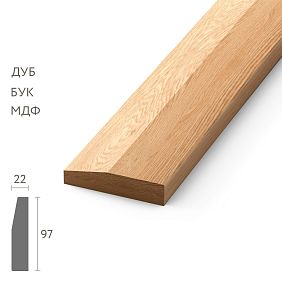
The casing can be flat, profiled, or carved. Width varies from narrow 40-60 mm strips to wide 100-150 mm frames. Corner joints are made at a right angle or at 45 degrees.
Classic scheme: Casing with cornice
The casing is complemented by a horizontal cornice above the door. The cornice can be an extension of the casing—the same width and profile—or a protruding element—wider and more massive than the side strips.
This scheme creates a complete composition, visually increases the height of the opening, and emphasizes classical styling. Suitable for most traditional interiors.
Developed scheme: Casing, consoles, cornice
Decorative consoles are added to the casing and cornice, placed in the upper corners of the opening.Consoles visually supportthe cornice, creating an illusion of structural logic.
This scheme is characteristic of classical, Baroque, and neoclassical interiors. It requires sufficient room scale—in compact rooms, consoles may look bulky.
Ceremonial scheme: Pilasters, capitals, pediment
Full architectural design includes vertical pilasters on the sides of the opening, capitals crowning the pilasters, a horizontal entablature, and a pediment above the door. Such a composition turns the opening into an architectural portal.
The ceremonial scheme requires high ceilings—at least 3 meters, sufficient opening width—from 90 cm, and corresponding room scale. It is appropriate in representative interiors—halls, living rooms, libraries.
Installation technology for over-door decor
Proper installation guarantees the durability and aesthetics of the composition.
Preparation Stage
The wall must be level, dry, and sturdy. Irregularities exceeding 5 mm are leveled with plaster or drywall. Loose, crumbling areas are reinforced with deep-penetration primer.
Marking is a critically important stage. Determine the central axis of the opening, mark horizontal levels for the cornice and consoles. Use a laser level for accuracy. Place the elements without fastening, evaluate the composition, and adjust the placement if necessary.
Choosing fasteners
Light polyurethane elements are attached with mounting adhesive like "liquid nails." The adhesive is applied to the back of the element in a zigzag or dots, the part is pressed against the wall, and secured with painter's tape during setting.
Heavy wooden or plaster elements require additional fastening with screws or anchors. Fasteners are installed discreetly—in recesses of the relief or from the back through the wall. After installation, the holes are filled with putty.
Large consoles and brackets are attached to metal brackets hidden inside the element. The bracket is screwed into the wall, and the decorative element is placed over it. Such fastening withstands significant loads.
Element Joints
Corner joints of architraves are made at a 45-degree angle. Use a miter box or miter saw for precise trimming. The joint is coated with glue and, if necessary, secured with headless finishing nails.
The horizontal cornice is joined with vertical elements either at an angle or butt-jointed. Gaps are filled with acrylic sealant and sanded after drying. Quality joining is critical for aesthetics—sloppy seams ruin the decorative impression.
Final finishing
After installation, elements are painted, varnished, or patinated. If the decor and wall should be the same color, painting is done after all elements are installed simultaneously. This creates a monolithic composition without color boundaries.
Patination is performed using the following technique: elements are painted in the base color, after drying, a contrasting patina is applied with a brush into the recesses of the relief, and excess is removed with a cloth. Raised parts remain light, recesses dark.
Gilding is applied to the raised parts of the ornament using gold leaf or gold paint. For an antique gilding effect, transparent patina is applied after gilding, and dark patina in the recesses.
Combining over-door decor with other interior elements
Over-door decor does not exist in isolation—it is part of the overall decorative system of the room.
Harmony with ceiling decor
Ceiling MoldingCeiling and door cornices should match each other in style and scale. If the ceiling molding is 100 mm high with a classic profile, the door cornice should be of comparable size and style.
ceiling rosettesCeiling rosettes and over-door pediments can repeat ornamental motifs, creating thematic unity. Floral ornament on the rosette echoes the floral decor of the pediment.
Correspondence to window architraves
In a room with both doors and windows, their frames should harmonize. Matching architrave profiles, repeating ornamentation, and a unified color palette create compositional unity.
If windows are framed with complex architraves and cornices, doors require equally elaborate decor. Simple door framing with grand windows creates imbalance.
Connection with furniture
Classic FurnitureFurniture with carved decor requires corresponding architectural framing. Ornate furniture facades harmonize with richly decorated doorways. Minimalist furniture clashes with Baroque stucco.
Carved furniture legs can repeat the shape of door decor consoles. Furniture facade ornamentation echoes pediment ornamentation. Such coincidences create a well-thought-out decorative system.
Regional features and historical styles
Over-door decor varies depending on cultural traditions and historical eras.
Russian Style
Russian StyleRussian style in architecture is characterized by carved architraves with floral and geometric patterns, kokoshniks, and terem-style finials. A carved pediment with traditional motifs—solar symbols, stylized flowers, tree of life—is placed above the door.
Carving is done from wood—pine, larch, oak. Colors are natural or bright—red, blue, green, gold. Modern interpretations of Russian style use polyurethane painted to resemble wood, reducing cost while preserving aesthetics.
Mediterranean Style
Italian, Greek, and Spanish traditions feature concise forms emphasizing material texture. Above the door—a simple stone or wooden cornice without excessive ornamentation. Consoles are massive, with simple geometry.
Colors are warm—ochre, terracotta, white. Texture is natural—textured plaster, unfinished wood, rough stone. Decorative effect is achieved not through carving but through interplay of volumes and textures.
French style
French classicism includes Rococo, Baroque, and Empire in various regional versions. Above the door—elegant pediments with rocaille, scroll-shaped consoles, delicate carving with floral motifs.
Colors are pastel—pale blue, powder pink, mint, cream. Gilding is delicate, patina light. Overall impression—lightness, airiness, elegance.
Mistakes in door opening design
Typical mistakes to avoid.
Mismatch in scale
Large over-door decor in a low room feels oppressive and creates a cramped sensation. Small decor in a tall, spacious hall gets lost and fails to create the necessary accent. Rule: decor scale is proportional to space scale.
Stylistic conflict
A Baroque pediment in a minimalist interior, modern geometric overlays in a classical space—such combinations create visual chaos. Decor should match the overall style or consciously contrast as an artistic technique.
Excessive decoration
Overloading with details turns an interior into a decorative showcase. A sense of proportion is a designer's key skill. One expressive element is better than many small ones competing for attention.
Poor installation
Crooked joints, visible seams, deviations from the horizontal, gaps between elements and the wall — all of this ruins the aesthetics of even high-quality decor. Installation requires professionalism or meticulous precision when doing it yourself.
Frequently asked questions
What is the decorative panel above the door called?
A decorative element above a door can be called different names depending on its shape and style: a pediment or door cornice is a horizontal protruding element, a fronton is a triangular or arched finish, a console is a supporting decorative bracket.
What material is best for over-door decor?
For wet rooms and budget projects — polyurethane. For formal interiors with high aesthetic requirements — solid wood. For restoration projects — plaster. For modern interiors — MDF with a quality finish.
Can over-door decor be installed independently?
Light polyurethane elements are not difficult to install — basic skills are sufficient. Heavy wooden or plaster parts are better entrusted to professionals. The main thing is precise marking and quality fasteners.
How much does door frame decoration cost?
The cost varies from several thousand rubles for a simple polyurethane casing with a cornice to tens of thousands for a full decoration made of carved oak with capitals and a fronton. Installation adds 30-50% to the material cost.
How to choose decor to match an existing interior?
Analyze the room's style, the scale of the space, the existing ceiling and wall decor. The door decor should harmonize with the overall system. Consulting with a designer or the manufacturer's specialist will help avoid mistakes.
Should all doors in a room be decorated the same?
Formal doors — the entrance door, the one leading to the living room — are decorated more richly. Secondary ones — to bedrooms, bathrooms — are simpler. This creates a spatial hierarchy and emphasizes functional zoning.
Can different materials be combined in decoration?
Yes, this is a common technique. Wooden casings with a polyurethane cornice, MDF pilasters with plaster capitals. The main thing is visual compatibility after the final finish.
How to care for over-door decor?
Regular dry cleaning with a soft brush. Wet cleaning of polyurethane is acceptable; wood and plaster are afraid of excess moisture. Refinishing the coating every 5-10 years preserves the aesthetics.
Does a pediment protect the door from moisture?
On facades — yes, the protruding cornice diverts water. In interiors, the protective function is minimal; the main role is decorative.
Where to buy quality over-door decor?
The best option is to buy directly from the manufacturer. This guarantees authenticity, quality, an adequate price, and professional consultations.
Conclusion: create a ceremonial portal with over-door decor
Door framing is an art that turns a functional opening into an architectural portal, an invitation to a special space. Pediment, cornice, fronton, consoles — elements that have been used for centuries to decorate formal entrances, temples, palaces. Today, these elements are available for decorating ordinary apartments and houses, allowing everyone to create an interior worthy of admiration.
decorative elements for doorsopen up limitless possibilities for personalizing space. Classical forms create an atmosphere of tradition and stability. Baroque opulence adds theatricality. Modernist lines bring artistry. Minimalist solutions emphasize modernity.
The company STAVROS offers a full range of elements for decorating doorways.Carved casings and facade decormade from solid oak and beech,polyurethane brackets and consoles, Capitals for pilasters, cornices, frontons, decorative overlays.
Full-cycle production ensures quality control at all stages. European raw materials, modern equipment, hand carving by master professionals. Over 20 years of experience, thousands of completed projects, the title "INDUSTRY LEADER OF RUSSIA" — guarantees of the manufacturer's reliability.
A wide range allows for the implementation of projects of any complexity and style. Ready-made collections in classic, baroque, modern, art deco styles. Possibility of custom orders based on client sketches. Professional consultations on selection, quantity calculation, installation technology.
Convenient logistics: delivery across Russia, pickup points in Moscow and St. Petersburg, transparent payment terms. STAVROS is a partner that will help turn an ordinary doorway into a ceremonial portal, create an interior where every detail is thought out, every element carries meaning and beauty.