






























































Article Contents:
- Before you begin: what you need to understand about the relationship between panels and skirting
- System logic: what goes where
- Wooden skirting as a structural element, not just decoration
- Wall preparation: the foundation everything else depends on
- Permissible deviations: what the wall must maintain
- Wall moisture: the hidden threat
- Priming: why it's needed, not for 'beauty'
- Marking: before you grab the level
- Mounting layout calculation: the math nobody likes to do in advance
- Batten quantity calculation: a formula without surprises
- Baseboard calculation: length and angles
- Wooden baseboard height: a critical parameter
- What to consider when choosing a wooden baseboard before purchase
- Profile height: the logic of scale
- Baseboard profile: straight vs. shaped
- Wood species and coordination with batten panel
- Cable channel: to hide or not
- How to align batten panel and floor level: a technical breakdown
- Floor level check: essential before proceeding
- Laser level: base mounting point
- Bottom node algorithm: step by step
- Battens vs direct mounting: when and what
- Direct adhesive mounting of slat panels: when applicable
- Mounting slat panels on battens: when necessary
- Corners, ends and transitions: special attention zones
- Internal corners: three strategies
- External corners: where mistakes are most common
- Door end: the most ignored joint
- Transition of the slatted panel to the ceiling
- Fastening technology: what and how to fix the slats
- Mounting adhesive: selection of composition
- Mechanical fastening: self-tapping screws and finishing nails
- Acclimatization: cannot be skipped
- Wooden skirting board: mounting technology from A to Z
- Skirting board preparation: cutting and trimming
- Wall mounting: methods and logic
- Corner joints: working with real geometry
- Errors that ruin the appearance: complete list
- Error 1: baseboard purchased after panel installation
- Error 2: installing slatted panels without acclimatization
- Error 3: open ends without protective coating
- Error 4: uncoordinated tone of baseboard and slatted panels
- Error 5: violation of horizontality during installation
- Error 6: gap between baseboard and floor
- Error 7: inconsistency in the width of gaps between slats
- Error 8: baseboard without sealing
- Error 9: mixing textures of decorative slatted panels
- When it's better to avoid DIY
- Installation of solid wood slat panels
- Spaces with non-standard geometry
- Large surfaces with high rhythm requirements
- Finishing details: what makes installation complete
- Sealing: acrylic as an invisible element
- Protection of finished surfaces after installation
- Gap lighting: installation before or after
- Final table: criteria for clean installation
- STAVROS: installation system and material from a single source
- FAQ: Answers to Popular Questions
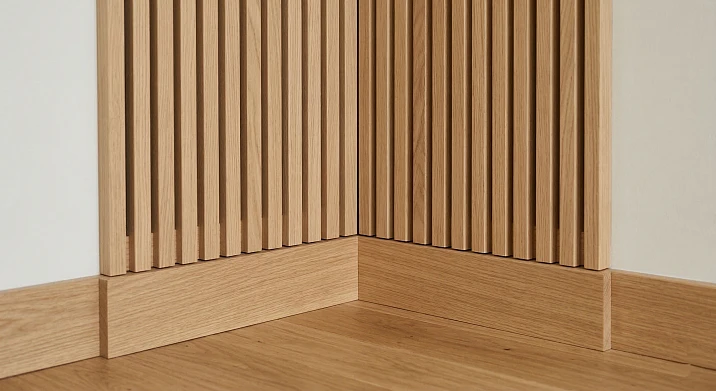
There is one detail that distinguishes a finished interior from a patched-up one. It's the joint. The joint of a slat panel with a baseboard. The joint of a corner. The joint of a panel end with a door casing. It is in these points—millimeter by millimeter—that either professional work or its complete absence is revealed.
installation of slatted panels— and installationSolid Wood Skirting Board— these are two processes that must be coordinated from the very beginning. Not 'first the panels, then we'll figure out the baseboard' — but a unified system, designed from floor to ceiling even before the first batten is placed on the wall. Whoever doesn't understand this gets what everyone has seen: beautiful panels with a crooked base, a gap between the baseboard and the floor, and a general feeling of 'something is wrong, but I can't tell what.'
Let's break it down step by step. Honestly, in detail, without generalities.
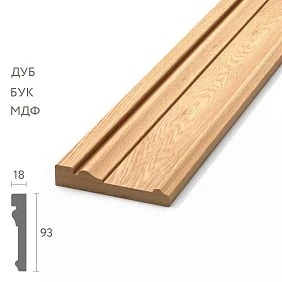
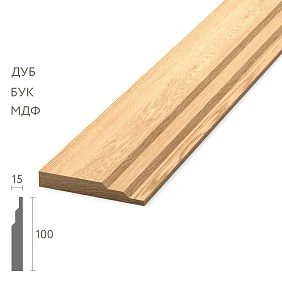
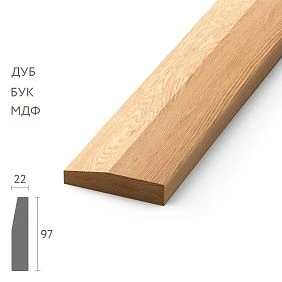
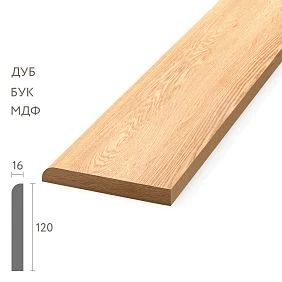
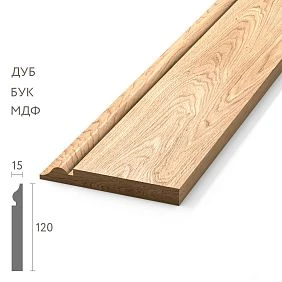
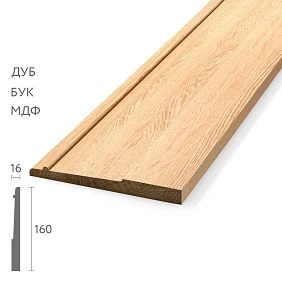
Before we begin: what you need to understand about the relationship between panels and baseboard
Batten paneling is a vertical system. Baseboard is a horizontal system. They meet at one point: at the base of the wall. This very point is the most vulnerable in an aesthetic sense. If it's resolved correctly — the entire interior reads as thoughtful. If not — neither the quality of the panels nor the cost of the baseboard will save the impression.



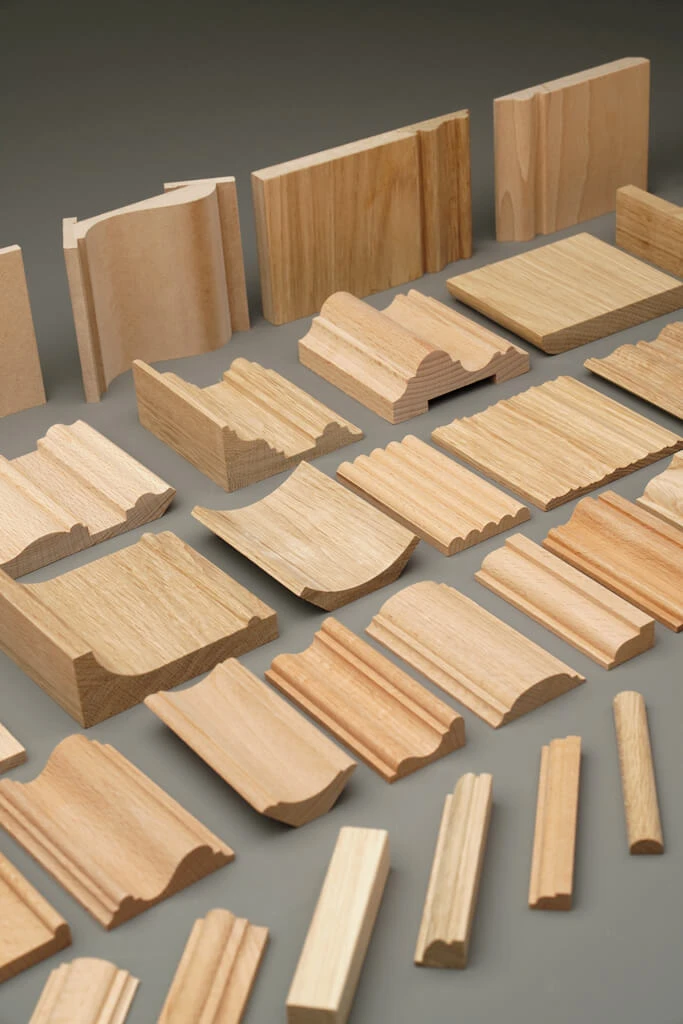
System logic: what follows what
There are two approaches to the installation sequence:
First approach: panels first, then baseboard. Batten panels are installed from the ceiling, the bottom end remains 'in the air' — with a 10–15 mm gap from the floor. The baseboard is installed on top, covering the bottom end of the panels and the expansion gap at the floor. The most common and technically logical approach.
Second approach: baseboard first, then panels. The baseboard is attached to the wall, the battens are installed above, their bottom end rests against the top edge of the baseboard. Only works with a perfectly horizontal baseboard and level floor — otherwise gaps are inevitable.
For most real rooms — with uneven floors, level variations, imperfect walls — the first approach is technically more reliable. The baseboard as a finishing element, covering imperfections.
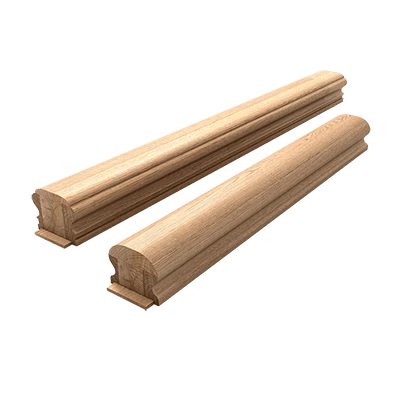
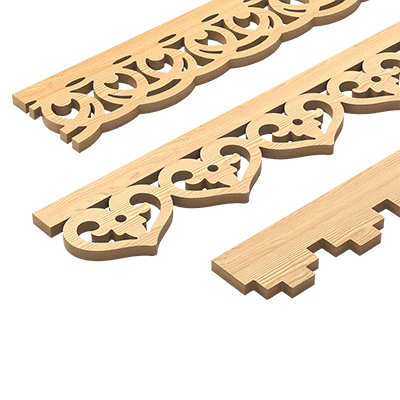
Our factory also produces:


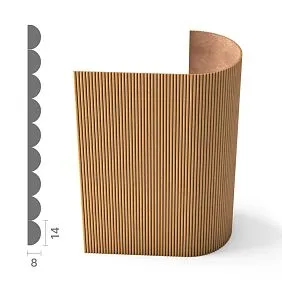
Wooden baseboard as a structural element, not just decor
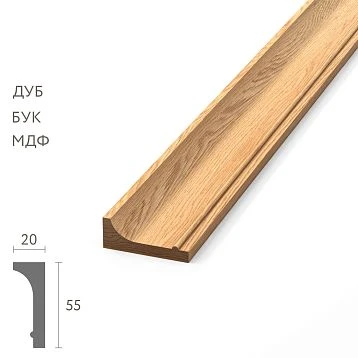
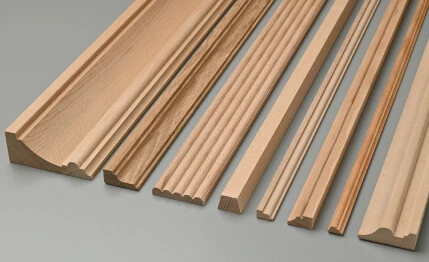
The main misconception: a baseboard is just a 'decoration at the bottom of the wall'. In reality, itFloor wooden skirtingis:
-
A structural element that conceals the expansion gap between the finished floor and the wall (necessary when laying parquet, laminate)
-
A mounting element that covers the lower end ofslatted wall panelsand cable channels
-
A visual element that establishes a horizontal rhythm and 'weight' at the base of the wall
Made from solid wood — it's also a tactile material signal: you've chosen the real thing.
Get Consultation
Wall preparation: what everything else depends on
Talking about the correct installation of slatted panels without discussing wall preparation is like giving advice on table setting while ignoring the condition of the table. The wall is the foundation. If the foundation is poor, even perfect installation will yield mediocre results.
Permissible deviations: what the wall must maintain
For direct adhesive mountingslatted wall panelsAllowable plane deviation — no more than 3 mm on a two-meter straightedge. This rule is strict. 5 mm — already a risk. 8 mm or more — battens are mandatory.
Check: place a two-meter straightedge against the wall. In several points and in several directions. The maximum gap under the straightedge — is the allowable deviation.
Wall moisture: a hidden threat
Wood is a hygroscopic material. A freshly plastered wall, an under-dried screed, a room after wet work — all these are sources of moisture that will penetrate the mass and cause warping of the slat.
Standard wall moisture for wooden finishing — not higher than 12%. Measured with a pin or pinless moisture meter. In the absence of a device — the rule "not less than 28 days after final plastering" for gypsum compounds. For cement plaster — 42–56 days.
Priming: why it's needed not for "beauty"
Primer before mounting slatted panels on porous substrates (aerated concrete, shell rock, old plaster) performs three functions: strengthens the surface layer, reduces absorption of mounting adhesive, creates a moisture migration barrier. On dense substrates (concrete, brick) — primer improves adhesive adhesion.
Saving on primer when mounting wooden slatted panels is a direct path to their detachment after a year of operation.
Marking: before taking the level
Before installing the first batten, several fundamental questions need to be resolved:
-
Where does installation begin — from the corner, from the center of the wall, or from the window opening?
-
How do the panels join with window and door reveals — will there be wooden reveals or neutral framing?
-
What is the height of the panels — full wall from floor to ceiling or a protective zone (lower 110–130 cm)?
-
Where is the boundary of the lower end — taking into account the height of the baseboard and the expansion gap
These very decisions determine how high to leave the gap at the bottom and how to calculate the first mounting line.
Mounting layout calculation: the math that people don't like to do in advance
Most mistakes during installing slatted panels on a wall occur not during the installation process, but before it. More precisely — due to the lack of calculation before starting work.
Calculating the number of battens: a formula without surprises
The width of a slat panel is the sum of the slat width and the gap width between slats. This is the module. Number of modules × module width = occupied surface width.
Example: slat 60 mm, gap 20 mm, module = 80 mm. Wall width 3200 mm. 3200 / 80 = 40 slats.
But a real wall is rarely a multiple of the module. The outermost slats will often need to be trimmed. Trimmed slats are ends that need to be covered with a finishing profile or fitted to a corner so the joint is clean.
Tip: start installation symmetrically from the center of the wall — then both outermost slats will be the same width. Visually, this always looks better than a full slat at one edge and a narrow offcut at the other.
Skirting board calculation: length and angles
Skirting board length = room perimeter along the bottom of all walls minus the width of door openings. Add 10% to the resulting number for reserve — for mitered joints in corners, trimming, possible defects.
Number of internal corners × 2 slats per corner. Number of external corners × 2 slats per corner. External corners are more complex: they require a strictly symmetrical 45° cut.
Wooden skirting board height: a critical parameter
If a tall wooden skirting board (88, 100, 108 mm) is planned, it must be included in the installation scheme from the very beginning. Its height determines how much gap is left at the bottom when installing slat panels. Simple formula:
Gap for the panel's lower end = skirting board height − 15–20 mm
With a 100 mm skirting board, the bottom gap = 80–85 mm. The skirting board overlaps the lower end of the slat by 15–20 mm, covering the expansion gap and creating a clean horizontal contact.
If the skirting board height is not known before panel installation — installation cannot begin. This is a rule, not a suggestion.
What to consider when choosing a wooden skirting board before purchase
Wooden baseboardSolid wood — this is not an element chosen 'as an afterthought' after selecting panels. It is chosen simultaneously, in the same material, with an understanding of proportions and profile.
Profile height: scale logic
| Baseboard Height | Suitable for | Not suitable for |
|---|---|---|
| 50–62 mm | Low ceilings (up to 2.7 m), delicate interior | High slats (width >70 mm) |
| 72–82 mm | Standard rooms (2.7–2.9 m) | Monumental classic |
| 88–100 mm | Quality interior, height from 2.8 m | Too low ceilings |
| 108–125 mm | High rooms from 3 m, neoclassical | Standard apartments |
The baseboard should be proportional to the width of the plank: a wide plank (75–100 mm) requires a high baseboard (88–108 mm). A thin plank (40–55 mm) with a high, massive baseboard creates imbalance.
Baseboard profile: straight vs shaped
Straight baseboard ("heel" without profiling) — modern, laconic, suitable for minimalism and Scandinavian style. Installed without a visible strip, in a tight fit to the floor.
Shaped baseboard with a protruding shelf and profiling — classic and neoclassical interior. The protruding shelf creates a shadow at the base of the wall, enhancing the architectural character of the space. This type works best in conjunction withdecorative slatted panelsclassical styling.
Wood species and coordination with plank paneling
Solid oak baseboard with oak plank panels — unconditional unity. IfSlatted wall panelsmade of ash — baseboard of ash or oak of a similar tone. If the panels are MDF with a wood-like finish — solid wood baseboard provided the finish tone is coordinated.
The main contradiction to avoid: massive oak baseboard + plank panels with laminated "wood-like" finish of a different tone. Next to real solid wood, any imitation reveals itself instantly.
Cable channel: to hide or not
If a baseboard with a cable channel is planned — this must be included in the project before installation. The location of outlets, the cable route to them, the height of the cable exit from the wall — all this is coordinated with the height of the baseboard and its mounting position. A wooden baseboard with a cable channel exists, but it has a specific profile — with a plug or removable strip.
How to align a slatted panel with floor level: technical breakdown
This is the most technically demanding joint in the entire installation. This is where most 'DIY' installations fall apart visually.
Checking floor levelness: cannot proceed without this
The real floor is rarely level. Variations of 5–15 mm over a wall length of 3–4 meters are normal for most projects. Variations up to 30 mm occur regularly.
How does this affect installation? If the baseboard is pressed against the floor 'as is,' without accounting for the variation—it fits tightly at one end of the wall, and a gap appears at the other. This gap between the baseboard and the floor is one of the most noticeable signs of unprofessional installation.
Solution: the bottom edge of the baseboard must follow the horizon of the laser level, not the floor surface. The gap between the baseboard and the floor at the lowest point (if there is a variation) is sealed with flexible acrylic sealant matching the baseboard finish.
Laser level: the base point of installation
installation of slatted panels on the wallbegins with setting a horizontal baseline using a laser level. This line is a reference for:
-
The top mounting line of the first slat (when installing top-down)
-
The bottom mounting line (when installing bottom-up with a gap for the baseboard)
-
Horizontal axis of the top finishing profile
No laser level – only a bubble level. Tape measure and "by eye" are unacceptable for wooden slat panels: errors accumulate and result in visible misalignment on the final slat.
Algorithm for the bottom assembly: step by step
-
Determine the final height of the wooden baseboard
-
On the laser level, mark a horizontal line at a height = baseboard height minus 15 mm from the highest point of the floor
-
Along this line, mount the lower support profile (or install a temporary mounting rail)
-
The bottom edge of the slat panels is installed along this line – precisely, horizontally
-
After installing all panels – remove the temporary profile, install the wooden baseboard, overlapping the bottom edge of the panels by 15–20 mm
Result: perfect horizontal alignment, concealed edge, no gaps.
Battens vs direct mounting: when and what
This choice determines the quality of all subsequent work. There is no universal answer — there are criteria.
Direct adhesive installation of slatted panels: when applicable
Direct installation — slats are attached directly to the wall with mounting adhesive (liquid nails, polyurethane adhesive) with additional fixation using finishing nails or a pneumatic stapler. Applicable when:
-
Wall deviation is no more than 3 mm/2 m
-
Sufficient hardness of the base (does not crumble under pressure)
-
Normal wall humidity
-
Absence of hidden utilities in the wall plane
Advantage: minimal depth loss (the panel protrudes only 12–20 mm from the wall). Disadvantage: any wall imperfection is transferred to the panel surface.
Installation of slatted panels on battens: when necessary
Battens are mandatory when:
-
Wall deviation exceeding 3 mm/2 m
-
Need to insulate or soundproof the wall
-
Concealed wiring under panels
-
Brick or concrete wall with high humidity (battens create a ventilation gap)
-
Installationwooden slat panelsof solid wood — ventilation gap extends wood lifespan
Battens — 40×40 wooden beams or metal profiles spaced 400–600 mm. Installed strictly vertically using a level, aligned with shims.
Important: with battens, structure depth increases by 40–60 mm. This means theWooden baseboardmust cover not only the lower end of the slat but also close the gap between the batten plane and the floor. Consider this in baseboard profile calculation: an enlarged "heel" at the base or an additional spacer part is needed.
Corners, ends, and transitions: areas requiring special attention
If the bottom node (panel-to-baseboard) is critical zone number one, then corners and ends are zone number two. This is where most visible errors are concentrated.
Internal corners: three strategies
Strategy one — miter cut at 45°. Slats from both sides of the corner are cut at 45° and joined. Theoretically beautiful. Practically — only works with a perfectly straight angle (90°). In real rooms, the angle is rarely exactly 90°. Result with an angle deviation: a visible gap at the apex or spreading at the base.
Strategy two — overlapping one panel over another. The panel on one side goes into the corner up to its apex. The panel on the other side butts with its end against the side surface of the first. The joint is concealed with acrylic sealant. A reliable technology for real corners.
Strategy three — corner profile. A metal or wooden corner profile covers the joint of both panels. This is a solution that always gives a clean result regardless of the actual wall angle.
Forwall finishing with slatted panelsin residential premises, strategy three is the most predictable in terms of finish quality.
External corners: where mistakes are most often made
An external corner is a protruding corner, visible from both sides. Mistakes here are visible from all viewing points.
Miter cut at 45° on an external corner is the standard solution, but it requires extremely precise work with a miter saw. The cut angle must be strictly 45° (or adjusted for a non-standard wall angle). Both ends are sanded, fitted, glued, and clamped with corner clamps until the adhesive sets. Then — finishing sealant.
Metal corner profile (corner trim) — covers the ends of both panels at an external corner. The most technological option: the profile compensates for slight angle deviations and protects the ends from mechanical damage.
Doorway end: the most overlooked joint
The end of a slatted panel at a doorway — this is where the wood meets the reveal or casing. If a solid wood casing is installed after the panels, it can overlap the end of the slat — then no finish treatment of the end is required. If the reveal is finished with plaster or paint — the end of the slat must be treated with oil or varnish before installation, otherwise the unprotected end will absorb moisture and dirt.
An open end without coating and without being overlapped by another element — this is the type of detail that reveals unprofessional installation at first glance.
Transition of a slatted panel to the ceiling
The top end — a symmetrical problem to the bottom one. Solutions:
-
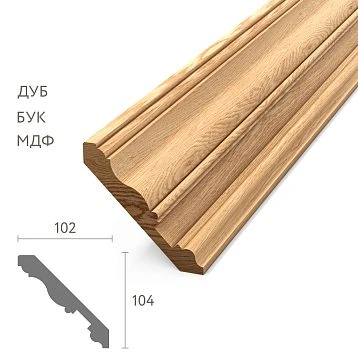
Solid wood cornice — overlaps the top end, completes the system around the perimeter
-
Wood or MDF ceiling skirting — covers the wall-ceiling joint and the top end of the slat
-
Gap with backlighting — the top end remains open, an LED strip behind it shines upward. Requires precise alignment and a clean end
Solid wood cornice whenwooden slatted oak panels— is the architectural finishing touch of the system. It is the cornice that creates the feeling that the finish is designed, not just assembled.
Fastening technology: what and how to fix the slats
Mounting adhesive: choosing the composition
For mounting wooden slatted panels on the wall:
-
Polyurethane adhesive — maximum adhesion, works on damp substrates, resistant to vibrations. Recommended for solid wood
-
Acrylic mounting adhesive (liquid nails) — versatile, easy to work with, lower initial grab (requires temporary fixation)
-
Low-expansion mounting foam — for vertical surfaces. The foam is non-flammable, does not settle, provides good sound insulation. Used on battens
Adhesive is applied to the back of the slat in a "snake" pattern or in dots spaced 200–250 mm apart. After pressing — temporary fixation with pneumatic pins or tape until the adhesive cures (20–40 minutes depending on the composition).
Mechanical fastening: screws and finishing nails
Screws are driven into the gap between the battens—into the supporting base (lathing or wall). The head is not visible between the battens when positioned correctly. Spacing: 400–500 mm vertically.
Finish nails (brads) with a diameter of 1.2–1.6 mm—into the solid wood of the batten at an angle to the wall. They are countersunk with a nail set, filled with putty, or covered with wax of the appropriate shade. Practically invisible on the finished surface.
Prohibited: flat-head screws directly into the face surface of the batten. This is not installation; it is material damage.
Acclimatization: must not be skipped
Wooden slat panelsSolid wood must undergo acclimatization in the room—at working temperature and humidity—for at least 48–72 hours. The packaging is opened, but the battens are not removed from the bundle—allowing the temperature to equalize. This prevents linear changes after installation.
Installation without acclimatization is the most common cause of gap separation and batten warping 2–4 weeks after installation.
Wooden baseboard: installation technology from A to Z
Baseboard preparation: cutting and end trimming
Before installation, each baseboard plank is measured on-site. Wall length, corner locations, presence of door openings—all are recorded.
Baseboard end trimming: straight cut (90°) for joints with casings and door frames. 45° cut—for joints in corners. A miter saw with a tilting table is the only tool that provides a precise cut forwooden floor baseboardA manual jigsaw does not provide the necessary precision.
Wall mounting: methods and logic
Liquid nails or mounting adhesive — wall mounting without mechanical means. Suitable for even substrates. The baseboard is pressed against the wall and temporarily secured with painter's tape for 20–30 minutes.
Finish nails through the body of the baseboard — the heads are countersunk, filled with putty, or covered with a wax pencil. A more reliable fastening.
Screws into the wall + decorative cap — for cases where the baseboard is mounted on an uneven wall and rigid fixation with adjustment is needed.
Rule: the top edge of the baseboard is tightly pressed against the plane of the slatted panel. The bottom edge — against the floor plane or sealed with acrylic. No visible gaps.
Joints in corners: working with real geometry
A perfect 90° angle in an apartment is rare. Real angles of 87–93° are normal. This means that a 45° cut will create a gap at the corner vertex. Solution:
-
Place the baseboard against the wall without a cut — mark the intersection point with the other plank on the floor
-
Connect the mark with the inner point of the corner — you get the real bisector of the angle
-
Cut along this bisector, not at 45°
-
Finish seam - acrylic sealant, matched to the color of the baseboard
Or: use corner rosettes (decorative elements that cover the joint in the corner). In classic interiors, this is part of the design.
Mistakes that ruin the appearance: complete list
This section is the bitter experience of thousands of projects. Save it until the start of work.
Mistake 1: baseboard purchased after panel installation
Result: the baseboard ends up either too low (does not cover the lower end of the slat) or too high (covers the slats by 30+ mm, creating an awkward proportion). The baseboard must be purchased before starting panel installation - or at least before marking.
Mistake 2: installation of slatted panels without acclimatization
After 2-4 weeks: gaps between slats diverge, warping in the center of the panel, adhesive seam rupture at the ends. Looks catastrophic. Solution - only partial or complete reinstallation.
Mistake 3: open ends without protective coating
The ends of a wooden batten are the most vulnerable spot: there is no longitudinal fiber there to protect the face surface. An unprotected end will darken within a month and begin to delaminate within six months. All ends must be treated with oil or varnish before installation.
Mistake 4: Inconsistent tone between the skirting board and batten panels
Oak battens in a natural tone + a 'walnut' skirting board create a visual dissonance that is irritating every day. Especially if there is 'larch' laminate flooring nearby. Three different 'woods' in one room is not variety, it's chaos. The tonal system must be unified.
Mistake 5: Violation of horizontality during installation
Battens were installed 'by eye' without a laser level. From a distance of 2–3 meters, it's visible that the rows are slightly 'pulled' diagonally. It's impossible to correct without reinstallation. A laser level is not an option, but a mandatory tool.
Mistake 6: Gap between the skirting board and the floor
The skirting board was installed 'according to the floor level' without marking a horizontal baseline. In the area where the floor is lower, a gap of 4–8 mm formed. It's especially visible in oblique lighting. It can be filled with acrylic sealant—but that's already a compromise, not a solution.
Mistake 7: Inconsistency in the width of gaps between battens
Vertical battens were installed 'by hand spacing' without a template. In one place the gap is 18 mm, in another—23 mm. The rhythm is broken. It's impossible to restore without reinstallation. Solution: a template made of plywood of the required width—inserted between battens when installing each subsequent one.
Mistake 8: Skirting board without sealing
The joint between the skirting board and the wall at the top is not sealed. Within 3–6 months, due to seasonal fluctuations, a gap will appear. The top seam of the skirting board should always be sealed with acrylic in the color of the skirting board or wall (depending on which you want to emphasize).
Mistake 9: mixing textures of decorative slatted panels
In one room, slatted panels on two walls are from different manufacturers, with different slat spacing and different tones. They tried to 'add variety.' The result: the space falls apart, there is no unified system.decorative slatted panelsWithin one room, they should be from the same series.
When it's better to avoid DIY
A delicate but honest question. There are situations where 'I'll do it myself' is a direct path to redoing it in three months.
Installation of solid wood slatted panels
Wood is a living material. Working with it requires an understanding of acclimatization, humidity, grain direction, and the correct choice of adhesive and fastening. A mistake here costs not only time but also material. Solid wood slatted panels are not cheap.
If you have no experience working with wooden products, hiring a specialist will pay off simply by not having to buy the material twice.
Rooms with non-standard geometry
Slanted walls, bay windows, arches, niches, columns — all of these require professional calculation of the installation scheme. The issue is not just about beauty — it's about understanding how to finish each non-standard joint so that it reads as an intentional architectural detail, not as 'it couldn't be done any other way.'
Installation of batten panelsIn rooms with complex geometry — a task that requires templating, preliminary cutting, and an understanding of the principles of working with angles.
Large surfaces with high requirements for rhythm
A wall 5–6 meters long with a slatted panel is a serious technical volume. A gap width error that is unnoticeable on a one-meter section becomes a 10–15 mm mistake on a five-meter wall. Large planes require precise instrumental control on each slat.
Finishing details: what makes the installation complete
Sealing: acrylic as an invisible element
Acrylic sealant is not a 'gap filler.' It is a tool for managing joints. Properly applied acrylic makes the joint invisible. The main rule: sealant is applied at room temperature, smoothed with a wet finger or spatula, and excess is immediately removed. Dried acrylic cannot be corrected.
Sealant tone: to match the baseboard color (when filling the bottom seam), to match the wall color (when sealing the top seam of the baseboard).
Protection of finished surfaces after installation
After completing the installationslatted wall panelsand wooden skirting board — final surface finishing:
-
Checking all end cuts for oil/varnish coating
-
Refreshing coating where it was removed during installation
-
Applying wax paste to skirting board surface with oil coating
-
Removing adhesive residue with solvent before it fully cures
Installation is not complete until final finishing is done.
Gap lighting: installation before or after
If plannedSlatted panel with backlighting— LED strip is installed before mounting the batten, into a pre-made groove in the battens or on underlayment. Wires are routed before installation. Installing wiring afterward means disassembling part of the panels.
Final table: clean installation criteria
| Node | Quality criterion | Common mistake |
|---|---|---|
| Lower end of the rail | Overlapped by baseboard by 15–20 mm | Not overlapped, end visible |
| Baseboard at floor | Tight fit or acrylic joint | Gap without sealing |
| Upper joint of baseboard | Acrylic joint to match | Unfilled gap |
| Internal corner | Corner profile or fitted joint | Gap at corner apex |
| External corner | Metal cover strip or 45° + sealant | Open end without treatment |
| Gaps between slats | Uniform along entire height (template) | Different step in height |
| Horizontality of the batten | Using a laser level | Warping on long spans |
| Transition to the ceiling | Cornice or ceiling skirting | Open end without finishing |
STAVROS: installation system and material from a single source
Properinstallation of slatted panelsstarts with the right material. It's hard to get a clean result if the battens are from one place, the skirting is from another, the cornice is from a third, and they are all mismatched in tone, profile, or scale.
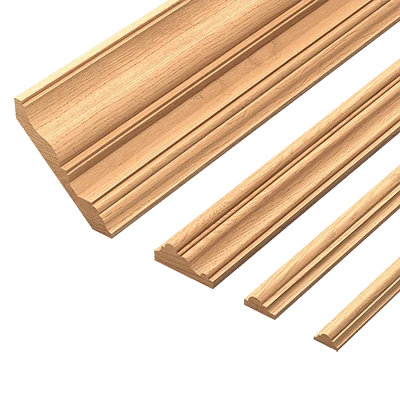
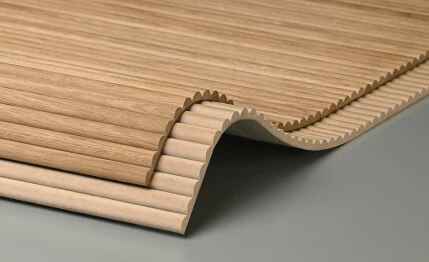
STAVROS producesSlatted wall panelsmade of natural oak, ash, and thermowood, and at the same time—a full range of wooden moldings:Wooden baseboardCornices, moldings, trims. The entire range is coordinated: by wood species, finishes, and profile scale.
This means you don't have to coordinate samples from five different stores. You get a unified system: panel, baseboard, cornice, trim — from a single source, with verified material and finish compatibility.
Consultation on selection, quantity calculation, finish samples. Delivery across all of Russia.
Finishing without crooked joints isn't luck. It's the correct sequence of correct decisions.
FAQ: Answers to popular questions
Can slatted panels be installed without battens on a brick wall?
Technically — yes, provided the surface is level. But for solid wood on brick, a batten system with a ventilation gap is recommended: brick accumulates moisture, which without ventilation transfers into the wood.
What is the best adhesive for mounting wooden slatted panels?
Polyurethane construction adhesive — best adhesion to most substrates, resistant to vibration. Acrylic liquid nails — easier to work with, but require temporary fixation.
Do the ends of solid wood slatted panels need to be painted or treated?
Absolutely. The ends are the most vulnerable part: they actively absorb moisture without the longitudinal grain. Oil impregnation or varnish on the ends — before installation.
How to choose the height of a wooden baseboard?
Consider two factors: ceiling height and slat width. For ceilings 2.7–2.8 m and slat width 60–75 mm — baseboard 72–88 mm. For ceilings from 2.9 m — 88–108 mm.
How to cover the joint between the baseboard and the slat panel if there is a small gap?
Acrylic sealant matching the baseboard color — apply a thin layer, smooth with a wet finger. Covers gaps up to 3–4 mm. For larger gaps — use a profile strip or reinstall the baseboard.
Can you install slatted panels yourself?
Yes, with the necessary tools: laser level, miter saw, pneumatic stapler or finish hammer, construction adhesive. Complete step-by-step instructions are in the guide oninstalling slat panels yourself.
How to cut solid wood slat panels?
Miter saw with carbide blade — for crosscuts. Circular saw — for longitudinal cuts. Jigsaw — only for curved cuts (for outlets, switches). More details — in the article aboutwhat to cut slat panels with.
How to properly store slat panels before installation?
Horizontally on a flat surface, in a room with normal humidity. Not near exterior walls in winter. Not in packaging—open for ventilation. Acclimatization for 48–72 hours before installation.