Article Contents:
- History of moldings: from functionality to aesthetics
- Ancient heritage
- Renaissance and Baroque
- Classicism and neoclassicism
- Modern interpretation
- Variety of moldings: shapes, materials, applications
- Types of moldings by shape and purpose
- Materials of Manufacture
- Design solutions using moldings
- Space zoning
- Creating architectural accents
- Correcting Room Proportions
- Framing Architectural Elements
- Ceiling decorative trim
- Where to buy moldings: criteria for choosing a reliable supplier
- Product Range and Quality
- Company Reputation and Experience
- Consultative Support
- Delivery and Return Conditions
- Additional services
- Molding Installation Technology: From Preparation to Finishing
- Preparatory work
- Molding Cutting
- Molding Installation
- Joint Processing and Finishing
- Molding in Various Interior Styles
- Classic style
- Neoclassicism
- Modern style
- Scandinavian Style
- Art Deco
- Innovative Solutions in the World of Decorative Profiles
- 3D Molding
- Illuminated Molding
- Eco-Friendly Materials
- Digital Design and Manufacturing
- Economic aspects of using moldings in interior design
- Price-to-Quality Ratio
- Factors affecting the cost of moldings
- Long-Term Economic Efficiency
- Psychological Impact of Molding on Spatial Perception
- Creating a Sense of Security and Stability
- Influence on Perception of Proportions
- Forming Aesthetic Perception
- Creating an Atmosphere of Prestige and Status
- Practical Tips for Choosing Molding for Different Rooms
- Molding for the Living Room
- Molding for the Bedroom
- Molding for the Kitchen and Dining Room
- Molding for the Bathroom
- Molding for the Hallway and Foyer
- Moldings for children's rooms
- Conclusion: Molding as an Investment in Interior Beauty and Functionality

In the world of interior design, there are elements capable of radically transforming space, giving it elegance and completeness. Moldings are exactly such architectural details that have evolved from auxiliary elements into independent interior accents. Today, we will dive into the wonderful world of decorative profiles, reveal their potential in decorating rooms, and, of course, tell you, where to buy moldings of the highest quality to realize your design ideas.


History of moldings: from functionality to aesthetics
Decorative profiles have a rich history dating back to ancient times. Initially, they served a purely practical purpose - concealing joints between different surfaces and materials. However, over time, architects and designers recognized the enormous aesthetic potential in these elements.




Ancient heritage
In ancient Greece and Rome, moldings were used to decorate columns and building facades. Masters carved them from marble, creating complex profiles with elegant curves. These elements not only gave buildings a monumental quality but also created play of light and shadow, bringing life to stone surfaces.
Our factory also produces:


Renaissance and Baroque
The Renaissance era revived interest in ancient heritage, and moldings once again took a prestigious place in architecture. During the Baroque period, they reached the peak of their decorative potential - lavish, ornate profiles adorned palaces and cathedrals, creating an atmosphere of luxury and grandeur.
Get Consultation
Classicism and neoclassicism
In the era of Classicism, moldings became more restrained but no less refined. They emphasized the proportions of rooms, creating clear spatial geometry. The Neoclassical style, which emerged in the 20th century, once again turned to these elements as symbols of elegance and good taste.
Modern Interpretation
Today, moldings are experiencing a true renaissance in interior design. They fit organically into both classic and modern interiors, becoming a universal tool for creating unique spaces. Modern manufacturing technologies allow creating profiles of various shapes, sizes, and materials, opening up boundless opportunities for creativity.
Variety of moldings: shapes, materials, applications
The modern market offers an impressive variety of decorative profiles, differing in shape, size, material, and functional purpose. Understanding the main types of moldings and their characteristics will help navigate this diversity.
Types of moldings by shape and purpose
Ceiling moldings - installed at the junction of wall and ceiling, visually smoothing the transition between surfaces. They can be simple or elaborately decorated, with floral ornamentation or geometric patterns.
Wall moldings - used to create decorative panels on walls, frame mirrors, paintings, or doorways. They add structure and elegance to the interior.
Baseboards - installed at the junction of wall and floor, protecting the lower part of the wall from damage and concealing technical gaps. Modern baseboards may be equipped with cable channels for concealed wiring.
Corner elements - used for decorating external and internal corners, giving structures a finished and aesthetically pleasing look.
Rosettes - round or polygonal decorative elements installed on the ceiling around chandeliers or light fixtures. They create a striking accent and emphasize the importance of the lighting fixture.
Materials for manufacturing
Polyurethane - one of the most popular modern materials for manufacturing moldings. It is lightweight, strong, moisture-resistant, and not susceptible to insect damage. Polyurethane moldings feature high relief detail and easy installation. Such items can be purchased on specialized resources, where a wide range of quality decorative elements is presented.
Wood - a classic material possessing natural beauty and eco-friendliness. Wooden moldings create a warm, cozy atmosphere but require more careful maintenance and protection from moisture.
Gypsum - a traditional material for manufacturing decorative elements. Gypsum moldings are characterized by high detail and plasticity, but they are heavier than polyurethane analogs and more fragile.
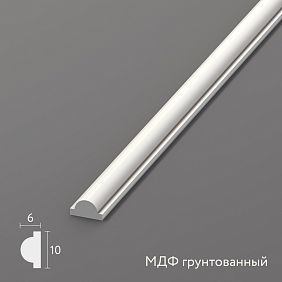
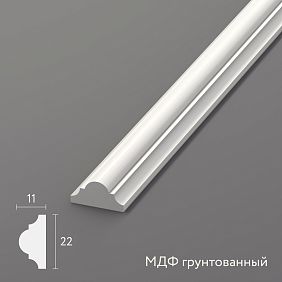
MDF - an affordable material that is easy to process and paint. MDF moldings are often used in modern interiors due to their versatility and reasonable price.
Polystyrene foam - a lightweight and inexpensive material suitable for creating simple profiles. However, it is less durable and long-lasting compared to other materials.
Design solutions using moldings
Moldings are not just decorative elements, but a powerful tool in the designer's hands, capable of solving various tasks related to organizing and transforming space. Let's consider the most effective approaches to using decorative profiles in interior design.
Space Zoning
In modern open-plan interiors, moldings become an elegant way to visually divide space into functional zones without erecting walls. Wall profiles can mark the boundaries of the living room, dining room, or work area, creating a structured yet unified space.
Creating architectural accents
Moldings allow creating expressive architectural elements even in the most ordinary rooms. Decorative wall panels, finished with profiles, can imitate classical architecture or create modern geometric compositions. Such accents instantly transform the interior, giving it individuality and character.
Correction of room proportions
Proper use of moldings allows visually correcting the proportions of a room. Horizontal profiles placed on walls visually expand the space, while vertical ones increase the ceiling height. In rooms with high ceilings, moldings can create a more intimate, cozy atmosphere, breaking large surfaces into fragments proportional to human scale.
Framing architectural elements
Moldings are traditionally used to frame door and window openings, niches, columns, and other architectural elements. Such framing not only emphasizes the importance of these elements but also creates smooth transitions between different surfaces, making the interior more harmonious.
Decorative ceiling treatment
Ceiling moldings and rosettes transform an ordinary ceiling into a work of art. They can create classical coffered ceilings, imitate stucco, or form modern geometric compositions. Combined with properly selected lighting, such treatment becomes a true interior decoration.
Where to buy moldings: criteria for choosing a reliable supplier
Choosing a supplier of decorative profiles is a responsible step that affects not only the aesthetic result but also the longevity of the decoration. What should be considered when selecting a company where you plan to purchase moldings?
Product assortment and quality
A reliable supplier offers a wide range of moldings in various shapes, sizes, and styles. This allows selecting the optimal solution for any interior, whether classical palace style or minimalist modern design. Product quality must be confirmed by compliance certificates and manufacturer warranties.
Company reputation and experience
Company experience in the market and customer reviews are important indicators of supplier reliability. Time-tested companies, such as those presented on specialized resources, usually value their reputation and offer products of consistently high quality.
Consultative support
Professional consultations on selecting and installing moldings - a valuable advantage that a reliable supplier can offer. Experienced specialists will help choose profiles matching the interior style, calculate the required amount of materials, and provide installation recommendations.
Delivery and return conditions
Convenient delivery terms and the possibility of returning or exchanging goods in case of defects are important factors to consider when choosing a supplier. Reliable companies usually offer flexible cooperation terms and are willing to resolve arising issues in favor of the client.
Additional Services
Molding installation technology: from preparation to finishing
Technology of installing moldings: from preparation to finishing
Correct installation of decorative profiles is the key to their longevity and aesthetic appeal. Let's consider the main stages of installing moldings and technical nuances to take into account during the work.
Preparation Work
Before starting installation, it is necessary to carefully prepare the surfaces on which the moldings will be installed. Walls and ceilings must be flat, clean, and dry. All old finishing materials that may interfere with secure fixing of the profiles should be removed.
An important preparation stage is marking. Using a level, plumb bob, and pencil, lines must be drawn on the surfaces along which the moldings will be installed. This ensures even and symmetrical placement of decorative elements.
Cutting moldings
Moldings must be cut into pieces of the required length, taking into account the room's configuration. Special tools such as a try square and a fine-toothed hacksaw or an electric miter saw are used for this. Special attention should be paid to corner joints — they must be made at an exact angle to ensure perfect alignment of the elements.
Molding installation
The method of attaching moldings depends on their material and weight, as well as the type of surface they are installed on. Lightweight polyurethane profiles are usually attached using a special mounting adhesive. Heavier elements may require additional fastening with screws or anchors.
During installation, it is necessary to ensure that moldings are properly aligned with the markings and tightly fit against the surface. Any excess adhesive protruding from under the profile should be immediately wiped away with a damp cloth.
Joint treatment and finishing
After installing all elements, it is necessary to treat the joints between individual molding segments. For this, putty is used, which is sanded with fine-grit sandpaper after drying to achieve a smooth surface.
Finishing moldings includes priming and painting. Primer ensures better paint adhesion to the surface and uniform coloring. Acrylic or alkyd paints are typically used for molding, applied in several layers with intermediate sanding.
Moldings in various interior styles
Decorative profiles are remarkably versatile — they fit organically into interiors of various stylistic directions, from classic to modern minimalism. Let's examine how moldings are interpreted in different styles and what characteristics their use has.
Classic style
In classical interiors, moldings play a key role, creating an atmosphere of luxury and elegance. Here, richly decorated profiles with floral ornamentation, acanthus leaves, meanders, and other traditional motifs are appropriate. Ceiling cornices usually have a substantial width and complex profile, while walls are adorned with decorative panels framed by moldings.
The color solution for classical moldings is traditionally white or cream, which contrasts effectively with more saturated wall tones or harmonizes with them in monochromatic interiors.
Neoclassicism
The neoclassical style offers a more restrained interpretation of classical motifs. Moldings here have a simpler profile but retain elegance and refinement. They are used more selectively, creating clear spatial geometry without excessive ornamentation.
In neoclassical interiors, moldings often become part of color accents — they can be painted in a contrasting color relative to the walls or, conversely, blend with them, creating a refined monochromatic image.
Modern style
In modern interiors, moldings acquire a new sound. Here, profiles with clear, minimalist lines, without complex decoration, are used. They can create geometric compositions on walls and ceilings, playing with proportions and rhythm.
The color solution for moldings in modern interiors can be the most diverse — from traditional white to bright accent colors or deep dark shades. An interesting effect is achieved by painting moldings in the same tone as the walls, where the decorative effect is achieved solely through the play of light and shadow on relief surfaces.
Scandinavian style
In Scandinavian interiors, where naturalness and functionality are valued, moldings are used sparingly. Here, simple ceiling cornices and baseboards are appropriate, emphasizing the purity of lines and proportionality of space.
The color palette of moldings in the Scandinavian style is usually limited to white, which harmonizes with light walls and creates a sense of airiness and spaciousness.
Art Deco
The Art Deco style, with its love for geometry and luxurious materials, offers a special interpretation of moldings. Here, profiles with clear, graphic lines are used, creating expressive geometric compositions on walls and ceilings.
The color solution for moldings in the Art Deco style can be contrasting and striking — black-and-white combinations, use of gold or silver to accentuate individual elements. Such an approach creates a dramatic, theatrical effect, characteristic of this stylistic direction.
Innovative solutions in the world of decorative profiles
Modern technologies have not overlooked such a traditional field as the production of decorative profiles. Innovative materials and manufacturing methods open up new possibilities for designers and architects, allowing them to create unique interior solutions.
3D moldings
3D decorative profiles are one of the most interesting directions in the development of this field. Thanks to modern manufacturing technologies, it has become possible to create moldings with complex three-dimensional structures that create impressive visual effects.
3D moldings can imitate various textures - from natural (wood, stone, leather) to futuristic abstract patterns. They become not just decorative trim, but a standalone artistic element that attracts attention and creates a unique atmosphere.
Illuminated moldings
Integration of LED lighting into decorative profiles is another innovative solution that has been actively developed in recent years. Illuminated moldings can create an eye-catching backlight for walls and ceilings, highlight architectural elements, or serve as a source of soft diffused light.
Such profiles are usually made from translucent materials that evenly diffuse light, creating a glowing effect. Modern LED technologies allow adjusting the brightness and color of backlighting, creating various lighting scenarios depending on mood or functional purpose of the room.
Eco-friendly materials
In response to growing demand for eco-friendly materials, molding manufacturers offer profiles made from recycled or renewable resources. Such moldings not only minimize environmental impact but also ensure a healthy microclimate in the room.
Among eco-friendly materials for molding production, one can highlight biodegradable polymers, wood fiber-based composites, recycled plastic, and even innovative materials based on agricultural waste.
Digital design and manufacturing
Modern digital technologies allow creating moldings with unprecedented accuracy and complexity. Computer modeling and 3D printing open opportunities for manufacturing unique profiles based on individual projects.
Such an approach is especially valuable in restoring historical buildings, where it is necessary to recreate lost decorative elements with maximum accuracy. Digital scanning of preserved fragments allows creating an exact three-dimensional model, from which new moldings are manufactured, indistinguishable from the originals.
Economic aspects of using moldings in interior design
Investments in decorative profiles are not only investments in the aesthetics of space, but also in its functionality and longevity. Let us consider the economic aspects of using moldings and factors that influence their cost.
Price-to-quality ratio
The cost of moldings can vary significantly depending on the material used, the complexity of the profile, and the brand of the manufacturer. However, it is important to understand that saving on quality may lead to additional expenses in the future.
Quality moldings, purchased from reliable supplierspossess high strength, resistance to mechanical damage and environmental exposure. They maintain an attractive appearance for many years, requiring no replacement or complex maintenance.
Factors influencing the cost of moldings
Material used is one of the key factors determining the cost of decorative profiles. Polyurethane moldings usually occupy a mid-range price category, offering an optimal balance of quality and cost. Moldings made from precious wood species or handcrafted plaster moldings may be significantly more expensive.
Profile complexity - the more complex and detailed the molding's relief, the higher its cost. Simple smooth profiles are usually more affordable than elaborately decorated elements with floral ornamentation or other complex motifs.
Dimensions - the width and height of the profile also affect its cost. Large moldings with impressive dimensions usually cost more than their more modest counterparts.
Brand and country of manufacture - products from well-known brands with a long history and reputation usually have a higher cost. However, such manufacturers typically guarantee consistently high quality and compliance with stated characteristics.
Long-term economic efficiency
Investments in quality moldings can be economically efficient in the long term for several reasons:
Increase in property value - a well-designed interior using decorative profiles can significantly increase the market value of residential or commercial property.
Durability - quality moldings do not require frequent replacement or repair, reducing long-term expenses for maintaining the space.
Versatility - classic moldings remain relevant regardless of fashion trends, allowing one to avoid frequent interior updates.
Energy efficiency - some types of moldings, especially ceiling cornices with built-in lighting, can contribute to more efficient lighting use and, consequently, reduce electricity costs.
Psychological impact of moldings on the perception of space
Decorative profiles not only beautify the interior from an aesthetic standpoint, but also exert a significant influence on the psychological perception of space. This aspect is often underestimated, but it is precisely this that can explain why rooms with well-chosen moldings are perceived as more harmonious and comfortable.
Creating a sense of security and stability
Moldings, especially ceiling cornices and baseboards, create a visual 'frame' for the space, clearly defining its boundaries. This is subconsciously perceived as a sign of order and stability, creating a sense of security and comfort.
In modern interiors with minimalist design and open floor plans, a sense of 'incompleteness' and 'emptiness' often arises. Decorative profiles help structure such spaces, making them more psychologically comfortable.
Influence on perception of proportions
The human brain constantly analyzes the proportions of surrounding space, and moldings can significantly influence this process. Horizontal profiles placed at a certain height create visual landmarks that help the brain quickly 'read' the space and feel comfortable within it.
In rooms with non-standard proportions, moldings can play a corrective role, creating an illusion of more harmonious relationships between the height, width, and depth of the space.
Formation of aesthetic perception
Decorative profiles, with their rhythmic lines and repeating elements, create a visual rhythm that the brain perceives as a sign of harmony and order. This explains why interiors with moldings are often perceived as more aesthetically appealing, even if the observer cannot precisely explain the reason for this perception.
Moreover, moldings, with their play of light and shadow, add depth and multidimensionality to the space, making it visually more interesting and stimulating for perception.
Creating an atmosphere of prestige and status
Historically, moldings were associated with luxury and high social status, as their use was characteristic of palaces and aristocratic mansions. This cultural association persists today, so interiors with decorative profiles are often perceived as more prestigious and status-oriented.
For many people, such an atmosphere creates a sense of success and achievement, positively affecting self-esteem and overall psychological state.
Practical tips for choosing moldings for different rooms
Choosing decorative profiles for a specific room is a creative process that requires consideration of many factors: from the functional purpose of the space to its architectural features. Let us consider practical recommendations that will help make the optimal choice for different types of rooms.
Moldings for the living room
Living room - a space for receiving guests and family relaxation, so here more expressive and decorative profiles are appropriate. In spacious living rooms with high ceilings, one can use wide ceiling cornices with complex relief, decorative rosettes around chandeliers, and wall moldings to create panels or frame mirrors and paintings.
To create a cohesive look, it is recommended to choose moldings from the same series or stylistically matching ones. If there is a fireplace in the living room, it can be effectively framed with decorative profiles, turning it into a striking architectural accent.
Moldings for the bedroom
In the bedroom, where it is important to create an atmosphere of calm and relaxation, it is recommended to use more restrained moldings with smooth, gentle lines. Ceiling cornices of medium width with subtle relief will create a sense of spatial completeness without excessive decoration.
An interesting approach - using wall moldings to create a decorative panel above the headboard. Such an accent replaces a traditional headboard and becomes a striking element of the interior. To create a cozy, intimate atmosphere, one can choose moldings painted in the wall color or a shade close to it.
Moldings for the kitchen and dining room
In the kitchen and dining room, decorative profiles should combine aesthetic appeal with practicality. Here, it is recommended to choose moldings made from moisture-resistant materials that are easy to clean from dirt - polyurethane profiles are ideal for these purposes.
In spacious kitchen-dining rooms, moldings can be used to visually divide the space into functional zones. For example, the dining area can be highlighted using a ceiling cornice of a different profile or color, creating a kind of 'dome' above it.
Moldings for the bathroom
In the bathroom, where high humidity and temperature fluctuations are present, it is especially important to choose moldings made of moisture-resistant materials. Polyurethane profiles, which can be purchased from specialized suppliersare ideally suited for such conditions, as they do not deform and do not lose their attractive appearance under the influence of moisture.
In small bathrooms, it is recommended to use moldings of narrow width and shallow relief to avoid 'weighing down' the space. An interesting effect is created by combining moldings with mirrored surfaces, which visually expand the room.
Moldings for the hallway and entryway
Hallway and entryway - the first rooms guests see, so it is important to create a favorable impression. In narrow hallways, it is recommended to use horizontal wall moldings, which visually expand the space.
An interesting approach - creating decorative panels using moldings at the lower part of the walls. Such a solution not only decorates the space but also protects walls from damage in the area of maximum contact.
Moldings for a child's room
In a child's room, decorative profiles can become part of a play or educational space. Here, moldings with simpler shapes and bright colors that harmonize with the overall room design are appropriate.
An interesting approach - using moldings to create decorative frames where a child can place their drawings or photographs. Such a solution makes the interior interactive and easily transformable according to the child's growing interests.
Conclusion: moldings as an investment in the beauty and functionality of interior design
Decorative profiles are not just decorative elements, but a powerful tool for creating unique, harmonious, and functional spaces. They combine aesthetic appeal, practical functionality, and psychological comfort, becoming one of the most worthwhile investments in interior design.
The modern market offers an impressive variety of moldings, differing in shape, size, material, and stylistic solution. This allows selecting optimal options for any interior, whether classic palace-style or minimalist modern design.
When choosing decorative profiles, it is important to consider not only their aesthetic qualities but also their practical characteristics: resistance to moisture and mechanical damage, ease of installation and maintenance, durability. Quality moldings, purchased from reliable supplierswill delight with their beauty and functionality for many years.
Proper use of decorative profiles allows solving various design tasks: zoning space, correcting room proportions, creating architectural accents, and forming a cohesive, harmonious interior image. At the same time, moldings remain a universal element that easily adapts to design changes and does not lose relevance over time.
Investing in quality moldings is not only an investment in the aesthetics of a space, but also in its functionality, durability, and psychological comfort. This solution will bring satisfaction and joy for many years, making your home or office more beautiful, harmonious, and cozy.