












































































Article Contents:
- Why natural wood remains relevant
- Wooden moldings for walls and furniture
- Baseboards and ceiling solutions in solid wood
- Wooden rails as modern moldings
- Combining moldings, baseboards, and rails
- Maintenance: repair, repainting, longevity
- Combined solutions: solid wood and polyurethane
- Examples of schemes and stylistic solutions
- Why choose STAVROS
- Answers to popular questions
- Conclusion

Why natural wood remains relevant even with widespread availability of polymer analogs, how to properly use wooden decor in different stylistic concepts, and why a combined approach is not a compromise but a smart strategy.wood trim itemsWhy natural wood remains relevant even with widespread availability of polymer analogs, how to properly use wooden decor in different stylistic concepts, and why a combined approach is not a compromise but a smart strategy.
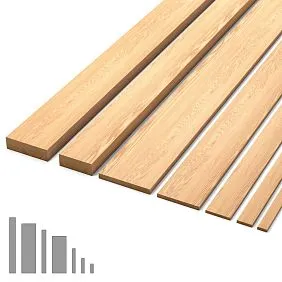


Why natural wood remains relevant
Solid wood is a living material that continues to interact with its environment even after processing and installation.Wooden trimIt regulates indoor humidity, absorbing excess moisture during damp weather and releasing it during dry conditions. This natural mechanism creates a comfortable microclimate unattainable by synthetic materials. Polyurethane, however, remains inert: it does not breathe, does not interact with its surroundings, and contributes nothing to creating a healthy atmosphere. Despite the technological sophistication of polymers, they lack the very 'soul' that makes an interior truly alive and harmonious.
The aesthetic value of natural solid wood is unmatched. Each plank has a unique grain pattern, an incomparable color play, and an individual texture character.Wooden moldingsThey change their perception depending on lighting: morning light reveals one shade, evening another, artificial lighting creates a third reality. Even polyurethane moldings, painted to look like wood, remain lifeless imitations lacking this dynamism. An experienced eye instantly detects the forgery, and no printing or toning technology can reproduce the complexity of natural texture.
Tactile qualities of solid wood create a completely unique level of spatial perception. Touchingdecorative wooden moldingstriggers a subconscious response: the texture is pleasant, the surface temperature is comfortable, even the sound of a light tap carries information about the material's density and quality. Polyurethane reveals its artificial nature upon touch: a cold, lifeless surface devoid of any energy. In premium interiors, where every detail contributes to creating an atmosphere of luxury and nobility, such imitation is unacceptable.
The longevity of natural solid wood is measured not in decades, but in centuries.Production of trim elementsMade from select oak or beech guarantees service for at least 50-100 years without loss of performance characteristics. Wood does not fade under ultraviolet light as catastrophically as polymers, does not deform under point loads, does not crack under mechanical impacts. If necessary, a wooden element can be restored: sanded, repainted, coated with a new protective layer. Polyurethane does not offer such possibilities — damaged fragments can only be replaced.
Ecological safety — a factor gaining increasing importance in the modern world. NaturalWood Trimdoes not contain volatile organic compounds, formaldehyde, phthalates, or other toxic substances that synthetic materials may contain. This is especially critical for living spaces, children's rooms, and bedrooms. Wood is hypoallergenic, does not emit odors when heated, and possesses natural antibacterial properties due to tannins and phytoncides in the wood fiber structure.
Investment attractiveness of solid wood is determined by its ability to retain and even increase value over time. QualityBeech skirting boardsoak or beech after 20-30 years acquires a noble patina, becomes an antique element enhancing the interior's status. Polyurethane items, over the same period, become outdated, lose their appearance, and require replacement. From a long-term economic perspective, natural wood proves more cost-effective, despite its higher initial cost.




Wooden moldings for walls and furniture
Wall wooden moldings are tools of spatial architecture, allowing modeling of volume perception, correcting room proportions, creating visual dominants and rhythmic structures. In classic interiorswooden wall moldingsform a strict panel geometry that defines the entire compositional logic of the space. Vertical elements are arranged like columns or pilasters, visually raising the ceiling and adding grandeur and formality to the room. Horizontal moldings divide the wall into tiers, creating a classic three-part structure: plinth, main field, frieze. Such spatial organization traces back to ancient architectural canons and carries centuries of cultural memory about the harmony of proportions.
In neoclassicism, wooden molding serves as an element of restrained luxury. Here, the key is not excessive decoration, but the elegance of lines, the nobility of the material, and the precision of detail execution.Buy wooden moldingsIt has a minimalist profile: simple cove, soft rounded edge, delicate protrusion. Such elements do not draw attention to themselves, but create a subtle architectural structure that is subconsciously perceived and forms a sense of precision and thoughtfulness in the interior. Neoclassicism demands flawless execution — precisely why solid wood, rather than imitation, is preferred here.
Furniture moldings serve a different purpose: they transform a functional item into a piece of applied art.Wooden molding for furnitureis applied to cabinet, chest, and buffet facades, creating a relief structure and visually enriching the surface. In classic furniture, moldings may be carved with floral motifs, twisted elements, heraldic details. In modern furniture, more minimalist profiles are used, but the principle remains the same: relief creates play of light and shadow, makes the facade three-dimensional, alive, and interesting to perceive.
Moldings for kitchen facades deserve a separate discussion.Kitchen furniture corniceand surface-mounted profiles in solid oak or beech define the style of the entire space. In Provence, country, and classic kitchens, such elements are mandatory — without them, the interior appears unfinished and lacking character. It is important thatwooden cornices for furniturewere made from the same wood species as the main facades, or harmoniously matched in tone and texture. Contrasting solutions are also possible: light facades with dark moldings create a striking graphic effect.
Figured moldings for creating buazery panels — the pinnacle of furniture-decorative art. Buazery implies a complex multi-layered composition of frames, panels, rosettes, corner elements. All details must fit seamlessly, forming a monolithic structure without gaps or misalignments. For such work,buy wooden cornice for furnitureand moldings with ideal geometry, stable moisture content, absence of internal stresses in the solid wood. Only high-quality factory-made products from a reliable manufacturer guarantee a successful result.
In modern interiors, moldings are used more freely, often asymmetrically, violating classical canons.Molding to look like wood for wallscan be painted in contrasting colors, highlighting one wall or space fragment. Options with backlighting are possible: an LED strip is mounted behind the molding, creating a floating frame effect. Such solutions are characteristic of contemporary style, where classical elements are reinterpreted and integrated into a new visual logic.
Our factory also produces:


Baseboards and ceiling solutions in solid wood
Floor baseboard — it is not just a decorative trim, but a functional element protecting the lower part of the wall from dirt, mechanical damage, and moisture during cleaning.Wooden baseboardsThey provide reliable protection due to the high density of solid wood and resistance to impacts. Plastic baseboards crack from accidental hits by a vacuum cleaner or furniture leg, polyurethane ones deform and lose shape, while wooden ones withstand significant loads without visible consequences. Scratches can be easily removed by local sanding and repainting, restoring the element to its original appearance.
The height of the baseboard is determined by the proportions of the room and stylistic concept. In compact spaces with ceilings 2.5-2.7 meters, awooden floor baseboardheight of 60-80 mm is appropriate. This size does not visually overload but creates a clear boundary between the wall and floor. In spacious rooms with ceilings over 3 meters, baseboards 100-150 mm and higher are used, creating a representative, monumental impression. A wide baseboard emphasizes the scale of the room, adding weight and solidity to the interior.
The profile of the baseboard also contributes to the overall style. A classic European profile with soft rounded edges is universal and suitable for most interiors. A rectangular baseboard with sharp edges is characteristic of minimalism and Scandinavian style. A figured profile with decorative grooves and protrusions — an attribute of classic, baroque, and empire styles. When choosingWooden baseboardit is important to consider how it will combine with window casings, cornices, moldings — all trim elements must form a unified ensemble.
Ceiling baseboards and cornices create a smooth transition between wall and ceiling, visually completing the space, making it more harmonious and cohesive.Wooden ceiling baseboardis especially relevant in interiors with wooden ceilings, paneling, or beam structures. Here, polyurethane analogs are inappropriate — they reveal their artificiality and disrupt the integrity of the natural ensemble. A wooden cornice, matched to the ceiling finish, creates a sense of monolithic unity and thoughtful architectural design.
The size of the ceiling baseboard is determined by the height of the room. In rooms with standard ceilings 2.5-2.7 meters, a cornice 40-60 mm is sufficient. At heights of 3 meters and above, more expressive profiles 80-120 mm can be used, emphasizing the scale of the space. In historic buildings with ceilings 4-5 meters, cornices 150-200 mm are used, creating a palace-like, grand atmosphere.Wooden ceiling baseboardmust be proportional to the scale of the room — too small it will 'disappear', too large it will overwhelm.
Combined ceiling solutions imply using multiple levels of cornices and moldings, creating a complex multi-layered structure. Such compositions are characteristic of classic interiors, where the ceiling becomes an independent decorative element. The lower tier may be made of a wide cornice with rich carving, the middle — of a smooth profile, the upper — of a narrow cornice. All elements must be made from the same wood species and have a unified finish, so the composition reads as a single structure.
Functional advantages of wooden baseboards include the ability to lay out communications.Floor baseboard woodwith an integrated cable channel allows hiding electrical wiring, internet cables, antenna wires without wall grooving and without damaging the finish. A removable panel provides access to communications for repair or modernization. This solution is especially relevant during renovation without full reinstallation of engineering systems, when new lines need to be laid with minimal disruption to existing finishes.
Get Consultation
Wooden planks as a modern molding
Plank constructions are one of the main trends in modern interior design.wooden planks on the wallThey create a rhythmic structure that works on multiple levels of perception. Vertical planks visually raise the ceiling, making the space higher and more slender. Horizontal planks expand the room, creating a sense of openness. Diagonal planks introduce dynamism, movement, and energy. Chaotic arrangement of planks of different widths and intervals creates a complex artistic effect, transforming the wall into an art object.
In minimalist interiorsOak wooden planks for wallsThey become the sole decorative element, drawing attention and defining the character of the space. Clean lines, natural texture, absence of unnecessary details — this is the philosophy of minimalism, where each element carries both functional and aesthetic load. Planks can be painted to match the wall color, creating a monochromatic composition, or contrast with the wall to highlight a fragment of space. Solutions with backlighting are popular: an LED strip is mounted behind the planks, creating a floating structure effect and soft contour lighting.
Zoning space using plank partitions is a functional solution for studios and open-plan rooms.form the architecture of walls and ceilings, creating a play of light and shadow.They form a visual boundary between functional zones without blocking light and air. Such a partition does not 'consume' space like a solid wall, but creates a sense of privacy and structure. Vertical planks with a 50-100 mm interval allow light to pass through while being dense enough to visually separate zones such as living room and bedroom, kitchen and dining area, workspace and relaxation zone.
The acoustic properties of plank constructions also deserve attention. Wooden planks with a soft sound-absorbing backing improve room acoustics, reduce reverberation, and make the acoustic environment more comfortable. This is especially relevant in recording studios, home theaters, and conference rooms, where sound quality is critical.Wooden planks for decorationIn such projects, they perform a dual function: aesthetic and acoustic.
The variety of profiles and sizes of planks allows creating unique compositions. Thin planks 10-20 mm create an elegant, graphic structure. Wide planks 50-80 mm form a more substantial, robust image. Combining planks of different widths adds complexity and visual interest.Buy oak wooden planks for wallsIt is advisable to use several sizes to create a multi-level composition with rhythmic variations and accents.
The wood species for planks are selected based on aesthetic and operational requirements.oak lumberIt has an expressive texture with clearly visible growth rings, creating a rich, visually complex image.Beech parquetIt features a uniform structure and a warm pinkish tone, ideal for Scandinavian and minimalist interiors. Oak, walnut, cherry — each species adds its own nuances to the color and texture palette of the interior.
Ceiling plank constructions create a completely unique effect: the ceiling stops being a flat white surface and becomes an architectural element.Wall cladding with wooden lathsIt can be complemented with similar ceiling finish, creating a unified volumetric environment. Such a solution visually unifies the space, making it cohesive and thoughtfully designed. It is important to correctly calculate the direction of the planks: running along the room they elongate the space, across the room they widen it, diagonally they add dynamism.
Combination of moldings, baseboards, and planks
Combining different types of wooden trim in one space requires a sense of proportion and understanding of compositional principles. A classic approach implies using elements from one type of wood and with a single finish.Trimming ItemsPlanks, moldings, and crown moldings made from oak create a harmonious ensemble where all details complement each other. Uniformity of material and texture ensures the integrity of the interior, visual continuity of all architectural elements.
Contrasting solutions also have their place, but require more careful adjustment. Light walls with dark moldings and baseboards create an expressive graphic effect, emphasizing the geometry of the space. Dark walls with light wooden elements create the reverse effect: decoration becomes more noticeable, taking center stage. It is important that the contrast be justified by the stylistic concept and not appear random.
Combining traditional moldings with modern planks allows mixing different styles and eras. For example, a wall with traditional boiserie panels can coexist with a plank partition dividing functional zones. Such a combination creates an interesting dialogue between history and modernity, tradition and innovation.buy wooden trimPlanks of different types should be from the same manufacturer to ensure compatibility in size, processing quality, and finish.
Transition zones between rooms are places where especially important consistency of decorative elements is required.Oak casingOn doorways, it should match withwith wooden skirting boardsand wall moldings. Ideally, all elements have a similar profile or at least share common decorative motifs. This creates visual continuity between different levels and planes of the interior, making the space cohesive.
The color solution for wooden trim can vary from natural wood tones to painted variants.Buy wooden trimIt can be left untreated and painted in any color on the RAL or NCS scale. White moldings and baseboards — classic, suitable for most interiors. Black or dark gray elements create a graphic, modern look. Bright colors — a bold solution, appropriate for eclectic, pop art, and postmodern styles.
Installation logic requires that all wooden elements be installed with technological gaps to compensate for temperature and humidity deformations.Buy oak trim in MoscowIn Moscow or Saint Petersburg, delivery is possible, but before installation, the material must acclimate in the room for at least 3-5 days. This will allow the material to stabilize, reach working humidity, and avoid deformations after installation.
Operation: maintenance, repainting, durability
Care for wooden trim does not require complex procedures, but implies regularity and attention. Dry wiping with a soft cloth removes dust and surface dirt. Wet cleaning using special natural wood cleaning agents is performed as needed, but no more than once a week. Aggressive cleaning agents containing chlorine, ammonia, or abrasive particles are not permitted for wooden surfaces — they destroy protective coatings and dry out the material.
Repainting wooden elements is a way to refresh the interior without replacing decor.wooden wall profileIt can be repainted an unlimited number of times, each time achieving a new look. Preparation includes light sanding to remove old finish and create a rough surface, dust removal, and priming. Painting is done in 2-3 layers with intermediate drying. The final layer of varnish or wax protects the paint from wear and gives the surface a noble matte or satin sheen.
Local repair of damage is one of the main advantages of solid wood over synthetic materials. Scratches and scuffs are removed by sanding the damaged area and applying a protective coating. Dents are filled with special wood putty, sanded after drying, and painted to match the main item. Chips are repaired by gluing in a wooden insert and then fitting it to the profile. Polyurethane elements do not have this repairability — damaged fragments must be replaced.
The longevity of wooden trim directly depends on the quality of the original material and proper usage.oak trimMade from properly dried and treated wood, it lasts 50-100 years without losing functionality. Items made from beech last 30-50 years, which is also an excellent indicator. Polyurethane profiles degrade within 15-25 years: they yellow, become brittle, develop microcracks, and lose their appearance.
Stability of the solid wood geometry is ensured by kiln drying to 8-10% moisture and subsequent acclimatization under operating conditions. Properly preparedFurniture moldingdoes not deform, does not crack, and retains original dimensions for decades. Polyurethane does not react to humidity but may deform at high temperatures — for example, near fireplaces, stoves, or radiators. Wood is more stable under such conditions if properly protected.
Restoration of old wooden decor is a service that allows historic interiors to be revitalized. Antique moldings, baseboards, and cornices can be cleaned of old finishes, damaged areas restored, and covered with modern protective coatings. Such elements gain collectible value and become distinctive features of the interior. Polyurethane molding cannot be restored — it is simply replaced, losing all historical and cultural value.
Combined solutions: solid wood and polyurethane
A rational approach to finishing implies using each material where it demonstrates its strengths.Door molding— casings, boxes, and trim pieces — must be wooden, because these elements are subjected to mechanical loads and require high strength. Baseboards in living rooms are also better made of solid wood: they protect walls from damage and operate under normal microclimate without extreme exposure.
Ceiling cornices and moldings in rooms with normal humidity are preferably wooden: they create a noble, luxurious interior look. However, in bathrooms, toilets, unheated verandas, and winter gardens, polyurethane is appropriate. It does not fear moisture, does not deform from temperature fluctuations, and does not require complex protective treatment. It is rational to use polymers where wood 'suffers,' and aesthetic advantages of solid wood are not critical.
Decorative elements with complex configurations — rose petals, brackets, corner elements with elaborate carving — can be polyurethane if they convincingly imitate wood carving. Modern molding technologies allow creating highly detailed elements that are indistinguishable from hand-carved ones at a distance. However, the main solid wood trim must remain wooden to preserve the overall aesthetic of naturalness.
Budget projects allow broader use of polyurethane provided that visible, 'contact' elements are made of wood.wooden skirting board purchaseis suitable for all living rooms, while ceiling cornices in hallways and utility rooms may be polyurethane.Oak door trimis mandatory, while wall moldings in non-critical zones — polyurethane. This approach allows optimizing costs without critical loss of quality.
Combining wood and polyurethane on the same plane is not allowed — the difference in texture and color will be too noticeable. If both materials are used, they should be separated by functional zones or levels: wooden elements at the bottom, polyurethane at the top, or vice versa. It is important that the transition is logical and not conspicuous.
Painting in a single color partially neutralizes the difference between wood and polyurethane, but it cannot fully conceal it. Solid wood even under a thick layer of paint retains texture, which is visible under side lighting. Polyurethane remains smooth and lifeless. Therefore, the idea 'paint everything white, and it won't be visible' works only partially — an experienced eye will still detect the imitation.
Examples of schemes and stylistic solutions
A classic interior with wooden decor is built on the principles of symmetry and hierarchy. Walls are divided by moldings into rectangular or square panels.Profile made of woodcreates frames within which wallpaper, murals, and textiles are placed. A high baseboard of 100 mm and above completes the composition at the bottom, while the ceiling cornice — at the top. Door casings repeat the molding profile, creating a unified style. The color palette is restrained: natural wood tones, white, cream, and beige-gray.
Neoclassicism simplifies the classic scheme by removing excessive decor and retaining only the essential. Walls remain mostly smooth, moldings are used locally — to highlight the fireplace zone, TV wall, or headboard area in the bedroom.wooden wall moldingschoose simple profiles, without complex carving or scrolls. Baseboards of medium height 70-90 mm. Colors are more varied: gray, graphite, and dark blue tones are allowed in combination with natural wood.
Modern minimalism uses wood as an accent material. One wall is clad with vertical boards, creating a focal point in the interior. Other surfaces remain smooth and painted in neutral tones.Oak wooden planks for wallsMounted at a uniform spacing of 50-100 mm, creating a rhythmic structure. Baseboards of minimal height (40-60 mm), often concealed installation, to not disrupt the purity of lines. Color palette is monochromatic: white, gray, black, natural wood.
Scandinavian style leans toward light wood species and maximum naturalness.Wooden boards in interiorUsed for zoning and creating coziness. Baseboards made of light beech or ash harmonize with laminate and parquet in the same tones. Moldings are used rarely, mainly for doorways decoration. Overall philosophy — simplicity, functionality, naturalness.
Loft and industrial styles use wood in contrast to concrete, brick, metal.Wooden profileMade from dark walnut or thermally treated oak, it creates a warm accent in a brutal space. Boards can be mounted on concrete walls, creating a complex textured composition. Baseboards are massive, rough, distinctly natural. Colors are saturated: dark brown, graphite, black with natural wood texture.
Eclecticism allows combining different styles in one space. Classical moldings coexist with modern boards, antique furniture — with minimalist wall decor.Buy molding productsProfiles from different eras and styles are available from specialized suppliers who offer both modern and replicas of historical profiles. The key in eclecticism — sense of proportion and understanding what unites disparate elements into a unified composition.
Why choose STAVROS?
STAVROS company — one of the leadingmolding manufacturersin Russia, specializing in solid premium wood products. Production facilities are equipped with modern high-precision equipment, allowing to create molding products with strict adherence to geometry and surface finish quality. Quality control at all stages — from raw material selection to packaging of finished products — guarantees consistently high product quality.
Wide range of profiles and sizes allows selecting a solution for any stylistic direction.Molding SPBandMolding MoscowAvailable through dealer network and online store with delivery across Russia. Consultants will help select optimal profiles, calculate required material quantity, provide installation and finishing recommendations.
Custom production to order — a service for exclusive projects requiring non-standard profiles, sizes, or wood species. STAVROS’s technological capabilities allow manufacturing molding according to individual drawings while maintaining all quality standards. This is especially relevant for restoring historical interiors, where it is necessary to recreate lost elements with precise correspondence to the original.
Ecological production — an important aspect of corporate philosophy. Wood is purchased from certified suppliers practicing responsible forestry. Production waste is recycled and reused. Finish coatings are applied only on water-based basis, without toxic solvents or formaldehyde resins.
Technical support and consultations — a service that distinguishes STAVROS from competitors. Company specialists will not only help select material, but also develop mounting scheme, suggest optimal fastening systems, recommend proven contractors for installation.Buy molding SPBCan be purchased with full-service package — from design to turnkey installation.
Answers to Popular Questions
Why is wooden baseboard better than plastic? Solid wood is stronger, longer-lasting, more eco-friendly, repairable, and creates a noble, luxurious interior look. Plastic is cheaper and easier to install, but loses on all other parameters.
Can wooden molding be used in humid rooms? Yes, provided it is properly protected with water-repellent coatings. However, for bathrooms and toilets, polyurethane is more rational — it requires no special care and does not fear direct contact with water.
How often should protective coating on wooden elements be renewed? In residential spaces with normal use — every 5-7 years. In high-traffic areas and spaces with heavy loads — every 3-4 years.
Can wooden molding be installed by oneself? Technically possible with appropriate tools and carpentry skills. However, for flawless results, it is better to hire professionals — they ensure precise cuts, correct fastening, and absence of gaps.
Which wood species is best for moldings and baseboards? Oak — the standard for strength and durability, ideal for classic interiors. Beech — a universal option with uniform texture suitable for various styles. Ash — expressive texture for modern spaces.
How to properly combine wooden decor with other materials? Wood harmonizes with stone, ceramic, glass, metal. It is important to maintain balance: if walls are clad with stone, decor should be restrained to avoid overloading the space.
Why is wooden molding more expensive than polyurethane? Solid wood — natural, renewable, but limited resource. Processing requires high qualification, complex equipment, and careful quality control. Polyurethane is produced from cheap petrochemical raw materials with minimal labor input.


