Article Contents:
- Wood vs. Synthetic: Why Natural Moldings Win
- Uniqueness of each item
- Ecological Purity and Microclimate
- Durability as an Investment
- The Anatomy of Perfection: Exploring Types and Styles of Moldings
- Classification by Functional Purpose
- Stylistic directions
- Wood species: character in every fiber
- Fine Hardwoods
- Softwoods: Accessibility Without Compromise
- Production Technology: From Log to Masterpiece
- Wood preparation
- Mechanical processing
- Final finishing
- Application Sphere: Where Moldings Reveal Their Potential
- Interior solutions
- Furniture decor
- Installing Moldings: Professional Secrets
- Preparatory work
- Fastening technology
- Joint Processing
- Pricing: investments in quality
- Factors affecting the price
- Economic feasibility
- Modern Trends: Where Fashion Is Heading
- Ecological Trend
- Technological Innovations
- Stylistic directions
- Maintenance and Operation: Preserving Beauty for Years
- Regular maintenance
- Protection against damage
- Updating Finishes
- Buying Moldings: How to Avoid Choosing Wrong
- Supplier selection criteria
- Assessment of product quality
- Conclusion: Art in the Details
Your home deserves more than standard solutions. In the world of interior design, there is a fine line between an ordinary dwelling and a space that inspires, energizes, and reflects the true taste of its owner. This line runs through details — those very elements that transform four walls into a work of art.
Today buy moldings You can access collections that were once available only to select workshops and design studios — all from the comfort of your home. We’re talking about wooden moldings — an art form that combines centuries-old craftsmanship traditions with modern production capabilities.
But how to choose exactly the elements that will transform your space? What secrets do wooden moldings hold, and why have they become the #1 choice for those who understand the true value of quality? Let’s explore this fascinating world, where every plank tells its own story.


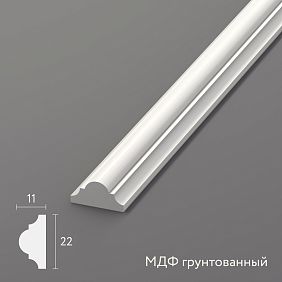
Wood vs. Synthetic: Why Natural Moldings Win
In the age of mass-produced synthetic materials, choosing natural wood becomes a statement of values. Wooden moldings These are not just decorative elements — they are a philosophy of life, where quality matters more than quantity, and authenticity is valued above imitation.




Uniqueness of each item
Nature does not create two identical trees. Each board has a unique wood grain pattern, individual color play, and its own growth story. When a craftsman transforms this living material into a molding, they preserve this uniqueness, creating an item that cannot be mechanically reproduced.
The texture of natural wood changes depending on lighting, time of day, and season. Morning light highlights one aspect of the pattern, evening light — another. This living interplay of light and shadow creates dynamics in the interior that no synthetic material can replicate.
Our factory also produces:


Ecological Purity and Microclimate
Wood is a natural air conditioner for your home. It regulates humidity, absorbing excess moisture during damp weather and releasing it back during dry days. This creates a comfortable microclimate, especially important for people with respiratory conditions or heightened sensitivity to synthetic materials.
Natural resins and essential oils found in wood possess antiseptic properties. They naturally suppress the growth of harmful microorganisms, creating a healthy atmosphere in the home.
Get Consultation
Durability as an investment
Quality Moldings from solid wood Last for decades without losing their appeal. Moreover, over time, wood develops a noble patina, becoming even more beautiful. This makes wooden moldings not just a purchase, but a long-term investment in the beauty and comfort of your home.
With proper care, wooden elements can last as long as the house itself. History knows examples of wooden decor that adorned interiors for centuries, passed down from generation to generation as family heirlooms.
The Anatomy of Perfection: Exploring Types and Styles of Moldings
The world of wooden moldings is incredibly diverse. From minimalist Scandinavian profiles to lavish Baroque compositions — each style has its philosophy, purpose, and character.
Classification by Functional Purpose
Ceiling Cornices
These are the kings among decorative moldingsThey create a visual boundary between the wall and ceiling, giving the room a sense of completion and architectural expressiveness. Complex multi-level moldings can visually raise ceilings and create an illusion of greater space.
Simple moldings suit minimalist interiors where linearity is important. Complex profiles with carved elements become a central accent in classical interiors.
Wall moldings
These elements work as architectural accents on walls. They can divide walls into zones, create decorative panels, frame paintings or mirrors. Vertical moldings visually raise ceilings, horizontal ones — expand the space.
Baseboards
Modern baseboards are not just simple strips covering the junction between wall and floor. They are full decorative elements that can radically change the perception of a room. Tall baseboards create a sense of solidity and respectability, low ones — lightness and airiness.
Stylistic directions
Classic style
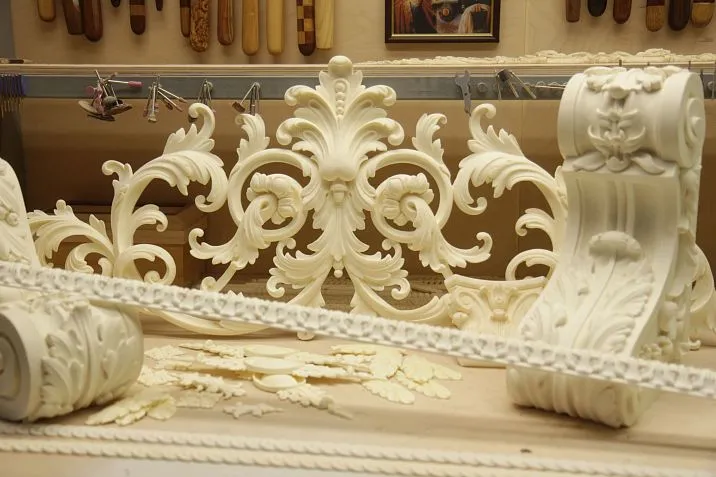
Characterized by complex profiles with multiple curves, carved elements, and rich detailing. Such moldings require high craftsmanship and create an atmosphere of an aristocratic mansion.
Classic profiles often include plant motifs — acanthus leaves, grapevines, rosettes. These elements give the interior a sense of grandeur and formality.
Modern Minimalism
Simple geometric shapes, clear lines, absence of excessive decoration. Such moldings emphasize the architecture of the room, without distracting from the main interior concept.
Minimalist profiles are universal — they look equally good in Scandinavian, high-tech, and loft interiors.
Country and Provence
Country-style moldings are characterized by deliberate simplicity, imitation of handcraft, and use of natural wood imperfections as decorative elements.
Provençal style implies more elegant forms with floral motifs, but retains the feeling of home comfort and connection to nature.
Wood Species: Character in Every Fiber
The choice of wood species determines not only the appearance of moldings, but also their performance characteristics, durability, and processing features.
Fine Hardwoods
Oak — the king of wood
Oak is rightfully considered the standard among wood species for manufacturing wooden trimIts density reaches 700 kg/m³, ensuring exceptional strength and longevity of the products.
Oak's texture is expressive and noble — clearly defined annual rings create a beautiful pattern, especially striking in radial cuts. The color range varies from light yellow to dark brown depending on the wood's origin.
Oak is easily processed by all types of tools, allowing the creation of moldings with the most complex configurations. It holds carving well, does not chip during end processing, and polishes easily to a mirror finish.
Beech — European classic
Beech has a uniform dense structure without a pronounced texture. This makes it an ideal material for moldings, where geometric profile accuracy and flawless surface smoothness are important.
Beech density is 650-680 kg/m³, providing strength comparable to oak, but the wood is more workable. Beech easily takes stains and can imitate more expensive species.
Beech's natural color is light rose with a slight cream tint. When steamed, the wood takes on a rich red-brown color, not inferior in beauty to valuable tropical species.
Ash — Northern Strength
Ash has a unique combination of strength and elasticity. Its density reaches 700 kg/m³, and its elasticity allows creating moldings with complex curved shapes without the risk of cracking.
Ash's texture resembles oak's, but is more contrasting. Clear distinction between early and late wood creates an expressive striped pattern, especially beautiful in radial cuts.
Ash color varies from cream-white to light brown. This wood readily accepts any stains, allowing the creation of moldings in a wide color range.
Softwoods: accessibility without compromise
Spruce — democratic quality
Spruce is the most accessible wood species for molding production, but this does not mean low quality. Properly processed and dried spruce wood has sufficient strength for most interior applications.
Spruce density is 400-500 kg/m³, making the products lightweight and easy to install. The resinous nature of the wood provides natural protection against pests and mold.
Spruce is easy to process and readily accepts various finishes. It can be stained to resemble more expensive species or left in its natural state, highlighting the wood's natural beauty.
Linden — the carver's workshop
Linden is ideal for carved moldings. Its soft, uniform structure allows executing the finest carvings without chips or scratches.
Linden wood has low density — 450–500 kg/m³, but for decorative elements this is more of an advantage. Lightweight moldings are easier to install and do not impose excessive load on structural elements.
The natural color of linden is white with a slight cream tint. This wood stains beautifully, allowing you to create moldings of any color.
Production technology: from log to masterpiece
Creating high-quality wooden moldings is a complex technological process where each stage affects the final result.
Wood preparation
Drying — the foundation of quality
Proper wood drying is the foundation of quality moldings. Natural drying takes 2–3 years but ensures maximum wood stability. Kiln drying reduces the time to 2–3 weeks, but requires precise adherence to temperature and humidity regimes.
The final moisture content of wood for moldings should not exceed 8–10%. This ensures dimensional stability and prevents deformation during use.
Sorting and selection
For production carved moldings Only high-grade wood without knots, cracks, rot, or other defects is used. Each board undergoes visual inspection and instrumental moisture testing.
Mechanical processing
Profile milling
Modern CNC milling machines allow creating moldings of any complexity with precision down to tenths of a millimeter. Special milling cutters ensure clean processing, eliminating the need for additional sanding.
Material feed speed is adjusted depending on profile complexity and wood hardness. This prevents burning and chipping, preserving the natural beauty of the wood.
Carved elements
Carving is the highest expression of craftsmanship in wooden molding production. Complex ornaments are created using CNC milling machines or by skilled carvers manually.
Each carving element requires an individual approach. The depth of carving, the angle of grooves, and the radii of curves — all these parameters affect the play of light and shadow, creating the ornament’s three-dimensionality.
Final finishing
Sanding
Sanding gives the molding surface perfect smoothness. The process occurs in several stages with gradually decreasing abrasive grit. Final sanding is performed with 220–320 grit abrasive, ensuring a flawless surface for coating application.
Protective coatings
Modern protective coatings not only protect wood from moisture and UV exposure but also highlight its natural beauty. Oil-based coatings penetrate deeply into the wood, preserving its natural texture. Lacquer coatings form a protective film on the surface, providing maximum resistance to mechanical damage.
Application sphere: where moldings reveal their potential
Modern Moldings for furniture and interiors open up boundless creative possibilities for designers and homeowners.
Interior solutions
Ceiling decoration
Ceiling moldings radically change the perception of space. A simple white ceiling becomes an architectural element, giving the room character and style, thanks to cornices.
Coffered ceilings are created using a system of intersecting beams and moldings. Such constructions visually raise the ceiling, create play of light and shadow, and add volume and dynamism to the interior.
Hidden lighting in ceiling cornices creates a "floating" ceiling effect. LED strips placed in special grooves of moldings provide soft diffused light, visually increasing the room’s height.
Wall compositions
Wall moldings allow creating complex decorative compositions. Panels with boiserie, framed by moldings, give the interior an aristocratic character. Such decoration is especially effective in offices, libraries, and living rooms in classic style.
Moldings can be used for space zoning. Vertical elements visually divide walls into sections, creating rhythm and structure in the interior.
Opening framing
Door and window casings made from wooden moldings transform ordinary openings into architectural elements. Complex profiles with carved details create an elegant appearance, while simple ones emphasize the minimalist aesthetic of modern design.
Furniture decor
Moldings play a key role in creating high-end furniture. They add volume and expressiveness to the facades of cabinets, chests, and kitchen sets.
Kitchen furniture facades
Wooden moldings on kitchen facades create a classic style that never goes out of fashion. Framed facades with panels bordered by moldings add elegance and sophistication to the kitchen.
Combining different molding profiles allows creating unique compositions. The central part of the facade can be framed with a simple molding, while corners can be decorated with more complex elements.
Living room furniture
Cabinets, chests, and drawers with moldings look like pieces of furniture art. Wooden elements highlight the status of the furniture, creating a sense of solidity and reliability.
Bookcase cabinets with carved moldings become a central element of the interior. They not only perform their storage function but also serve as a decorative accent in the room.
Installing moldings: professional secrets
Quality installation is half the success in creating a beautiful interior with wooden moldings.
Preparation Work
Planning and marking
Successful installation begins with careful planning. It is necessary to create an accurate plan for placing moldings, indicating all dimensions and references to interior elements.
Marking is done using a laser level and tape measure. Special attention is paid to corners — they must be perfectly straight or precisely match the project parameters.
Surface preparation
The surface for mounting moldings must be flat, dry, and strong. Irregularities exceeding 2-3 mm per linear meter require leveling.
The base is primed with deep-penetration compounds. This improves the adhesion of adhesive compositions and prevents moisture from the adhesive from being absorbed into the base.
Fastening Technology
Adhesive connections
Modern wood adhesives provide joint strength exceeding the strength of the wood itself. Polyurethane adhesives contain no water, which prevents deformation of moldings during drying.
Adhesive is applied in an even layer to both surfaces to be joined. The holding time before joining is 3-5 minutes, allowing adjustment of the elements' position.
Mechanical fastening
For heavy moldings, adhesive joints are reinforced with mechanical fasteners. Galvanized self-tapping screws or special headless nails are used.
Fasteners are placed in locations where they will be hidden by decorative elements or can be filled with putty. The distance between fastener points is determined by the weight and rigidity of the molding.
Joint Treatment
Corner joints
Corner joints are the most critical part of installing moldings. They must fit perfectly without gaps or steps.
Corner cuts are made on a circular saw with a rotating head. For complex profiles, special templates are used to ensure cutting accuracy.
Joint sealing
Small gaps in joints are filled with acrylic sealant in wood color. Excess sealant is immediately wiped away with a damp cloth before it dries.
Large gaps are filled with wooden inserts or special wood putties. After drying, the repair area is sanded and stained to match the main item's color.
Pricing: Investment in quality
The cost of wooden moldings is determined by many factors; understanding them will help make the right choice.
Factors affecting price
Wood Species
Premium species (oak, beech, walnut) cost 2-3 times more than mass-market ones (pine, birch). However, the higher price is offset by the longevity and prestige of the products.
Exotic species (teak, mahogany, wenge) may cost 5-10 times more than ordinary ones, but their use is justified in exclusive projects.
Profile complexity
Simple rectangular moldings cost 2-3 times less than complex profiled ones. Carved elements may increase the cost by 5-10 times depending on the ornament's complexity.
Processing quality
Moldings processed by machine are cheaper than those with hand-finished details. However, for important interiors, it is advisable to choose products with individual finishing of each item.
Economic feasibility
Long-term savings
Quality Buy wooden moldings May seem expensive at first glance. However, their durability makes this purchase economically advantageous in the long run.
Wooden moldings last 20-30 years without replacement, whereas synthetic analogs require updating every 5-7 years. Considering the costs of dismantling and reinstallation, wooden items prove more cost-effective.
Increase in property value
Quality wooden molding finish increases property market value by 8-15%. This is especially relevant for luxury housing, where decorative details play a decisive role in property valuation.
Modern trends: where is fashion heading?
The world of wooden moldings is constantly evolving, reflecting changes in design preferences and technological capabilities.
Ecological Trend
Growing consumer environmental awareness stimulates demand for natural materials. Wooden moldings fit perfectly into the "green" construction concept.
FSC certification guarantees that the wood comes from sustainably managed forests. This is important for consumers concerned about ecology.
Technological Innovations
Thermo-treated wood
Thermally modified wood has increased dimensional stability and resistance to moisture. Such moldings can be used in rooms with variable humidity without risk of deformation.
New protective coatings
Modern coatings based on natural oils and waxes preserve the natural beauty of wood while providing reliable protection. They are environmentally safe and easy to renew.
Stylistic directions
Neoclassicism
Modern interpretation of classic forms implies simplification of decorative elements while preserving their basic proportions. Moldings become more minimalist but do not lose elegance.
Scandinavian minimalism
Simple forms, light wood species, minimal decoration — key principles of Scandinavian style. Moldings here serve as architectural accents, emphasizing the geometry of space.
Loft and industrial
Rough textures, deliberate simplicity of finish, combination of wood with metal — characteristic features of industrial style. Moldings in such interiors imitate beams and structural elements.
Care and maintenance: preserving beauty for a long time
Proper care ensures a long life for wooden moldings and preserves their original beauty.
Regular Maintenance
Dust removal
Wooden surfaces attract dust, especially in relief areas. Regular cleaning with a soft cloth or brush prevents accumulation of dirt.
For hard-to-reach areas of carved moldings, use a soft brush or vacuum cleaner with a crevice tool. It is important not to apply excessive force to avoid damaging delicate carved elements.
Wet cleaning
Periodic wet cleaning helps remove more stubborn dirt. Use slightly damp cloth without aggressive cleaning agents.
After wet cleaning, the surface is immediately wiped with a dry cloth. This prevents moisture absorption into the wood and formation of stains.
Protection against damage
Humidity Control
Optimal air humidity for wooden moldings is 45-65%. Lower humidity may cause cracking, higher humidity — swelling and deformation.
In dry rooms, use humidifiers. In humid rooms — dehumidifiers or forced ventilation systems.
Protection from direct sunlight
Ultraviolet radiation destroys lignin in wood, causing color change and reduced strength. Moldings located near windows require additional protection.
Use UV filters on windows or special protective coatings for wood with UV blockers.
Coating renewal
Periodicity of renewal
Wooden moldings' protective coatings require periodic renewal. Oil-based coatings are renewed every 3-5 years, lacquer-based ones every 5-8 years.
Signs of the need for renewal: dullness, appearance of minor scratches, color change in certain areas.
Renewal Technology
Old coating is carefully removed with fine-grit sandpaper. Surface is cleaned of dust and degreased.
New coating is applied in thin layers with intermediate drying. The number of layers depends on the type of coating and operating conditions.
Buying Moldings: How to Avoid Choosing Wrongly
Choosing the right supplier and understanding quality criteria are the key to successful purchase of wooden moldings.
Supplier selection criteria
Reputation and experience
Choose manufacturers with long-standing history and positive market reputation. Experienced companies better understand customer needs and ensure stable product quality.
Study reviews from other buyers, examples of completed projects, presence of quality and compliance certificates.
Assortment and Customization Options
Wide range of ready-made profiles allows selecting the optimal solution for most tasks. The ability to manufacture moldings according to custom sketches is important for exclusive projects.
Clarify production timelines for non-standard items and minimum order volumes.
Assessment of product quality
Visual Inspection
Quality moldings have uniform color without stains or streaks. Surface should be smooth without chips, scratches, or other defects.
The profile geometry must be perfectly maintained along the entire length of the item. Check this by pressing the molding against a flat surface.
Wood Moisture Content
Moisture content of finished items should not exceed 8-12%. Higher moisture may cause deformation after installation.
Serious manufacturers indicate moisture content in the product passport or provide control measurement data upon request.
Processing quality
Surface must be carefully sanded without tool marks. Carved elements must be clearly detailed without smoothed-out details.
Molding ends must be carefully processed and, if necessary, coated with a protective compound.
Conclusion: The Art of Details
Choosing wooden moldings is choosing in favor of quality, beauty, and longevity. In the world of mass production and synthetic materials, natural wood remains a symbol of true luxury and good taste.
buy moldings Today, you can receive delivery to any point in the country, gaining access to the best examples of furniture and interior art. Modern wood production and processing technologies allow creating items that surpass in quality and beauty the examples of past eras.
Investing in quality wooden moldings is investing in the future of your home. They not only decorate your interior today, but will delight you and your children for decades. Unlike fleeting trends, the classic beauty of natural wood remains relevant always.
Remember: true luxury lies not in price, but in quality. Choosing wooden moldings means choosing timeless values — beauty, quality, tradition. You are not just creating an interior, but an inheritance that will be passed down from generation to generation.
Quality begins with choosing the right partner. For many years, STAVROS has been a leader in producing elite wooden interior items. Combining traditional wood processing methods with modern technologies, STAVROS creates products that meet the highest quality and aesthetic standards. Rich experience, own production, meticulous quality control at every stage, individual approach to each client — this is what makes STAVROS the preferred choice for those who value real quality. Each STAVROS item is created with an understanding of its special role in forming a unique interior, where every detail, every line, every texture matters. Choosing STAVROS means choosing not just moldings — you are choosing a philosophy of quality that turns your home into a work of art.